Meetings & Information


*****************************
****************************************************
MUST READ:
GET THE FACTS!


Showing posts with label Twin River. Show all posts

Monday, August 15, 2016

Amy Veri: Proposed Tiverton casino a bad deal for everyone


Amy Veri: Proposed Tiverton casino a bad deal for everyone


Posted Aug. 14, 2016 at 2:01 AM 

The proposed casino in Tiverton is not the shining grace that Twin River is marketing. Under newly enacted legislation, the state will receive less revenue than it does currently from the Lincoln and Newport casinos. There is a 0.5 percent reduction in revenue for the state, from 16 percent to 15.5 percent.
Twin River is “guaranteeing” the Town of Tiverton $3 million in annual revenue. However, what Twin River fails to underscore is that the state will be on the hook for any shortfall. That means if Twin River does not meet projected earnings, the taxpayers of Rhode Island will have to make up the difference.
This is important because Twin River’s revenue projections for the proposed Tiverton casino were based upon their assumption that no casino would be built in Taunton, Mass. However, the $1 billion First Light Resort and Casino broke ground in Taunton in April.
A closer inspection of Twin River’s revenue projections for the Tiverton casino shows an anticipated loss of revenue for 2019. So, within one year of the casino opening, Twin River expects that it will lose money. Be ready to break out your checkbooks, taxpayers.
Finally, what has not been emphasized is the increase in insurance premiums that Tiverton residents will face. Homeowners insurance and car insurance will increase because of the social ills associated with casinos (e.g. increased crime). Tiverton residents should anticipate a tax hike too, to cover the cost of the demand placed on police and rescue.
Casinos are built to keep business inside, not to benefit local businesses or the community. Rhode Islanders: Think twice about how you vote on Question One. Do we really need another taxpayer-backed mistake?
Amy Veri
Little Compton
The writer is a candidate for the state Senate, District 12 (Little Compton, Tiverton, Middletown, Newport).

 http://www.providencejournal.com/opinion/20160814/amy-veri-proposed-tiverton-casino-bad-deal-for-everyone


Sunday, August 14, 2016

If a Tiverton casino opens, there needs to be a plan for social justice


Guest Opinion: If a Tiverton casino opens, there needs to be a plan for social justice be a plan for social justice


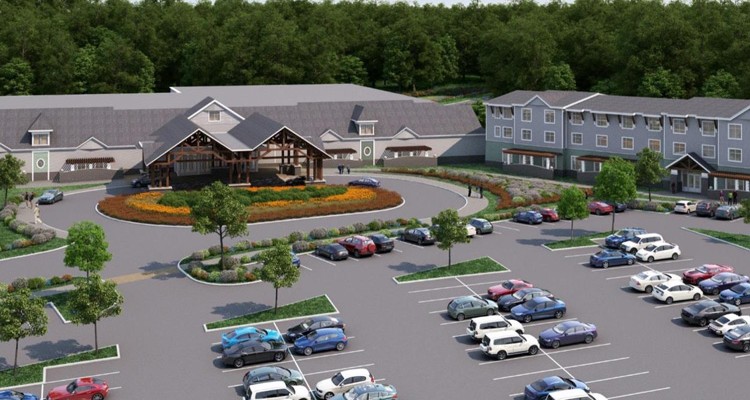
An artist's rendering of the proposed 85,000-square-foot Tiverton casino. It would have 1,000 video lottery terminals and 32 table games. It would be attached to an 84-room hotel.

Drawing Courtesy of Twin River Management Group

Friday 

Posted Aug 12,2016


As a priest, pastor and President of the Tiverton Interfaith Clergy Group opposing the expansion of gambling in Rhode Island in general and the placement of a casino in Tiverton specifically, I asked the Tiverton Planning Board to begin working on a social plan. If there must be a casino placed in Tiverton, then there must be a social plan for the sake of social justice. I am asking the Planning Board to consider developing, approving and submitting a social plan to the Tiverton Town Council, as soon as possible, in the event Tiverton voters approve the casino referendum on Election Day, Nov. 8, a mere 90 days away.

The Rev. John E. Higginbotham

As a priest, pastor and President of the Tiverton Interfaith Clergy Group opposing the expansion of gambling in Rhode Island in general and the placement of a casino in Tiverton specifically, I asked the Tiverton Planning Board to begin working on a social plan. If there must be a casino placed in Tiverton, then there must be a social plan for the sake of social justice. I am asking the Planning Board to consider developing, approving and submitting a social plan to the Tiverton Town Council, as soon as possible, in the event Tiverton voters approve the casino referendum on Election Day, Nov. 8, a mere 90 days away.

A social plan will help facilitate and help to provide Tiverton residents who become addicted to casino gambling with access to resources they will need when they, and their families, suffer the financial fallout from a gambling addiction as a direct result of a casino coming into this town. Some of the resources needed would include psychiatric treatment for gamblers suffering from this addiction, legal resources when criminal activity, eviction, bankruptcy or utility shut offs are involved. There should be access to emergency financial resources such as low- interest rate loans providing residents with food, utility payments, rent money to prevent eviction and emergency mortgage payments to prevent foreclosure. Employment assistance must be made available when the gambler has been terminated as a direct result of their gambling addiction.

These resources are all about survival. We all know our finances go much deeper than basic survival. However, a gambling addiction does not discern between disposable income and survival income. The addiction just knows that money is the fuel needed for the high the “action” gives the gambler when playing slot machines or any of the table games in the casino. This addiction not only takes away the luxury of disposable income from the gambler, a gambling addiction takes away all the money an addicted gambler can get their hands on.

A casino can easily create a gambling addiction in a model citizen’s life. For example, a Tiverton resident goes into this proposed casino one night just for the fun of it to play the slots and winds up a year or two later with a full blown gambling addiction. The person becomes an active gambler and craves the excitement of the “action” playing the slots only to end up broke, borrowing from Peter to pay Paul, maxing out the credit cards at the ATM machine, which the casino so conveniently provides. Finally, when there is nothing left but toxic shame, bankruptcy becomes a way out for many gamblers.

Unfortunately, there is embezzlement from the gambler’s place of employment just to keep gambling because the addiction whispers “Keep playing. You can hit it big. You can save the house and the car and the 401(k) and replace the kid’s college tuition money that you have been saving since birth. You can save face. You can be a hero and still have fun.” That’s a gambling addiction controlling what was a model life, a good life, a healthy life. In the end, a person with a chronic gambling addiction can end up ruining their life and the life of their family and loved ones who depend upon them for their survival. In chronic cases they could end up in bankruptcy court or doing 3-to-5 years in prison for embezzlement or even worse taking their own lives. It’s not just about your money; it’s about your life. In this case, it is the life of this beautiful town.

I know the Tiverton Town Council and many proponents of the casino say, “This is just hyperbole. These are just scare tactics. This is just an over exaggeration of the facts.” When asked about the addiction issue, casino executives usually point out that most people don’t have a gambling problem, which is true. Just over 1 percent of the population is considered to be compulsive gamblers, those with the most serious level of gambling addiction and another 3 percent to be problem gamblers, those folks with somewhat lesser levels of addiction.

However, as documented in the landmark Institute of American Values report “Why Casinos Matter” (www.americanvalues.org), multiple independent studies show that 35-50 percent of casino gambling revenues come from that 4 percent of the population who are collectively referred to in the gambling literature as “problem gamblers.”

This means that the casino industry’s very business model is dependent upon preying upon addicted gamblers. That is people with some level of gambling addiction and that up to half the money government obtains from casino gambling comes from exploiting addicted citizens and the people close to them. This is the basis of the argument that it is unethical for government to support and promote gambling. The bottom line: It is difficult to take seriously the casino industry’s claims that casinos do everything possible to identify, bar, and help addicted gamblers get treatment since most casinos would be hard pressed to stay in business if they lost 35-50 percent of their revenue.

If the voters approve the referendum, then this town must be prepared for the social fall out. You see, the town is our people. We have a responsibility to our people. This is a matter of social justice. As an advisory body to the Town Council, the Planning Board has an obligation and a duty to at least plan for any eventuality, especially the placement of a casino in this beautiful New England village and to protect the people they serve from harm and when that harm is done, be there to help them. Otherwise, our town will be changed, and not for the better. Otherwise, there will be no peace in our town because there will be no justice. Otherwise, we are saying, I just don’t give a damn.

The Rev. John E. Higginbotham is president of The Tiverton Interfaith Clergy Group.


http://www.heraldnews.com/opinion/20160812/guest-opinion-if-tiverton-casino-opens-there-needs-to-be-plan-for-social-justice

Monday, August 8, 2016

Plainridge Park casino fined $10,000 for alcohol violations


Plainridge Park casino fined $10,000 for alcohol violations

By Dan Glaun  
Follow on Twitter 
on August 08, 2016

The Massachusetts Gaming Commission has fined Plainville's Plainridge Park Casino $10,000 for violating alcohol regulations.
The casino, which is run by Penn National Gaming, was the subject of random and unannounced compliance checks by the gaming commission's Investigations and Enforcement Bureau in April and May.
During those checks, investigators recorded violations of alcohol storage requirements and service limits, the gaming commission said in a press release.
"During the period of April 19, 2016 to May 8, 2016, gaming agents observed seven incidents of noncompliance pertaining to alcohol storage requirements involving unsecured doors to refrigerators containing alcohol," the commission said. "During the period of April 24, 2016 to May 7, 2016, IEB gaming agents observed 13 incidents of noncompliance regarding alcohol distribution. In these instances, gaming agents observed the delivery of more than two drinks to an individual patron at a time, which is contrary to regulations adopted by the Gaming Commission."
Plainridge Park waived its right to a hearing and took steps to address the violations, including new training, signage at each casino bar explaining the rules, the termination of an employee, disciplinary talks with other employees and increased managerial oversight.
"Plainridge Park Casino is committed to responsible beverage service," Plainridge Park Casino Vice President and General Manager Lance George said in a statement. "We take full responsibility for the infractions and have taken proactive steps to remedy these types of unfortunate occurrences in the future." 
Plainridge Park, which celebrated its one-year anniversary in June, pays 49 percent of its gambling revenue in taxes and has paid $81.9 million into the state coffers as of July.
It is in competition with the Twin River Casino just 11 miles away across the Rhode Island Border and has faced questions about its financial performance since state officials slashed their expectation for the gaming facility after its launch in June 2015.
The state initially expected to take in $105 million per year in tax revenues. With slots intake not meeting targets, that projection was lowered to $83 million.
But both Plainridge Park and gaming commissioner chairman Steven Crosby are sanguine about the casino's economic performance.
"I don't know anything about their internal arithmetic, but I know that they are generating more revenue per machine than most of the other casino launches in the last one or two decades," Crosby told MassLive last month. "So they're doing very well by industry standards. So I'm sure they're doing well, too."
Revenues have plateaued or dropped in recent months but are up since a low of $11.3 million in gross revenue in December. Gross gaming revenue for the casino fell to $12.3 million in June, after seeing $13.5 million in May.


Tuesday, January 5, 2016

Propaganda & Hallucinations: All Things Travel: Out-Of-State Casinos Beating Plainridge Slot Bar


One only had to consider comparisons from the AGA's [American Gaming Association] web site. 

These words from former Attorney General Scott Harshbarger and Gov. Michael Dukakis: 

After jobs, the argument for casinos is that they provide a new state revenue stream. But the numbers don’t add up.

Commonwealth Magazine reported that in order to reach the revenue estimates when the bill was unveiled — of between $1.4 billion and $1.9 billion — somewhere between $5.6 billion and $7.2 billion must be bet and lost at the two proposed casinos every year.

In Las Vegas, it takes 266 casinos to bring in $11.6 billion in gross revenue, which translates into $924 million in tax revenue. Even the $300 million to $600 million now estimated here is a stretch based on that data.


To read the article in its entirety:
What’s the big hurry? 


The projections are deliberately OVERSTATED to sell PREDATORY GAMBLING to voters and to dazzle elected officials. 


FROM: 

We tried to tell them....


All Things Travel: Out-Of-State Casinos Beating Plainridge Park


BOSTON (CBS) — As the year comes to a close, Plainridge Park Casino is finishing in fourth place in the New England gaming race behind Foxwoods and Mohegan Sun in Connecticut and Twin River in Rhode Island.


The numbers don’t add up for Massachusetts’ first gaming establishment.

At a time when the state’s unemployment is low at five percent and the average family is paying about $600 less each year to buy gas, gamblers are choosing to travel out-of state.

A couple of other gambling options may also be hurting Plainridge. Fantasy sports are an easier alternative for younger players, and the availability of higher price lottery scratch tickets may be a factor.

The popularity of Connecticut casinos can be seen in the prices that Mohegan Sun is charging for New Year’s Eve and January weekends. One-third of their guests are expected to come from Massachusetts by car and bus.

New Year’s Eve is priced at $799 for a room, and Jan. 1 is sold out at Mohegan.

On Jan. 9, the announced price is $499. However, frequent customers will pay less. If you come Monday or Tuesday during the first week of the year, your reward’s card might entitle you to a free room depending on availability.

At Foxwoods, they are getting ready for the second Boston Red Sox fan weekend of fun and games featuring retired players before the start of spring training on Jan. 23.

On recent visits to both Plainridge and Twin River on a Monday afternoon, people playing the slots didn’t draw a crowd.

What was crowded was the live action of Blackjack at the tables in Rhode Island. The food options at Twin River are better.

Then, there is the situation of the ATMs at Plainridge.

The Massachusetts Gaming Commission has made it so banking machines will not be allowed at casinos, and that’s true. They’re not allowed on the floor where slot machines are located, but if you step into the food court or near the entrance, that’s where you’ll find them.

The original estimate was that Massachusetts’ first casino would take in more than $200 million in its first year. However, the year-end figure could be nearly half of that amount.

In Plainridge on New Year’s Eve, a big night out, the casino is offering $25,000 in free slot play, or $2,016 every hour.

Resort casinos in Everett and Springfield will show much higher results. People are always looking for new ways to lose their money at a resort casino.


Friday, January 1, 2016

Massachusetts: Familiar Patterns Repeated By Gambling Vultures, Don't act surprised!


The Gambling Vultures follow a predictable pattern....they've done it elsewhere! 


Early in the process of 'organizing,' the Massachusetts Gambling Commission conducted several Edumacational Forums....during one of the Forums, the Casino Experts discussed that Twin River had TABLE GAMES with which the Plainridge Slot Barn would be unable to compete ..... 

Predictable Solution? 

ADD TABLE GAMES! 

On the right side of this page is a lengthy list of categories, for example TABLE GAMES.  

Massachusetts taxpayers; hard-earned dollars funded reports prepared by CASINO EXPERTS that included BOGUS PROJECTIONS - clearly overstated JOB CREATION and OVERSTATED REVENUE PROJECTIONS in order to SELL Predatory Gambling to politicians whose egos were stroked by Gambling Lobbyists and  should have known better, Unions salivating for JOBS and a public all too willing to follow without question. 


Blindly Accepting Overstated Projections


gambler's assumption of risk should not be forgotten or forgiven as revenue from the Plainridge Park Casino fails to meet rosy projections. The slot ...

JOAN VENNOCHI

State should not cover Plainridge’s bet


DECEMBER 31, 2015

BY DEFINITION, GAMBLING is risky business.

And, according to the basic rule of play in any game of chance, the risk falls on the gambler — be it a senior citizen who loses his social security check to a slot machine, or one casino operator who loses customers to another casino operator.

A gambler’s assumption of risk should not be forgotten or forgiven as revenue from the Plainridge Park Casino fails to meet rosy projections. The slot parlor, located in Plainville, was expected to take in $262 million in its first year. However, that revenue projection has fallen to $160 million.

Plainridge was supposed to keep Massachusetts gamblers away from Twin River Casino in Lincoln, R.I., located just 11 miles away. It hasn’t. The Rhode Island venue offers a variety of table games and allows smoking. Constrained by Massachusetts law, Plainridge is a no-smoking facility, with no table games.

Penn National Gaming, the Plainridge casino operator, knew of those restrictions when it competed for the state’s only license for a slot-machine parlor. They assumed the risk that goes with it. A lesser haul than expected doesn’t change their obligations to the state.

Under the state’s 2011 gambling law, the casino owes Massachusetts 49 percent of its gross gaming revenue. If the casino makes less money than projected, so does the state. Based on current revenue projections, the state would receive about $78 million from Plainridge. Plainridge is also expected to pay about $1.5 million in local property taxes to Plainville.

No matter what the casino takes in, Penn National should not come looking for any tax reductions from the Commonwealth. But that’s what Penn National is doing in Bangor, Maine, where its slot parlor opened to much celebration – just like the one in Plainville. At first, revenue poured into Bangor’s Hollywood Casino — just like it did in Plainville. Then business fell off — just like it has in Plainville.

In Maine, when revenue dropped, Penn National lobbied for a tax break. When the local board of assessors voted against it, Penn National appealed. A saturated gambling market has led to similar requests for tax mercy from casino operators in other states.

Casino operators hand no money back to their losing patrons. Massachusetts should hold the operators to the same standard.

A gambler’s assumption of risk should not be forgotten or forgiven as revenue from the Plainridge Park Casino fails to meet rosy projections. The slot parlor, located in Plainville, was expected to take in $262 million in its first year. However, that revenue projection has fallento $160 million.

Plainridge was supposed to keep Massachusetts gamblers away from Twin River Casino in Lincoln, R.I., located just 11 miles away. It hasn’t. The Rhode Island venue offers a variety of table games and allows smoking. Constrained by Massachusetts law, Plainridge is a no-smoking facility, with no table games.

Penn National Gaming, the Plainridge casino operator, knew of those restrictions when it competed for the state’s only license for a slot-machine parlor. They assumed the risk that goes with it. A lesser haul than expected doesn’t change their obligations to the state.

Under the state’s 2011 gambling law, the casino owes Massachusetts 49 percent of its gross gaming revenue. If the casino makes less money than projected, so does the state. Based on current revenue projections, the state would receive about $78 million from Plainridge. Plainridge is also expected to pay about $1.5 million in local property taxes to Plainville.

No matter what the casino takes in, Penn National should not come looking for any tax reductions from the Commonwealth. But that’s what Penn National is doing in Bangor, Maine, where its slot parlor opened to much celebration – just like the one in Plainville. At first, revenue poured into Bangor’s Hollywood Casino — just like it did in Plainville. Then business fell off — just like it has in Plainville.

In Maine, when revenue dropped, Penn National lobbied for a tax break. When the local board of assessors voted against it, Penn National appealed.

A saturated gambling market has led to similar requests for tax mercy from casino operators in other states.

Casino operators hand no money back to their losing patrons. Massachusetts should hold the operators to the same standard.


Massachusetts: Explaining Failure...112 NEW JOBS?


Early in the Gambling Commission's process, the Commission convened an EDUMACATIONAL FORUM composed  of CASINO EXPERTS...


...those who had researched, compiled and received MASSACHUSETTS TAXPAYERS' $$$ pronounced that CASINO GAMBLING would pave the streets with gold, solve ALL fiscal woes, create a GAZILLION JOBS....and much else.


The CASINO EXPERTS nodded in agreement like bobble heads...OH! YES! They were confident in their projections....


How did they know? Well they based their projections on DISPOSABLE INCOME.

If that was reasonable, then CASINOS belong in Newton, Sherborn, Dover and so on.

So, you fell for the PROPAGANDA even as others warned it was incorrect.


Now those BOGUS Projections have been revealed, the Propagandists, like Steve Crosby dismiss it with a wave of the hand and 'it's still good.'


Incidentally, the VIDEO FORUM was posted and disappeared.
When Steve Crosby was emailed about its disappearance, the inquiry was ignored.

Let's remember that the Slot Barn was intended to subsidize HORSE RACING, a dying industry. 


How The Mass. Casino Industry Stands As 2016 Begins


Workers finishing up Plainridge Park Casino in Plainville in June. (Jesse Costa/WBUR)


Workers finishing up Plainridge Park Casino in Plainville in 
June. (Jesse Costa/WBUR)


JACK LEPIARZ

BOSTON It’s been a big year for the casino industry in Massachusetts. The state’s first expanded gambling facility opened in June. The Plainridge Park Casino has 1,250 slot machines and a racetrack. And bigger casino proposals in Boston and Springfield are closer to becoming realities.

Here’s what’s changed over the past year:

Falling Revenues

In Plainville

At Plainridge in Plainville, right on the Rhode Island border, things have not gone exactly as planned.

Since the casino opened, it’s seen monthly revenue drop consistently — down from $18 million in its first full month of operation in July, to just less than $12 million last month. That means over the course of five months, the state’s first expanded gaming facility lost about a third of its revenue.


However, that is not necessarily cause for concern. The casino is certainly not bringing in as much revenue as Penn National Gaming, which owns Plainridge, wanted to make, but they had made very aggressive predictions for what this facility would earn. People were expecting it to poach a lot more traffic from the Twin River Casino in Rhode Island but that just hasn’t materialized. Twin River has actually revised its revenue projections up because Plainridge is less of a factor.

Meantime, Massachusetts is lowering its projections for tax revenue from Plainridge by 40 percent. That said, it’s not like Plainridge is losing money — far from it. The facility is still projected to make about $160 million and a healthy profit from that. But that’s a far cry from what Penn National and gaming analysts had expected from the first casino in Massachusetts.

If Penn National is concerned about the revenue decline, it’s not showing it. What we’ve consistently heard is that a drop-off in revenue is not uncommon after a big opening — that it takes time for revenues to pick back up after the initial honeymoon phase.

Even before it opened, Plainridge’s general manager, Lance George, admitted that they were likely to play around with offerings — both in terms of live entertainment and slot machines — to see what works.

“We’ll see what works for us, a lot of live entertainment, we’ll try some things, see what the local community responds to, and then we’ll try to fine tune our entertainment offerings as we move forward,” George said.

And they are making changes. They’re looking at changing some of their restaurant offerings — bringing in a Dunkin’ Donuts rather than the independent coffee shop. They also plan to change some of the games offered.

Plainridge will remain the only gambling facility in Massachusetts for longer than expected.

MGM Springfield And The Connecticut Border War

A rendering of the MGM Springfield casino (Courtesy of MGM)

A rendering of the MGM Springfield casino. (Courtesy of MGM)

MGM Resorts is modifying its casino proposal for the city of Springfield. New site hearings on that are not expected until after the New Year.

This all started when MGM asked for a yearlong delay in opening because of work on I-91 in the area.

Basically, instead of opening in 2017 and causing a huge traffic jam, they wanted to wait until 2018. MGM’s president has repeatedly said they only have one chance to make “a good first impression.”

What has caused more consternation are MGM’s adjusted plans to their casino complex. Instead of this beautiful, 25-story glass hotel downtown, they’re going to have a six-story hotel. MGM says that won’t affect the price tag up to about $950 million, but it still prompted some push-back from local leaders — which led to MGM brass actually making a visit to Springfield to reiterate their commitment to the city.

In the background of all of this, Connecticut is looking to build a third casino — specifically on the way to Springfield to try and keep some of their gamblers in the state.

Springfield’s goal is to prevent the Massachusetts gamblers from going to Connecticut, but it’s also to try and siphon some of those north-central Connecticut customers and bring them up to Massachusetts. If you’ve got a third Connecticut casino right on the Massachusetts border, that eats up a lot of MGM’s projected customer base.

Boston And Wynn Lawsuit

An artist’s rendering of the proposed Wynn casino in Everett (Courtesy Wynn Resorts Holdings)
An artist’s rendering of the proposed Wynn casino in Everett.
(Courtesy Wynn Resorts Holdings)

There’s been a long back and forth between Wynn Resorts and Boston Mayor Marty Walsh, but there’s finally been some resolution on that front — but not total resolution.

After 11 months, Boston’s lawsuit against the Massachusetts Gaming Commission to vacate Wynn’s casino license in Everett was dismissed.

That was after the Gaming Commission and Wynn refused to consider Boston a host community to the casino — which would have allowed residents in Charlestown to possibly kill the proposal via referendum.

But, just because that lawsuit is gone does not mean the court battles are all settled. There’s still a lawsuit by Mohegan Sun — which had applied for the same Greater Boston casino license seeking the same thing. The judge allowed lawsuit to move forward — even though the state gaming law specifically bars failed applicants from suing the commission.

Boston also has another lawsuit against the state over its decision to approve Wynn’s environmental plan — something Wynn needs to start construction.

Walsh and Steve Wynn finally met for a face-to-face meeting. We don’t know what came out of that, though both sides called it productive. But it’s important to remember the two sides were meeting regularly in “productive meetings” up until the city filed its lawsuit. So this isn’t the first time we’ve seen them meet and try to solve this diplomatically.

Don’t Forget About Southeastern Massachusetts

Looking ahead to 2016, the question still lingers of what is going to happen in southeastern Massachusetts.

The gaming commission is looking at two proposals in what’s called Region C. One is in Brockton, filed by George Carney, who owns the Brockton Fair and wants to build a $500 million casino on the fairgrounds. The other is in Taunton, proposed by the Mashpee Wampanoag tribe.


This rendering shows a design for a resort casino that the Mashpee Wampanoag tribe hopes to build in Taunton. (Courtesy of Regan Communications)

This rendering shows a design for a resort casino that the Mashpee
Wampanoag tribe hopes to build in Taunton. (Courtesy of Regan
Communications)

The big issue is that if the commission approves the Mashpee casino, the state collects just 17 percent of revenue in taxes compared with 25 percent from other resort casinos. But if the state approves a separate casino in Region C, the tribe pays zero tax to the state and could still build its casino without state approval because it’s going through a federal process.

The commission is set to make a decision within the next three months.


****************

Massachusetts gaming chairman defends Plainridge, says casino has been a 'substantial economic plus'

State official: Plainridge Park Casino still a 'plus'

Racing commission chairman: Plainridge a 'substantial' help to economy, despite lower revenue


Race Commission at Plainridge
Racing Commission Chairman Stephen Crosby says Plainridge 
is still good for the state. (Staff file photo by Mark Stockwell)

Posted: Tuesday, December 29, 2015 

PLAINVILLE - Despite lower than expected revenue, the chairman of the state Gaming Commission maintains Plainridge Park Casino is creating jobs and economic development.
In a blog post on the commission website, Chairman Stephen Crosby writes that it is too soon to judge Plainridge and the state should take a long view of legalized gambling.
Plainridge only opened in June and there has not been enough time to properly evaluate it, he said.
His post came on the same day that The Boston Globe quoted experts and gamblers as saying Plainridge is too small, with only 1,250 slot machines and no table card games with live dealers, to compete with full-fledged casinos in Rhode Island and Connecticut.
But, Crosby also said Plainridge and other planned casinos totaling $3.4 billion in investments have already begun to generate benefits for the state.
Plainridge, he said, has created about 550 jobs and hired 112 people from the unemployment rolls. More than $250 million was spent building the slots parlor, or racino, on Route 1, and it is purchasing $1.8 million in products from local suppliers, he said. 

In other words, Plainridge Slot Barn has only created 112 NEW JOBS? 
"It is clear that the Plainridge Park Casino has been a substantial economic plus for the Town of Plainville, the region, and the Commonwealth," he wrote.
Plainridge is paying $2.7 million in fees and $1.5 million in property taxes to the Town of Plainville.
Crosby also questioned criticism that holds that Plainridge revenues are lower than expected because the market has become saturated with gambling.
He said "in the first four full months of Plainridge operation, slot machine revenues in the five casinos in Rhode Island, Connecticut and Massachusetts have increased by $37 million.
"All of that growth has been in the Plainridge facility. And meanwhile, Plainridge seems to have recaptured $22 million in slot revenue from its competitors - a major objective of the legislation," he said of the 2011 casino bill legalizing gambling in Massachusetts.
Plainridge opened with a boom in late June and took in $18 million in July. It has been on a steady decline since, with only $11 million made in November.
Officials at Penn National Gaming, the owners of Plainridge, said the decline is natural and business will pick up again early next year.
Critics contend the disappointing revenue at Plainridge is a sign that there are too many casinos in the Northeast and it will get worse when casinos open in Everett, Springfield and possibly Taunton and Brockton.



Sunday, December 27, 2015

Plainridge Slot Barn: Overstated Projections, Gambling Market Saturation, Unkept Promises


That Yellow Brick Road was never what politicians and the gullible believed. 


Chill in the air at Plainridge Park


Massachusetts residents interviewed recently at Twin River Casino in ... Gambling marketing consultants hired before the gala opening predicted as ...

Plainridge casino now slotted for disappointment


Plainridge Park Casino has had a hard time since its initial grand opening drawing visitors away from the larger Twin River Casino in Rhode Island.


JONATHAN WIGGS/GLOBE STAFF


Plainridge Park Casino has had a hard time since its initial grand opening drawing visitors away from the larger Twin River Casino in Rhode Island.

Sean P. Murphy GLOBE STAFF

DECEMBER 27, 2015


PLAINVILLE — The band capped off a cover of a hit 1970s rock tune with a stylish guitar flourish, but nobody clapped, not one of the nine people glued to video poker screens at the bar, nor any of two dozen others arrayed in ones and twos at the nearby slot machines.

“Anyone for blackjack?” a woman’s voice called out, while the smiling likeness of a comely dealer looked out from the giant high-resolution screen of a gambling machine, in search of customers. But on this recent Thursday night at Plainridge Park Casino, none approached.

It was a far cry from the opening in June, when more than 10,000 people paraded through the state’s first casino, and Plainridge’s video blackjack dealers had all the customers they could handle.

Those now-lonely virtual dealers epitomize an apparent miscalculation made by the planners of Plainridge, who figured a smallish slots parlor would be enough to lure Massachusetts customers away from a larger casino with more offerings just over the border in Rhode Island. Massachusetts residents interviewed recently at Twin River Casino in Lincoln, R.I., said they found Plainridge too small, too focused on slot machines, or too stingy.

“Not enough variety,” in the slot machines at Plainridge, said Joseph Gagnon, a retiree from Uxbridge who along with his wife gambles at Twin River about once a week. “We tried Plainridge. We didn’t like it. Too small.”


Plainridge revenue continues slide


Revenues were down by $1 million from October, the fourth consecutive monthly decline at the Plainville casino.


Eladio Sanchez of Taunton concurred. At Twin River, he said, “you can get up and walk around. At Plainridge, there’s no place to go.”


Gambling marketing consultants hired before the gala opening predicted as much as almost $300 million in Plainridge’s first year. Even under a “worst case” scenario, Plainridge would take in upward of $210 million a year, they said. Last month, the Massachusetts state budget office cut back that figure to $160 million, as Rhode Island’s counterpart increased its estimates of casino revenue by $35 million in that state.


Plainridge owners declined to comment for this story. They have previously said the holiday season is historically a slow period for all casinos and said they expect business to pick up in the late winter. The owners have also acknowledged that they have moved out some of their video blackjack machines because gamblers aren’t using them.

But outside observers say Plainridge, limited by Massachusetts law to 1,250 slot machines and no table games, might have fallen behind the curve in gambling tastes between the time it was conceived four years ago and its opening in June.

“A slots parlor — that just doesn’t cut it anymore,” said Richard McGowan, a Boston College professor and gambling specialist. “Plainridge is going after 60-year-olds, 70-year-olds, 80-year-olds. It’s a nice little crowd to go after, but it’s certainly limited.”


KEITH BEDFORD/GLOBE STAFF


A billboard advertised for the Twin River Casino a half mile from the Plainridge Casino in Plainville, Mass.


Back in 2011, lawmakers mapping out the state’s entrance into legalized gambling considered a slots parlor a relatively inexpensive and fast way to generate tens of millions of dollars in new taxes, while awaiting the much bigger payoff of resort casinos that would take much more time and money to build.

At the time, more than half of Twin River’s patrons came from Massachusetts, and state officials figured that Plainridge would become a “last line of defense” to keep gamblers at home, said Clyde W. Barrow, a University of Texas professor who has studied the New England casino market.

But Twin River saw it coming and evolved from a gritty slot parlor at an aging horse track into a modern complex that includes 4,000 slot machines, table games, a steakhouse, and a 3,000-seat arena, all surrounded by acres of parking. Last month, it introduced poker tables, considered the current hottest draw for younger adults.

“Plainridge got outflanked by Twin River,” Barrow said.

‘At this point, it is unclear if there is any one reason as to why revenue is currently lower than expected.’


On that recent Thursday evening at Plainridge, only a couple hundred people spread out across the cavernous casino, which has a fire-department-imposed capacity of 3,750. Hundreds of slot machines blinked and blustered and beckoned, but mostly to no avail. The looping, prerecorded entreaties of the video blackjack dealers blathered on, mostly unheeded.

In the food court, three people sat amid scores of empty tables and chairs. Servers at the two restaurants stood with arms crossed. Cocktail waitresses walked the carpeted aisles asking, “Beverages?”

The band struck up another tune, still stuck in the 1970s.

“It’s a little dead here,” Carl Smith of Stoughton said as he arrived at Plainridge. “A bit too quiet.”

Smith said he enjoys staying at casinos in Las Vegas and elsewhere for a few days to gamble and go to shows.

“But there just ain’t much here,” he said.

Slot machines at one time were so lucrative that Connecticut’s Foxwoods Resort Casino and Mohegan Sun were in a constant state of expansion, adding about 6,250 machines to their existing stock of about 8,500 in one 10-year period, the equivalent of five Plainridges.

But the heyday of the slot machine might be over. Since 2009, slot revenue at Foxwoods and Mohegan Sun has plummeted by about $500 million, which casino specialists attribute in part to a growing preference for other forms of gambling, including with daily fantasy sports companies such as DraftKings and FanDuel.

Plainridge’s performance has caught the attention of House Speaker Robert DeLeo, who pushed in 2011 for a slot parlor along with the three resort casinos favored by former Governor Deval Patrick. It is “something the House is watching closely,” a spokesman said.

The state Gaming Commission released a statement that it “will continue to closely monitor and evaluate the performance” of Plainridge. “At this point, it is unclear if there is any one reason as to why revenue is currently lower than expected.”

John E. Taylor Jr., chairman of Twin River Management, thinks he has the answer.

“Plainridge is a nice place, but we have a lot more to offer,” he said.