Meetings & Information


*****************************
****************************************************
MUST READ:
GET THE FACTS!


Showing posts with label British Columbia. Show all posts

Thursday, August 18, 2016

Gambling Addiction


LETTER: More needs to be done to fight gambling addiction

Published: July 29, 2016


Re: Seniors excited about proposed casino for Victoria (Gazette, July 27)

As a 75 year old senior, I am excited about another casino locating in Greater Victoria, but not for the reasons given in the article.

Don’t other seniors and the general public realize that the B.C. Treasury takes in over a billion dollars annually from gambling - more than comes in from forestry. And for the small indulgences and pleasures it offers a few of us seniors, it increases the number of confirmed addicts, including adults, children and grandchildren. And that costs us hundreds of millions of dollars to repair families and relationships damaged by this so-called benign pastime.

That my fellow seniors can’t appreciate that is beyond me.

Everyone connected to the gambling industry must confront the scope and magnitude of gambling addiction in this province. And all of us must demand that our politicians face this social disease and use our money for programs that enhance the family and community.

Otherwise we become party to turning our provincial government, including municipal governments, into the most insidious pimps ever known.

Dale Perkins
Victoria


Bingo can lead to gambling addiction, experts claim


Bingo players may be at risk of developing a gambling addiction

Read more at http://talkradio.co.uk/news/bingo-can-lead-gambling-addiction-experts-claim-1607292577#RwTu7Pkvl8CwawWv.99

Friday, July 29, 2016

As many as one in 10 bingo players are at risk of developing a gambling addiction, recent research shows.
The study, commissioned by the Resonsible Gambling Trust, revealed that 2.5% of regular players had already developed a gambling problem, with only a third of those telling family and friends about it and just 7% seeking professional help.
"All forms of gambling carry some risk of addiction," Iain Corby, director of operations at the Gambling Association, told Julia Hartley-Brewer. "That's been rising steadily since gambling was effectively made more legal in 2007. 
"When we asked people if they [wanted] to cut down where they would go for help, most of them didn't really know there was professional help available. 
"We'd encourage people to ask themselves some questions: whether they're feeling more stressed, or maybe lying about their gambling."
Listen to the full interview to find out more, and for information on where to get help if you are facing challenges with gambling


Has Boom In Gaming Industry Increased Gambling Addiction?


July 29, 2016

By Tracey Leong

VIDEO ON LINK


BALTIMORE (WJZ) — A new study will be looking into the booming business and the impact it has on people living in Maryland.

Since 2010, the state has seen a rapid growth of gambling, with a new one popping up almost every year, and a sixth on the way.

Researchers want to know if the booming fambling industry is also increasing gambling addiction.

“We know that gambling has an impact on things like suicide–highest suicide of any addiction–bankruptcy, domestic violence,” said Jeffrey Beck, a clinical director for the University of Maryland, focusing on gambling problems.

Having overcome his own gambling addiction, Beck knows the disorder all too well.

His concern is the accessibility of in Maryland.

“You can’t get hooked until you try it,” Beck said.

Experts say only five percent of gamblers are actually addicted, and there have been no studies that show casinos cause the problem.

While researchers are working to determine a casino’s impact on a gambling addiction, it’s clear they’re a huge economic boost for Maryland, bringing in a record revenue of more than $100 million a month.

But casinos are not the only way people can gamble.

“You can gamble on your cell phone, you can do it online, you can do it by phone. So there are so many means,” said Sharon Bolden, Institute for Behavioral Resources.

Bolden has an extensive background in treating those with a gambling addiction. She says the responsibility falls on the individual, not the industry.

“I don’t believe that they’re feeding off those with an addiction because I think they are being as responsible as they can be,” said Bolden.

Researchers hope to have the survey results of casinos impacting addiction available by the end of 2017.

For information on treating a gambling addiction, CLICK HERE.


Tracey Leong joined WJZ Eyewitness News in July 2014 as a general assignment reporter. Her journalism career began in Southern California, where she was born and raised. She worked as an intern at KABC and an editorial assistant at KNBC in Los...

http://baltimore.cbslocal.com/2016/07/29/new-study-will-look-into-impact-of-casinos-on-gambling-addiction/

Sunday, July 17, 2016

Comment: Gambling is simply a tax on the vulnerable


Comment: Gambling is simply a tax on the vulnerable

Al Anderson / Times Colonist
JULY 17, 2016
- See more at: http://www.timescolonist.com/opinion/op-ed/comment-gambling-is-simply-a-tax-on-the-vulnerable-1.2303466#sthash.Mx5RUoBP.dpuf

The costs associated with the liberalization and saturation of casino gambling, due to local and provincial thirst for more money, are high and increasing.
The social costs, in a study of one jurisdiction that is likely typical, rose from $40 million to $106 million from 2003 to 2007. These and others are in the range of 150 per cent increases.
These and most other social-cost numbers are mostly head-in-the-sand figures, unpaid by regulators and governments. Token funds for slick “play within your limits” ads don’t cut it.
Neither does B.C. Lottery Corp. spokesperson Angela Koulyras’s comment regarding the 91-year-old who lost everything: “This is an unfortunate incident. We care about our players and take our responsibility to offer safe and fun gambling entertainment seriously.”
This implies rarity, while admitting they don’t track or know the gamblers. You don’t care about those you don’t know.
Studies, such as ones from southern Nevada and the Alberta Gaming Research Institute, discovered casino gambling to be highly correlated with social problems: domestic violence, child abuse and neglect, divorce, bankruptcy, suicide, drug and alcohol abuse, illicit sex (especially prostitution), fraud, money-laundering and theft.
I know people like the word “gaming,” but it is much too soft a term. Gambling revenue from problem gamblers for all kinds of betting is 23 to 37 per cent, but for problem gamblers in casinos, it is 50 per cent. Fifty cents of every dollar spent in casinos is spent by problem gamblers.
Contrary to lottery-corporation, local- and provincial-government reporting, the bulk of casino revenues do not come from excess recreational and entertainment funds. Up to 80 per cent of gambling revenues (50 per cent from problem gamblers alone) are like a tax on the vulnerable and the least able to afford it.
In their state of ongoing shortages and addiction, usually one of two spouses will spend needed food, housing and retirement dollars gambling for the sake of false hopes for betterment. Where both spouses gamble, homes and businesses are often lost.
The longer the time spent trying, the more the realization of loss and hopelessness. I’m from a family of addicted gamblers. My grandmother knew scarcity most of her married life. One aunt barred herself from a local casino, but was allowed to re-enter at will or simply go to another.
Child neglect and abuse and family-member suicide are never far from the deception, unfulfilled hope and despair.
Problem gamblers are twice as likely to commit suicide as other addicts. The B.C. Coroners Service noted a total of 34 gambling-related suicides between 2003 and 2010. In 2010, there were 10 such reported cases, alarmingly, more than double the year before. Across Canada, at least 200 gamblers kill themselves each year, according to the Canada Safety Council.
The true numbers are likely more than triple. More alarming should be the fact of increasing numbers of youth suicides from gambling.
Increasingly, they will happen on your watch. Forget the dreams of cruise-ship clients, and busloads flocking to the casino doors. The boats have their own tables and so does almost every other B.C. community.
Many would rather believe a lie than accept the truth that they don’t like. Councillors included. We can choose to believe or disbelieve a truth, but our choice doesn’t affect reality. Truth doesn’t adjust itself to accommodate our preferences.
The truth is, people are going to lose significantly more than they win. The truth is that the bottom line of the actual community financial balance sheet is negative. The truth is: Husbands, wives, mothers, fathers, grandparents and youth will die, guaranteed. And when the truth is heard, sorry never works.
American biblical scholar E. Schuyler English tells the story of a man who satisfied a lifelong dream by buying a high-quality barometer. When he unpacked the instrument, he was dismayed to find it pointing to the section marked “hurricane.”
After shaking the instrument vigorously, the man wrote a scorching letter to the store from which he had purchased the instrument and, on his way to the office in New York the next morning, mailed the protest.
That evening, he returned to Long Island to find not only his barometer missing, but his house also. The needle was telling him something.
Your surest way to avoid the disastrous and inevitable human costs, the pain and the explaining, is to see “the needle” and stop the application process. Tell your addicted B.C Lottery Corp., on behalf of the true-life balance sheet: No thank you.
Al Anderson holds a PhD in mathematics. This is an edited version of a submission he made to Victoria city council on Thursday.
- See more at: http://www.timescolonist.com/opinion/op-ed/comment-gambling-is-simply-a-tax-on-the-vulnerable-1.2303466#sthash.Mx5RUoBP.dpuf


Les Leyne: Problem gamblers shamefully ignored


Les Leyne: Problem gamblers shamefully ignored

Les Leyne / Times Colonist
JULY 16, 2016
- See more at: http://www.timescolonist.com/opinion/columnists/les-leyne-problem-gamblers-shamefully-ignored-1.2303537#sthash.7YlktASS.dpuf

The B.C. Lottery Corp. and the View Royal casino trotted out the standard defence in response to the disgraceful exposé last week involving the nonagenarian gambling addict who lost every cent she had and more at the casino.
There was a pat rendition of all the measures in place to deter problem gamblers and unctuous expressions of concern for the welfare of the woman who was relieved of several hundred thousand dollars over a few years.
Colleague Katherine Dedyna recounted the story of Elfriede Lippa, who a few years ago was living in a paid-off condo with a $100,000 nest egg in the bank. She took to gambling, unbeknownst to her family, and over a period of several years, ran through the savings, mortgaged her home twice and wound up owing so much she is virtually bankrupt.
Now she’s 91 years old living in a long-term care home while her shocked family deals with the aftermath.
An “unfortunate situation,” the B.C. Lottery Corp. said, recounting all the “GameSense” protocols that are supposed to prevent this from ever happening. In the meantime, as colleague David Bly recounted here Friday, readers shared similar stories.
The government and the Great Canadian Gaming Corp. have an elaborate presentation on all the measures to deal with problem gamblers. Here’s the thing: They’re not good enough.
Not all casino-goers are gambling addicts. But the damage they inflict on themselves and wreak on their families is way out of proportion to their numbers. Lippa’s story and the others that came to light illustrates that the counter-measures are coming up way short.
It’s partly because the Crown corporation and the casino companies put a big emphasis on “privacy concerns.” Citizens have the right to lawfully spend money as they please. But the right to privacy is being used as a dodge to avoid taking responsibility and intervening in Lippa’s gambling habits at the numerous opportunities that came up.
Did anyone notice through the abundant surveillance system the same elderly woman was in the casino Christmas Eve, Christmas Day and Boxing Day?
How many times does a senior citizen have to go to an ATM before someone realizes there might be an issue?
Why doesn’t racking up 34,872 points on a casino loyalty card in just 43 days not trigger any warnings?
That hackneyed phrase “it takes a village” is most often used in terms of collective responsibility for children. But it takes a village to look after advanced seniors as well. And BCLC and the casino, along with the lenders, shirked their village duties in letting this slide for so long.
“We respect the privacy of our players in how they choose to manage their discretionary funds,” said the Crown corporation.
It respected her privacy right through her financial nightmare, as well. By doing nothing. Lippa wouldn’t even show up in the problem-gambler statistics, because they never intervened or interacted with her.
A nonagenarian lying drunk on the street or living as addict in the tent city would get the full rollout of assistance. But one who blows through hundreds of thousands of dollars in a government-sanctioned casino can do so in full view of advisers.
GameSense, a pretend word for a pretend program, has a bunch of elementary information on problem gambling. But people would have to recognize they have a problem in order to look for a solution. The hallmark of addiction is refusing to accept that fact.
It’s up to the “GameSense advisers” and casino staff on duty to recognize potential problems and act on them. BCLC says they do that by looking for gamblers in distress, those who are drunk or blaming the slot machines.
You have to wonder if they intervene then to help them, or because they’re disturbing the other customers being relieved of their money.
The government and the casinos portray gambling as a fun way to spend the occasional evening. Sophisticated, happy middle-agers drop a few bucks, have a few laughs and go home happy. Lots of them do. But there’s another cohort of quietly desperate people spending way more than they should.
Casinos and the government make a pile of money off them, and they don’t look that interested in cutting into the take.
- See more at: http://www.timescolonist.com/opinion/columnists/les-leyne-problem-gamblers-shamefully-ignored-1.2303537#sthash.7YlktASS.dpuf

Wednesday, July 13, 2016

Casino would bring more social problems


Casino would bring more social problems

Times Colonist
JULY 12, 2016
- See more at: http://www.timescolonist.com/opinion/letters/casino-would-bring-more-social-problems-1.2299329#sthash.Jmq3zpys.dpuf

Re: “Victoria picked for second casino site,” July 9.
So Victoria’s mayor and city council favour cramming 300 to 400 slot machines into the Crystal Garden in an attempt to generate some revenue for the city.
Apparently, the fact that the Crystal Garden is a heritage building with a conservatory-style glass roof and walls and is a registered national historical site makes it a great candidate for slot machines, gaming tables and bingo rooms.
Apparently, tourists from around the world will look forward to playing the slots and stamping a few bingo cards after a tour of Victoria’s heritage neighbourhood and Old Town.
Gambling does not improve peoples’ lives. It is well documented that casinos increase problem gambling and associated harms such as bankruptcies, divorce and suicides. Downtown Victoria is already struggling with significant social problems. Do we really need to add a gambling facility to the mix?
Further, the B.C. government has created a joint gaming investigative team to reduce organized crime involvement in illegal gaming and to prevent criminals from using gaming facilities to launder the proceeds of crime.
It is estimated a casino might generate $1.8 million to $2.5 million in annual revenue for the city. This will not come close to covering the costs of addressing the social harms caused by gambling and the additional policing and governmental monitoring that will be necessary to keep organized crime out of the game.
I shudder to think what our civic leaders will think of next.
Bruce Porter
Victoria
- See more at: http://www.timescolonist.com/opinion/letters/casino-would-bring-more-social-problems-1.2299329#sthash.Jmq3zpys.dpuf


Crocodile tears shed over gambling’s victims


Crocodile tears shed over gambling’s victims

Times Colonist
JULY 12, 2016 12:35 AM

Re: “Gambling left mountain of debt for 91-year-old woman,” July 10.
How sad was the story relating the bankruptcy and harm suffered by Elfriede Lippa from her gambling addiction.
Recently, Victoria won the competition with Saanich for another casino, to the accolades of many. Drowned in the celebrations were voices of concern and dissent.
Government-sanctioned gambling is a voluntary tax on the poor, the addicted, the desperate and the most vulnerable in our society. It is not just money but relationships, health and self-respect that gradually disappear.
B.C. Lottery Corporation sheds crocodile tears over the massive suffering many endure, such as Lippa, who lost so much. Token support is offered as a concession to public conscience.
If I were merely self-serving, I would welcome government zealously gouging citizens so that my taxes might be lower.
In that case, I would suggest that government become involved in other questionable, but profitable, activities. Regulated prostitution and selling of recreational drugs should generate billions for the public coffers.
And just as in the case of gambling, we could close our eyes, hold our noses, and call it a virtue.
John Billett 
Victoria
- See more at: http://www.timescolonist.com/opinion/letters/crocodile-tears-shed-over-gambling-s-victims-1.2299330#sthash.kpvmveMN.dpuf

Sunday, October 19, 2014

Dirty money flows freely...through casinos


Former B.C. casino investigator calls suspicious transactions 'shocking'

Volume of apparent money laundering 'eye-opening and shocking,' Ed Rampone says

CBC NewsPosted: Oct 18, 2014
 
Dirty money flows freely, says former casino investigator
Dirty money flows freely, says former casino investigator 2:55


A CBC News investigation has sparked renewed calls to overhaul casino operations and tighten provincial regulations to curb suspected money laundering on some of B.C.'s most popular gaming floors.

In just over three months this spring, almost $27-million worth of suspicious cash transactions were documented by just two Lower Mainland casinos — the River Rock in Richmond and the Starlight in New Westminster.
Ed Rampone, former head of casino investigations with the province's Gaming Policy and Enforcement Branch, says there's little doubt the suspicious cash flowing through casinos is gang money.

Ed Rampone, former head of casino investigations with B.C. Gaming Policy and Enforcement Branch
 
CBC News spoke via Skype with Ed Rampone, the former head of casino investigations with B.C. Gaming Policy and Enforcement Branch, on Friday, Oct. 17, 2014. (CBC)

"This is money laundering happening through your casinos," Rampone told CBC News Friday. "It's eye-opening and shocking to see the volume that it's reached."

Documents gathered through an Freedom of Information request revealed that many of the transactions flagged by staff at the River Rock and Starlight casinos this spring involved large quantities of smaller bills — often in denominations of $20 and $50. The RCMP have said in the past that such small denominations are the currency of the drug trade.

Despite the presence of dozens of cameras recording the comings and goings and more than 500 reports noting the flow of suspicious cash, police were never called.

All this comes three years after a previous CBC News investigation revealed $8 million in suspicious transactions were documented in a similar three month period. Following that news in 2011, the B.C. government reviewed casino operations and launched an anti-money laundering strategy.
But Rampone says little seems to have changed.
Casino money laundering concerns
Money laundering can happen when individuals buy in at a casino with dirty cash, play a few games, and then cash out their balance and claim it as winnings. (CBC)

"The failure to do anything about it and just continue to rubber stamp this and pass it on as intelligence — it's bordering on negligence," he said.

Rampone said people bringing in large quantities of unsourced cash need to be stopped and challenged immediately, if not by casino security then by police, who should be assigned to gaming centres.

"They ought to be turning [the money] away and not dealing it away the same way that the banks turn it away at the cash wickets," he said. "Ask some questions of these individuals, and, if need be, intercept that currency."

Casinos still deal mostly in cash: lawyer


Casinos remain predominantly a cash business in B.C., according to Christine Duhaime, a lawyer with expertise in anti-money laundering measures.
Duhaime added that no obvious police involvement does not mean there are no current investigations, but she believes a greater police presence on the gaming floors would go far to deter crimes.
Dr. Garry Smith, a University of Alberta researcher who studies gambling-related crime, said the sheer volume of documented suspicious transactions seem to indicate B.C. needs to do more to deter criminal activities at casinos.

"I'm sure they could be doing more than they're doing," he said. "If there's still suspicion about where this money comes from, then they contact police. So far they're not doing that."

The B.C. Lottery Corp. told CBC News that no one has been convicted of money laundering through operations that it licenses. It also said that anyone buying chips or credit with cash and then quickly cashing out at a B.C. casino is returned the same cash denominations. If a cheque is issued, it is marked that the funds are not gaming winnings.

B.C.'s Finance Ministry, which receives gaming funds from its private casino partners, also defended its efforts to curb money laundering in casinos by pointing to the shift to electronic options, such as patron gaming-funds accounts, to discourage the use of large amounts of cash.

As a sign of success, the ministry said there were nearly 9,800 non-cash transactions totalling $18,158.390 in the last six months. It noted that's a large jump from the 50 non-cash transactions recorded in 2012, when the program was put in place.


CBC Investigates

CBC Vancouver's award-winning team of investigative journalists break stories that matter to British Columbians.

We continue to find stories you won't see anywhere else. We dig deeper and go further to find the truth.

Help us expose corruption, government waste and threats to your safety. Tell us if you know about something we should be investigating.

We're always looking for stories.


http://www.cbc.ca/news/canada/british-columbia/former-b-c-casino-investigator-calls-suspicious-transactions-shocking-1.2804418


Wednesday, March 12, 2014

Government the biggest gambling enabler


OUR VIEW: B.C. government the biggest gambling enabler
  • by Editorial - Campbell River Mirror
  • posted Mar 11, 2014 at 2:00 PM

  • Admitted problem gambler Joyce Ross said her lawsuit against the BC Lottery Corporation was not about recouping her own losses, but exposing flaws in BCLC’s voluntary-exclusion gamblers program to protect others in future. But with all due deference, it’s hard to see the North Delta woman’s recent lawsuit, in which she alleged she lost $78,000 at Surrey’s Fraser Downs and Langley’s Cascades casinos between 2007 and 2010 – in spite of having signed herself into the voluntary exclusion program – as more than another gamble that failed to pay off.

    It is churlish to want to crow at another’s misfortune. Gambling has been identified as an addiction, and those unwilling to walk in the shoes of addicts of all kinds, or at least attempt to understand their problems, show a want of empathy. Addiction behaviours – whether linked to gambling, smoking, drinking, soft or hard drugs or other activities – by their very definition have far exceeded the plane where rational decision making enter the picture. By the time someone is classed as an addict, he or she has gone beyond the point of choosing to do something of their own free will, even though those of us who don’t share that particular addiction struggle to understand this.

    However, B.C. Supreme Court Justice John Truscott – in finding the casinos were not negligent – was right to conclude that gamblers, like Ross, who volunteer for self–exclusion and then try to cheat the system by avoiding detection, should not be given special treatment.

    He said it was Ross’ primary responsibility to stay out of the casinos. In a practical sense, as he pointed out, to award her money because she was in the self-exclusion program would only encourage other gamblers to join the program to make similar claims. Rather than suing BCLC, Ross’ best hope of changing the system would be to run for provincial office on an anti-gambling platform.

    Then she would participate in a forum directly with the unseen partner in all problem gambling scenarios, and the biggest problem gambler in B.C. Principal enabler and beneficiary of problem gambling, liquor and tobacco consumption among the people of B.C. is the provincial government – and it seems unable, to kick the habit.

    – Black Press


    http://www.campbellrivermirror.com/opinion/249621771.html


    Sunday, December 15, 2013

    The Expendable: 159,000 problem gamblers....

    Casino rises from ashes

    By Colin Miles, The ProvinceDecember 15, 2013


    http://www.theprovince.com/health/Casino+rises+from+ashes/9288720/story.html


    Wednesday, October 30, 2013

    UBC scientists build slot machine for rats and learn how to curb their compulsive gambling


    UBC scientists build slot machine for rats and learn how to curb their compulsive gambling


    By Staff Reporter, The Province
    OCTOBER 29, 2013


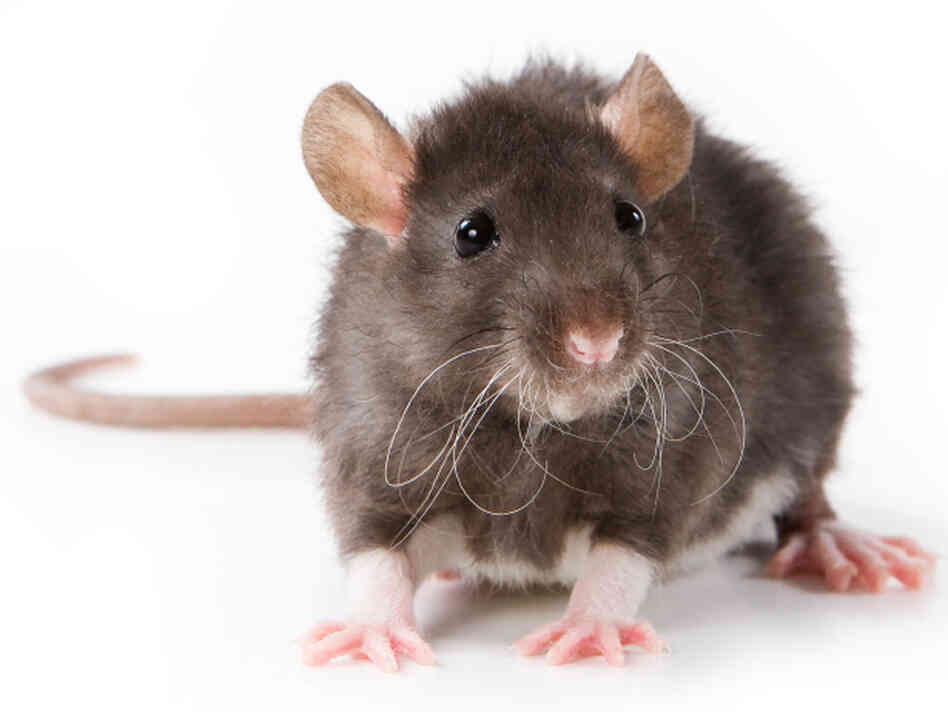
    Lab rats at UBC have shown behaviour similar to that of compulsive gamblers, but researchers reduced it by blocking their dopamine D4 receptors.


    At UBC, the lab rats do more than get shots — they play slots.

    A team of University of B.C. brain researchers have been teaching the rodents to become high rollers, as they study solutions to problem gambling in rats.

    The scientists set up little rat casinos to examine ways to reduce gambling behaviours in the animals, in hopes of providing answers for similar compulsive behaviours in humans.

    Their research has been successful in reducing addictive gambling behaviours in rats using drugs that block dopamine D4 receptors. The scientists have reported their findings in a recent edition of Biological Psychiatry journal.

    “Pathological gambling is increasingly seen as a behavioural addiction similar to drug or alcohol addiction, but we know comparatively little about how to treat problem gambling,” Paul Cocker, lead author of the study and a PhD student in UBC’s pyschology department, said in a statement.

    “Our study is the first to show that by blocking these receptors we might be able to reduce the rewarding aspects of near-misses that appear to be important in gambling.”

    The researchers had the animals work at a slot-machine style apparatus with flashing lights and levers where the rats gambled for sugar.

    http://www.theprovince.com/health/scientists+build+slot+machine+rats+learn+curb+their+compulsive+gambling/9096872/story.html


    Friday, October 12, 2012

    Suspect sought for threats made at Penticton casino


    Suspect sought for threats made at Penticton casino

    Casino.jpg

    Tuesday, October 9, 2012

    "Responsible Gambling Programs" ? The Gambling Industry joke!


    North delta gambler sues lottery corporation, two casinos


    Lawsuit plaintiff Joy Ross was also an organizer of a recent failed attempt to set a record for world's largest human peace sign in Cloverdale.
     

    Lawsuit plaintiff Joy Ross was also an organizer of a recent failed attempt to set a record for world's largest human peace sign in Cloverdale.

    Photograph by: AMY REID , Surrey NOW

    A North Delta woman is suing the B.C. Lottery Corp. (BCLC) and two local casinos after she claims an exclusion program failed to stop her from gambling away hundreds of thousands of dollars.

    The suit was filed in the Supreme Court of Canada by Joy Ross, who claims that due to the negligence of the BCLC and casino operators, she was able to enter casinos and gamble away $331,000, despite putting herself on the casinos' exclusion lists.

    Other than the BCLC, the others named in the suit are Orangeville Raceway Ltd., owners of Cloverdale's Fraser Downs Casino and Racetrack; Gateway Casinos and Entertainment Inc., owners of Langley's Cascades Casino.

    According to Ross' lawyer, Jim Hanson, the case is the first of its type in Canada to go before judgment.

    "From our perspective, the case involves the rights and responsibilities of the government and casino industries in relation to addictive gamblers who have excluded themselves of the casinos of British Columbia," said Hanson.

    "The casinos and government owed addicted gamblers a duty of care once they have placed themselves on the exclusion lists and that duty of care was breached."

    The exclusion program is a BCLC initiative where casino patrons can voluntarily blacklist themselves from B.C.'s casinos. In her suit, Ross claims she got around the policy by providing fake names.

    "We want to get it either scrapped or enforced," said Ross. "The problem becomes that people like myself rely on programs like that and by the time you get into it, your addiction is really ingrained."

    As a deterrent, anyone found in a casino after placing themselves on the exclusion list can be fined for up to $5,000 and is ineligible for major winnings and it's there that Hanson and Ross are also alleging wrongdoing.

    "From our point of view, a very important legal issue that must be decided is who should keep the profits of any gambling that takes place by addicts after they exclude themselves," said Hanson. "Is it right for the government and casino industry to keep the profits of gambling when they know the profits have come from addicted gamblers after their exclusions?"

    "It's a stark example of the house always winning."
    A spokesperson for the BCLC said they would not be discussing the case during the timeframe of court proceedings, out of respect for the courts.

    "What we can say is that, as the entity responsible for operating commercial gambling on behalf of the province, BCLC takes its obligations very seriously," said the spokesperson. "We offer the voluntary self-exclusion program as a voluntary resource for people who wish to exclude themselves from B.C. gaming venues and PlayNow.com.

    "Our position in the action is, among other things, that BCLC has complied with the Responsible Gambling Standards set out by the province's Gaming Policy and Enforcement Branch in regard to voluntary exclusion."


    Read more:http://www.thenownewspaper.com/news/North+delta+gambler+sues+lottery+corporation+casinos/7361706/story.html#ixzz28qZrn6g6