Meetings & Information


*****************************
****************************************************
MUST READ:
GET THE FACTS!


Showing posts with label tax policy. Show all posts

Monday, December 19, 2016

Some Pa. casinos pledge to pay host fee, but not Sands Bethlehem
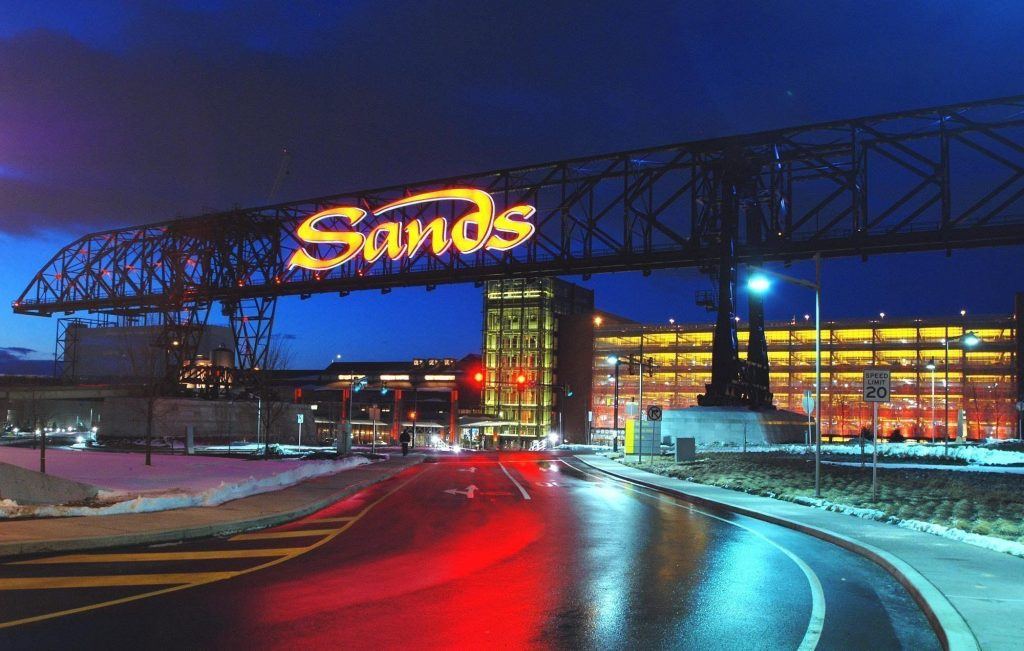


Some Pa. casinos pledge to pay host fee, but not Sands Bethlehem

Four casinos have committed to giving their communities the host fees that have been deemed unconstitutional. Sands is not among them.
 (FRANK WARNER/THE MORNING CALL)

By Matt Assad
Morning Call 

Even though the state Supreme Court has struck down the $10 million casino host fee as unconstitutional, casinos across the state have begun to cut deals to make sure their host communities still get the money they've been using to fund police, fire and even homeless shelters.
Sands Casino in Bethlehem will not be among them — at least not anytime soon.
Parx Casino in Bensalem last week became the fourth gambling hall to agree to give its host communities their casino money next year, even if state legislators can't follow through on their promise to restore the fee before the money is cut off in January.
Hollywood in Dauphin County, Harrah's in Chester and Rivers in Pittsburgh had already struck deals, while others are expected to follow in the coming weeks. But Sands officials who met with Bethlehem Mayor Robert Donchez last week told him they're going to take their cue from state legislators, who tried and failed to tackle the host fee issue before they went on break in November.
That wait-and-see approach leaves the city rolling the dice on when, or if, it will get money equivalent to the pay for 100 police officers.
"We're not going to speculate on any future outcome by the Legislature," said Ron Reese, spokesman for Las Vegas Sands Corp., which owns the Bethlehem gambling hall. "As it unfolds, we'll follow and act accordingly."
Donchez said he's not worried — yet.
"We met with the Sands and we're all hopeful legislators will find a fix," Donchez said. "If nothing happens by April, we'll talk [with Sands] again and take it from there."
All this talking, waiting and hoping is happening in the wake of a September state Supreme Court ruling that struck down the $10 million host fee and the 2 percent tax on slot machines revenues funneled to counties. Justices agreed that the tax put a much greater burden on smaller casinos such as Mount Airy Casino Resort than big-revenue casinos such as Sands Casino Resort Bethlehem.
Mount Airy, in Monroe County, challenged the $10 million fee, arguing successfully that it violates the tax uniformity clause in the state constitution.
Justices stayed their opinion for 120 days, until Jan. 26, to give legislators a chance to fix the law before the flow of money stops. But frantic attempts by House and Senate leaders to do that before the session ended in November failed. That's left communities that balance budgets with the the collective $140 million in host fees statewide relying on legislators to come together when they return to Harrisburg next month.
However, some casinos have decided to remove all doubt. Hollywood Casino, in Grantville near Harrisburg, was the first, striking a deal in November to pay the host fee through June, even if legislators fail to restore it.
"If they don't get a fix by June, we'll extend through December and keep extending it until the matter is settled," said Eric Schippers, a senior vice president with Hollywood Casino owner Penn National Gaming. "They're counting on that revenue for critical needs and we don't want them worrying about whether it's going to be there. It's going to be there. That's our commitment."
Rivers followed a few weeks later.
"To reinforce Rivers Casino's strong commitment to our hometown, we have worked collaboratively with city officials to ensure that $10 million in annual local share payments from Rivers Casino to Pittsburgh will continue uninterrupted through 2017," said Rivers General Manager Craig Clark.
As for the remaining six casinos — smaller resort casinos in Valley Forge and Lady Luck Casino in Fayette County were not affected by the ruling — the payment schedule gives host communities a little breathing room. Casinos make their host fee payments quarterly, and they'll make their Jan. 15 payment before the money stops.
Legislators will be back in session by mid-January. That gives them time to fix the law before casinos would miss their next scheduled payment April 15. The problem is that law changes often don't get passed until legislators are deep inside their annual June horse-trading session to pass the state budget.
Sen. Pat Browne, R-Lehigh, said he's hoping to beat the April deadline.
"With so many moving parts, there are no guarantees," Browne said. "But we'll be working as quickly as possible toward a fix. We know how important this money is."
Twitter @matthewassad21
610-820-6691
ALL IN
Casinos that have agreed to pay host fees through 2017
•Hollywood Casino, Grantville
•Rivers Casino, Pittsburgh
•Harrah's Casino, Delaware County
•Parx Casino, Bucks County

http://www.mcall.com/business/mc-pa-casinos-host-deal-20161218-story.html

Sunday, May 24, 2015

Casinos support tax avoidance


This proves once more how clueless, naive and negligent our lawmakers are when it comes to how they let casinos operate. Here’s just one example! Only slot players who win over $1200 have to sign an IRS tax form that reports their winnings. Table game players don’t have to sign anything.

 Therefore millions of dollars in table game winnings is never reported. The Fed’s and casino states governments don’t get a dime from those winnings. Now if you’re wondering why this is, it’s because casino operators have conned our lawmakers into believing there is no way for them to know how much patrons win at table games. Now isn't that strange considering that over 80% of table game players are enrolled in casino reward card programs. These programs track the amount of time and money gambled in the casino. Even without these programs do you believe with the technology out there today casinos can’t make table players who win over $1200 sign an IRS tax form. With that said, don’t you think it’s unfair that slot player have to report, but table game player don’t?
Philadelphia Inquirer - May 23, - 2015 - Gambling tax proposal would affect casinos and governments
When Mercedes Stephens recently hit a jackpot at Sugar/House Casino, her slot machine flashed the faces of 12 cartoon buffaloes - and then it locked up.
Stephens, 47, had won more than $1,200, which meant she had to stop playing and sign an IRS tax form that reports her winnings.
The process took about five minutes, she said. But the gaming industry warns that the interruption could soon eat away at casino profits and - ironically - billions in gambling tax revenue that flow into Pennsylvania and New Jersey.
That's because the Internal Revenue Service wants to lower the reporting threshold on slot winnings from $1,200 to $600. If that happens, casino industry supporters say, gamblers will spend more time filling out W2 forms and less time playing.


image: http://media.philly.com/images/SUGAR166525874.jpg
A casino delaer at work. (TOM GRALISH / Staff Photographer / File )


Last updated: Saturday, May 23, 2015


When Mercedes Stephens recently hit a jackpot at SugarHouse Casino, her slot machine flashed the faces of 12 cartoon buffaloes - and then it locked up.

Stephens, 47, had won more than $1,200, which meant she had to stop playing and sign an IRS tax form that reports her winnings.

The process took about five minutes, she said. But the gaming industry warns that the interruption could soon eat away at casino profits and - ironically - billions in gambling tax revenue that flow into Pennsylvania and New Jersey.

That's because the Internal Revenue Service wants to lower the reporting threshold on slot winnings from $1,200 to $600. If that happens, casino industry supporters say, gamblers will spend more time filling out W2 forms and less time playing.

"Not only is the casino not earning revenue, but the state is losing money, and so are local governments," said Chris Moyer, a spokesman for the American Gaming Association. "It would be detrimental to local and state governments and the revenues they receive from the gaming industry."
 
Analysts agree the proposed rule would affect casino profits in states with casinos, including New Jersey and Pennsylvania, which leads the country in gambling tax revenue. But experts and casino owners have predicted varying degrees of impact.
 
For instance, a spokesman at Penn National, owner of the Hollywood Casino in Dauphin County, told The Inquirer it would suffer a five percent - or $6.5 million loss - in local and state tax revenue.
 
But Alex Bumazhny of Fitch Ratings said casinos would take only a fraction of the hit that smoking bans have taken on profits, which can be as much as 10 percent.
 
Analyst Cory Morowitz of Morowitz Gaming Advisors L.L.C. said the proposal "will have real costs to the gaming industry."
 
"Slot revenues are already declining across most markets and properties," Morowitz said. "This will only make matters worse."
 
Pennsylvania casinos took in $2.3 billion in slot revenue in fiscal year 2013-14, according to the Pennsylvania Gaming Control Board. Slightly more than half of it - 55 percent - was taxed.

The biggest chunk, 34 percent, or nearly $800 million, went to the state and was mostly dedicated to property-tax relief. Four percent, or about $92 million, went to towns and counties that have casinos. For instance, SugarHouse paid about $7 million to Philadelphia, which spends that money on wage-tax reduction.
 
At SugarHouse, about 1,700 people each month fill out W2 forms after winning $1,200 or more. Under the proposed rule, that number would grow to 10,000 a month, said Wendy Hamilton, SugarHouse general manager.
 
She said it often takes eight to 10 minutes for someone to complete a tax form before getting back to playing.
 
"We think it's a horrible idea," she said. "We'd need to hire a couple more people and buy more equipment."
 
The current reporting threshold for slots has been in effect since 1977, when $1,200 was more like $4,700, accounting for inflation. The IRS has proposed the $600 threshold to bring slot winnings in line with the reporting requirements of business and trade revenue and because technological advances have made tracking winnings easier.
 
But Frank Fantini, publisher of Fantini's Gaming Report, an industry newsletter, said slots players lose most of their winnings back to the casinos anyway.
 
"It's a lot of work for very little purpose," he said of the proposed threshold. "And if the players don't feel entertained anymore because they're filling out tax forms, are they going to do something else on a Friday night?"

Gaming companies have sent out a petition to casinos and their patrons across the country, and an American Gaming Association official will speak at an IRS hearing on the matter June 17. The federal agency is also collecting public comments on the proposed change until June 2.
 
Stephens, who won that jackpot at SugarHouse, said the proposed IRS rule would cause some players to bet less money to avoid the lower threshold.
 
"Everything else is already taxed enough," she said. "Give people a break."


610-313-8118
@Ben_Finley
This is a corrected version of an earlier article.

Read more at http://www.philly.com/philly/news/20150523_Gambling_tax_proposal_would_affect_casinos_and_governments.html#tJbzkXCD8Q5R1URU.99

Wednesday, July 10, 2013

Korean Gambler Wins Appeal in U.S. Slot-Machine Tax Case


Korean Gambler Wins Appeal in U.S. Slot-Machine Tax Case


Friday, November 23, 2012

$$$$ Flooding Across State Lines

As our favorite nosy neighbor pointed out here:
The Grinch who taxed Christmas... And gave us casinos...
the focus in Massachusetts is sorely misplaced. [Maybe the focus should be on the Hack-O-Rama that got us here.]

The Gambling Industry Playbook mandates that one of the argument employed to promote Predatory Gambling must be the $$$ FLOODING ACROSS STATE LINES.


What a pity Clyde only counts license plates when the Casino Vultures pay him to do so.

Mass. residents take advantage of early Black Friday deals in New Hampshire

11/23/2012


Kayana Szymczak for the Boston Globe


Shoppers inside the Pheasant Lane Mall Sears store in Nashua, N.H. waited in line to buy products in a pre-black Friday sale. Approximately 400 people waited outside.
 

NASHUA – Allan Galdamez decided that, this year, the turkey could wait.

On Thursday evening, the Waltham resident was the first person in line at Sears at the Pheasant Lane Mall after arriving at the store at 8 a.m. His plan: grab a 50-inch television for $299 and head home for a belated Thanksgiving dinner.

“We’re just going to get in and get it and get out,” he said.

The doors opened at 7:50 p.m. Ten minutes later Galdamez emerged successful.

Galdamez was among close to 1,000 people lined up outside Sears and Target in Nashua on Thursday, hoping to score the kinds of deals more typically offered up in the early hours of Friday morning.

Store openings on Black Friday, the traditional kick-off of the holiday shopping season, have crept earlier and earlier for the past several years. This year, a number of major retailers pushed up their start times even further, opening their doors to shoppers who were still digesting their pumpkin pie.
 
Shoppers, for their part, are eager to take advantage of these new hours. Nationally, 17 percent of consumers – some 41 million people – planned to shop on Thursday, according to a survey by The International Council of Shopping Centers, a trade group, and investment bank Goldman Sachs.

About one-third of consumers intend to shop on Black Friday, the survey found.

Massachusetts blue laws, however, prohibit most stores from opening on Thanksgiving, forcing eager shoppers to either wait until after midnight or drive to a neighboring state to score the best deals. And many did; at least half of the cars parked at Pheasant Lane Mall on Thursday evening sported Massachusetts license plates.
 
Shoppers lining up in Nashua Thursday had mixed opinions on Thanksgiving store hours.

For Chelmsford resident Carol Mehigan, who was waiting for the doors to open at Sears, hitting the mall is no different than any other form of Thanksgiving night entertainment.

“The guys are at home watching football — we can shop,” said Mehigan, who was hoping to buy a discounted television for her oldest grandson.

Galdamez wished that a store closer to home – somewhere in Massachusetts – had been open and offering the same deals.

Others waiting in line, however, expressed support for Massachusetts’ ban on Thanksgiving hours.
Rebecca Delarossa, of Lowell, regularly attends Black Friday sales but was less enthused about waiting in line at Target on Thursday in order to get the best deals. Her mother and one of her sisters, also regular Friday shoppers, refused to go shopping on Thanksgiving, she said.

“It’s not the same,” said Patti Reekie of Tyngsboro, who barely finished her Thanksgiving dinner before heading out to stand in line at Target. “You’re supposed to be in front of the TV eating leftovers right now.”

http://www.boston.com/businessupdates/2012/11/22/mass-residents-take-advantage-early-black-friday-deals-new-hampshire/StY7pd3BSVp7F0wI9x043I/story.html

Monday, October 29, 2012

Toronto: Ignoring Costs!


From:
Check out the report on Health and Social Impacts...abysmal. Worse that it is accepted as satisfactory.
 
http://app.toronto.ca/tmmis/viewAgendaItemHistory.do?item=2012.EX24.1
Health and Social Impacts
The Medical Officer of Health (MOH) has prepared a technical report on the public health impacts of gambling and of expanded access to gaming venues. The key findings are summarized herein. The MOH's report concludes that increasing access to gambling through any means (including a casino) is associated with an increase in the prevalence of problem gambling which presently affects 0.2% of the population. Consequently, a casino located anywhere in the GTA will likely increase health risks for Toronto residents and nearby communities.
The OLG contributes approximately $40 million annually – 2 percent of its annual slot revenues – to the provincial government's programs to fund the treatment, research, prevention and public awareness of problem gambling. The corporation additionally spent $12.9 million in 2011/12 on internal responsible gambling initiatives including staff training and self-exclusion programs. OLG works with other provincial agencies including CAMH to develop staff training, and the Ontario Problem Gambling Research Centre to conduct research.
Financial Impact
The City Manager will engage an external firm to develop and conduct public and stakeholder consultation using a variety of methods. The consultation process will be funded from the 2012 approved budget and no new funds are required for this purpose.
As stated in this report, the consultant's analysis has outlined the significant economic and financial benefits to the City of operating a casino in Toronto. Over and above construction jobs (ranging from 3,600 to 8,500), an integrated entertainment complex could create an estimated 4,400 to 7,300 net new jobs. The project could generate net GDP in the range of $640 million and additional estimated annual property taxes of up to $27 million. Revenue from the sale or lease of City owned land could contribute additional value to the City of up to $250 million for capital purposes.
Most importantly, the hosting fee could provide substantial annual revenue to the City. Estimates range from $32 million to $168 million annually depending on the type of casino complex and negotiated fee formula with OLG.

Tuesday, September 11, 2012

Atlantic City Taxpayers to Subsidize Casinos


Taxpayers will pay as Atlantic City borrows to cover casino tax appeals

Atlantic City skyline

Atlantic City skyline


Posted: Sunday, September 9, 2012 
          
 
Atlantic City’s government, as it approves a $103 million bond to cover tax-appeal payments to the casinos, is already considering another $40 million bond for next year.
 
That would add to the $35 million already borrowed at the end of last year.
 
How much will the average city homeowner’s tax bill increase to cover these bonds? An extra $106 a year — each year — for the next 20 years.
 
Financial ratings firm Standard & Poor’s already has warned that more such bonds could weaken Atlantic City finances and possibly trigger another downgrade of its debt rating.
 
Michael Stinson, Atlantic City revenue and finance director, said taking on the bonding debt is preferable to the alternative of paying the casinos over five years — the longest term they would accept. The five-year plan would require combined tax credits of $20 million a year and substantial cuts to the city budget.
 
“We’re working to cut hundreds of thousands, a million dollars — not $20 million to $25 million,” he said Friday.
 
Interest costs on the money borrowed to pay casinos will be substantial.
 
Casino repayment bonding within the past year alone will cost $46 million in interest over 20 years, given the 3.6 percent interest on its $35 million bond. This assumes the city gets the same rate on the $103 million recently proposed, according to the city’s application to the state Local Finance Board.
Negative outlook
 
But the city may get a less favorable bond rate since Standard & Poor’s in April lowered the city’s bond rating to A-, six steps below AAA, and warned it may downgrade the city again as a result of additional casino tax rebate costs.
 
S&P a1so gave Atlantic City a negative outlook on its debt because of “continued uncertainty regarding the impact of future casino tax appeal settlements on the city’s finances and the city’s ability to produce structurally balanced budgets without reliance on tax appeal funding bonds.”
 
In conjunction with the April downgrade, Andrew Teras, credit analyst with S&P, wrote that “further budget stress from the financing of additional appeal settlements that results in a weakened financial position or a significantly increased debt burden” could result in an additional lowering of Atlantic City’s debt rating.
 
That could make it harder and more expensive for the city to borrow money.
 
S&P said other factors in the downgrade included:
n “concentrated and decreasing property tax base,
 
n “concentrated economy that relies on the city’s struggling gaming market
 
n and “high unemployment rate and low income levels.”
 
A bond market expert said he thinks Atlantic City’s debt rating probably will hold steady for now and that the proposed bonds will find plenty of buyers even if the city is downgraded again.
 
John Mousseau, portfolio manager at Vineland-based Cumberland Advisors, where municipal bonds are a key part of the $2 billion in investments it manages, said the relative scarcity of New Jersey debt issues this year and the yield on the Atlantic City bonds will assure there is demand for them.
 
“Even if it’s downgraded, the need for yield out there is heavy right now,” said Mousseau, 55, of Maplewood. “The yield on the bonds is positive, not zero, and they’re more secure than most things.”
 
But investors will need to worry about the city’s long-term prospects and whether the market value of the bonds will fall.
 
“Is there headline risk with Atlantic City? I’d really want to watch what gambling revenues do over the next few years. They’ve gone in a different direction from other states, and there’s no shortage of competition,” Mousseau said. “Do you reach a tipping point on how people view the fortunes of Atlantic City? ... Is gambling as it relates to Atlantic City and its fortunes in a spiral that’s still going down?”
 
Investors also will need to watch how well city government handles the cost of servicing additional debt to pay casino tax appeals and how many more appeals are paid off with debt, he said. “Who knows if they’ll be having appeals in five years of assessments they’ve settled on now?”
Mousseau said he’s a bit optimistic about Atlantic City’s future, although perhaps not enough to be a buyer.
 
“I actually think from the things I’ve read that things are bottoming out, and I think it’s a decent buy,” he said. “But I don’t know that Cumberland will buy it.”
 
Shrinking tax base
 
Atlantic City’s current budget of $234 million, approved in May, required a tax increase of 9 percent.
 
Asked by city officials how much the pending casino tax appeals by Revel, Borgata and Tropicana may cost, the city finance office has figured the payoffs from those may require another $40 million in bonds next year.
 
“We’ve been asked for the potential, and yes, that could be the number, but ... it’s too early to say whether we’ll bond again next year,” Stinson said. “If we decide it makes sense, we’d revisit that. We had settlements this year with Caesars and Harrah’s that didn’t cause us to borrow, so the hope is that in the future we can structure agreements that way. Time will tell.”
 
The city also has used just $146 million of its $658.4 million borrowing capacity, according to the city’s debt statement in the $35 million bond prospectus.
 
That threshold is determined by state law, which limits municipal borrowing to 3.5 percent of its ratable base value.
 
This much is sure: Atlantic City will be paying its budget and casino tax rebates out of taxes from a ratable base with a much lower value.
 
Atlantic City’s ratable base was about $20.5 billion during 2008 through 2010 — the highest in New Jersey then, according to data from the New Jersey Department of Community Affairs.


Resort property owners filed more than 3,000 tax appeals during that time. Most municipalities experienced a similar onslaught following the severe recession and collapse of the real estate market.
 
In Atlantic City, property values sank just after a citywide revaluation of tax assessments in 2007.
 
The first in three decades, the revaluation was conducted as annual casino industry revenue peaked. It also more than doubled the city’s ratable base.
 
Subsequent tax appeals decreased the Atlantic City ratable base by $1 billion. Despite that, the resort continued to have New Jersey’s highest value in taxable property in 2011 because other towns were facing similar circumstances.
 
Other municipalities also borrowed to offset shrinking tax revenues. The state Local Finance Board authorized more than 60 tax appeal relief bonds for municipalities since 2011, Department of Community Affairs documents show.
 
But Atlantic City’s challenge went beyond the general fall in property values.
Gambling competition proliferated in nearby states, ending the city’s East Coast casino monopoly and greatly reducing the value of its casino properties.
 
The local casino industry’s annual revenue declined from $5.2 billion in 2006 to $3.3 billion in 2011.
 
Since then, the city ratable base has dropped another $3.5 billion — a trend driven nearly exclusively by casinos, according to casino tax appeal settlements.
 
“Atlantic City is unique in that one industry has accounted for 65 to 75 percent of the land (value),” Stinson said.
 
That could cause major tax increases for noncasino taxpayers. Within the past year, tax appeals have reduced Atlantic City’s ratable base by more than $3.5 billion. Based on the current tax rate of $1.13 per $100 of assessed value, that means those properties would have generated $39.6 million less in taxes in 2012 if their appeals had concluded earlier. In that scenario, the $39.6 million would have been redistributed over the entire tax base — meaning higher taxes for everyone else.
Savings sought
 
Bearing this in mind, city officials have been looking for ways to save or make money. But so far, the amounts have been small relative to the ratable base devaluation.
 
The city recently switched prescription plans for government workers, which will save more than $200,000 annually, and is looking into doing the same for dental coverage. Alternative energy initiatives also will save the city nearly $500,000 annually: about $420,000 through municipal vehicle natural gas conversion expected to start before the end of the year and $50,000 or so from a solar installation recently completed on the roof of the city public works building.
 
Cell towers being installed this fall will generate steady income as well; just one typically brings in $240,000 annually, which the city will split with its contractor.
 
“No other city in New Jersey has the concentration of one industry in such a dominant majority of the taxable base,” Stinson said. “With their downturn, it’s had a very adverse effect on the valuation of the city.”
 
Business editor Kevin Post contributed to this report.
 
 
http://www.pressofatlanticcity.com/communities/atlantic-city_pleasantville_brigantine/taxpayers-will-pay-as-atlantic-city-borrows-to-cover-casino/article_17b787d8-fa11-11e1-9e2a-001a4bcf887a.html

Monday, September 10, 2012

Turning America Into a Giant Casino


Turning America Into a Giant Casino

Thursday, September 6, 2012

Gambling is Social Justice Issue


More Than a Vice, Gambling is Social Justice Issue


I lived through it in my ancestral home on the Mississippi Gulf Coast, as the casino industry promised an economic turnaround if voters would just give it the right to exist.

Almost every state is involved in some discussion of state-sponsored gambling.
I think there are bigger issues involved than how they are typically framed.

First of all, pro-gambling elected officials aren't evil villains (necessarily). Yes, some of them are personally corrupt and poised to profit from the industry they are enabling.
But many of these elected officials have good aims. They want to educate children, build infrastructure and so on without raising a tax burden.

I think gambling is an illusory way to do this, but, still, I acknowledge good intentions at the root of some of the cheerleaders for the industry.

But, unfortunately, I think both proponents and opponents of expanded gambling see this as merely a "values" issue.

Of course, conservative Christians don't support gambling because they see gambling as immoral, so they want it illegal.

These Christians also see drunkenness as immoral and so, if they could, the reasoning goes, they'd be right back at Prohibition.

But gambling isn't merely a "values" issue. Neither is it primarily a "moral" issue, at least not in terms of what we typically classify as "moral values" issues. Gambling isn't primarily a question of personal vice. If it were, we could simply ask our people to avoid the lottery tickets and horse-tracks, but leave it legal.

Gambling is a social justice issue that defines how it is that we love our neighbors and uphold the common good.

Gambling is a form of economic predation. Gambling grinds the faces of the poor into the ground.

It benefits multinational corporations while oppressing the lower classes with illusory promises of wealth, and with (typically) low-wage, transitory jobs that simultaneously destroy every other economic engine of a local community.

In the end, the casinos will leave. And they'll leave behind a burned-over district with no thriving agricultural, manufacturing or tourism economies.

In the meantime, they leave behind the wreckage of "check-to-cash" loan sharks, pawn shops, prostitution and 1-2-3 divorce courts.

Conservative Christians can't talk about gambling if we don't see the bigger picture.
First of all, most of the "market" for gambling comes from those in despair, seeking meaning and a future.

The most important thing a church can do to undercut the local casino is to preach the gospel. By that I don't just mean how to get saved (although that's certainly at the root of it).

I mean the awe-filled wonder in the face of the really good news that Jesus is crucified and resurrected, the old dragon is overthrown.

Second, we must understand that gambling is an issue of economic justice.

We can't really address the gambling issue if we ignore the larger issue of poverty.

Evangelicals who don't care (as does Jesus, the prophets and the apostles) about the poor can't speak adequately to the gambling issues.

By this I don't simply mean caring about individual poor people but about the way social and political and corporate structures contribute to the misery of the impoverished (James 5:1-6).

We will never get to the nub of the gambling issue if we don't get at a larger vision of poverty and the limits of commercial power.

This means asking the state not to use acquisitiveness and covetousness to separate people from their means of living.

It also means modeling a different kind of ethic in our churches. The power of gambling lies in a vision of the "good life," and that's a vision that is co-opted by the gambling industry, not created by it.

It is fueled by our fallen vision of limitless growth, of limitless acquisition.

Let's oppose state-empowered gambling, but let's do so while loving the poor the industry seeks to devour.

Let's work toward rebuilding families, honoring honest labor and encouraging the flourishing of communities in which the impoverished are not invisible.

Too many of our "opponents" see us as morally prissy Victorians who don't want people doing "naughty" things in our presence.

Let's demolish that pretense by being the gritty colony of the kingdom that sees the economically downtrodden among us as, when in Christ, "heirs of the kingdom" (James 2:5).

And let's hold out a vision, for all of us, of an inheritance that comes not through predation, and not through luck, but through sonship, through grace.

http://www.ethicsdaily.com/more-than-a-vice-gambling-is-social-justice-issue-cms-19290

Wednesday, August 1, 2012

CASINO IS TESTAMENT TO GOVERNMENT FAILURE


CASINO IS TESTAMENT TO GOVERNMENT FAILURE
By Mike Hudson
The Seneca Niagara Casino stands prominently today as a living monument to government failure.

There was the failure of Niagara Falls city officials to get a significant cut of the casino revenue in the first place and their continuing failure to ensure that money was spent on worthwhile projects or that it was collected.

Then there was the failure of state officials, blinded by the prospect of hundreds of millions of dollars flowing unencumbered annually into Albany ’s coffers, to do anything at all to protect the poor, taxpaying saps of Niagara Falls, known in official documents as the “host community.”

And there was the failure of the Seneca Nation of Indians and their business arm, the Seneca Gaming Corp., to make even the slightest effort at being good neighbors. Make no mistake, in the eyes of the Seneca’s, the casino isn’t a tourist attraction located in downtown Niagara Falls, it is a major profit center located in the middle of sovereign land.

Their corporate attitude toward the host city makes even the petrochemical industry’s robber barons who gave this city Love Canal seem benign in comparison. The Seneca’s don’t pay taxes, they don’t adhere to building codes or zoning ordinances, they can’t be sued in court and they act as though the world owes them a living.

If the people of Niagara Falls do not rise to prevent it, in four years, the Seneca and the state of New York may sign another compact.

How are our local and regional leaders preparing for the coming challenge? In much the same way they “prepared” a decade ago during the negotiations that led to the casino opening, which is to say not at all.

State Sen. George Maziarz, ex-Assemblywoman Francine DelMonte, Mayor Paul Dyster, Councilman Charles Walker – were on board in 2000 and 2001, when roughly 55,000 benighted residents of what may be the highest taxed municipality in the United States consumed the mantra of “Trust Albany” like it was Kool-Aid.

We’ve had three governors and two mayors since George Pataki and Irene Elia signed off on the original deal. The “Trust Albany” theme has undergone a rebirth with two of its adherents being Councilwoman Kristin Grandinetti and, again, Mayor Dyster.

But there are dark rumors swirling around the governor’s mansion that hint that Gov. Andrew Cuomo may be getting ready to sell the Niagara Frontier further down river.

The state now allows Finger Lakes Gaming and Batavia Downs to call themselves casinos, even though they’ve only got electronic slot machines. Both want a casino license to have table games. There’s one hitch. Gov. Cuomo says he wants to open it up to competition and the nine race tracks in New York would not necessarily get first crack.

Cuomo is said to favor a plan that would see the new, non-native casinos opened downstate, with Western New York reserved for Indian gaming and blacked out to further development. Cuomo is said to believe that such a plan would address what the New York Daily News and other downstate media have characterized as his “Indian problem.”

This would mean, while the rest of the state could have anyone open a casino, from Donald Trump to Steve Wynn, in Niagara Falls only Seneca Indians would be allowed to run them .

If the past is prologue, the people of Niagara Falls have no reason whatsoever to believe their elected leaders will get them a better deal this time around. We’ll be lucky to keep what we have and that is pretty close to nothing.


http://www.niagarafallsreporter.com/Stories/2012/July10/HudsonCasinoTestament.html

Monday, June 25, 2012

Romney: The Get-Out-Of-Jail-Free Candidate


What Sheldon Adelson Wants

By The New York Time | Editorial
24 June 12

o American is dedicating as much of his money to defeat President Obama as Sheldon Adelson, the casino magnate who also happens to have made more money in the last three years than any other American. He is the perfect illustration of the squalid state of political money, spending sums greater than any political donation in history to advance his personal, ideological and financial agenda, which is wildly at odds with the nation's needs.
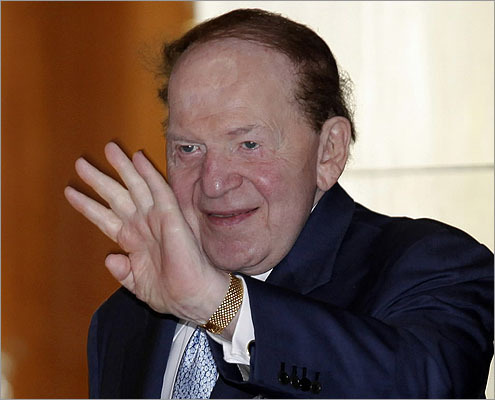
Mr. Adelson spent $20 million to prop up Newt Gingrich's failed candidacy for the Republican nomination. Now, he has given $10 million to a Mitt Romney super PAC, and has pledged at least $10 million to Crossroads GPS, the advocacy group founded by Karl Rove that is running attack ads against Mr. Obama and other Democrats. Another $10 million will probably go to a similar group founded by the Koch brothers, and $10 million more to Republican Congressional super PACs.

That's $60 million we know of (other huge donations may be secret), and it may be only a down payment. Mr. Adelson has made it clear he will fully exploit the anything-goes world created by the federal courts to donate a "limitless" portion of his $25 billion fortune to defeat the president and as many Democrats as he can take down.


One man cannot spend enough to ensure the election of an unpopular candidate, as Mr. Gingrich's collapse showed, but he can buy enough ads to help push a candidate over the top in a close race like this year's. Given that Mr. Romney was not his first choice, why is Mr. Adelson writing these huge checks?

The first answer is clearly his disgust for a two-state solution to the Israeli-Palestinian conflict, supported by President Obama and most Israelis. He considers a Palestinian state "a steppingstone for the destruction of Israel and the Jewish people," and has called the Palestinian prime minister a terrorist. He is even further to the right than the main pro-Israeli lobbying group, the American Israel Public Affairs Committee, which he broke with in 2007 when it supported economic aid to the Palestinians.

Mr. Romney is only slightly better, saying the Israelis want a two-state solution but the Palestinians do not, accusing them of wanting to eliminate Israel. The eight-figure checks are not paying for a more enlightened answer.

Mr. Adelson's other overriding interest is his own wallet. He rails against the president's "socialist-style economy" and redistribution of wealth, but what he really fears is Mr. Obama's proposal to raise taxes on companies like his that make a huge amount of money overseas. Ninety percent of the earnings of his company, the Las Vegas Sands Corporation, come from hotel and casino properties in Singapore and Macau. (The latter is located, by the way, in China, a socialist country the last time we checked.)

Because of the lower tax rate in those countries (currently zero in Macau), the company now has a United States corporate tax rate of 9.8 percent, compared with the statutory rate of 35 percent. President Obama has repeatedly proposed ending the deductions and credits that allow corporations like Las Vegas Sands to shelter billions in income overseas, but has been blocked by Republicans.


Mr. Obama's Justice Department is also investigating whether Mr. Adelson's Macau operations violated the Foreign Corrupt Practices Act, an inquiry that Mr. Adelson undoubtedly hopes will go away in a Romney administration. For such a man, at a time when there are no legal or moral limits to the purchase of influence, spending tens of millions is a pittance to elect Republicans who promise to keep his billions intact.

http://readersupportednews.org/opinion2/277-75/12078-focus-what-sheldon-adelson-wants


Martin Bashir | Aired on June 18, 2012

Sheldon Adelson: GOP’s million dollar man

Bloomberg View columnist William Cohan joins MSNBC’s Martin Bashir to discuss Sheldon Adelson, the man who reportedly has spent or pledged $71 million to Republican candidates and causes, and where his money and interests lie.


http://video.msnbc.msn.com/martin-bashir/47864344#47864344