Meetings & Information


*****************************
****************************************************
MUST READ:
GET THE FACTS!


Showing posts with label gambling addiction. Show all posts

Saturday, December 7, 2019

A life-changing problem to discuss this week


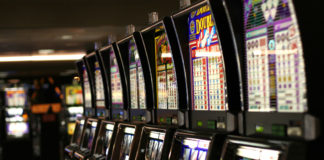
Image result for REEL WAMPS


The problem of commercialized gambling will be a subject of conversation in millions of American homes over the next few days as families and friends gather for Thanksgiving.
Why? Because it's America's biggest most-neglected problem today.
Americans are on course to lose more than $1 trillion of personal wealth to commercialized gambling over the next eight years.
Our mission is to reduce this enormous loss of wealth by citizens by 50% over the same span.
Below are some must-share facts along with some specific reforms that will dramatically improve the lives of millions of Americans:
The Problem: Tens of millions of citizens are broke!!! And millions of citizens are now addicted to commercialized gambling.
Partial Policy Solutions That Have Been Put Forward From Both Political Parties to Help Solve the Problem:
  • Tax Cuts
  • Tax Credits
  • Raising the Minimum Wage
  • Increasing Taxes on the Rich
  • ….None of which represent a consequential fix
Absent from the List is America's Biggest Most-Neglected Problem: The Life-Changing Citizen Losses of Personal Wealth to Commercialized Gambling
The sheer size and scope of these financial losses lacks any comparison:
The Way Forward
  • Building assets, the accumulation and investment of savings, are key for anyone looking to make a better life. A home, a college fund, retirement accounts, a stock portfolio—these assets are the hallmarks of middle and upper class America, and they are all the result of savings.
  • Building assets is the direct opposite of commercialized gambling. No single policy reform would create more financial peace for low-to-middle-income citizens than reversing the current scheme of turning millions of people who are small earners, who could be small savers, into habitual bettors.
Partial List of Reform Proposals Include:
  • To safeguard the health of minors, no kids under should be exposed to gambling ads and marketing on TV, radio, at point-of-sale, or on the internet.
  • No advertising or marketing of commercialized gambling to low income populations.
  • A ban on the sale of lottery products in check-cashing outlets, which serve unbanked, low-income people.
  • No high dollar lottery tickets should be sold in low income areas (ending the practice of selling tickets greater than $5.00)
  • Capping staking levels on all slot machine-style games, regardless whether it is a physical machine or online, to $2.00 or less. There is no justification for staking levels above $2.00.
  • End the predatory practice of allowing commercialized gambling on credit, whether by credit card or “markers,” (interest-free loans issued by casinos.) It’s inconceivable that states encourage citizens to fund their gambling addiction using debt.
  • Require state lotteries to track and report re-wagers and quantify their relationship to sales and subsequent prizes.
  • Ban “loot boxes” and other elements of commercialized gambling that are currently being engineered into video games that kids under 18 are playing.
  • Reduce the overall amount of lottery games being marketed to the public. Presently, some states offer dozens of different gambling games. For example, Texas was promoting 92 scratch games for sale in November 2019.
  • Reduce the amount of locations where extreme forms of gambling like electronic gambling machines are being marketed by the state.
  • Reduce the speed of the commercialized gambling being offered by states. Many of the most harmful forms of commercialized gambling are also the fastest like electronic gambling machines, online gambling, and scratch tickets.
  • Require commercialized gambling interests to be treated the same under civil litigation laws as any other business.
  • Create an Office of the Public Advocate committed to public service in representing state citizens in any matter that is covered by the authority of the state gambling commissions, as well as proceedings before state and federal agencies and courts, so that they are protected from being exploited and cheated by commercialized gambling operators. This is similar to what many states do in representing state utility consumers.
  • Require that state problem gambling councils collect and report annual data on state gambling addiction numbers and on the effectiveness of the problem gambling interventions being funded (changing the measurement from how many calls are taken to how many people are moved from addicted to not addicted).
  • Restrictions on the inducements offered to gamblers to keep them gambling or luring them to start gambling after they have stopped.
Please consider how you can use your time, talent, and treasure to help move these desperately-needed, long-overdue social reforms forward over the next 18 months and let me know. Thank you.
Best,
Les Bernal
National Director
Stop Predatory Gambling
________________________________
Who We Are —
- A 501c3 non-profit based in Washington, DC, we are a national social reform network of citizens and organizations from across the U.S.
- We believe in improving the lives of the American people with compassion and fairness, freeing us from the lower standard of living, exploitation, and fraud that commercialized gambling spreads.
- We are one of the most diverse organizations in the United States, one in which conservatives and progressives work side-by-side to improve the common good.
What We Stand For —
- We believe everyone should have a fair opportunity to get ahead and improve their future.
- We believe every person’s life has worth and that no one is expendable.
- We believe that a good society depends on the values of honesty, concern for others, mutual trust, self-discipline, sacrifice, and a work ethic that connects effort and reward.
- We believe no government body should depend on predatory gambling to fund its activities.
If you share our beliefs, please help sustain our work by making a tax-deductible, financial gift today of $10 or more.
Stop Predatory Gambling Foundation
100 Maryland Avenue NE, Room 310  | Washington, District of Columbia 20002
(202) 567-6996 | les@stoppredatorygambling.org


Friday, August 17, 2018

Yarmouth woman charged with leaving baby outside casino


Gambling Addicts loose all sense of responsibility.

Gambling Addicts leaving children in vehicles has been widely reported - that's why casinos and slot barns patrol their parking lots.

Yarmouth woman charged 


with leaving baby outside casino

Image result for HALSTON BORGLUND


LINCOLN, R.I. — A South Yarmouth woman left her 3-month-old baby alone in a running vehicle outside a Rhode Island casino for about 90 minutes Wednesday while she was inside, according to police.

Lincoln police charged Halston Borglund, 26, with cruelty or neglect of a child.

A warrant also was issued for Borglund out of Barnstable District Court on Thursday for an alleged probation violation in a 2015 case, where she pleaded guilty to a charge of larceny of a drug.

An officer at Twin River Casino was informed by security at around 10 a.m. Wednesday that a child had been left alone in a parked vehicle.

Authorities found the girl inside a running sport utility vehicle with a window down. 

Borglund came out of the casino and allegedly said she left the baby alone for just a few minutes while she ran inside to retrieve keys.

Casino security said she actually had entered at around 8:30 a.m.

The baby was evaluated at a hospital and taken into state care.

It was not clear from online Rhode Island court records if Borglund was released on bail or was still in custody. Lincoln police did not respond to multiple voicemails Thursday seeking more information.

According to the Barnstable docket, a notice of probation violation was filed July 30 and Borglund’s probation officers requested the warrant Thursday.

In the 2015 case, she stole fentanyl, an extremely powerful opiate, from an unconscious patient who was receiving the medication through an intravenous line, according to police reports.

Borglund has a total of six cases in the Barnstable court dating back to 2010, excluding traffic violations, court records show.

Three cases were filed in 2010 and two cases in 2012, and all are closed, leaving the 2015 case.

In January 2010, she was charged with assault and battery. The charge was dismissed the following month at the request of the victim, according to the docket from the case.

In May 2010, Borglund was charged with assault and battery and malicious destruction of property. That case was dismissed in June of that year because the victim failed to cooperate, according to the docket.

In July of that year, she was charged with receiving stolen property. She pleaded guilty in January 2011, according to the docket. Although the terms of the plea are not in the file, it states that the case was “continued without a finding” and a probation order was entered. She was “discharged on all counts” and the case was closed on Oct. 25, 2015, according to the docket.

On Aug. 16, 2012, she was charged with 18 counts, including identity fraud, writing bad checks, theft and vandalization. She pleaded guilty to 10 counts in April 2013, which was followed by a probation violation and the termination of her probation in June 2014, according to the docket.

On Aug. 28, 2012, she was charged with larceny and breaking and entering in the daytime. She pleaded guilty in April 2013 and, after violating her probation, was sentenced to jail on June 10, 2014. The docket does not state what sentence she received.


http://www.capecodtimes.com/news/20180816/yarmouth-woman-charged-with-leaving-baby-outside-casino

Thursday, October 5, 2017

Stop Predatory Gambling: Las Vegas shooter Stephen Paddock was not a “professional gambler”


EXCERPT BELOW CLICK ON LINK TO VIEW ADDITIONAL INFORMATION!


Las Vegas shooter Stephen Paddock was not a “professional gambler”


The facts coming out of Las Vegas are becoming clearer every day that the Las Vegas shooter Stephen Paddock had a serious gambling addiction. But virtually no one has said it publicly. Read the latest New York Times reporting on his gambling behavior. It was the center of his life.
The powerful corporate gambling operators in Las Vegas have a lot to lose if Paddock is revealed as a gambling addict. No credible gambling addiction expert unaffiliated with gambling operators (and their funding) would describe him as a “responsible gambler.” ‘Responsible gambling’ is little more than a marketing slogan made up by commercialized gambling operators and their partners. Its intent is to place the spotlight on the citizen and shield their predatory and fraudulent business practices.
The mass media continues to use terms like “professional gambler” when describing Paddock. While he may have even said that about himself, he was not a professional gambler.
No professional gambler uses slot machines and video poker machines like Paddock didThe machines create the allusion of skill, but you’re playing against the house, which means you’re mathematically guaranteed to lose all of your money the longer you play them. Once you press the button on the machine, there is no skill involved. The computer inside the machine decides whether you lose or win.
The Times story has a concise description of how the machines work:
“There are no opponents. There is no bluffing or worrying about competitors’ hands. Five virtual cards are drawn from a 52-card virtual deck- instantly on the video screen- and players decide which ones to “hold” or keep, and which ones to exchange for new cards. Players calculate the possibilities remaining in the 47 other virtual cards.”
Paddock was playing hundreds of hands per hour (about one hand every six seconds) for many hours straight. Over and over again.
The business model of casinos is based on people like Paddock losing over and over again. While he may have won occasionally, it’s a statistical certainty that he lost the longer and more frequently he played.
While it’s uncommon for the millions of American citizens who’ve become addicted to electronic gambling machines to become mass shooters, it is very common for them to harm themselves and others close to them (often in the form of domestic violence.) 
http://www.stoppredatorygambling.org/las-vegas-shooter-stephen-paddock-was-not-a-professional-gambler/


Thursday, January 5, 2017

The devil in my casino


The devil in my casino
 Columnist

On a recent night, I yielded to temptation and paid a visit to my neighborhood den of sin: the newly opened casino at MGM National Harbor.
From my house in Fort Washington, the road to Hades is four miles. Barring traffic jams, I can be at a slot machine in less than 10 minutes. With my first dollar, I received a cash-out voucher for 50 cents and five free spins. It wasn’t a win, but it didn’t quite feel like a loss, either.
I played on, excited by the unexpected new chances to hit the jackpot.

I had been warned.
Living within 10 miles of a casino more than doubles the rate of problems from excessive gambling, according to researchers at the University of Buffalo.
Baby boomers like me are said to be among the fastest-growing group of problem gamblers.
“Older adults view the casino as a place where they can socialize, escape their loneliness, and escape their grief,” researchers Fayetta Martin, Peter A. Lichtenberg and Thomas N. Templin wrote in a journal for the National Institutes of Health. “Given that their primary choices of games are slot machines, these social needs, however, may not be getting met. . . . It may be worthwhile for church groups to assess the reasons for older adults wanting to go to casinos and helping them to determine how their social needs might be met in alternative ways.”
And then there’s the race factor.
As the National Center for Responsible Gaming has noted, “Gambling and gambling related problems are common among all racial and ethnic groups in the United States, but there is new evidence that African Americans are more likely to experience gambling-related problems than white Americans.”
That’s three strikes. Still, there is something to be said for being mesmerized.
Along with the casino, MGM National Harbor features several luxury retail stores and fancy restaurants the likes of which Prince George’s County, Md., had never seen. At the Sarah Jessica Parker store, for instance, a pair of purple high heels goes for $355. For a county more accustomed to seeing Kmart stores, the high-end goods suggest that there may be something royal about Prince George’s after all.
At the opening of MGM’s Marcus restaurant, chef Marcus Samuelsson cooked up a meal worthy of an establishment in the nation’s most affluent, predominantly black county. The dinner included an “Obama short rib slider” along with “China Afro funk and sweet potato puree, St. Hill Shrimp N Grits with Carolina shrimp, shoe box ham and creamy grits.”
Of course, these offerings also pose potential problems. Gambling is not the only behavior that can lead to addiction. Shopaholism and food addiction can be just as costly.
Nevertheless, the primary attraction at MGM National Harbor is the casino — that 125,000-square-foot cavern of iniquity.
There are more than 3,000 slots and hundreds of card and craps tables.
I took my free spins and came close to winning each time. Barbara Dafoe Whitehead, director of civil society initiatives at the Institute for American Values, has suggested that such titillation is just part of the casino con game.
“One way these computerized pickpockets milk their customers is by generating near misses, whereby the spinning symbols on the machine stop just above or below the winning payline,” she says. “The feeling of having come oh so close to a win prompts further play.”
I had spent a total of $4 during the visit and won five free spins and a 50-cent voucher. But I have since discovered several books and articles on how to beat the slot machine.
As for my maiden voyage to the casino, I confess that the devil made me do it. However, when I learn those winning techniques, Lady Luck could make me do it again.

Sunday, January 1, 2017

Woman Jailed For Stealing $427K From Thompson Auto In Doylestown To Play Bingo


Woman Jailed For Stealing $427K From Thompson Auto In Doylestown To Play Bingo


The former office manager of the Thompson Organization in Doylestown was sent Thursday to the Bucks County Correctional Facility for stealing more than $427,000 from her employer over a 10-year period.
Kelley M. Lutz, 49, of Silverdale, was sentenced by Bucks County Senior Judge Albert J. Cepparulo to serve one to two years, plus a concurrent 10 years of probation.
Cepparulo also ordered Lutz to pay $427,019 the Thompson Organization, owners of several area auto dealerships, during her probation. Lutz was the business’s longtime office manager in Doylestown.
She blamed an addiction to high-end bingo games for the thefts. Investigators found no evidence that she spent the stolen money on anything but bingo, which Lutz attended at volunteer fire companies or other charitable organizations several times each week.
Lutz pleaded guilty on November 7 to a long list of felony theft-related charges. She admitted that from February 2006 to January 2016, she consistently stole money from her employer by a variety of means, and then altered computer records to cover her tracks.
Deputy District Attorney Marc Furber said Lutz stole $166,540 by creating 302 fraudulent checks made out to cash. Another 559 instances were identified in which Lutz stole $260,479 by withholding or skimming money from bank deposits or stealing money from petty cash reserves.
Furber noted that Lutz committed the thefts despite drawing a substantial salary that ranged from $77,000 to $93,000 over the course of her employment as office manager.
“This is not someone who had a good reason” to steal, Furber said of Lutz’s gambling addiction. “It was a bad reason to do a very bad thing.”
Lutz had worked for Thompson since 1989, and had been office manager since 1994. She had multiple accounting, financial and human resources duties that gave her access to Thompson’s computerized systems for financial records and transactions, enabling her to create false entries to cover her crimes.
Not until Lutz was terminated in January 2016 for an unrelated matter did her thefts come to light, when a senior manager reviewed paperwork that was left on her desk.
“We soon realized a despicable crime was committed by someone we had trusted to oversee our family-run business for many years,” wrote John H. Thompson, owner of the Thompson Organization, in a victim impact statement submitted to Cepparulo. “In the year prior to Mrs. Lutz’s termination, it was discovered that she had stolen over $150,000 in one year.”
Thompson said the damage from Lutz’s thefts went beyond monetary loss, saying she had damaged the reputation of his business, and had cast suspicion on subordinates who unwittingly cashed some of the phony checks that Lutz wrote.
“After a front-page article was published in the local newspaper, residents and business people in the Doylestown community began to question our ability to run a business and even questioned whether we were selling the business,” Thompson wrote. “Words can’t describe the anger and betrayal my family and I and so many of our employees feel.”
Lutz acknowledged that in 2007, she had been confronted by a senior manager after $30,000 went missing. She agreed to make restitution, borrowed the funds from her 401(k) retirement plan, and was able to keep her job.
Furber noted that despite that second chance, Lutz continued to steal even during the time she was repaying that money. She also failed to seek help for her gambling addiction until her arrest this year, despite having an aunt who works as an addictions counselor.
Lutz said that, contrary to common perceptions of bingo, it is possible to lose in excess of $1,000 a night in higher-end games. She described her addiction as a mix of giddy anticipation beforehand and crushing depression after a losing night.
“When I knew I was going to play bingo, I got a natural high,” she said, but then got “seriously depressed” after a bad night. She rationalized that she could return the money she stole once she had a few big wins.
“That’s what I intended to do when I hit it big,” she said.
“But you never hit it big,” defense attorney Andrew Schneider said.
“No,” Lutz replied.
Friends and family, including Lutz’s husband, Shawn, said they knew she played bingo a lot, but never realized the amount of money involved. Several described her as a generous, compassionate person.
“She’s ashamed, devastated, remorseful,” Shawn Lutz said. “She wants to make this right.”
Kelley Lutz said that after she was arrested, she began seeing a therapist for her gambling addiction and joined Gamblers Anonymous.
“They help me to see what I was, and what I’ve done, and how to become a whole person without gambling,” she said. “I have to live with the guilt of what I have done to my family, my place of employment, and my friends.”
Under questioning by Furber, Lutz said she and her husband own their residence, a shore house in New Jersey and a boat, but had made no effort to liquidate any of those assets to start paying restitution. Her husband submitted $2,000 today, calling it “all I could afford.”
Schneider called Lutz “a good woman who has done a bad thing. What is this case about? This case is about an illness.”
Lutz “has learned her lesson,” Schneider said, asking Cepparulo to sentence her to probation. “There is nothing more shameful than being arrested for a crime and having a criminal record.”
Cepparulo said Lutz’s crimes cannot be dismissed as a one-time mistake by a first-time offender.
“There is no mistake when it comes to theft,” the judge said. “Theft is an intentional act” that Lutz committed “on a repeated basis, over time – time and time again.”
Cepparulo rebuked her for not seeking help sooner, saying “it’s hard for me to understand how you ended up squandering $427,000, an average of $42,000 per year, playing bingo. That’s an astounding amount of money.”
Cepparulo said he would approve making Lutz eligible for intermediate punishment such as house arrest or work release. Schneider said that Lutz had already been screened and approved for house arrest.
The case was investigated by Bucks County Detective Eric Landamia and Doylestown Township Detective Anthony Breslau.
(Information provided by the Bucks County Office of the District Attorney, and is assumed accurate.)

Sunday, December 25, 2016

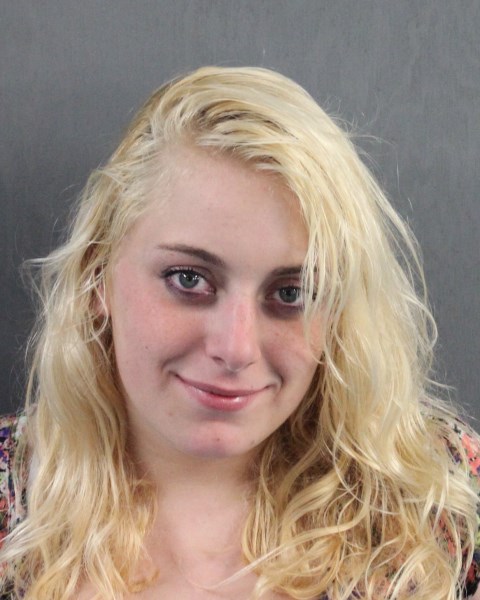
Mom jailed for leaving kids in Sands Bethlehem Casino garage while gambling


EASTON, Pa. - A woman who left her three children in her minivan in the parking garage of a Pennsylvania casino while she gambled will spend two ...

Mom jailed for leaving kids in casino garage while gambling


v

Sunday, December 11, 2016

Connecticut: Gambling issue leads to larceny charge


Gambling issue leads to larceny charge

December 9, 2016
By Jason Vallee Sun staff writer


STONINGTON — A Mystic man is facing charges after police said he had been “floating deposits” while working as a manager at Dunkin’ Donuts in order to pay for a gambling addiction.
Ryan Richard Farrell, 28, of 207 Whitehall Ave., Apt. #3, was taken into custody by Stonington police Tuesday morning after the department obtained a warrant. He was arraigned the same day in New London Superior Court on one count of third-degree larceny and pleaded not guilty, court records show.
According to a police report, an investigation revealed that between Sept. 19 and Oct. 2, Farrell had operated a “floating deposit” scheme in an effort to help fund what police called a gambling addiction. A “floating deposit” is the act of using money from one deposit to supplement a second in order to skim money off the top.
Over the course of two weeks, police said a review of deposits showed he had taken $6,822 from the two Dunkin’ Donuts locations on Route 27 in Mystic.
Police said the investigation was initiated Oct. 4 after the owners of the two stores, Greg and Karen Daley, reported to police that they believed Farrell, who was employed as a manager, had not made several deposits. Officers spoke with Farrell and discovered he was still in possession of several deposit bags and nearly $445 in cash.
Farrell told police that he had tossed some of the money into the Poquonnock River at Bluff Point and admitted to officers he was experiencing financial hardship as a result of lost wages due to a previous incident. According to the affidavit, he told officers that in May, money had gone missing while he was working as a manager and he was forced to come to an agreement with the Daleys to repay the money over time through paycheck withholdings.
Farrell told Greg Daley that he left the money on a desk by mistake and it was taken, likely by another employee. The May losses totaled nearly $6,500, police said, but the incident was not reported because Daley was concerned that if he fired Farrell and sought criminal charges, he would not be able to recoup the funds.
In early November, police again spoke with Farrell and he told officers that an assistant manager was responsible for the missing money, $800 in all. Farrell said he had been “floating deposits” in an effort to give the assistant manager time to pay it back but that she was unable to do so.
Concerned over inconsistencies in Farrell’s story and having received information that he may have a gambling problem, police then contacted Foxwoods and Mohegan Sun and determined he was a frequent visitor to both. According to the affidavit, the two casinos reported that in 2016 alone, he had run up losses of more than $18,000 — including $5,998 in the two weeks when money went missing.
Further investigation also revealed that Farrell had a similar issue in 2015 while employed at a Groton Dunkin’ Donuts. He was arrested in March 2015 and convicted in October 2016 of third-degree larceny after pleading guilty, according to court records. He was given a two-year sentence in that case, execution suspended pending the completion of a one-year probation period.
The latest charge is not considered a probation violation because, court officials said, the incident occurred prior to his sentencing. Farrell remains in state custody in lieu of a $25,000 bond, records show, and is due back in New London Superior Court for a pretrial hearing on Dec. 23.


Thursday, December 8, 2016

Lotteries, payday lending, and the swindling of America’s poor


Lotteries, payday lending, and the swindling of America’s poor

By Michael Gerson

In that portion of the presidential field that does not view self-government as a stage for self-promotion, prejudice and blithering ignorance, one of the more encouraging trends is an increasing seriousness about the issue of poverty.
Events in Ferguson, Mo., and Baltimore have focused the public mind, just as the consequential publication of Robert Putnam’s “Our Kids” has served to inform and deepen the policy debate. The question is posed: Can the United States go on as it has been with a good portion of its working class almost entirely isolated from the promise of our country?
It is a yes or no question. A “yes” involves the acceptance of a rigid, self-perpetuating class system in a country with democratic and egalitarian pretentions — a system upheld and enforced by heavy-handed policing, routine incarceration and social and educational segregation.
A “no” is just the start of a very difficult task. The mixed legacy ofthe Great Society — helping the elderly get health care, it turns out, is easier than creating opportunity in economically and socially decimated communities — has left the national dialogue on poverty ideologically polarized. And many policy proposals in this field seem puny in comparison to the Everest of need.
But there is one set of related policy ideas that would dramatically help the poor and should not be ideologically divisive. How about a renewed effort to help the poor by refusing to cheat them?
I am referring to a broad and growing collaboration between government and business to systematically defraud and exploit the poor through state lotteriespayday lending and payday gambling.
The lottery is a particularly awful example of political corruption. Here government is raising revenue by selling the Powerball dream of wealth without work. Studies in a number of states have shown that lottery ticket sales are concentrated in poor communities, that poor people spend a larger portion of their income on tickets and that the poor are more likely to view the lottery as an investment. “This could be your ticket out,” promised one typical billboard in a distressed Chicago neighborhood.
Think on this a moment. In a place where government has utterly failed to provide adequate education and public services, government is using advertising to exploit the desperation of poor people in order to raise revenue that funds other people’s public services. This is often called a “regressive” form of taxation. The word does not adequately capture the cruelty and crookedness of selling a lie to vulnerable people in order to bilk them. Offering the chance of one in a 100 million is the equivalent of a lie. Lotteries depend on the deceptive encouragement of mythical thinking and fantasies of escape.
Another form of financial predation against the poor — this one in the private sector — is payday lending. If you live in one of the 36 states that allow the practice, you have probably seen the storefronts in depressed neighborhoods. There are now more of them in the United States than there are McDonald’s franchises. In theory, payday lenders offer small loans of a few hundred dollars without credit checks to cover emergency cash flow needs. In practice, lenders make their money on repeat borrowers who get behind in their payments and roll them over into larger loans often with triple-digit interest rates.
The result is a downward spiral of debt in which borrowers pay back many times their loan amount — often seized directly from their bank accounts. This is what used to be called loan-sharking and usury. It is now a $46 billion industry, with considerable political clout, selling a financial product to the poor that encourages debt servitude.
Business and government in many states have entered a full partnership on payday gambling — moving gaming out of destination resorts and into malls and riverboats, closer to middle- and working-class gamblers. State governments raise money by taxing revenue generated by slot machines that are really sophisticated computers, designed to encourage players to enter the “zone” and play “to extinction.” Compulsive behavior is the intended goal of the software program, and thus the intended goal of state legislators who would rather encourage addiction than ask the broader public for taxes.
The United States is bursting at the seams with populist energy. Here is a cause that should appeal to activists prone to camping in parks or to wearing tricorn hats: Let’s get government out of the business of treating citizens as marks and dupes. And let’s confront everyone — in business and government — who benefits from defrauding the poor.

Ka-ching! Gambling addicts’ problems just got worse.


Ka-ching! Gambling addicts’ problems just got worse.

AS THE allure and glitz of Las Vegas arrive at the Potomac on Thursday in the form of MGM’s gigantic $1.4 billion casino at National Harbor, much of the buzz has been about all the lovely lucre for the gaming industry and Maryland. So spare a moment to consider the cost — to the tens of thousands of compulsive gamblers in and around the Washington area whose exposure to extreme risk just got a lot worse.
An eye-opening article in the current issue of the Atlantic magazine describes the outsize marketing efforts by gaming companies to target problem gamblers, who consist of less than 20 percent of casino patrons but provide a hugely disproportionate share of the industry’s profits. From free limos, hotel suites, liquor and gifts, to easy credit and ingratiating hosts and hostesses, casinos know how to keep their best, and most vulnerable, customers coming back for more and more . . . and more.
That’s long been the case in Nevada and the 39 other states that have also legalized gambling and opened their arms wide to casinos in the past four decades. What’s changed, and changed remarkably, are the astonishing technological advances — specifically, in electronic slot and video poker machines — that play on gamblers’ weaknesses and leave millions of them even more helpless to quit their addictions.
As the Atlantic article puts it, “A significant portion of casino revenue now comes from a small percentage of customers, most of them likely addicts, playing machines that are designed explicitly to lull them into a trancelike state that the industry refers to as ‘continuous gaming productivity.’ ”
That “trancelike state” is induced by ingenious high-tech methods, including features that coax players into believing they’d very nearly won (as they lost), and induce them to keep playing by making their losses occur more gradually. Through highly sophisticated techniques, which also include assiduous monitoring and tracking of big-time spenders by gaming companies, players are induced to go beyond their limits and their abilities to absorb losses.
Even as Maryland has raked in hundreds of millions of dollars in annual tax revenue from casinos since they first opened in the state in 2010, the human price has mounted. Calls to the state’s gambling hotline — 800-GAMBLER — have climbed, and each year hundreds more people legally bar themselves from stepping inside a casino through the state’s Voluntary Exclusion Program (which is difficult to enforce).
By law, a minuscule portion of Maryland’s casino revenue is diverted to a state fund that provides counselors trained to deal with gambling addiction and pays for research and public awareness of the problem. But unlike some other states, Maryland — which with six casinos is now among the nation’s most concentrated gaming markets — offers no free treatment programs. Lawmakers in Annapolis have been negligent.
There are undeniable economic benefits from casinos for the state and, now, quite likely, for Prince George’s County, where MGM’s casino has created several thousand jobs. It would be foolish for lawmakers and the public to salivate over those while continuing to ignore the human toll.


Wednesday, November 16, 2016

Do casinos improve lives? The Atlantic forcefully says no


The Atlantic, one of America's most influential magazines, has ripped the curtain off predatory gambling in its December edition. It's one of the most compelling and revealing stories ever written about the issue. Please read it and then share it widely on Facebook, Twitter and your email networks.

The country's political establishment (both on the Left and the Right) has forced predatory gambling onto working class, rural and urban Americans alike over the last twenty years, casting it as "an economic engine." One of the major results has been a lower standard of living for almost all of us, regardless whether you gamble or not.

Another tragic result has been the destruction of millions of American lives. Scott Stevens, the primary focus of The Atlantic story, is one of them.

It's inevitable that predatory gambling will be sunset in the United States. It's not a question of if but when.

Best,

Les Bernal
National Director
Stop Predatory Gambling
If you believe what we believe in, please support our work by contributing $10 or more today to help sustain it.

________________________________
Improving the lives of the American people, using education and advocacy to free us of the dishonesty, exploitation, addiction and lower standard of living that commercial gambling spreads.