Showing posts with label Ameristar Casino. Show all posts
Showing posts with label Ameristar Casino. Show all posts
Sunday, May 5, 2013
Ameristar Casinos 1Q profit falls, revenue drops
Ameristar Casinos 1Q profit falls, revenue drops
5/3/2013
LAS VEGAS — Ameristar Casinos said Friday that its net income slid 57 percent in the first quarter, pressured in part by acquisition-related costs, economic conditions and bad weather.
For the three months ended March 31, the casino operator — which is being acquired by Pinnacle Entertainment Inc. — earned $18 million, or 51 cents per share. That's down from $41.4 million, or $1.21 per share, a year earlier.
Stripping out acquisition-related costs and costs related to the development of a new property, earnings were 56 cents per share.
Analysts polled by FactSet expected earnings of 60 cents per share.
Pinnacle announced in December that it would buy rival Ameristar for about $869 million, plus take on $1.9 billion of its debt. Ameristar shareholders approved the deal late last month. The transaction is expected to close in the second or third quarter.
Ameristar said that its comparison to the year-ago period was tough because last year was a leap year and included a very mild winter. The company said the higher payroll tax, a delay in income tax refunds and escalating fuel and utility costs also weighed on its performance.
Revenue dropped 5 percent to $295.1 million from $312.1 million as it pulled in less money from gambling and lodging. The company was also slightly more promotional during the period.
Wall Street predicted $302.4 million in revenue.
Ameristar Casinos Inc. has eight casino-hotel properties that mostly serve people from Colorado, Idaho, Illinois, Indiana, Iowa, Kansas, Louisiana, Mississippi, Missouri, Nebraska and Nevada. It is building a new casino resort in Lake Charles, La.
Its stock added 4 cents to $26.40 in morning trading.
http://www.nbcnews.com/id/51762199/ns/business-us_business/


Thursday, May 2, 2013
Employer Blames Casino for $4 Million Embezzlement
The Predators have access to your financial records, know your income, know that you are exceeding your personal funds.
Why are they allowed to keep stolen funds? Is this racketeering?

(CN) - A candy wholesaler sued an Ameristar casino for $4 million, claiming it "enticed and enabled" a worker who embezzled the money and blew it on slot machines.
Why are they allowed to keep stolen funds? Is this racketeering?

Employer Blames Casino for $4 Million Embezzlement
(CN) - A candy wholesaler sued an Ameristar casino for $4 million, claiming it "enticed and enabled" a worker who embezzled the money and blew it on slot machines.
Saturday, April 13, 2013
Ameristar Received Stolen Funds From Gambling Addict
Employer Blames Casino for $4 Million Embezzlement
Sunday, March 31, 2013
Professional Gambler Charged in Illegal Financial Transactions at Ameristar Casino
Professional Gambler Charged in Illegal Financial Transactions at Ameristar Casino
Saturday, March 30, 2013
Member of the Tom Hyland Card Counting team, one of the most successful black jack teams in America.
Kansas City, MO - infoZine - Tammy Dickinson, United States Attorney for the Western District of Missouri, announced that a professional gambler from New Jersey has been charged in federal court with illegally structuring financial transactions, including cashing in hundreds of thousands of dollars in chips at a local casino.
Richard Dougherty, 52, of Linwood, NJ was charged in a federal criminal complaint filed in the U.S. District Court in Kansas City, Mo., with structuring financial transactions. Dougherty was arrested at the Ameristar Casino in Kansas City, MO on the evening of Thursday, March 28, 2013, following the filing of the criminal complaint earlier that day. He appeared in court today and was released on bond.
According to an affidavit filed in support of the criminal complaint, Dougherty won nearly $700,000 during dozens of visits to Ameristar over the past year. Dougherty is a professional gambler and a member of the Tom Hyland Card Counting team, one of the most successful black jack teams in America. The Hyland Team is most known for their expertise as card counters and passed on their skills to many team members over the years. Hyland team members, both full-time and part-time players, are scattered across the country. The team at one point had grown to 30 or 40 people. Playing as a team rather than an individual helps to smooth over the losses, because if one person has a bad day then it’s usually smoothed out by the wins of teammates.
Because the Hyland team has been counting cards for so long they are recognized at many casinos.
Richard Dougherty, 52, of Linwood, NJ was charged in a federal criminal complaint filed in the U.S. District Court in Kansas City, Mo., with structuring financial transactions. Dougherty was arrested at the Ameristar Casino in Kansas City, MO on the evening of Thursday, March 28, 2013, following the filing of the criminal complaint earlier that day. He appeared in court today and was released on bond.
According to an affidavit filed in support of the criminal complaint, Dougherty won nearly $700,000 during dozens of visits to Ameristar over the past year. Dougherty is a professional gambler and a member of the Tom Hyland Card Counting team, one of the most successful black jack teams in America. The Hyland Team is most known for their expertise as card counters and passed on their skills to many team members over the years. Hyland team members, both full-time and part-time players, are scattered across the country. The team at one point had grown to 30 or 40 people. Playing as a team rather than an individual helps to smooth over the losses, because if one person has a bad day then it’s usually smoothed out by the wins of teammates.
Because the Hyland team has been counting cards for so long they are recognized at many casinos.
The team has used disguises throughout the years at various casinos. However, at present, disguises are less important as there are laws, specifically in Atlantic City and in Missouri, to prevent casinos from barring card counters.
Dougherty is charged with structuring financial transactions at Ameristar in order to avoid federal reporting requirements. Federal law requires casinos to file currency transaction reports with the federal government for each transaction (either cashing in or cashing out) of $10,000 or more. These regulations also require that multiple transactions be treated as a single transaction if they are conducted by, or on behalf of, the same person, and they total more than $10,000 during one business day. It is illegal for an individual to structure financial transactions in such a way that the casino fails to file the required report.
The criminal complaint alleges that Dougherty purchased at least $166,380 in chips with cash in 11 structured transactions at Ameristar, and that he cashed in chips for $315,075 in 32 separate structured transactions from Feb. 16, 2012 to March 27, 2013.
Dougherty made at least 60 visits to Ameristar between Feb. 16, 2012 and March 27, 2013. During this time period, the affidavit says, Dougherty won at least $697,892 and lost $382,880, netting him $315,012 in casino winnings. Not one time during his play at the Ameristar did Dougherty cash out for more than $10,000, according to the affidavit. Dougherty allegedly structured these currency transactions in amounts less than $10,000 to avoid triggering the filing of a currency transaction report.
The affidavit also refers to Dougherty’s gambling activities at casinos in Powhattan, Kan.; Atlantic City, N.J.; Las Vegas, Nev.; Metropolis, Ill.; Elizabeth, Ind.; Valley View, Calif.; West Lake, La.; and Morton, Minn. Dougherty has allegedly used multiple aliases at a large number of the casinos he has played. According to the affidavit, casinos have filed 126 currency transaction reports on Dougherty since 1996.
Dickinson cautioned that the charge contained in this complaint is simply an accusation, and not evidence of guilt. Evidence supporting the charge must be presented to a federal trial jury, whose duty is to determine guilt or innocence.
Dougherty is charged with structuring financial transactions at Ameristar in order to avoid federal reporting requirements. Federal law requires casinos to file currency transaction reports with the federal government for each transaction (either cashing in or cashing out) of $10,000 or more. These regulations also require that multiple transactions be treated as a single transaction if they are conducted by, or on behalf of, the same person, and they total more than $10,000 during one business day. It is illegal for an individual to structure financial transactions in such a way that the casino fails to file the required report.
The criminal complaint alleges that Dougherty purchased at least $166,380 in chips with cash in 11 structured transactions at Ameristar, and that he cashed in chips for $315,075 in 32 separate structured transactions from Feb. 16, 2012 to March 27, 2013.
Dougherty made at least 60 visits to Ameristar between Feb. 16, 2012 and March 27, 2013. During this time period, the affidavit says, Dougherty won at least $697,892 and lost $382,880, netting him $315,012 in casino winnings. Not one time during his play at the Ameristar did Dougherty cash out for more than $10,000, according to the affidavit. Dougherty allegedly structured these currency transactions in amounts less than $10,000 to avoid triggering the filing of a currency transaction report.
The affidavit also refers to Dougherty’s gambling activities at casinos in Powhattan, Kan.; Atlantic City, N.J.; Las Vegas, Nev.; Metropolis, Ill.; Elizabeth, Ind.; Valley View, Calif.; West Lake, La.; and Morton, Minn. Dougherty has allegedly used multiple aliases at a large number of the casinos he has played. According to the affidavit, casinos have filed 126 currency transaction reports on Dougherty since 1996.
Dickinson cautioned that the charge contained in this complaint is simply an accusation, and not evidence of guilt. Evidence supporting the charge must be presented to a federal trial jury, whose duty is to determine guilt or innocence.
Saturday, January 5, 2013
Ameristar Investigation
Ameristar formerly sought a Springfield, MA site.
BALA CYNWYD, Pa., Jan. 4, 2013 /PRNewswire/ -- Law office of Brodsky & Smith, LLC announces that it is investigating potential claims against the Board of Directors of Ameristar Casinos, Inc. ("Ameristar" or the "Company") (Nasdaq: ASCA) relating to the proposed acquisition by Pinnacle Entertainment, Inc. ("Pinnacle").
Under the terms of the transaction, Ameristar shareholders will receive only $26.50 in cash for each share of Ameristar stock they own. The investigation concerns possible breaches of fiduciary duty and other violations of state law by the Board of Directors of Ameristar for not acting in the Company's shareholders' best interests in connection with the sale process to Pinnacle. The transaction may undervalue the Company as Ameristar expects to open its 500 million Lake Charles, La project in 2014. In addition, an analyst has set a price target for Ameristar stock at $29.00 per share.
If you own shares of Ameristar stock and wish to discuss the legal ramifications of the proposed transaction, or have any questions, you may e-mail or call the law office of Brodsky & Smith, LLC who will, without obligation or cost to you, attempt to answer your questions. You may contact Jason L. Brodsky, Esquire or Evan J. Smith, Esquire at Brodsky & Smith, LLC, Two Bala Plaza, Suite 602, Bala Cynwyd, PA 19004, by e-mail at investorrelations@brodsky-smith.com visiting http://brodsky-smith.com/524-asca-ameristar-casinos-inc.html, by calling toll free 877-LEGAL-90.
SOURCE Brodsky & Smith, LLC
http://finance.boston.com/boston/news/read?GUID=23131590
Law Office of Brodsky & Smith, LLC Announces Investigation of Ameristar Casinos, Inc.
BALA CYNWYD, Pa., Jan. 4, 2013 /PRNewswire/ -- Law office of Brodsky & Smith, LLC announces that it is investigating potential claims against the Board of Directors of Ameristar Casinos, Inc. ("Ameristar" or the "Company") (Nasdaq: ASCA) relating to the proposed acquisition by Pinnacle Entertainment, Inc. ("Pinnacle").
Under the terms of the transaction, Ameristar shareholders will receive only $26.50 in cash for each share of Ameristar stock they own. The investigation concerns possible breaches of fiduciary duty and other violations of state law by the Board of Directors of Ameristar for not acting in the Company's shareholders' best interests in connection with the sale process to Pinnacle. The transaction may undervalue the Company as Ameristar expects to open its 500 million Lake Charles, La project in 2014. In addition, an analyst has set a price target for Ameristar stock at $29.00 per share.
If you own shares of Ameristar stock and wish to discuss the legal ramifications of the proposed transaction, or have any questions, you may e-mail or call the law office of Brodsky & Smith, LLC who will, without obligation or cost to you, attempt to answer your questions. You may contact Jason L. Brodsky, Esquire or Evan J. Smith, Esquire at Brodsky & Smith, LLC, Two Bala Plaza, Suite 602, Bala Cynwyd, PA 19004, by e-mail at investorrelations@brodsky-smith.com visiting http://brodsky-smith.com/524-asca-ameristar-casinos-inc.html, by calling toll free 877-LEGAL-90.
SOURCE Brodsky & Smith, LLC
http://finance.boston.com/boston/news/read?GUID=23131590
Saturday, December 22, 2012
Massive Casino Debt Passed Along

Pinnacle to buy Ameristar Casinos
Price tag set around $869M
Dec 21, 2012
In a deal that would more than double its size, Pinnacle Entertainment said Friday that it will buy rival Ameristar Casinos for about $869 million, plus take on $1.9 billion of its debt.
Pinnacle owns seven U.S. casinos and a racetrack and is developing another property. Ameristar has eight casinos in the United States — including one in Vicksburg — and has a $500 million casino under construction in Lake Charles, La. The company said buying Ameristar could help it become a bigger player in the gaming industry, while trimming costs.
U.S. casinos have struggled to recover from the recession as consumers watch spending. Larger U.S. casino companies have increasingly relied on their properties in Asia for profits.
If the deal is approved by shareholders and regulators, Pinnacle will pay $26.50 for each share of Ameristar Casinos Inc. That’s a 20 percent premium over the company’s Thursday closing stock price of $22.07. It’s also gaining $116 million of the company’s cash.
Ameristar shares jumped 17 percent to $25.75 on the news, while Pinnacle shares rose 3 percent to $13.80.
The deal, expected to close by the end of the third quarter, has been approved by the boards of both Las Vegas operators. Pinnacle said it has received a financing commitment.
Pinnacle said the acquisition would save it at least $40 million a year and boost earnings.
Pinnacle has casinos in Louisiana, Missouri and Indiana. It’s developing another property in Ohio and also has a racetrack in the state. Ameristar’s holdings include casinos in Missouri, Iowa, Colorado, Mississippi, Indiana and Nevada. Had the two companies already been combined, it would have generated $2.4 billion in revenue in the 12 months through September, Pinnacle said.
Pinnacle was the parent company of Biloxi Casino Corp., which did business as Casino Magic Biloxi.
That casino closed in fall 2006, and the Biloxi property was sold to Harrah’s Entertainment for $25 million.
http://www.clarionledger.com/viewart/20121222/BIZ/312220017/Pinnacle-buy-Ameristar-Casinos
Acquisition of Ameristar Casinos, Inc. by Pinnacle Entertainment, Inc. May Not Be in Ameristar Casinos Shareholders' Best Interests
SAN DIEGO and LAS VEGAS, Dec. 21, 2012 /PRNewswire/ -- Shareholder rights attorneys at Robbins Umeda LLP are investigating possible breaches of fiduciary duty and other violations of the law by members of the board of directors of Ameristar Casinos, Inc. (NASDAQ: ASCA) in connection with their efforts to sell the company to Pinnacle Entertainment, Inc. (NYSE: PNK).
On December 21, 2012, Ameristar Casinos and Pinnacle Entertainment announced they had entered into a definitive merger agreement under which Pinnacle Entertainment will acquire Ameristar Casinos through an all cash offer. Ameristar Casinos shareholders will receive $26.50 per share. The transaction is expected to close in the third quarter of 2013.
The Board of Directors' Actions May Prevent Ameristar Casinos Shareholders from Receiving the Maximum Value for Their Stock
Robbins Umeda LLP's investigation focuses on whether the board of directors at Ameristar Casinos is undertaking a fair process to obtain maximum value and adequately compensate its shareholders. The $26.50 per share offer price is substantially below the $31 target price maintained by an analyst at Knight Equity Research, and the $29 price set by an analyst at Imperial Capital. Further, on October 31, 2012, Ameristar Casinos announced that the company's third quarter of 2012 "was one of Ameristar's most profitable ever." Given, these facts, the firm is examining whether the board of directors' decision to sell Ameristar Casinos for $26.50 per share is fair to shareholders and maximizes the value for their shares.
Ameristar Casinos shareholders have the option to file a class action lawsuit against the company to secure the best possible price for shareholders and the disclosure of material information so shareholders can vote on the transaction in an informed manner. If you own Ameristar Casinos stock and are interested in information about your rights and potential remedies, contact Darnell R. Donahue at (800) 350-6003, ddonahue@robbinsumeda.com, or via the shareholder information form on the firm's website.
Robbins Umeda LLP is a nationally recognized leader in securities litigation and shareholder rights law. The firm represents individual and institutional investors in shareholder derivative and securities class action lawsuits, and has helped its clients realize more than $1 billion of value for themselves and the companies in which they have invested. For more information, please go to http://www.robbinsumeda.com.
Press release link:
http://www.robbinsumeda.com/shareholders-rights-blog/ameristar-casinos-inc/
http://www.robbinsumeda.com/shareholders-rights-blog/ameristar-casinos-inc/
 PR Newswire (http://s.tt/1xyyp)
http://www.prnewswire.com/news-releases/acquisition-of-ameristar-casinos-inc-by-pinnacle-entertainment-inc-may-not-be-in-ameristar-casinos-shareholders-best-interests-184509441.html
Saturday, December 1, 2012
Ameristar pulls out of Springfield casino race

From: Bill Kearney
Do you think Ameristar pulled out because I made them aware of the provision that is in the Massachusetts gaming law that makes all casino operators mail their patrons who are enrolled in their reward card programs casino monthly statements. Those card holders account for 85 to 90% of a casinos patron base. Who knows how many casino patrons will curb their casino gambling spending and even quit casino gambling when being made aware month after month of their wins and mostly losses. Hopefully the other casino operators who I've made aware of this provision will do the same.

Ameristar pulls out of Springfield casino race
 By Dave Wedge
Friday, November 30, 2012
The crowded field of competitors for a western Massachusetts casino has gotten a bit smaller as Ameristar has pulled out of its plans for a nearly $1 billion gaming palace in Springfield, officials said.
Ameristar was planning a 500-room hotel, spa and casino with thousands of slots and gaming tables just off Intersate 91, but scrapped the plans today because the company was not confident it could win city approval, officials said.
Springfield officials had been considering casino plans from Ameristar, MGM International and Penn National and will pick one or more proposals to send to the state for consideration for the sole western Massachusetts gaming license. Springfield Mayor Domenic Sarno lamented the loss of one of the competitors but was confident Springfield will still land a world-class gaming resort.
“Obviously the city is very disappointed in Ameristar’s decision to withdraw from the competition,” Sarno said in a statement. “Ameristar made a strong proposal for an exciting project that would have given our voters a clear choice as to the type of location that would best serve the city.”
“Nonetheless, I am confident that the proposals of MGM and Penn Gaming will create a robust competition,” he added.
The news comes as Holyoke has re-emerged as a potential gaming site. The city’s mayor, Alex Morse, recently did an about-face on gaming and said he’s in talks with Iron Horse Entertainment for a possible casino at the former Mountain Park amusement park.
Paper City Development, which had been working on a proposal for Springfield with Hard Rock International, is also interested in negotiating a deal for a casino in Holyoke, in light of Morse’s flip-flop. Paper City officials today paid a $25,000 fee to Holyoke to cover costs related to the city’s consulting expenses, a company official said. Mohegan Sun is also proposing a casino in nearby Palmer.
In another development closer to Boston, Las Vegas gambling tycoon Steve Wynn, who is mulling a casino for Everett, has asked state gaming officials for a meeting to discuss the application process, according to Massachusetts Gaming Commission spokeswoman Elaine Driscoll.
Wynn’s proposal for a site off Route 99 along the Mystic River would compete with a proposed $1 billion gaming mecca at Suffolk Downs. Suffolk Downs has already paid the state a non-refundable $400,000 preliminary application fee.
http://www.bostonherald.com/news/regional/view.bg?articleid=1061178535&pos=breaking
Ameristar was planning a 500-room hotel, spa and casino with thousands of slots and gaming tables just off Intersate 91, but scrapped the plans today because the company was not confident it could win city approval, officials said.
Springfield officials had been considering casino plans from Ameristar, MGM International and Penn National and will pick one or more proposals to send to the state for consideration for the sole western Massachusetts gaming license. Springfield Mayor Domenic Sarno lamented the loss of one of the competitors but was confident Springfield will still land a world-class gaming resort.
“Obviously the city is very disappointed in Ameristar’s decision to withdraw from the competition,” Sarno said in a statement. “Ameristar made a strong proposal for an exciting project that would have given our voters a clear choice as to the type of location that would best serve the city.”
“Nonetheless, I am confident that the proposals of MGM and Penn Gaming will create a robust competition,” he added.
The news comes as Holyoke has re-emerged as a potential gaming site. The city’s mayor, Alex Morse, recently did an about-face on gaming and said he’s in talks with Iron Horse Entertainment for a possible casino at the former Mountain Park amusement park.
Paper City Development, which had been working on a proposal for Springfield with Hard Rock International, is also interested in negotiating a deal for a casino in Holyoke, in light of Morse’s flip-flop. Paper City officials today paid a $25,000 fee to Holyoke to cover costs related to the city’s consulting expenses, a company official said. Mohegan Sun is also proposing a casino in nearby Palmer.
In another development closer to Boston, Las Vegas gambling tycoon Steve Wynn, who is mulling a casino for Everett, has asked state gaming officials for a meeting to discuss the application process, according to Massachusetts Gaming Commission spokeswoman Elaine Driscoll.
Wynn’s proposal for a site off Route 99 along the Mystic River would compete with a proposed $1 billion gaming mecca at Suffolk Downs. Suffolk Downs has already paid the state a non-refundable $400,000 preliminary application fee.
http://www.bostonherald.com/news/regional/view.bg?articleid=1061178535&pos=breaking
Friday, November 23, 2012
The slow-moving Massachusetts process
Licensing of Mass. casinos a slow-moving process
Posted: 11/23/2012
BOSTON -- When Gov. Deval Patrick ended years of contentious debate over ex
panded gambling by signing a bill authorizing up to three resort-style casinos
and a slots parlor, he warned against expecting any quick economic windfall.
One year later, such caution appears warranted. While there has been some progress in the 12 months the law has been in effect, there also have been some setbacks.
Several casino proposals have been offered, while other trial balloons have been shot down. A new state gaming commission with broad oversight of the law has held dozens of meetings and won praise for transparency, but it has yet to appoint an executive director or finish writing key regulations. Western Mass achusetts -- and Spring field in particular -- has been a hotbed of casino interest, but competition has been slow to take shape in other parts of the state. Plans for a tribal casino envisioned under the law are in limbo.
The bottom line is that casino licenses are unlikely to be awarded until early 2014, and it may well be 2017 before gamblers are actually placing bets in sparkling new resorts. For some, that's too long to wait for the estimated $400 million in annual state revenue and thousands of temporary and permanent jobs the casino industry could bring.
"We would like to see it move much more quickly," said Frank Callahan, president of the Massachusetts Building Trade Council, which represents unionized workers in construction trades. "There are a lot of jobs at stake."
Calls to speed up process
Callahan is among those urging the commission to speed up the licensing process, perhaps by borrowing from the best practices in nearly two dozen other states that already have commercial gambling facilities. The council has cited an American Gaming Association survey showing that nearly all of those states moved from legalization to opening of casinos in less time than is projected in Massachusetts.
Stephen Crosby, whom Patrick appointed to lead the five-member gaming commission, says he understands the complaints. State and local governments are eager for tax revenue and economic development, unions are seeking jobs and "people want to gamble," he said. But he said he won't allow the panel to be pushed into hasty decisions, citing a complex and exacting law and policy questions that have proven even more challenging than anticipated.
"We are taking the amount of time that is appropriate to take," Crosby said in an interview. "We have been very clear that we are not going to sacrifice care for speed."
For example, the commission is allocating almost a full year to reviewing the backgrounds and qualifications of would-be casino developers, he said.
Competition in Western Mass.
The law allows the panel to award one resort casino license in eastern Massachusetts and one in the western part of the state, as well as a single license to operate a slots parlor. The jockeying for the western license has been lively. Three companies -- Ameristar Casinos, MGM Resorts Inter national and Penn National Gaming -- have offered proposals for Springfield, and Mohegan Sun is pursuing a plan in Palmer.
By contrast, only the Suffolk Downs racetrack in Boston has entered the bidding for the eastern Massachusetts casino license, and the Plainridge harness track in Plainville is the only formal suitor for the slots license. That could change, as Chicago-based Rush Street Gaming has stated, without specificity, its intention to pursue a casino, and the owner of a former dog racing track in Raynham has publicly stated interest in a slots parlor.
The situation is also cloudy in southeastern Massachusetts, the third region where a resort-style casino would be allowed, and the one region where a federally recognized Indian tribe was given a leg up in the process. The Mashpee Wampanoag tribe, which has proposed a casino in Taunton, successfully negotiated a casino compact with Patrick's administration, only to have it rejected by the U.S. Interior Department. The governor and tribe have promised to reopen negotiations with an eye toward addressing Interior's complaint that the state was seeking too large a share (21.5 percent) of gaming revenue from the tribe.

Crosby said he hopes to see more competition emerge in eastern Massachusetts. But he also noted the law is strict, essentially giving cities and towns veto power over casinos in their communities. One potential competitor, Las Vegas casino operator Steve Wynn, suspended a proposal for a casino in Foxborough in the face of local opposition.

"The system is working the way the system is supposed to work," Crosby said.
Series of missteps
Yet the first year has not been without missteps. In May, the commission's choice for interim executive director, Stanley McGee, declined the offer after the resurfacing of an allegation that he sexually assaulted a 15-year-old boy in Florida in 2007.

Crosby called the episode a "learning experience" for the panel. A permanent executive director has yet to be named. While some ardent casino backers are disappointed with the commission's deliberate pace, the panel gets high marks from former Attorney General Scott Harshbarger, one of the state's leading opponents of casino gambling.
He credits the panel for taking its time and not succumbing to pressures to accelerate the process.
"I think they deserve a lot of credit for avoiding the push to get this up and running at all costs," said Harshbarger, who predicted the gambling law would bring corruption and other social ills.

Harshbarger said he was impressed by the commission's openness -- it has provided live webcasts of most public meetings -- and the apparent absence of any undue influence from powerful elected officials.
Sen. Stanley Rosenberg, D-Amherst, one of the principal architects of the casino bill, said the law is unfolding mostly as expected, with one surprise being the level of interest in western Massachusetts compared with the rest of the state. He praised the commission while suggesting it might consider ways of shortening the timeline for licensing.
 Not
surprisingly, Stan
Rosenberg, (D- Amherst) the senator for whom the Unwarrented
Hubris award's was created, also serves on the committee, a prerequisite for
which would appear to be narcissistic personality disorder.
Not
surprisingly, Stan
Rosenberg, (D- Amherst) the senator for whom the Unwarrented
Hubris award's was created, also serves on the committee, a prerequisite for
which would appear to be narcissistic personality disorder.
Don't expect, however, to see any tinkering with the law itself, barring discovery of some catastrophic flaw. "I hope that there are no fatal points, because short of a fatal point, let it play out," Rosenberg said.
[Wonder how the casino stock Stan invested in is doing?]
http://www.berkshireeagle.com/ci_22051315/licensing-mass-casinos-slow-moving-process
One year later, such caution appears warranted. While there has been some progress in the 12 months the law has been in effect, there also have been some setbacks.
Several casino proposals have been offered, while other trial balloons have been shot down. A new state gaming commission with broad oversight of the law has held dozens of meetings and won praise for transparency, but it has yet to appoint an executive director or finish writing key regulations. Western Mass achusetts -- and Spring field in particular -- has been a hotbed of casino interest, but competition has been slow to take shape in other parts of the state. Plans for a tribal casino envisioned under the law are in limbo.
The bottom line is that casino licenses are unlikely to be awarded until early 2014, and it may well be 2017 before gamblers are actually placing bets in sparkling new resorts. For some, that's too long to wait for the estimated $400 million in annual state revenue and thousands of temporary and permanent jobs the casino industry could bring.
"We would like to see it move much more quickly," said Frank Callahan, president of the Massachusetts Building Trade Council, which represents unionized workers in construction trades. "There are a lot of jobs at stake."
Calls to speed up process
Callahan is among those urging the commission to speed up the licensing process, perhaps by borrowing from the best practices in nearly two dozen other states that already have commercial gambling facilities. The council has cited an American Gaming Association survey showing that nearly all of those states moved from legalization to opening of casinos in less time than is projected in Massachusetts.
Stephen Crosby, whom Patrick appointed to lead the five-member gaming commission, says he understands the complaints. State and local governments are eager for tax revenue and economic development, unions are seeking jobs and "people want to gamble," he said. But he said he won't allow the panel to be pushed into hasty decisions, citing a complex and exacting law and policy questions that have proven even more challenging than anticipated.
"We are taking the amount of time that is appropriate to take," Crosby said in an interview. "We have been very clear that we are not going to sacrifice care for speed."
For example, the commission is allocating almost a full year to reviewing the backgrounds and qualifications of would-be casino developers, he said.
Competition in Western Mass.
The law allows the panel to award one resort casino license in eastern Massachusetts and one in the western part of the state, as well as a single license to operate a slots parlor. The jockeying for the western license has been lively. Three companies -- Ameristar Casinos, MGM Resorts Inter national and Penn National Gaming -- have offered proposals for Springfield, and Mohegan Sun is pursuing a plan in Palmer.
By contrast, only the Suffolk Downs racetrack in Boston has entered the bidding for the eastern Massachusetts casino license, and the Plainridge harness track in Plainville is the only formal suitor for the slots license. That could change, as Chicago-based Rush Street Gaming has stated, without specificity, its intention to pursue a casino, and the owner of a former dog racing track in Raynham has publicly stated interest in a slots parlor.
The situation is also cloudy in southeastern Massachusetts, the third region where a resort-style casino would be allowed, and the one region where a federally recognized Indian tribe was given a leg up in the process. The Mashpee Wampanoag tribe, which has proposed a casino in Taunton, successfully negotiated a casino compact with Patrick's administration, only to have it rejected by the U.S. Interior Department. The governor and tribe have promised to reopen negotiations with an eye toward addressing Interior's complaint that the state was seeking too large a share (21.5 percent) of gaming revenue from the tribe.
Crosby said he hopes to see more competition emerge in eastern Massachusetts. But he also noted the law is strict, essentially giving cities and towns veto power over casinos in their communities. One potential competitor, Las Vegas casino operator Steve Wynn, suspended a proposal for a casino in Foxborough in the face of local opposition.
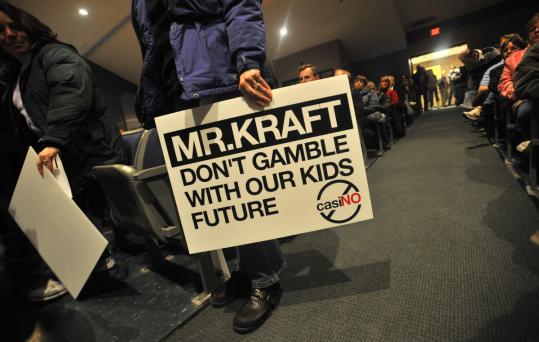
"The system is working the way the system is supposed to work," Crosby said.
Series of missteps
Yet the first year has not been without missteps. In May, the commission's choice for interim executive director, Stanley McGee, declined the offer after the resurfacing of an allegation that he sexually assaulted a 15-year-old boy in Florida in 2007.

Crosby called the episode a "learning experience" for the panel. A permanent executive director has yet to be named. While some ardent casino backers are disappointed with the commission's deliberate pace, the panel gets high marks from former Attorney General Scott Harshbarger, one of the state's leading opponents of casino gambling.
He credits the panel for taking its time and not succumbing to pressures to accelerate the process.
"I think they deserve a lot of credit for avoiding the push to get this up and running at all costs," said Harshbarger, who predicted the gambling law would bring corruption and other social ills.
Harshbarger said he was impressed by the commission's openness -- it has provided live webcasts of most public meetings -- and the apparent absence of any undue influence from powerful elected officials.
Sen. Stanley Rosenberg, D-Amherst, one of the principal architects of the casino bill, said the law is unfolding mostly as expected, with one surprise being the level of interest in western Massachusetts compared with the rest of the state. He praised the commission while suggesting it might consider ways of shortening the timeline for licensing.
 Not
surprisingly, Stan
Rosenberg, (D- Amherst) the senator for whom the Unwarrented
Hubris award's was created, also serves on the committee, a prerequisite for
which would appear to be narcissistic personality disorder.
Not
surprisingly, Stan
Rosenberg, (D- Amherst) the senator for whom the Unwarrented
Hubris award's was created, also serves on the committee, a prerequisite for
which would appear to be narcissistic personality disorder.Don't expect, however, to see any tinkering with the law itself, barring discovery of some catastrophic flaw. "I hope that there are no fatal points, because short of a fatal point, let it play out," Rosenberg said.
[Wonder how the casino stock Stan invested in is doing?]
http://www.berkshireeagle.com/ci_22051315/licensing-mass-casinos-slow-moving-process
Sunday, November 11, 2012
Schmoozing, it's in the Playbook
April 13, 2009, the Palmer Citizens Casino Impact Study Committee submitted a report to the Palmer Town Council that determined the annual mitigation costs to host Mohegan Sun would be $18.3 MILLION to $39.9 MILLION ANNUALLY, with an estimated INITIAL CAPITAL IMPROVEMENT COST of $46.7 MILLION to $147.8 MILLION.

The report was ignored.
Middleboro's Selectmen accepted gifts, attended parties and events and treated the Mashpee Wampanoag as friends, not a business coming to town.
Taunton was much the same, blinded by the dazzle of Fools' Gold.
Mayor Menino and Senator Petrucelli accepted 'charitable contributions' from Richard Fields, owner of Suffolk Downs, successfully avoiding disclosure.
Has anyone in Springfield mentioned COSTS?
Too many seem to forget that in order for casinos to profit, local residents need to lose $$$.
Pols told to be ‘very careful’
Urged to avoid Springfield casino schmooze
By Dave WedgeSunday, November 11, 2012
Springfield elected officials have been warned to steer clear of parties, giveaways or other events sponsored by potential casino bidders to avoid any conflicts of interest, a top city official said.
“Anyone in a decision-making or advisory capacity has to be very careful,” said Kevin Kennedy, the city’s chief development officer and chairman of the casino advisory committee.
The Herald reported yesterday that Ameristar and MGM — locked in a battle to build a casino resort in Springfield — have been shelling out cash for parties to woo supporters and blanketing the city with an aggressive marketing blitz campaign.

Kennedy said of the spending spree: “The PR efforts they are making are good for Springfield. It’s creating a good atmosphere. But we’re taking it one step at a time.”
Meanwhile, Mohegan Sun, which is also looking to bring a casino to Western Massachusetts, has had an office in Palmer for four years, sponsors the Big E agricultural fair and the Basketball Hall of Fame in Springfield and donates money annually to Holyoke for its St. Patrick’s Day parade and to Palmer for its annual Palmer Day festivities, a spokesman said.
Mohegan Tribal Gaming Authority CEO Mitchell Etess trumpeted the “great support” for the Palmer project and said, “It’s been clear ... just how strong the interest level and excitement is for our project.”
The state passed a casino law a year ago, setting the stage for three casinos and one slots-only gaming parlor in the state. Ameristar, MGM, Mohegan Sun and Penn National are among the players competing for the Western Massachusetts casino license. Suffolk Downs so far is the only one in the running for the Eastern Massachusetts license, although plans have been floated for Crossroads Resort in Milford and the Herald reported last week that Everett has had preliminary talks with Hard Rock International for a proposal there. Rush Street Gaming also is reportedly eyeing sites in the state.
The federal Bureau of Indian Affairs last month rejected a gaming compact between the state and the Mashpee Wampanoag Tribe, which was given special rights to a casino license in Taunton in southeastern Massachusetts, sending that proposal back to the drawing board.
Plainridge Racecourse in Plainville is bidding for the slots parlor license, while Raynham Park also has expressed interest in opening a slots parlor.
The state Gaming Commission, which has been meeting with applicants and others who have expressed interest in opening a casino, doesn’t expect the first license to be awarded until 2014.
Erin Smith contributed to this report.
http://bostonherald.com/news/regional/view/20221111pols_told_to_be_very_careful_urged_to_avoid_springfield_casino_schmooze
“Anyone in a decision-making or advisory capacity has to be very careful,” said Kevin Kennedy, the city’s chief development officer and chairman of the casino advisory committee.
The Herald reported yesterday that Ameristar and MGM — locked in a battle to build a casino resort in Springfield — have been shelling out cash for parties to woo supporters and blanketing the city with an aggressive marketing blitz campaign.

Kennedy said of the spending spree: “The PR efforts they are making are good for Springfield. It’s creating a good atmosphere. But we’re taking it one step at a time.”
Meanwhile, Mohegan Sun, which is also looking to bring a casino to Western Massachusetts, has had an office in Palmer for four years, sponsors the Big E agricultural fair and the Basketball Hall of Fame in Springfield and donates money annually to Holyoke for its St. Patrick’s Day parade and to Palmer for its annual Palmer Day festivities, a spokesman said.
Mohegan Tribal Gaming Authority CEO Mitchell Etess trumpeted the “great support” for the Palmer project and said, “It’s been clear ... just how strong the interest level and excitement is for our project.”
The state passed a casino law a year ago, setting the stage for three casinos and one slots-only gaming parlor in the state. Ameristar, MGM, Mohegan Sun and Penn National are among the players competing for the Western Massachusetts casino license. Suffolk Downs so far is the only one in the running for the Eastern Massachusetts license, although plans have been floated for Crossroads Resort in Milford and the Herald reported last week that Everett has had preliminary talks with Hard Rock International for a proposal there. Rush Street Gaming also is reportedly eyeing sites in the state.
The federal Bureau of Indian Affairs last month rejected a gaming compact between the state and the Mashpee Wampanoag Tribe, which was given special rights to a casino license in Taunton in southeastern Massachusetts, sending that proposal back to the drawing board.
Plainridge Racecourse in Plainville is bidding for the slots parlor license, while Raynham Park also has expressed interest in opening a slots parlor.
The state Gaming Commission, which has been meeting with applicants and others who have expressed interest in opening a casino, doesn’t expect the first license to be awarded until 2014.
Erin Smith contributed to this report.
http://bostonherald.com/news/regional/view/20221111pols_told_to_be_very_careful_urged_to_avoid_springfield_casino_schmooze
Friday, November 9, 2012
Springfield City Councilors Astounds!
At no point have Springfield's leaders addressed the costs of Predatory Gambling - the Gambling Addiction, increased crime, the experiences of other communities, the financial condition of the developers, the destruction of local businesses.....

Springfield City Councilor Timothy Rooke shuns advice, seeks contact with casino companies
By
on November 08, 2012


 Timothy J. Rooke
Rooke said he wants as much advance information as possible from casino developers so that he can make the most informed vote when a casino agreement or more than one agreement is forwarded for council consideration by Mayor Domenic J. Sarno.
City Solicitor Edward M. Pikula, however, said in an email to councilors, that casino proposers “are prohibited from communicating directly with any city employee,” under the city’s formal request for casino proposals. The City Council members are city employees, he said.
Pikula said the three companies proposing a casino will be required to make a public presentation between Dec. 4 and Dec. 14, and the councilors can be present during those public meetings.
Council President James J. Ferrera III said he has met with casino developers and plans to continue those meetings to help them “navigate the process” to answer any of their questions, and to provide information to his constituents on a major economic development project.
“That’s my job as an elected official,” Ferrera said, adding that Pikula’s warning is Pikula’s opinion.
Rooke said the warning from Pikula amounts to a “gag order.”
“How can the legislative body of the city (the council) and a licensing agent of the casino process not be directly involved, approached or educated in our due diligence/fact finding efforts” Rooke said.
“My opinion is that if this ‘gag order’ was allowed it will give the false appearance that developers who are investing millions, if not billions of dollars would not have fair, equal and open access to the City Council decisions makers. That is not the case.”
Three casinos are being proposed in Springfield. Under state law, a single casino will be permitted in Western Massachusetts, and up to three casinos statewide. The council would need to approve any mayor-negotiated agreement with a casino developer and would approve any needed zone changes or special permits, officials said.
Proposed casinos in Springfield include: Ameristar, proposing a project at the former Westinghouse site in East Springfield; MGM Resorts, proposing a project in the South End; and Penn National, proposing a casino in the North End of the downtown corridor.
In addition, the owner of Mohegan Sun is proposing a casino in Palmer off the Massachusetts Turnpike.
Rooke said he has also suggested that in considering which casino proposal is the best for Springfield, that a “score card or matrix be used to weigh each economic development proposal on all objective issues.” Thus, each would be rated on objective criteria, he said.
“I am not, nor do I intend to let the largest economic development process in the city’s history to be made by a consultant, the economic development director or one elected official,” Rooke said. “Nor would I suspect that my colleagues on the City Council will allow this either.”
Pikula said the city’s consulting firm, Shefsky & Froelich of Chicago, plans another monthly meeting with the City Council on Nov. 14.
“Should a councilor feel a need to communicate with a proposer, the communication should be coordinated and vetted through the city’s consultant,” Pikula said in his email to councilors.
Ferrera said "we as councilors have a responsibility and obligation to ensure Springfield gets the best possible casino proposal or proposals to the Gaming Commission. I intend to be fully involved in the process."
http://www.masslive.com/news/index.ssf/2012/11/springfield_city_councilor_tim_7.html
Thursday, November 1, 2012
Mayor Sarno Confirms Public Perception!

Mass. city takes next step in casino process
AP / November 1, 2012
SPRINGFIELD, Mass. (AP) — Springfield is moving on to the second phase of its casino selection process.
The companies will now be asked to submit more detailed applications under Phase II of the process, which must include detailed site plans, projections of economic benefits to the city and state, and estimates of jobs the project will create.
Springfield Mayor Domenic Sarno appointed a seven-member advisory committee Thursday to help review applications.
Sarno intends to pick one — or possibly more — proposals to put before voters for approval next year.
http://www.boston.com/news/local/massachusetts/2012/11/01/mass-city-takes-next-step-casino-process/IJZjkTg18uvXogb0LKG2zK/story.html
The city announced Thursday that all three developers proposing casino plans for the city have been prequalified after submitting Phase I applications. They are MGM Resorts, Penn National Gaming and Ameristar Casinos.
The companies will now be asked to submit more detailed applications under Phase II of the process, which must include detailed site plans, projections of economic benefits to the city and state, and estimates of jobs the project will create.
Springfield Mayor Domenic Sarno appointed a seven-member advisory committee Thursday to help review applications.
Sarno intends to pick one — or possibly more — proposals to put before voters for approval next year.
http://www.boston.com/news/local/massachusetts/2012/11/01/mass-city-takes-next-step-casino-process/IJZjkTg18uvXogb0LKG2zK/story.html
Wednesday, October 24, 2012
Gambling panelists take Asia jaunt
From:Bill Kearney
Massachusetts ‘GAMING’ Future
Sounds like another casino “Happy Ending”
Sounds like another casino “Happy Ending”
Gaming panelists take Asia jaunt
By Dave WedgeWednesday, October 24, 2012
Two state gaming commissioners are on a $9,000 Asian junket while back home another casino company floated plans for a nearly $1 billion Springfield gambling mecca.
Massachusetts Gaming Commission Chairman Stephen Crosby and Commissioner Gayle Cameron are on a weeklong trip to Asia — the world’s largest gambling market — where they are attending an international gaming regulators conference in Singapore. Cameron, a former New Jersey state trooper who is heading the commission’s enforcement arm, is slated to spend an extra night in Macau to meet with gaming officials.

“Many of our potential gaming applicants are anticipated to have international business ventures that will play a role in their consideration during their application process here,” Gaming Commission spokeswoman Elaine Driscoll said of the trip. “It is critical that MGC establish working relationships with our international counterparts.”
Driscoll said despite the trip, the board is “full-speed ahead” on schedule. The board is slated to meet with potential gaming applicants Monday in Framingham, where they will be briefed on just how in-depth background checks will be on executives, officers, employees and financial partners.
In addition to Monday’s conference, consultants hired by the commission will spend three days next week meeting individually with potential casino operators, providing guidance on the application process.
Among those who have signed up to meet with the consultants are Plainridge Racecourse in Plainville, Ameristar Casinos, Mohegan Sun, MGM Springfield, Penn National Gaming and Suffolk Downs/Caesar’s Entertainment, Driscoll said. Plainridge, Suffolk Downs and MGM are the only three that have so far paid an initial $400,000 pre-application fee.
Meanwhile, Ameristar yesterday laid out plans for a $910 million casino in Springfield. The Las Vegas casino company’s plans call for a 500-room luxury hotel and 150,000-square-foot gaming parlor on a 40-acre site off Interstate 291. The plans also include indoor and outdoor pools, a spa, a conference center and restaurants, including one owned by former Red Sox player and TV analyst Jerry Remy.
MGM and Penn National have also unveiled detailed Springfield plans while Mohegan Sun is expected to seek a license for a resort casino in Palmer.
http://bostonherald.com/news/regional/view.bg?articleid=1061169866
Massachusetts Gaming Commission Chairman Stephen Crosby and Commissioner Gayle Cameron are on a weeklong trip to Asia — the world’s largest gambling market — where they are attending an international gaming regulators conference in Singapore. Cameron, a former New Jersey state trooper who is heading the commission’s enforcement arm, is slated to spend an extra night in Macau to meet with gaming officials.
Photo by Christopher Evans
ODDS EVEN: Commission Chairman Stephen Crosby, above, is on a weeklong trip to Asia.
“Many of our potential gaming applicants are anticipated to have international business ventures that will play a role in their consideration during their application process here,” Gaming Commission spokeswoman Elaine Driscoll said of the trip. “It is critical that MGC establish working relationships with our international counterparts.”
Driscoll said despite the trip, the board is “full-speed ahead” on schedule. The board is slated to meet with potential gaming applicants Monday in Framingham, where they will be briefed on just how in-depth background checks will be on executives, officers, employees and financial partners.
In addition to Monday’s conference, consultants hired by the commission will spend three days next week meeting individually with potential casino operators, providing guidance on the application process.
Among those who have signed up to meet with the consultants are Plainridge Racecourse in Plainville, Ameristar Casinos, Mohegan Sun, MGM Springfield, Penn National Gaming and Suffolk Downs/Caesar’s Entertainment, Driscoll said. Plainridge, Suffolk Downs and MGM are the only three that have so far paid an initial $400,000 pre-application fee.
Meanwhile, Ameristar yesterday laid out plans for a $910 million casino in Springfield. The Las Vegas casino company’s plans call for a 500-room luxury hotel and 150,000-square-foot gaming parlor on a 40-acre site off Interstate 291. The plans also include indoor and outdoor pools, a spa, a conference center and restaurants, including one owned by former Red Sox player and TV analyst Jerry Remy.
MGM and Penn National have also unveiled detailed Springfield plans while Mohegan Sun is expected to seek a license for a resort casino in Palmer.
http://bostonherald.com/news/regional/view.bg?articleid=1061169866
Sunday, October 21, 2012
Evidence Abounds! Thank you, Rev. J. Peter Swarr!
Episcopals oppose resort casino in Springfield
By Stephanie Barry, The Republican
The Republican
on October 20, 2012

The Rev. J. Peter Swarr, rector of St. Mark's Episcopal Church in East Longmeadow, is shown here after his appointment in 2009.
SPRINGFIELD - Episcopalians in Springfield formally came out against a casino within the city limits after the 111th Annual Convention of the Episcopal Diocese of Western Massachusetts on Saturday.
Members unanimously passed a resolution to oppose casino gambling in Massachusetts, but leaders said they recognize the tide has largely turned in favor of casino gaming. The diocese is particularly averse to placing a resort casino in Springfield.
"We don't like any of it. Christians by and large oppose state-sanctioned gambling because of the harm it causes, but we realize that ship has sailed," said the Rev. J. Peter Swarr, rector of St. Mark's Episcopal church in East Longmeadow.
A statewide casino bill has authorized up to three casinos across the state with one slated for Western Massachusetts. Three companies have proposals to develop casinos in Springfield, and a fourth is pursuing a site in Palmer.
Officials of the city that had an unemployment rate of 11.2 percent during the last report have embraced the possibility of a casino within Springfield limits. Proposals include eliminating blighted properties, hiring thousands of workers, linking to key city locations and boosting other businesses and entertainment venues within Springfield.
MGM Resorts is proposing a casino in Springfield's South End, while Penn National Gaming has a site in the North End and Ameristar Casinos Inc. has purchased property off Interstate 291 in East Springfield. The Mohegan Tribal Gaming Authority has chosen a site of the Massachusetts Turnpike in Palmer for potential development.
Mayor Domenic J. Sarno termed the three potential players in Springfield as all “world class.” Development proposals are topping $800 million.
Swarr said he spent more than three years at a church in Detroit, where a similar casino scenario played out and boosters pitched the concept as the only economic savior for a floundering city in desperate need of jobs.
"All kinds of places came in and they made wonderful promises, including places like MGM, and if you haven't noticed: Detroit is not the new Las Vegas," Swarr said.
Michigan voters approved a proposal to build casinos in Detroit in 1996 and three cropped up in the city since - Greektown Casino, MGM Grand Detroit and MotorCity Casino, with a fourth a short distance outside Detroit.
The Greektown Casino filed for Chapter 11 bankruptcy in 2010 - just about a decade since it first opened its doors. The site has struggled to recover with a new management group.
Swarr said the resort casinos in Detroit offered minimum wage jobs and captured most foot traffic from other local businesses, particularly restaurants, which he said suffered after the casinos opened.
"We see Springfield as a microcosm of what we saw in Detroit," Swarr said. "Casinos don't create wealth. Yeah, they create minimum wage jobs."
And, as people of faith, he said, they believe the potential for gambling addictions and draining of already scant budgets will cause harm in a poverty stricken city.
According to the resolution passed at the convention at Sheraton Springfield Monarch Place Hotel, the diocese is resolved to "educate our members and our communities about the negative impact casinos will have," work to minimize the negative impact, "in particular by opposing a casino in Springfield," and "undertake a period of study, prayer, and conversation around the issue of casino gambling."
Swarr said a diocesan task force will prepare materials, resources and discussion guides for study and prayer around the issue over Lent, which begins 40 days before Easter Sunday.
http://www.masslive.com/news/index.ssf/2012/10/episcopals_against_casino_in_s.html
Saturday, October 20, 2012
Springfield: Baffling!
Springfield seems to have written their own rules and time table on this one.
Truly baffling!
Maybe it's time to apply the brakes.

Springfield pledges transparency with unveiling of casino proposals online; City Council to meet with consultant
 By
By on October 18, 2012
SPRINGFIELD — The city, citing the need for a fully transparent process, has released the full, detailed Phase 1 proposals for three competing casino projects in Springfield, which were filed with the city by last week’s deadline.
A new web page maintained by the Springfield Redevelopment Authority details casino proposals submitted by the city's Oct. 11 "Phase I" Request for Qualifications and Proposals deadline.
The web page is available at: www.springfield-ma.gov/casino.
“We made a promise right from the start this would be an open and transparent process,” said Kevin E. Kennedy, chief development officer. “This is evidence we intend to keep our word. Everyone in the public will be as well-informed as those who are working on this on a day-to-day basis.”
The companies that met the deadline were MGM Resorts International, which is planning a South End casino; Penn National Gaming, which is planning a casino in the North End of the downtown district; and Ameristar Casinos, which is planning a casino at the former Westinghouse site in East Springfield.
The information included on the new web page includes each company's proposal, qualifications and conceptual plans. A five-member Casino RFQ Review Committee will use the information to "pre-qualify" companies by Oct. 31. Pre-qualified companies will be invited to submit more detailed proposals in the next phase, beginning Nov. 1.
The review committee consists of Kennedy, Public Works Director Allen R. Chwalek, Deputy City Solicitor Kathleen Breck, Board of Assessors Chairman Richard Allen and Finance Director Timothy J. Plante.
The new web page also includes an at-a-glance table (below) comparing the details of the three proposals.
In related news, Kennedy and representatives of the city’s hired casino consultant, Shefsky & Froelich of Chicago, will meet with the City Council on Monday to provide the latest information on the casino review process and related issues. The meeting is at 5 p.m., at City Hall.
Some councilors have raised concerns that the council is not getting enough information to date, and needs to have a greater role in the review and selection process. The council will have to approve any community host agreement with a casino firm, and has power over zoning and special permit issues, councilors said.
Kennedy said that briefings and meetings with the council will be done on a regular basis throughout the process.
A new web page maintained by the Springfield Redevelopment Authority details casino proposals submitted by the city's Oct. 11 "Phase I" Request for Qualifications and Proposals deadline.
The web page is available at: www.springfield-ma.gov/casino.
“We made a promise right from the start this would be an open and transparent process,” said Kevin E. Kennedy, chief development officer. “This is evidence we intend to keep our word. Everyone in the public will be as well-informed as those who are working on this on a day-to-day basis.”
The companies that met the deadline were MGM Resorts International, which is planning a South End casino; Penn National Gaming, which is planning a casino in the North End of the downtown district; and Ameristar Casinos, which is planning a casino at the former Westinghouse site in East Springfield.
The information included on the new web page includes each company's proposal, qualifications and conceptual plans. A five-member Casino RFQ Review Committee will use the information to "pre-qualify" companies by Oct. 31. Pre-qualified companies will be invited to submit more detailed proposals in the next phase, beginning Nov. 1.
The review committee consists of Kennedy, Public Works Director Allen R. Chwalek, Deputy City Solicitor Kathleen Breck, Board of Assessors Chairman Richard Allen and Finance Director Timothy J. Plante.
The new web page also includes an at-a-glance table (below) comparing the details of the three proposals.
In related news, Kennedy and representatives of the city’s hired casino consultant, Shefsky & Froelich of Chicago, will meet with the City Council on Monday to provide the latest information on the casino review process and related issues. The meeting is at 5 p.m., at City Hall.
Some councilors have raised concerns that the council is not getting enough information to date, and needs to have a greater role in the review and selection process. The council will have to approve any community host agreement with a casino firm, and has power over zoning and special permit issues, councilors said.
Kennedy said that briefings and meetings with the council will be done on a regular basis throughout the process.
http://www.masslive.com/news/index.ssf/2012/10/springfield_unveils_casino_pro.html
Sunday, October 14, 2012
3 Developers Salivate to Invade Springfield
From Michael T. Kogut, founder of Citizens Against Casino Gaming --
"Springfield's latest move is yet another example of the city moving forward with a process without regard to state law and in a way even the state Gaming Commission has warned against. The public has a right to know each and every detail and the manner in which the city is proceeding and not just hyperbole and platitudes from the Sarno administration."
3 developers vie for Springfield, Mass., casino
By BOB SALSBERG
Associated Press / October 11, 2012
BOSTON (AP) — Three companies seeking to develop a resort casino in Springfield submitted applications Thursday to the western Massachusetts city, and a fourth that had previously expressed interest declined to enter the competition.
Penn National Gaming, which unveiled details of an $807 million casino plan earlier in the day, MGM International and Ameristar Casinos met the Thursday 5 p.m. application deadline set by city officials, who are expected to select one proposal to put before voters.
Hard Rock International did not apply. The company had also been eyeing Springfield after dropping an earlier proposal to develop a casino in Holyoke after opposition from the mayor of that city.
Kevin Kennedy, Springfield’s economic development director, said the three companies that met the deadline also submitted $50,000 application fees that will help cover transportation studies and other costs associated with the city’s review of the casino proposals.
Mayor Domenic Sarno and other city officials had earlier predicted at least four and as many as six would-be casino developers, but Kennedy said he was not disappointed that fewer applied.
‘‘To get three is a great accomplishment,’’ said Kennedy, who noted that the proposals were all unique and would be situated in different parts of the city.
Penn National Gaming said was seeking to build a casino and hotel project on a parcel that is now home to a newspaper and a bus terminal. The company — in partnership with Peter Picknelly, the chairman and chief executive of Springfield-based Peter Pan Bus Lines — is proposing a 300,000-square-foot casino and a 300- to 500-room hotel on 13.4 acres of land off Interstate 91 in the city’s North End.
The project, which would be called Hollywood Casino Springfield, would include up to 3,500 slot machines and at least 100 poker and other table games. The company said it also planned several restaurants and space for conventions.
The plan calls for relocating the offices of The Republican newspaper to a newly-renovated location in downtown Springfield and building a new printing plant for the newspaper. The existing Peter Pan bus terminal would be moved to Union Station.
Peter Carlino, chairman and chief executive of Wyomissing, Pa.-based Penn National Gaming, said in a statement that the casino plan would contribute to a ‘‘renaissance’’ for Springfield’s downtown and deliver ‘‘thousands of new permanent jobs, significant union construction jobs, and millions of tax dollars to the region.’’
Penn National Gaming operates more than two dozen gambling facilities in the U.S. and Canada. It opened the Hollywood Casino Columbus in Ohio’s capital earlier this month.
In August, MGM International proposed an $800 million resort casino on 10 acres of downtown land that had sustained extensive damage in a June 2011 tornado.
Ameristar Casinos, the only potential developer that currently owns land in Springfield, bought a former industrial site off Interstate 291 for $16 million earlier this year.
A spokesman for Hard Rock did not immediately return a call seeking comment. There have been reports the company may turn its attention to eastern Massachusetts.
Springfield announced a selection process in August to weigh the multiple casino proposals it was expecting to receive.
Kennedy said officials will conduct a preliminary review by Oct. 31 to determine if the three applicants are qualified to move on to a more thorough review. While city officials have not ruled out presenting more than one proposal to voters, ‘‘we'd like one to rise to the top,’’ he said.
The Massachusetts Gaming Commission will make the final decision on awarding the sole casino operating license for western Massachusetts, one of three regional licenses allowed under the state’s 11-month-old casino law.
The company that emerges from the Springfield competition will likely have to compete with Mohegan Sun, which is seeking a resort casino in the town of Palmer.
Three casinos submit bids for Springfield licenses

PENN NATIONAL GAMING
A rendering shows the proposed casino plan from Penn National Gaming.
Three well-known casino developers met Thursday’s deadline to submit a formal proposal and a $50,000 fee to the City of Springfield and will compete for the city’s support in pursuit of casino development rights in Western Massachusetts.
MGM Resorts, Penn National Gaming, and Ameristar will battle for the city’s favor, each proposing a gambling resort development approaching $1 billion.
Hard Rock International, which had expressed interest in Springfield and pursued land downtown, did not submit a proposal and will not compete in the city.
The 2011 state casino law allots one resort casino license for Western Massachusetts. In addition to the three companies in Springfield, the operators of the Mohegan Sun casino in Connecticut have proposed a resort in Palmer. The state gambling commission will eventually decide which project will be licensed.
Mayor Domenic Sarno has set up a local contest to evaluate the casino projects in Springfield. His administration set the Thursday deadline for casino operators to submit financial information about their companies and rough outlines of their projects. The city will demand more detailed information about each project later, and Sarno is expected to choose one or two winners with whom to negotiate the terms by which the city would agree to host a gambling resort.
The host agreements would then need the endorsement of local voters in separate ballot questions before the winning companies may apply to the gambling commission for a state license.
Also on Thursday, Penn National released details and an artist rendering of its proposed $807 million casino and entertainment complex in Springfield’s north end. The cost estimate is just slightly higher than the $800 million proposed in August by MGM, which wants to build in the city’s south end. Penn denied any intentional one-upmanship, though the size of the investment will be an important factor in the public campaign to win support for each project.
“Our proposed $807 million destination casino resort will be the centerpiece of a revitalization of the city and bring thousands of new permanent jobs, significant union construction jobs, and millions of tax dollars to the region,’’ company chairman Peter Carlino said.
Penn National’s proposal calls for 3,000 to 3,500 slot machines, poker rooms, up to 100 live table games, and a hotel with 300 to 500 rooms. The plan would create new restaurants, a spa, parking garage, and up to 45,000 square feet of meeting and convention space. The complex would be called Hollywood Casino Springfield.
Penn, in partnership with Peter Picknelly, a Springfield businessman and operator of Peter Pan Bus Lines, plans to build on 13.4 acres near the city’s downtown. The development would include land now occupied by The Republican newspaper, which would relocate if the project wins a license. The newspaper’s current building would then be torn down.
The newspaper’s publisher, George Arwady, said in a Globe interview Thursday that the paper will not be an investor or owner in the casino proposal. “Our main function is to get out of the way,” he said. “We are selling the property, pure and simple.”
Terms of the possible sale have not been released. Arwady said the newspaper has a “handshake agreement” to sell and is still negotiating a formal option deal for the sale of its building and land.
Penn irked fellow competitor Ameristar in its announcement, by saying the company would be willing to help develop the 41 acres Ameristar owns in east Springfield, where Ameristar proposes its casino resort.
“If Ameristar is not successful, we’d want to step up,” said Eric Schippers, a Penn National spokesman. “We have offered to bring in a third party to revitalize that site.”
“That should be fairly easy to do,” shot back Troy Stremming, an Ameristar senior vice president, “given our great location and easy access from the highway,”
On Thursday, Ameristar released some details of its proposal: a $910 million development with 3,300 slot machines, 110 table games, a 500-room hotel, parking for 4,300 cars, plus restaurants, a spa, pools, and meeting space.
The company will reveal further details and renderings soon, Stremming said.
Subscribe to:
Posts (Atom)

 Posts
Posts


