Meetings & Information


*****************************
****************************************************
MUST READ:
GET THE FACTS!


Showing posts with label slot machines. Show all posts

Saturday, December 7, 2019

A life-changing problem to discuss this week


Image result for REEL WAMPS


The problem of commercialized gambling will be a subject of conversation in millions of American homes over the next few days as families and friends gather for Thanksgiving.
Why? Because it's America's biggest most-neglected problem today.
Americans are on course to lose more than $1 trillion of personal wealth to commercialized gambling over the next eight years.
Our mission is to reduce this enormous loss of wealth by citizens by 50% over the same span.
Below are some must-share facts along with some specific reforms that will dramatically improve the lives of millions of Americans:
The Problem: Tens of millions of citizens are broke!!! And millions of citizens are now addicted to commercialized gambling.
Partial Policy Solutions That Have Been Put Forward From Both Political Parties to Help Solve the Problem:
  • Tax Cuts
  • Tax Credits
  • Raising the Minimum Wage
  • Increasing Taxes on the Rich
  • ….None of which represent a consequential fix
Absent from the List is America's Biggest Most-Neglected Problem: The Life-Changing Citizen Losses of Personal Wealth to Commercialized Gambling
The sheer size and scope of these financial losses lacks any comparison:
The Way Forward
  • Building assets, the accumulation and investment of savings, are key for anyone looking to make a better life. A home, a college fund, retirement accounts, a stock portfolio—these assets are the hallmarks of middle and upper class America, and they are all the result of savings.
  • Building assets is the direct opposite of commercialized gambling. No single policy reform would create more financial peace for low-to-middle-income citizens than reversing the current scheme of turning millions of people who are small earners, who could be small savers, into habitual bettors.
Partial List of Reform Proposals Include:
  • To safeguard the health of minors, no kids under should be exposed to gambling ads and marketing on TV, radio, at point-of-sale, or on the internet.
  • No advertising or marketing of commercialized gambling to low income populations.
  • A ban on the sale of lottery products in check-cashing outlets, which serve unbanked, low-income people.
  • No high dollar lottery tickets should be sold in low income areas (ending the practice of selling tickets greater than $5.00)
  • Capping staking levels on all slot machine-style games, regardless whether it is a physical machine or online, to $2.00 or less. There is no justification for staking levels above $2.00.
  • End the predatory practice of allowing commercialized gambling on credit, whether by credit card or “markers,” (interest-free loans issued by casinos.) It’s inconceivable that states encourage citizens to fund their gambling addiction using debt.
  • Require state lotteries to track and report re-wagers and quantify their relationship to sales and subsequent prizes.
  • Ban “loot boxes” and other elements of commercialized gambling that are currently being engineered into video games that kids under 18 are playing.
  • Reduce the overall amount of lottery games being marketed to the public. Presently, some states offer dozens of different gambling games. For example, Texas was promoting 92 scratch games for sale in November 2019.
  • Reduce the amount of locations where extreme forms of gambling like electronic gambling machines are being marketed by the state.
  • Reduce the speed of the commercialized gambling being offered by states. Many of the most harmful forms of commercialized gambling are also the fastest like electronic gambling machines, online gambling, and scratch tickets.
  • Require commercialized gambling interests to be treated the same under civil litigation laws as any other business.
  • Create an Office of the Public Advocate committed to public service in representing state citizens in any matter that is covered by the authority of the state gambling commissions, as well as proceedings before state and federal agencies and courts, so that they are protected from being exploited and cheated by commercialized gambling operators. This is similar to what many states do in representing state utility consumers.
  • Require that state problem gambling councils collect and report annual data on state gambling addiction numbers and on the effectiveness of the problem gambling interventions being funded (changing the measurement from how many calls are taken to how many people are moved from addicted to not addicted).
  • Restrictions on the inducements offered to gamblers to keep them gambling or luring them to start gambling after they have stopped.
Please consider how you can use your time, talent, and treasure to help move these desperately-needed, long-overdue social reforms forward over the next 18 months and let me know. Thank you.
Best,
Les Bernal
National Director
Stop Predatory Gambling
________________________________
Who We Are —
- A 501c3 non-profit based in Washington, DC, we are a national social reform network of citizens and organizations from across the U.S.
- We believe in improving the lives of the American people with compassion and fairness, freeing us from the lower standard of living, exploitation, and fraud that commercialized gambling spreads.
- We are one of the most diverse organizations in the United States, one in which conservatives and progressives work side-by-side to improve the common good.
What We Stand For —
- We believe everyone should have a fair opportunity to get ahead and improve their future.
- We believe every person’s life has worth and that no one is expendable.
- We believe that a good society depends on the values of honesty, concern for others, mutual trust, self-discipline, sacrifice, and a work ethic that connects effort and reward.
- We believe no government body should depend on predatory gambling to fund its activities.
If you share our beliefs, please help sustain our work by making a tax-deductible, financial gift today of $10 or more.
Stop Predatory Gambling Foundation
100 Maryland Avenue NE, Room 310  | Washington, District of Columbia 20002
(202) 567-6996 | les@stoppredatorygambling.org


Sunday, November 18, 2018

Big victories against predatory gambling at the ballot box on Election Day Tuesday


Image result for stop predatory gambling


There were some major victories against predatory gambling at the ballot box on Election Day Tuesday:

1) Florida citizens voted overwhelmingly to put the power to decide gambling expansion in the hands of the people instead of the Legislature. The state group No Casinos Florida organized the referendum and led the fight to pass it.

2) The people of Florida also voted to abolish greyhound dog racing after years of work by the greyhound protection organization Grey2K.

3) Idaho voters rejected the deceptive proposal to legalize slot machines at Idaho race tracks. Our chapter Stop Predatory Gambling Idaho played a key role in educating citizens about the issue.

4) In a history-making referendum, an Illinois community that introduced video gambling reversed that policy through a binding ballot question. Voters in Forest Park, Illinois shut down video gambling machines in their community.

There were also two efforts that did not go our way on Tuesday. In Arkansas, out-of-state gambling interests spent millions of dollars to initiate a referendum to pass regional casinos and then saturate the state with campaign advertising. And in Louisiana, sports gambling operators spent more than $1 million to lure voters in some state parishes to support "daily fantasy sports" gambling. It was a blatantly deceitful attempt to force online gambling into people's homes by disguising it as something harmless.  

I'm so proud to be a part of this just and important fight with you to improve the lives of the American people with compassion and fairness. Thank you!

Best,
Les Bernal
National Director
Stop Predatory Gambling
________________________________
Who We Are —
- A 501c3 non-profit based in Washington, DC, we are a national government reform network of individuals and organizations from across the U.S.
- We believe in improving the lives of the American people with compassion and fairness, freeing us from the lower standard of living, exploitation, and fraud that commercialized gambling spreads.
- We are one of the most diverse organizations in the United States, one in which conservatives and progressives work side-by-side with with a common national purpose.
What We Stand For —
- We believe everyone should have a fair opportunity to get ahead and improve their economic standing.
- We believe every person’s life has worth and that no one is expendable.
- We believe that a good society depends on the values of honesty, concern for others, mutual trust, self-discipline, sacrifice, and a work ethic that connects effort and reward.
- We believe no government body should depend on predatory gambling to fund its activities.
If you share our beliefs, please help sustain our work by making a tax-deductible, financial gift today of $10 or more. 


Thursday, October 5, 2017

Stop Predatory Gambling: Las Vegas shooter Stephen Paddock was not a “professional gambler”


EXCERPT BELOW CLICK ON LINK TO VIEW ADDITIONAL INFORMATION!


Las Vegas shooter Stephen Paddock was not a “professional gambler”


The facts coming out of Las Vegas are becoming clearer every day that the Las Vegas shooter Stephen Paddock had a serious gambling addiction. But virtually no one has said it publicly. Read the latest New York Times reporting on his gambling behavior. It was the center of his life.
The powerful corporate gambling operators in Las Vegas have a lot to lose if Paddock is revealed as a gambling addict. No credible gambling addiction expert unaffiliated with gambling operators (and their funding) would describe him as a “responsible gambler.” ‘Responsible gambling’ is little more than a marketing slogan made up by commercialized gambling operators and their partners. Its intent is to place the spotlight on the citizen and shield their predatory and fraudulent business practices.
The mass media continues to use terms like “professional gambler” when describing Paddock. While he may have even said that about himself, he was not a professional gambler.
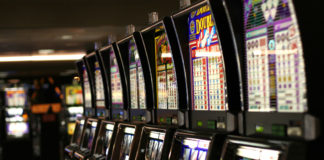
No professional gambler uses slot machines and video poker machines like Paddock didThe machines create the allusion of skill, but you’re playing against the house, which means you’re mathematically guaranteed to lose all of your money the longer you play them. Once you press the button on the machine, there is no skill involved. The computer inside the machine decides whether you lose or win.
The Times story has a concise description of how the machines work:
“There are no opponents. There is no bluffing or worrying about competitors’ hands. Five virtual cards are drawn from a 52-card virtual deck- instantly on the video screen- and players decide which ones to “hold” or keep, and which ones to exchange for new cards. Players calculate the possibilities remaining in the 47 other virtual cards.”
Paddock was playing hundreds of hands per hour (about one hand every six seconds) for many hours straight. Over and over again.
The business model of casinos is based on people like Paddock losing over and over again. While he may have won occasionally, it’s a statistical certainty that he lost the longer and more frequently he played.
While it’s uncommon for the millions of American citizens who’ve become addicted to electronic gambling machines to become mass shooters, it is very common for them to harm themselves and others close to them (often in the form of domestic violence.) 
http://www.stoppredatorygambling.org/las-vegas-shooter-stephen-paddock-was-not-a-professional-gambler/


Thursday, January 5, 2017

The devil in my casino


The devil in my casino
 Columnist

On a recent night, I yielded to temptation and paid a visit to my neighborhood den of sin: the newly opened casino at MGM National Harbor.
From my house in Fort Washington, the road to Hades is four miles. Barring traffic jams, I can be at a slot machine in less than 10 minutes. With my first dollar, I received a cash-out voucher for 50 cents and five free spins. It wasn’t a win, but it didn’t quite feel like a loss, either.
I played on, excited by the unexpected new chances to hit the jackpot.

I had been warned.
Living within 10 miles of a casino more than doubles the rate of problems from excessive gambling, according to researchers at the University of Buffalo.
Baby boomers like me are said to be among the fastest-growing group of problem gamblers.
“Older adults view the casino as a place where they can socialize, escape their loneliness, and escape their grief,” researchers Fayetta Martin, Peter A. Lichtenberg and Thomas N. Templin wrote in a journal for the National Institutes of Health. “Given that their primary choices of games are slot machines, these social needs, however, may not be getting met. . . . It may be worthwhile for church groups to assess the reasons for older adults wanting to go to casinos and helping them to determine how their social needs might be met in alternative ways.”
And then there’s the race factor.
As the National Center for Responsible Gaming has noted, “Gambling and gambling related problems are common among all racial and ethnic groups in the United States, but there is new evidence that African Americans are more likely to experience gambling-related problems than white Americans.”
That’s three strikes. Still, there is something to be said for being mesmerized.
Along with the casino, MGM National Harbor features several luxury retail stores and fancy restaurants the likes of which Prince George’s County, Md., had never seen. At the Sarah Jessica Parker store, for instance, a pair of purple high heels goes for $355. For a county more accustomed to seeing Kmart stores, the high-end goods suggest that there may be something royal about Prince George’s after all.
At the opening of MGM’s Marcus restaurant, chef Marcus Samuelsson cooked up a meal worthy of an establishment in the nation’s most affluent, predominantly black county. The dinner included an “Obama short rib slider” along with “China Afro funk and sweet potato puree, St. Hill Shrimp N Grits with Carolina shrimp, shoe box ham and creamy grits.”
Of course, these offerings also pose potential problems. Gambling is not the only behavior that can lead to addiction. Shopaholism and food addiction can be just as costly.
Nevertheless, the primary attraction at MGM National Harbor is the casino — that 125,000-square-foot cavern of iniquity.
There are more than 3,000 slots and hundreds of card and craps tables.
I took my free spins and came close to winning each time. Barbara Dafoe Whitehead, director of civil society initiatives at the Institute for American Values, has suggested that such titillation is just part of the casino con game.
“One way these computerized pickpockets milk their customers is by generating near misses, whereby the spinning symbols on the machine stop just above or below the winning payline,” she says. “The feeling of having come oh so close to a win prompts further play.”
I had spent a total of $4 during the visit and won five free spins and a 50-cent voucher. But I have since discovered several books and articles on how to beat the slot machine.
As for my maiden voyage to the casino, I confess that the devil made me do it. However, when I learn those winning techniques, Lady Luck could make me do it again.

Luck works both ways for slot winner, alleged heroin dealer, Madison police say


Luck works both ways for slot winner, alleged heroin dealer, Madison police say

Talk about a come down.
A Madison man who just won $1,500 at a Ho-Chunk Gaming slot machine early Wednesday was arrested while sitting at the machine waiting for his winnings, because a bag of heroin found at the front door allegedly fell out of his pants.
Michael Goodman, 32, was tentatively charged with possession of heroin with intent to deliver, Madison police said.
The incident happened at about 12:15 a.m. at the casino at 4002 Evan Acres Road.
“He likely was feeling pretty jubilant about hitting a slot machine jackpot, and was waiting to collect more than $1,500 in winnings, when police arrived and altered the mood by placing him in handcuffs,” police spokesman Joel DeSpain said.
Pause
Current Time0:00
/
Duration Time0:00
Loaded: 0%
Progress: 0%
0:00
Fullscreen
00:00
Mute
Earlier in the night, a casino employee found a plastic bag near the front entrance, a bag that looked like it contained drugs.
“It contained a golf ball-sized amount of a cream-colored powdery material, individually packaged in a couple of dozen pea-sized amounts,” DeSpain said. “The officer suspected heroin and testing determined that to be correct.”
Surveillance video at the front entrance showed a man adjusting the legs of his sweatpants, and when he did so, the bag of heroin fell out, but he apparently didn’t realize it, since he kept going into the casino to play.
“Security told police he was seated near some slot machines, waiting to collect his winnings,” DeSpain said. “Ironically, that is where his luck ran out.”


Israel Bids Shalom to State-Sponsored Slots on New Year's


The approval, however, comes at a great cost for the lottery monopoly, which had to shut down its 500 slot machines and 150 Keno machines on New ...

Israeli Slot Machine Prohibition Comes into Force On New Year's Eve, Israel's crackdown on its gambling industry reached new heights after the ...

Israeli Finance Minister Moshe Kahlon has declared himself to be “very happy” that his government banned state-sponsored slot machines. But for ...


Wednesday, November 16, 2016

Do casinos improve lives? The Atlantic forcefully says no


The Atlantic, one of America's most influential magazines, has ripped the curtain off predatory gambling in its December edition. It's one of the most compelling and revealing stories ever written about the issue. Please read it and then share it widely on Facebook, Twitter and your email networks.

The country's political establishment (both on the Left and the Right) has forced predatory gambling onto working class, rural and urban Americans alike over the last twenty years, casting it as "an economic engine." One of the major results has been a lower standard of living for almost all of us, regardless whether you gamble or not.

Another tragic result has been the destruction of millions of American lives. Scott Stevens, the primary focus of The Atlantic story, is one of them.

It's inevitable that predatory gambling will be sunset in the United States. It's not a question of if but when.

Best,

Les Bernal
National Director
Stop Predatory Gambling
If you believe what we believe in, please support our work by contributing $10 or more today to help sustain it.

________________________________
Improving the lives of the American people, using education and advocacy to free us of the dishonesty, exploitation, addiction and lower standard of living that commercial gambling spreads.

Thursday, November 10, 2016

Gambling addict and mother-of-six talks of her 'crippling guilt' after plundering $500,000 of her family's savings and spending it on poker machines


Gambling addict and mother-of-six talks of her 'crippling guilt' after plundering $500,000 of her family's savings and spending it on poker machines

  • Kate Seselja ran a earth moving business with her husband, Phil
  • But she wasted  half a million dollars gambling on pokie machines
  • The mother-of-six plundered their savings account to feed the secret habit
  • She said her addiction started at 18 years old when she won $1,000
  • Now 37, she has started a support group to help other problem gamblers 
A mother-of-six was crippled with guilt after feeding $500,000 into pokie machines to feed her gambling addiction.
Kate Seselja, 37, who ran a successful earth moving business with her husband Phil, told that's life! magazine that the pull of the pokies was a 'toxic hypnosis' and at the height of her addiction she secretly burned through $30,000 of their savings in a month.
Pregnant with her sixth child and engrossed in a pokie machine addiction despite the desperate pleas of her husband, she finally realised she had hit rock bottom
'Toxic hypnosis': Kate Seselja was hooked on the pokies after winning $1,000 as an 18-year-old
'Toxic hypnosis': Kate Seselja was hooked on the pokies after 
winning $1,000 as an 18-year-old
Mrs Seselja, from rural NSW, became hooked on gambling as an 18-year-old when she won $1,000 from a $20 bet.
The cravings went away for a short time in her early 20s, when she settled down with Phil and had the first of her six children.
But the urges came flooding back one night when she saw the flashing lights of the poker machines while visiting the pub with her mothers' group. 
'Before I knew what I was doing, I'd put some coins in the slot. It was like a toxic hypnosis took over,' she told that's life! 
In the months that followed Mrs Seselja secretly fed her growing addiction through the family's savings account. 
'That then continued on a path forward of over 12 years of just cycling in and out of addiction, self-loathing, shame, fear and regret,' she told Fairfax Media.  
'I thought it was a cycle I would never be able to escape.'
She estimated that in 12 years she had wasted about half a million dollars in her frequent gambling binges. 
'I'd wasted so much money and was crippled by guilt,' she told that's life!
The epiphany that finally broke the cycle came as she sat in front of a pokie machine while pregnant with her sixth child. 
With her husband ringing every few minutes and pleading with her to come home, she realised once and for all that she needed to tackle the problem head on. 
She sought counselling, re-built relationships with her family, and eventually started The Hope Project to help others battling addiction. 
'Although I lost 15 years I've finally taken control. 
'I'll never waste my money on those machines again - you can bank on that.' 
If you think you have a problem with gambling, call the Gambling Helpline on 1800 858 858 or visit: http://www.gamblinghelponline.org.au/  

Thursday, October 6, 2016

Drug Money Laundering at Downstream Casino in Quapaw, Oklahoma


15 indicted in Springfield meth distribution ring


Harrison Keegan&nbsp, HKEEGAN@NEWS-LEADER.COM

October 5, 2016


Fifteen people have now been indicted in a conspiracy to distribute large quantities of meth in the Springfield area.
Four men were charged in March after authorities say they were busted with 12 pounds of meth and 6 pounds of heroin in a Springfield garage, but Tuesday's 37-count superseding indictment implicates 11 more people in the large-scale meth distribution ring.
According to a news release from the U.S. Attorney for the Western District of Missouri, the 15 people indicted in the conspiracy are Patrick Roger Brigaudin, 54, Timothy Garth Hall, 55, Jennifer Louise Minor, 41, Amber Marie Vantuyl, 35, Gary Lee Driggers, 64, William Frank Eft, 66, Leah Renee Binney, 55, and William David Watts, 58, all of Springfield, Gayla Rochelle Phillips, 41, and Richard Todd Sherwood, 58, both of Willard, Mo., Adrian Ortiz-Corrales, 41, and Eduardo Diaz, 52, both of Las Vegas, and Carlos Alberto Luna, 42, Federico Herrera-Preciado, 51, and Maria Zetina-Ortega, 28, who have no known address.
A criminal complaint in the case says that on Feb. 29, authorities set up surveillance outside Brigaudin's house at 1720 E. McDaniel St.
A Dodge pickup truck pulled into the open garage at Brigaudin's house at about noon, and authorities quickly raided the property with a search warrant they had secured a few days earlier, according to the complaint.
Agents from the Drug Enforcement Administration, Springfield Police Department, Homeland Security and the IRS entered the garage and found 12 pounds of meth and 6 and a half pounds of heroin in a secret compartment under the bed of the truck, according to the complaint.
Three other men who were allegedly at the scene that day with Brigaudin — Hall, Ortiz-Corrales and Diaz.
The February seizure came about a year after authorities say they stopped a man in Texas with 15 pounds of meth — nine of which were bound for Brigaudin, the complaint says.
The 15 defendants are accused of participating in a conspiracy to distribute meth in Greene County from October 2013 to February 2016.
Brigaudin, Ortiz-Corrales, Phillips, Luna, Herrera-Preciado and Zetina-Ortega are also accused of participating in a money-laundering conspiracy during that time, according to the release.
Court documents say that between January 2009 and April 2015, Brigaudin put more than $10 million into slot machines at Downstream Casino in Quapaw, Oklahoma and withdrew about $8.4 million from the slot machines.
The release says Ortiz-Corrales and Diaz are also charged together with one count of possessing heroin with the intent to distribute.
In addition to the drug-trafficking and money-laundering conspiracies, Brigaudin is charged with four counts of distributing methamphetamine and one count of attempting to possess methamphetamine with the intent to distribute. Brigaudin, Ortiz-Corrales and Diaz are charged together in one count of possessing methamphetamine with the intent to distribute, according to the release.
The release says Brigaudin and Phillips are charged together in one count of money laundering. Ortiz-Corrales and Luna are charged together in two counts of money laundering. Ortiz-Corrales and Herrera-Preciado are charged together in two counts of money laundering. Ortiz-Corrales, Herrera-Preciado and Zetina-Ortega are charged together in two counts of money laundering.
Vantuyl, Hall, Binney, Eft and Sherwood are each also charged with one count of possessing methamphetamine with the intent to distribute, according to the release.
The release says Minor is also charged with two counts of distributing methamphetamine, and Phillips is charged with one count of distributing methamphetamine.
Driggers is also charged with four counts of using a telephone to facilitate the drug-trafficking conspiracy. Binney is charged with two counts of using a telephone to facilitate the drug-trafficking conspiracy. Minor, Eft, Hall, Phillips, Watts and Sherwood are each charged with one count of using a telephone to facilitate the drug-trafficking conspiracy, according to the release.
Watts is also charged with maintaining a premises that he made available for unlawfully storing, distributing, and using meth, the release says.


Monday, August 22, 2016

West Virginia: Lawsuit against Mountaineer dismissed


Lawsuit against Mountaineer dismissed


AUG 21, 2016

STEPHEN HUBA


WHEELING — A judge has dismissed a wrongful death lawsuit that touched on the question of whether casinos and slot machine manufacturers have a responsibility to prevent compulsive gambling by patrons.
The lawsuit against Mountaineer Casino, Racetrack & Resort, filed by the widow of Scott Stevens in 2014, claimed the Hancock County casino had a duty to intervene in the compulsive gambling habits that allegedly drove him to suicide in August 2012.
U.S. District Court Judge Frederick P. Stamp Jr.’s order of dismissal came nearly four years to the date after Stevens fatally shot himself in a Jefferson County park — and a day after Stacy Stevens voluntarily withdrew her case.
Her attorney, James G. Bordas Jr. of Wheeling, could not be reached for comment. Mountaineer routinely does not comment on litigation.
The lawsuit claimed that, from 2007 to the day he died, Stevens was a regular patron at Mountaineer, where he played the slot machines and, over time, became hopelessly addicted to gambling.
To support his habit, he embezzled more than $7 million from his workplace, where he was chief financial officer, and emptied his family’s savings, retirement account and his children’s college funds, the lawsuit said.
Even after an IRS audit discovered the embezzlement and Stevens was fired, he continued playing the slot machines at Mountaineer for 10 more months, never telling his wife about his secret life as he dragged his family deeper into debt, the lawsuit said.
The lawsuit also named as a defendant Reno, Nev.-based slot machine manufacturer International Game Technology Inc. and former Mountaineer parent company, MTR Gaming Group. Its main allegation was that the IGT slot machines used at Mountaineer are“inherently dangerous” and are designed to keep people playing to the point where they can’t stop.
“The products were not a passive medium through which gamblers enacted a pre-existing addiction but, rather, an interactive force that eroded players’ capacity to make reasoned decisions,” the lawsuit said.
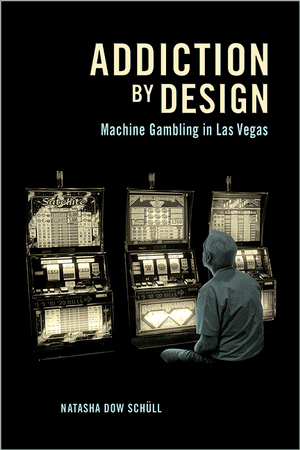
The lawsuit also accused IGT of intentionally concealing from patrons algorithms and other design features that govern slot machines’ win-loss functions — features that have been written about in books such as “Addiction by Design: Machine Gambling in Las Vegas” by MIT anthropologist Natasha Dow Schull.
“No other form of gambling is known to manipulate the human mind as much as slot machines,” the lawsuit said. “Playing these machines produces in numerous gamblers a trance-like state in which their ability to make rational decisions is eroded. Players become addicted to a dissociated mental state of diminished self-awareness and the suspension of a sense of time, money value and one’s immediate surroundings.”
Ultimately, the lawsuit stalled on the question of whether casinos and slot machine suppliers have a “duty of care” to protect patrons from compulsive gambling.
Stamp put the question to the West Virginia Supreme Court of Appeals, the state’s highest court, in order to address motions filed by the defendants to dismiss the case. Justice Brent D. Benjamin, who wrote the opinion, concluded that no duty of care exists under West Virginia law and, therefore, a lawsuit claiming negligence could not be sustained.
Benjamin cited similar cases in Indiana and New Jersey in which courts found that the state’s prerogative in regulating the gaming industry superseded any responsibility on the part of casinos and vendors.
In the case of West Virginia, racetrack casinos such as Mountaineer are already heavily regulated by the West Virginia Lottery Commission, operating under strict rules set by the state Legislature.
“The hardware and software components of the (slot) machines are required to precisely comport with statutory parameters, and ‘each video lottery terminal approved for placement at a licensed racetrack must conform to the exact specifications of the video lottery terminal prototype tested and approved by the commission,'” Benjamin said, citing the West Virginia Code.
What’s more, Benjamin said the state sets aside $150,000-$500,000 annually for its Compulsive Gambling Treatment Fund and maintains an exclusion list whereby patrons with a compulsive gambling disorder can be prevented, either voluntarily or involuntarily, from entering casino premises.
Because legal gambling is so entwined with the state, the duty of care rests with the Legislature not the private sector, Benjamin concluded.
“State law regulates virtually every facet of casino gambling and its potential impact upon the public,” he said. “The state has so thoroughly integrated itself into the provision and operation of the (slot) machines on every level … that its involvement cannot readily be divorced from that of its licensees and key suppliers.”
Stamp said the supreme court’s ruling was “dispositive,”meaning it settled the issue.