Meetings & Information


*****************************
****************************************************
MUST READ:
GET THE FACTS!


Showing posts with label Pawn Shops. Show all posts

Wednesday, June 22, 2016

Gambling Addiction


Anti-gambling groups have seized on the Triple M drowning jibe that embroiled club presidents Eddie McGuire and James Brayshaw to highlight the ...

Channel News Asia
In mitigation, Chow's lawyer said she was in dire financial straits due to mounting debts that she had incurred because of her gambling addiction.

ABC Online
Selesi Toumo'ua, 30, used the cash for gambling, including a bet on Hawthorn to win the 2013 AFL ... He maintains he has a gambling addiction.

Three-Year Extension Of Springfield Pawn Shop Moratorium Appears Likely


The city council in Springfield, Massachusetts has voted to extend a moratorium on new pawn shops for an additional three years.
City Councilor Tom Ashe, chairman of the Public Safety Committee, asked the council to extend the moratorium on licensing new pawn shops and secondhand stores to June 30, 2019. Ashe held several hearings across the city during the past six months and said he found not one person who was against extending the moratorium.
" I have not heard,on any occasion, any group saying we could use more pawn shops," said Ashe.
The council gave first-step approval Monday night to the ordinance extending the pawn shop moratorium for another three years. Final approval is expected at the June 27th council meeting.
Springfield Police Commissioner John Barbieri said the 42 pawn shops and junk dealers currently licensed in the city is a manageable number for police to keep tabs on.
" If you have an item stolen, you want the police department  to have a fair shot to make the rounds to all the secondhand junk dealers and pawn shops to make every effort to try to recover your property," said Barbieri.
He urged the council to extend the moratorium on new pawn shops for three years. He said the MGM casino, which is scheduled to open in September 2018, could be a magnet for pawn shop operators.
" If you look at other casino cities, generally there are business people who like to open used car lots and pawn shops because it is a quick way for people to get cash, if they have a gambling addiction. The city has to be concerned about people who are addicted and we have to very careful about the people we grant licenses to," said the police commissioner.
In addition to putting a temporary ban on new stores in 2014, the city council put tougher regulations on pawn shops and secondhand stores. Used goods must be held for 30 days before being put up for sale.  The stores were required to replace handwritten log books of their inventory with a computerized record including photographs of jewelry.
After the new rules took effect, police conducted stings at several shops. As a result of the investigations, licenses for three pawn shops were revoked and fines were levied against five more stores.
" It seems as though the pawn shops are very cooperative ( now). We have not seen the shenanigans we saw in the past," said Barbieri.  " We are happy with the ( pawn shops) we currently have."
In a report to the city council’s Public Safety Committee, Springfield police detailed more than a dozen cases where jewelry, electronics, and other property stolen from residences throughout western Massachusetts were recovered from pawn shops.


The42
The 2008 All-Ireland winner hit the headlines in October 2013 when it emerged that he was struggling with a gambling addiction. This led to several ...

Former Worcester property manager gets probation, ordered to pay $60K she stole from employer


By Gary V. Murray 
Telegram & Gazette Staff

Posted Jun. 21, 2016

WORCESTER - A woman charged with stealing from her former employer to fuel a gambling addiction was placed on probation and ordered to pay $60,000 in restitution Tuesday in Central District Court.
Jenilee Derosiers, 31, whose address is listed in court records as 4 Wyman St., admitted to sufficient facts for a guilty finding on a charge of larceny of more than $250 by a single scheme involving the theft of at least $60,000 from Hampton Properties, a Worcester-based real estate development and apartment-rental company where she worked for several years before being charged last October.
Judge Michael G. Allard-Madaus continued the larceny charge without a finding for three years, during which time Ms. Derosiers will be on probation. As conditions of probation, Ms. Derosiers was ordered to to pay a total of $60,000 in restitution, $10,000 of it by Friday, and to continue undergoing counseling for her gambling problem. The balance of the restitution is to be paid at a rate of at least $500 a month, and the judge said he would consider reducing the period of probation if the money is paid in full sooner.
Ms. Derosiers' lawyer, Peter L. Ettenberg, had asked Judge Allard-Madaus to continue the larceny charge without a finding for two years with an order of restitution. Assistant District Attorney Nathan Morse did not object to probation and a restitution order, but asked the judge to find Ms. Derosiers guilty.
According to a statement of facts filed in court by Worcester Detective Michael Tarckini, the thefts occurred on various dates from early 2013 until about Aug. 28, 2015. Ms. Derosiers, who worked as a property manager for Hampton Properties, received rental payments and security deposits from tenants in the form of cash, and kept some or all of the monies for her personal use, investigators alleged. It was also alleged that Ms. Derosiers altered the company's financial records to cover up her thefts.
While agreeing to accept $60,000 in restitution, Russell Haims, president of Hampton Properties, said he believed the amount stolen by Ms. Derosiers was closer to $95,000, and possibly as high as $135,000.
In support of his request that Ms. Derosiers be found guilty, Mr. Morse noted that the charge against her involved a significant amount of money. The prosecutor told the court that Mr. Haims had caught Ms. Derosiers stealing from him once before, but had given her a second chance after she paid back the money.
Mr. Haims said in an impact statement that Ms. Derosiers breached the trust he had placed in her. He said his former employee was paid a salary and commissions, and was provided with three new vehicles and a cellphone during the course of her employment.
"Little did I know that she was stealing from me for so long," he told the judge. Calling the thefts "calculating" and "cold-hearted," Mr. Haims said he had to pay forensic auditors $60,000 to methodically go through the transactions involving Ms. Derosiers, and was forced to sell two properties to meet his company's financial obligations.
Mr. Ettenberg said his client, who grew up in Southbridge, had no prior criminal record. He told Judge Allard-Madaus Ms. Derosiers had taken steps to address her gambling addiction, which Mr. Morse said had been evidenced by the discovery of scratch tickets in her desk.
After the thefts were first reported to authorities, Ms. Derosiers met with police and prosecutors and was "totally forthcoming," according to her lawyer.
Knowing she would have to pay restitution, Ms. Derosiers began working two jobs, and she and her fiance cut back on their expenses, so she could make the anticipated monthly restitution payments, Mr. Ettenberg said. He added that Ms. Derosiers was hoping to obtain a loan or receive financial contributions from her family to help her pay restitution.
While there had been no publicity concerning her criminal case prior to Tuesdays's court hearing, Mr. Ettenberg pointed out that a reporter was present in court, and said he feared the media coverage might jeopardize her employment status.
"The press is here. There's going to be an article. She could lose both her jobs," Mr. Ettenberg told Judge Allard-Madaus.
"The damage that you did is significant," the judge told Ms. Derosiers. He said the continuance without a finding, which would enable Ms. Derosiers to avoid having a felony conviction, was "a tremendous opportunity for you to rehabilitate yourself."
The judge continued Ms. Derosiers' case to Sept. 20 for what he called a "90-day review" and said she would have to inform the court of any change in her employment.

http://www.telegram.com/article/20160621/NEWS/160629884

Tuesday, May 27, 2014

Cash-for-Gold shop opens near Sugarhouse Casino


Massachusetts ‘GAMING’ Future
 
Open this link and listen were some casino gamblers get their gold from.
 
Philadelphia Inquirer - May 12, 2014, - Cash-for-Gold shop opens near Sugarhouse Casino
A store that buys gold has opened up across Delaware Avenue from SugarHouse casino, and once again, neighborhood groups and city leaders are fighting it.

“We were promised these kinds of businesses would be kept out, that this would never happen,” said Fishtown Action's Maggie O'Brien, as unhappy as she was when cash-for-gold signs went up on the same store back in 2011.

Read more at http://www.philly.com/philly/business/Cash-for-Gold_shop_opens_near_Sugarhouse_Casino.html#ev0mo1duAksBXC5P.99
 

Massachusetts ‘GAMING’ Future

Open this link and listen were some casino gamblers get their gold from.

http://www.veoh.com/watch/v62217338BpJxzmp3

Philadelphia Inquirer - May 12, 2014, - Cash-for-Gold shop opens near Sugarhouse Casino

A store that buys gold has opened up across Delaware Avenue from SugarHouse casino, and once again, neighborhood groups and city leaders are fighting it.

“We were promised these kinds of businesses would be kept out, that this would never happen,” said Fishtown Action's Maggie O'Brien, as unhappy as she was when cash-for-gold signs went up on the same store back in 2011.

Read more at http://www.philly.com/philly/business/Cash-for-Gold_shop_opens_near_Sugarhouse_Casino.html#ev0mo1duAksBXC5P.99


Last updated: Monday, May 12, 2014, 12:27 PM

A store that buys gold has opened up across Delaware Avenue from SugarHouse casino, and once again, neighborhood groups and city leaders are fighting it.

“We were promised these kinds of businesses would be kept out, that this would never happen,” said Fishtown Action's Maggie O'Brien, as unhappy as she was when cash-for-gold signs went up on the same store back in 2011.

“I was surprised, and I was angry,” to see new signs advertising the purchase of gold and jewelry, said near-neighbor and activist Jethro Heiko. “I thought it wasn't allowed, and this is not the kind of business people want near their homes.”

Fishtown Neighbors Association's Matt Karp and Sean McMonagle, legislative aide to First District Councilman Mark Squilla, don't like this particular deja vu, either.

“I thought we took care of this back in 2011,” McMonagle said.

As far as the opponents are concerned, this store is a pawn shop, and pawn shops are a prohibited use at the site, which has an Allen Street address although it fronts on Delaware Ave.

The pawn shop issue was raised the first time around, and back then the city determined that the zoning code did not explicitly define cash-for-gold stores as pawn shops.

In response, McMonagle's previous boss, former First District Councilman Frank DiCicco, and Council President Darrell Clarke joined forces on legislation adding cash-for-gold stores to the pawn shop definition. (Clarke's office is also researching the current situation.)

This site had a jewelry store permit before the DiCicco/Clarke bill was introduced.

That permit, which includes accessory buying and selling of precious metals, was updated in Nov. 2013, according to city records.

No one from the Department of Licenses & Inspections was available to comment Friday, but back in 2011, I explained that to qualify under such a license, at least 75 percent of a store's floor space must be dedicated to jewelry sales, and no more than 25 percent to buying precious metals. Receipts don't count: Only floor space.

Phila Gold owner Kim Bui said Friday his business will buy and sell jewelry, and neighbors need not worry: “This is not a pawn shop.”

He will not be lending people money in exchange for collateral as pawn shops do, he said after coming out from behind a window with a “speak here” circle to talk.  (That window and circle have been in place since the last time.) “There will be no bonds,” Bui said.

There were several jewelery display cases at Phila Gold on Friday,  but  all were empty.

When asked where the jewelry was, Bui said he didn't want to invest in any until he knew there was a demand for it. He said he was going to see how things went in the next month, and whether customers asked for jewelry. If there was no demand, he would close.

Bui said he's been open for four days, and hasn't  purchased any metal yet. Some people have come into the store to ask about the jewelry, and he told them to check back. Others wanted to know if he was a pawn shop or if he would cash a check, and he said he told them he he did neither.

The back of a business card sitting on the counter included the phrase, “Cash for Gold & Pawn.”

When asked about it, Bui showed another card on which he had crossed out that part, and said it was a printer's error. He began crossing the phrase off the rest of the stack, and asked for the card PlanPhilly had with the phrase still on it so he could cross it off that one, too.

Both Squilla's office and Clarke's have received calls from concerned neighbors, and are investigating the situation.

“My boss just shot an email to ask them to inspect it,”  McMonagle said Friday.

McMonagle said Squilla's office would be fighting to close the business.

Back in 2011, I found the Cash-for-Gold signs were in violation, and they were removed. That store never opened for business.

McMonagle noted that since the building had not been used as a jewelry store since 2011, the use permit would normally have expired.

PlanPhilly has requested from  clarification on the status of the store's permit; what impact, if any, the amended definition of “pawn shop” that includes cash-for-gold stores has on this case; and whether or not it matters that buying gold and jewelry is the business most predominantly advertised by the store's signage.  McMonagle is also looking into these issues.

None of the folks in the neighborhood really care how much of the floor space is dedicated to jewelry sales.

Fishtown Neighbor's Karp called the 25 percent floor area stipulation a “loop hole,” since the vast majority of a business could be buying metals. “This is a prohibited use, and they should have to go through the variance process,” he said.

O'Brien's organization has always supported SugarHouse, and Heiko was once leader of Casino-Free Philadelphia. They agreed the store proposed in 2011 shouldn't open, and they agree this one should close.

Heiko said the casino is a predatory business, and it attracted another predatory business to  open.

O'Brien said she's concerned people who can't afford to lose money to gambling will cash in items to get money, but beyond that, she's  worried such a business would bring to Fishtown “thieves who steal people's jewelry and go down there and cash it in” and people addicted to drugs or alcohol looking for money for their fix.

Karp said FNA members were very concerned about a casino attracting pawn shops, cash for gold, and other business Fishtown would rather not have, but that hadn't happened, at least not until now.


Read more at http://www.philly.com/philly/business/Cash-for-Gold_shop_opens_near_Sugarhouse_Casino.html#hfyFWLlOhm6dj54Z.99

Thursday, September 12, 2013

The house always wins


The house always wins

By John J. Drew

Monday, September 9, 2013

Local businesses awaiting payout from Fayette County casino...


Bill Kearney

Massachusetts ‘Gaming’ Future

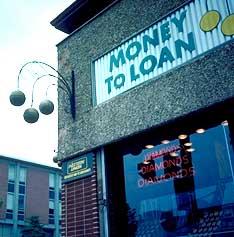
The only businesses that flourish when a casino opens near them are Liquor stores, Check-Cashing joints, Pawn shops, and of course drug dealers, loan sharks and prostitution.

Pittsburgh Tribune - September 3, 2013 - Local businesses awaiting payout from Fayette County casino...


In the two months since a casino opened 5 miles from the Chalk Hill Market on Route 40 in Wharton, owners Ed and Tina Harris have seen a lot more traffic on the two-lane highway that fronts their business in Fayette County.

They don't know whether the vehicles are ferrying gamblers to Lady Luck Casino at Nemacolin, but the couple is certain most of the drivers are not stopping at their store, where players could snag last-minute sundries such as cigarettes before hitting the slots and gaming tables.

“For us to have actually picked up business, it has not worked,” Tina Harris said from behind the cash register as she rang up an ice cream cone for one of the regulars who comprise most of the store's business. “We see a lot of traffic, but not for our store.”


Read more: http://triblive.com/news/fayette/4582463-74/casino-luck-route#ixzz2dpWpnxbw
See More

Sunday, June 16, 2013

In Queens, a Casino Bet Gone Bad


"Something unfortunate had happened in the neighborhood, and now there seemed to be no turning back, people said: the opening nearly two years ago of Resorts World Casino on Rockaway Boulevard, adjacent to the Aqueduct Racetrack."

http://nyti.ms/10jQ2g7
 
Big City

In Queens, a Casino Bet Gone Bad

Robert Stolarik for The New York Times
Pawnshops dot Rockaway Boulevard in South Ozone Park, Queens, now that a casino has been built in the area.
What had prompted my visit was, in a sense, a tourist’s curiosity about how integration of this kind might actually be lived and how, in the midst of a mayoral race, political conceptions in such a place might be evolving.
There were instances of inspiration to be found, encounters with a New York of one’s gorgeous mosaic fantasies. A barbershop called E Place, owned by an Uzbek immigrant named Eric Dzhuray, caters to Trinidadians and Guyanese — who make up a considerable share of the community in South Ozone Park — and at least one young white suburbanite who had grown so devoted to the shop when he lived in neighboring Howard Beach that he continued his patronage even though he had married and moved to Long Island.
      
The fact that a catering hall called La Bella Vita, owned by a man named Tony Modica and steeped in Pompeii aesthetics, was full of black patrons on the day I wandered in suggested that a certain kind of social progress had been made since the divisive days of Spike Lee’s “Do the Right Thing,” two decades ago.
      
Both the barbershop and catering hall were to be found on Rockaway Boulevard, the primary commercial thoroughfare in South Ozone Park. Though it seemed as if it should be a busy place, full of pedestrian traffic and businesses servicing varied cultural interests, it has the bloodless feel of a Sun Belt village lost to misbegotten visions. The area itself is not poor; in the particular census tract I was visiting, median family income stands at $63,000 a year, above the figure for the city on the whole. But whatever vitality the demographics might suggest is so obviously lacking that one longtime resident mentioned that he hoped simply for a McDonald’s to energize the slackened mood.
How could this have happened? When the subject of politics came up, it elicited little interest (except from a man named Danny Napoli, who wore dark glasses and a flag bandanna around his head and said that he was supporting Christine Quinn, offering that it didn’t matter to him that she was gay). Few others seemed to have much sense of who was running for mayor at all or much faith that government could effect significant change — or at least significant good — locally.
      
Something unfortunate had happened in the neighborhood, and now there seemed to be no turning back, people said: the opening nearly two years ago of Resorts World Casino on Rockaway Boulevard, adjacent to the Aqueduct Racetrack. As Gov. Andrew M. Cuomo pushes for the authorization of three Las Vegas-style casinos in upstate New York, and as the possibility of additional casinos in the city looms in the years ahead, there are certainly lessons to be absorbed from what Resorts World has wrought.
      
As Alberto Livecchi, a longtime resident of South Ozone Park and the owner of a store selling musical equipment, explained, the construction of the casino — a racino, in gambling parlance — came with promises that have not materialized. Having been sold as a boon to local commerce, it has instead affected businesses negatively, Mr. Livecchi argued. “People are just funneled into the casino and don’t leave,” he remarked. Whatever street life there was has been destroyed, residents said; pawnshops are ubiquitous. “Casinos are only interested in enriching themselves,” Mr. Modica said.
Ample data on how gambling affects local businesses suggests that these men are not hallucinating. In the 1990s, researchers at Iowa State University examined the consequences of riverboat gambling for business owners in Clinton, Iowa, and found that while 12 percent reported an increase in business, 29 percent reported a decrease, and 60 percent reported no change at all. And racetrack casinos, as Clyde Barrow, a political economist who studies gambling, explained, draw most customers not from the far and wide but from a 30-minute radius. Rather than drawing new money to the area, it seems, they divert local dollars to gambling.
      
What we hardly need research to tell us is that the world that emerges around casinos is often an intensely depressing place. Across the street from Resorts World is Sell and Pawn Inc., which takes gold, silver, jewelry, electronics and so on from those compelled to find their way to their next slot machine dollar. The shop’s owner, a Russian immigrant, opened up a year after the casino did, having worked in construction and seeing that work dry up after the financial crisis. A friend urged him to open a pawnshop because it was lucrative, but he was not, it seemed, prepared for the psychological toll this new occupation would take, for the fact that moral bankruptcy was now a job requirement.
      
“You have to take advantage of desperate people,” he told me, looking fairly miserable. “I don’t like this business at all.”

E-mail: bigcity@nytimes.com
 
 
http://www.nytimes.com/2013/06/16/nyregion/in-queens-a-casino-bet-gone-bad.html?_r=0


Friday, January 18, 2013

Abetting addiction to gambling through casino pawnshops


Abetting addiction to gambling through casino pawnshops


Friday, January 18th, 2013

With the imminent opening of more casinos in Entertainment City, I would like to raise the issue of “responsible gambling.” Pagcor has been proclaiming its strong commitment to responsible gambling, saying it will ban gambling addicts or problem gamblers from all its premises as a way of assisting their “victimized” families.

But Pagcor has no face recognition software installed anywhere in its premises, so it is impossible for its security staff to monitor gambling addicts. In fact, it seems Pagcor is even into helping gamblers get deeper into debts by allowing the operation of pawn facilities inside casinos. This in my mind is definitely not an indication of Pagcor’s strong commitment to responsible gambling. Neither are the croupiers trained to spot problem gamblers. You would think a player who spends 24-36 hours nonstop in a casino, putting ever smaller bets on the table, might be worth a check as part of the responsible gambling ethos, but no, he’s not!

The croupiers are in fact incentivized to let gamblers continue playing as most Baccarat dealers automatically take the stake on a winning bet on Pairs, Tie and Super Six for their tipbox without even asking the players. To be fair, they mostly do that to Filipinos, not to foreign players who are more likely to object.

Pagcor should be required to install face recognition software in all casinos, and at the same time initiate a comprehensive program that will prevent banned players from entering casinos. Pagcor should also train its dealers to recognize problem gamblers.

As it stands, the present system mocks the families of gambling addicts and projects an image of an institution with no sense of social responsibility but so obsessed only with profits, whatever the cost!

—JAMES STRATTON

http://opinion.inquirer.net/45097/abetting-addiction-to-gambling-through-casino-pawnshops

Thursday, September 6, 2012

Gambling is Social Justice Issue


More Than a Vice, Gambling is Social Justice Issue


I lived through it in my ancestral home on the Mississippi Gulf Coast, as the casino industry promised an economic turnaround if voters would just give it the right to exist.

Almost every state is involved in some discussion of state-sponsored gambling.
I think there are bigger issues involved than how they are typically framed.

First of all, pro-gambling elected officials aren't evil villains (necessarily). Yes, some of them are personally corrupt and poised to profit from the industry they are enabling.
But many of these elected officials have good aims. They want to educate children, build infrastructure and so on without raising a tax burden.

I think gambling is an illusory way to do this, but, still, I acknowledge good intentions at the root of some of the cheerleaders for the industry.

But, unfortunately, I think both proponents and opponents of expanded gambling see this as merely a "values" issue.

Of course, conservative Christians don't support gambling because they see gambling as immoral, so they want it illegal.

These Christians also see drunkenness as immoral and so, if they could, the reasoning goes, they'd be right back at Prohibition.

But gambling isn't merely a "values" issue. Neither is it primarily a "moral" issue, at least not in terms of what we typically classify as "moral values" issues. Gambling isn't primarily a question of personal vice. If it were, we could simply ask our people to avoid the lottery tickets and horse-tracks, but leave it legal.

Gambling is a social justice issue that defines how it is that we love our neighbors and uphold the common good.

Gambling is a form of economic predation. Gambling grinds the faces of the poor into the ground.

It benefits multinational corporations while oppressing the lower classes with illusory promises of wealth, and with (typically) low-wage, transitory jobs that simultaneously destroy every other economic engine of a local community.

In the end, the casinos will leave. And they'll leave behind a burned-over district with no thriving agricultural, manufacturing or tourism economies.

In the meantime, they leave behind the wreckage of "check-to-cash" loan sharks, pawn shops, prostitution and 1-2-3 divorce courts.

Conservative Christians can't talk about gambling if we don't see the bigger picture.
First of all, most of the "market" for gambling comes from those in despair, seeking meaning and a future.

The most important thing a church can do to undercut the local casino is to preach the gospel. By that I don't just mean how to get saved (although that's certainly at the root of it).

I mean the awe-filled wonder in the face of the really good news that Jesus is crucified and resurrected, the old dragon is overthrown.

Second, we must understand that gambling is an issue of economic justice.

We can't really address the gambling issue if we ignore the larger issue of poverty.

Evangelicals who don't care (as does Jesus, the prophets and the apostles) about the poor can't speak adequately to the gambling issues.

By this I don't simply mean caring about individual poor people but about the way social and political and corporate structures contribute to the misery of the impoverished (James 5:1-6).

We will never get to the nub of the gambling issue if we don't get at a larger vision of poverty and the limits of commercial power.

This means asking the state not to use acquisitiveness and covetousness to separate people from their means of living.

It also means modeling a different kind of ethic in our churches. The power of gambling lies in a vision of the "good life," and that's a vision that is co-opted by the gambling industry, not created by it.

It is fueled by our fallen vision of limitless growth, of limitless acquisition.

Let's oppose state-empowered gambling, but let's do so while loving the poor the industry seeks to devour.

Let's work toward rebuilding families, honoring honest labor and encouraging the flourishing of communities in which the impoverished are not invisible.

Too many of our "opponents" see us as morally prissy Victorians who don't want people doing "naughty" things in our presence.

Let's demolish that pretense by being the gritty colony of the kingdom that sees the economically downtrodden among us as, when in Christ, "heirs of the kingdom" (James 2:5).

And let's hold out a vision, for all of us, of an inheritance that comes not through predation, and not through luck, but through sonship, through grace.

http://www.ethicsdaily.com/more-than-a-vice-gambling-is-social-justice-issue-cms-19290