Meetings & Information


*****************************
****************************************************
MUST READ:
GET THE FACTS!


Showing posts with label regulatory flaws. Show all posts

Sunday, July 21, 2013

Jury trial set in Deadwood gaming squabble


Jury trial set in Deadwood gaming squabble
July 20, 2013 5:00 am
 
DEADWOOD | Fourth Judicial Circuit Court Judge Warren Johnson has set a Nov. 20 jury trial over a three-year squabble between two Deadwood gaming companies.

In September 2010, Hickok’s Inc. sued Four Aces Holding Co., former Gold Dust owner William Wohlers and his Legacy Gaming Inc., seeking unspecified damages over failed agreements made between the companies to route slot machines in their Deadwood gaming halls. Wohlers countersued, seeking $342,226 in damages.

Attorney Roger Tellinghuisen, who represents Wohlers and Legacy Gaming, said Friday the complex case revolves around a Gold Dust agreement to route slots and manage Hickok’s gaming action. Part of the agreement included replacement of slot machines and reimbursement of monies to the cage at the completion of the routing arrangement, he said.

When Four Aces and principal Jeff Lamont purchased the Gold Dust, it assumed the routing agreement, Tellinghuisen explained. Later, Four Aces terminated the routing agreement, but said it was unaware of provisions requiring it to replace slot machines and reimburse the Hickok’s cage.

“The fight is over who is responsible to replace the machines and money in the cage,” Tellinghuisen said. “It’s Bill Wohlers’ position that that is Four Aces’ responsibility, and Four Aces says it isn’t their responsibility because they were unaware of the agreement,” the attorney said.

To complicate the issue, defendant Wohlers, an Iowa businessman, acquired a third interest in Hickok’s, which is now suing him. In his counterclaim, Wohlers seeks payment of approximately $120,000 in promissory notes that Hickok’s assigned to the shareholders from whom Wohlers had purchased his interest.

Tellinghuisen said parties to the lawsuit may try mediation prior to the court date, but added he expects the case to be brought before a jury in November.

Rapid City attorney Courtney Clayborne, who represents Hickok’s, was unavailable for comment.


http://rapidcityjournal.com/news/local/communities/lead-deadwood/jury-trial-set-in-deadwood-gaming-squabble/article_bd7082ef-3602-5cdc-a8ce-ee90d18550a9.html
 

Sunday, May 26, 2013

California Says No to Galaxy Gaming


California Says No to Galaxy Gaming, But Nevada Might Say Yes

Posted by Peter McCullough on May 25, 2013
 
There are several “rules of engagement” in Galaxy Gaming’s guiding principles that seem to conflict with a recent ruling made against the companies CEO Robert Saucier.
 
Administrative Law Judge Catherine Frink made no bones about her ruling deeming the CEO as “evasive and, in some instances, intentionally dishonest.”

The Las Vegas manufacturer of casino table games, was denied the right to doing business in California due to a lengthy and ongoing investigation calling into question several unsavory business practices that could have an unfavorable outcome of the companies Nevada gaming license.
Saucier is under scrutiny for misleading and misrepresentation of information regarding business ventures, signing unapproved licensing deals with California tribal casinos, lawsuits and even information that may have been false about his own personal past.

In 2002 Saucer applied for a gaming license with Tule River Tribe Gaming Commission, at that time the Commission began an investigation with the help of the Bureau of Gaming Control. The investigation uncovered that Saucier did not give full disclosure of very pertinent facts and what could be harmful business ventures that are very relevant to approval by the state of California.

According to the 2002 report Saucier list of information that was never disclosed included:
  • Failure to mention an order to pay a $1.5 million judgment to Sherron Associates, a creditor in a hotel-casino project.
  • Failed to reveal gambling taxes owed to City of Spokane in WA State by his Mars Hotel and Casino, a hotel that eventually failed.
  • Misrepresented his past drunk driving conviction stating it was dismissed
  • Failed to list a valid address. He filed his personal federal income tax returns in Washington, listed a condominium in Mexico as his home and had a license for a home-based business in Las Vegas.
  • Failed to disclose multiple businesses: Galaxy Gaming of Nevada, LLC; Galaxy Gaming of Oregon, LLC; Bonus Blackjack, LLC; Intergalactic; and others.
  • Failed to mention gaming licenses from other states, including Washington and Nevada.
  • Did not reveal that he pays child support.
  • Did not disclose his involvement in past lawsuits. For instance, he sued the Mars Hotel for $1.6 million in 1998. “In essence, he sued himself and received a default judgment,” Frink wrote.
  • Failed to mention a foreclosed house and two personal credit card bills that were sent to collections.
  • Had no Nevada business license, as required, from 2001 to 2004. He blamed the missing license on an “oversight by staff.”
  • Claimed to have graduated from UNR, but he did not.
“In a highly regulated industry such as gaming, the failure to be forthcoming with relevant information was inexcusable,” commented Frink.
Saucier’s case was assigned to the Attorney General’s Office in 2007 for prosecution and is still pending further investigation. Mired in lawsuits and controversy, it still seems as though that Saucier may not have to answer to his past when it comes to his Nevada.

Apparently different states in the US have vastly different laws and regulatory standards. Nevada’s Gaming Control Board chairman, Burnett stated,
“Other states sometimes have vastly different laws and regulatory standards than we do.” “There are cases when a ‘denial’ doesn’t mean the same thing as it does in Nevada. For example, in some states in the Midwest, there have been denial proceedings but they’re for various transactions and don’t necessarily relate to the integrity or the suitability of the company itself.”


Tuesday, December 11, 2012

Black money being pumped in through Goa casinos


Black money being pumped in through Goa casinos: Pacheco


Published: Tuesday, Dec 11, 2012

Goa's former Tourism Minister Fransisco Miccky Pacheco has alleged that off shore casinos were sheltering hawala rackets in the state.

"Money is transacted in these casinos through hawala. The black money is pumped in through these gambling dens as there is no control of government over them," Pacheco told reporters yesterday. The Goa Vikas Party legislator said that he had discussed this issue with Chief Minister Manohar Parrikar as it is of serious concern.

Goa has five off shore casinos operating in Panaji. Pacheco alleged that state government has absolutely no control over the functioning of these casinos, which siphon off the money looting the state exchequer.

The legislator claimed that the casino operators fudge the number of visitors and evade the entry fee, which is payable to the state government.

"Similar is the case with the entertainment tax. They show doctored records so that they have to pay only 20% of the actual tax," Pacheco alleged.

The legislator claimed that the off shore casino operators have cheated the government of thousands of crores of rupees.

http://www.dnaindia.com/india/report_black-money-being-pumped-in-through-goa-casinos-pacheco_1776079

Thursday, September 6, 2012

Virtual sports betting comes to Facebook


Virtual sports betting comes to Facebook


RocketPlay Sportsbook and Sports Casino
RocketPlay has launched Sports Casino, an online casino for Facebook that operates only on virtual currency. (RocketPlay)

By Alex Pham
September 5, 2012

As president of a company that just came out with a game on Facebook called "Sports Casino," Matthew Cullen is surprisingly OK with the prospect that the U.S. is not likely to see legalized online gambling anytime soon.

Cullen's company, RocketPlay does, however, has put money on the odds that sports betting will be very popular on Facebook and other social platforms.

That's because their game is free to play and involves betting with virtual currency, not the real kind.

In many other respects, however, "Sports Casino" resembles many real-money online betting services that operate legally in the United Kingdom, where RocketPlay is based. Players can place bets on the outcome of hundreds of sports matches in college and professional football, baseball, hockey and basketball. (The company plans to add auto racing, cricket, rugby and other sports.)

They can also place bets while a game is happening. Will Matt Kemp hit a home run at his next turn at bat? Will USC score a touchdown during its next drive?

RocketPlay's betting system calculates the odds for each bet in real time, adjusting its payouts to the moment-to-moment action in the game.

In Europe, where these types of play-by-play bets are much more common than in Las Vegas, about 80% of overall bets are placed after a game kicks off, said Cullen, who knows this because he previously worked as a vice president of Betfair, a real-money online betting company in the U.K.

Once players run out of virtual currency, they can wait for the currency to slowly replenish over time for free. Or they buy more currency with real money, which is how RocketPlay plans to generate revenue.

“Sports Casino” is part of a suite of games in which betting is one component. In between sports matches, RocketPlay offers its players five other casino games to fill the idle time and keep its customers engaged.

One of those games is poker. Why?

"The audience for poker and sports betting are nearly identical," Cullen said.

It's no surprise, then, that RocketPlay partnered with Zynga, whose Texas Hold'em poker game is the most popular on Facebook. The agreement calls for Zynga to publish RocketPlay's games both on Facebook and on Zynga.com, where Zynga can drive traffic to RocketPlay's games in exchange for a piece of the revenue generated by those titles. The specific terms of the publishing deal, however, is confidential.

Zynga and other social gaming companies are eager to learn more about online gambling, which is said to generate more than $30 billion a year in revenue worldwide, roughly three times the annual sales of social games. Facebook this summer worked with GameSys to launch a real-money bingo game in the U.K. called "Bingo Frenzy."

In December, the U.S. Department of Justice issued a memo suggesting that selling lottery tickets across state lines over the Internet might be considered legal under the Federal Wire Act. Some in the gaming industry believe that to be an opening for online poker in the U.S. involving real-money stakes, and possibly other forms of online gambling.

But Cullen says that day is so far off that he's not willing to bet any money on that prospect.

"That's just fine with us," he said. "If the market remains closed to real-money betting here, that will be good for us, because that will mean people will play with our offering instead."

http://www.latimes.com/entertainment/envelope/cotown/la-et-ct-virtual-sports-betting-facebook-20120904,0,206335.story

Wednesday, September 5, 2012

Michigan Casino Referendum Struck Down


Bridge, union rights & tax votes will appear in November election
Sep 5, 2012

Written by Stanton Tang

LANSING, Mich. (Paul Egan and Dawson Bell, Detroit Free Press) - The Michigan Supreme Court today ordered three challenged ballot proposals onto the Nov. 6 ballot but blocked a fourth -- a proposal to authorize eight more Michigan casinos.

The court's decision means voters will be asked to decide the fate of five proposed constitutional amendments and whether to retain one state law (on emergency managers) when they go to the polls this fall, the busiest state ballot in a generation.

The three proposals ordered on the ballot today by the court would require a statewide vote on a new public bridge to Canada, enshrine collective bargaining rights in the constitution, and require a two-thirds legislative supermajority for state tax increases. Two others - to protect the unionization of home health care workers and increase renewable energy standards - and a referendum on the emergency manager law had already been certified.

Today's decision was unanimous, except for a split on the casino proposal, which the 4-3 majority declared could not be certified because its drafters failed to warn petition signers and potential voters that it would diminish authority written into the existing constitution for the Liquor Control Commission.

In today's ruling, the court emphasized that it was important not to erect artificial barriers to the right of citizens to amend the constitution by petition drive (as each of the proposals does).

Opponents had sought to bar the proposals from the ballot, arguing that their drafters had failed to include language identifying other sections of the constitution that would be affected by their adoption, thereby leaving petition signers and potential voters in the dark about their implications.

But the court said that only when an amendment directly changes an existing provision or nullifies it altogether was the so-called re-publication of the existing provision required.

Today's ruling could have far-reaching implications for future ballot initiatives, as the justices tried to spell out a clear set of guidelines for aspiring petitioners to follow.

In the short term, it means the loss of several millions of dollars in television advertising that was anticipated in a showdown between the casino expansionists and defenders of existing casinos in Detroit and those owned by Indian tribes.

Emily Palsrok, a spokeswoman for the group pushing expansion, said the court's decision was disappointing, but an only temporary setback.

The liquor license language contained in the proposed amendment (and identified as a fatal flaw by the court) was not an essential part of the proposal, and can easily be re-written, she said.

"We'll be back," Palsrok said.

The court heard oral arguments on the cases on Thursday.

The Board of State Canvassers has scheduled a Friday meeting to finalize the Nov. 6 ballot, just ahead of the final deadline for doing so.


http://www.wzzm13.com/news/article/224163/2/Court-dumps-casino-question-from-Michigan-ballot

Sunday, August 5, 2012

New Bedford's Future

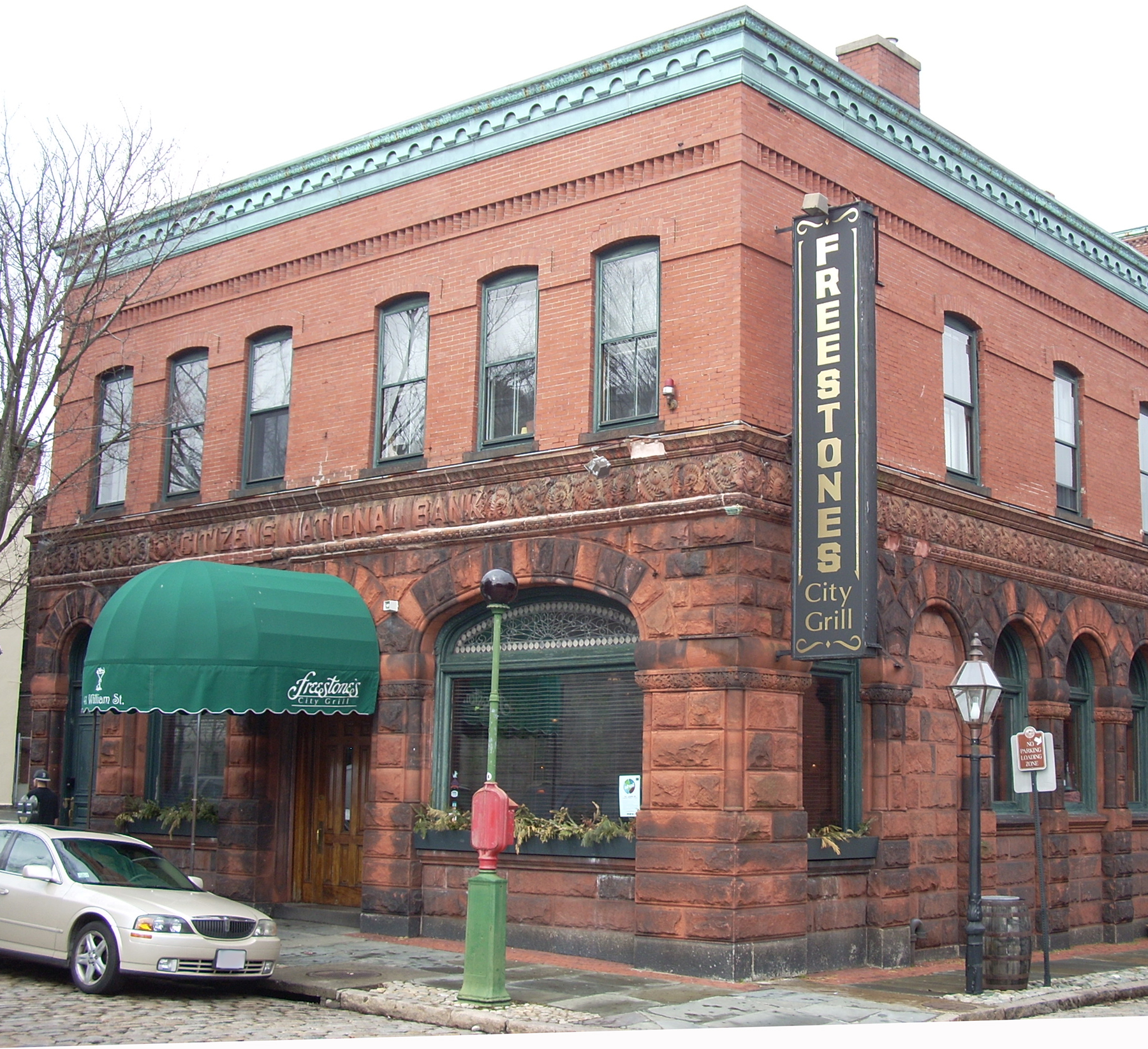
A special fondness for New Bedford and its treasures is acknowledged, Freestone's, in the midst of the historic district has always held warm affection, but the failures of leadership and media scrutiny is baffling.


When a group of us met with former Mayor Scott Lang, information about the impacts of urban casinos was presented.

Atlantic City stands as a stark reminder about the destruction of local businesses, escalating crime, devastation to tourism and urban decay. There are surely others such as Detroit and Niagara where the failures of Predatory Gambling are duplicated.


Blinded by the glitter of Fools' Gold, evidence is ignored.

The Zeiterion Theater, a gem struggling to survive, will breath its last gasps, unable to compete.


False promises will be made, broken at the earliest convenience. before the ink dries.

Those in office will leave, ignoring connections between their short-sighted policies and the devastation. No one willing to stand. 

They'll pretend that somehow 'New Bedford is different. We'll do it right,' just as Beacon Hill pretended.

Having made great strides in a positive direction, filled with wondrous potential, it offers no comfort to say "I told you so" years hence when dreams turn into rubble.


Our View: Trial and errors — Ruling points out gaming law's flaws


The U.S. Court of Appeals for the First Circuit gives life to KG Urban Enterprises' bid to build a billion dollar casino at the site of an abandoned power plant in New Bedford.

The decision also gives KG some losses regarding a request for an injunction and their claims dealing with a "Carcieri fix," but none that should discourage them in their pursuits.

Neither should the decision discourage the Mashpee Wampanoag in their pursuit of a half-billion dollar casino in East Taunton.

The state gaming law, on the other hand, is looking a little shaky.

The Appeals Court ruled that the First Circuit should not have dismissed KG's lawsuit on equal protection grounds, and remanded to the First Circuit "for such further proceedings as may be appropriate."

Bottom line? KG's claim that the gaming law's set-aside for the tribe harms Southeastern Massachusetts deserves judicial scrutiny.


We would agree. It is clear that any commercial applicant is prevented from competing for the license allotted to Region C because of the state law's accommodation for tribal applicants.

The state law requires that commercial competition will be settled partly on whether one applicant's plan is better for the state and surrounding communities than another's.

KG, which has a plan, doesn't get that chance as the law stands.

If, on the other hand, Region C were open to competition just as the Greater Boston and Western Mass. regions are, KG, the tribe and any other applicant could compete on equal footing. If a commercial applicant were to win, then give the tribe the chance to continue the process it's now involved in, that is, seeking approval of the federal government to take the Taunton land into trust for the the purpose of casino gambling.

If the tribe is eventually successful, after KG or another commercial applicant had won a license, then grant the tribe their license, as well. The now-approved compact between the tribe and the commonwealth allows the Mashpee to try, try again if this first attempt to get land into trust fails.

This set-aside wouldn't diminish a commercial competitor's opportunity and still gives the tribe theirs.
The downside?


Massachusetts could end up with more than three casinos, which the state says should be the maximum. But that's how it goes. A lot of work went into writing the state gaming law, but its imperfections are starting to show. The law today could very well change in order to settle what is looking more and more like a disparity of opportunity. One way or another, the weakness in the law is going to have consequences.

Monday, June 11, 2012

Hearing for Casino $$$$


Legislators watched the flood of $$$ in Middleboro and failed to address the disclosure in the legislation. A little late, but the legislation below attempts to add transparency.


http://www.malegislature.gov/Bills/187/House/H04049


Subject: NOTICE OF PUBLIC HEARING ON H4049, Wednesday, June 13, 2012--Joint Committee on Election Laws


Joint Committee on Election Laws


Rep. Aaron Michlewitz Sen. Barry Finegold

House Chairman Senate Chairman


PUBLIC HEARING NOTICE


Date of Hearing: Wednesday, June 13, 2012

Time: 10:00 A.M.

Location: Room B-2

The Joint Committee on Election Laws will conduct a public hearing on a bill concerning casino referenda.


BILL #
SPONSOR
TITLE
H4049
Rep. Angelo Scaccia
An Act relative to casino referenda


Please note that schedule and agenda are subject to change.

You may contact committee staff with any questions at (617) 722-2460.

---

Jared Magee
Research Director
Joint Committee on Election Laws
Representative Aaron Michlewitz, House Chairman
x8986 or 617 722 2460
jared.magee@mahouse.gov

Sunday, January 22, 2012

'breathtaking expansion of gambling'

Update: Prosecutor calls Internet cafe bill 'breathtaking expansion of gambling'
By Jeff Burlew Florida Capital Bureau

Joseph Cocchiarella, a prosecutor with the State Attorney's Office in Orange and Osceola counties, told lawmakers today a bill that would regulate rather than ban Internet cafes represents "a breathtaking expansion of gambling" in Florida.

He told members of the Senate Committee on Regulated Industries that changing the gaming law to allow the businesses would mean prosecutors couldn't go after them as they have in his judicial circuit, home of Walt Disney World. He said that while the cases against Internet cafes haven't led to convictions, the counties are now free of the businesses, which opponents say attract crime and breed a host of social ills.

Sen. Miguel Diaz de la Portilla, R-Miami, member of the committee and sponsor of the bill (SB 380), said regulating rather than banning the Internet cafes would mean keeping open as many as 1,000 businesses and saving anywhere from 8,000 to 13,000 jobs. The bill would charge a $100 fee per machine, which he said would bring the state $4 million a year in revenue.

"So what we're trying to do is establish uniformity," he said, "bring those that may be operating on the fringes into compliance, bring them into the mainstream and provide reasonable, logical regulation for an activity that exists. And we have to recognize the up to 13,000 Floridians who are employed in these Internet cafes."

The committee voted 8-1 in favor of the bill.

update
A Senate committee voted 8-1 this morning in favor of a bill (SB 428) that would regulate -- not ban -- Internet cafes across Florida. The committee tabled another bill (SB 428) that would ban the businesses outright.

Sen. Miguel Diaz de la Portilla, R-Miami, sponsor of the bill that would regulate Internet cafes, said he wants to bring "reasonable, logical regulation" to businesses that employ up to 13,000 Floridians. He said regulating them would generate $4 million in revenue for the state.

Representatives from the Florida Attorney General's Office and the Florida Sheriffs Association said they support a ban rather than regulation.

April Kirsheman, general counsel for the Seminole County Sheriff's Office, said machines used in the Internet cafes have a mesmerizing effect on patrons and can lead to gambling addiction.
The Senate's Committee on Regulated Industries is taking up a bill (SB 428) today that would ban simulated gambling devices used by Internet cafes.

Similar legislation moved through a House subcommittee earlier this week.
Opponents of the businesses say nearly 1,000 Internet cafes have sprung up across Florida, leading to a host of social ills, including gambling addiction.


The committee is also taking up a bill (SB380) that would regulate game promotions.

Monday, November 21, 2011

State Set Scene for Future Corruption

Hack-O-Rama here we come!


New commission given sweeping oversight of casinos
By Associated Press

BOSTON — When Gov. Deval Patrick signs a new gambling bill into law, control over the three planned casinos and one slots parlor will quickly shift from state lawmakers to an as-yet-unnamed five-member commission, whose members will all make more than $100,000 a year.

Top lawmakers said they deliberately set out to give the commission as much leeway as possible to regulate the new industry.

"You have to have someone to give the authority to, to make those difficult ... decisions," said House Speaker Robert DeLeo, D-Winthrop, a strong supporter of expanded gambling.

"I think it’s best left for an independent commission to take a look at who’s qualified to have one of these facilities, to make sure that the people who are operating them have not only the fiscal management to do so, but they pass all of the necessary qualifications," he added.
[And take their queue from the Speaker?]

The law gives the commission sweeping powers to:

— Approve or deny casino licenses.

— Inspect financial reports.

— Hire and fire commission employees.

— Conduct investigations.

— Impound slot machines and other gambling equipment.

— Issue subpoenas.

— Act as trustees for gambling-related trust funds.


The commission will also have the power to levy and collect assessments, fees and fines associated with the casinos and provide assistance to the governor in negotiating a compact with a federally recognized Indian tribe. In return, the full-time commissioners will receive six-figure salaries.

Under the bill, the chairman of the commission will receive a salary equal to that of the state secretary of administration and finance — $150,000 — while the remaining four commissioners will receive $112,500 each, or three-quarters the salary.

Patrick, whose earns about $140,000 as governor, is expected to sign the bill as early as Tuesday.

The commissioners are appointed by three of the state’s top elected officials.

Patrick, Attorney General Martha Coakley and state Treasurer Steven Grossman, all Democrats, will each name one member to the commission. The remaining two members will be appointed by a majority vote of the governor, attorney general and treasurer.

Patrick’s pick will serve as commission chairman.

Members of the commission will serve five-year terms and can be appointed to a second term. No more than three can be from the same political party. The governor can remove a member only for specific reasons including malfeasance, conviction of a felony or neglect of duty.

Casino critics say the bill stacks too much clout in the hands of the commission.

"We and all citizens, including legislators ... should be very concerned about the sweeping powers of this new bureaucracy," Kathleen Conley Norbut, a longtime critics of casino gambling, said in a statement.

"We proposed development of a ’watchdog’ group that would monitor the establishment and growth of the industry, as well as the concentrated powers of the commission. This is something that is still needed," she added, saying lawmakers "intentionally have washed their hands of future responsibility."

The bill places restrictions on the outside activities of commissioners.

The commissioners are expected to work full time for the board and are barred from owning any stock in a business that holds a casino license or from providing any professional services to any regulated firms. Commissioners are also barred from wagering in a casino except as part of the job.

While state lawmakers prohibited one another from working for a casino for at least one year after leaving public office, commissioners are held to a three-year "cooling-off" period after leaving the board.

The lengthy bill goes into great detail about just what authority the commission wields. The most critical is the power to "determine which applicants shall be awarded gaming licenses."

The bill appears to leave little room to appeal that decision once it is made, short of going to court.

"The commission shall have full discretion as to whether to issue a license," the bill states. "Applicants shall have no legal right or privilege to a gaming license and shall not be entitled to any further review if denied by the commission."

Under the bill, one casino will be in each of three broad geographic locations across the state. It will be up to the commission to weigh each proposal and pick the one they think is the best — or to deny all proposals if none meet their criteria.

The commission also has the authority to suspend or revoke a license for specific reasons, including breaching a condition of the license or if a licensee commits a felony.

Picking the winning casino bidders is a choice that could be extremely lucrative — to the state and the casino company.

Each winning casino firm must show it has enough money to pour at least $500 million into a gambling facility while also covering a licensing fee of at least $85 million. For the slots parlor, the winning company will have to show it can spend $125 million developing the facility and also cover a $25 million fee.

Overseeing it all is the commission, empowered to weigh not just a company’s financial stability, but also its "integrity, honesty, good character and reputation."

The commission’s power doesn’t stop there.

The board will also have its own law enforcement agency — an "investigations and enforcement bureau" that will be the primary enforcement agent for regulatory matters.

The commission even has power to regulate casino "junkets" designed to lure those willing to bet at a higher level in exchange for the casino picking up the cost of transportation, food and lodging.

To cover the costs of the commission, the bill establishes the Massachusetts Gaming Control Fund. The commission is named the trustee of the fund and is empowered to use the money to pay for the operational expenses of the commission.

The money for the fund comes in part from certain fees levied on the industry — including an annual license fee of $600 for each slot machine and a nonrefundable application fee of $400,000 for each casino proposal.