Meetings & Information


*****************************
****************************************************
MUST READ:
GET THE FACTS!


Showing posts with label reducing taxes. Show all posts

Monday, August 1, 2016

Lawsuit dropped by Rivers Casino in tax dispute


Rivers Casino drops lawsuit over gambling tax paid to Pittsburgh


 | Friday, July 29, 2016

Rivers Casino on Friday dropped a lawsuit it filed against the state last month claiming a gambling tax it pays to Pittsburgh is unconstitutional.
A spokesman did not offer an explanation for why the North Shore casino dropped its suit against the Pennsylvania Department of Revenue. Rivers was attempting to block the department from collecting the tax established by lawmakers when they legalized gambling in 2004.
Rivers attorneys claimed the municipal portion of the local share tax in the state's Gaming Act unlawfully applies different tax rates to Pennsylvania's 12 operating casinos and doesn't tax all casinos equally in terms of revenue from slot machines that goes to municipalities.
Similar lawsuits are pending by Mount Airy and Harrah's Philadelphia casinos.
For fiscal year 2015-16, Rivers earned $272 million in slots revenues, records show.
Rivers annually pays a local-share assessment to the city of 2 percent of slots revenues or $10 million, whichever is greater. It has paid $65 million to Pittsburgh since opening in 2009.
In addition to getting the tax abolished, Rivers' parent company, Holding Acquisition Co., wanted a refund on some of the money it has paid.
Pittsburgh planned to join the state in defending the claim and considered a counter-lawsuit against Rivers.
“We are pleased that the Rivers Casino changed course and withdrew this erroneous lawsuit,” said Kevin Acklin, Mayor Bill Peduto's chief of staff. “We remain vigilant to defend the commitments made by the casino to the residents of our city.”
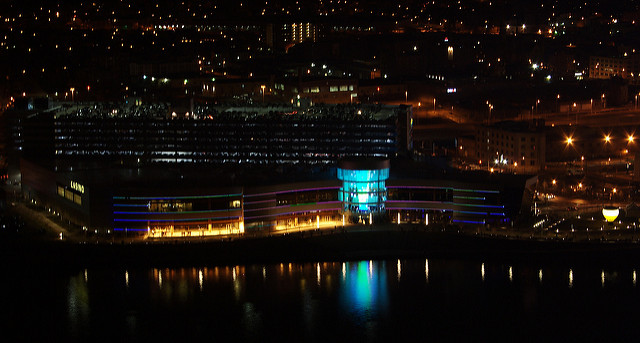
http://triblive.com/news/adminpage/10875591-74/casino-tax-rivers


5314780480_70e4e28b2c_z


Lawsuit dropped by Rivers Casino in tax dispute


Marie Kelley

July 30, 2016

A lawsuit was filed by Rivers Casino in Pittsburg challenging their yearly tax payment based on revenues from slot machine gaming just a few weeks ago and the suit has now been dropped. Late this afternoon, the casino announced the complaint has been withdrawn with no further comment on the matter.
The lawsuit was filed on June 27th within the Pennsylvania Supreme Court against the Pennsylvania Department of Revenue in an attempt to fight the local share tax based on the municipal portion. A spokesman for the casino, Jack Horner, did not speak any further on the matter, just to say that the lawsuit had been withdrawn.
The casino owner, Holdings Acquisition Co., filed the lawsuit, maintaining that the municipal portion of the local share tax was in violation of the clauses of uniformity and equal protection within the constitution of the state as well as the United States. The portion of tax was enacted when slot gambling was first legalized in 2004, with the company calling the tax an unequal rate on slot machine licensees.
Almost all casinos in the state are required by law to pay more than 2% of their gross terminal revenue on slot machine games or a rate of $10 million a year to the host municipality. The only venues exempt from this law are the resort destinations of Valley Forge and Nemacolin as well as casinos in Philadelphia.
2% of revenues is paid when the total amount is over $500 million or a $10 million fee if below this marker. Since the law was enacted in 2004, no casino has pushed past the $500 million marker. This means all casinos have paid $10 million in fees annually. The money paid was used by Pittsburgh to build up the pension fund. With the lawsuit, the casino was hoping to earn a refund for payments made to the city which would equal around $65 million.
When the lawsuit was filed, the city of Pittsburg asked the court to dismiss, citing that the potential for the refund would have a dramatic and immediate effect on the financial health of the city.  With the suit dropped, similar lawsuits remain pending by the Harrah’s Philadelphia venue as well as Mount Airy Casino.


Thursday, July 21, 2016

Rivers Casino challenge to slots tax highlights big checks Pa. casinos have been writing


Slot machine tax challenged by Rivers Casino
Every day, 2 percent of the cash earned by every slot machine at Rivers Casino goes to the city of Pittsburgh. In 2015, that amounted to $5.5 million. But it wasn’t nearly enough. At the end of the year, the North Shore casino cut a check for another $4.5 million to hand over to the city — representing the difference between what its slot machines produced and the minimum $10 million that Pittsburgh is entitled to annually under state gambling law.

Rivers Casino challenge to slots tax highlights big checks Pa. casinos have been writing


Every day, 2 percent of the cash earned by every slot machine at Rivers Casino goes to the city of Pittsburgh. In 2015, that amounted to $5.5 million. But it wasn’t nearly enough.
At the end of the year, the North Shore casino cut a check for another $4.5 million to hand over to the city — representing the difference between what its slot machines produced and the minimum $10 million that Pittsburgh is entitled to annually under state gambling law.
Rivers Casino is no exception.
Last year, eight other casinos in the state ponied up anywhere from $2.4 million to $7.6 million in “true-up” payments to cover the difference between what their slot machines produced for local municipalities and the minimum $10 million they are required to pay their communities.
The municipal portion of the local share tax, enacted when slot machine gambling was legalized in Pennsylvania in 2004, is now the subject of legal challenges by Rivers and two other casinos — Mount Airy and Harrah’s Philadelphia.
Stakes have become high in the legal tussle — so high that Pittsburgh Mayor Bill Peduto canceled an appearance at Rivers Casino Wednesday for a Northside Chamber of Commerce event.
He felt “it is not appropriate to appear at the casino while it is making the city the subject of a lawsuit putting taxpayer funds in jeopardy,” spokesman Tim McNulty said.
Under the system being challenged, all casinos in the state are required to pay the municipal portion except those in Philadelphia and the resort casinos in Nemacolin and Valley Forge. The affected venues pay 2 percent of their gross terminal revenue if it exceeds $500 million or $10 million if it is less than that.
In its lawsuit filed last month, Holdings Acquisition Co., the Rivers Casino owner, claimed the provision “imposes unequal rates of taxation on slot machine licensees” and violates uniformity and equal protection clauses in the state and U.S. constitutions.
The law lacks uniformity, it maintained, because it ordains two tax rates on the same class of taxpayers depending on whether gross terminal revenues are above or below $500 million. That difference in treatment is “arbitrary and not rationally related to any legitimate government purpose,” Holdings argued.
Compounding the matter, at least in the eyes of Holdings, is that casinos in the city of Philadelphia pay 4 percent of their gross terminal revenue as the local share but are not subject to the $10 million minimum. Resort casinos pay 2 percent and aren’t subject to the $10 million minimum.
In the 10 years the state has been collecting the municipal share, no casino has ever exceeded the $500 million figure, meaning all have been required to write checks every year to hit the $10 million level. That’s despite the fact many would be paying much less based solely on revenues.
The way the system works is that the state collects 2 percent a day from casino slot machines and earmarks it for the municipal share. At the end of the year, the state calculates how much has been collected and how much each casino owes as a “true-up” payment to reach the $10 million.
Last year, Parx Casino, the largest in the state, shelled out the least, $2.4 million. Presque Isle in Erie, anted up the most, $7.6 million.
Rivers paid $4.5 million, while The Meadows Racetrack and Casino in Washington County paid $5.6 million.
The majority paid between $4 million to $5 million.
Christopher Craig, who helped craft the state’s gambling law as a lawyer working for former state Sen. Vincent Fumo, said the local share was added to help municipalities offset the costs, including police and infrastructure, associated with hosting a casino.
As for the 2 percent versus the $10 million, the legislature was seeking to strike a balance between the needs of the municipality and “not creating a burden” for the casino, Mr. Craig said.
The 4 percent was put in place for Philadelphia because legislators felt gross terminal revenues for casinos in that city would generate more than $10 million a year for the local share.
“People can go back 12 years and quibble with some of the public policy decisions,” Mr. Craig said. “At the end of the day, the act has been extremely successful.”
Should Rivers prevail, Pittsburgh would lose $10 million a year in revenue, though payments the past few years have been tied up in a battle with the Intergovernmental Cooperation Authority. Rivers also is demanding about $65 million in refunds for money it paid in the past.
Pittsburgh has been using the gambling funds to prop up its ailing pension fund, as required under the Act 47 recovery plan.
If the city loses the money, it would not be able to meet that state mandate or would have to cut $10 million from “core municipal services” to do so, Mr. McNulty said. The city intends to intervene in the lawsuit.
“The local share tax payments were one of the conditions for granting the casino its license, and it never should have taken this frivolous legal action,” Mr. McNulty said.
Like the city, Denis Rudd, a professor and director of hospitality and tourism management at Robert Morris University, doesn’t think the casino has much of a beef. He said there’s definitely a cost to the municipality in hosting such a venue “and that’s the reason they get a chunk of” the revenue.
Mr. Rudd conceded $10 million is nothing to sneeze at — even for a casino like Rivers that produced $272 million in gross terminal revenue last fiscal year, 54 percent of which went for taxes, including the municipal payment. But all casinos knew going in what the cost would be, he noted.
“They agreed to it, so they should have to pay it,” he said.


Friday, July 15, 2016

Has Plainridge Park Casino plateaued?


Has Plainridge Park Casino plateaued?


Boston - The latest gaming revenue numbers for Plainridge Park Casino, the lone slots parlor in Massachusetts, are expected to be out later this week.
The slots parlor, run by Penn National Gaming, hit its one-year anniversary on June 24.
But has Plainridge, which in the next few years is expected to face competition inside Massachusetts from resort casinos, plateaued?
The day before Plainridge's anniversary, the Attleboro Sun Chronicle reported that the 1,250 slot machine facility has "paid $75 million in taxes to the state, $4 million in taxes and fees to the Town of Plainville and created more than 500 jobs."
But one professor who crunched some numbers says at the moment, it appears the facility has plateaued somewhat when it comes to monthly revenues.
"It is doing fine," said Paul DeBole, assistant professor of political science at Lasell College in Newton.
The slots parlor is looking at making about $160 million for the first full year of operations, "slightly better than expected," he said in an email.
Plainridge Park Casino saw $13.5 million in May
Plainridge Park Casino, the state’s sole slots parlor, took in $13.5 million in the month of May, according to the Massachusetts Gaming Commission. The gross slots revenue figure is an increase from April but slightly less than what the slots parlor posted in March.

But the bigger question is whether they can make a profit, particularly since it faces a 49 percent tax rate on gambling revenue.
He said Penn National is facing somewhere between six and ten percent profit on investment.
"We saw a huge uptick in revenues in January and February, but they were caused by Plainridge's rather liberal free play promotion," DeBole said in the email. That caused an artificial boost to Plainridge's gross gaming revenue figures.
DeBole predicts that going forward, annual revenues will come in at plus or minus $140 million, at least until resort casinos come online sometime in the next few years.
The Mashpee Wampanoags are building a tribal casino, MGM is constructing a casino in Springfield and Wynn Resorts is attempting to build a casino north of Boston in Everett. (Casino mogul Steve Wynn, during a recent trip to Boston, derided Plainridge as a "box of slots" while he unveiled to reporters a model of his proposed gambling palace.)
Massachusetts voters in November will weigh whether to add a second slots parlor license to the state's 2011 expanded gambling law. The current law authorizes one slots parlor and up to three resort casinos.
Plainridge's main competition right now is Twin River Casino in Rhode Island, which is ten minutes from Providence. Twin River boasts 4,200 video slot machines and virtual table games. It also allows smoking inside, and the gambling age there is 18, while in Massachusetts it's 21 years old.
Penn National hasn't pushed for tax relief in Massachusetts, but DeBole noted that the company is already looking for some for a casino it owns in Bangor while citing a saturated gambling market.
Plainridge, for its part, is staying positive about its future in Massachusetts. The company says they're happy with the results year-to-date.
"We certainly like our momentum," Lance George, Plainridge's general manager, told MassLive.com last month, as the one-year anniversary approached. "We like the start that we're off to for the first four, five months, now we're in our sixth month. We certainly seem to have gathered some momentum as the calendar flips to 2016."
He added: "We had the first four months of the year, successive increase in revenues month over month, over month, over month."
Asked if Plainridge is being taxed too much, Stephen Crosby, the chairman of the Massachusetts Gaming Commission, said, "I don't know anything about their internal arithmetic, but I know that they are generating more revenue per machine than most of the other casino launches in the last one or two decades."
"So they're doing very well by industry standards. So I'm sure they're doing well, too," Crosby said.
He acknowledged that revenues for the last two or three months have appeared to be similar.
"They're making money hand over fist and we got our 75 million dollars this year, so we're happy," he said, referring to the state's cut.
The commission releases Plainridge's monthly revenue reports on the 15th of each month. Numbers for June 2016 are due on Friday.


Friday, January 1, 2016

Massachusetts: Familiar Patterns Repeated By Gambling Vultures, Don't act surprised!


The Gambling Vultures follow a predictable pattern....they've done it elsewhere! 


Early in the process of 'organizing,' the Massachusetts Gambling Commission conducted several Edumacational Forums....during one of the Forums, the Casino Experts discussed that Twin River had TABLE GAMES with which the Plainridge Slot Barn would be unable to compete ..... 

Predictable Solution? 

ADD TABLE GAMES! 

On the right side of this page is a lengthy list of categories, for example TABLE GAMES.  

Massachusetts taxpayers; hard-earned dollars funded reports prepared by CASINO EXPERTS that included BOGUS PROJECTIONS - clearly overstated JOB CREATION and OVERSTATED REVENUE PROJECTIONS in order to SELL Predatory Gambling to politicians whose egos were stroked by Gambling Lobbyists and  should have known better, Unions salivating for JOBS and a public all too willing to follow without question. 


Blindly Accepting Overstated Projections


gambler's assumption of risk should not be forgotten or forgiven as revenue from the Plainridge Park Casino fails to meet rosy projections. The slot ...

JOAN VENNOCHI

State should not cover Plainridge’s bet


DECEMBER 31, 2015

BY DEFINITION, GAMBLING is risky business.

And, according to the basic rule of play in any game of chance, the risk falls on the gambler — be it a senior citizen who loses his social security check to a slot machine, or one casino operator who loses customers to another casino operator.

A gambler’s assumption of risk should not be forgotten or forgiven as revenue from the Plainridge Park Casino fails to meet rosy projections. The slot parlor, located in Plainville, was expected to take in $262 million in its first year. However, that revenue projection has fallen to $160 million.

Plainridge was supposed to keep Massachusetts gamblers away from Twin River Casino in Lincoln, R.I., located just 11 miles away. It hasn’t. The Rhode Island venue offers a variety of table games and allows smoking. Constrained by Massachusetts law, Plainridge is a no-smoking facility, with no table games.

Penn National Gaming, the Plainridge casino operator, knew of those restrictions when it competed for the state’s only license for a slot-machine parlor. They assumed the risk that goes with it. A lesser haul than expected doesn’t change their obligations to the state.

Under the state’s 2011 gambling law, the casino owes Massachusetts 49 percent of its gross gaming revenue. If the casino makes less money than projected, so does the state. Based on current revenue projections, the state would receive about $78 million from Plainridge. Plainridge is also expected to pay about $1.5 million in local property taxes to Plainville.

No matter what the casino takes in, Penn National should not come looking for any tax reductions from the Commonwealth. But that’s what Penn National is doing in Bangor, Maine, where its slot parlor opened to much celebration – just like the one in Plainville. At first, revenue poured into Bangor’s Hollywood Casino — just like it did in Plainville. Then business fell off — just like it has in Plainville.

In Maine, when revenue dropped, Penn National lobbied for a tax break. When the local board of assessors voted against it, Penn National appealed. A saturated gambling market has led to similar requests for tax mercy from casino operators in other states.

Casino operators hand no money back to their losing patrons. Massachusetts should hold the operators to the same standard.

A gambler’s assumption of risk should not be forgotten or forgiven as revenue from the Plainridge Park Casino fails to meet rosy projections. The slot parlor, located in Plainville, was expected to take in $262 million in its first year. However, that revenue projection has fallento $160 million.

Plainridge was supposed to keep Massachusetts gamblers away from Twin River Casino in Lincoln, R.I., located just 11 miles away. It hasn’t. The Rhode Island venue offers a variety of table games and allows smoking. Constrained by Massachusetts law, Plainridge is a no-smoking facility, with no table games.

Penn National Gaming, the Plainridge casino operator, knew of those restrictions when it competed for the state’s only license for a slot-machine parlor. They assumed the risk that goes with it. A lesser haul than expected doesn’t change their obligations to the state.

Under the state’s 2011 gambling law, the casino owes Massachusetts 49 percent of its gross gaming revenue. If the casino makes less money than projected, so does the state. Based on current revenue projections, the state would receive about $78 million from Plainridge. Plainridge is also expected to pay about $1.5 million in local property taxes to Plainville.

No matter what the casino takes in, Penn National should not come looking for any tax reductions from the Commonwealth. But that’s what Penn National is doing in Bangor, Maine, where its slot parlor opened to much celebration – just like the one in Plainville. At first, revenue poured into Bangor’s Hollywood Casino — just like it did in Plainville. Then business fell off — just like it has in Plainville.

In Maine, when revenue dropped, Penn National lobbied for a tax break. When the local board of assessors voted against it, Penn National appealed.

A saturated gambling market has led to similar requests for tax mercy from casino operators in other states.

Casino operators hand no money back to their losing patrons. Massachusetts should hold the operators to the same standard.


Sunday, November 1, 2015

Maine casino's tax break plea could be omen for Mass.


After hot start, Bangor casino slipping

Revenue drop spurs appeal for tax break

The blackjack dealer announced a winning hand at Hollywood Casino in Bangor, where the early crowds (below) have since gestures after dealing a winning hand at Hollywood Slots, Friday, March 16, 2012


ROBERT F. BUKATY/ASSOCIATED PRESS/FILE
A blackjack dealer announced a winning hand at Hollywood Casino in Bangor.


BANGOR — The slot parlor opened to much celebration, and racked up huge revenue at first. The new casino era looked bright, and a state that had long debated whether casinos were a good idea appeared to have locked in a steady stream of tax dollars.

But then business fell off, and before long, the owner of the casino was lobbying for a substantial tax break.

This is the tale that is playing out in Bangor, where Hollywood Casino has demanded that $850,000 be slashed from its annual property taxes, a reduction of almost 40 percent, and by far the largest tax abatement ever requested in this city of about 35,000 residents.

And some casino observers are saying that what’s happening in Maine could be a harbinger of what could happen in Massachusetts if its first casino continues to see a decline in its revenue, especially with as many as four more casinos possibly opening in the state over the next few years.

Casino operators, facing fierce competition, will likely argue that they will go out of business without tax relief from state and local governments, said the Rev. Richard McGowan, a Boston College professor and specialist in casinos.

“I can’t imagine the casinos in Massachusetts not asking for tax breaks after they’re up and running,” he said.

Another casino specialist, Denis P. Rudd, a Robert Morris University professor, pointed to online gambling as a growing threat to casinos, especially daily fantasy sports websites like FanDuel and DraftKings.

“Online gambling is eroding the customer base of casinos,” Rudd said. “There are only so many customers to go around.”

That was the case an attorney for Hollywood Casino made when he asked Bangor tax assessors for a break on Aug. 5, citing the opening in 2012 of a second casino in Maine.

“It’s not good times for the casino industry,” Jonathan A. Block said at the hearing, according to a videotaped recording posted on the city’s website. “The bottom line is that the supply of casinos is exceeding the demand.”

New casinos are opening in the Northeast “at a very rapid pace,” he said, driving down the value of existing ones, like the 10-year-old Hollywood.

When Hollywood first opened in a temporary facility, following years of debate and a contentious statewide election, it had a monopoly on Las Vegas-style slot machines for hundreds of miles in any direction.

Patrons filed into Hollywood Slots.
JOEL PAGE FOR THE BOSTON GLOBE/FILE 2005
Patrons filed into Hollywood Slots.
Hollywood could not expand fast enough, as gamblers came from near and far, quickly growing to include 1,000 slot machines, dozens of tables offering games like blackjack, poker, and craps, a 148-room hotel, and a multilevel parking garage.

Hollywood’s revenue began sliding in 2011, and took a big hit a year later when a rival casino opened in Oxford, about 130 miles away in the western part of the state, according to revenue figures posted online by the Maine Gambling Control Board.

In the last five years, Hollywood has lost about $240 million in annual slots revenue, while Oxford has picked up about $60 million, a net loss statewide of about $180 million.

Maine lawmakers are considering adding another casino in the southern part of the state.

Hollywood Casino is paying more than $2 million a year in local property taxes, based on a $100 million assessment of the value of its land and buildings. Block, however, told Bangor’s assessors that its property is worth about $60 million.

Hollywood also pays a percentage of its revenue to the state, but the casino operator is not challenging that tax.

Plainridge Park Casino, in Plainville, Mass., pays about $1.5 million a year in local property taxes. The slots-only operation enjoyed an overwhelming response from the public in its first week, making it, briefly, one of the most lucrative casinos in the country. But after Plainridge’s gala opening in June, its revenues slipped significantly in each of the next three months.

Those numbers have generated considerable uncertainty about whether Plainridge can hit the $200 million in annual revenue that was projected by the state Gaming Commission before its opening. Plainridge competes in an already crowded market, with three much larger casinos in Rhode Island and Connecticut within a 90-minute drive.

Plainridge is owned by Penn National, one of the top casinos companies in the country. Penn National also owns Hollywood. A Penn National spokesman declined comment.

Andrea Soucy, a member of Plainville’s Board of Selectmen, said Penn National has not brought up a tax reduction for Plainridge.

“Right now, they’re holding up their end of the bargain,” she said.

In Bangor, the board of assessors voted 5-0 to deny Hollywood’s tax abatement, but the case is on appeal before a state board in Augusta.

People interviewed in Bangor said they support the local board’s decision.

“I don’t think a tax break is appropriate for the casino,” said Shelley Miller, a local schoolteacher. “It’s a business, subject to market corrections.”

Even at the casino, patrons expressed reservations.

“When my 401(k) takes a tumble nobody’s there to make up my losses,” said Ronalda Sinclair, visiting from New Brunswick, Canada.

Sean P. Murphy can be reached at smurphy@globe.com.
Follow him on Twitter @spmurphyboston.


Friday, September 4, 2015

Atlantic City Casinos Push New Jersey Governor Chris Christie to Sign Financial Assistance Bills


Atlantic City Casinos Push New Jersey Governor Chris Christie to Sign Financial Assistance Bills

Atlantic City casinos Chris Christie PILOT legislation
Atlantic City casinos are still awaiting approval for a tax break legislation package from New Jersey Governor Chris Christie, and say further delays could harm the already struggling city. (Image: Nyier Abdou/The Star-Ledger)


Read more: http://www.casino.org/news/atlantic-city-casinos-push-christie-to-sign-aid-measure#ixzz3kp6DPkSJ


Atlantic City casinos are pressuring Governor Chris Christie to step off the political campaign trail for a minute and hike back to Trenton to sign a package of rescue bills. The measures were approved by both the Assembly and State Senate in June, and have been since sitting on his desk for final approval ever since.
The Casino Association of New Jersey (CANJ) says the bills, particularly the Payment In Lieu Of Taxes (PILOT) program, is critical for the city as a whole.
“As the clock continues to tick while we wait for Governor Christie to sign the Atlantic City Revitalization legislation, the price of inaction continues to grow and the fate of Atlantic City and the region hang in the balance,” CANJ said in its press release.

Christie’s Cold Feet

Atlantic City can still claim the streets of the famous Parker Brothers board game, but its monopoly on the gambling industry has long disappeared. Once considered the East Coast gambling mecca, but now in varying states of disrepair and financial anguish, the resort gaming town thought it had Christie’s support for a recovery measure back in March when state lawmakers were debating the issue.
“The governor looks forward to … the legislation proposed by the Senate President to bring real, long lasting fiscal stability to Atlantic City,” Kevin Roberts, Christie’s spokesman, said in March. “The governor urges the legislature to put just such legislation on his desk for signature.”
The bills the legislature agreed upon is a five-part package that is centered around the PILOT program, allowing the eight remaining casinos to avoid fluctuating tax rates in favor of a stabilized payment system. The other four mandates would create a state education fund for the city, guarantee health insurance, and retirement benefits for casino workers, divert monies to redevelopment projects, and eliminate the Atlantic City Alliance and reinvest its $30 million annual budget.
“Every day that the proposed legislation is not adopted reduces the amount of revenue that the city may receive under the funding and jeopardizes the stability sought to be achieved by the legislation package, threatening non-casino Atlantic City businesses and residents and taxpayers across the county,” CANJ said.

Community Chest

Similar to the federal government’s bailout of the US subprime mortgage crisis in 2008, the bills aren’t popular among all parties in New Jersey, and letting the casinos off the hook for their tax responsibilities is certainly seen as a bailout.
But CANJ claims without these measures, more venues will struggle to pay on their now over-assessed properties.
CANJ also says that Christie’s holdup will cost Atlantic City $50 million as taxes from casinos go to Trenton instead of being reinvested locally. “That means the city would need to replace that revenue by other sources, presumably the property taxpayers of Atlantic City,” CANJ stated.
It appears the governor is backtracking from the deal, as giving casinos a free stack of chips could come back to haunt him on the 2016 presidential campaign trail. The two-term Republican state leader is trying to make his case for the presidential ticket and appeal to more conservative voters, but that might be difficult considering his approval rating in the Garden State is currently at 37 percent. Nationwide, latest polls show him with the backing of a dismal three percent of likely GOP voters.
That puts Christie well behind another person who abandoned Atlantic City awhile back: Republican front-runner Donald Trump.


Read more: http://www.casino.org/news/atlantic-city-casinos-push-christie-to-sign-aid-measure#ixzz3kp6QJh4A

Tuesday, October 28, 2014

Day Fourteen: 18 reasons in 18 days to Vote YES on 3


Please share and post widely.
Casinos are already lining up to change the rules.
 
Some casinos have recently petitioned states to reduce their tax burden, negating the primary justification for legalizing casinos in the first place. This June, the CEO of the American Gaming Association stated that "the tax and torture model (of taxing casinos) is unsustainable" as he called for states to reduce taxes on casinos or risk losing jobs. Here in Massachusetts, casinos have already requested changes to the casino law, and they aren't even open for business yet. As long as the casinos hold all the cards (read: money and political influence), their lobbyists will keep pushing for changes that benefit them, at the taxpayers' expense. It's already happening in other states. It will happen here, too.
Is whatever you believe might be gained from casinos,
worth everything that you will lose?
On November 4th, Vote YES to Repeal the Casino Law
Vote YES on #3
Vote YES to STOP the Casino Mess
WANT TO HELP?
3 Ways You Can:

1) Please share/post these messages widely: https://www.facebook.com/profile.php?id=100005253047911
We Can't Win Without YOU!
Find the full list of reasons to Vote YES on 3 here: