Meetings & Information


*****************************
****************************************************
MUST READ:
GET THE FACTS!


Showing posts with label drugs. Show all posts

Thursday, January 5, 2017

Luck works both ways for slot winner, alleged heroin dealer, Madison police say


Luck works both ways for slot winner, alleged heroin dealer, Madison police say

Talk about a come down.
A Madison man who just won $1,500 at a Ho-Chunk Gaming slot machine early Wednesday was arrested while sitting at the machine waiting for his winnings, because a bag of heroin found at the front door allegedly fell out of his pants.
Michael Goodman, 32, was tentatively charged with possession of heroin with intent to deliver, Madison police said.
The incident happened at about 12:15 a.m. at the casino at 4002 Evan Acres Road.
“He likely was feeling pretty jubilant about hitting a slot machine jackpot, and was waiting to collect more than $1,500 in winnings, when police arrived and altered the mood by placing him in handcuffs,” police spokesman Joel DeSpain said.
Pause
Current Time0:00
/
Duration Time0:00
Loaded: 0%
Progress: 0%
0:00
Fullscreen
00:00
Mute
Earlier in the night, a casino employee found a plastic bag near the front entrance, a bag that looked like it contained drugs.
“It contained a golf ball-sized amount of a cream-colored powdery material, individually packaged in a couple of dozen pea-sized amounts,” DeSpain said. “The officer suspected heroin and testing determined that to be correct.”
Surveillance video at the front entrance showed a man adjusting the legs of his sweatpants, and when he did so, the bag of heroin fell out, but he apparently didn’t realize it, since he kept going into the casino to play.
“Security told police he was seated near some slot machines, waiting to collect his winnings,” DeSpain said. “Ironically, that is where his luck ran out.”


Thursday, October 6, 2016

Drug Money Laundering at Downstream Casino in Quapaw, Oklahoma


15 indicted in Springfield meth distribution ring


Harrison Keegan&nbsp, HKEEGAN@NEWS-LEADER.COM

October 5, 2016


Fifteen people have now been indicted in a conspiracy to distribute large quantities of meth in the Springfield area.
Four men were charged in March after authorities say they were busted with 12 pounds of meth and 6 pounds of heroin in a Springfield garage, but Tuesday's 37-count superseding indictment implicates 11 more people in the large-scale meth distribution ring.
According to a news release from the U.S. Attorney for the Western District of Missouri, the 15 people indicted in the conspiracy are Patrick Roger Brigaudin, 54, Timothy Garth Hall, 55, Jennifer Louise Minor, 41, Amber Marie Vantuyl, 35, Gary Lee Driggers, 64, William Frank Eft, 66, Leah Renee Binney, 55, and William David Watts, 58, all of Springfield, Gayla Rochelle Phillips, 41, and Richard Todd Sherwood, 58, both of Willard, Mo., Adrian Ortiz-Corrales, 41, and Eduardo Diaz, 52, both of Las Vegas, and Carlos Alberto Luna, 42, Federico Herrera-Preciado, 51, and Maria Zetina-Ortega, 28, who have no known address.
A criminal complaint in the case says that on Feb. 29, authorities set up surveillance outside Brigaudin's house at 1720 E. McDaniel St.
A Dodge pickup truck pulled into the open garage at Brigaudin's house at about noon, and authorities quickly raided the property with a search warrant they had secured a few days earlier, according to the complaint.
Agents from the Drug Enforcement Administration, Springfield Police Department, Homeland Security and the IRS entered the garage and found 12 pounds of meth and 6 and a half pounds of heroin in a secret compartment under the bed of the truck, according to the complaint.
Three other men who were allegedly at the scene that day with Brigaudin — Hall, Ortiz-Corrales and Diaz.
The February seizure came about a year after authorities say they stopped a man in Texas with 15 pounds of meth — nine of which were bound for Brigaudin, the complaint says.
The 15 defendants are accused of participating in a conspiracy to distribute meth in Greene County from October 2013 to February 2016.
Brigaudin, Ortiz-Corrales, Phillips, Luna, Herrera-Preciado and Zetina-Ortega are also accused of participating in a money-laundering conspiracy during that time, according to the release.
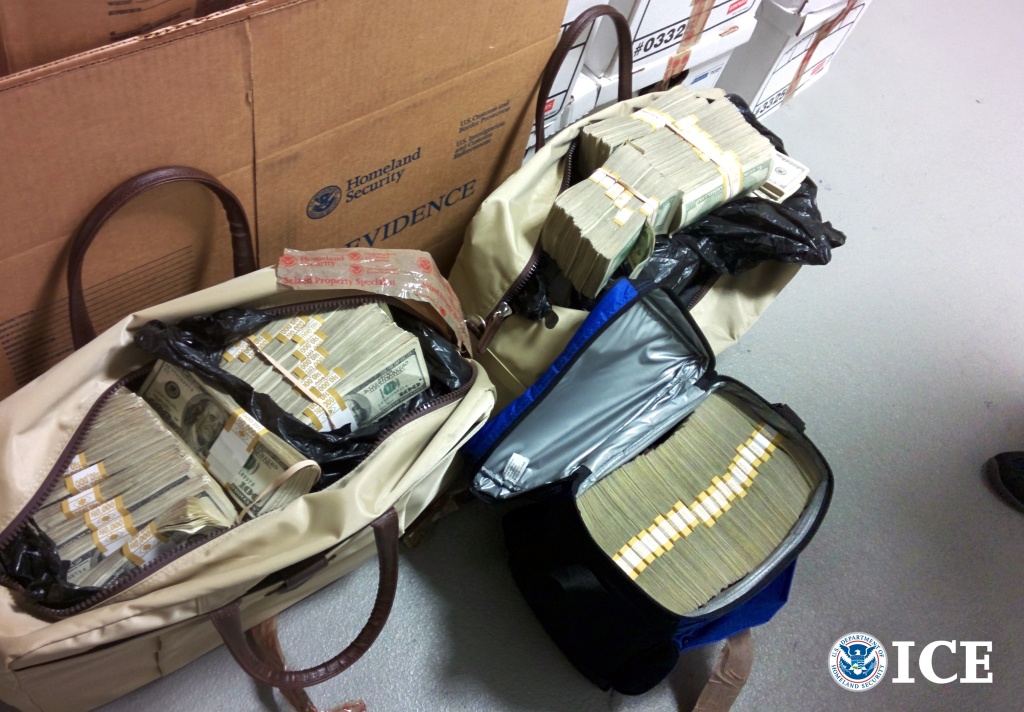
Court documents say that between January 2009 and April 2015, Brigaudin put more than $10 million into slot machines at Downstream Casino in Quapaw, Oklahoma and withdrew about $8.4 million from the slot machines.
The release says Ortiz-Corrales and Diaz are also charged together with one count of possessing heroin with the intent to distribute.
In addition to the drug-trafficking and money-laundering conspiracies, Brigaudin is charged with four counts of distributing methamphetamine and one count of attempting to possess methamphetamine with the intent to distribute. Brigaudin, Ortiz-Corrales and Diaz are charged together in one count of possessing methamphetamine with the intent to distribute, according to the release.
The release says Brigaudin and Phillips are charged together in one count of money laundering. Ortiz-Corrales and Luna are charged together in two counts of money laundering. Ortiz-Corrales and Herrera-Preciado are charged together in two counts of money laundering. Ortiz-Corrales, Herrera-Preciado and Zetina-Ortega are charged together in two counts of money laundering.
Vantuyl, Hall, Binney, Eft and Sherwood are each also charged with one count of possessing methamphetamine with the intent to distribute, according to the release.
The release says Minor is also charged with two counts of distributing methamphetamine, and Phillips is charged with one count of distributing methamphetamine.
Driggers is also charged with four counts of using a telephone to facilitate the drug-trafficking conspiracy. Binney is charged with two counts of using a telephone to facilitate the drug-trafficking conspiracy. Minor, Eft, Hall, Phillips, Watts and Sherwood are each charged with one count of using a telephone to facilitate the drug-trafficking conspiracy, according to the release.
Watts is also charged with maintaining a premises that he made available for unlawfully storing, distributing, and using meth, the release says.


Sunday, July 17, 2016

TEMECULA: Casino drug bust nets 2 suspects


TEMECULA: Casino drug bust nets 2 suspects


BY PATRICK ONEILL / STAFF WRITER

Wednesday, June 15, 2016

Dover Downs scheme follows money laundering trend


Dover Downs scheme follows money laundering trend


Men are accused of funneling ill-gotten cash through casino, a tactic authorities are well aware of


The scheme recently revealed to have used Dover Downs Hotel & Casino slot machines to wash drug money was doomed from the start.
The effort made a man, now in custody, a celebrity on casino cameras for his flamboyant playing habits and eventually linked him to a ring of heroin peddlers in Kent and Sussex counties, casino and police officials said. The capture proves the house always wins.
Operation Duck Hunt was a Delaware State Police investigation that concluded in May targeting the heroin distribution ring. Thirteen people were indicted and during the investigation police confiscated 1.75 kilograms of heroin, a cache worth $1.2 million on the street.
Salman Choudhary was one of those arrested and is accused of funneling the ill-gotten cash through real estate and local businesses in an effort to legitimize the drug money. But police said he also brought large sums of cash to Dover Downs hoping to essentially exchange bills that'd make the IRS curious for ones that could be written off as gambling winnings.
"When we found out he was here on the floor, our cameras were trained on him. We cooperated with the regulatory people for over two years," said Ed Sutor, CEO and president of Dover Downs. "If it had not been for us following regulations properly, he wouldn't have been caught, at least not from his activities here."
Gambling establishments nationwide have fought — and earned — a reputation associated with organized crime and shady money practices. For those reasons, they're tightly controlled by state and federal regulations that makes cheating on either side of the blackjack table much more difficult.
But Dover Downs didn't know where Choudhary's money was coming from, nor was it their prerogative to care. And the money went securely into the casino's vault over the course of the two-year investigation.
What the casino knew was how much money Choudhary was spending on each trip, and that their bosses at the Delaware Department of Homeland Security wanted him watched.

When washing goes wrong

It didn't take long before the all-seeing eyes at Dover Downs were focused onto Choudhary, Sutor said.
The casino's 2,400 slot machines are connected to a single mainframe which can track how much money is put into individual devices, and when a gambler uses his rewards card — as Sutor said Choudhary did — how much money an individual is spending and making also can be tracked.
"He came in and started playing slot machines with a lot of cash. Now, we don't have people standing over their shoulder counting how much money they're placing into the machine. We, like all casinos, have a computer behind the scenes," Sutor said. "It got the attention of our state regulators."
If a player feeds a machine more than $10,000 in a single day, the law requires a casino to file a Currency Transaction Report. Sutor said Choudhary came often and the casino was required to file multiple CTRs over his playing habits.
It wasn't just high-dollar machines that kept Choudhary busy on the gaming floor, Sutor said. He became a regular and did little to try and hide the money he brought along.
Delaware Department of Safety and Homeland Security Division of Gaming Enforcement spokeswoman Wendy Hudson declined to comment on anything that had to do with the investigation at Dover Downs or the money laundering activities that happen at casinos in general. She cited an ongoing investigation as the reason for her silence.
STORY CONTINUES BELOW GRAPHIC:

The same was true at a news conference last month where the results of Operation Duck Hunt were announced. Police kept mum on the details of the laundering scheme.
"I know you have some good questions, but we have to hold off on that," Delaware State Police spokesman Sgt. Richard Bratz told reporters.
Police did say the laundering scheme and the heroin ring weren't initially linked, but the one investigation proceeded the other.
"It began as a possible money laundering case and evolved into one of the largest heroin seizures in Delaware, along with other asset seizures throughout Sussex County to include money, property and guns," Greg Nolt, director of the Division of Gaming Enforcement, said at the news conference.

A well-documented practice 

The practice of washing illicit money through casinos, however, is well documented.
"I don't think casinos are a very good place to launder money. An idiot would do it. Sure, there's other ways you could dream of doing it. But to come in and gamble, to put your money in a machine knowing the casino wins, you're already starting with your foot in a hole," Sutor said. "However, we have all sorts of procedures in place in order to avoid people trying to exchange currency."
A 2014 investigation at Harrington Raceway and Casino centered around a similar theme — and in this case the money was dirty in a literal sense.
"Harrington Casino surveillance confirmed three subjects introduced the bills into machines and cashed out tickets with little or no play. The tainted money was recovered from the machines by DGE Detectives and linked to a bank robbery in Maryland," Hudson said. "The suspects and their vehicle were identified through surveillance video footage.  The information was shared with Maryland State Police and the FBI.  All three suspects were arrested in Maryland."

The U.S. Department of the Treasury 2015 money laundering report points to the practice of "structuring" — generally, parceling out what would otherwise be a large cash transaction to avoid reporting requirements — as the most commonly reported practice for washing money through casinos. This is especially prevalent in Nevada, the only state where sports betting is legal which allows their books to funnel illegal out-of-state money.
Another common practice is purchasing chips with cash or depositing funds into a casino account before a minimal amount of play on the casino floor, essentially trading dirty bills for the casino's clean money. This can work with fake money as well, and according to the Treasury report an average of $40,000 a week in counterfeit currency is reported by Nevada casinos.
"If someone came into our facility with a large amount of small bills — 5s, 10s, 20s — and tried to get that changed to hundreds or even a check, we wouldn't do it," Sutor said. "That would be facilitating money laundering, and it didn't happen in this case. The people in the cage right behind me, they're all trained. The people in the pits, they're all trained. And we use computers to catch people after the fact."
That training, Sutor said, extends to cashiers offering players advice on how to get around reporting their winnings or having the casino report of the same.
Casinos in New Jersey and Nevada file the most casino suspicious activity reports nationwide, according to the Treasury report, and are the venues most often cited in criminal prosecutions involving money laundering through casinos. In 2013, casinos and card clubs in the United States filed more than 27,000 SARs, more than 40 percent of which came from Nevada and New Jersey.
Delaware casinos filed 26 SARs in 2015 and eight between January and March of this year.
Contact Adam Duvernay at (302) 324-2785 or aduvernay@delawareonline.com.

Examples of money laundering through U.S. casinos

  • New York, 2012: 25 people were indicted on charges of illegal gambling and money laundering, including using nominees to open accounts, place bets and collect  winnings at a licensed Las Vegas sports book on behalf of out-of-state bettors. 
  • New Jersey, 2011: a woman was convicted of fraudulently misrepresenting herself as a U.S. government official who, for a fee, could help immigrants achieve permanent legal resident status. She earned hundreds of thousands of dollars. Among her expenditures were trips to Atlantic City casinos where she allegedly spent tens of thousands of dollars in cash.  
  • Maryland, 2011: a man and woman who managed a multimillion dollar heroin ring in the Baltimore area were indicted on drug trafficking and money laundering charges. They allegedly used drug cash for gambling in Las Vegas casinos and bought lottery tickets from winners. 
  • New York, 2011: a man was indicted for allegedly using casino slot machines to launder illicit proceeds. The transactions took place on an Indian reservation on the U.S./Canadian border. The farmer allegedly routinely visited the Mohawk Bingo Palace on the reservation, putting tens of thousands of dollars in U.S. currency into slot machines and then receiving a casino check for the credit balance.
  • Arizona, 2010: a man was indicted for operating a fraudulent gambling enterprise in which he allegedly solicited funds based on claims of an insider advantage that would allow him to generate gambling profits for investors. He allegedly wired approximately $4 million from the credit union to accounts at Las Vegas casinos where he either used the money to gamble or converted it to cash.
Source: U.S. Department of the Treasury 2015 money laundering report
[Editor's note: The graphic below is the same as the one above that mobile users may not be able to see.]
http://www.delawareonline.com/story/news/crime/2016/06/03/dover-downs-scheme-follows-common-trends-money-laundering/84910692/

Wednesday, May 18, 2016

DELAWARE: Heroin money laundered at casinos, police say


VIDEO ON LINK


Heroin money laundered at casinos, police say


James Fisher, The News Journal

May 17, 2016

A 31-year-old Felton man, Deangelo Mcglotten, is the "ringleader" of a large-scale heroin distribution effort that a two-year police investigation just broke apart, authorities said announcing the indictment of Mcglotten and 12 other people on drug, conspiracy, racketeering and money laundering charges.

Police also said the investigation uncovered a money-laundering scheme that sent proceeds of illegal drug sales through casinos. A Georgetown businessman, Salman Choudhary, 37, was charged with involvement in organized crime, racketeering, money laundering, attempting to evade tax and failing to file tax returns. He was held on a bond of $1.7 million, the largest cash bond of any of the people indicted after what authorities called "Operation Duck Hunt."

"A heroin distribution ring operating in Kent and Sussex Counties was led by Deangelo Mcglotten along with his closest associates, Timothy Felix and Adrian Coverdale," said Nathaniel McQueen Jr., superintendent of the Delaware State Police. "The illegal proceeds of the drug organization were being laundered by Salman Choudhary through casinos, businesses and personal property."

Felix, 30, of Dover, faces eight criminal charges including drug dealing, conspiracy, racketeering and money laundering. He was held on $750,000 cash bond. Coverdale, 34, of Blades faces six similar charges and was held on $400,000 cash bond.

Police declined to specify exactly how the suspects allegedly laundered ill-gotten money at casinos, saying the investigation had not yet wrapped up and pointing out some of that information should be withheld pending the suspects' trials. "I know you have some good questions, but we have to hold off on that," Bratz told reporters.

Comments law enforcement officials made at the news conference suggested the alleged money laundering happened at the Dover Downs casino, and that discovering it was key to getting the investigation off the ground.

"It began as a possible money laundering case and evolved into one of the largest heroin seizures in Delaware, along with other asset seizures throughout Sussex County to include money, property and guns," said Greg Nolt, director of the Division of Gaming Enforcement, at the news conference.

A DSP spokesman, Sgt. Richard Bratz, said the operation began in April 2014 and culminated in multiple search warrant executions and arrests on May 11. Earlier, on Jan. 13, he said, police searched Mcglotten's home and an Acura vehicle linked to him but didn't arrest him in connection with the probe until last week.

Still, Mcglotten had been detained on heroin-related charges during the course of the two-year probe. He was arrested by Dover police in July 2014 after a tip that he was in possession of a lot of heroin; at the time, police said 1,300 bags of heroin weighing 19.5 grams was in his car.

In all, police confiscated 1.75 kilograms of heroin during the investigation, with a street value of $1.2 million, Bratz said. On May 11, police arrested eight people, including Mcglotten, Choudhary, Felix and Coverdale.

Six others were indicted by a Sussex County grand jury but have not yet been located or arrested, police said. They are:


  • Linda Mcglotten, 49, of Milford, the mother of Deangelo Mcglotten
  • Reginald Mcglotten, 30, of Millsboro
  • Obrien Morris, 26, of Millsboro
  • Luis Manzanet-Garlaza, 27, of Milford
  • Sohail Zeeshan, 39, of Rehoboth Beach
  • Luis Manzanet-Garlaza, who police said has ties to Milford, northern New Jersey, Florida, and Puerto Rico.


  • If anyone has any information in reference to the location of the listed wanted subjects, they are asked to contact Sgt. M. Dawson at (302) 752-3815.  Information may also be provided by calling Delaware Crime Stoppers at (800) TIP-3333, via the Internet at www.delaware.crimestoppersweb.com or by sending an anonymous tip by text to 274637 (CRIMES) using the keyword "DSP."

    "Where possible, we want to try to eliminate entire networks of drug dealers and hold those at the very top of the organization responsible. The time and the effort necessary to do that is extensive," said Delaware Attorney General Matt Denn at a news conference in Georgetown. "We are going to continue to diligently pursue ops like this one, to disrupt trafficking operations and hold responsible those who put this poison into our communities, but until our state is successfully treating the addiction crisis that has gripped our state, the demand for these drugs is going to continue, and eventually new dealers are going to seek to replace these ones.”

    Contact James Fisher at (302) 983-6772, on Twitter @JamesFisherTNJ or jfisher@delawareonline.com.

    EDITOR'S NOTE: An earlier version of this story had an incorrect number of people indicted. The correct number is 13 in all.


    http://www.delawareonline.com/story/news/local/2016/05/17/heroin-money-laundered-casinos-cops-say/84439438/


    Saturday, May 7, 2016

    No verdict in Bonanno mob trial; deliberations resume Monday


    No verdict in Bonanno mob trial; deliberations resume Monday

    nws  Santoro
    Anthony Santoro (aka Skinny) is one of many Bonanno associates rounded up in Manhattan Criminal Court July 9 2013. (Joe Marino/New York Daily News) (Joe Marino)

    MANHATTAN, N.Y.-- After six days of deliberations, the jury in the Bonanno mob trial did not reach a verdict Thursday in state Supreme Court in Manhattan.
    The deliberations will resume Monday.
    Anthony (Skinny) Santoro, 52, of Great Kills, and his alleged Bonanno co-defendants -- Vito Badamo, 53, Nicholas Santora, 73, and Ernest Aiello, 36 -- are accused of enterprise corruption, including loansharking, gambling and drug dealing, after authorities reportedly busted the family's nine-man crew in July 2013.
    On Thursday, the panel asked to hear a series of calls regarding a bettor who owed money from betting on allaction247.com, the gambling site Santoro allegedly ran.
    In one of the calls, Santoro says, "I'm gonna split his f------ head open with a hatchet, to be honest with you."
    "Biz, I'll put two holes in his f------ forehead, I'll double tap his forehead right now. I will go right now put two holes in his head. He'll be one dead young punk. I'll leave him in the street right now. I'll shoot him right now, right this minute. I'll take a shower and shave, just to go shoot him."
    They jurors also asked for clarification regarding the difference between direct evidence and circumstantial evidence.
    The panel asked the judge Wednesday for advice about resolving its disagreements so it can avoid a hung jury.
    The skinny on 'Skinny' --  Man at center of mob trial
    Anthony (Skinny) Santoro, the alleged Staten Island Bonanno mobster, has been portrayed with these conflicting -- yet fascinating -- personalities.
    On Tuesday, the jurors requested to see all the photos from the trial, the vouchers from all the executed search warrants, and asked to hear calls involving Badamo, Santoro and Nicholas Bernhard, one of the other five co-defendants who pleaded guilty.
    The panel also heard a car-bug call between Badamo and alleged Bonanno boss Santora. They also wanted to see the phone books and vouchers from Santora's home search.
    The jurors had deliberated for two days before a week-long break and returned on Monday. On Monday, the panel asked to see evidence pertaining to  allaction247.com. They also asked to see the vouchers pertaining to the search warrant executed at Santoro's Tanglewood Drive residence in Great Kills.
    During their brief discussions two weeks ago, they had questions about venue and the loansharking charge.
    The panel was charged with the different elements constituting enterprise corruption, grand larceny in the second-degree and first-degree criminal usury.
    The state claims Santora, who is allegedly nicknamed "Captain Crunch," is the crime family's ringleader. The prosecution says he was in charge of an Internet gambling site, sold prescription drugs, such as Cialis and Viagra, on the black market, and the other three defendants were his underlings.

    BONANNO MOB TRIAL

    Tuesday, March 8, 2016

    Feds say 'large-scale' meth dealer gambled millions at Downstream Casino


    Feds say 'large-scale' meth dealer gambled millions at Downstream Casino


    Prosecutors say the man at the center of a large-scale Springfield meth distribution ring was a high roller at a nearby casino.
    Patrick Brigaudin, 54, is one of four men charged last week with conspiracy to distribute large amounts of drugs after authorities allegedly found 12 pounds of meth and 6 and a half pounds of heroin in his garage.
    In court filings asking that Brigaudin be held without bond, federal prosecutors say Brigaudin is a flight risk because between January 2009 and April 2015 he put more than $10 million into slot machines at Downstream Casino in Quapaw, Oklahoma.
    Court documents say he withdrew about $8.4 million from the slot machines.
    Court documents say Brigaudin's arrest Feb. 29 was the culmination of a two and a half year investigation that resulted in authorities seizing more than 50 pounds of meth. Documents say the investigation found that Brigaudin was a "large-scale methamphetamine distributor" in southwest Missouri.
    A criminal complaint used to charge Brigaudin and three other men with conspiracy to distribute meth and heroin says that on Feb. 29, authorities set up surveillance outside Brigaudin's house at 1720 E. McDaniel St.
    A Dodge pickup truck pulled into the open garage at Brigaudin's house at about noon, and authorities quickly raided the property with a search warrant they had secured a few days earlier, according to the complaint.
    Agents from the Drug Enforcement Administration, Springfield Police Department, Homeland Security and the IRS entered the garage and found 12 pounds of meth and 6 and a half pounds of heroin in a secret compartment under the bed of the truck, according to the complaint.
    Three other men who were allegedly at the scene that day with Brigaudin — Timothy Hall, 54, Adrian Ortiz-Corrales, 41, and Eduardo Diaz, 51 — have also been charged with conspiracy to distribut
    Court documents say Ortiz-Corrales traveled to Springfield at least three times since the start of the year for "drug-related business" with Brigaudin.
    Ortiz-Corrales and Brigaudin allegedly went to Springfield banks and deposited large sums of cash in quantities just beneath what would trigger mandatory reporting requirements from the banks.
    Diaz, court documents say, crossed the US-Mexico border at border control checkpoints at least nine times in the previous 10 months.
    Narcotics investigators have told the News-Leader several times over the last few years that the bulk of the meth in Springfield is transported here from Mexico and southwestern parts of the United States.
    Court documents made public so far don't describe how the defendants in this case acquired the meth and heroin that was seized last week.
    The complaint does, however, link the defendants to a 15-pound meth seizure in north Texas in March 2015. The meth in that case was reportedly from Mexico.
    If convicted, all four defendants in this case face a minimum of 10 years in prison and a maximum sentence of life in prison, according to court documents.


    Saturday, March 5, 2016

    Casinos Asked to Help Fight Money Laundering


    Casinos Asked to Help Fight Money Laundering