The debate in the conservative state over asking voters to approve casinos and a lottery as an alternative to raising taxes is producing some unlikely bedfellows
The gambling proposal poses an awkward dilemma: ‘You’ve got to understand, whereas Republicans may not favor gaming strongly, they definitely oppose higher taxes.’Photograph: Oleksiy Maksymenko/Alamy
Past efforts to loosen Alabama’s gaming restrictions have largely fallen on closed ears. But the times could be changing. A new proposal to legalize traditional casinos and establish a lottery, two forms of gambling that have traditionally encountered backlash in the heart of the Bible belt, has surfaced at the behest of conservative lawmakers.
State lawmakers are being forced to close the state’s more than $250m short-term budget gap during the current legislative session. Governor Robert Bentley, who so far has resisted calls for direct budget cuts from the legislative branch, has proposed raising $541m in new taxes to address both immediate and long-term budget shortfalls.
Alabama residents, long opposed to increases in both gaming and taxes, could be forced to choose the lesser of two evils.
“You’ve got to understand, whereas Republicans may not favor gaming strongly, they definitely oppose higher taxes,” says Marsh, who currently serves as the Alabama senate president pro tempore. “When you’re left with the option of the governor increasing taxes, I think it’s only fair to let the people vote on it. The taxes would not. Let the people make that decision before we tax them.”
Marsh says his bill would give voters the chance to legalize class II and class III gambling – which include slot machines, blackjack, poker, craps and other table games – near the state’s four greyhound tracks. Currently, the Poarch Band of Creek Indians, the state’s lone federally recognized tribe, has smaller-scale casinos in Atmore, Montgomery and Wetumpka that offer electronic bingo that looks like slot machines but is legal. Gamblers seeking a traditional gambling experience with slot machines or roulette must leave the state to cash in their chips.
Three-fifths of state lawmakers would need to approve the constitutional amendment in order to place the proposal on a statewide ballot. If voters passed the measure, Alabama would levy a 13% tax on gross casino gambling revenue, which would go toward the general fund. An additional 1% tax would be split among the counties where the casinos are located. The bill also calls for a 4% tax on casino equipment vendors.
The gambling bill would also establish Alabama’s first-ever lottery to plug the budget gap. Alabama, one of six states without a lottery in the United States, is no stranger to such proposals over the years.
Back in 1998, Democrat Don Siegelman was elected governor largely on the promise of letting residents scratch lottery tickets to provide free in-state tuition to Alabama high school graduates – a model other southern states such as Georgia and South Carolina now have in place. Facing strong church opposition on moral grounds, residents ultimately rejected the lottery proposal the following year. The ill-fated plan later landed Siegelman a six-and-a-half year prison sentence for corruption charges related to the sale of a state regulatory board seat in exchange for a $500,000 lottery campaign donation.
A recent Auburn University at Montgomery study found both a lottery and casino could generate a total of nearly $400m in annual revenue. According to Marsh, the expanded gambling could lead to $800m in economic development. With Alabama residents driving to other states to gamble, he says officials are missing a major opportunity to boost the state’s economy and solve the budget crisis.
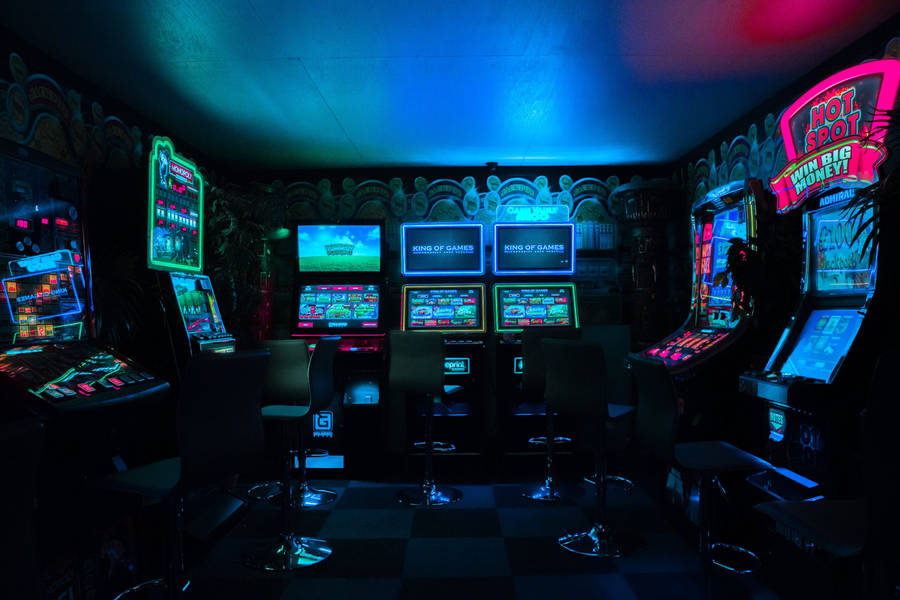
Alabama could be heading for a little bit of Las Vegas. Photograph: Kumar Sriskandan/AlamyRepublican state senator Trip Pittman doesn’t buy into the potential benefits of the gambling plan. He plans to filibuster the legislation on the senate floor arguing that it won’t solve the state’s immediate budget needs. Pittman says lawmakers should instead consider alternatives like further streamlining of the state’s retirement costs, capping healthcare spending, and revisiting the use of taxpayer incentives given to private-sector companies.
“Losers gamble,” Pittman says. “If you have a budget problem, you should change things so you don’t end up in the same place. What good are gambling or raising taxes if you don’t change the issues needed to solve the problem.”
Pittman is willing to consider some kind of tax increase and is not alone. Some members of Alabama’s Tea Party, known for steadfast resistance toward taxes, have even suggested potential tax hikes as part of the bigger solution rather than drastic cuts slashing essential programs.
At a recent public hearing, the vice-chair of the Poarch Band of Creek Indians tribal council, Robert McGhee, voiced his opposition to the constitutional amendment that would allow competing casinos to operate in the state. He blasted the measure for its lack of regulations and shortsighted approach.
“That’s like handing your teenager a credit card with no rules attached and then being surprised when you get a bill that, well, looks like Alabama’s budget deficit,” McGhee said at the public hearing.
The Poarch Band of Creek Indians have since countered with an enticing proposal: a $250m loan to help cover the budget shortfall. What’s the catch? The tribe would need to become the state’s exclusive gambling partner. A Poarch Band of Creek Indians spokesperson did not return the Guardian’s request for comment.
The full senate and house of representatives still need to sign off on Marsh’s constitutional amendment, which passed through the senate tourism and marketing committee. If lawmakers approve the bill, the constitutional amendment would be placed on the statewide ballot in September.
Some lawmakers, who are bracing for a special session to address the budget needs, have questioned whether the gambling would even solve the immediate deficit.
Alabama’s potential gambling vote would not just determine the outcome of this year’s budget talks.
It would serve as a litmus test of the state’s shifting political spectrum. Charles Bullock, a political science professor at the University of Georgia, says residents have become increasingly moderate since the state’s referendum on gaming. With the influence of fundamentalist churches slowly declining, he says younger voters might be open to casinos and a lottery.
“Maybe voters have become more comfortable with that vote,” Bullock says. “Maybe they’ve gone to Mississippi casinos as well as bought lottery tickets in Georgia. Maybe it’s less alien to a share of the electorate today.”
Republican state senator Greg Albritton, who represents a south Alabama district where one of the Poarch Band of Creek Indians bingo casinos is located, questions whether Alabama voters are ready for both forms of gambling at the same time. But there’s one thing he’s willing to wager on: a lively debate on whether blackjack or taxes make the most sense the resolve the state’s funding problems.
“It will be a bloody fight on the floor,” Albritton says. “Will it get through? I don’t know. If it were just a lottery, it’d probably get through. If it were just private gaming, it’d have less of a chance but possible. But with both, I don’t know what will happen.”
The Associated Press is reporting that the Alabama-based Poarch Creek Band of Indians wants to move gambling sites into Florida. Facing opposition, tribal leaders say they try a new negotiation strategy.
Rebuffed so far by Gov. Rick Scott, the Poarch Creek Band of Indians is suggesting it might adopt a hardball negotiating stance: Let us offer gambling in a few Florida locations, or we could consider growing and selling marijuana on our property.
Tribal leaders are contesting their right to build a gambling site on the Florida side of the Florida/Alabama line near the Wind Creek Casino they already operate in Atmore, Ala.
Read the full story here.
A single acre of land in North Escambia may be taking center stage in the
future of gambling in Florida, or it may just become a one-stop marijuana
shop.
The Poarch Band of Creek Indians really want the small parcel in the Nokomis
community to be the home of their next gaming facility. They are currently
constructing a large metal building that covers a majority of the acre, about
five miles west of Highway 97 on Nokomis Road. They are officially calling the
structure a “warehouse”, but its true future use remains to be seen.
You know, shady and improper links between Alabama House Speaker Mike Hubbard and the
Poarch Band of Creek Indians.
Heard that.
Speaker of the House Mike HubbardDave Martin/Associated Press
You know, the way cash was passed from the Indian gaming interests to a powerful GOP group nationally, and how that money was passed back to Hubbard and PACs he controlled so that nobody would know the anti-gaming Alabama GOP was financed by ... Indian opposition.
Because what is outlined in the document written by lawyers for the RSLC is more than innuendo and political trash talk. It is a cover-your-butt warning to the RSLC itself.
What the group did in Alabama was shady.
What Hubbard did was designed to trick the people of Alabama.
And what they did together was – these are the words of the RSLC lawyers from the Washington firm of BakerHostetler – probably illegal.
"It is likely that a prosecutor in Alabama, after investigation, could argue that the routing of contributions from the Poarch Creek Indians to RSLC, then back to certain Alabama PACs controlled by Mike Hubbard does appear to violate Section 17-5-15 (a misdemeanor)," the lawyers wrote. "It is also common knowledge and wisdom in Alabama that taking a contribution directly from the tribe is political suicide for a Republican candidate or public official. Here RSLC appears to have served as both a recipient of the funds in question and as a donor of the funds back to Alabama, thereby permitting Mike Hubbard to do indirectly that which he could not do directly."
Oh snap.
Because there is a prosecutor investigating the activities of Mike Hubbard in a Lee County grand jury as we speak. Hubbard, by the way, has already used political contributions to pay lawyers at White Arnold & Dowd more than $170,000 for his defense. Which is legal but ... God knows why?
But I digress.
While all these words and phrases (Indians and gambling and PAC-to-PAC transfers) might seem – yawn, so 2010 – it's the actual concern from lawyers at this very Republican group that is thunderous.
I mean come on, Woodward and Bernstein made a lot of noise with talk about Watergate. But it was the tapes – and the confirmation -- that made a difference.
And while I know Matt Hart and other prosecutors investigating Hubbard don't need a roadmap, this one comes with GPS navigation.
But it doesn't just have legal implications. It confirms the worst of suspicions, that politically toxic Indian gaming cash was laundered through a powerful GOP group and sent back to Alabama, where the fight to shut down non-Indian gaming continues.
The memo notes that RSLC took about $1.11 million from Alabama donors from 2009 to 2011, and about $578,000 of it came from the Poarch Creek Indians and their lobbyists. During the election 2010 election cycle, Poarch Creek donations tripled the next-highest contributor.
Much of this stuff has been reported across Alabama and in the New York Times and elsewhere. But not like this. Not by people like this, protecting their own clients' legal and PR interests.
"This would cause a political firestorm in Alabama if made public," the lawyers wrote. "Both Hubbard and his ally, Governor (Bob) Riley, have made a political cause out of eliminating non-tribe gaming in Alabama. Now, it would appear to an outside observer that this has been a hypocritical effort funded by Indian gaming interest in order to keep non-Indian casinos out of Alabama. RSLC was reckless in making a contribution to a group historically affiliated with Jack Abramoff."
The Democrats have been screaming that for years. And that's why this document is more than old news.
It's not just the crazy Dems talking anymore. These are the prestigious lawyers for the powerful Republican State Leadership Committee itself, saying Alabama and Mike Hubbard are trouble.
A federal court ruling that favored an Alabama tribe could boost the case for the Wampanoag Tribe of Gay Head (Aquinnah) to open a casino on its Martha's Vineyard land.
In a ruling handed down last week, a federal judge concluded that Congress intended the Indian Gaming Regulatory Act to prevent state law from interfering with Indian gaming on tribal lands.
The judge in the Alabama case ruled on April 11 that the state could not restrict three casinos operated by the Poarch Band of Creek Indians on tribal lands. In an interesting twist, the judge ruled that federal law protects the gaming authority of the Poarch Band even if the type of casinos are illegal under state law, which they are in Alabama.
"The bottom line is that even if defendants are operating illegal Class III gaming at the Poarch Band casinos, (state law) does not provide the state authority to prohibit such gaming," the judge wrote. Class III gaming includes most casino games.
The Poarch Band casinos apparently use full-fledged slot machines while the state has only authorized Class II gaming, which is typically bingo, electronic or otherwise, and certain card games.
Massachusetts legalized full-fledged casinos in 2012, and the law authorizes the governor to negotiate with federally recognized Indian tribes.
In court documents filed Thursday, attorneys for the Aquinnah tribe provided a supplemental brief that includes the Alabama decision as ammunition in its battle with Massachusetts over gambling rights. The Vineyard-based tribe's contends that it can legally operate a Class II casino, essentially a high-stakes bingo hall, on its Island land without permission from the state.
"... The district court dismissed the state's complaint, concluding that Congress intended IGRA (Indian Gaming Regulatory Act) to preempt all state-law claims that 'interfere with tribal governance of gaming,'" Aquinnah lawyers wrote about the Alabama case.
The Aquinnah already have received opinions from federal agencies responsible for overseeing Indian gaming that the federal law supersedes settlement acts.
The distinction in the Alabama case may be that it doesn't involve a land settlement agreement, Ronald Rappaport, an attorney for the town of Aquinnah, which opposes a tribe casino, said.
Rappaport said he could not comment further until he has a chance to review the Alabama decision.
Massachusetts and town officials have argued that the land settlement between the Aquinnah and the state, reached in 1983 and codified by Congress in 1987, requires the tribe to follow state and local laws.
Brad Puffer, a spokesman for Attorney General Martha Coakley's office, which is handling the case for the state, declined comment on the ongoing litigation.
Scott Crowell, the tribe's lead attorney in the case, did not return calls seeking comment.
Last month, U.S. District Judge Dennis Saylor heard oral arguments in the dispute between the state and the Aquinnah over whether state or federal court has jurisdiction in the case. Saylor took the case under advisement and has not yet issued a ruling.
In December, Gov. Deval Patrick filed suit in state court seeking to block a Class II casino on the island after tribe leaders made their plans public. The suit, which was brought before a single justice of the Supreme Judicial Court, alleges a breach of contract.
That triggered a move by the tribe to have the case heard in federal court, which the Aquinnah believe has jurisdiction because of the Indian Gaming Regulatory Act.
Tribe leaders have support from the tribe's general membership to use an unfinished community center on the island as a gambling hall. The tribe moved in that direction after the Patrick administration repeatedly refused to negotiate a compact with the tribe similar to the deal reached with the Mashpee Wampanoag Tribe for a Taunton casino.
Tribe gives $250,000 to attorney general candidate
KIM CHANDLE, Associated Press
By KIM CHANDLER, Associated Press
Updated 11:21 am, Friday, March 7, 2014
MONTGOMERY, Ala. (AP) — The Poarch Band of Creek Indians gave heavily to the Democratic challenger for attorney general who opposes incumbent Luther Strange's efforts to close the tribe's casinos.
Montgomery Rep. Joe Hubbard, D-Montgomery, filed campaign finance reports this week showing he received $250,000 from political action committees fueled by the Poarch Creeks.
Hubbard received a total of $250,000 from three PACs operated by lobbyist John Teague. The PACs received almost all of their money from the Poarch Creeks. The money represents the bulk of the $326,827 that Hubbard raised in the first month of his campaign for attorney general.
The Poarch Band operates electronic bingo casinos in Montgomery, Wetumpka and Atmore.
Strange has encouraged the National Indian Gaming Commission to take action against the Poarch Creek's three casinos, arguing the tribe's electronic bingo machines are more like slot machines and should not be allowed without state permission. He filed a lawsuit in 2013 seeking to shut down the three casinos, accusing the tribe of "operating, advancing, and profiting from unlawful gambling activity."
Hubbard on Friday said Strange was wasting state resources. He said the Poarch Band is a federally recognized tribe and not under Alabama jurisdiction.
"Luther Strange has no more business going in there and telling them how to run their business than he does going down to Mexico City and telling Mexicans how to run their domino games. Trying to run those little old ladies out of those bingo parlors is a waste of precious resources that we can't afford to waste," Hubbard said.
An email requesting comment from Strange's campaign was not immediately returned.
Strange said in a statement last year that federal inaction regarding Indian bingo casinos left him no action but to file the lawsuit.
"As I have said many times, my office will use every tool at its disposal to stop illegal gambling in Alabama, wherever it is located. This lawsuit against the Poarch Band is one of those tools," Strange said.
Hubbard announced his challenge to the Strange last month. Strange is still far outgunning Hubbard in the money raise. Strange this week reported a campaign balance of nearly $1.2 million.
The Poarch Creeks, now the state's chief operator of electronic bingo games, have become a major player on the Alabama political stage. The tribe has made $837,500 in campaign contributions since June, according to campaign finance records.
Attorney General Strange beefs up lawsuit against Indian casinos Posted: Apr 12, 2013
By Tametria Conner
MONTGOMERY, AL (WSFA) - Alabama Attorney General Luther strange is beefing up the state's lawsuit against the Poarch Band of Creek Indian's three casinos.
In March, the Indians filed a motion to move the case to federal court. They also asked the court to simply dismiss the case.
Attorney General Strange's latest filing centers on whether the tribe's games are slot machines or bingo machines.
The original suit was filed in February and asked the court to close the Indian casinos in Atmore, Montgomery and Wetumpka.
Thursday's filing amends that complaint to clarify the federal aspects of the state's claims. AG Strange wants to shut the casinos down, saying they are operating slot machines which are considered illegal under Alabama law.
The Poarch Creek Indians argue that the attorney general is trying to circumvent federal law and disregard the sovereignty of their land.
Bingo battle heats up as A.G.
Luther Strange expands complaint against Poarch Creek
12 Apr 2013 6:33 AM Alabama Attorney General Luther Strange today
returned fire against the Poarch Band of Creek Indians, lodging a multi-pronged
legal attack on the tribe's gambling interests in the state.
The new tack was laid out in an amended
complaint against the tribe filed today in U.S. District Court in Montgomery.
Strange had originally asked an Elmore County Circuit Court judge to shut down
the Poarch Band's three casinos on the grounds that they are a public nuisance.
The new complaint was filed after
the tribe last month moved the lawsuit to
federal court and asked a judge to dismiss it on the grounds that Alabama has no legal right to sue
the Poarch Band, a sovereign nation under federal law.
"We have amended the complaint to clarify the
federal aspects of the State's claim and to let the court know more about how
the Tribe's slot machines ope rate. Amending a complaint is something that
happens all the time in the early stages of a lawsuit," said Andrew Brasher,
Strange's deputy solicitor general, in an email.
Brasher's statement goes on to suggest that
filing the suit in state court at first was a legal rouse designed to limit the
tribe's options in court. "We were not surprised that the tribal defendants
moved the lawsuit from state court to federal court. This procedural move
required the tribal defendants to acknowledge that federal law gives the State a
claim against them and to waive several defenses that they could have raised.
So, we are not asking the federal court to send the case back to state court; we
are asking the federal court to go ahead and consider our claim now," he said.
The latest complaint still claims that the
tribe's casinos are a public nuisance under Alabama law, but it expands the
legal theater of battle by calling into question the slot-style, electronic
bingo machines that the tribe uses.
Unlike private gambling operations, like the
recently raided VictoryLand, which are covered by state law, Tribal gambling is
governed by the federal Indian Gaming Regulatory Act, commonly referred to as
IGRA.
Broadly speaking, IGRA allows federally
recognized tribes like the Poarch Band to engage in bingo gambling if bingo
gambling is legal elsewhere in the state. In order to engage in slot machines or
table games like blackjack and roulette, tribes have to enter into a legal
compact with the state. Bingo is legal in certain Alabama counties,
so the Poarch Band has the right to operate bingo halls.
However, the tribe has
no compact with the state, and Alabama law specifically prohibits slot-machine
gambling, which is what Strange argues is really going on in Poarch Band
casinos. Bingo or Slots? Strange argues slots
IGRA allows tribes to engage in bingo via
comp uters or other "technological aids," even if such electronic versions of
the game are illegal elsewhere in the state. However, IGRA expressly forbids
"electronic or electromechanical facsimiles of any game of chance or slot
machines of any kind."
According to Strange's complaint, that's
exactly what the Poarch Band's machines are designed to do.
The complaint includes a number of exhibits
showing the kinds of "bingo" machines that the Poarch Band uses, noting their
resemblance to slot machines. Several of the models, the complaint points out,
have both bingo and non-bingo versions that are virtually identical.
An AL.com reporter recently lost $20 to Red
Hot Fusion, one of the models cited in the complaint, as he did research on the
Wind Creek Casino in Atmore. An avid gamer told him that a Pascagoula casino has
the same game, minus the bingo.
As the complaint puts it, "The player does
not need to pay attention, listen to alphanumeric designations drawn one-by-one,
or match them up to a bingo card. Instead, the player presses a single button,
watches slot-machine reels spin, and is told whether he or she has won by the
gambling device."
In addition to Strange's argument that th e
games themselves are illegal under federal and state law, he also asserts that
the tribe's casinos do not sit on federally protected trust land and are thus
subject to the state's gambling laws.
The 1934 Indian Reorganization Act gave the
federal government the right to take lands of recognized tribes into trust, but
the U.S. Supreme Court's 2009 Carcieri decision ruled that the law only applies
to tribes that were recognized at the time the act went into law.
Since the Poarch Band was recognized in the
1980s, that means their lands are not actually federally protected, according to
Strange.
Some experts have said that the Carcieri
decision does not necessarily apply to all tribes, that it would take further
legal or administrative changes to undo the trust status of the dozens of tribes
that gained federal recognition after 1934.
The tribe will likely file a new response to
the state's complaint in the coming weeks.
Alabama tribal casino slot machine dispute
moves to federal court The
Republic The Montgomery Advertiser reports (http://on.mgmadv.com/17vyQor
) state officials say the Poarch Creek casinos are feature gambling machines
that violate state and federal laws. Officials say operating slot
machines is illegal in the state and illegal ...
AG wants federal judge to shut down Indian
casinos Montgomery Advertiser The state, in the amended complaint
filed on Thursday by the office of Attorney General Luther Strange, is seeking
to shut down the Poarch Creek casinos by having them declared public nuisances
that operate slot machines that are illegal in the state ...
Alabama Attorney General Luther Strange filed a lawsuit in Elmore County trying to shut down what he argues are slot machines at the three casinos operated in the state by the Poarch Band of Creek Indians.
While Strange quickly points out that state authorities do not have jurisdiction on tribal land, he argues that the Poarch Creeks are not following state gambling laws and that the “continued operation of unlawful gambling devices by defendants is a public nuisance” that should be stopped by the court.
The Poarch Creeks, in a statement sent out Tuesday afternoon, said the lawsuit has no legal merit.
“As a federally recognized sovereign Indian nation, Poarch Creek’s land is governed by federal, not state law,” according to the Poarch Creek statement. “While we respect Mr. Strange’s attempts to fulfill his duties as state attorney general, he is not a federal official and therefore, has no jurisdiction or enforcement authority over tribal land or tribal gaming operations.”
The Poarch Creeks argued the machines are electronic bingo, which is Class II gambling, and are legal under federal law.
“While Mr. Strange may target VictoryLand and any other gaming facility in the state, this lawsuit against Poarch filed in circuit court is yet another example of Mr. Strange refusing to recognize the sovereignty of the Poarch Band of Creek Indians,” according to the statement from the tribe.
If there is Class II gambling in a state, American Indians are allowed to have the same class, which by federal regulations includes electronic bingo, on their lands. But Strange and others argue the machines are slot machines, which are not Class II.
The state filed the lawsuit against members of the Poarch Creek Tribal Council and against members of the tribal Gaming Authority. The Poarch Creeks operate casinos in Wetumpka, Montgomery and Atmore. They are in the midst of a $246 million expansion of the casino in Wetumpka, adding a 20-story hotel and casino that is scheduled to open in January 2014.
Strange’s office argues the Poarch Band is “operating, advancing, and profiting from unlawful gambling activity at the Creek Casino in Wetumpka, the Wind Creek Casino in Atmore, and the Creek Casino in Montgomery in violation of Article IV, Section 65 of the Alabama Constitution (1901) and Ala. Code § 13A-12-20 et seq.”
State authorities, led by Strange’s office, served a search warrant at VictoryLand on Tuesday and seized hundreds of machines and an undisclosed amount of cash.
Joe Espy, attorney for VictoryLand and casino owner Milton McGregor, said Tuesday that the “lawsuit against the Poarch Creek Indian casino filed today is a smokescreen and a waste of taxpayer money.”
“As he knows, the Alabama attorney general has no jurisdiction over Native American gaming,” Espy said following the law enforcement action at the Macon County casino. “In the short term, all this is going to do is send the customers of VictoryLand to the Poarch Creek Indian facility in Wetumpka.”
Strange said in his statement that he decided to file the lawsuit after other efforts to stop gambling activities by the Poarch Creeks failed and because state law enforcement could not seize machines on reservation land.
“Unlawful gambling is a statewide problem, and I have worked with local authorities to enforce Alabama law consistently and fairly throughout the state,” Strange said. “I have sent two letters to the National Indian Gaming Commission, asking them to stop the Poarch Band’s unlawful gambling, but the commission has refused to do anything about it. The commission’s inaction has left me with no choice but to file this lawsuit.”
Strange sent letters to the National Indian Gaming Commission on Feb. 11, 2011, and on April 25, 2012, asking the commission to take action to stop the use of what Strange and his office believe are slot machines, which are illegal in Alabama, at the Poarch Creek casinos. Others argue the machines are electronic bingo machines that are legal in the state.
“I have lobbied Congress to stop the expansion of Indian gambling to new areas, and I have filed a brief in the Alabama Supreme Court to oppose the Poarch Band’s efforts to use its land for gambling,” Strange said. “As I have said many times, my office will use every tool at its disposal to stop illegal gambling in Alabama, wherever it is located. This lawsuit against the Poarch Band is one of those tools.”
Alabama Attorney General Luther Strange says that the recent seizure of gambling devices from a Houston County casino should serve as a warning to others who are engaged in illegal gambling.
Strange conducted a recent raid on the facility and confiscated about 500 electronic bingo machines from Center Stage, formerly called Country Crossing, near Dothan. Strange also said anyone operating a gambling hall should be put on notice.
He has also threatened raids on VictoryLand in Macon County if it is reopened, yet has continued to permit gambling elsewhere without threats, including Greenetrack in Greene County which advertises it has “over 300 of your favorite gaming machines – The Lucky Duck , Bucks and Bucks, Wild Billy, Hotter than Hell, Robbin Some Cash, Four Leaf Cash, Big Dawgz, Crimson 7’s, Inferno 7’s and many more, to operate wide open.
Both Macon and Greene counties have solid constitutional amendments which in the opinion of most legal experts permit all types of bingo games, including those played on electronic machines. Another bingo casino has been operating in Lowndes County for several months under a constitutional amendment that some consider questionable with regard to electronic games.
Some have suggested that Strange, in going after the non-Indian gambling houses in Alabama, is attempting to give the Poarch Creek Indian gambling operation the ability to further monopolize gaming in Alabama. Indeed, the Poarch Creek tribe laundered $100,000 to the Strange Campaign for Attorney General in 2010.
The money trail for the $100,000 amount went from the Poarch Leadership Committee to the Republican Leadership Committee on July 15, 2010; from the Republican Leadership Committee to the Alabama Republican Party on July 22, 2010, then from the Alabama Republican Party to the Luther Strange Campaign on August 4, 2010.
Sources tell me that in order to seize control of the gambling issue in Alabama from Gov. Bentley, Strange has covered up his connections with the Poarch Creeks, even to the extent of pretending to question their use of electronic bingo at tribal casinos in Atmore, Montgomery and Wetumpka. His “pretend” question, challenging the use of those “slot-machine look-alikes” was shot down by the
Indian Gaming Regulatory Commission with these words: “If a state permits paper bingo, a tribe within that state may have electronic bingo.” Following this logic, if the Poarch tribe can have those rights, certainly the rest of us would be so entitled.
So Strange, with a “wink and a nod” to our governor seized the issue of gambling from the governor’s control, expects such to be a continuing cash cow for political contributions, and will likely expect several more hundreds of thousand dollars from the Poarch casinos. Then he’ll try to shake down the rest of us instead of allowing those who want to gamble to help the tax burden of everybody else.
It would be interesting to see what would happen if Mr. Strange went after the real illegal gambling in our state…sports betting, which even puts slot machines in the shade. Or, perhaps he could join with the governor and force the Poarch Creeks, since they pay no taxes, into a compact like Florida’s which requires 25 percent of Indian Casino profits be paid to the state.
Bob Martin is editor and publisher of The Montgomery Independent.
Poarch Band casino expansion draws criticism from Muscogee (Creek) Nation
18 August 2012 LENZY KREHBIEL-BURTON, Native American Times
WETUMPKA, Ala. — A proposed casino expansion by the Poarch Band of Creek Indians has come under fire from another tribe over concerns of grave exhumation
The Muscogee (Creek) Nation, headquartered in Okmulgee, Okla., is protesting location of the Alabama tribe’s proposed $246 million expansion project, claiming it desecrates Hickory Ground, the last pre-removal capital of the Muscogee (Creek) Nation National Council. In 2007, the two tribes signed a memorandum of understanding that grounds, which were added to the National Register of Historic Places in 1980, would be preserved “in perpetuity.”
“The Muscogee (Creek) Nation is committed to protecting the burial and ceremonial grounds of our ancestors,” Principal Chief George Tiger said. “We have attempted to convey to the Poarch Band why it is wrong to disturb the peace of our ancestors and burial grounds. However, the Poarch Band does not seem to share our cultural values and respect our traditional ways.”
In a statement released Thursday, the Poarch Band of Creek Indians denied the Oklahoma tribe’s concerns, claiming the proposed site is outside the ceremonial grounds.
"As an Indian nation with close cultural, if not familial ties to the Muscogee Nation, we are disappointed by recent statements that do not accurately reflect Poarch’s efforts to maintain the site and preserve a relationship with the Muscogee Nation,” Robbie McGhee, the tribe’s treasurer and head of the government affairs office, said. “We have honored our agreement to preserve the ceremonial ground, just as we honor the history and cultural significance of our shared heritage."
The expansion project includes plans for a 20-story hotel with 285 rooms, a full-scale casino with more than 2,500 electronic gaming machines, a resort-style pool and space for live entertainment.
The only federally-recognized tribe in Alabama, the 3,000-citizen Poarch Band of Creek Indians also operates casinos in Montgomery, Ala., and Atmore, Ala.
For the sliver of a town that Gretna is in nearby Gadsden County, it's certainly getting its share of attention.
That spotlight is not necessarily aimed at the small, rural community of about 1,700 residents for what it is now, but what it could become.
In nine days, residents of Gadsden County will have a chance to vote on allowing slot machines to be added to the barrel racing and card game attractions that are already in operation at a newly built complex in Gretna, a town that is 85 percent black and with an unemployment rate of 24 percent.
Money will drive this vote, for many reasons. Elected officials in Gadsden County are hard-pressed to turn down an outside operation flush with cash that wants to invest there. The creation of jobs is just that important, as well as what additional taxes would mean toward the quality of life. Last year, the successful lobbying to land a national solar farm was greeted with cheers and high-fives, in stark contrast to the organized opposition that forced a major coal-powered energy operation to look elsewhere a few years earlier.
Of the 170 or so already employed at Creek Entertainment Gretna, about 70 percent are from Gadsden County. And an expansion that includes slot machines means even more jobs, though a vote in the affirmative could initially be rendered moot and dependant on the outcome of what is sure to be a legal challenge. Suddenly, the pedestrian-level appeal that slots will bring jobs to a poor rural area moves to an arena where decisions will be made by a handful of blue-chip attorneys.
I met this week with the Rev. Charles Scriven, a Tallahassee resident who was pastor at Beulah Hill Missionary Baptist Church in Gretna from 1991 to 2001 and who now leads a handful of the faithful at Corinth Christian Fellowship in Midway. He's hoping that the vote is a thumbs-down. Scriven, who turns 80 this year, is leading a racially diverse, multidenominational group of pastors in opposing slot machines and casino-style gambling.
He has reached into his pockets to pay for yard signs and fliers to spread the message that money generated from slot machines will not be the economic engine that strikes gold for Gretna.
(Page 2 of 3) One of those standing on the opposite side is former state Sen. Al Lawson Jr., a native of Gadsden County who was instrumental in getting legislation passed that gives residents of Gadsden the freedom to vote their conscience on this issue. He is revered by many in Gadsden County as one of their own who often championed legislation to benefit his district, which included Gadsden County. Now in private business, he has signed on as a paid consultant for Creek Entertainment Gretna, which has the powerful financial backing of the Poarch Band of Creek Indians.
He's wondering where Scriven and other opposing pastors have been all of this time. When the Gadsden County Commission decided last fall to place the referendum on the Jan. 31 ballot, nobody spoke publicly against it before the vote.
My bet is that voters will overwhelmingly approve slots, even though there won't be enough well-paying jobs offered to cure Gretna's unemployment problem. Look at what happened last fall during an initial appeal to fill jobs. Several hundred people showed up for maybe 100 positions.
These are the kinds of odds that worry Scriven and other pastors. Scriven says he remembers the same sense of hope that came over the community when plans were announced that a private prison was coming to Gadsden County. There weren't enough jobs to go around, and many were filled by noncounty residents.
He fears a repeat with expanding gaming operations. Jobs will be limited to lower-paying positions. More importantly, he fears that parents who are barely making it will spend their money on the very limited chance of beating the house. And there will be more crime as desperate outsiders prey on those pocketing winnings on the inside.
"You are destroying the fabric of the community when you have an industry that saps the very soul of an individual and his livelihood," Scriven said. "You are looking at the very poor living on the edge who are trying to make it. It's contrary to the spirit of Christ. If you are a Christian, there are some things that you can't do because of your commitment to Christ."
(Page 3 of 3) Scriven is no doubt influenced by his background in law enforcement and the ministry. He spent 20 years with the Jacksonville Police Department/Jacksonville Sheriff's Office, becoming the first black division chief at the Sheriff's Office. He was then appointed by Gov. Reubin Askew in 1975 to the state's Parole and Probation Commission, becoming the first black person to serve on the commission. He then worked for the state Division of Alcoholic Beverages and Tobacco, retiring as captain.
Scriven believes that supporters are selling out to false promises. He also says that Gadsden County commissioners simply found an out by agreeing to the referendum. "By saying, 'Let the people decide,' the people have never decided anything in (Gadsden) County," he said.
Joining Scriven in opposing slot machines is the Rev. Eric Erskine, pastor of First Baptist Church of Havana for the past 15 years. "This is not something that's going to be a good thing for Gadsden County," he said. "It's going to bring a lot of pain, difficulty and hardships to families. They are touting a lot of jobs, but there are other factors. A lot of these casinos become a city unto themselves; they have their own hotel, so there's no need to leave. The other businesses are not going to benefit."
Lawson says he's curious about why the pastors are speaking out two weeks before the vote. He points out the 24-percent unemployment figure for minorities in the Gretna area. Many of those who fill buses to Biloxi and Atmore, Ala., are churchgoers. It's not necessarily true that poor Gadsden County residents will be spending their grocery money at the slots and card tables, since it's more likely to attract outsiders who have additional money to spend on entertainment.
"They say they are against the slots, but their members play the lottery all the time," Lawson said. "I think the people will decide if they want slots or not. Poor people, not just minorities, were pushing to get a referendum. They need jobs." Which leaves the pastors wondering: At what cost?
Former state representative Benjamin Lewis of Dothan has now taken the stand in the gambling corruption trial. He's the last of the three legislators who helped the FBI to testify. Lewis, who's now a district judge in Houston County, says indicted state Sen. Harri Anne Smith (I-Slocomb) was initially opposed to having an electronic casino in Dothan.
Lewis testified in Alabama's gambling corruption trial Tuesday. He said he and Smith met with Gov. Bob Riley and Attorney General Troy King in March 2008 to try to stop Country Crossing casino from being built in Dothan.
Lewis is the last of three legislators who helped the FBI with its investigation of Statehouse corruption to take the witness stand. Court documents say he taped Smith for the FBI.
Smith is accused of taking bribes to support pro-gambling legislation designed to protect Country Crossing and other casinos that are now closed.
Riley appointed Lewis to his judgeship in June 2010.
An Alabama state representative who helped the FBI investigate Statehouse corruption testified Monday that indicted casino owner Milton McGregor tried to buy his vote for pro-gambling legislation by promising significant campaign contributions from his friends.
Republican state Rep. Barry Mask of Wetumpka said McGregor's intentions were clear in a 36-minute phone call that Mask let the FBI record as part of its investigation. Prosecutors played the taped call Monday for the jury in the trial of McGregor and eight others accused of buying and selling votes.
"I'm committed to helping you in a significant way through friends of mine," the VictoryLand casino owner told Mask in the recorded phone call.
Mask is one of three legislators who assisted the FBI in its investigation and is the second to testify in the trial, which began its third week Monday.
Mask said McGregor left him a phone message on Feb. 14, 2010, asking him to call. Mask contacted an attorney with the state Department of Public Safety, who put him in contact with the FBI, which had already begun an investigation.
With two FBI agents at this side, Mask returned McGregor's phone call on the morning of Feb. 15, 2010. In the phone call, McGregor seeks Mask's vote for a proposed constitutional amendment to protect McGregor's electronic bingo casino from raids by the governor's gambling task force. Then he talks about getting campaign support for Mask, who was running for re-election.
Mask, who has always voted against gambling legislation, says he would be hurt politically if he reported campaign contributions from McGregor on his campaign finance reports, which are public records.
McGregor explains that he has lots of friends and he can influence who they support in campaigns. "I mean significant help. These people are players," McGregor says.
When Mask presses him for a figure, McGregor says he needs to call his friends. But he assures Mask that he keeps his promises.
"I've made a commitment to you," McGregor says on the tape.
Mask testified that one of the defendants, McGregor lobbyist Bob Geddie, showed up that night at a campaign fundraising dinner in Elmore County with two campaign donations totaling $5,000. The checks were from political action committees run by Geddie and his partner, Joe Fine.
When asked by prosecutor Steve Feaga what McGregor meant by his remarks in the phone call, Mask testified, "He's bought my vote if I want to vote for his bill."
Defense attorneys objected and U.S. District Judge Myron Thompson said, "Whether Mr. McGregor was buying his vote, the jury can decide and not this witness."
The following day Mask made another phone call to McGregor, also recorded by the FBI. In that call, McGregor says he sent his lobbyist to the fundraiser.
McGregor's defense attorney, Joe Espy, sought to discredit Mask's testimony by getting him to acknowledge that he was the first one to bring up campaign contributions and the fundraising dinner in the first phone call to McGregor.
He also got Mask to acknowledge that he enjoys playing poker with friends even though he traditionally opposes gambling legislation.
Under questioning by defense lawyers, Mask said he receives referral fees annually from lobbyist Steve Windom for recommending that Computer Associates use him as a lobbyist in 2004. Mask said the payments started before he was elected to the Legislature in 2006, and they are to continue as long as Windom represents the company.
The company did computer work for state agencies during Republican Gov. Bob Riley's administration.
Mask reports Windom's payments to the state Ethics Commission each year. The payments started in the range of $1,000 to $10,000 in 2005 and then rose to the range of $10,000 to $50,000 in 2006, according to his ethics forms.
Defense lawyers said they wanted to ask about Windom's payments because Windom has lobbied for the Mobile dog track, where the Poarch Creek Indians own the controlling interest. The Creeks' also operate a casino in Mask's district. That casino in Wetumpka is not regulated by the state and has thrived since McGregor's state-regulated casino in Shorter was forced to close last year by the governor's gambling task force. The task force maintained the games were illegal slots.
In a phone interview with The Associated Press, Windom said his referral fees to Mask began before the dog track became a lobbying client and before Mask ran for the Legislature. He said the payments varied from year to year, but were "on the low end of the $10,000 to $50,000 annually.
Prosecutors said the next witness scheduled in the trial is the organizer for Mask's fundraising dinner, Debbie Moore.
With the men in charge at Alabama’s electronic bingo casinos facing trial on federal corruption charges, State Attorney General Luther Strange announced Friday an agreement to expel the machines at the heart of the controversy.
Strange said Friday morning he’d reached an agreement with International Gaming Technology, Bally Technologies and Multimedia Games to remove all of their machines and equipment from VictoryLand, Country Crossing and the White Hall Entertainment Center.
The companies agreed to completely remove their machines within 60 days.
“It is my hope that this action will put an end to the electronic bingo controversy that has engulfed our state for far too long,” Strange said in a press release.
Strange said the deal is the result of a “reasoned legal strategy” that began just after his election in November to “enforce Alabama’s laws against slot machines.”
He met with local law enforcement and district attorneys in Houston, Macon and Lowndes counties, as well as lawyers representing the bingo machine manufacturers. They discussed “the state’s legal position regarding electronic bingo.”
The casinos, he said, were given the opportunity to “have their day in court through a forfeiture action.”
Efforts to pass a bill putting the legality of electronic bingo to a vote last year led to an October federal indictment of gambling kingpins, state senators and lobbyists. The corruption trial of 10 defendants, including VictoryLand’s Milton McGregor and Country Crossing’s Ronnie Gilley, was postponed until June 6.
Earlier this week, Strange also fired a shot at Poarch Creek Indian casino operators, who continue to operate thousands of bingo machines.
“There are other manufacturers with machines in this state, and I hope that they will follow the lead of those who have responsibly agreed to remove their machines,” Strange said, likely referring to the makers of machines in Wetumpka, Montgomery and Atmore.
Additionally, representatives from Cadillac Jack and Hest Technology have notified the Attorney General’s Office that they have already removed their machines and equipment from the state.
The players have changed, but the battle remains the same. Top government officials in Alabama still want to rid the state of electronic bingo – this time they’re taking aim in another direction.
Former Gov. Bob Riley and his task force headed by Mobile County District Attorney John Tyson waged war with privately-owned facilities such as VictoryLand, Greenetrack and Country Crossing, and won. Riley is no longer governor, there is no task force headed by Tyson, and VictoryLand, Greenetrack and Country Crossing no longer offer electronic bingo.
But new Alabama Attorney General Luther Strange -- a former lobbyist -- has lobbied to a federal agency that oversees Indian gambling to prohibit electronic bingo from Indian casinos in Alabama. Poarch Creek Indian Gaming operates three such casinos in the state: Wind Creek Casino in Atmore, Creek Casino in Wetumpka and Creek Casino in Montgomery
If the privately owned facilities cannot legally offer electronic bingo (machines that eerily resemble slots, but are not), then it makes sense that Indian-owned casinos cannot offer them either. Anything else would be a double standard. Was it fair for the Indian casinos to operate and offer the same games that VictoryLand offers while VictoryLand’s Quincy’s 777 remained under threat of police raid for weeks last year?
What’s wrong for one should be wrong for all. What’s right for one should be right for all.
The Alabama Supreme Court ruled last summer what was right and what was wrong, though new legislation to formally legalize such gaming failed in the Statehouse. In October, a handful of lawmakers, lobbyists and casino owners were arrested and face a number of corruption charges, including vote-buying for electronic bingo, in the Legislature.
Thus far, Indian casino owners have quietly kept their operations running.
We are not suggesting that electronic bingo is right or wrong. We do suggest that the laws of Alabama be followed. We applaud the new attorney general for standing up for Alabama’s laws at the federal level. We do not believe his predecessor would have done this.





 Posts
Posts


