Meetings & Information


*****************************
****************************************************
MUST READ:
GET THE FACTS!


Showing posts with label Horseshoe Casino in Council Bluffs Iowa. Show all posts

Saturday, September 13, 2014

Horseshoe Casino keeps $$$, Council used campaign donations to support a gambling addiction


Did you ever notice that the SLOT BARN that sucks law-abiding citizens into GAMBLING ADDICTION is not always named?

And the SLOT BARN gets to keep the $$$?
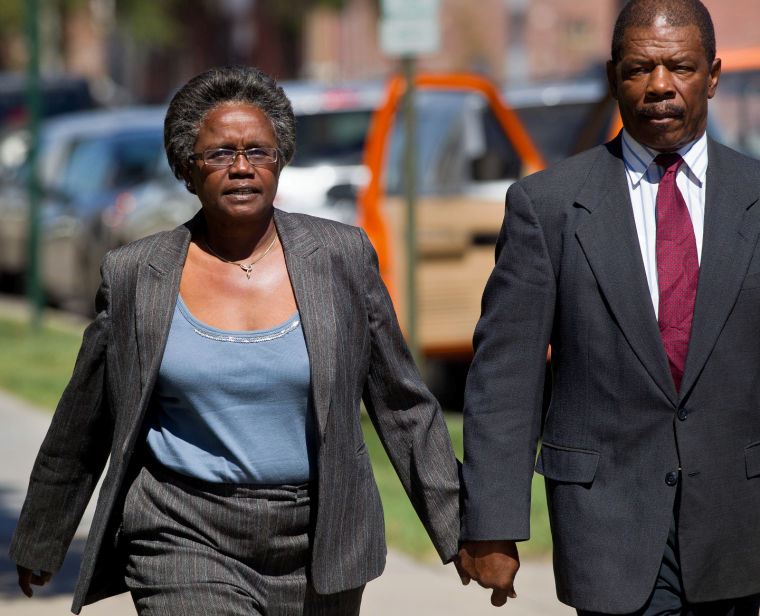


She used campaign donations to support a gambling addiction

Posted: Friday, September 12, 2014 5:07 pm


LINCOLN — Former State Sen. Brenda Council lost her license to practice law Friday after the Nebraska Supreme Court disbarred her for using campaign donations to support a gambling addiction.
 
The high court’s decision to impose its highest sanction on Council came after a court referee who reviewed the case recommended a temporary suspension and probation. In a written judgment released Friday, the court said a lesser punishment would fail to reinforce the higher standard to which lawyers and elected officials are held.
 
“By misappropriating the funds entrusted to her as a public officer and covering up that misappropriation with misrepresentations, respondent violated the public trust and abused her office,” the court wrote. “Such abuse of public office by an attorney ‘can suggest an inability to fulfill the professional role of lawyers.’ ”
 
Council, 60, of Omaha, can seek reinstatement as a lawyer in five years. The Supreme Court must consider such applications, although it rarely grants reinstatement.
 
Messages left with Council Friday morning were not immediately returned. Her lawyer, Vince Powers of Lincoln, said she was disappointed but accepted the court’s decision.
 
“Brenda Council very much regrets what happened,” Powers said. “She recognizes it’s 100 percent on her. It’s her responsibility. It’s no one else’s fault.”
 
Powers said Council is employed and is moving on with her life. He declined to say what she is doing professionally, but he emphasized she remains committed to treatment for her gambling addiction.
 
The case stems from Council’s misappropriation of more than $63,000 in campaign funds, which she spent at casinos over a 2½-year period. She used a campaign debit card to withdraw money more than 100 times. Her misuse of the funds came to light in 2012 when Attorney General Jon Bruning filed state charges.
 
Professional disciplinary charges were filed against Council’s license based on two misdemeanor convictions in state court for abuse of public records. She pleaded guilty and was fined $250 on each charge.
 
In October, felony wire fraud charges were filed in U.S. District Court. In a plea deal, she was fined $500 and put on probation for three years.
 
During a May hearing before the high court, John W. Steele, assistant counsel for discipline, said: “I don’t think we should have felons practice law.”
 
At the same hearing, Powers said the court should take into account his client’s long record of public service and professional accomplishment.
 
Fremont attorney Thomas Thomsen, the court referee, had recommended that her law license be suspended for one year and that she be given two years’ probation.
 
In his report, Thomsen praised Council’s record of service and her willingness to tackle her gambling addiction. She had since repaid the funds and had participated in a 12-step program to help overcome her addiction.
 
“We all lose if our sanction prevents (Council) from serving her clients in her community as an attorney,” Thomsen said.
 
Council also argued the misappropriation did not involve client funds.
 
But the high court said it did not see a distinction, because the money was used for a purpose other than for which it was intended. Additionally, the judges said the mitigating factors in Council’s case did not sufficiently overcome the fact that she committed the offense repeatedly and tried to cover it up.
 
Council was elected to north Omaha’s District 11 legislative seat in 2008, after serving on the Omaha school board and the Omaha City Council. She got her law degree from Creighton University in 1977.
 
Despite the charges, she sought a second term in the Legislature but was defeated.
 
Judge Lindsey Miller-Lerman recused herself from the case, which was decided by the court’s six other judges.
 
Contact the writer:
402-473-9587, joe.duggan@owh.com
Brenda Council
 
She regrets her actions and “recognizes it’s 100 percent on her,” says her lawyer, Vince Powers.

 
http://lexch.com/news/regional/she-used-campaign-donations-to-support-a-gambling-addiction/article_2650a41e-3ac9-11e4-bb8d-5f51796457e3.html


Friends of Brenda Council expect her to continue to help people, despite loss of her law license


State Sen. Brenda Council charged with campaign finance violations


[audio available on link]
 
Bruning also said he does not think the action will affect Council’s legal eligibility for office. The Nebraska Constitution says people convicted of felonies are ineligible for office, but contains no such provision for misdemeanors. Bruning noted that in 2005, Council had signed a voluntary ban on her presence at a casino in Council Bluffs, Iowa. When she later violated that ban, she was first warned, then was arrested for trespassing.

Council addressed that situation in a 2008 interview when it was raised by her opponent that year, Dennis Womack. “I think what people ought to focus on is that it was a decision on my part that that was an activity that I should discontinue. And the error that was committed was going into a facility, not for the purpose of gambling, and having the effect of my decision to discontinue that activity come back to haunt me,” she said at the time.
 

Wednesday, October 2, 2013

Expert: Poker chip case highlights security issue


Expert: Poker chip case highlights security issue


He says problem gambling in the military could put the U.S. at risk.


Written by Daniel P. Finney
Oct. 1, 2013

The suspension of the No. 2 commanding officer at U.S. Strategic Command for allegedly passing counterfeit poker chips at an Iowa casino represents a “significant threat to national security,” an expert who studies gambling addiction in the U.S. military said Monday.

Last month, Stratcom officials suspended Vice Adm. Tim Giardina, who was second-in-command of the nation’s nuclear arsenal, and recommended the 34-year Navy veteran be reassigned. Stratcom is based at Offutt Air Force Base near Omaha. Giardina has not yet been charged with a crime. He remains stationed at Stratcom, but is banned from any responsibilities related to the nuclear arsenal, military officials said.

Giardina is being investigated by both the Iowa Division of Criminal Investigation and the Navy Criminal Investigative Service related to the introduction of counterfeit poker chips into a poker game at the Horseshoe Casino in Council Bluffs.

“Gambling in the military is a huge problem for national security that the military tries to ignore,” said John Kindt, a University of Illinois professor and author of the 2012 research paper “The Gambling Threat to National and Homeland Security: Internet Gambling.”

Generally speaking, Kindt said impaired judgment creates the biggest threat to national security.

The three biggest spying cases of the last 30 years — those related to former CIA agent Aldrich Ames, former FBI agent Robert Hanssen and former Navy warrant officer John Walker Jr. — all involved U.S. intelligence or military personnel being paid millions for secrets.

“Think about the vulnerability a gambling addict represents in that kind of command,” Kindt said. “If they’re losing money and have dug themselves a big hole, they are more susceptible to agents who are working against the interests of the United States.”

U.S. Department of Defense studies show between 5 and 9 percent of U.S. military personnel have suffered gambling-related problems in their lifetimes. About 2 percent fit the classification of gambling addicts. That is more than double the national average of less than 1 percent.

Recent scientific studies show gambling addicts receive pleasure stimulus in the same areas of the brain as those who are addicted to alcohol and other drugs, said Dr. Donald Black, a University of Iowa psychologist who has done extensive research on gambling addiction.

“The brain response leads to impaired judgment in terms of both their decisions to continue gambling and in other areas of their life,” Black said. “The addiction leads people to make choices they would not otherwise make.”

Iowa investigators remained quiet about the ongoing case involving Giardina. Officials have declined to specify the denominations of chips used in the game or the specific dollar amount. However, DCI Special Agent in Charge David Dales said the amount was “significant.”

Dales said state detectives are waiting for NCIS to finish its investigation before moving forward. Passing a counterfeit poker chip is considered a felony in Iowa punishable by five years imprisonment and a fine up to $7,500.

Iowa Racing and Gaming officials also looked into the case Monday. Their investigation found the Horseshoe Casino in Council Bluffs was not at fault in the incident and had adequate security to detect counterfeiting, said Brian Ohorilko, commission administrator.

“Basically, Horseshoe did everything by the book,” Ohorilko said.

http://www.desmoinesregister.com/article/20131001/NEWS01/310010090/Expert-Poker-chip-case-highlights-security-issue

No. 2 nuke commander won't face charges in Iowa


No. 2 nuke commander won't face charges in Iowa


Oct. 1, 2013 - 02:41PM
 
OMAHA, NEB. — Iowa will take no legal action against the No. 2 officer in charge of U.S. nuclear war-fighting forces who is accused of using counterfeit gambling chips at a casino in the state, officials said Tuesday.

Nonetheless, Navy Vice Adm. Tim Giardina could still face federal charges.

Giardina was suspended Sept. 3 while Naval Criminal Investigative Service examines the allegation that he used $1,500 in counterfeit chips at the Horseshoe Casino in Council Bluffs, Iowa, in June.

Matt Wilbur, the top prosecutor in Iowa’s Pottawattamie County, said Giardina’s lack of a criminal record coupled with his distinguished service to the country makes it very likely he would avoid serious punishment in a state court. But the Defense Department can take action against him under the military code of conduct.

“They assured us they would have the ability to deal with him,” Wilbur said.

Naval Criminal Investigative Service spokesman Ed Buice said a federal investigation is underway but that the agency won’t comment on ongoing investigations.

Giardina officially remains deputy commander at U.S. Strategic Command, which is based at Offutt Air Force Base near Omaha, but is prohibited from performing duties involving nuclear weapons or requiring a security clearance.

Strategic Command oversees the military’s nuclear fighter units, including the Navy’s nuclear-armed submarines and the Air Force’s nuclear bombers and nuclear land-based missiles.

The head of Strategic Command, Air Force Gen. Robert Kehler, has recommended that Defense Secretary Chuck Hagel reassign Giardina.

Before Giardina started his assignment at Strategic Command in December 2011, he was deputy commander and chief of staff at U.S. Pacific Fleet. He is a career submarine officer.

The allegations against Giardina follow two other troubling incidents involving the military’s nuclear establishment.

The nuclear missile unit at Minot Air Force Base, N.D., pulled 17 launch control officers off duty last spring after a problematic inspection and later relieved of duty the officer in charge of training and proficiency.

At Malmstrom Air Force Base, Mont., a nuclear missile unit failed a nuclear safety and security inspection in August. Then an officer in charge of that unit’s security forces was relieved of duty nine days later.

http://www.navytimes.com/article/20131001/NEWS/310010011/No-2-nuke-commander-won-t-face-charges-in-Iowa

Monday, September 30, 2013

No. 2 US nuke commander suspended amid criminal probe


No. 2 US nuke commander suspended amid criminal probe


Chips ahoy!

The Naval admiral who was the No. 2 officer in charge of all US nuclear weapons is under a criminal probe for allegedly trying to pass a pile of counterfeit chips at an Iowa casino, officials said Saturday.
Navy Vice Adm. Tim Giardina may have had his finger on the button, but his other hand was on a “a significant monetary amount” in bad chips, said special agent David Dales of the Iowa Division of Criminal Investigation.

He has been suspended for the past three weeks from his duties as second-in-command at US Strategic Command, officials said in announcing the startling suspension Saturday.

Omaha-based “STRATCOM” oversees the country’s nuclear-armed bombers, intercontinental missiles and submarines.

Giardina has been under investigation by the Naval Criminal Investigation Service since July, a STRATCOM spokeswoman said.

The career submarine officer is now barred from any duties requiring a security clearance or relating to nuclear weapons, the spokeswoman said.

Iowa investigators stationed at the Horseshoe Casino in Council Bluffs discovered the allegedly chintzy chips.

The matter was serious enough that STRATCOM’s top commander, Air Force Gen. Robert Kehler, reached out to Defense Secretary Chuck Hagel to recommend that Giardina be reassigned pending the investigation, officials said.

White-collar crimes such as embezzlement and fraud are the most common associated with gambling, experts said.

“Gambling, especially Internet gambling, is a huge issue in the military,” said Keith Whyte, executive director of the National Council on Problem Gambling. Military personnel are twice as likely as civilians to have a gambling pathology, he said.


http://nypost.com/2013/09/28/no-2-us-nuke-commander-suspended-amid-probe/

Sunday, September 29, 2013

No. 2 nuke commander suspended amid casino probe


Massachusetts ‘Gaming’ Future

I can tell you from my personal experience, you wouldn't want to know what goes through the mind of a casino gambling degenerate. I'd hate to think that someone in charge of nuclear weapons has those thoughts.

Philadelphia Inquirer - September 28, 2013 - No. 2 nuke commander suspended amid casino probe...


The No. 2 officer at the military command in charge of all U.S. nuclear war-fighting forces is suspected in a case involving counterfeit gambling chips at a western Iowa casino and has been suspended from his duties, officials said.


No. 2 nuke commander suspended amid casino probe

This image provided by the U.S. Navy shows Navy Vice Adm. Tim Giardina in a Nov. 11, 2011, photo. The U.S. strategic Command, the military command in charge of all U.S. nuclear warfighting forces says it has suspended its No. 2 commander, Giardina, for unspecific reasons, and he is under investigation by the Naval Criminal Investigative Service. (AP Photo/U.S. Navy)


WASHINGTON (AP) - The No. 2 officer at the military command in charge of all U.S. nuclear war-fighting forces is suspected in a case involving counterfeit gambling chips at a western Iowa casino and has been suspended from his duties, officials said.

Navy Vice Adm. Tim Giardina has not been arrested or charged, Iowa Division of Criminal Investigation special agent David Dales said Saturday. The state investigation is ongoing.

Giardina, deputy commander at U.S. Strategic Command, was suspended on Sept. 3 and is under investigation by the Naval Criminal Investigative Service, a Strategic Command spokeswoman said.

The highly unusual action against a high-ranking officer at Strategic Command was made more than three weeks ago but not publicly announced at that time. The command is located at Offutt Air Force Base near Omaha, Neb.

Air Force Gen. Robert Kehler, who heads Strategic Command, suspended Giardina, according to the command's top spokeswoman, Navy Capt. Pamela Kunze. Giardina is still assigned to the command but is prohibited from performing duties related to nuclear weapons and other issues requiring a security clearance, she said.

Kehler has recommended to Defense Secretary Chuck Hagel that Giardina be reassigned, Kunze said. Giardina has been the deputy commander of Strategic Command since December 2011. He is a career submarine officer and prior to starting his assignment there was the deputy commander and chief of staff at U.S. Pacific Fleet.

DCI agents stationed at the Horseshoe Casino in Council Bluffs, Iowa, discovered the counterfeit chips, Dales said. He would not say when the discovery was made or how much in counterfeit chips was found, only that "it was a significant monetary amount."

Council Bluffs is located across the Missouri River from Omaha.

"We were able to detect this one pretty quickly and jump on it," Dales said. He declined to give specifics on how authorities determined that casino chips had been counterfeited or how Giardina might have been involved.

Strategic Command oversees the military's nuclear fighter units, including the Navy's nuclear-armed submarines and the Air Force's nuclear bombers and nuclear land-based missiles.

Kunze said Strategic Command did not announce the suspension because Giardina remains under investigation and action on Kehler's recommendation that Giardina be reassigned is pending. The suspension was first reported by the Omaha World-Herald.

Kunze said a law enforcement investigation of Giardina began June 16. Kehler became aware of this on July 16, and the following day he asked the Naval Criminal Investigative Service to begin a probe.

The suspension is yet another blow to the military's nuclear establishment. Last spring the nuclear missile unit at Minot Air Force Base, N.D., pulled 17 launch control officers off duty after a problematic inspection and later relieved of duty the officer in charge of training and proficiency.

In August a nuclear missile unit at Malmstrom Air Force Base, Mont., failed a nuclear safety and security inspection; nine days later an officer in charge of the unit's security forces was relieved of duty.

Read more at http://www.philly.com/philly/news/nation_world/20130928_ap_b46bcb10b3f54627a800c18fe2c21914.html#oLzmwUruiH8VJmbT.99

Monday, January 14, 2013

Casinos are mostly about losing


13 January 2013
Casinos are mostly about losing


By Kurt Rogahn

The people enthused about bringing a casino to Cedar Rapids sure talk a winning game. But everything they promise — the jobs, the money for education, social needs, the arts, and community development and beautification — depends on just one thing: A steady parade of people willing to lose money. Losers, they are. Losers, like my younger brother, Mark, of Oconomowoc, Wis.


To look at Mark, you wouldn’t think him a loser: Maintained a career in sales for years, driving to work in a black Lincoln Continental. Always wore laundered shirts — no wash-and-wear for him. Still, he lived a double life, over many years, with huge appetites on his dark side — first for alcohol, then for drugs, and then, for something else.

While Mark’s wife, Michele, underwent treatment for non-Hodgkin’s lymphoma at the University of Nebraska in summer 2006, he crossed the river to the casino at Council Bluffs. If he regularly visited casinos before then, it’s beyond me. After Michele died that fall, Mark’s casino visits accelerated: Milwaukee, Chicago, Hammond, Ind., and Las Vegas.

To fund his losing over the next three years, Mark drained Michele’s substantial retirement accounts, and then his own. Then, without permission, he tapped the trust fund he and I and our sister had set up for a fourth Rogahn sibling. Mark’s fortunes roller-coastered. He lost his job selling forklifts.

Bank deposit slips indicate substantial winnings, confirmed in notices from the Internal Revenue Service: He saw one in July 2009 demanding nearly $40,000 in back taxes for 2006, but by then the money was gone.

He never saw the notice for $69,000 in 2007 taxes, or nearly $85,000 for 2008. Those came to my house, here in Cedar Rapids, after his suicide in April 2010. At his death, Mark was immediate past president of his church, a big mainstream congregation.

Not everyone lives a double life. Not everyone who drinks is alcoholic — though Mark was — and not everyone who visits a casino has a gambling problem. Still, problem gamblers do exist in sufficient numbers that the society in which I grew up confined gambling to Las Vegas and few places else.

Today, we not only forget why that was so, but we have enfeebled our aspirations. We used to build communities by attracting the means to provide jobs and produce goods and services people need.

Yet what passes for economic development in the March 5 casino vote depends instead on losers losing big.

To build a casino in Cedar Rapids will make it easier for losers to lose, and that’s what that industry is counting on. In gambling, the odds favor the house. Any charitable contributions are but a fraction of the losers’ losses. We all like nice things for our community, but the benefits are indecent if we rely on indecent means to obtain them.

I’m voting no in March. If I had the power, I wouldn’t vote for any more casinos in Iowa.

I care too much for losers.

l Kurt Rogahn, onetime reporter and assistant opinion page editor of The Gazette, is a senior proposal writer for Pearson Education in Iowa City. The views are his own. Comments: Kurt.Rogahn@hotmail.com

http://thegazette.com/2013/01/13/casinos-are-mostly-about-losing/

Friday, July 27, 2012

AGA Continues to DUPE!

In an effort to pretend that ....well....they're not really Predators....the Gambling Industry begins its Fairy Tale week   ---


Since most of the Gambling Industry's profits come from Gambling Addicts, effective Responsible Gambling Programs would put them out of business.

Harrah's [now known as Caesars] determined that 90% of their profits originated from 10% of their patrons. That's Gambling Addiction! 

Statistics vary and may be 80%/20% and so on. Yet, the fact remains that the Gambling Industry earns most of their profits from GAMBLING ADDICTS.

The AGA effectively learned from the Tobacco Industry and implemented effective public relations to mislead, including funding carefully selected research. 

Believe as you wish, but the House ALWAYS wins!


Bluffs casinos to kick off Responsible Gaming Education Week

Responsible Gaming Education Week

Responsible Gaming Education Week

The three Council Bluffs casinos have participated in Responsible Gaming Education Week since its inception by the American Gaming Association in 1998.

Posted: Friday, July 27, 2012 12:00 am | Updated: 10:33 am, Fri Jul 27, 2012.
Ameristar Casino Hotel, Harrah’s Council Bluffs Casino & Hotel and Horseshoe Casino are once again joining forces in a special effort to educate the public about the risk of problem gaming.

Responsible Gaming Education Week, a week-long event from July 30 through Aug. 3, is an industry-wide effort to focus on the issue of disordered gambling and to promote responsible gaming practices.

The three Council Bluffs casinos have participated in Responsible Gaming Education Week since its inception by the American Gaming Association in 1998. Although the properties work throughout the year to address problem gambling and offer treatment provider contact information, Responsible Gaming Education Week provides a special opportunity to place increased focus on this important issue.

In addition, this week allows the industry to spread the word about what it is doing to address and alleviate gambling problems.

Annually, Responsible Gaming Education Week gives casino employees a chance to learn more about resources available to help those who have gambling problems. Through property flyers, stickers and brochures, team members are able to increase their knowledge of responsible gaming practices and disordered gaming.

This is the 15th consecutive year in which the AGA has dedicated a week of activities to responsible gaming education. The theme of this year’s campaign is “All In.” The week is part of the AGA’s ongoing Responsible Gaming National Education Campaign and represents the industry’s long-term commitment to this issue. Casino employees across the country have taken part in Responsible Gaming Education Week to promote responsible gaming at their properties and in their communities.

The Iowa Gaming Association, which is comprised of the 16 licensed casinos in the state of Iowa, is a major source of information for those seeking assistance regarding a problem gambling issue. At iowagaming.org, the public can find current information about responsible gaming resources, including the Statewide Voluntary Self-Exclusion Program offered by all casinos in Iowa.

Iowa’s licensed casinos provide more than $5 million annually [A PITTANCE!], which is earmarked for the 1-800-BETS-OFF help line, advertising and the 11 gambling counseling centers in the state that provide awareness, prevention and treatment for the less than 2 percent of the population who experience gambling problems.


Although reluctant to do so, the Scam of RESPONSIBLE GAMBLING is becoming such an Industry promotion, a new category was begun to track the SCAM.

Sunday, January 15, 2012

Three casinos hit with state fines for violations

Three casinos hit with state fines for violations
By Dar Danielson

The Iowa Racing and Gaming Commission hit the Riverside Casino with a $20,000 fine this week for allowing an underage person to get onto the gambling floor. It was the second recent violation for the facility.

General manager Dan Franz spoke to the commission. “We certainly regret that this happened, we take it very seriously, we take our responsibility to maintain the integerity of the gaming floor very seriously. And quite frankly to be up here again the second time within a year regarding a violation, we’re embarrassed by that, and don’t feel good about it at all,” Franz said.

Franz says this case was a simple mistake as the minor had a paper I-D and it couldn’t be scanned by the security officer. Franz says the man looked at the I-D and immediately started looking at the height and weight listed and missed the date of the person’s birth. “There’s really no other excuse for it, other than he made a mistake,” Franz said.

Riverside also paid a $20,000r fine for the first instance, and would have to pay $30,000 if there is another problem before April.

The Racing and Gaming Commission also fined Harrahs Casino and the Horshoe Casino, both in Council Bluffs, $3,000 each for allowing someone who had banned themself from gambling to enter the casinos. Commission administrator Jack Ketterer says the casinos have to be vigilant in preventing people who “self exclude” themselves from gambling.

“People do that all the time, and there’s not any way for the licensees to catch all these people, but what we do want them to do is when they have a taxable jackpot….that they compare that person’s name with the name on the self exclusion list and their Social Security number,” Ketterer said. He says these two casinos did not catch the self exclusions and allowed the people to collect jackpots.

Any jackpot over $1,200 requires identification before it can be paid out.

Saturday, March 5, 2011

The Gambling Industry: Always the Whiners

The Gambling Industry fails to pay its fair share of taxes even though gambling is wildly profitable. Always noteworthy are the whines and threats emanating from the Industry when asked to pick up their share of costs.

A federal study determined that for every $1 in tax revenues from Gambling, the cost to taxpayers is $3, to which they respond by telling you ALL that they have done, but never get to that dastardly COST part.

Reading about all of this reminded me of my friend,
Gladys and Six Degrees of Suffolk Downs we've heard it all before - same words, different state, we're on the same page. It's always the same.

Casino workers protest proposed tax increase

SIOUX CITY -- Gov. Terry Branstad stopped in Sioux City Friday morning for a town hall meeting highlighting his adminstration's efforts to create new jobs in the state.

More a dozen Argosy Casino Sioux City employees sat together, wearing matching yellow T-shirts with the words, "Save Sioux City Jobs," in big red letters.
[And always, the rule is to provide T-shirts and bus people in to create the illusion of great support, however bogus.]

"I'm not convinced that's the case that you would have to discontinue table games," Branstad responded.

The governor maintains the casinos can afford to contribute an estimated $190 million in additional taxes to help fund his campaign promise of cutting the state's corporate taxes by 50 percent.

Having the nation's highest corporate tax rate scares off new businesses, and impedes the growth of existing ones, he said.

"I've seen the (gaming) industry grow and flourish and be very profitable. I think you would have to acknowlebge that," Branstad told Shearin.

If Branstad's tax plan is approved, the Argosy would be forced to not only lay off staff, but also cut purchases of equipment, supplies and services by more than $1 million annually, as well as reduce its local charitable donations, Eder [If Branstad's tax plan is approved, the Argosy would be forced to not only lay off staff, but also cut purchases of equipment, supplies and services by more than $1 million annually, as well as reduce its local charitable donations, Eder
[Argosy general manager Kees Eder] said.

Monday, March 29, 2010

Greyhound Racing Dead

Has dog racing run its course?
A dying breed: While greyhound tracks close across the country, the industry’s prospects worsen as gaming companies complain about having to subsidize an antiquated sport


The national convention of the American Greyhound Track Owners Association that starts today at Caesars Palace will include a sober accounting of the industry’s latest victims — and the intractable problems that will contribute to future closures.

Each year attendance drops at the convention. This year’s gathering is expected to draw about 120 people. Fifteen years ago the tally was upwards of 400.

The industry is in such rapid decline that a growing number of dog track owners are finding common ground with animal rights groups hoping to put live dog racing out of its misery.

In Iowa, for example, Harrah’s Entertainment is trying to outlaw part of its gambling business and is willing to pay the state $7 million a year for the privilege.

More than half of the nation’s greyhound tracks have closed for lack of business in the past three decades. Four closed last year alone, leaving some states without any live dog racing.

Although profits are down for many companies because of the recession, track owners are fighting to stay alive in the face of competition from casinos, an unsympathetic public uncomfortable with the concept of racing dogs for sport and state legislatures seeking more tax dollars from gambling to fill budget gaps.

But most of all, they are battling time itself.

“It’s a different era now than it was 40 and 50 years ago,” says Karen Keelan, association president and owner of a New Hampshire track that stopped live dog racing in 2008 and offers wagering on simulcast races. “The entertainment ideal is different today. There are so many things for people to do in their spare time. And everything’s quicker, with the Internet and social networking.”

Keelan, who began working at her father’s track after college, is trying to keep her family business alive after selling a Connecticut track in 2006 that couldn’t compete with the nearby giant Foxwoods and Mohegan Sun casinos.

The situation is more dire for kennel and dog owners who don’t have land to sell or the chance to profit from casinos like gambling companies do. Many are choosing to retire as tracks are phased out or have moved kennels and dogs to other states where prospects are somewhat brighter.

Among them is Fred Fulchino, owner of Regall Sports Kennel in Connecticut. At 44, he’s not ready to exit the business.

Instead, he has moved his 75 dogs to Florida, where they race at the Mardi Gras racetrack near Hollywood, which is subsidized by an adjacent casino.

Like Keelan, Fulchino is a realist.

“People want instant gratification,” Fulchino said. “They want to put in three dollars, pull a lever and win $10,000. They’re not happy winning $500 like the old-timer handicappers did by studying racing forms.”

Gamblers have wagered on greyhounds in the United States since at least 1925, when Derby Lane opened for business in St. Petersburg — and Florida remains the state with the most greyhound tracks — but by the 1970s there were many tracks in other states.

The beginning of the end for greyhound racing began in the 1980s and 1990s with the introduction of state lotteries and especially casinos with Las Vegas-style gambling and flashy slot machines. Wagering on greyhound races in the United States has declined from $3.5 billion in 1991 to $1.1 billion in 2007, according to the Association of Racing Commissioners. This 68 percent decline has been sure and steady. More than half of the greyhound tracks that were operating in the late 1980s and early 1990s have since closed.

The continued decline in dog racing has become even more painful for casino owners who are required to subsidize the tracks as a condition of operating casinos with slot machines.

Casino gambling would not exist in many states but for dog and horse tracks and their financial problems. Over the past two decades, several states legalized casinos at the site of dog and horse tracks for the stated purpose of subsidizing these businesses with slot machine profits.

Among them was Iowa, the first state to legalize riverboat gambling. Years after gambling boats began operating there in 1991, the state — in an attempt to prop up a well-entrenched agricultural economy dependent on the feeding, breeding and racing of greyhounds — established rules requiring casinos with dog tracks to offer a certain number of races per year.

Harrah’s, which commissioned a study this year that attempts to quantify the amount of such subsidies, says the setup doesn’t make economic sense for business or the state.

Instead of diverting $12 million a year in slot revenue to supplement the prize money divided up among dog owners and breeders, Iowa’s two casinos with greyhound tracks want to pay the state $10 million a year. Dog owners and breeders say that money wouldn’t come close to the economic loss of an entire industry, with its trickle-down effect on retailers and consumers.

Still, Harrah’s calls greyhound racing a giant waste of money and resources — including real estate that could be used for more profitable enterprises.

“It’s like a horse and buggy manufacturer getting a subsidy from an auto manufacturer,” Harrah’s spokesman Gary Thompson says. “We’re subsidizing a dying business.”

Using slot money to support tracks never made much economic sense to begin with, though racetrack casinos were more politically palatable at the time, adds Jan Jones, the company’s senior vice president of communications and government relations.

“Horse and dog breeders have their share of political influence,” Jones says. “There were jobs at stake. And these facilities existed to begin with. It just seemed easier to put slots where betting was already taking place.”

According to the Harrah’s study, greyhound owners and kennels competing in Iowa have received $140 million in casino revenue since the subsidy was initiated in 1995, with 42 percent of the money going to owners and kennels in other states.

“We’re losing money and the state is losing money,” Jones says. “And we’re not seeing a lot of young customers getting into greyhound racing.”

In recent years, several tracks unable to open casinos on their property have closed. Meanwhile, other tracks without slots are hanging on in the hope that they will be allowed to offer the machines in time to save their businesses. For these casino hopefuls, greyhound tracks will function much like the few bingo games left in Las Vegas Strip resorts: They will be cultural curiosities or something to do with the grandparents on a Sunday afternoon.

“The product became an antique. We were an 8-track cassette store in a world of CDs,” laments Roy Berger, executive vice president of the Dairyland Greyhound Park in Wisconsin, which closed last year after sustaining $17 million in losses over five years.

After Wisconsin legalized pari-mutuel betting on races and a lottery in 1988, Indian tribes built casinos on reservation land with the blessing of the federal government, which said tribes were entitled to offer gambling games of their own. Racetrack owners fought the tribes in court and lost. They also attempted to build casinos themselves but to no avail — the state wasn’t eager to approve Las Vegas-style casinos on nontribal lands.

“It’s extremely unfair that the Native American casinos have a monopoly on this product,” Berger complains. “It’s like operating a grocery store next to another store that opens down the block with a different kind of beer or soda that we’re prohibited from selling.”

Such is the crazy-quilt patchwork of state gambling laws that have opened the door to tribal casinos while prohibiting slot machines for nontribal entities that lack public support and require voter approval for casino gambling. In spite of the continued spread of casinos nationwide, many people, especially in socially conservative communities, don’t want to live near them.

Unlike many of her peers, Keelan doesn’t believe slot machines at greyhound tracks are the answer to survival.

A Rhode Island track, Lincoln, has declared bankruptcy even after being able to simulcast races and add slot machines.

“Sometimes the payback isn’t there,” Keelan says. “With the downturn, it’s hard to keep up with what makes people happy anymore.”

Grey2K USA video
Increasingly, track owners are confiding in a former enemy, a national greyhound advocacy group called Grey2K USA.

The Boston-based nonprofit, which aims to outlaw greyhound racing, backed a successful ballot measure in 2008 to end greyhound racing in Massachusetts and is expected to win a similar fight in Rhode Island, where the Twin River track seeks to end live racing as part of a bankruptcy court agreement. Track owners in New Hampshire and Colorado have already lobbied lawmakers to give up live racing and instead offer simulcast races.

“It’s so odd to be agreeing with people who have spent millions fighting you after so many years,” says Carey Theil, executive director of Grey2K USA. “It’s like ‘Alice in Wonderland.’”

Coupled with the economic argument against greyhound racing is a shift in public opinion against racing dogs for sport, Theil says.

His organization has helped shape public opinion with devastating videos, using race footage broadcast by the tracks for gambling purposes, showing dogs injured during races. The group has cross-referenced videos with publicly available statistics on dog injuries to determine the identities of hurt dogs, including the dogs’ names and what they look like.

Track owners say they are doing their best to care for their dogs. Mistreating greyhounds isn’t tolerated like it was decades ago, while the vast majority of dogs are adopted out after racing for a few years.

“These are athletes. They live in air-conditioned buildings and are exercised frequently. They’re on strict diets. They’re massaged and given whirlpool baths,” Richard Winning, vice president of Derby Lane, says.

Still, even standard practices such as keeping dogs in cages, muzzling them and leading them out for exercise and back into their crates don’t sit well with some people.

Even Harrah’s, accustomed to doing battle with community activists as the nation’s largest and most geographically diverse casino operator, isn’t entirely comfortable with the continued practice of racing animals that many consumers consider pets.

“We’re not sure this is a business we want to be in,” Jones says. It would be disingenuous, however, to say the company is motivated by altruism for the dogs, she adds.

Keenly aware of the public’s declining interest in dog racing and animal rights concerns, Isadore Havenick, 32, sees a potential solution: The third-generation greyhound track operator wants to reduce the number of races he is required to offer at his family’s Flagler Dog Track in Miami and a second track in Naples. Florida tracks with casinos have different racing requirements that are built into state law.

“When people ask what I do I say I work in a casino,” says Havenick, who opened the Magic City casino next to the Flagler track in October. When the dogs aren’t running, the track hosts concerts for casino customers.

“We lose money on dog racing every day,” he adds.

Winning, whose great-grandfather founded the U.S.’ first greyhound track, holds onto to hope that dog racing will make a comeback and retain a permanent, though smaller, place in the gambling industry.

After all, Winning says, “Everyone thought disco was dead but it came back.”

Thursday, March 18, 2010

Harrah Profits: The Death of Greyhound Racing or Why Pretend?

Casino to Iowa: We’ll pay you $7 million a year to end dog racing

Iowa would indefinitely receive $7 million a year if lawmakers agree to end live greyhound racing, representatives of the world’s biggest casino chain said today.

“This is a tremendous solution for Iowa,” said Dan Real, assistant general manager at Horseshoe Casino in Council Bluffs.

The offer from Harrah’s Entertainment could be substantially more than an offer made earlier this legislative session in which Council Bluffs and Dubuque Casinos would pay a total of $10 million a year for seven years.

Harrah’s, which owns Horseshoe Casino in Council Bluffs, said today in a press conference that it would be willing to pay its $7 million share annually for as long as the casino holds a gambling license in the state.

They were not speaking for officials from Dubuque Greyhound Park and Casino, now known as Mystique Casino. It was not immediately known if the Dubuque casino would share in the willingness to make and ongoing appropriation to the state.

“That is $7 million a year that can be spent by the state for real issues that affect Iowans like education, jobs and health care as compared to spending this money on a few breeders and owners, many of whom are out of state,” Real said.

Harrah’s Entertainment, which owns 50 casinos worldwide and purchased the Council Bluffs greyhound racetrack-casino in 2001, commissioned a study of the greyhound industry and gave copies to Gov. Chet Culver and key lawmakers in January.

The report shows consumer interest in betting on dogs has drastically dwindled and that it’s expensive for the casinos to subsidize greyhound racing.

The two dog tracks together spend about $12 million a year in profits from slots and other gaming to supplement the prize money, or purses, that dog owners and kennels win, the report states.

The Dubuque and Council Bluffs tracks are currently required by the state to have dog races as part of an agreement lawmakers made in 1994 to save the state’s dog racing industry. In order for the casinos to have slot machines, dog racing must take place.

The Harrah’s report found that about $140 million in revenue from slot machines and table games went to greyhound owners and kennels from 1995 to 2008.

House File 2493 would have granted that casinos the right to end dog racing but the bill failed to meet various legislative hurdles and has been declared dead by Democratic leadership, specifically Senate Majority Leader Michael Gronstal, D-Council Bluffs.

Gronstal, on Friday, told Iowa Public Television’s “Iowa Press” that it’s doubtful that such a bill would pass this year.

Some of the opposition is from lawmakers who believe it’s wrong to accept cash to allow casinos out of their obligations.

“What we’re talking about is paying a for a fee of a re-licensure of a facility,” said Jim Carney, a lobbyist for Harrah’s. “We don’t think it’s correct to characterize it as buying our way out of anything.”

Officials from the greyhound industry have expressed concern that ending the racing would create a huge economic blow to the state and its’ 62 kennels and 146 breeders and owners. Harrah’s, today, said it would also allocate between $4 million and $10 million to help professionals in the dog industry prepare for new careers.

Rep. Doug Struyk, R-Council Bluffs, who has worked on various gambling issues this legislative session, said today’s offer will likely push some lawmakers to reconsider. Lawmakers have had tussles about allocations as little as $1,500 this year. The money is badly needed, he said.

It’s possible that the idea could be attached as an amendment to future budget bills even though Struyk said he isn’t currently planning to introduce such a provision.

“I think, more important than anything, today certainly educated more people about the issue and lets people know that this is an option that’s out there,” Struyk said.