Meetings & Information


*****************************
****************************************************
MUST READ:
GET THE FACTS!


Showing posts with label Toronto. Show all posts

Thursday, May 22, 2014

Gambling history is common among homeless people in Toronto, new study


Gambling history is common among homeless people in Toronto, new study
Posted By News On May 21, 2014

TORONTO, May 21, 2014 – Homeless clients using services at Toronto's Good Shepherd Ministries are nearly nine times more likely to have a history of problem or pathological gambling than the general population, a new study from St. Michael's Hospital has found.

"Intuitively, one might think there's a connection between problem gambling and homelessness but very few studies have explored this in any depth.," said Dr. Flora Matheson, a research scientist with St. Michael's Centre for Research on Inner City Health. "By doing this kind of research, we help community organizations to better understand their clients and provide more holistic, effective treatment."

The findings, published in the June issue of Journal of Gambling Studies, looked at the prevalence of problem gambling and pathological gambling among 254 clients at Good Shepherd.

Good Shepherd – a community-based organization in Toronto – provides a range of services for homeless clients. Its administrators were concerned that an organizational focus on substance addiction and mental health issues might mean that gambling was a "blind spot" for its staff.

Of the 254 interviewed at Good Shepherd, 35 per cent indicated that at some point in their lives they had been either a problem or pathological gambler. The prevalence of gambling in the general population is around 0.6 to 4 per cent.


"Intuitively, one might think there's a connection between problem gambling and homelessness but very few studies have explored this in any depth.," said Dr. Flora Matheson, a research scientist with St. Michael's Centre for Research on Inner City Health. "By doing this kind of research, we help community organizations to better understand their clients and provide more holistic, effective treatment."
(Photo Credit: St. Michael's Hospital)

"Toronto shelters now have a sense of how important screening for gambling history is among people who are homeless," said Dr. Matheson. "Further research is still needed to know whether similar rates exist across the country or the globe."

Dr. Matheson suggests shelters should consider implementing screening for gambling as part of intake. Organizations that identify similarly high rates of problem gambling could then improve services by:
  • Training staff on the signs of gambling addiction
  • Equipping staff with referral resources for gambling addiction programs
  • Forming partnerships with organizations that offer gambling addiction programs
  • Considering potential in-house responses to gambling addictions

Gambling was defined as betting money or something of material value on an event with an uncertain outcome – such as horse races, dice, scratch cards, bingo or even a card game with friends. While gambling can be a harmless pastime for some, for others it can become an addiction affecting daily life.

Those who experience gambling as a harmful addiction are often classified as problem gamblers and have difficulty limiting money or time spent on gambling. There are varying degrees of problem gambling but pathological gambling is the most severe form; an example would be when money is spent gambling rather than on basic life necessities such as food or shelter.

A plain language report detailing the research collaboration between Good Shepherd and the Centre for Research on Inner Health was also launched today.


Monday, September 30, 2013

OLG began review of racetracks’ spending of slot revenues in 2010


Scenes from the morning workout at Woodbine Racetrack on June 27, 2013. The Globe found that Woodbine Entertainment paid $51-million in bonuses to employees over a 12-year period. (Moe Doiron/The Globe and Mail)

OLG began review of racetracks’ spending of slot revenues in 2010

Saturday, May 11, 2013

Watching Reason Prevail


Kitchener councillors unanimously oppose casino

Mayor and all 10 councillors tell CBC News they don't want a casino

Posted: May 10, 2013

 
Kitchener council is all but certain of rejecting a casino within city limits when it votes on the matter Monday, according to a survey of councillors conducted by CBC News.

CBC News contacted the mayor and all 10 city councillors to ask if they would support or reject the idea of hosting a casino. All of them said they would be voting against being a host city.
Ward 7 councillor Bil Ioannidis said the results of the public online casino survey, which were overwhelmingly opposed to a casino, helped him reach a final decision.

“The survey confirms everything that I was expecting,” said Ioannidis. “I’ll be voting no for sure.”
Ward 4 councillor Yvonne Fernandes says she recognized the Ontario Lottery and Gaming Corporation’s top priority is to make money.

“Sometimes it’s to the benefit of people and sometimes it’s not,” said Fernandes. “I think in this case, it’s not to the benefit of our average citizen.”

Ward 3 councillor John Gazzola told CBC News that he tried at first to keep an open mind on the financial benefits of a casino, but eventually decided he will vote against building one.

“I did a lot of investigation and I found it’s going to pull out a lot more money out of our area than it would ever bring in,” said Gazzola.

The official vote will take place at Kitchener City Hall on Monday at 7:00 p.m.

The motion on the casino also includes a recommendation that council ask Woolwich Township to abandon its plans to attract a casino.

"From my point of view it's basically saying, 'You guys didn't get it right so we want you to think about it again,'" Woolwich Township Mayor Todd Cowan told Craig Norris on The Morning Edition Friday about the recommendation.

"We looked at all sides, we invited a number of delegations pro and con to come to our council meetings. We had three public meetings, plus we had a lot of staff time that had gone into looking at studies, Canadian gambling studies. I think that we did a very thorough job," he added.

"I don't think we made a quick decision, I think we made a very thoughtful, educated decision," said Cowan.

Councillors will also vote on another recommendation to ask the province to change its rules on the casino allocation process so that consent from both lower- and upper-tier municipalities is required in order to continue with the process.

The OLG said Thursday it will review the process in response to requests by Premier Kathleen Wynne and now Finance Minister Charles Sousa to do so.

http://www.cbc.ca/news/canada/kitchener-waterloo/story/2013/05/09/unanimous-opposition-to-casino-expected-by-kitchener-city-council.html

All Kitchener councillors to vote 'no' on proposed casino
Waterloo Record
The overwhelming majority of people who spoke at two public meetings were against a casino and city councillors cite that opposition as a major reason for their no votes. “It is not a good deal,” Coun. John Gazzola said. “I have done a lot of reading ...


Thursday, May 9, 2013

Toronto Casino Opposition.....


With the Toronto casino issue looming for the city of Toronto, some neighbourhoods in the city have seen anti-casino signs popping up on front lawns such as these ones on Spencer Ave. in the Parkdale area. Spencer Ave. is a few blocks away from the CNE site where MGM has proposed building their casino. (Fred Lum/The Globe and Mail)

Casino opposition backs off from plans for special meeting


Sunday, May 5, 2013

No game, no pain


Thursday, 02 May 2013 11:58

No game, no pain

Written by Catholic Register Editorial

In the past two decades, government-sponsored gambling in Canada has more than quintupled. The average adult now spends about $515 annually on lotteries, slot machines, video display terminals, horse racing and casinos. Together, these dreamers and optimists drop almost $14 billion a year into government coffers.

What has developed is an unholy alliance between citizen and state in which more people are drawn to gambling as more governments become reliant on the easy money gaming generates. It is an interdependence that is inflicting physical and emotional harm on individuals and families while chipping at the moral underpinning of society.

Cardinal Thomas Collins underlined this extensive harm in a pastoral letter released last week.

Several new casinos are being discussed for Ontario as part of a plan to increase gambling profits by $1.3 billion a year. A major new gambling hall seems destined for Toronto or surrounding area, which prompted the cardinal to reflect on the implications of setting up even more opportunities for wallet- emptying games like craps, blackjack and roulette.

The implications seem pretty clear. Government pit crews will rake in multi-millions each year to fund programs, offset budget deficits and pay down debt while leaving communities to cope with even greater levels of addiction, bankruptcy, crime, divorce and, occasionally, suicide. That’s the social cost of gambling. While most people may never develop a gambling problem, more than 350,000 people in Ontario alone are classified as problem gamblers. That includes 29,000 students.

These are the people alluded to by the cardinal when he spoke of grievous suffering he has witnessed because of gambling. By its nature, by its lure of instant riches, gambling often reels in those least able to afford it. Collins called this a “cruel illusion” and quite rightly said, “it is not wholesome for governments to promote it, especially through extensive advertising.”

Governments acknowledge that gambling can be harmful. Their response? Invest a tiny percent age of proceeds into programs to treat addiction and other problems. A farmer would call this shutting the barn door after the horse got out. The cardinal rebuts the government’s “dubious logic” by proposing it would make more sense to avoid the problem in the first place. Of course he’s right.

Government-sponsored betting is distasteful because it often empties the pockets of the young, the poor, the emotionally vulnerable, the people who can least afford to gamble. A prime responsibility of government is to alleviate suffering, not promote a lifestyle that causes pain. But when governments make gambling easy, widespread and supported by advertising that glamourizes lotteries and casinos, pain often ensues.

Sometimes individuals beat the odds. Overall, however, it’s a safe bet that when gambling is expanded all of society loses.

http://www.catholicregister.org/columns/item/16243-no-game-no-pain


COMMENT:

Thursday, 02 May 2013 16:10 posted by marilynlancelot
Gripped by Gambling. Sure, everyone loves to gamble . . . if they win. But, the person sitting next to you in church, the man in line at the grocery store, or one of your co-workers; any one of these could be involved with a gambling problem. Imagine your grandmother committing a crime to support her gambling addiction. I am a recovering alcoholic, gambler, and have recovered from other addictive behaviors. I published a book, Gripped by Gambling, where the readers can follow the destructive path of the compulsive gambler, a prison sentence, and then on to the recovery road.

I also publish a free online newsletter, Women Helping Women, which has been on-line for more than twelve years and is read by hundreds of women (and men) from around the world. (www.femalegamblers.info). I have been interviewed many times, and appeared on the 60 Minutes show in January 2011, which was moderated by Leslie Stahl.

Sincerely,

Marilyn Lancelot

Sunday, April 28, 2013

Gambling can bring ‘grievous suffering’


Cardinal Thomas Collins
  • Sat Apr 27 2013
  • Gambling can bring ‘grievous suffering’

    Guelph-born archbishop of Toronto urges reflection on the proliferation of gambling in Ontario

    Cardinal Thomas Collins, the Catholic archbishop of Toronto, has spoken out against bringing a casino to Toronto in a new pastoral letter being distributed in the Toronto archdiocese this weekend.
    Cardinal Thomas Collins, the Catholic archbishop of Toronto, has spoken out against bringing a casino to Toronto in a new pastoral letter being distributed in the Toronto archdiocese this weekend.
    Christopher Furlong/Getty Images

    (Editor’s note: This pastoral letter by Guelph-born Cardinal Thomas Collins, the archbishop of Toronto, is being distributed to 225 parishes in the Toronto archdiocese this weekend. The city of Kitchener is holding a second public meeting Tuesday for input into whether the city should accept or reject a casino for the city.)

    In my years of pastoral ministry as priest and bishop, I have become sadly aware of the grievous suffering experienced by individuals and families because of gambling dependence.

    We are now engaged in debating plans for an expansion of casinos in Ontario, including a major new one in the Toronto area, so I am writing to offer pastoral guidance to our Catholic community.
    This current discussion is an appropriate occasion for each of us to reflect more deeply upon the effects of gambling in our community.

    In recent years, governments have more and more used gambling to increase tax revenue, proposing as well that gambling benefits the economy. It is understandable that governments are tempted by the prospect of what seems to be an easy way to do that. Even if there were significant long-term economic benefits, however, and that is far from clear, the establishment of a new casino in Toronto will have a negative social impact that outweighs such benefits, and will have an adverse effect on the vitality and social health of our community.

    It is sometimes argued that yet another casino could be a source of employment and would attract visitors and tourists. That approach is short-sighted. We need to consider the overall effects of the expansion of gambling. I recommend that you read the Jan. 28 report of the city’s medical officer of health, Community Health Impacts of a Casino in Toronto, which concludes that “with respect to all other potential impacts, the available evidence indicates that the introduction of a new casino is likely to have greater adverse health-related impacts than beneficial impacts.”

    I am particularly concerned that marriages and families will be hurt or even destroyed through greater ease of access to gambling through the construction of yet another large casino. The health of families is a constant concern of our Catholic Family Services and of Catholic Charities member agencies throughout the archdiocese. In our parishes as well we seek to strengthen families, and we directly deal with the suffering that gambling addiction causes to individuals and families. We seek to heal, and are concerned by the expansion of the capacity to harm.

    Licensed gambling is undeniably legal, and in fact is being heavily promoted by the government. In view of the suffering that gambling can cause, however, it is important to consider what light both our Christian faith and reason shed on the moral issues related to it.

    Occasional and small-scale gambling can be a legitimate form of entertainment, and is not inherently evil. The catechism of the Catholic Church, in the section relating to respect for persons and their goods, states that games of chance or wagers are not in themselves contrary to justice, but become morally unacceptable when these activities deprive people of what is necessary to provide for their needs and those of others. That, unfortunately, is what happens far too often. The catechism also notes the power of gambling to enslave.

    Individuals, and the government, and charitable organizations as well can become enslaved by the lure of easy gambling revenue, and that is clearly not healthy.

    The Assembly of Catholic Bishops of Ontario has consistently raised concerns about the proliferation of gambling, advising governments to take a more cautious approach toward promoting this source of income. These concerns have heightened as gambling has grown over the past 30 years to become a basic source of government revenue in the province.

    Gambling is inherently based on illusion — on promoting the fantasy, particularly attractive to the most vulnerable and the most desperate, that it is an easy way to provide a quick solution to the financial problems that they face. That is a cruel illusion, and it is not wholesome for governments to promote it, especially through extensive advertising.

    It is sometimes said that should anyone become addicted, gambling’s proceeds can be used to treat their addiction. Apart from the fact that this is rather dubious logic, as it makes more sense not to cause the problem in the first place, problem gambling is a serious public health concern. There is evidence that a significant amount of revenue is derived from people who are most vulnerable to gambling.

    When gambling is so extensively available, and is so aggressively promoted, it is also very difficult to protect our young people from viewing gambling as a worthwhile activity, whose negative effects are masked.

    As we consider this important issue in the civil society in which we all live and participate as citizens, we should also look carefully at whether we as a Church are also caught up in an unhealthy dependence on gambling that can harm others. I ask all Catholic organizations to examine any connection which they might have with gambling as a source of revenue. If we are engaged in any form of gambling that is likely to cause harm, we should find alternatives as soon as possible. We must not fund our good works in ways that cause suffering to others.

    As a Catholic community, we should ponder carefully the proposals before our elected officials and add informed commentary to the discussion. Is yet another major casino a truly wholesome development that enhances the quality of life in our community? Does even more gambling make for a better society for individuals and for families? Can we support the further extension of a reality which already causes significant harm to the most vulnerable among us?

    Cardinal Thomas Collins is the archbishop of Toronto.

    http://www.therecord.com/opinion/columns/article/924598--gambling-can-bring-grievous-suffering

    Thursday, April 25, 2013

    No Toronto Casino!


    SCARBOROUGH: Do you live in one of these wards? Your councillor is undecided about casinos in Toronto. Sign the No Casino Toronto petition http://goo.gl/4eA4n to send them an email instantly urging them to SAY NO to a mega casino in Toronto. Tell your friends and family to do the same!

    Tuesday, April 23, 2013

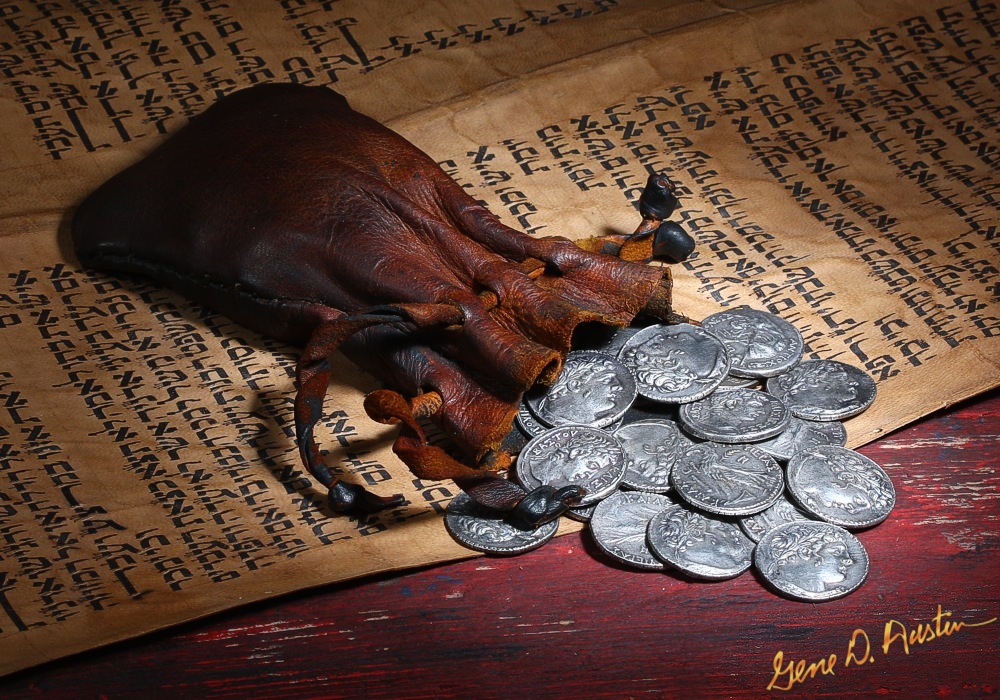
    30 Pieces of Silver


    On casino question, let the people decide

    With two sides touting their point of view with equal zeal and little proof, might as well let a referendum make the choice.
     
    By:City Columnist, Published on Tue Apr 23 2013
     
    The public can say “No” only so many times before succumbing to the weight of history and the press of those advocating for change, good or bad.

    So, I know that to propose a referendum on the issue of a casino in Toronto is to capitulate to those who subscribe to what one resident last week called “this monstrous evil” of state-sanctioned gambling.

    Still, I think that’s where we are as a society, circa 2013: agnostic, amoral, materialistic, amorphous, almost anything goes.

    Riding a backlash against centuries of Puritanism and uptight strictures, we’ve turned nullifidian, consumers of everything to the exclusion of nothing.

    I disqualified myself from the casino debate at the outset, distrustful of my instincts here. I have no inclination to gamble, and even less tolerance for those who would woo the weak to part with their money so cavalierly, so ruinously.

    And yet, increasingly, more of us gamble away our tiny fortunes and our loonies and twoonies. between scratch and win, lotto this and that, ProLine and bingo, slots at Woodbine and games at the Ex, and bus trips late into the night to Rama and Niagara, many Canadians embrace gambling like a cup of coffee from Tim’s.

    The majority tell pollsters they are against a downtown casino, but the gap between yes and no is trending the other way.

    My opposition is surely rooted in a lifelong indoctrination against the evils of gambling. It’s an excellent example of poor stewardship. Nothing presented by advocates — the jobs, the fun, the matter of choice, the revenues, and the claims of economic stimulus — has managed to trump the words of prohibition.
     
    To attend the public hearing before the city’s executive committee last week was to feel enlightened one minute and despairing the next. Who is correct, when the claims are so diametrically opposed?

    The city is to get a fee for hosting the casino? But is it $20 million or $50 million? And will city councillors really hold out for $100 million? Or is that a ruse — “Look, we fought real hard!” — but they’ll fold in the end?

    To listen to the police chief was to believe that casinos are benign operations with infinitesimal impact on prostitution, drug trafficking and other crimes. Believe what you wish and ignore scientific studies that show casinos account for 8 per cent of the crime in U.S. counties where they exist.

    The mayor threatened city councillors whose consciences inform them that programs built on the backs of addicts and weak-willed citizens lack a certain ring of civic authenticity. He’ll make sure voters know such councillors turned their backs on the jobs, blood money, that flow with them — thousands of jobs, the mayor promises.

    And all the while, the creepy-crawly lobbyists of the gambling cartel, many of them otherwise employed in reputable endeavours, coax city councillors to line the pockets of their corporate masters while chasing crumbs for the public purse.
     
    A hundred buses a day leave Toronto with gamblers bound for casinos, the mayor claimed. A million and a half people in the city gamble, he said.
     
    Councillor Denzil Minan-Wong, normally a bedfellow to the crowd drunk on such filthy lucre, professes religion on this one. Casinos are “one of the most depressing places” and they don’t fit the Toronto he dreams of.

    “You are not playing with a full deck to turn this down,” said Deputy Mayor Doug Holyday.
    The anticipated $100 million in “hosting fees is unattainable” and even that amount is “can’t leverage transit” construction, Councillor Adam Vaughan said.

    To let the revenues go to a border city would be to deliver social problems “on the backs of our 2.5 million people, and we get no revenues,” Holyday concluded.

    So, for 30 pieces of silver . . . sell out your constituents.

    Maybe the constituents are okay with that, content with self-immolation on the altar of the jackpot.

    Besides, both sides are so entrenched, locked in a winner-take-all sweepstakes, with the draw scheduled at city council in a couple of weeks.

    On this one, let the people decide in a referendum. It’ll be their party; they can cry if they want to.


    http://www.thestar.com/news/city_hall/2013/04/23/on_casino_question_let_the_people_decide.html


    Sunday, April 21, 2013

    Casinos: Costs exceed Benefits


    David Frum: A fork at the centre of the universe


    The city of Toronto faces two hugely important decisions about its future — whether to build a new casino and expand the island airport in the heart of the city. I’d vote “nay” on the first and “aye” on the second.

    Richard Florida has argued the case against the casino powerfully in the Huffington Post: “Virtually every serious study that has ever been done of the economic impacts of casinos shows that their costs far exceed their benefits and that they are a poor use of precious downtown land. A downtown casino will tear holes in Toronto’s urban fabric, create more costs than benefits, and as surely as if it’s holding up a giant sign, will send the message that Toronto is on the wrong track.”

    I’d add another objection: Casinos have a bad way of introducing corruption into city government. Casinos are to cities as oil is to national governments: a windfall of cash that voters pay less attention to than other sources of government revenue. As Detroit learned the hard way, casinos can lead to unfavourable outcomes. According to a March 22 report in the Detroit News:

    “Greektown mogul Jim Papas allegedly bribed two city officials with $20,000 worth of casino chips while pursuing pension-fund deals for himself and others worth millions, according to a federal indictment, city records and sources familiar with the investigation. The revelation sheds light on the source of payments, [which are] described as bribes that are part of an alleged conspiracy that federal prosecutors say cost Detroit pension funds more than $84-million.”

    Toronto may be less vulnerable to outright fraud than the notoriously poorly governed city of Detroit. But once the casino industry gets a foothold in the city, Torontonians should certainly expect their own local version of what’s going on right now in Cedar Rapids, Iowa: “The dueling pro- and anti-casino campaigns have spent $2.2-million to date to get their messages out before Tuesday’s vote on casino gaming in Linn County.”

    The so-called “anti-casino” camp in Iowa actually represents competing casinos two counties away, which are trying to shut down the competition before it opens. Casinos may begin as creatures of politics, but they end up being the paymasters of politicians. Saying “no” is a crucial prophylactic for cities that aspire to keep their politics clean.

    http://fullcomment.nationalpost.com/2013/04/20/david-frum/


    In the comments:

    John Atticus Truenorth 196017 hours ago
     
    "The Richard Florida piece is an academic joke."
    Why?
    Analysis of the casino proposals by Rothman's Martin Prosperity Institute at U of T pretty much came to the same conclusion:
    http://martinprosperity.org/media/TO-Casino-Econ-Impact_v02.pdf
    Casinos do more harm than good to the greater economy and social fabric of a city. And they don't actually generate that much revenue into city coffers anyways.

    From the sounds of it you seem to think these critiques are wrong simply because they go against what Rob Ford thinks about the issue.

    Just who exactly is on the "pro-casino" side saying this is a great idea? Other than Ford, the OLG, and casino industry?


    Saturday, April 20, 2013

    Denying Increased Crime

    Ever notice that when Proponents, the Casino KoolAid consumers, want to justify Predatory Gambling, they deny the INCREASED CRIME even when statistics prove otherwise?


    Toronto casino: In 2001 crime was a concern at Woodbine. Has anything changed?

    After slot machines came to Woodbine in 2000, police warned about crime. Today, as council ponders approving a large casino, the message has changed.
     
    By:City Hall Bureau reporter, Published on Fri Apr 19 2013
     
    Slot machines had been operating less than a year at Woodbine racetrack when Toronto police asked city council to fund an extra 18 officers to handle the increased workload.
     
    “The historical information indicates that gaming facilities can generate social and crime issues in a community,” the police said then, even quoting Donald Trump that gambling brings crime.

    In explaining the 2001 request for council to fund more officers, police managers said the racetrack area saw a 29 per cent hike in violent crime to 162 incidents in 2000 versus 126 the previous year. Property crime rose to 755 incidents in 2000 from 651 in 1999.

    Police said the introduction of 1,700 slot machines in March, 2000 — later increased to 3,000 machines — was a “contributing factor” in the spike.
     
    Fast forward to today, with Mayor Rob Ford’s administration pushing hard for a large casino in the city with perhaps 1,500 slots and 400 table games, and the message has changed.

    Chief Bill Blair, at the request of the city manager, appeared before council’s executive committee chaired by the mayor to say crime at Woodbine hasn’t gone up appreciably since the slots arrived.
     
    “There’s no statistical trend that indicates there’s been an increase in either violent criminal activity or property criminal activity in that area over that period of time,” Blair said.

    Blair dismissed one estimate given to the executive committee that a large casino, now under consideration, could mean $50 million to $100 million in annual policing costs.

    Toronto now has had 13 years of experience with Woodbine slots — one of the busiest gaming floors in North America — and police report few problems, said Rod Phillips, president of the Ontario Lottery and Gaming Corp.

    “In fact, many police chiefs will say that the facilities we run are among the safest because of the security that’s there, because of the surveillance that’s there,” Phillips said. [This is INSIDE the Gambling Facility.]

    “So I think Chief Blair’s contribution was probably just reflecting that same experience here in Toronto.”

    What does it mean if Toronto — or another GTA municipality — approves a casino? Will crime rates climb?

    Hard to say and it depends on who you ask.
     
    Toronto Councillor Joe Mihevc, who pressed Blair on the point at the committee hearing, said he thinks a large casino will bring crime problems.
     
    “I believe that and I think most Torontonians would believe that,” Mihevc said. “It’s not a belief based on nothing, it’s based on friends and family members who’ve gotten involved in gambling, sometimes over their heads, and have done things that are illegal.
     
    “And they wouldn’t have done those things if they weren’t struggling with this addiction.”
    Councillor Peter Milczyn, a Ford ally who represents an Etobicoke ward, said Woodbine has not been a problem.
     
    “Over the years, I’ve never heard anybody, police or residents or businesses, raise any concerns that there is any particular criminal activity associated in or around Woodbine,” Milczyn said.

    The request for extra police was mainly due to the fact that the slots attract thousands of players every day, and extra police are needed as they would be wherever large crowds gather, he said.
     
    Blair agreed, in his presentation to the executive committee.
     
    “I might anticipate that if we were going to have any kind of public venue in Toronto that would attract a large number of people, it could have an impact on policing costs for that location,” the chief said.

    The earlier request for extra officers for Woodbine said examples of police calls include medical complaints, unwanted guests, accidents, persons wanted, thefts and impaired driving.
     
    Blair said he hasn’t been asked to report on the cost of policing a large casino, but he couldn’t provide even a rough estimate at this point.

    “We have no sense at this time of scale or scope or location and so I don’t have anything on the back of an envelope,” he said. “I think we’d be reluctant to pull a number out of the air and it would just be a number pulled from the air.”

    The executive committee voted 9-4 to tell Ontario Lottery and Gaming that the city is interested in the casino opportunity. Council is to decide whether to grant conditional consent next month.
     
    City manager Joe Pennachetti said a report on policing costs would be available before council makes a final decision late this year or early 2014.

    http://www.thestar.com/news/gta/2013/04/19/toronto_casino_in_2001_crime_was_a_concern_at_woodbine_has_anything_changed.html

    18 extra police officers needed at Woodbine after slot machines added


    Friday, April 19, 2013

    Casinos Ruin Cities


    "Adding a casino to Toronto will not make it a 'world-class' city. It will make it second class." Ergo, Springfield would become...

     http://www.huffingtonpost.ca/richard-florida/toronto-casino-rob-ford_b_2164882.html?just_reloaded=1


    Casinos Ruin Cities
    Posted: 04/17/2013
    The debate over a casino in downtown Toronto is coming to a head. Mayor Rob Ford's executive committee of Toronto City Council voted 9-4 in favour of a downtown casino, putting the ultimate fate of the casino before a vote of the full City Council.

    Ford said he was "optimistic" Toronto will ultimately get a downtown casino, according to the Globe and Mail. "Nine votes, I think that's a good beginning."

    Fortunately, a majority or near majority of Toronto's councillors are on record as being opposed to a downtown casino, according to recent reports.

    If Council votes no, the mayor said he will take the issue directly to the voters. "'It's either no or yes.

    If it's a yes, thank you very much, appreciate your support for creating 10,000 good-paying jobs," Ford said on Monday. "And if it's a no, then I guess that becomes an election issue." But he backtracked on this on Tuesday, saying that: "It's not an election issue. They are just going have to explain to the voters why they didn't create 10,000 good-paying jobs. I want to deal with it this year. I'm optimistic. People are seeing the light."

    Ford and the nine committee members who voted yes are not the only ones people pushing for a downtown casino. Key elements of Toronto's business leadership have either been active cheerleaders for it, quietly supportive, or eerily mum.

    You have to ask yourself, why?

    Toronto's business leaders like to think that they are helping to build a great global city, but casino building is city-ruining of the highest order. Virtually every serious study that has ever been done of the economic impacts of casinos shows that their costs far exceed their benefits and that they are a poor use of precious downtown land. A downtown casino will tear holes in Toronto's urban fabric, create more costs than benefits, and as surely as if it's holding up a giant sign, will send the message that Toronto is on the wrong track. As the architecture critic Christopher Hume put it a while back:

    "Torontonians have made it clear they're not interested." He added, "the beauty of this city now is that it doesn't need a casino, let alone want one. In fact the casino needs Toronto more than the city needs it."

    I had my chance to vent about casino gambling in Toronto in the Star last spring. "About one thing," I wrote, "urbanists across the ideological spectrum are unanimous. And that is that building casinos, especially in an already thriving downtown, is a truly terrible idea." My colleague Kevin Stolarick put it best: "Adding a casino to Toronto will not make it a 'world-class' city. It will make it second class."

    David Olive, the business columnist of the Toronto Star, recently wrote that in the "Toronto casino debate, it's time to walk away from the table." Citing a March study by my research team at the University of Toronto's Martin Prosperity Institute, he writes that:

    "The turning point in the interminable debate over a new casino resort in downtown Toronto will be, one hopes, the astonishing report released March 12 by the Martin Prosperity Institute (MPI) at the University of Toronto."The MPI found that a casino makes little -- if any -- sense for the GTA. And it implies that the slick lobbyists employed by casino advocates Ontario Lottery and Gaming Corp. (OLG) and its private partners are betting on what they hope is widespread gullibility among Torontonians.
    "The MPI report knocks the stuffing out of the casino advocates' bloated claims of renewed economic vitality in a GTA that, in fact, is already thriving -- a rare metropolis to boast the status of North America's fastest-growing city twice in the past half century (currently and in the 1960s and 1970s).

    "The Martin Prosperity Institute is an extension of the business school at U of T. As such, it is pro-business and has a vested interest, for the sake of attracting the best and brightest students worldwide, in the GTA's economic stardom.
     
    If a new downtown casino, as proposed, could help advance MPI's interests, the think tank would be a cheerleader for it. Instead, in remarkably blunt language, the business and urban-economy experts at MPI conclude that the casino champions have simply generated a blizzard of numbers, 'all of them meaningless' and conveyed in a 'remarkably skewed' and 'misleading manner.'"

    The Globe and Mail's Margaret Wente dubbed Toronto's casino push, a "dead man's hand," pointing out: "Casinos aren't for cities on their way up. They're for cities out of options."
    Toronto is hardly unique in the push for casinos. Mega-casino moguls and developers like Sheldon Adelson and Malaysia's Genting Group are proposing lavish billion-dollar casino complexes in cities across the globe. I called it "the casinoization of everywhere" in an oped in the New York Daily News -- the latest manifestation of what the late Susan Strange aptly dubbed "casino capitalism."
    In the U.S. alone, gambling generates roughly $90-billion in annual revenues, a figure that is projected to expand to $115-billion by 2015. Faced with the prospect of laying off teachers, firemen, and policemen, it looks like manna to cash-starved cities and metros. But if there's one truth we know about casinos, it's that the house always wins. Casinos generate mega-profits for their developer-owners, who don't have to deal with the myriads of problems they cause for the cities in which they are located.

    Gamblers might fool themselves into thinking that they can get something for nothing, but cities and governments should know better. For all the ostensible billions in tax revenue, spillovers from increased tourism, and higher property values casinos supposedly generate, when all the social, moral, and monetary costs that they levy on cities are added up, they have almost always proven themselves to be financial and economic disasters.

    Most of the outspoken opposition to Toronto's casino has come from academics like me, journalists, religious groups, and civic activists. Toronto's business leaders have been conspicuously mum on the subject -- and on Mayor Rob Ford's small-minded, anti-urban agenda. In addition to holding the mayor, pro-casino councillors, and the OLG accountable, civically-minded Torontonians should be asking where the city's business and political leadership stands. Especially when you consider how many of the most outspoken opponents of casinos in other cities have turned out to be prominent business leaders.


    A case in point is Warren Buffet, the über-successful investor. "I'm not a prude about it," he said in 2007, "but to a large extent gambling is a tax on ignorance. I find it socially revolting when a government preys on the weakness of its citizenry rather than serving them. When a government makes it easy to take their Social Security and start pulling handles or playing lotto, it's a pretty cynical act.... It receives taxes on the backs of those dreaming of a car or colour TV....it's not government at its best." When casino gambling was proposed in his home state of Nebraska, he took to the airwaves to oppose it, as seen in the above Fireside Chat.
     
    News & Views: Norman Braman On Marlins Stadium Investigation & Resort Destination Casino Bill: Guest: Norman Braman, businessman and civic activist

    The same is true of the Florida billionaire Norman Braman, the former owner of the Philadelphia Eagles, who vehemently opposes destination mega-casinos in South Florida. "If you open the door to casinos," he told the journalist Eliott Rodriguez in the television interview posted above, "you are opening the door to crime and creating more unemployment. No proponent of casino gambling can name any place in the United States where casinos have revitalized a community. Actually, it's had the opposite effect." To Dylan Ratigan (the video is posted below) he said, "If you look at all the statistics concerning casinos throughout the United States, whether they're riverboat or permanent, after three to five years, almost two jobs are lost for every one that's created." He makes an important point. As in Singapore, most places that introduce gambling see a quick upward spike, followed by a steep decline. Casino lobbyists prefer to talk about their early successes.


    When all is said and done, gambling is one of the most regressive ways to generate public revenue and one of the least productive uses of money imaginable -- it takes the most from the people who can afford it the least.

    A glitzy mega-casino in the heart of downtown would be a direct affront to Toronto's brand as a well-managed city of builders and investors. Taken together with Mayor Ford's bizarre statements on gay rights, his move to abolish bike lanes, and the numerous scandals that surround him, it couldn't but have a seriously deleterious effect on the city's ability to attract people and thus on its long-run economic prosperity. As I told the Globe and Mail recently: "Casinos are brand killers. People in the outside world would say, 'Toronto is a great city, so why are they putting a casino there?' "

    For everyone who's concerned about Toronto's future, it's time to take score. Not just of who's been in favour of such a city-ruining monstrosity and who's been opposed to it, but who among the city's so-called leaders have sat quietly on the sidelines.

    http://www.huffingtonpost.ca/richard-florida/toronto-casino-rob-ford_b_2164882.html?just_reloaded=1


    Sunday, April 14, 2013

    Dead man’s hand: Just say no to casinos


      (Curtis Lantinga)

    (Curtis Lantinga)
    MARGARET WENTE

    Dead man’s hand: Just say no to casinos


    The Globe and Mail (includes correction)
    Published Thursday, Apr. 11 2013

    What could be better than a big casino in downtown Toronto? Why, it’s practically free money! Just pull the lever and hit the jackpot. Jobs and revenues and tourism dollars will rain down on us like April showers.

    That’s the sales pitch, anyway. The casino lobby is furiously courting cities across North America, promising to fill their coffers by peddling a little harmless fun to the public. Toronto Mayor Rob Ford is all gung-ho. The people who run the Ontario Lottery and Gaming Corp. can scarcely contain their excitement. Don’t be so old-fashioned. You’d have to be soft-headed to resist.

    But not all is going smoothly. The casino lobby didn’t reckon with the Sikhs. Or the Jews, the Protestants, the Muslims, the Catholics, the Buddhists and the Jains. These groups usually don’t have much in common. But, last week, 250 of the city’s faith leaders got together to say No to a casino in Toronto. They don’t like the devastation that gambling brings to families and communities, and they particularly don’t like the signal that casinos send about our civic values. “This isn’t about politics,” Christopher White, the minister of Fairlawn Avenue United Church, told me. “It’s about city-building.” And, in his view, there are a lot of better ways to build a city.

    Personally, I don’t mind if people gamble. If they want to throw their money down the drain, too bad for them. But I agree with Rev. White. I don’t think the government should act as their enabler.
    Warren Buffett doesn’t think so, either. “It’s a terrible way to raise money,” the legendary investor, who opposed casinos in his home state of Nebraska (and won), told reporters during an annual shareholders meeting. “… It’s a tax on ignorance. I don’t like the idea of the government depending, for certain portions of its revenue, on hoodwinking citizens.”

    As for the business case – the 10,000 well-paying jobs, the economic development and all the rest – don’t believe it. The Rotman School of Management’s Martin Prosperity Institute studied the potential economic impact of a casino in Toronto, and its conclusions were damning: “So far, all we have are numbers – lots and lots of numbers. The important thing is that all of them are meaningless.”
    Urban theorist Richard Florida, the institute’s director, has been tracking the casino craze around the world. “I call them city ruiners,” he told me. “Casinos generate a lot of social costs, and they’re a regressive form of taxation. They take money away from poor people.” They’re also the wrong message for a city to send, because they smack of desperation. Casinos aren’t for cities on their way up. They’re for cities out of options.

    “Casinos are brand killers,” said Mr. Florida. “People in the outside world would say, ‘Toronto is a great city, so why are they putting a casino there?’ ”

    All governments live to some extent on the avails of vice. In Ontario, the OLG (according to its annual report for fiscal 2011) extracted $6.7-billion from the public’s pockets, of which $2-billion went to provincial coffers. This money is recycled into good works, which are conspicuously advertised to show how indispensable the OLG is. Governments promote casinos as painless revenue streams that create economic development. In fact, the casino business is a rather inefficient transfer of money from middle- and lower-income groups, some of which goes to the state in taxes, some of which pays the operating expenses and some of which goes to the owners.

    Thriving major cities don’t need casinos. And even minor cities have rejected them. In Surrey, B.C., a coalition of citizens, students and faith groups (including evangelicals and Sikhs) defeated a $100-million casino proposal in January, even though it was strongly backed by the provincial government.

    The casino debate doesn’t split along the usual party lines. Toronto’s mayor has the construction unions on his side. On the other side is a mix of left-leaning city councillors, conservative rabbis and ordinary people who’re uneasy about a casino but aren’t quite sure why. I think I understand. They’re proud of the city, and they think we can do better.

    “I think it’s cynical on the part of the state to raise money from people who basically can’t afford it by promising them a dream that is not going to come true,” Mr. Buffett told one interviewer. “The state ought to be trying to do something for its citizens, not do something to its citizens.”

    Said Mr. White: “A casino is smoke and mirrors. Let’s create new business opportunities with sustainable middle-class jobs that will give people dignity. Surely we’re capable of that.”

    Correction: Thursday print edition and earlier online versions of this column incorrectly attributed a quote to Berkshire Hathaway chairman Warren Buffett. In fact, the statement “The modern slot machine is one of the best ways to remove money from suckers known to man” was made by Berkshire Hathaway vice-chairman Charlie Munger.

    http://www.theglobeandmail.com/commentary/dead-mans-hand-just-say-no-to-casinos/article11017537/


    Saturday, April 13, 2013

    Dan Gilbert: When Sucking $$$ From the Poor Isn't Enough


    Dan Gilbert pitching casino for downtown Toronto

    David Muller | dmuller@mlive.com By David Muller
    MLive.co
    on April 12, 2013


    Dan Gilbert and Detroit business leaders retail 'master plan' for downtown DetroitQuicken Loans founder Dan Gilbert . (Tanya Moutzalias | MLive.com)
     
    DETROIT, MI - Dan Gilbert and partners in Caesars Entertainment will pitch plans for a downtown casino in Toronto to city officials there next week, the Cleveland Plain Dealer reports. Ontario officials are also considering whether or not to privatize government-owned casinos outside of Toronto, so Gilbert and company may see some opportunities there, a company spokeswoman told the Cleveland publication.
     
    Gilbert, who signed off on buying majority share of downtown Detroit’s Greektown Casino-Hotel last week, is expanding his gaming holdings throughout the region.
     
    He recently struck casino and horse track deals in Baltimore and northern Kentucky, and has bought a stake in Caesars’ online gaming division, the Cleveland Plain Dealer reports.
     
    Gilbert, the founder of Quicken Loans and owner of 4 million square feet of downtown Detroit commercial real estate, began his foray into the gaming world when he started Horseshoe casinos in Cleveland last May and in Cincinnati last month. On Tuesday, his group opened Thistledown Racino in the suburbs of Cleveland.
     
    Caesars is a minority partner with Gilbert’s Rock Gaming on the Ohio gaming developments, as well as on Turfway Park, a thoroughbred track in northern Kentucky. Casino gambling is still illegal in Kentucky, but the state has been talking about its legalization.
     
    http://www.mlive.com/business/detroit/index.ssf/2013/04/dan_gilbert_pitching_casino_fo.html


    Friday, April 12, 2013

    Crime-casino links should alarm Massachusetts


    Crime-casino links should alarm Toronto and Ontario pro-gambling forces

    U.S. regulators aren’t ignoring the relationship between organized crime and corporate casino operators — so why is Ontario?
     
    Sheldon Adelson and his wife Miriam at the Four Seasons Macao hotel and casino. His Sands empire is under investigation for bribery and corruption. (Aug. 28, 2008)
    BOBBY YIP / REUTERS
    Sheldon Adelson and his wife Miriam at the Four Seasons Macao hotel and casino. His Sands empire is under investigation for bribery and corruption. (Aug. 28, 2008)
     
    By:Sandy Garossino and Adam Vaughan Published on Fri Apr 12 2013
     
    If anyone were to suggest to a casino promoter that there is a relationship between organized crime, corruption and the big corporate casinos, the denials would fly faster than any cards from a professional dealer. This would be in spite of mounting international evidence to the contrary that U.S. regulators have discovered and begun to act upon.
     
    Today, the lion’s share of the global profits of companies such as Las Vegas Sands Corp., MGM and Wynn (all vying for the Toronto casino) now come from Macau — a magnet for corruption and organized crime far beyond the reach of these same U.S. regulators.

    At $38 billion revenue in 2012, Macau casinos generated roughly six times the haul of the Vegas Strip, and this is on track to grow to $62 billion by 2015 (U.S. revenues remain flat). The April 9, 2012, edition of the New Yorker reported that total amounts wagered in Macau in 2010 are estimated at $600 billion or equal to all U.S. ATM cash withdrawals that year. This in a city with the population of Hamilton.

    This new geographic centre for gambling puts Vegas operators at arm’s-length from U.S. regulators.

    In Macau, 70 per cent of casino revenue is derived from VIP clientele whose financing is provided by informal “bankers” known as junkets. According to a Reuters report from Oct. 24, 2012, these junket operators are often owned by Asian triads who “have grown adept at disguising their investments, just as the Mafia once did in Las Vegas.”

    A 2011 annual report by the U.S. Congressional-Executive Commission on China states: “The growth of gambling in Macau, fuelled by money from mainland Chinese gamblers and the growth of U.S.-owned casinos, has been accompanied by widespread corruption, organized crime, and money laundering,”
     
    U.S. regulators have taken notice.

    This is the reason why the U.S. Justice Department and the Security and Exchange Commission (SEC) have Sheldon Adelson’s Sands empire under investigation for bribery and corruption. And why his company stated recently that it “likely” violated the federal Foreign Corrupt Practices Act, which outlaws the bribery of foreign officials, according to a SEC filing.
     
    In a lawsuit against his former employer, Steven Jacobs also accuses the Sands management of tolerating the activity of organized crime in Macau, and of secretly investigating government officials in order to use “improper leverage” against them. In plain language, that’s called blackmail. And while that suit has not been settled, Sands was recently hit with a ruling that it hid evidence and deceived the judge in the case.

    Nor is Sands alone. Wynn Resorts has been making headlines in its own bribery and corruption scandal.
     
    MGM, too, is under an order from authorities to leave Atlantic City, due to unscrupulous practices uncovered in a scathing report by the New Jersey attorney general. Regulators objected to MGM’s pursuit of a partnership with a notorious figure with deep links to organized crime in Macau. The investigation also found that MGM’s senior management deliberately misled regulators to conceal the known organized crime links of its partners.
     
    So, while alarm bells are ringing with U.S. state and federal governments and regulators, what are the governments of Toronto and Ontario doing? Inviting these companies to bring their corrupt business practices here.

    Wynn Resorts chair and CEO Steve Wynn has already said, “We’re really a Chinese company now, not an American company.” Regulators and the public should take note.

    The City of Toronto and the Government of Ontario should not believe Wynn and the other big-time international casino operators that they will be bringing the Las Vegas experience to Toronto. Their business models no longer work that way. Macau is the new model with its junket operators with suspected links to organized crime that power it. In poker circles, there’s a rule: Don’t play the hand, play the player. Ontario, Toronto — you know who you are playing against. Don’t let their denials bluff you. U.S. regulators are already taking action against them. It’s time to walk away from the game.

    Sandy Garossino is a former B.C. Crown prosecutor as well as one of the founders of Vancouver Not Vegas, the grassroots movement that defeated the megacasino planned for downtown Vancouver. Adam Vaughan is Toronto city councillor for Ward 20, Trinity-Spadina.

    http://www.thestar.com/opinion/commentary/2013/04/12/crimecasino_links_should_alarm_toronto_and_ontario_progambling_forces.html


    Tuesday, April 9, 2013

    Faith leaders unite to oppose Toronto casino


    Faith leaders unite to oppose Toronto casino

    Frances Kraft, Staff Reporter, Monday, April 8, 2013

    Rabbi Baruch Frydman-Kohl, left, and Rev. Christopher White were among the speakers at an interfaith clergy press conference to oppose casino expansion in the GTA. [Frances Kraft photo]TORONTO — The Toronto Board of Rabbis, along with other groups of GTA faith leaders, has spoken out against the proposed Toronto casino.

    Their statement, signed by more than 265 faith leaders, was released at an April 4 press conference at City Hall. It expressed opposition to the expansion of casinos proposed by the Ontario Lottery and Gaming Corporation, and support for NoCasinoToronto.com’s anti-casino campaign.
    The statement, which can be viewed online at nocasinotoronto.com (and on page 32), called on governments to “protect the most vulnerable in our society from casinos that exploit human weaknesses and addictions,” and urged others to voice their opposition to expanded gambling.
    STATEMENT BY CLERGY
    We, the undersigned faith leaders and representatives in the Greater Toronto Area, stand united in opposing the expansion of casinos proposed by the Ontario Lottery and Gaming Corporation and support the anti-casino campaign led by www.NoCasinoToronto.com.
    We represent diverse faith communities with unique perspectives, principles, sacred texts, traditions and teachings that form the basis of our opposition to expanded gambling. We are unified in our position that gambling is contrary to the ethical norms of our traditions because it negatively impacts our faith communities and the wider public.
    We are convinced that casinos contribute to family breakdown, depression, addiction, bankruptcies and crime, and thus are antithetical to our mission as faith traditions to strengthen individuals, families and communities.
    Our faith traditions teach us that our governments should maintain order, preserve justice and promote the common good. We believe that our governments must take a stand to promote the values of education, hard work, social justice and the dignity of labour, and reject the illusion of easy money, for both individuals and public coffers.
    Our governments should protect the most vulnerable in our society from casinos that exploit human weaknesses and addictions. We therefore call upon our governments to reject gambling expansion and reject this predatory industry as a solution to economic and fiscal problems.
    We strongly urge our Municipal City Councils to vote against any new casinos in the Greater Toronto Area. We further urge our brothers and sisters in our faith communities to become informed about this issue and voice their opposition to expanded gambling to our elected officials.
    “We are convinced that casinos contribute to family breakdown, depression, addiction, bankruptcies and crime,” the document stated.

    At the press conference, Rabbi Baruch Frydman-Kohl, president of the Toronto Board of Rabbis, said that he and his colleagues were speaking “out of deep personal experience of individuals in our community who have been affected by excessive gambling.”

    He told of a congregant – a married father of three – whose family had cut him off because of his gambling.

    “He left his children penniless, and he himself was on the street on Passover, because he had no place to go.”

    The rabbi was one of more than half a dozen speakers including representatives of the Canadian Council of Imams, the Hindu Dharma Mission of Canada, the GTA Council of Christian Churches, the Anglican Diocese of Toronto, the Jain Society of Toronto, and the Guru Ram Das Ashram, who had signed the Interfaith Statement Opposing Casino Expansion in the Toronto Area.

    Rev. Christopher White, who moderated the event, said the group objected to “the negative impact the proposed casino expansion will have on our fellow citizens and the life we all share.”

    He said he “would respectfully disagree” with Mayor Rob Ford, who earlier that day had said the majority of Torontonians were in favour of a casino.

    The interfaith statement was an outgrowth of a symposium in January called Faith in the City, to address areas of common social concern. Rev. White called the anti-casino initiative an “unprecedented and historic show of unity.”

    Opposition to casino expansion was unanimous among the speakers, despite some differences in perspective.

    In the Hindu tradition, for example, gambling is strictly forbidden, and will lead to physical, mental and spiritual suffering in this life and the next, said Pandit Suraj Persad of the Hindu Dharma Mission of Canada.

    But Torah and Jewish tradition are not opposed to “casual” gambling at certain times during the year, Rabbi Frydman-Kohl said. However, he clarified, “regular and extended and ongoing” gambling is prohibited.

    Bishop Philip Poole of the Anglican Diocese of Toronto noted that gambling “offers the illusion of getting something for nothing, [but] the house always wins.

    “I understand that governments need to be creative in finding new sources of revenue, but casinos are not the way forward.”


    http://www.cjnews.com/index.php?q=node/105135

    Sunday, April 7, 2013

    Owning Mahowny


    Gary Stephen Ross, author of Stung, is helping No Casino Toronto raise public awareness by fielding questions at a screening of Owning Mahowny, shown here. (Sony Pictures Classics/courtesy Everett Collection)
    Gary Stephen Ross, author of Stung, is helping No Casino Toronto raise public awareness by fielding questions at a screening of Owning Mahowny, shown here. (Sony Pictures Classics/courtesy Everett Collection)
    Q&A Gary Stephen Ross

    ‘Casinos are highly sophisticated examples of social engineering meant to separate people from their money’