Meetings & Information


*****************************
****************************************************
MUST READ:
GET THE FACTS!


Showing posts with label Harrah's. Show all posts

Monday, January 2, 2017

MOST VEGAS CASINOS IN DEBT, BIG TIME


Magnificent gaudy structures erected for the ultimate 1% SCAM to empty your wallet, your 401K, your employer's funds, rack up credit card debt....



All built on a House Of Cards created by banks that will collapse, leaving taxpayers to pick up the tab.....



MOST VEGAS CASINOS IN DEBT, BIG TIME


Las Vegas Welcome sign
House always wins? While operating a Vegas casino seems like an obvious money maker, the cost of these massive buildings has most of these jackpot makers in the red long-term.
For the last few years, we’ve been reading about casino empires crumbling before our eyes.  In 2012, an article ran in USA Today that the economic downturn had created huge, unpayable debts in Vegas gambling properties.  These debts were incurred in brighter economic times but fell victim to the Great Recession.

One of the conglomerates mentioned in the USA Today article, Caesar’s Entertainment, was able to stall bankruptcy for three more years but finally filed for bankruptcy protection in 2015.
Las Vegas Fountain
Donald Trump learned the hard way how ephemeral big projects can be.  He took over the Taj Mahal Casino in Atlantic City and offered 14% interest on bonds to finance construction.  His company defaulted on its commitments soon after.  In short, a big building project may signify much smoke but little fire.
MGM Resorts International is trying to expand in both the US and Asia.  Although gambling is on the rise in the US, it is not at all certain that Vegas casinos will feel the enough of said growth to forestall bankruptcy.
The Fontainebleau Resort was going to cost 2.7 billion dollars but the Bank of America pulled out in 2014 and left a shell of a building in its wake.
Vegas Casino


It isn’t just the economic downturn that has threatened so many Vegas gambling properties.  Many other jurisdictions have legalized casinos in recent years.  This and online casinos make it difficult for Vegas casinos to bring in the customers they need to realize the profits that will pay off their massive debts.  Competition certainly reigns supreme even in the world of Vegas gambling!


https://www.gamingpost.ca/canadian-casino-news/vegas-casinos-debt-big-time/


Thursday, October 6, 2016

The Casino Trap


The Casino Trap

As the gambling industry booms, aggressive marketing targets older patrons

Gamblers play on a casino floor
Casinos use marketing ploys to target older patrons — and empty their wallets. — Mark Peterson/Redux
Beauford Burton had enjoyed the occasional poker game in his youth, but in his 60s the slots hooked him. He and his wife, Sharon, started making the 2 1/2-hour drive every Friday from their home in Kings Mountain, N.C., to Harrah's Cherokee Casino Resort, where they won occasionally but lost more frequently. In one year, he lost about $50,000, nearly the equivalent of his annual salary as a manager in a textile company.

They often stayed longer than they'd intended—many times the casino would offer them a free hotel room Saturday night. Burton can't remember ever paying for a room. He had access to an exclusive bar with free drinks and food, preferred seating in the restaurants and suite upgrades in the hotel. Harrah's once flew the couple to its casino in Laughlin, Nev., and covered all their expenses—except, of course, what they gambled.
In the end, Burton knew that all of the freebies weren't really free, and that he had paid for them tenfold with his losses. "I have always known you don't get something for nothing, but I fell for it," he says. "It's the good old devil at work."
Over four years, the slots drained more than $100,000 from Burton's 401(k). But he kept playing. He cashed in a life insurance policy, took out cash advances on his credit card and gambled away Social Security checks meant to pay utility bills. Finally, in 2008, the gambling habit took his home.
By then, he was playing in a panic, betting up to $15 to $20 a spin, chasing his losses and pursuing the one illusory jackpot that he hoped would save him. "As you start to lose, you think, This is a luck thing, my luck is going to change," says Burton, now 73. "But the more you go, the more you lose. It ends up in desperation. I can see how people get so deep that it causes them to take their own lives, because it gets really, really bad."

The rise of the casinos

Of the 101 million visitors to America's casinos in 2014 (the last year for which information was available), nearly half were age 50 or older, according to data from the gambling industry. In 2014, American casinos reported over $66 billion in gambling revenue, and much of that profit came from these older gamblers.
A 2011 study published in the Journal of Gambling Studies revealed that many older adults viewed the casino as a place where they can socialize and escape from loneliness or grief.
It's never been easier for them to get to one. Long gone are the days when the twin casino meccas of Las Vegas and Atlantic City, N.J., represented the sole options for American gamblers. Regional casinos have proliferated dramatically since 1988, when the Indian Gaming Regulatory Act legalized casino development on Indian lands. That sparked a loosening of state prohibitions on gambling and a nationwide casino building boom. Today, 1,400 casinos are spread across 40 states. Regional casinos are especially attractive to those who prefer to drive themselves and do not want to have to spend the night. States with large populations of adults over 65, including Florida, Pennsylvania, New York, Michigan, Ohio, Massachusetts and West Virginia, have all expanded casino gambling in recent years.

Addiction experts alarmed

Older adults are an especially desirable demographic for the gaming industry because they fill the floors during off-peak hours, and casinos market to them aggressively, offering discounts on breakfast and lunch, free drinks and guarantees to "instantly win up to $1,000 Free Slot Play!" They stage free daytime entertainment such as polka dancing, magic shows and live "Golden Oldies" shows. The "third of the month club" provides complimentary shuttles from senior centers and retirement housing complexes on the day they receive their Social Security checks. Some casinos stock their bathrooms with adult diapers and disposal receptacles for diabetics' needles. They provide wheelchairs, walkers and more handicapped parking spots than a hospital. One Nevada casino operated an on-site pharmacy—since closed—where accumulated play credits could cover the standard $25 copay on medications.
The gambling boom—and the aggressive tactics the industry uses to lure older patrons—has alarmed addiction experts. Even casino patrons with no history of problem gambling can develop addictive behavior as they age. According to a 2005 study by David Oslin, a professor of psychiatry at the University of Pennsylvania Medical Center in Philadelphia, 1 in 11 adults over age 65 bet more than they could afford to lose in the previous year. The study suggests that more than 4 million older Americans could have a gambling problem. "That's a higher rate than we have for most diseases," he says.

Notable high rollers

Earlier this year, the Hollywood Reporter devoted a cover story to one such pathological gambler—Emmy-winning television producer and writer David Milch, 71. Despite earning millions from the shows he helped create, including NYPD Blue and the critically acclaimed HBO series Deadwood, Milch ran up enormous debts betting on horse racing (also the topic of his short-lived HBO series Luck). According to a lawsuit filed by Milch's wife against the couple's business managers, between 2000 and 2011 his gambling losses reached $25 million, and he's now $17 million in debt.
For other high-rolling notables with well-documented gambling habits, such as NBA great Charles Barkley and actor Ben Affleck, sports betting and poker are the typical culprits. But the majority of everyday problem gamblers are camped out at the slot machines, which have evolved from the traditional one-armed bandits into highly sophisticated "electronic gaming machines" powered by proprietary computer chips. Slots are the biggest revenue producer for the industry and the most popular attraction for older gamblers: 3 out of 4 adults age 65 and older identify slots and video poker as their preferred form of gambling, according to a Harrah's survey.
A gambler plays a slot machine at a casino
Slot machines are the most addictive form of casino gambling, enticing users to 'keep playing' until they've suffered major monetary losses. — Naomi Harris

'Electronic crack'

Slots are also the most addictive form of casino gambling, with the machines designed to maximize your "time on device" until you're out of money. A 2001 study by psychiatrist Hans Breiter, then of Massachusetts General Hospital in Boston, confirmed that the machine's nickname—"electronic crack"—is an apt one. Using MRI scanners, he found that in subjects playing slots, the brain's neural circuits fired in a way that was similar to those using cocaine.
Several factors make gamblers particularly susceptible to addiction behavior as they age. Loneliness, social isolation and the loss of a spouse can encourage older people to seek relief in casinos. "For someone older who has been sick in the hospital or who is bored or lonely, that can have a big impact on them," says clinical geropsychologist Dennis McNeilly of the University of Nebraska Medical Center in Omaha.
More serious age-related cognitive decline plays a role, too. A 2012 study found that changes in the anatomy and chemistry of brains in dementia patients 65 and up, particularly in the frontal region—which controls executive functioning—"may render older adults particularly vulnerable to the stimulation provided by the slot machine." Dementia afflicts about 14 percent of the U.S. population over 70 years old, and an estimated half of those (nearly 2 million people) are undiagnosed. "With both the reward system and impulse controls impaired, that creates the perfect storm for someone to develop problems with gambling," says Michael Hornberger, a neuroscientist at the University of East Anglia in England. Cognitive issues can cause sufferers to lose their sense of money's value, and those with dementia often repeat a singular behavior such as pushing the button on a slot machine over and over. "They just keep playing as long as the casino lets them," Hornberger says.

In some cases, compulsive gambling behavior can emerge as a side effect of medications. Mark Stacy, a neurologist at the Duke University School of Medicine in Durham, N.C., noticed that several of his Parkinson's disease patients began reporting gambling problems after he had increased their doses of drugs called dopamine agonists, used to treat motor dysfunction. As many as 10 to 15 percent of Parkinson's patients who take the drugs exhibit this tendency, he says. "I believe these drugs do cause gambling problems where they otherwise would not occur. When you stop the drug, the behavior goes away."
Foes of casino gambling say that the industry actively targets vulnerable older patrons. For every 20 older patrons who walk through their doors, says Les Bernal national director of the advocacy organization Stop Predatory Gambling, the casinos want to "find a couple of them that they can take for all they're worth."

From social gambler to addict

Beauford Burton's experience at Harrah's Cherokee Casino is typical of such relationships.
In addition to sending birthday cards and weekly mailings with ticket deals to shows and vouchers for free play, the casino assigned a VIP host who called Burton at home to invite him back for various specials. Casino hosts often lavish personal attention on high-rolling older charges, asking about their health, reminding them to take their medicine and eating meals with them.
"The whole premise of a host is to extract as much money from that player as possible," says ex-host John-Talmage Mathis, who worked as VIP marketing director at the Boomtown Casino in Bossier City, La. "For older people, the host becomes their friend, giving them attention they may not be getting from their children or friends."
Casinos award hosts bonuses based on how much the gambler loses. "The losses of your player," Mathis says, "are your success."
As the industry seeks to expand, more women are being enticed into casinos, and more are experiencing problems, according to a study published in the journal Psychiatry.
Many slot machines are now designed specifically for women players, who, like longtime slots addict Melynda Litchfield, sometimes feel bonded with their machines. Litchfield, 56, worked 27 years at a Chicago-area hospital, climbing from staff nurse to administrator with a salary of $100,000.
Yet she couldn't afford a prom dress for her daughter because she lost so much playing slots at the Grand Victoria Casino in Elgin, Ill., 10 minutes from their home. For Litchfield, the atmosphere was as addicting as the machines themselves. The staff treated her warmly and called her by name. "They gave me so much personal attention and TLC that you get the false impression these people—who are milking away all of your money—actually care about you," she says.
The casino also served as an escape, to a place where she did not have to tend to the needs of anyone else. "I didn't want to talk to anyone," says Litchfield, who quit gambling in 2012 and is now a national victims advocate for Stop Predatory Gambling. "I just wanted to get lost in my machine."

Pushed toward the slots

Amy Ziettlow, a Lutheran minister and affiliate scholar at the Institute for American Values, visited casinos in Louisiana, Iowa and New York for her investigative report, "Seniors in Casino Land."
"The whole aim of trying to cater to the needs of the least among us simply to take their money is abusive," she says. "Owners push them toward the slots."
Industry advocates such as Chris Moyer, director of public affairs for the American Gaming Association, tell another story. "If seniors are enjoying the entertainment product we provide, there's no reason why they shouldn't be able to enjoy that in a responsible manner," he says. He points out that casinos do provide education materials on addiction, displaying pamphlets that urge patrons with gambling problems to call a toll-free help number. The casinos also encourage problem gamblers to put their names on self-exclusion lists. "The casino gaming industry takes extraordinary measures to spot those who need help and connect them to treatment," Moyer says.
As his addiction deepened, Beauford Burton found one of those pamphlets and called the 800 number. As he recalls, the person who answered his call just told him he should stop gambling if he couldn't afford it. "There was no meat to it," he says. "Once your intent is not to come back to them, I think they want to be clear of you."
After declaring bankruptcy in 2008, Burton finally managed to quit with the support of his wife and his faith. He and Sharon now live in a two-bedroom apartment in Kings Mountain, where he has become an outspoken critic of a proposal to build a casino in his community. He regrets his gambling problems but takes responsibility for his behavior. "I can't put total blame on those people because I was the one ignorant about it," Burton says. "But the casinos do try to make things as exciting for you as they can."
John Rosengren is a freelance journalist who lives in Minneapolis.


Thursday, September 22, 2016

CAESARS OFFERS CREDITORS ANOTHER $1.6B, WOULD SPELL END OF HEDGE FUND OWNERSHIP


CAESARS OFFERS CREDITORS ANOTHER $1.6B, WOULD SPELL END OF HEDGE FUND OWNERSHIP

caesars-final-offer-creditorsCasino operator Caesars Entertainment has improved its offer to junior creditors to over $5b, but the offer is only good until Friday.
On Wednesday, Caesars added an extra $1.6b to the $4b it had already offered junior bondholders of Caesars Entertainment Operating Co. (CEOC), the main unit of Caesars that filed for bankruptcy protection in January 2015, citing $18.4b in debt.
The total amount that the parent company is offering junior creditors now exceeds the $5.1b that an independent examiner determined the parent was liable for if these creditors were to prevail in their lawsuits in Delaware and New York.
Most of the additional $1.6b is coming from Caesars’ hedge fund owners, Apollo Global Management and TPG Capital, who have agreed to give up their equity in Caesars in exchange for releasing them from liability related to those creditor lawsuits.
The lawsuits were filed after creditors accused Caesars and the hedge funds of illegally shifting profitable assets out of CEOC and into other Caesars units prior to the bankruptcy filing. Creditors have also accused the parent company of reneging on guarantees to honor CEOC’s debts.
The extra $1.6b includes $100m from Caesars directors and officers, via their insurance companies. Last week, US Bankruptcy Judge William Goldgar approved a creditor request to have a peek at the personal finances of some of these directors and hedge fund owners in order to determine how much they could contribute to CEOC’s restructuring.
An additional $400k would come from “small” reductions in recoveries by senior creditors, most of whom have already approved CEOC’s restructuring. These senior creditors have to sign off on these reductions for the plan to go ahead.
On Wednesday, CEOC attorney David Seligman told the Illinois bankruptcy court that this “best and final” offer was only valid until Friday. The creditors have argued in court that they are owed $12.6b, and it remains to be seen whether they’ll take Caesars bait or roll the dice and see how the lawsuits turn out.
Should the creditors take the money on the table, it will bring an end to the hedge funds’ disastrous involvement in the Caesars debacle. The funds loaded up on $28b worth of debt to purchase the then-named Harrah’s in 2007, only to have the financial rug pulled from under their feet when the global economy tanked the following year, a setback from which the company never recovered.

http://calvinayre.com/2016/09/21/casino/caesars-final-offer-creditors/


Monday, August 1, 2016

Lawsuit dropped by Rivers Casino in tax dispute


Rivers Casino drops lawsuit over gambling tax paid to Pittsburgh


 | Friday, July 29, 2016

Rivers Casino on Friday dropped a lawsuit it filed against the state last month claiming a gambling tax it pays to Pittsburgh is unconstitutional.
A spokesman did not offer an explanation for why the North Shore casino dropped its suit against the Pennsylvania Department of Revenue. Rivers was attempting to block the department from collecting the tax established by lawmakers when they legalized gambling in 2004.
Rivers attorneys claimed the municipal portion of the local share tax in the state's Gaming Act unlawfully applies different tax rates to Pennsylvania's 12 operating casinos and doesn't tax all casinos equally in terms of revenue from slot machines that goes to municipalities.
Similar lawsuits are pending by Mount Airy and Harrah's Philadelphia casinos.
For fiscal year 2015-16, Rivers earned $272 million in slots revenues, records show.
Rivers annually pays a local-share assessment to the city of 2 percent of slots revenues or $10 million, whichever is greater. It has paid $65 million to Pittsburgh since opening in 2009.
In addition to getting the tax abolished, Rivers' parent company, Holding Acquisition Co., wanted a refund on some of the money it has paid.
Pittsburgh planned to join the state in defending the claim and considered a counter-lawsuit against Rivers.
“We are pleased that the Rivers Casino changed course and withdrew this erroneous lawsuit,” said Kevin Acklin, Mayor Bill Peduto's chief of staff. “We remain vigilant to defend the commitments made by the casino to the residents of our city.”

http://triblive.com/news/adminpage/10875591-74/casino-tax-rivers


5314780480_70e4e28b2c_z


Lawsuit dropped by Rivers Casino in tax dispute


Marie Kelley

July 30, 2016

A lawsuit was filed by Rivers Casino in Pittsburg challenging their yearly tax payment based on revenues from slot machine gaming just a few weeks ago and the suit has now been dropped. Late this afternoon, the casino announced the complaint has been withdrawn with no further comment on the matter.
The lawsuit was filed on June 27th within the Pennsylvania Supreme Court against the Pennsylvania Department of Revenue in an attempt to fight the local share tax based on the municipal portion. A spokesman for the casino, Jack Horner, did not speak any further on the matter, just to say that the lawsuit had been withdrawn.
The casino owner, Holdings Acquisition Co., filed the lawsuit, maintaining that the municipal portion of the local share tax was in violation of the clauses of uniformity and equal protection within the constitution of the state as well as the United States. The portion of tax was enacted when slot gambling was first legalized in 2004, with the company calling the tax an unequal rate on slot machine licensees.
Almost all casinos in the state are required by law to pay more than 2% of their gross terminal revenue on slot machine games or a rate of $10 million a year to the host municipality. The only venues exempt from this law are the resort destinations of Valley Forge and Nemacolin as well as casinos in Philadelphia.
2% of revenues is paid when the total amount is over $500 million or a $10 million fee if below this marker. Since the law was enacted in 2004, no casino has pushed past the $500 million marker. This means all casinos have paid $10 million in fees annually. The money paid was used by Pittsburgh to build up the pension fund. With the lawsuit, the casino was hoping to earn a refund for payments made to the city which would equal around $65 million.
When the lawsuit was filed, the city of Pittsburg asked the court to dismiss, citing that the potential for the refund would have a dramatic and immediate effect on the financial health of the city.  With the suit dropped, similar lawsuits remain pending by the Harrah’s Philadelphia venue as well as Mount Airy Casino.


Saturday, July 30, 2016

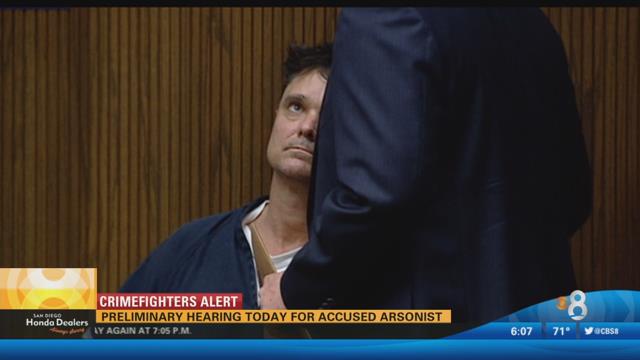
Informant: Accused arsonist 'proud' of his crimes


Informant: Accused arsonist 'proud' of his crimes


By J. Harry Jones | 8:47 a.m. July 29, 2016


 — A jail inmate serving a sentence for a drug-related conviction testified Thursday that a Poway man accused of setting several brush fires in 2014 and 2015 bragged about his crimes and said he had hoped to burn down Indian casinos.
The 54-year-old inmate, Richard Culver, took the stand during the El Cajon Superior Court trial of Jonathan Cohen, saying he and Cohen have known each other for several years — linked mostly by their mutual drug use. He said when he was taken into custody last summer he was by chance placed in the same jail module as Cohen.
“He was laughing about (the arson case),” Culver said. “He said Cal Fire was stupid and they would never get enough evidence against him.”
The inmate said Cohen told him he “wanted to torch” all the gambling businesses because despite a good income he earned as a boat mechanic “he spent every penny at the casinos.”
He said Cohen told him the targets were the Barona Casino & Resort in Lakeside as well as the Valley View and Harrah’s casinos in Valley Center, Casino Pauma and the Pala Casino Resort and Spa.
Cohen’s attorney, Deputy Public Defender David Thompson, called the informant a “lying snitch” during opening statements and on Thursday accused him of making up everything.
Cohen, 45, is charged with staring five wildfires, four along Lake Wohlford Road in Valley Center and one along state Route 67 in Lakeside. Prosecutors also have presented evidence of three other fires that burned small areas along Wildcat Canyon Road in Lakeside not far from Barona.
Cohen had been under investigation for about one year before his arrest last summer. The case against him is mostly circumstantial and based largely on video and camera surveillance which placed Cohen in the vicinity at roughly the same time small brush fires would occur along the sides of roads.
Culver said he initially wanted to testify against Cohen in the hopes of getting his sentence reduced, but — when told that was impossible — eventually decided to cooperate because of the nature of the crime. He said said he lost one house to wildfire in Northern California in years past and almost lost a second in the San Pasqual Valley more recently due to an arson fire.
He testified that Cohen told him how he tried to start fires, using matchbooks and match boxes weighted down with gravel, as well as modified bullets rigged to explode when thrown out of a car window. When investigators searched Cohen’s house they found such bullets.
Cohen faces a maximum of 11 years in prison if convicted. The trial is expected to conclude by the end of next week.


Friday, June 24, 2016

BANKRUPTCY JUDGE GIVES CAESARS CREDITORS THE OKAY TO VOTE ON RESTRUCTURING


BANKRUPTCY JUDGE GIVES CAESARS CREDITORS THE OKAY TO VOTE ON RESTRUCTURING

caesars-bankruptcy-restructuring-voteCasino operator Caesars Entertainment has received court approval to allow creditors to vote on the proposed restructuring plan of the operator’s bankrupt main unit.
On Wednesday, US Bankruptcy Judge Benjamin Goldgar set a Jan. 17, 2017 confirmation hearing for the planned restructuring of Caesars Entertainment Operating Co (CEOC), which filed for Chapter 11 bankruptcy protection last year.
In issuing his ruling, Goldgar said there was “something poetic” about that January date, which comes two years and two days after CEOC filed its Chapter 11 paperwork, citing $18.4b in debts.
Goldgar’s frustration with the length of this process was on full display on Wednesday, as he insisted the parties were “going to finish this now.” However, he also said he expects Caesars’ path to creditor harmony would be neither short nor simple.
While the confirmation hearing is still seven months away, lawsuits filed by CEOC’s creditors in Delaware and New York could get underway by Aug. 29. Goldgar granted a temporary stay of the suits last week in a bid to allow Caesars more time in which to convince creditors to sign on to CEOC’s restructuring.
On Wednesday, CEOC lawyers claimed they’d made “significant progress” in getting senior creditors to approve the restructuring, and a lawyer representing a group of senior bondholders said his clients were close to signing on the dotted line.
The junior creditors who filed those Delaware and New York lawsuits are proving a tougher sell, as they’re the ones who’ve been asked to bear the brunt of the $10b that CEOC’s proposed restructuring would make disappear. They claim to be owed as much as $12.6b and think the extra $4b that the Caesars parent company has offered to contribute is an insult.
The junior creditors have accused Caesars of stripping CEOC of its more profitable assets and shifting them to other Caesars’ divisions in order to shield them from creditors’ clutches. The creditors have also accused Caesars’ hedge fund owners of unlawfully absolving the parent company of responsibility to honor the debts of its main unit. The parent company has said it will have to join CEOC in bankruptcy court if it’s required to honor those debt obligations.

http://calvinayre.com/2016/06/23/casino/bankruptcy-judge-okays-caesars-creditors-vote-restructuring/


Sunday, June 19, 2016

Union authorizes July strike against 5 Atlantic City casinos


Union authorizes July strike against 5 Atlantic City casinos


Posted: Sunday, June 19, 2016 12:15 am
ATLANTIC CITY, N.J. — Atlantic City’s casino workers say they’ll go on strike against five of the city’s eight casinos on July 1 if a contract isn’t reached by then.
Members of Local 54 of the Unite-HERE union voted Thursday to authorize a strike against Bally’s, Caesars, Harrah’s and the Tropicana. The union had already authorized a strike against the Trump Taj Mahal.
A spokesman said Thursday several thousand workers cast ballots, which were 96 percent in favor of a strike.
The remaining three casinos— Borgata, Golden Nugget and Resorts — have been given an indefinite extension by the union, which says talks with them have been making progress.
The union says workers made painful sacrifices that need to be reversed now that Atlantic City’s casinos are regaining their financial footing.
“The most insulting thing is that in 2011 this union gave up part of its package to help the casinos when they were struggling,” union president Bob McDevitt said.
The vote comes at a precarious point for Atlantic City as it begins to stabilize from the loss of four of its 12 casinos in 2014, grapples with a $100 million budget shortfall and tries to fight off a state takeover and the prospect of in-state competition from two proposed casinos in the northern part of the state.
“These five employers clearly are not in touch with what their employees are feeling,” McDevitt said. “What is happening at the table is an insult. The day before a strike vote, Tropicana offered a five-year wage freeze. The day before!”
Tony Rodio, president of Tropicana Entertainment, which runs the Tropicana and the Taj Mahal, said the company has invested $160 million at the Tropicana since 2011.
“Our employees have benefited from increased hours, increased gratuities and job security while 33 percent of the market’s 12 casinos have been forced to close and thousands have lost their jobs,” he said. “It should also be noted that since emerging from bankruptcy in 2010, current ownership has not withdrawn one penny of investment from Tropicana Atlantic City while continuing to risk millions in an uncertain market.”
Kevin Ortzman, president of Caesars and Bally’s, said parent company Caesars Entertainment’s “goal remains to negotiate a fair resolution to keep our employees at work for their sake and to continue supporting Atlantic City’s revitalization, which has our full commitment.”
Irma Dominguez, a housekeeper at Harrah’s for 24 years, said she’s ready to walk out if necessary.
“Since 2004, I’ve only gained 80 cents an hour on my salary,” she said. “In 2011, we gave them back a week of vacation to help keep them in business. Now that they’re making money, we want that back. We deserve it.”
Elaine Malloy, a cocktail server at Bally’s, called the casinos’ current offer “horrendous.”
“They’re not willing to give anything back that they needed from us in 2011, when we agreed to help them,” she said.
Remaining on the job under current conditions would be almost as financially difficult as going out on strike, she said.


Thursday, June 16, 2016

Suffolk Downs, Caesars, f/n/a Harrah's, Gary Loveman


Caesars sought home at Suffolk Downs... 


CAESARS ENTERTAINMENT WINS TEMPORARY REPRIEVE OF CREDITOR LAWSUITS

caesars-reprieve-creditor-lawsuitsBeleaguered casino operator Caesars Entertainment has won a temporary reprieve from having to face creditor lawsuits.
On Wednesday, US Bankruptcy Court Judge Benjamin Goldgar told Caesars he had suspended bondholder lawsuits in Delaware and New York until Aug. 29. The period is shorter than Caesars had requested and Goldgar said the likelihood of him renewing the freeze after that date “will be slim.”
Caesars is attempting to restructure its main unit Caesars Entertainment Operating Co (CEOC), which filed for bankruptcy in January 2015, citing over $18b in debt.
Junior creditors, who have been asked to bear most of the fiscal pain of this restructuring, have filed lawsuits accusing CEOC’s parent company Caesars Entertainment Corporation (CEC) of illegally shifting profitable assets out of CEOC into other CEC divisions prior to the bankruptcy filing.
The creditors have also accused CEC’s hedge fund owners Apollo Global Management and TPG Capital of conspiring to ensure that the parent company was absolved of the obligation to honor its subsidiary’s massive debts.
The Delaware trial, which involves $3.7b in CEOC’s debt, was scheduled to commence on Thursday. The New York trial, which involves over $7b, had a hearing scheduled for next week. Caesars has argued that if these courts find CEC liable for CEOC’s debts, CEC will have to join CEOC in bankruptcy court.
CEC recently attempted to improve upon its original paltry offer that would have paid junior creditors pennies on the dollar. CEC’s hand was forced by the findings of an independent examiner, who determined that the asset transfers left CEC vulnerable to up to $5.1b in additional claims.
While Caesars execs expressed relief at Wednesday’s ruling, Goldgar warned them not to squander this opportunity. “There better be some conversations. You’ve got that time. Use it.”
The parties will be back in Goldgar’s Illinois court on June 22 for a hearing on CEOC’s request to allow creditors to vote on the company’s latest restructuring plan.


http://calvinayre.com/2016/06/15/casino/caesars-entertainment-temporary-reprieve-creditor-lawsuits/