Meetings & Information


*****************************
****************************************************
MUST READ:
GET THE FACTS!


Showing posts with label Utah. Show all posts

Monday, June 22, 2015

Drug dealing gambler to spend up to 20 years in prison for money-laundering scheme


Drug dealing gambler to spend up to 20 years in prison for money-laundering scheme

Saturday, November 8, 2014

Utah ‘high roller’ accused of laundering drug money through casino skips out on trial


Utah ‘high roller’ accused of laundering drug money through casino skips out on trial
First Published Nov 07 2014
 
 
A judge has issued an arrest warrant for a Utah man once considered a "high roller" at West Wendover casinos after he failed to show up for a trial on charges of money laundering and tax evasion.
 
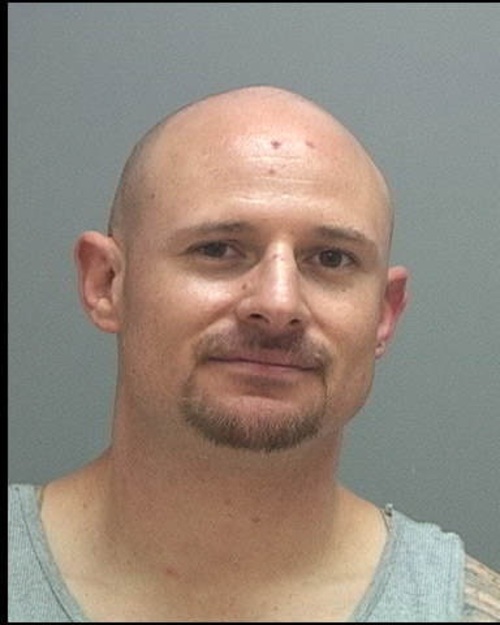
State prosecutors say Robert Thomas Rust spent more than $384,000 on gambling in Nevada over two years — money they believe was actually the proceeds of an illegal drug operation.
 
Rust, 34, was scheduled for a three-day jury trial in Salt Lake City’s 3rd District Court beginning Wednesday, but failed to appear.
 
Judge Robin Reese issued a $250,000 warrant for Rust’s arrest.
 
It wasn’t immediately clear why Rust missed his court date. Telephone messages left for Rust’s defense attorney, Richard Gale, were not returned. A spokeswoman for the Utah Attorney General’s Office, which is prosecuting the case, says the case will move forward once Rust is located.
 
Rust had pleaded not guilty to one second-degree felony count each of second-degree felony money laundering and third-degree felony tax evasion. The charges carry penalties of one to 15 years and one to five years in prison, respectively.
In court papers, prosecutors allege that between January 2011 and May 2012, Rust and his wife, Susana Montano Rust, 40, used slot machines at the Wendover Nugget Hotel and Casino to launder about $384,569 in funds, which the couple allegedly acquired through the sale of methamphetamine from their home in Sandy.
 
During one month alone, Rust pumped more than $150,000 into casino slots. The practice of running criminal proceeds through a casino and claiming the money as gambling winnings — which is taxable income — has been commonly used, prosecutors say.
 
Charging documents also say the couple could never legitimately have had so much money for gambling. State and federal tax returns for 2011 show Rust worked at a restaurant earning about $18,700 annually. Susana Rust earned just about $8,000 annually, working for a commercial cleaning company.
 
Rust has not been charged with any drug crimes, nor has his wife, although she was also charged with money laundering and tax evasion. Court records indicate Susana Rust has never been arrested.
 
Court papers also show the Utah Attorney General’s Office is seeking to seize $37,154.37 and one of the Rust’s vehicles.


BOOKING DATE: Sept 15 2014
CHARGE:
•THEFT BY RECEIVING STOLEN PROPERTY
•POSSESSION OF A CONTROLLED SUBSTANCE WITH INTENT TO DISTRIBUTE

Thursday, February 9, 2012

Internet gambling bill to keep out Indian casino gambling

Internet gambling bill to keep out Indian casino gambling
By Ladd Brubaker, Deseret News

SALT LAKE CITY — Gambling via the Internet is already illegal in Utah, but state law needs to specifically say that to pre-empt federal law from letting on-line gaming slip in, the bill's sponsor said.

Rep. Steven Sandstrom, R-Orem, had to tweak his HB108 before the House Law Enforcement and Criminal Justice Committee voted unanimously Wednesday to recommend the measure banning Internet gambling to the full House.

From the archiveSandstrom said measure is needed to keep Indian casino gambling from getting a toehold in Utah.

"That's what this law, quite frankly, is really about," Sandstrom said.

Utah and Hawaii are the only two states without any form of legalized gambling.

"I think that defines who we and what we are as a state," he said. "I think that's one reason we're so productive."

Sandstrom presented his bill Tuesday but had to remove a requirement that Internet service providers that provide service in Utah must block access to gambling websites before the committee would vote on the bill.

Sandstrom explained the connection between Internet gambling and Indian casinos is a proposal before Congress that would allow online gambling.

The proposed federal law, HR1174, includes a provision that would allow an individual state to opt out of the law, if it notifies the U.S. Department of Treasury within 60 days.

HB108 would require Utah's governor to exercise that opt-out right.

But if by some circumstance that fails to happen, HB108 would still protect Utah's no-gambling status, Sandstrom said, by codifying it as illegal, thus further signaling Utah's intent to opt out of HR1174.

Thursday, January 5, 2012

Utah couple charged in Nevada over Casino Shooting

Utah couple charged in Nevada over crime spree
Written by: Dan Metcalf Jr.
Reported by: Marcos Ortiz

ELKO, Nev. (ABC 4 News) - A Utah man and woman have been charged in connection with a kidnapping and attempted murder investigation after a crime spree that began with the death of a retired Mt. Pleasant couple.

Logan McFarland and Angela Hill (aka Angela Atwood) appeared in an Elko courtroom on Wednesday to face charges related to the kidnapping of a West Wendover woman who was shot in the head while escaping.

The woman survived and was recovering in a Salt Lake City hospital.

McFarland and Hill were arrested on Tuesday while walking along a dirt road 30 miles west of West Wendover after a rancher and pilot spotted them from the air.

Court documents show that Angela Hill was the person police believe fired the shot that hit Rattana Keomanivong as she struggled to get away from the Utah couple during a failed carjacking on Saturday near a West Wendover casino.

Police say McFarland and Hill are also suspects in the deaths of Dorothy Ann and Leroy Woody Fullwood, who were found covered in blood at their home in Mount Pleasant on Sunday.

A police affidavit said that a witness told investigators that McFarland and Atwood "borrowed" a friend's car while attending a party in Moroni on December 29, but did not return it.

The affidavit said that a witness reported that McFarland returned to the Moroni residence at about 2:00 a.m. on the 30th and bragged about having obtained cash and firearms.

The witness told police that McFarland and Atwood left sometime during the night, and that when the car's owner asked him about the car, he texted McFarland, suggesting the car might be reported as stolen if he did not return it. According to the affidavit, McFarland called the witness and told him the car was parked near Santaquin.

The witness told police he and a companion went to Santaquin to retrieve the car, and found a jewelry box, an electric grill, a keyboard and other items in the trunk as they returned the vehicle to the owner.

Police say the witness burned some of the items, fearing they were stolen.

According to the affidavit, the witness later read about the Mt. Pleasant homicides and called police to report what had happened.

Meanwhile, police in Santaquin reported that another stolen vehicle had been found in Wells, Nevada.

In court Wednesday, Angela Hill became visibly and vocally upset when a judge read formal charges that would be filed against her, including one first degree felony attempted murder accusation, which identifies Hill as the person investigators believe shot Rattana Keomanivong during the West Wendover carjacking.

Hill and McFarland will face nine charges between them during another Wednesday evening hearing. Among the felony charges they will face are kidnapping, conspiracy to kidnapping, vehicle theft, robbery with a weapon, and a possible battery with a weapon.

No known charges have been filed against McFarland or Hill in connection with the Utah investigation into the death of Dorothy Ann and Leroy "Woody" Fullwood.

Should McFarland or Hill be charged with any crimes related to the Mount Pleasant deaths, they would then face extradition to Utah.


Suspects In West Wendover, Nev. Casino Shooting And Mount Pleasant, Utah Homicides Flee Into Desert

Monday, October 3, 2011

The Fight Of Federal Crackdown On Online Poker

Indicted Banker and Payment Processor Fight Federal Crackdown On Online Poker With Powerful Legal Papers
Nathan Vardi, Forbes Staff
Following the money trail

A payment processor and a banker, who were indicted by federal prosecutors in April as part of a sweeping crackdown on the online poker industry in the U.S., have filed strongly-worded legal papers to fight the government’s charges, arguing online poker businesses like PokerStars and Full Tilt Poker were not gambling businesses.

John Campos, a former vice-chairman of a Utah bank that allegedly accepted a cash infusion in return for handling online poker transactions, and Chad Elie, a payment processor who is accused of deceptively facilitating the flow of funds between U.S.-based players and online poker companies, filed separate motions to dismiss all counts filed against them in federal court in Manhattan. It is the first direct assault on the April case the U.S. Attorney in Manhattan, Preet Bharara, has brought against online poker’s biggest firms, which includes the indictment of 11 individuals.

For years online poker entrepreneurs and their lawyers bet that the Department of Justice would never mount a direct case against the online poker operators offering for-money U.S. play because of the perceived vagueness surrounding whether online poker violated U.S. law. The Justice Department has long argued that offering for-money online poker play does violate U.S. law, but that position has never been put to the test. By filing four memorandums of law supporting their motions to dismiss, Campos and Elie are highlighting the obstacles the government is facing in litigating an online poker prosecution and giving the first glimpse of the battle ahead.


Campos and Elie are fighting government accusations that they violated the Unlawful Internet Gambling Enforcement Act, the Illegal Gambling Business Act and conspired to commit money laundering. Elie is also facing a bank and wire fraud conspiracy charge. Both men point out that the companies involved in the April indictment, PokerStars, Full Tilt and Absolute Poker, charged a fee, known as a rake, for facilitated poker betting on their web sites that was related to a peer-to-peer game in which players competed against each other and were not part of house-banked games.

“PokerStars and Full Tilt are not ‘illegal gambling businesses’ under IGBA because they are not ‘gambling businesses’ at all,” says one of the legal filings. “To be ‘engaged in the business of betting or wagering’ requires that the business has a stake in the outcome of gambling contests, and the Indictment here fails to allege that the poker companies had any such stake.”

In a 33-page memorandum, Campos, who was vice-chairman of Sun First Bank, claims the Unlawful Internet Gambling Enforcement Act charges against him must be dismissed because the law exempts financial transaction providers like a Utah bank and those working on their behalf. For his part Elie filed three different memorandums supporting his motions to dismiss all charges filed against him, which he claims are part of a “flawed attempt” by the government.

The legal filings made by Campos and Elie both spend a lot of ink arguing the government’s case is baseless because poker is a game of skill and not chance—and therefore poker is not gambling. They point out that the Illegal Gambling Business Act lists nine activities regarded as gambling that do not include poker or any other card game, and claim that poker does not have much in common with the games the law cites, such as lottery or house-banked games in which the bettor has no role in the outcome like bookmaking, roulette or slot machines. “Online poker is a game in which the outcome depends to at least some degree on skill,” one of the court filings says.

Both Campos and Elie take a poke at U.S. Attorney General Eric Holder, who in congressional testimony in March said he did not know if poker was a game of chance or skill. “The common man is at a loss,” Elie argues in one of his memos. “Indeed, the Attorney General himself has commented that determining whether poker is a game of chance is ‘beyond [his] capabilities.’”

The legal filings also make jurisdictional arguments, saying PokerStars and Full Tilt Poker conducted their businesses offshore and not in the state of New York, where the indictment is filed. The only conduct in New York was the betting and accepting of bets from the state of New York, which is not sufficient to be seen as conduct carried out in the state, they claim. Elie hammers home this point in one of his court filings, saying the government is improperly using New York state law to bring federal charges of violating the Illegal Gambling Business Act. Campos and Elie argue the money laundering conspiracy charges must be dropped because they are based on bogus allegations of illegal gambling business activity.

Another notable argument can be found in Elie’s effort to undermine the government’s claim that he conspired to commit bank and wire fraud by getting banks and financial firms to process online poker transactions, disguising them to look like they were unrelated to online poker. The April indictment filed by federal prosecutors in Manhattan, which includes charges against two founders of PokerStars and Full Tilt, rely to a large degree on this kind of alleged financial wrongdoing. In a 13-page memorandum, Elie says that to make its case the government has to prove the alleged deception would have caused the banks harm or loss while the transactions in question actually profited the banks. Elie, who is alleged to have started committing bank fraud in 2009, makes a big deal over the fact that he and his partner made a $3.4 million investment in struggling Sun First, which earned $1.6 million in fees processing transactions with Elie’s payment processing firm. “Elie invested in and paid fees to banks, causing them actually to gain money as a result of the payment processing activities.”

In filing their legal arguments in federal court, Campos and Elie have become unlikely warriors in the long battle over online poker in America, making one of the most direct challenges ever against the Justice Department’s position on online poker.

Sunday, January 30, 2011

Casino gambling

Casino gambling

It seems Florida is considering gambling as a way to boost the local economy. New casinos would mean construction jobs and then hopefully tourist trade, which would mean jobs for maids, maintenance workers, clerks and restaurant workers.

It sounds so good, but the proposal is not well thought out. Has anyone checked with Nevada lately? It has the worst or almost the worst economy in the nation because it heavily relies on gambling as its source of revenue, and when people are not prospering, they don't have funds to gamble away. Cities and states need to look for substantial ways of building the economy through companies that provide a real product or service that the public needs and wants both in good times and in bad. There are no quick fixes. Let's hope Utahns never consider such a shallow resolution.

Darlene Bennett

Salt Lake City

Friday, December 17, 2010

Gaming the system

Gaming the system


This newspaper stands against any action that would spread the social, economic and personal damage done by gambling, on the Internet or elsewhere.

But everyone, pro- or anti-gambling, should be troubled by the Kabuki theater now being staged by Senate Majority Leader Harry Reid regarding a bill that pretends to give the federal government control over the global phenomenon of online poker. His efforts to get the bill approved in the rush of lame-duck congressional business is bad policy, and his colleagues on both sides of the issue and both sides of the aisle would be wise to stage an intervention to stop him.

Reid, of course, represents Nevada, where a lot of people have a vested interest in who gets to gamble where. He was narrowly re-elected last month with heavy help from both the management and labor ends of the Las Vegas casino industry and Reid, never all that big on carrying water for the gambling game, obviously owes them something in return.

The apparent payback is a bill that claims to put limits on online poker websites. It does, at least on paper. But it also gives a federally protected advantage in the brave new world of online gambling to the existing (Las Vegas) casinos.

In theory, the bill would allow Americans to play online poker only through websites licensed by the U.S. Commerce Department. And the department would only be allowed to grant such licenses to operations that already have brick-and-mortar casinos up and running. That would, in theory, prevent a rush of online-only gambling sites from setting up shop in North Dakota, fleecing the pigeons until someone objected, then shutting down one URL and launching another.

But, like many seemingly reasonable regulatory actions, that would also amount to a protectionist rule for the companies that already dominate the gambling industry — and already give a lot of money to politicians. Reid is among them, of course, but so is Utah’s anti-gambling Sen. Orrin Hatch.

The bill would also throw a bone to Hatch, Rep. Jason Chaffetz and other Utah politicians by pretending to allow anti-gambling states such as Utah to keep online poker sites from doing business with Utah residents.

Of course, it’s all just as much a fraud as the promise of easy riches from gambling. Law or no law, Utahns and everyone else on Earth can play online poker on sites based anywhere from Aruba to the Isle of Man.

Our leaders are going to have to put a lot more thought into what, if anything, they can do about it. And they should do it in ways that are honest with the American people and not simply designed to curry favor with activists on one side or high rollers on the other.