Meetings & Information


*****************************
****************************************************
MUST READ:
GET THE FACTS!


Showing posts with label tax evasion. Show all posts

Friday, May 21, 2021

Mashpee Wampanoag Tribe elects Brian Weeden as new tribal council leader


MIDDLEBORO REMEMBERS


Mashpee Wampanoag Tribe elects Brian Weeden as new tribal council leader


Jessica Hill Cape Cod Times 
Published May 18, 2021 

MASHPEE — The Mashpee Wampanoag Tribe has a new chairman who aims to unite tribal members, promote economic development and preserve the tribe’s culture. 

In its May 16 election, members of the Mashpee Wampanoag Tribe elected 28-year-old Brian Weeden as chairman of the Mashpee Wampanoag Tribal Council.

“I feel ready to get to work,” Weeden said. “There’s a lot of things that need to be done for the tribe and the community.” 

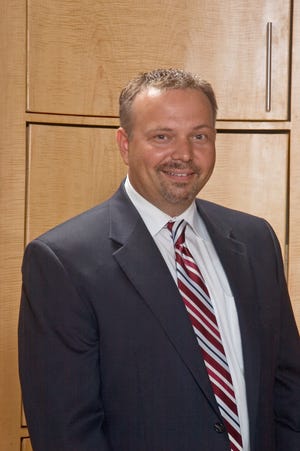
Brian Weeden has been elected tribal council chairman of the Mashpee Wampanoag Tribe. He said he wants to improve the tribe’s finances and increase transparency in how the tribe operates.


Weeden won by 20 votes, garnering a total of 241 votes to 221 for Nelson Andrews Jr.. Aaron Tobey Jr. received 167 votes, and Robert “Kyle” Bassett had 20. Carlton Hendricks Jr. was elected vice-chairman, Marie Stone elected treasurer and Cassie Jackson elected secretary. 

“I hope the tribe’s future is bright with the newly elected leadership,” Bassett said. “I know everybody that got elected, and I hope that they’re up for the challenge.” 

Weeden is the youngest person to serve as Tribal Council chairman, the head of the tribe’s executive and legislative government branch.

Weeden graduated from Mashpee High School in 2011 and attended Cape Cod Community College. He works for the Mashpee Department of Public Works as a custodian at the K.C. Coombs School. 

For years, Weeden has been involved in both tribal and town organizations, such as the Mashpee Conservation Commission and the Mashpee Historical Commission. He was most recently elected to the Mashpee School Committee. He is also on Mashpee’s Town Seal Design Committee, and is representing the Mashpee Wampanoag Tribe on the state seal commission.  

In 2009, Weeden founded the Youth Council, and created the Mashpee Youth Commission in 2019 to give young people a voice and experience in tribal and local politics. 

Weeden said his main priority is to restore unity in the tribal community by talking with members and listening to them, he said. He said he plans to organize more unity conferences and ceremonial gatherings. Hendricks, the vice-chairman, also wants to have an open, transparent government where members are aware of what is going on, he said.

Weeden said another goal is to preserve and emphasize the tribe’s culture through more language classes and cultural programming, such as summer camps and Quahog Day for children. He said the tribe used to have a toddler hour at the tribal museum, where day care providers would come in with their children, and a member of the Mashpee Wampanoag Tribe would host a cultural activity. 

Weeden and Hendricks say they also want to find ways to improve the tribe’s financial status through the implementation of a finance committee as well as find new streams of revenue.  

The tribe has been in a dire financial situation for years, and with the plans to build a Taunton casino halted, there is a serious need for economic development.

Weeden’s past two predecessors, Cedric Cromwell and Glenn Marshall, were both indicted on felony charges while in office. Cromwell is currently facing bribery and extortion charges, and Marshall pleaded guilty to several charges in 2009, including embezzling nearly $400,000 from the tribe.

Weeden said he hopes to turn the tide and restore the tribe’s integrity.

“The Cromwell administration left the tribe devastated,” said Hendricks, who has a couple of plans to bring economic development to the tribe, although he declined to provide specifics until he shares them with tribal members and the Tribal Council. He hopes to see two viable economic plans bringing in revenue to the tribe within two years. 

One of Weeden’s ideas is to create a deer farm in Mashpee. The tribe could replenish the woods and restock the Cape’s game, he said, as there are a lot of tribal members who still hunt. The tribe could sell venison to local distributors, tan the deer hide and make traditional clothing. Another idea is to do canoe tours along Mashpee’s rivers and waterways, Weeden said. 

Now also president of the Mashpee Wampanoag Tribe’s Gaming Authority, Weeden plans to get input from members of the tribe and the Tribal Council about what route the tribe plans to take with its casino projects. 

Weeden said he plans to put policies and procedures in place so the tribe “can never be in this situation again.”

“I think people that do wrong by the tribe should not be allowed to receive services” or be a part of the tribal government, he said. 

As someone who attended White House gatherings as a tribal youth delegate, Weeden said he plans to continue making sure the tribe is represented on a national level and build relationships with potential economic partners, he said. 

And at a local level, Weeden said he will also negotiate with the Town of Mashpee and review their intergovernmental agreement, and make sure the town is consulting with the tribe on matters such as development projects. 

Tribal members continue to get harassed for practicing their aboriginal rights to fish and hunt, Weeden said. Members have been arrested for trespassing while trying to access waterways. The Mashpee Pond, for instance, is locked, and Weeden plans on working with the Town of Mashpee to improve treatment and access to waterways. 

He also wants to work on the tribe’s land-in-trust status and continue land and restitution negotiations with the commonwealth. The tribe’s constitution also needs to be reformed, he said. Certain clauses about Tribal Council requirements and tribal enrollment should be amended to give more power to tribal members, he said.

“The constitution took away the voice of the people and gave a lot of power and authority to the chairman and the council,” Weeden said. 

“This administration is going to lead the way for future generations and get everything back in order around here, culturally, spiritually, physically, mentally,” Weeden said. “And do what’s right by our people.


Friday, April 2, 2021

Cromwell, DeQuattro plead not guilty to bribe, extortion, tax charges


Cromwell, DeQuattro plead not guilty to bribe, extortion, tax charges


Jessica Hill Cape Cod Times
Published Apr 2, 2021 

BOSTON — Cedric Cromwell, former tribal council chairman of the Mashpee Wampanoag Tribe, and David DeQuattro, owner of a Rhode Island architectural firm that worked with the tribe, pleaded not guilty Thursday during their arraignment in U.S. District Court on charges of bribery and extortion, and, for Cromwell, filing false tax returns.

Cromwell, a 55-year-old Attleboro resident, was charged in March with four counts of filing a false tax return on top of other charges of bribery and extortion from November. He and DeQuattro were each indicted by a federal grand jury in November on two counts of accepting or paying bribes as an agent of an Indian tribal government, and one count of conspiring to commit bribery. Cromwell was also indicted then on four counts of extortion under color of official right and one count of conspiring to commit extortion.

Cedric Cromwell, former tribal council chairman of the Mashpee Wampanoag Tribe, on Thursday pleaded not guilty to federal charges related to a casino project.

They both had pleaded not guilty to the November charges, but were back in court Thursday after the "superseding indictment" was returned alleging the further tax-related charges against Cromwell.

The charges are in connection with the tribe’s plans to build a resort and casino in Taunton. DeQuattro’s company, Robinson Green Beretta Corp., was contracted to serve as the “owner’s representative” for the tribe for its casino project, and the indictment alleges that Cromwell used his role as chairman of the tribal council and his role on the tribe’s gaming authority to ensure that DeQuattro’s company would remain the representative for the project. 

DeQuattro allegedly provided Cromwell with a stream of payments and benefits valued at about $57,549.37. In exchange, DeQuattro’s company was paid approximately $4,966,287.16 under the contract between July 2014 and February 2018, the indictment alleges. 

Thursday's arraignment, conducted via Zoom teleconference, was on the superseding indictment for the tax charges. Cromwell on Thursday pleaded not guilty to all charges, including both the original bribery and extortion charges as well as the new tax charges. DeQuattro also pleaded not guilty on his charges from November.

David DeQuattro, owner of a Rhode Island architectural firm, on Thursday pleaded not guilty to federal charges related to a casino project.

The defendants argued during the hearing that Judge Marianne Bowler should grant a motion for what is called a “bill of particulars,” saying that the plaintiff’s indictments were vague about the allegations and requesting more specific details about what happened. 

DeQuattro’s attorney, Martin Weinberg, wanted to know what exactly the government claims Cromwell communicated to DeQuattro as well as the times, places, manner and means by which the criminal conduct allegedly occurred.  


“Despite the allegations, there (are) no specifics as to what Mr. Cromwell told Mr. DeQuattro,” Weinberg said in the hearing. 

Prosecutor Christine Wichers countered that the 23-page indictment and the 31-page superseding indictment offer many details, including dates and payments. She said that she has produced all of the discovery on the underlying charges, although not yet on the recent tax charges, which will be submitted within two weeks.

Another hearing for Cromwell will be scheduled when the discovery evidence is presented on the tax charges.

The next status conference is scheduled for 3 p.m. May 18. In the interim, Bowler will send the case up to trial judge Douglas Woodlock to begin setting a date for the trial. 

When the case does go to trial, Wichers plans to call 30 witnesses and estimates the trial will last two weeks.  

On Thursday, Weinberg also filed a motion for the production of exculpatory evidence — or evidence that would free DeQuattro from blame — asking that the court review a limited subset of the discovery that includes the statements and testimony of Joseph Beretta, the former president of Robinson Green Beretta Corp.

Beretta is the government’s cornerstone witness in the case, Weinberg said during the meeting. 

Weinberg said that when Cromwell asked DeQuattro for a donation on June 25, 2014, DeQuattro did not immediately write a check. He went to his company’s then president, Beretta, and they discussed the request for the donation. Beretta went to the company’s longtime attorneys and asked for legal advice, Weinberg said. 

The attorneys provided opinions approving and/or not prohibiting or discouraging those donations, Weinberg wrote in the motion filed March 15. He argued that some of the attorneys told Beretta to proceed with caution and make sure the entity they were donating to was in good standing.

Beretta authorized each of the subsequent donations that DeQuattro made to Cromwell, Weinberg said. He authorized that in action and in words because he reimbursed DeQuattro, Weinberg said. 

“This goes right to (DeQuattro's) good faith,” Weinberg said. “Did he give these donations as a corrupt bribe, or as a good faith campaign or political donation?”

Weinberg asked the court and the government to take Beretta’s statements and see that it shows DeQuattro was acting in good faith and could be "exculpatory" for DeQuattro. 

Wichers said that Beretta’s statements do not include anything that would be exculpatory other than what she already disclosed in the discovery.

Bowler took the motion for a bill of particulars under advisement and denied the defendants’ motion for exculpatory evidence.  

The defendants also filed motions Thursday for a speedy trial, describing the harm that could come by waiting longer. Weinberg was concerned the delay could be nearly a year because of additional discovery and motions related to the tax charges against Cromwell.  

DeQuattro’s architecture firm has suffered a substantial loss of business as a result of the government’s allegations, Weinberg wrote in a motion. DeQuattro’s company had a contract canceled with Johnston, Rhode Island, schools for a project that was going to generate millions of dollars in fees, Weinberg wrote. 

“Continued delay of these proceedings will only cause further damage, quite possibly irreversibly so, to Mr. DeQuattro’s business interests,” Weinberg wrote. 


Saturday, March 27, 2021

Indictment: Cedric Cromwell failed to report alleged bribes as income


Indictment: Cedric Cromwell failed to report alleged bribes as income


Jessica Hill Cape Cod Times
Published Mar 24, 2021 

BOSTON — Cedric Cromwell, former tribal council chairman of the Mashpee Wampanoag Tribe, has been charged with filing false tax returns on top of pending bribery and extortion charges. 

A federal grand jury in Boston returned a superseding indictment Monday with the new charges, acting U.S. Attorney Nathaniel R. Mendell announced in a statement Tuesday night, along with the Federal Bureau of Investigation and Internal Revenue Service criminal investigation divisions in Boston.

Cromwell, an Attleboro resident, was charged with four counts of filing a false tax return, bringing the total number of charges he faces to12. He is scheduled to be arraigned on the new charges on April 1 before Magistrate Judge Marianne B. Bowler in federal court in Boston. 

The superseding indictment alleges that between 2014 and 2017 Cromwell failed to report a total of $177,392 on his tax returns. That includes $39,000 of personal income in 2014; $57,374 in 2015; $26,884 in 2016; and $54,134 in 2017.

Cedric Cromwell

Cromwell's attorney, Tim Flaherty, said Wednesday that the "recent indictment relates to tax irregularities that have no overlap and no connection to the early allegations."

“Chairman Cromwell looks forward to presenting a vigorous defense to the extortion and bribery claims and continues to state his innocence," Flaherty said.

Cromwell was charged with bribery and extortion in November along with David DeQuattro, 54, the owner of a Rhode Island architecture firm, in connection with the tribe’s plans to build a resort and casino in Taunton. 

Cromwell, 55, and DeQuattro were each indicted on two counts of accepting or paying bribes as an agent of an Indian tribal government and one count of conspiring to commit bribery, according to Mendell's statement. Cromwell was also indicted on four counts of extortion under color of official right and one count of conspiring to commit extortion.

When Cromwell filed his personal income tax returns for tax years 2014 through 2017, he failed to report bribes that he allegedly received from DeQuattro’s company, Robinson Green Beretta Corp., which was contracted to serve as the tribe’s “owner’s representative” for the casino project, according to the superseding indictment. 

The indictment alleged that DeQuattro provided Cromwell with a stream of payments and benefits valued at about $57,549.37. In exchange, DeQuattro’s company was paid approximately $4,966,287.16 under the contract between July 2014 and February 2018. 

Cromwell did report receiving $180,377 in salary from the tribe in 2017 in his federal personal income tax returns, which he filed jointly with his wife, the indictment states. 

Cromwell is accused of failing to report payments for consulting services he performed for a company that developed and supplied forest carbon offsets. 

While being questioned in a civil lawsuit in 2018, Cromwell said he was a consultant/owner for three limited liability companies, and more specifically a “consultant on carbon sequestration and an Indian Country liaison to Tribal Carbon Forestry Markets,” according to the indictment. 

Cromwell was paid the consulting income through an intermediary identified as “P-Co.”, which was formed by a lawyer who was one of Cromwell’s business associates, the statement says. That associate was the only authorized signatory on a bank account identified as the “P-Co. Shell Company Account,” according to the indictment.

Cromwell also failed to report income made by his company, One Nation Development, which was paid through the P-Co. account and the bank account of a Florida limited partnership that originated with an investment holding company in Las Vegas, the indictment said.

On multiple occasions between December 2014 and January 2016, the Las Vegas investment holding company wired money to the Florida limited partnership, which wired money to the P-Co. Shell Company Account. P-Co. then wired money to the One Nation Development account controlled by Cromwell, the indictment alleges.

The only authorized signatory on the investment holding company’s bank account was the CEO of a Las Vegas-based architecture firm hired to be the architect for the tribe’s casino project, the indictment says. 

If found guilty, Cromwell could face up to three years in prison, one year of supervised release and a fine of $100,000,according to the statement. Cromwell and DeQuattro could have to forfeit any property constituting or derived from proceeds traceable to the offenses. 

Cromwell was first elected to the tribal council in 2009 and was reelected in 2013 and 2017.

When Cromwell was initially charged with extortion and bribery, the council voted to remove him from his post as chairman. But some tribe members had already been pressuring the tribal council for the previous few years to remove Cromwell.

Petitions bearing the signatures of 100 registered tribal voters were certified April 2019 calling for Cromwell’s resignation or removal, along with the removal of Treasurer Gordon Harris.

For several months before the indictment was returned, a grand jury subpoenaed the tribe multiple times for records from 2013 to 2020. Those records include Cromwell’s personnel records, the tribe’s financial records and expenditures, election records and internal communications between the tribe's Gaming Authority and its partners, including the Robinson Green Beretta Corp. and Genting Malaysia, the tribe’s financial backer that invested $440 million into the casino project.

In October 2020, another petition signed by 35 tribe members requested Cromwell's removal. 

"Cromwell’s conduct is a breach of public tribal trust and an abuse of authority," the petition stated. "Cromwell has been dishonest and exercises a lack of integrity by his unwillingness to be transparent about the $500 million dollars that was borrowed from the investors. He is and has been a target of a federal investigation and has not been transparent about it either."

Cromwell would not be the first tribal council chairman to be convicted of filing false tax returns if he is found guilty. The council's prior chairman, Glenn Marshall, was sentenced to 3½ years in federal prison after pleading guilty to embezzling nearly $400,000 from the tribe to pay his own bills, making illegal campaign contributions, filing false tax returns and fraudulently receiving Social Security benefits while holding a full-time job. 

“The new charges are extremely serious, and we are watching the proceedings closely,” Tribal Council Vice Chair Jessie “Little Doe” Baird said in a statement. “Of course, we will continue to work with the U.S. attorney’s office.” 


MIDDLEBORO REMEMBERS

Wednesday, September 7, 2016

Miccosukees lose $1 billion bet with IRS


SEPTEMBER 5, 2016 3:30 PM

Miccosukees lose $1 billion bet with IRS

Read more here: http://www.miamiherald.com/opinion/op-ed/article99907442.html#storylink=cpy


Thursday, August 18, 2016

'I'm ashamed,' ex-Sandusky lawyer Karl Rominger says as he gets state prison for stealing $767K


VIDEO ON LINK

'I'm ashamed,' ex-Sandusky lawyer Karl Rominger says as he gets state prison for stealing $767K

By Matt Miller 
August 17, 2016


In in his heyday as a defense attorney, Karl Rominger was aggressive, even brash on behalf of his clients.

A far more humble, even tearful Rominger stood before a judge in a Cumberland County courtroom Wednesday afternoon and received a 5 1/2- to 18-year state prison sentence for stealing more than $767,000 from his clients.

The pilfered money, some of which was stolen from an estate that helps finance the Bethesda Mission for the homeless in Harrisburg, went to feed his gambling addiction, said Rominger, who was part of the defense team for Jerry Sandusky's child-sex trial.

"I'm ashamed. I'm very ashamed of what I've done," the 43-year-old Carlisle man told Adams County Judge Michael George, who presided specially in the case. "It's something I can't undo, I can't take back."

"When you gamble, it feeds itself," Rominger said, choking up. "Someday I'd like to make it all right."

Rominger, who has surrendered his law license, seemed stunned when George announced his punishment.

It could have been worse. First Assistant District Attorney Jaime Keating asked for a 7 1/2- to 15-year prison term, citing the wave of harm the thefts caused to Rominger's clients. That damage was mitigated only partially by payments from the Pennsylvania Lawyers Fund for Client Security that made some of the 18 victims financially whole, Keating said.

George did honor Keating's request for an 18-year probation sentence in addition to the jail time.

Keating questioned whether gambling was the sole motivation for the crimes. Avarice was its accomplice, he said.

"It was more than just gambling. It was living the high life beyond his means," Keating said. "This defendant used his law license as a license to steal."

He called a defense proposal for a sentence that would have allowed Rominger enough liberty to keep working so he could pay installments on restitution "unrealistic," given the amount of money that was stolen.

Rominger didn't lack support as he awaited his fate. Defense attorney Heidi Eakin asked those crowded into the courtroom to stand if they were there on Rominger's behalf. Thirty-two people, well over half the crowd, stood up.

Eakin said Rominger has undergone "rather intensive therapy" for his gambling addiction, which first gripped him in 2010. Also, she said, he has filed documents with the state gambling commission to bar him from even entering any Pennsylvania casino for the rest of his life.

"This gambling has led Karl to lose pretty much everything," Eakin said. His remaining assets, except for a $1,500 pickup truck, "would fit into a corner of this courtroom," she said.

Keating called several victims to make impact statements. Natasha Humphreys-Alamo, told how Rominger diverted an insurance settlement her hard-pressed family was to receive from an auto accident.

"That insurance settlement was all we had," she said. Rominger betrayed her not only as an attorney, but as a friend, Humphreys-Alamo said. Like Keating, she said she believes high living as much as gambling caused the thefts.

"I believe Karl got caught up in the business of being a good, upscale attorney," she said. "Our money is what paid for that."

Still, she said she doesn't hate Rominger and didn't want him to receive a long jail term, especially for the sake of his young son. "But I do believe there has to be a punishment for this crime," she added.

Chuck Wingate, Bethesda Mission's executive director, said Rominger's thefts from the estate cost the charity $75,000 to $100,000 in income, forcing it to deplete its reserves to meet an ever-growing need.

"Our clients and guests are the most vulnerable people in town," he said. "As Christians, we have forgiven Mr. Rominger. But we do know that actions have consequences."

In passing sentence, George said he believes Rominger's remorse is genuine. Still, the judge said Rominger's "breach of trust" can't be ignored.

"You have caused a lot of harm to a lot of people," George said. 

Rominger's legal troubles didn't end when sheriff's deputies slapped him in handcuffs, loaded him in a van and drove him off to prison. 

He still faces sentencing in federal court on his guilty plea to $116,000 worth of federal tax fraud charges for not reporting his stolen income to the IRS.


Monday, June 6, 2016

Casino M8trix owner fined millions by state gambling regulators, stripped of gaming license


Casino M8trix owner fined millions by state gambling regulators, stripped of gaming license

Jun 5, 2016


San Jose's Casino M8trix is setting records for all the wrong reasons.
On May 26, the California Gambling Control Commission stripped M8trix owner Eric Swallow of his ownership license and fined him a record $13.7 million for violating state gaming regulations. Chief among these was misleading regulators about the nature of, and financial ties to, companies the card room paid over $80 million from 2009 to 2013, according to Commission documents.
Swallow could still be in good financial shape even after paying, according to the decision, which cites an unnamed potential purchaser estimating the value of Swallow's 50 percent stake at $50 million. Swallow has already declared his desire to sell his stake, and one potential buyer is John Park, who owns five card rooms in California and filed for an ownership license with San Jose in April 2015.
It's not a surprise Swallow was stripped of his license. I n December, an administrative law judge recommended the Commission take that action based on an investigation by the Bureau of Gambling Control. But the size of the penalty dwarfs the judge's recommended $430,000 amount.

The decision goes into effect June 27, but the story may not be over.
In an email, Swallow's attorney Allen Ruby wrote that his client intends to challenge the decision, most likely in Superior Court, and that the first steps in that process will take place within the next 60 days.

The huge penalty blows away the previous record $1.5 million fine levied against (wait for it) Casino M8trix and co-owner Peter Lunardi in May 2015 for related accusations. That fine was part of a settlement with Peter and his wife Jeanine Lunardithat allowed them to keep their gaming licenses. The Lunardis control the other 50 percent of Garden City Inc., the entity that owns M8trix.

In 2008, Swallow and the Lunardis set up three limited liability companies in Nevada, which does not have an income tax, to ostensibly provide software, table games and consulting services to Garden City Casino, the card room that was replaced by M8trix in 2012. From 2009 to 2013, these LLCs received $81,762,000 from Garden City.

The Commission found that Garden City paid well-over market prices for the services rendered by the LLCs and that a significant amount of the payments were in reality distributions of profits to entities not licensed by the Commission, a practice prohibited by California's Gambling Control Act.

To be clear, setting up the LLCs was not found to violate state regulations, and the distributions to the LLCs were not part of the formal accusations filed by the Bureau that formed the basis of the case. But giving misleading information to Bureau agents does violate the Act.

One accusation upheld by the commission has to do with Dolchee LLC, which received more than $47 million from 2009 to 2013, according to the Bureau.

The Bureau stated that Swallow said the large payments were justified by gaming analytical software provided by Dolchee to manage Garden City operations. Peter Lunardi, former Garden City CFO Deven Kumar and former accountant Jerome Bellotti (who helped set up the LLCs) said they were unaware this software existed, and thought Dolchee only licensed the use of their games like "Baccarat Gold" and "Pai Gow Tiles" to the card room.

Furthermore, Lunardi and Kumar have previously testified that there were payments to Dolchee that were distributions of profits, not for services.

The commission stated "when an applicant and owner misrepresents the nature of his cardroom’s financial relationships, makes distributions to unlicensed entities, and misrepresents corresponding material facts, he obstructs the statutory oversight of both the (Bureau) and Commission ... (Swallow's) conduct collectively was a clear violation of the (Act)."

One point Swallow plans on contesting in court is the size of the $13.7 million fine. Ruby wrote that the amount is because individual violations have a $20,000 maximum which, if followed, would have resulted in a fine of a few hundred thousand dollars.

The Commission acknowledges the $20,000 limit on legally defined "fines," but states that the $13.7 million is a "penalty," which does not have any limits.

The Swallow decision came almost four weeks after former M8trix compliance officer Bob Lytle, also the former chief of the Bureau, reached a settlement with the Commission that resulted in his ownership licenses for two Sacramento-area card rooms being revoked and a fine of at least $75,000.