Meetings & Information


*****************************
****************************************************
MUST READ:
GET THE FACTS!


Showing posts with label Holyoke. Show all posts

Sunday, May 11, 2014

How much more evidence do we need?


Justice hearing casino repeal case tied to Suffolk Downs


Monday, November 11, 2013

Repeal The Casino Deal


http://www.masslive.com/politics/index.ssf/2013/11/holyoke_anti-casino_residents.html#incart_river

Comment section:
At a regional meeting of Surrounding Community representatives with Catherine Blue, MGC General Counsel held in Monson on Friday, November 8, 2013, at which there was no Masslive.com/Republican journalist present, the group was told by Ms. Blue that the MGC did not have to award a license to western Massachusetts (region 1.) The statute reads may license, "up to three class 1 casinos and 1 slots parlor."
...

In the event that MGM is found unsuitable - which has a measure of probability given that MGC has had to spend extraordinary amounts of money investigating MGM (compared to competitors) along with the baseline set with Caesars unsuitability and Atlantic City, NJ casting MGM out of the state due to it's partnership with foreign criminals.....it is not known at this juncture what the outcomes may be.

If there were any sense on Beacon Hill - which there is not as evidenced by the Speaker's own district kicking his Suffolk Downs patronage bill in the teeth, the state would have authorized at most 1 casino in a market that was already tanking and saturated. The economic feasibility of a profit to the state and taxpayers is nil at this juncture. Predatory gambling takes more wealth and incurs more costs than it delivers or mitigates.

Who gets the 9% horse-racing welfare benefit in the casino law now that the ponies are going to pasture? Maybe the brain-trust could find something more critical to fund than an archaic industry.......like wounded Veterans, sick children, elderly in need
 
 
Holyoke anti-casino residents glad voters rejected non-binding gaming question but still cautious


HOLYOKE -- Some of the dice tumbled right, but not all of it, so anti-casino residents are urging caution.

The good news from the perspective of Citizens for a Better Holyoke was that voters here said no on Tuesday to a non-binding question on the ballot that asked, “Should the city of Holyoke have a resort style gaming casino?”

They voted no by 61 percent to 39 percent, or 5,645 votes to 3,536 votes.

Also, Mayor Alex B. Morse was re-elected to a second term in Tuesday's election. Morse's opposition to a casino in Holyoke means he would not negotiate a host-city agreement with a casino developer, which under state law is necessary for a gaming plan to proceed in a community.

"With yesterday's election, Holyoke voters made it absolutely clear that they did not want a casino in Holyoke's future," John Epstein of Citizens for a Better Holyoke said in an email Wednesday.

But Holyoke voters twice said "yes" to nonbinding questions welcoming a casino, in 2002 and 1995.

The caution lies in what happened in Palmer and West Springfield and what could transpire in Springfield, Epstein said.

Under a November 2011 law, licenses will be issued for up to three casino resorts in the state, including one in Western Massachusetts.

Palmer voters stunned some people Tuesday by voting against Mohegan Sun's $1 billion casino resort proposal that had been pitched there since 2007. The plan failed with 2,657 casting no votes and 2,564 voting yes, and Mohegan is seeking a recount.

West Springfield voters voted down a referendum regarding Hard Rock Casino's proposal for that city Sept. 10.

Springfield voters approved the host community agreement between the city and MGM Resorts International for a gaming resort there on July 16.

What concerns anti-casino residents here is if MGM fails the state Gaming Commission background check and is rejected. That would leave Western Massachusetts without a suitable casino company to grant a license, and that would reopen the region to casino plans, Gaming Commission Chairman Stephen P. Crosby told The Republican Oct. 25.

“In the unlikely event that no Western Mass. applicant made it to the commission’s final application phase, the Massachusetts Gaming Commission would start the process over again in Western Massachusetts," Crosby said.

That means, said Epstein, "While we can celebrate our victories today, we will need to remain vigilant in the future."

Michael Mathis, MGM vice president of global gaming development, said Wednesday the company was confident about its casino plan.

MGM’s suitability hearing has not been scheduled yet, but is likely to happen by the end of this month, Gaming Commission spokeswoman Elaine Driscoll said.


http://www.masslive.com/politics/index.ssf/2013/11/holyoke_anti-casino_residents.html#incart_river


Saturday, November 2, 2013

Why a Potential Casino in Holyoke is NOT a One-Act Issue

This is so true of ANY community!

"THEY" never go away!

Protecting your community from Predatory Gambling and its adverse affects never diminishes.


Why a Potential Casino in Holyoke is NOT a One-Act Issue-
Both a casino development and the process to review casino plans eats up millions of dollars, people’s time, our public official’s time. Time that could be better spent, and should be spent in addressing the issues of education, safety, employment, housing, drug abuse and rehabilitation, healthcare, and productive types of development with long lasting benefits.

 Here’s how that happens and why casino development is somewhat unique in this:
1. The very process of reviewing casino proposals is very costly. It needs to be very extensive, as these complexes are very large and come with many inherent negative issues. It requires a close look at issues of traffic, zoning, building codes, alcohol licensing, security, over sight of pot...
ential illegal practices associate with gambling, and on and on. Many departments of a city and state government will be tied up for some length of time to get even close to an accurate assessment of a plan. And even then it is still hypothetical. This is why CFBH was concerned about a referendum vote that could open up the process of these unusually costly reviews, not because we wanted to silence voices. This casino review process has a reputation of so severely dividing a community, that even after the casino is gone, or the plan is denied, the division still lasts.
2. Mitigation – is the process for reviewing the many, many known negatives associated with casinos including increased crime, increased substance abuse, decreased property values, increased traffic, etc, then deciding how to compensate for the destruction. The very fact that we have to create a paid Massachusetts Gaming Commission, and that mitigation for this industry is expected, should be a RED Flag for this “industry”. How time and cost effective is this… to bring in an industry that you know from the beginning has massive amounts of negatives in the first place?
3. Casino developers have massive amounts of money to sink into propagandized marketing as compared to the budget of the towns they wish to develop in. So who do you think is going to win that war of persuasion and information? They can say anything, make any promises of potential jobs and revenue, and then when their promises don’t come true, they are not accountable as it is all hypothetical.
Again, all this time and money could be used in reviewing and implementing a balanced type of development that doesn’t have all the common negatives associated with it , we wouldn’t waste time and money correcting the known problems it brings and the cost of continual oversight in watching over activity of a casino. We could be using that time and money to enhance our police and fire departments, school system, streets, healthcare, entertainment, and general quality of life.
See More


Holyoke's Mayoral Election


As Holyoke election looms, mayoral candidate Jeff Stanek says his casino opposition has been consistent, which Mayor Alex Morse disputes

2013 alex morse vs jeff stanek.jpg
Mayoral candidate Jeff Stanek, right, said Friday he has "consistently opposed" a casino here despite assertions to the contrary about his position by Mayor Alex Morse, left. (The Republican [file])
 
Mike Plaisance, The Republican By Mike Plaisance, The Republicanmasslive.com
Email the author | Follow on Twitter
on November 01, 2013 at 7:36 PM
 
HOLYOKE — Mayoral candidate Jeffrey A. Stanek said Friday he has "consistently opposed" a casino here despite assertions to the contrary about his position by Mayor Alex B. Morse.

"I will not seek or entertain a casino for Holyoke if I am elected. We cannot allow this issue to divide our city," Stanek said in a press release.

"I have consistently opposed casino development for Holyoke. Statements from my opponent to the contrary are simply not true," Stanek said.

Holyoke appears to be out of the hunt for the sole gaming-resort license that the state Gaming Commission will grant for Western Massachusetts. But the issue's zombie-like ability to keep rising is underscored by a nonbinding question voters here Tuesday will face on the Election Day ballot asking, "Should the city of Holyoke have a resort style gaming casino?"

Voters approved similar casino questions here in 2002 and 1995.

Where Morse has wrongly presented his position on casino gambling, Stanek said in an email, is by saying that Stanek's vow to at least to listen to Holyokers who favor a casino means a Stanek administration would welcome a gaming resort here.

"I am personally against it, I will still not seek a casino developer. Listening does not mean I'm accepting casino gambling. We must make sure Holyoke is at the table for any spin-off benefits from Springfield or Palmer. It is going to one of two cities, not Holyoke. What is the point of allowing citizens to vote if our elected officials are close-minded?" Stanek said.

But, Morse said, Stanek himself has made statements that leave the door open to considering a casino proposal.
 
In a Sept. 12 interview with The Republican, Stanek said: "What's it hurt to try to get a good plan to see what it's like? But I think that's going to be a little bit of the difference with me. I'm going to put some personal feelings aside and do what the voters asked for. At least do my research and my due diligence on it, and see what happens from there."
 
I am personally against it, I will still not seek a casino developer. Listening does not mean I'm accepting casino gambling.
- Jeff Stanek

At an Oct. 30 debate on WWLP TV 22, Stanek reiterated his opposition to a casino here, but also said, "... the reality of it is, you know, we need taxable jobs here in the city of Holyoke. We need to increase our taxable base, and we can't be closed-minded to things either."

Morse said, "I’m glad my opponent agrees with my position, one that has remained clear and unchanged all campaign. However, I would challenge that his position has been consistently opposed to a casino development in Holyoke."

Stanek has said casino gambling is one of the issues on which Morse has flip-flopped. Morse a year ago announced he would consider casino proposals, after having won the 2011 election opposing a casino. But Morse said the brief consideration was exploratory and he remains opposed to a casino here.

Stanek's statement that he would be willing to listen to voters if Tuesday's casino question passes, said Morse, "seems to be a classic flip flop."

Morse said Stanek was wrong in saying Holyoke has been uninvolved in talks to ensure the city participates in a surrounding-community agreement to benefit from a neighboring casino.

http://www.masslive.com/politics/index.ssf/2013/11/as_holyoke_election_looms_mayo.html


Sunday, October 27, 2013

Suffolk-Caesars split rattles nerves

The Massachusetts Gambling Commission process was flawed.

The Rushed Votes should NOT have taken place before background checks were completed.

In the case of Springfield, too much was conducted behind closed doors, without adequate discussion. Any information that might disqualify MGM was publicly known prior to Springfield's rush.

Too much Casino KoolAid consumption!


CASINO ALERT: BOSTON HERALD - YESTERDAY - GO TO CITIZENS FOR A BETTER HOLYOKE FB GROUP SITE FOR MORE INFO -"In Springfield, meanwhile, officials are also sounding the alarm, firing off a letter to the gaming panel asking if it can replace MGM if the Las Vegas gaming behemoth fails its background check, the Springfield Republican reported.

MGM pulled out of its Atlantic City casino in 2010 after gaming regulators there deemed an MGM partner unfit to hold a license because of her father’s reputed organized crime ties in China.

- See more at: http://bostonherald.com/news_opinion/local_politics/2013/10/suffolk_caesars_split_rattles_nerves#sthash.pE2eHzBq.dpuf


Suffolk-Caesars split rattles nerves


Expert: Wynn, MGM ‘have reasons to be worried’
Wednesday, October 23, 2013
By: Dave Wedge

As Suffolk Downs scrambles to find a new gaming partner, officials in other potential casino towns are raising concerns that Caesars’ failure to pass muster with state regulators is a bad omen for other projects.

Milford Selectmen Chairman William D. Buckley fears Foxwoods, which has had financial problems and seen tribal members indicted for embezzlement, will have a tough time making it through the state gaming board’s background check.

“The Massachusetts Gaming Commission has certainly set a high bar, and Foxwoods will have its challenges,”

Buckley told the Herald last night.Foxwoods spokesman Stephen Oakes brushed off those concerns, saying, “We’re completely confident our standards of integrity, fair business practices and diversity will meet the standards established.”

In Springfield, meanwhile, officials are also sounding the alarm, firing off a letter to the gaming panel asking if it can replace MGM if the Las Vegas gaming behemoth fails its background check, the Springfield Republican reported.

MGM pulled out of its Atlantic City casino in 2010 after gaming regulators there deemed an MGM partner unfit to hold a license because of her father’s reputed organized crime ties in China.

“MGM has been granted licenses to operate in jurisdictions across the U.S. and around the world and we see no legitimate reason why we would not be granted one in Massachusetts,” MGM vice president Alan Feldman said.

Caesars and Suffolk Downs suddenly parted ways last week over red flags that surfaced in a state gaming board background investigation. The report, which is slated to be released today, flagged a Caesars business partner with reputed ties to a Russian crime ring, as well as Caesars’ $24 billion in debt, officials said.

Caesars, which has won licenses in Ohio and Maryland in the past year, has blasted the state commission for setting an “impossible standard.”

Experts say the findings don’t bode well for MGM or Wynn, which is seeking a $1.4 billion Everett casino.

“Wynn and MGM have reasons to be worried,” said Boston College sociology professor Richard McGowan, a gaming expert.

Wynn spokesman Michael Weaver said: “We are continuing to move our application onward and look forward to the process.”

Suffolk Downs CEO Chip Tuttle, meanwhile, said the East Boston racetrack is continuing talks with several “top-class” gaming operators.

- See more at: http://bostonherald.com/news_opinion/local_politics/2013/10/suffolk_caesars_split_rattles_nerves#sthash.pE2eHzBq.xjTXdMoF.dpuf

Holyoke: "Should the city of Holyoke have a resort style gaming casino?"

No community in the Commonwealth will ever be safe until we REPEAL THE CASINO DEAL!

Holyoke voters face nonbinding questions on casino gambling, needle exchange on Election Day ballot


HOLYOKE -- It's not just politicians on the Election Day ballot here Nov. 5 as voters also will be asked to vote on nonbinding questions regarding casino gambling and needle exchange.

Question 1 asks, "Should the city of Holyoke have a resort style gaming casino?"

Question 2 asks, "Should the city of Holyoke have a needle exchange program?"

Voters approved nonbinding casino questions here in 2002 and 1995, and rejected needle exchange in a nonbinding question in 2001.

City councilors voted in January to put the casino question on the ballot and in June to add the needle exchange question. Councilors said voters deserved a say on casino gambling and needle exchange despite decisions by Mayor Alex B. Morse.

Under a November 2011, licenses will be issued for up to three casino resorts in the state, including one in Western Massachusetts.

The gaming law requires that a developer reach a host-city agreement with a mayor or other community leader in order for such a project to proceed to a community vote. Morse wavered in November when he briefly said he would consider casino plans, but remains opposed -- and that means a casino project cannot move forward here as long as he is mayor.

Springfield voters approved the host community agreement between the city and MGM Resorts International for a gaming resort there on July 16. Palmer voters will decide a similar question on Nov. 5 regarding Mohegan Sun's plan off the Massachusetts Turnpike.

Councilors said Morse's opposition was unfair to Holyokers who wanted to give their current opinion about casino gambling, so they voted to offer the nonbinding question.

"It's a good opportunity for the citizens of Holyoke to have their voices be heard," Ward 2 Councilor Anthony Soto said during the Jan. 15 meeting.

Ward 7 residents have been vocal in fighting a casino here because previous plans have envisioned a gaming resort on the Mount Tom range.

John Epstein, of Harvard Street, said he is among those hoping Holyokers vote down the nonbinding casino question. The same negatives apply, he said: A casino would increase traffic and reduce property values. And, with two casinos permitted elsewhere in Massachusetts and casinos in adjoining states, revenue would be scarce, he said.

"They're just pulling the money out of the local economy," Epstein said.

Despite Holyoke currently being out of play, casino foes remain concerned. What if, they've asked, MGM fails the state Gaming Commission background check and is rejected, and then Palmer voters say no on the casino question there? Would that scenario put a Holyoke proposal back in play?

“In the unlikely event that no Western Mass. applicant made it to the commission’s final application phase, the Massachusetts Gaming Commission would start the process over again in Western Massachusetts," commission chairman Stephen P. Crosby said in an interview Friday.

While Crosby initially told a reporter, "We don't anticipate that being the case," he went on to explain: "We just have no anticipation one way or the other. We have no data on what the vote is going be like in Palmer. We don't have a background check yet on MGM, so we have no expectations one way or the other."

MGM officials have said they are confident that the company will be found "suitable" by the commission, passing its background check.

Mohegan Sun officials have also said they are confident their plan will be approved by Palmer voters, though they are not taking the vote for granted.

The state deadline for developers to submit a final resort casino application is Dec. 31.

Under the law's current timeline, communities must allow a 60- to 90-day window between the signing of a host community agreement and the community referendum vote, which is a prerequisite for the final application.


http://www.masslive.com/politics/index.ssf/2013/10/holyoke_voters_face_nonbinding.html


Friday, October 25, 2013

Why Holyoke isn't safe

NO COMMUNITY IN THE COMMONWEALTH WILL EVER BE SAFE
FROM PREDATORY GAMBLING UNTIL WE REPEAL THE CASINO DEAL!

FROM: Lyn Horan
We Are NOT Safe
From The Threat of a
HOLYOKE CASINO
Here's Why:
...

1. The Holyoke City Council has placed a
referendum question on the November
ballot asking if voters approve of placing a
casino in Holyoke.

2. Eric Suher, owner of Mountain Park, was
recently spotted meeting with a casino
executive.

3. Hard Rock Casino, who recently lost their
bid in West Springfield, is searching for
another location and already has a fully
developed plan to build a Holyoke casino at
Wyckoff Country Club on Easthampton
Road. Their plan is ready to go. All they
need is a receptive mayor.

4.Jeff Stanek has said that pursuing a casino
for Holyoke is a good idea. (Alex Morse
previously turned down Hard Rock and is
firmly opposed to bringing a casino to
Holyoke).

5. The Massachusetts gaming law gives the
Mayor sole power to negotiate a deal with
casino developers. They do not need
additional authority from other city entities.

6. There is over a billion dollars
($1,000,000,000) at stake. It would be
foolish to believe that developers, operators
and property owners would simply walk
away from the temptation of this kind of
money without putting up a fight.

7. With the junctions of I-91 and The Mass
Pike on our doorstep, many informed

people believe that Holyoke would be at
the very top of the Gaming Commission's
list – if it is back in play.
8. Any casino developer who has already paid
the $400,000 Phase I application fee to the
state, can pursue a casino in any
community which approves it, including
Holyoke. The Phase I application is NOT
location-specific.

9. Contrary to common misconception,
Springfield does NOT have a lock on the
casino. Just over a year ago everyone was
saying that Palmer had it sewn up and that
Springfield didn't stand a chance. NO ONE
has it locked in, because the final decision
rests entirely with the Gaming Commission
and no one knows which site they will pick.

10. The deadlines posted by the Mass. Gaming
Commission (MGC) are not absolute.
They are described as "likely" target dates.
If the MGC decides to shift the deadline by
just 90 days, Holyoke will be back in play
after this election. That shift is at the sole
discretion of the Gaming Commission.

11. If Palmer voters defeat Mohegan Sun on
November 5th; and if the MGC denies
MGM because of their Macau partnership
with daughter of organized crime leader
Stanley Ho (as happened in New Jersey); or
if the MGC recognizes that traffic on I-91
and the 3 bridges will be unmanageable –
Holyoke will be back in the running.

12. The threat to Holyoke will exist until the
day that the Mass. Gaming Commission
gives final approval to a developer to build
the casino elsewhere. Until that day comes,
we are not safe from the threat of a
Holyoke casino.

Presented by:
Citizens for a Better Holyoke
P.O. Box 6543
Holyoke, MA 01041
CitizensForABetterHolyoke@gmail.com

COMING SOON:
A VOTER’S GUIDE TO THE
CANDIDATES WHO OPPOSE
A HOLYOKE CASINO
See More

Casino referendum in Holyoke gets lost in the mix


Letters to the Editor: Casino referendum in Holyoke gets lost in the mix

Casino table 2012.jpg
Gambling chips sit on a card table at Revel Casino Hotel as a dealer prepares for the casino's opening last year in Atlantic City, N.J. (Wayne Parry / Associated Press file)
 
 
By Letters to the Editormasslive.com
on October 24, 2013
 
Isn’t it odd that with less than two weeks away from Election Day, residents of Holyoke will be voting on a casino referendum, and neither the press nor the candidates are talking about one of the most serious issues to face Holyoke?

Less than two years ago, casinos were a defining issue in the last mayoral race. True, it’s technically a non-binding referendum, but so were the last two and that doesn’t stop politicians from referring to them like political currency.

If this non-binding referendum was so unimportant, why did City Council members, Daniel Bresnahan, Kevin Jourdain, Brenna McGee, Todd McGee, Joseph McGiverin, Anthony Soto, and Linda Vacon push a vote on this issue knowing that three other members (who were likely to vote against it) would be out of town due to serious illness, previously scheduled vacation, and another meeting? If they wanted to give residents a voice, why aren’t they reminding them now to be informed voters on this issue?

Casino applicants do not have to specify a location yet as stated by the Massachusetts Gaming Commission. Casino backers will be vetted by the commission.

MGM is already being questioned about its Macau casino investor, Pansy Ho, whose father has connections to organized crime. Doesn’t look good for their Springfield casino. If we get a mayor who supports casino development after this election, there is still time for casino development in Holyoke. Deadlines stated by commission are stated as “likely.”

Any lawyer will tell you that is calculatedly vague. Alex Morse, for a two-week period considered a casino, then admitted his error, took full responsibility, and has not looked back, including comments made in recent debates.

Jeff Stanek stated he would consider casino development. Stanek claims that he is running on his business expertise but casino development is “monkey business” negatively impacting people across all socioeconomic backgrounds. As a businessman he should also know casino development is a saturated market. If we want to draw in legitimate businesses, consider this, no healthy corporation in their right minds has employees that want to live in a “casino town,” nor do the casino developers. 

-LYN HORAN, Citizens for a Better Holyoke


Saturday, October 12, 2013

The Casino Vultures NEVER Accept NO!


CASINO ALERT AND UPDATE:
Casino development is still a threat to Holyoke:
1. Casino Referendum – Holyoke residents will be tasked with voting concerning development of a casino on Nov. 5th. Though this is a non-binding referendum it will not only be considered by the Massachusetts Gaming Commission in making their decision for placing a Western Massachusetts casino, every public official or potential public official, and every Holyoke resident who votes will use its outcome in decisions made concerning Holyoke’s future.  

 2. Who gets it has not been decided and a specific geographical location did not have to be designated by individual developers when applications were accepted in the Gaming Commission’s Phase 1.
3. Hard Rock Casino is not likely to just give up after losing the West 
Springfield casino referendum for the above stated reason. They already have a fully developed plan (Wyckoff Country Club/Mountain Park) ready to go, and lots of money invested including a non-refundable $400,000 application fee, lawyers’ fees, marketing, etc. And for the developers…they see billions of dollars to be made for themselves that they are not likely to give up on just yet.
4. Prevention and watchfulness is the best strategy for us. A year ago, everyone thought Palmer had it locked up, over Springfield… now look at it.
Most of us were pretty sure in Holyoke that we could avoid a time-consuming and costly casino referendum back in the early spring. But our City Council slipped in a last minute vote on it when 3 City Council members who were likely to vote against it were known to be absent from that meeting.
The Massachusetts Gaming Commission has the final decision in their hands. Who knows what politics or other variables may come to play in that decision.
Would you rather be vigilant in protecting our city from this kind of devastating development, and the casino goes to somewhere besides Holyoke (along with all its problems), or stay asleep and wake up one day to find a casino with all its destructive outcomes is being built in your city?

Wednesday, January 16, 2013

Chicopee and Paper City Request Extension


Paper City Development and Chicopee mayor petition state gaming commission for more time to file casino application


Robert Rizzuto, The Republican By Robert Rizzuto, The Republican

The Republican
on January 15, 2013 Citing the several changes of heart Holyoke Mayor Alex Morse has had on the issue of casino gambling, Paper City Development and Chicopee Mayor Michael Bissonnette are asking the Massachusetts Gaming Commission for more time to file an application and the $400,000 non-refundable fee to be considered for the region's sole gaming license.

The Republican/MassLive.com learned late Tuesday that Paper City Development retained the Nicolai Law Firm in Springfield to draft the petition, which was delivered to the gaming commission's Boston office at 3 p.m. today – just two hours before the official "Phase 1" deadline.

Paul Nicolai, the limited liability company's lawyer, said the petition was a result of Morse's back-and-forth on the issue and how it impacted Paper City Development's potential to develop a resort casino in the Pioneer Valley.

"Frankly, it's tough to pay $400,000 and fill out an application for a gaming license when you don't know that if you get the gaming license, you've got ground to build the casino on, and that's the problem," Nicolai said. "The mayor of Holyoke has changed his mind a couple of times and tonight the city council is considering whether the people should decide whether a casino should come to Holyoke. So we've filed a petition to give us 30 days after the (potential U.S. Senate special) election to file an application assuming that Holyoke decides they want to go forward."

Tuesday evening, the Holyoke City Council is expected to vote on a non-binding referendum about casino gambling which would go before the voters as they hit the polls later this year to decide a replacement for U.S. Sen. John Kerry, who is expected to be confirmed as the next secretary of state for President Barack Obama.

The council is also looking at adding another non-binding referendum on the issue of a needle exchange in Holyoke, which Morse pushed through without their approval.

Considering Morse settled on opposing casino gambling but is a strong supporter of the city's needle exchange program, it may come as no surprise that the council tackles these issues as he is out of the country on vacation. But Morse said Tuesday evening that the council wasn't aware of his vacation plans when planning the meeting agenda.

When reached by reporter Michael Plaisance, Morse said he thinks the overture from Paper City Development is too little, too late.

"It's a dead issue, and Paper City Development is playing politics. I don't see any operator coming to Holyoke given my position," Morse said. "I urge the Massachusetts Gaming Commission to abide by their own timetable and resist playing politics with Paper City Development. I'm very pleased that

Paper City Development failed to submit their application by the deadline. More proof they are just making noise, as just last week they pledged to submit."

Morse later added that even if the council approves he non-binding referendums on casinos and the needle exchange, he wouldn't approve their appearance on the ballot- effectively killing the measures.

After Morse's initial opposition to a Holyoke casino, Paper City Development apparently was also negotiating a land acquisition deal in Chicopee to put a resort casino in that city's downtown. But when Morse announced he would consider such a facility in his city in a surprise twist of events, negotiations with Chicopee became less a priority.

Bissonnette also wrote a letter to the gaming commission on Tuesday supporting Paper City Development's plea for more time.

Additionally, Newton resident Charles J. Petitti, who proposed building the Good Samaritan Casino Hotel -- with mini-museums dedicated to Elvis Presley, Norman Rockwell and the Miss America Pageant in Holyoke, also asked for an extension.

The commission will ultimately decide what happens next; no timetable has been set for acting on the extension requests.

The four major casino companies expressing an interest in developing a Western Massachusetts resort casino have all made today's 5 p.m. deadline.
 
A full report on today's casino application deadline will be in Wednesday's issue of The Republican and on the 11 p.m. CBS-3 Springfield Evening News.


http://www.masslive.com/news/index.ssf/2013/01/paper_city_development_and_chi.html

Sunday, January 13, 2013

Facts Changed Mayor Morse's Mind

Click on the link below to review documents requested by the Republican in November.

The biggest disappointment is that The Republican has been a primary proponent of Casino Gambling, reporting one-sided information, until this article.

Those supporters who allow themselves to be blinded by the false promises without conducting their due diligence and investigating the costs and impacts of Gambling elsewhere should be embarrassed.

This is not what you think!


Documents trace Holyoke Mayor Alex Morse's consideration of casino gambling, Eric Suher's offers of downtown investment


HOLYOKE -- The Die Cut Card building at the corner of Front and
Dwight streets was one of several downtown properties targeted for
investment as part of a Mountain Park casino proposal presented by
Eric Suher to city officials in September.

By Greg Saulmon, The Republican
on January 12, 2013

HOLYOKE — Mayor Alex B. Morse's initial reaction in mid-September to a casino proposal floated by entertainment and real estate mogul Eric Suher was terse: "I don't like it."

The response, sent on Sept. 13, came just over a half hour after the city’s planning and economic development director, Marcos A. Marrero, forwarded an email to the mayor in which Suher outlined a list of potential benefits to the city.

Suher -- who grew up in the Paper City, launched his business career here, and is still a resident -- promised significant investment for the city's downtown. He also offered funding for programs at Holyoke Community College and William J. Dean Technical High School to accompany his proposed casino at Mountain Park.

The emails are included in nearly 500 pages of documents obtained by The Republican and MassLive.com in a Nov. 28 request to the city for release of public records. The request was filed in the days after Morse announced he would consider proposals from would-be casino developers, a change of heart from the strong anti-casino position he took in his 2011 campaign for mayor. Within three weeks, Morse changed his mind yet again, announcing on Dec. 13 that he would not negotiate with casino developers after all.

Earlier in 2012, Morse had virtually shut another would-be casino developer, Paper City Development, out of the game when its principals pitched a casino plan for Wyckoff Country Club.

The mayor also penned an anti-casino editorial, "No Dice," in CommonWealth magazine's October issue in which he outlined the city's non-casino strategies for economic development.

With Morse's announcement on Nov. 26 that the city would enter the casino process, Suher's Mountain Park plan emerged as the apparent frontrunner. The gaming resort was proposed for land Suher acquired in 2006 and 2007, including one property bought by a corporation he named Dadgayadoh MA, a Seneca Indian word that means "gambling men."

Paper City Development also got back in the action, resurrecting its Wyckoff proposal. A third possible site surfaced with Charles J. Petitti pitching a downtown “nonprofit” casino that he called “Good Sam’s,” a play on “good Samaritan.”

Now, with the state Gaming Commission’s Jan. 15 deadline looming for developers to submit a $400,000 fee and application materials, it is unclear if the casino debate for Holyoke will resume or die.

A partner in Paper City Development says the group will file the nonrefundable fee to the state Gaming Commission by Tuesday.

"We are still in, working it every day, through Christmas and New Year's with lawyers and others," partner Anthony L. Cignoli wrote in an email to The Republican on Jan. 3. (See related story.)
Suher declined to say if will submit the fee and application. He said renewed discussion of casino meetings he had with city officials amounted to "trying to beat a dead horse."

Holyoke's casino supporters have vowed to gather signatures needed to place a non-binding referendum on the November municipal election ballot, asking if voters want a casino. Holyoke voters approved casino questions in 2002 and 1995.

The documents obtained by The Republican outline the rise and fall of Morse’s willingness to engage with casino developers. They also document the role Marrero took in bringing Suher's proposal to the mayor and ultimately offering cautionary notes about the process after the pair visited a Bethlehem, Pa., casino in late November.

The documents also reveal the extensive, but short-lived, role that consultant David B. Panagore, once chief development officer for the city of Springfield, played in the early stages of Holyoke’s casino process.

The Suher bet
Marrero, who previously worked as a land-use and environmental planner with the Pioneer Valley Planning Commission, took his post as Holyoke’s director of planning and economic development on May 14. He was appointed by Morse in April.

ae-1113-suher-casino.jpg11.26.2012 | HOLYOKE -- Eric Suher, right, attends the press
conference in November at which Mayor Alex B. Morse
announced that he would consider casino proposals.


Emails show that Marrero contacted Suher on Aug. 31 to ask for a meeting the week of Sept. 10. The agenda which Marrero proposed included discussion of a number of Suher’s properties in the city -- "particularly the Die Cut Card building” at 439 Dwight St., he wrote.

Marrero's meeting with Suher took place on Sept. 12 and lasted two hours, according to one of the emails obtained by The Republican.

Suher wrote to Marrero in a Sept. 13 email, “I appreciate you taking the time yesterday. I do understand the mayor’s issue, but I feel strongly that this project is SO different from the previous Wyckoff plan, we need to seriously look at this, rather than just say no.”

Suher then outlined benefits to the city that his Mountain Park proposal would bring. He noted he had “taken care to make certain that Ward 7 would not be affected by traffic, noise, etc.” Much of the Ward 7 neighborhood, which runs along the Route 5 corridor on the northern side of the city, lies within close proximity to the Mountain Park site.

Suher's plan, according to the email, placed a “huge emphasis on downtown investment and economic sustainability.”

That investment would include locating the casino's management offices downtown, “with further investment in (the) 439 Dwight St. mill building for restaurant and cafe along the canal.”

Suher also proposed investing in market-rate residential housing downtown and offered money to complete the CanalWalk, including adding “canal laser light fountains.” Renderings submitted by Suher show a nightscape of the city, with the fountains in a stretch of the first-level canal that runs along Heritage State Park.

Suher also proposed building “an indoor / outdoor downtown mercado” and linking the casino to downtown by offering transportation between Mountain Park and the recently built Holyoke Transportation Center on Maple Street.

Other proposed investments included an endowment for a culinary school at Holyoke Community College, a culinary program at Dean Tech and other unspecified programs.

As for the casino itself, Suher said, the project would mean “two thousand plus jobs for Holyoke residents” and that the proposed resort would include a convention center and 300-room hotel, a “music amphitheater with covered seating that would attract world class entertainers” and a “recreation facility that would attract people from all over the region”

There was no price tag attached to all of Suher's proposed projects. Suher said the footprint for the project, including access ramps from Interstate 91, would fit within the parcels he already owns around the Mountain Park property.

holyoke-fountain-rendering.jpgFountains equipped with laser lights, seen here in a rendering
submitted as part of a package of documents relating to casino
proposals in Holyoke, were part of Eric Suher's plan to marry
downtown investment with a Mountain Park casino.

“This would send a huge message to the Holyoke (and surrounding) business community, enabling the city to attract additional business investment,” Suher wrote. “I am a lifelong city resident, and I have been investing in Holyoke since I was 18. I would never propose a project that I feel would be detrimental to the city or its residents.”

In interviews about the project, Suher has said he was negotiating with Len and Mark Wolman, principals in the Waterford Group, of Waterford, Conn., to operate the casino. The Wolmans have been in partnerships on casino projects, including the Mohegan Sun in Uncasville, Conn., which is proposing a resort casino in Palmer.

Marrero’s meeting with Suher came at the same time Morse sought the planning director's input for his anti-casino editorial. Morse first asked Marrero to review the editorial on Sept. 11, emails show.

One of the emails from the morning of Sept. 12 shows Marrero responded to the mayor that he had been in a meeting with Suher and hadn’t yet reviewed the piece. “We need to talk,” he added.
Suher’s email outlining the casino details arrived on the afternoon of Sept. 13, and Marrero fowarded it to Morse at 2:55 p.m. Morse’s response, “I don’t like it,” came just over a half hour later.

Morse’s initial resistance, though, appears to fade over the course of the next few weeks, the municipal documents show.

Copies of Morse’s calendar obtained by The Republican show he met with Marrero, city solicitor Elizabeth Rodriguez-Ross and treasurer Jon Lumbra on Sept. 25 “re: Eric Suher.” Morse said the meeting was to discuss the details Suher had sent on Sept. 13, and that this was the first time he met with other city officials to discuss Suher’s proposal.

Morse met with Suher at 3 p.m. on Nov. 13, his calendar shows, and the mayor confirmed that casinos were on the agenda for that meeting.

Both Marrero and Morse said they had no knowledge of Suher approaching any other city officials regarding a casino prior to Marrero’s Sept. 12 meeting. Marrero said he met with Suher on earlier occasions to discuss Suher’s “Pleasant Crossing” site at the corner of Hampden and Pleasant streets.

The topic of casinos did not arise during those meetings, Marrero said.

“There really is no further story to be told about meetings with Morse and Marrero that hasn't already been told,” Suher said in an email response for comment for this story. “Someone's trying to beat a dead horse.”

The mayor says Suher's proposal never amounted to any firm plans: “There was never a complete ‘plan’ shown to the City, merely a concept that Mr. Suher presented us.”

Morse added this week, “Even today, I haven't seen a plan from Suher other than what the public knows about, which was a general concept for a casino resort on Mt. Tom with a few Downtown components.”

Asked what happened between the Sept. 13 email in which he dismissed Suher’s proposal and his Nov. 26 announcement that he would consider casino proposals, Morse said only, “I felt that my job as mayor required me to give it more thought, and in an effort to be transparent, I thought it was necessary to deliberate publicly.”

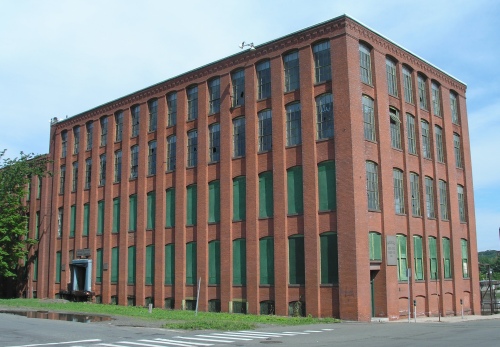
A house of (Die Cut) cardsSuher, through his company ES Development Corp., bought the four-story Holyoke Die Cut Card building in November 2001 for $157,500. The vacant building, located at 439 Dwight St., sits across Front Street from a municipal parking garage and across Dwight from the Volleyball Hall of Fame and Heritage State Park. The building and land are currently assessed at $258,900, according to city records.

The Die Cut Card building is highlighted in blue.
Suher is also a principal of Trident Holyoke LLC.,
which owns the 72 Front St. property
bounded by a blue line. Enlarge map.


It is one of several Suher-owned properties in Holyoke that figure in the city’s economic development and downtown revitalization efforts, some of which have vexed Paper City officials for years.

In October 2010, Suher sought a zoning change to build a parking lot at Mountain Park, which aroused suspicions among neighbors that he was gearing up for a possible gaming facility. A meeting to discuss the zoning change drew questions from city councilors about his plans for his Pleasant Crossing property, which had been sitting idle since he purchased it in 2005. At the time, Suher faced a November 2010 deadline to determine a use for the lot or see it revert to city ownership for $1. He had already received six previous extensions.


After the meeting, then-Mayor Elaine A. Pluta said she had also frequently asked about Suher’s intentions for the Die Cut building. Suher said on multiple occasions that he hoped to convert the property into market-rate housing, but was waiting until the Holyoke Housing Authority renovated the nearby Lyman Terrace housing complex.

Suher was, to the city's benefit several years earlier, the first of several property owners along the proposed CanalWalk to sign a formal easement with the city. The easements, signed in 2007 for Suher’s property at 72 Front St. and the die-cut building, allowed the city to move forward with the first phase of the project.

The promise to include funding to complete the CanalWalk as part of his casino development would have brought the project full circle, since he helped get it off the ground nearly six years ago.

Other benefits Suher listed in his casino concept were more speculative, involving land he does not already own.

A map of Suher's proposed downtown investments shows "Future Market Rate Housing" located at Lyman Terrace, bounded by High, Lyman, Front and John streets. The low-income, 167-unit housing project managed by the Holyoke Housing Authority was slated for demolition early in 2012, but it won a reprieve when Morse called for studying other options.

holyoke-rendering-map.jpgView full sizeA map included with documents provided in
response to a records request by The Republican shows areas
of downtown investment, proposed with Suher's plan for a
Mountain Park Casino.

Suher's conceptual map shows the downtown “mercado” located on city-owned land at 191 Appleton St. The “restaurant and outdoor terrace” are shown on Front Street, adjacent to the Die Cut building on land currently occupied by Suher’s Canal Place building at 72 Front St., now home to offices for several state agencies, and a building at 120 Front St. owned by Edward A. Owen, of West Springfield.

Morse said Suher's focus on downtown investment helped persuade him to reconsider a casino proposal for the city.

“The preliminary commitment to downtown, including the investments mentioned above (CanalWalk, Die Cut Card Building, seed money for the Holyoke Redevelopment Authority), did play a role in my decision to consider proposals,” the mayor said. "Furthermore, given the budgetary constraints on the City, the possibility of millions of dollars in additional tax revenue would compel any Mayor to look twice. I needed to explore whether or not it would be possible to achieve those goals – a casino in the City and a revitalized Downtown.”

The upgrades Suher proposed mirrored the city's plan for downtown redevelopment, known as “Connect. Construct. Create: A Plan for the Revitalization of Center City Holyoke,” that was released in September. And, emails obtained by The Republican show that concurrent to his casino negotiations Suher was working with city officials to lure a national restaurant chain to the Pleasant Crossing site.

Cornerstones of the “Connect. Construct. Create” plan include improving downtown housing options and rehabilitating blighted properties. CanalWalk is listed as a featured project.

Both Morse and Marrero said the plan can move ahead without investment from Suher as part of a casino deal.

“The Redevelopment Authority along with many city officials and participating citizens worked hard for several years to put a comprehensive plan in place that wouldn't sit on a shelf, but could be executed with success,” Marrero said. He added: “A casino (and funding from it) was never part of that plan, so the absence of a casino will not hinder it.”

A consultant's role
Another entry in the mayor’s calendar shows Morse initially met on Sept. 7 at 10:30 a.m. with Panagore, who most recently worked as chief operating officer in Hartford.

Morse said the crux of the Sept. 7 meeting was that Panagore “wanted to discuss opportunities in Holyoke and in Western Massachusetts.” The meeting did not involve any discussion of casinos, Morse said. He had been eager to take the meeting with Panagore, he said, because, “I have great respect for David, and he brings a unique set of experiences to the table, coupled with expertise and passion, like no one else I know.”

Panagore had resigned from his post in Hartford on Aug. 20, setting his last day as Sept. 14. At the time, he told the Hartford Courant he didn’t have another job in place. “I just didn't feel it was fair to undertake a job search while on the city's payroll.”

Panagore resurfaced in Holyoke when Morse announced in late November that he would consider casino proposals. Under the plan Morse laid out, Panagore would serve as a development consultant for the city, with fees to be paid by whichever operator managed the resort's casino.

A contract proposal with Panagore, dated Dec. 4, was included in the documents obtained by The Republican.

Under the contract, Panagore would work under the direction of Marrero to “... manage the City’s available assets and resources on behalf of the Mayor in order to successfully represent the City’s interests consistent with its development strategy, facilitate all facets of the development process relative to the potential location of a casino in Holyoke.”

Panagore was expected to review casino license applications and plans, assist with media relations and facilitate community outreach. He would also “act as principal point of negotiation for any agreement with project proponents, as contemplated by the Gaming Act, including developing host community services,” the contract proposal states.

The proposed agreement carried an option for the city to renew it on Oct. 1, 2013. It set a ceiling of 100 hours.

An invoice dated Dec. 3 and submitted on Dec. 6 shows Panagore billed the city for $4,640 to cover 29 hours of work at $160 an hour between Nov. 20 and Dec. 4. The itemized work list includes conducting research, meeting with Morse and other city officials and drafting a letter to potential casino developers.

Panagore played a role in the run-up to the mayor's Nov. 26 press conference, billing one hour at $160 for time on Nov. 25 to prepare for the event. On the day of the press conference, he billed for $1,360 to cover 8.5 hours of work.

On Dec. 4, a day for which he billed the city $960 for six hours of work, Panagore reportedly assisted Morse and Marrero in crafting an invitation to area mayors for a regional meeting on casinos, according to the documents.

Emails show that Panagore was also asked to participate in weekly meetings with city officials to discuss the casino issue. Tessa Murphy-Romboletti, assistant to the mayor, emailed Panagore and others on Nov. 29 to schedule the meetings. The first one was set for Dec. 3.

Panagore’s emails exchanged with city officials show he worked for Holyoke right up until Morse's Dec. 13 announcement. On Dec. 10, for instance, Morse forwarded a query from a reporter to Panagore, asking for thoughts on how to respond. The next day, Marrero asked Panagore for input on how to respond to questions from Paper City Development principals.

On the day Morse went public with his suspension of the casino proposal process, Panagore posted a link via Twitter to The Republican / MassLive.com’s coverage of the announcement. Later that night, Panagore wrote, "Mayor amazes me with his integrity & courage. Once he knew he had decided, he acted. No pretense, no wasted expense.”

Morse said this week that the city has ended its consulting relationship with Panagore.

The Bethlehem effect
What ultimately led Morse to reverse course on casinos the second time left many observers puzzled.
In interviews, Morse cited strong and vocal opposition from the community. He was jeered by a crowd outside his office when he held his Nov. 26 press conference, and casino opponents in the city quickly mobilized in the days that followed.

"At a time when our community needs unity of purpose, a year-long debate over locating a casino within our borders would only sow division and discord," Morse said when he announced his suspension of the casino process.

Bethlehem Mayor John B. Callahan gives a presentation on
the process to bring the Sands Resort Casino to his city.
The discussion was part of the City2City Greater Springfield's
learning trip to the Lehigh Valley in Pennsylvania.
Robert Rizzuto | The Republican


Records show that a trip Morse and other city officials took to Pennsylvania in late November also influenced his decision. During that trip, part of the City2City program organized by the Federal Reserve of Boston and Philadelphia, Morse, Marrero and Lumbra joined other Western Massachusetts representatives to tour the sprawling Sands Casino Resort at the former Bethlehem Steel property.

“There are real risks when you introduce gaming or gambling to a community, and a municipality needs to be vigilant in planning to mitigate such problems," Bethlehem Mayor John Callahan told his visitors. "We spent a lot of time traveling to other cities with casinos and ended up working together as a region to make it work for everybody.”

On Dec. 10, Marrero sent an email to Morse detailing his notes from the Pennsylvania trip and expressing doubts about whether the economic success Bethlehem found hosting a casino could translate to Holyoke.

“There were a few notable economic, procedural and site-specific circumstances under which Bethlehem’s (gaming-licensed resort) was provided a successful project and model of GLR development,” Marrero wrote. “It is highly questionable whether those circumstances currently exist in Holyoke.”

Listing differences between Bethlehem and Holyoke, Marrero noted the Pennsylvania casino’s proximity to the large New Jersey and New York markets, and cited the Bethlehem mayor's description of the Sands Casino -- with its tagline of “Closer than you think,” -- as “convenience gambling on steroids.” Marrero wrote that the largest markets a Holyoke casino could draw from – Boston and New York – would ultimately have casino resorts closer to their own metropolitan regions.

Marrero cited leaders he met in Pennsylvania who said the Sands Casino “does not play a role in spreading economic development in the region.” He also noted that Lehigh Valley region’s high rate of population growth in recent years, projected to continue in the current decade, stands in contrast to relatively flat growth in the Pioneer Valley.

Marrero also expressed concerns about the timeline of the casino process in Holyoke.

Lehigh Valley officials, he said, took a course of several years to discuss potential casino developments, visiting communities with casinos across the country and building partnerships with their own local arts, business and educational organizations.

“It is questionable whether we would have the opportunity to replicate such efforts locally by the Phase II deadline without compromising other planning efforts in the community and/or other items on the City’s economic development agenda,” Marrero wrote to the mayor.

Morse this week told The Republican and MassLive.com that the trip to Pennsylvania and Marrero’s memo played a role in his decision to return to an anti-casino stance. It became clear during the trip, Morse said, that the conditions that made a casino a successful bet for Bethlehem were not present in Holyoke: "It didn't take long to realize that any potential benefit was not worth it."

A visit to the gaming floor of the casino, Morse said, also made an impression: “(It) was nothing short of an incredibly depressing site to see. It was clear Holyoke could do better.”

While initially encouraged by Suher’s apparent commitment to downtown investment as part of a casino deal, Morse said, he concluded that a Mountain Park casino and a revitalized downtown were “incompatible visions of the city" and locating a casino on the outskirts of the city would be “incompatible with a vibrant Downtown Holyoke.”

Morse also reiterated that he would not support a casino for downtown Holyoke. “I'd rather focus on a long-term, sustainable approach to economic development,” he said.

http://www.masslive.com/news/index.ssf/2013/01/documents_trace_holyoke_mayor.html