Meetings & Information


*****************************
****************************************************
MUST READ:
GET THE FACTS!


Showing posts with label Adam Bond. Show all posts

Sunday, June 23, 2013

Count on Adam Bond for Levity!

It's taken several days for many in Middleboro to recover from Adam Bond's statements.

This was the reaction to ALL who remember Mr. Bond's history......


Bellicose Bumpkin posted this in response to the article below:

Yes – let’s have a Middleboro casino


Middleboro: Selectmen reject casino proposal without public input; some cry foul


MIDDLEBORO – Selectmen are dismissing an informal proposal for a commercial casino with little public input. The casino proposal comes from a developer who asked to remain unidentified until the deal is firmed up.

The developer floated his casino proposal to Middleboro Town Manager Charles J. Cristello but selectmen kyboshed the plan without public discussion. Former selectman Adam M. Bond questions selectmen’s decision and called for an open debate.

“The people in town have a right to know about it,” Bond said.

Chairman Stephen J. McKinnon is sticking to the board’s stance that the town already has a deal with the Mashpee Wampanoags, despite the tribe’s deal with the city of Taunton.

Bond, who was the chief negotiator between the town and tribe in 2007, says McKinnon’s logic is off base.

“What deal?” said Bond noting the tribe has signed a deal with Taunton.

Vice Chairman Allin Frawley rejected the proposal saying he wouldn’t put the town through the ordeal it faced in 2007 when the question for a tribal casino was put to a vote and garnered 2,387 in favor – 1,335 in opposition. The hullabaloo leading up to the historic town meeting pitted rivaling factions of anti and pro casino supporters against each other, which in many cases was neighbor against neighbor.

No matter how McKinnon and Frawley cut it, former selectman Adam M. Bond is calling foul.

“To have a potential business proposition of that size be offered in without even disclosing to the public that that offer was in doesn’t make sense,” Bond said.

Both McKinnon and Frawley lobbied for greater transparency after the 2007 negotiations and called the seated Board of Selectmen to task. Bond says the pair are guilty of their own accusations.

The dynamics have changed since 2007 when gambling was illegal in the state and the Mashpee purposed a casino under the federal Indian gaming laws. Gambling is legal, the new proposal is for a different location and comes from a different entity, and Bond says he is certain the tribe would not get support if they returned to Middleboro.

http://959watd.com/blog/2013/06/middleboro-selectmen-reject-casino-proposal-without-public-input-some-cry-foul/


Far too many remember the temper tantrums thrown by Mr. Bond while he was secretly meeting with his coven to fan the flames of animosity during this pathetic saga....

Was there a name he neglected to call the casino opposition?

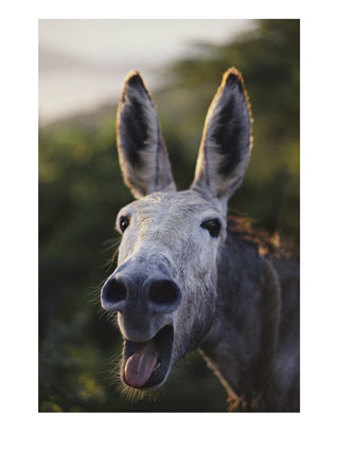
Mr. Bond likened those who opposed the Mashpee Wampanoag Folly to Braying Donkeys, compared them to Nazis, called us racists.....

Below, are Mr. Bond's ignorant comments likening opponents to Nazis:

That being said, I was speechless, a truly rare event, when I discovered Mr. Bond's comments, as follows (emphasis mine, misspellings his):

What concerns me, and makes me comment in the way I do, is that the theory that is being presented--unwittingly by most--is the nation within a nation theory. This is a theory that was used by Hitler to irradicate [sic] millions of jews in Europe, including many of my ancestors. So when you start talking about how dangerous it is to have a sovereign nation in the midst of the Town, because they will be self serving and mistreat anyone who is not a part of their group, you begin to highlight for me a theory which has little merit--since they have already received sovereign status and that is not the fight in front of us.
From: Random Thoughts From A Shikseh

Mr. Bond didn't stop there, but accused me of calling him an anti-semite [which never occurred to me], as well as reporting him to a non-existent organization.


Snookered!
Middleboro BOS: Misplaced Indignation #4
Mitigation or What? #2
Middleboro Chairman of BOS Resigns
Middleboro BOS: Misplaced Indignation #1
WXBR 1460 AM
Adam Bond

From:
The Book of Adam


Adam's New Tool

The Blogfathers

Goodbye Mr. Chips

Votestock

The Blog is a Harsh Mistress

If You Want a Friend, Get a Dog

Tank Man

The Goons on the Ice

Pulp Fiction


Adam Bond Deflowers Middleboro


There's far more to Mr. Bond's opportunism that a google search will reveal.

As far as his opinion?


Sunday, August 19, 2012

Candidates agree on distaste for Taunton casino plan


12th Bristol District candidates agree on distaste for Taunton casino plan


State representative candidates for the 12th Bristol District reflect differing backgrounds and political opinions.
But on the Mashpee Wampanoag's plan for a casino in East Taunton, they're mostly on the same page.
"It's a terrible deal. So is the compact," said Adam Bond, who criticized both the agreement the tribe negotiated with Taunton and the compact Gov. Deval Patrick signed last month.
Fellow Middleboro Democrat Roger Brunelle Jr. and Rep. Keiko Orrall, R-Lakeville, said they, too, oppose the plan.
Bond and Brunelle will vie for the Democratic nomination in the state primary Sept. 6. [Somewhat baffling since Mr. Bond really isn't a Democrat!] The winner will try to unseat Orrall in the Nov. 6 general election for a district that covers Lakeville, Berkley and portions of Middleboro and Taunton.
Orrall said she's opposed to the Taunton plan because of its regional impact and what she called a "lack of information" available to district residents. Orrall said she's also worried about the lack of regional mitigation under the Taunton plan, the lack of regional input to date, the effect the project could have on the Assawompsett Pond complex and its impact on traffic on routes 79, 24 and 140.


All three candidates voiced concerns about mitigation and traffic and said they'd prefer a commercial casino.
A commercial casino is "'regulatable.' It's taxable and it's all within the control of the state, and you can get more money out of it," Bond said.
In the state's expanded gaming law, a commercial casino license requires "all sorts of provisions ... that allow for mitigation for surrounding towns," Brunelle said. "There are avenues for the public to be involved."
Brunelle and Orrall voiced concerns about the delay and the indefinite timeline inherent in the fact that the Mashpee Wampanoag must first get the federal government to take the land into trust. A Supreme Court decision holds that this is only allowed for tribes that were federally recognized as of 1934. The Mashpee Wampanoag was recognized in 2007.

"Southeastern Massachusetts is now going to have to wait ... on an act of Congress. Literally," Brunelle said. He also said he is worried about potential legal ramifications, citing as one example developer KG Urban Enterprise's lawsuit claiming that the gaming law's tribal preference is race-based.
Both Bond and Orrall said the compact's requirement that the tribe pay 21.5 percent of its daily gross gaming revenue to the Massachusetts Gaming Commission might be rejected at the federal level.
Bond, meanwhile, railed against many aspects of Taunton's agreement with the Mashpee Wampanoag, including what he described as the tribe's ability to take additional land off the tax roll.
The deal calls for the city to get 2.05 percent of yearly net revenue from slot machines or a minimum of $8 million, according to the Cape Cod Times.
Bond, a former Middleboro selectman, called the Taunton deal "wretched" in comparison to a casino deal he helped negotiate with the tribe for his town.


To say that Middleboro's deal was better, doesn't say much since Mr. Bond crammed it through and called Opponents Braying Donkeys!

 
The "$7 million that we were going to get a year was increased annually by the (consumer price index)," he said. "Their $8 million is always $8 million."

Any consensus from the candidates ends when it comes to the basic concept of whether a casino is good for Southeastern Massachusetts. Orrall said she remains against expanded gaming, which she said can be predatory; the state should foster other areas of economic development, reduce regulation and reduce taxes, she said.

Casinos should be treated as any other incoming industry, Brunelle said. He said he supports expanded gaming as an opportunity for jobs and revenue but said people must be part of the process.

Bond said he, too, supports expanded gaming. But "I don't care about casinos one way or the other.
To me, it's the terms of the deal," he said. The Middleboro agreement included the best terms possible for the town, he said. 


How'd that go for ya?


A casino is "up to the people whether they want it. As for the Taunton plan, "yeah, I have some opinions on the casino," Bond said. "But it may bring jobs. It may. If it ever happens."


Tuesday, July 31, 2012

Middleboro lost and gained when casino deal fizzled


Middleboro lost and gained when casino deal fizzled
By Alice C. Elwell
Posted Jul 31, 2012

Photos

Reynolds Middleboro mv 07292012-84565.jpg
Marc Vasconcellos/The Enterprise

James D. Reynolds drives his 1953 Ford tractor on his family’s homestead in Middleboro. A casino was planned on the land behind him.


BY THE NUMBERS

Statistics on the defunct Middleboro casino deal:
  • 539: Acres off Route 44 that was to be casino site
  • $250 million: What town would have received for infrastructure improvements
  • $11 million: Annual payments town would have received for hosting casino
[The annual amount would only be $7 million. The figure was based on erroneous assumptions.]

On a sunny day in July 2007, thousands of residents turned out for a special town meeting to approve a deal with the Mashpee Wampanoags to host a resort casino in Middleboro.

Five years later, the deal has fizzled, the Mashpee tribe is seeking approval for a resort casino in nearby Taunton, and Middleboro has been left in the dust in the southeastern Massachusetts’ gaming race.

When the tribe backed away from its agreement with the town, Middleboro lost a bundle in expected mitigation money and annual tax payments – and some officials are still steaming over the way the tribe pulled out of the deal.

Brian P. Giovanoni, who was chairman of the Gaming Study Committee and Resort Advisory Committee, estimated the town lost more than $1 billion in expected revenue over the life of the casino. The town also lost its innocence, he said. 


“All the fighting this town went through, for nothing,” he said.

But, some residents and town leaders say the town gained as well – it will not have to cope with thousands of extra cars a day pouring into Middleboro, nor the litter, pollution and possible crime associated with gamblers frequenting the town.

“We lost a lot of potential revenue, but it was a trade-off,” Giovanoni said. “We also missed out on other things, for instance, a population boom.”

Middleboro will not see its rural character threatened by a looming regional casino.

“I’m not going to miss it at all, I’m glad I don’t have to fight the fight,” said James D. Reynolds, whose family homestead would have sat in the shadows of the casino off Route 44.

After the deal was inked, Reynolds figured he would one day see a sprawling casino out the windows of his home, built on land settled in 1692 by ancestors fleeing Salem after they were jailed in the witch trials.

Even though he lived his entire life in Middleboro, and his daughter was the fifth generation to be born in the house, Reynolds was ready to leave town when the casino seemed a reality.

Now, Reynolds is glad a casino is not coming to Middleboro, but said, “Like it or not, they (the tribe) did strike a contract and they have not honored their obligation.”


That’s the view of many former and current town officials.

The Mashpee Wampanoags should ante up money each year to the town once they open a casino in Taunton – or anywhere else for that matter – said some officials.

“At the very least, the tribe should provide an annual revenue stream once the money starts rolling in at a tribal casino, say $1.5 million a year, or a percentage of the slots,” said Adam Bond, former selectman and chief negotiator with the tribe at that time.

Tribe representatives and their attorney, Howard M. Cooper, from the Boston firm of Todd & Weld LLP Cooper could not be reached for comment.

Although the tribe paid the town $1 million in preplanning money, Town Manager Charles J. Cristello said it all went towards studies for a casino.

“They are not useful to us at all,” he said of the studies.

Cristello’s biggest concern is the 539 acres off Route 44 slated for the casino and still under the tribe’s control. [Owned by a different set of Gambling Investors the Tribe also owes money to.]

“If they’re not going to do tribal gaming, why own land here? It doesn’t make sense,” he said.

In the past, Wampanoag Tribal Council Chairman Cedric Cromwell said the land would be used for economic development, but he did not return recent calls for updated information.

Town lost cash from other sources, too

The town manager said the years spent planning for a casino were not only wasted time, but also represent lost money from other sources.

Cristello said the Mashpee tribe agreed to fund $250 million for a wastewater treatment plant, upgrades to the water system and improvements to Route 44 and its rotary.

“We didn’t apply for (federal) stimulus money (for those projects), we thought we had that covered,” he said.

Giovanoni said the state backed away from spending money to fix congestion along Route 44 and at the rotary, and the Southeastern Regional Planning & Economic Development District bumped the roadway to the bottom of its funding lists.

“They didn’t want to spend money on Middleboro if the tribe was going to do it,” Giovanoni said.

Cristello said the Wampanoags got something from Middleboro they did not pay for: political leverage.

“We made them a viable entity that the Legislature and the governor had to account for,” the town manager said.

Bond agreed, saying the tribe walked away from the Middleboro deal as a legitimate player in the casino game that forced state officials to give them preference for a casino license in this region.

The gaming law allows for three resort casinos – one each in southeastern Massachusetts, greater Boston and the western part of the state – and one slots parlor for the whole state.


Casino activists JOINED TOWN GOVERNMENT

Giovanoni is philosophical, though, saying the deal brought a lot of good to the town.

Several residents who got involved in the casino controversy are now active in town government, including himself. Giovanoni is a member of the School Committee.

Longtime casino foe Michael Solimini – now a gas & electric commissioner in town – said he is relieved he won’t see a gambling complex mar the rural character of Middleboro, but added he is not happy with the way things worked out.

“The town lost its focus and devoted resources to planning for a casino,” said Solimini. “Clearly the tribe should not be able to walk away from the contract.”

Allin J. Frawley, an ardent casino opponent and now a selectman, said no one knows exactly why the tribe pulled up stakes and left Middleboro.

In May 2010, Cromwell pulled the plug on the Middleboro casino and said he was backing out of the deal. The tribe moved on to a possible site in Fall River and recently settled on a casino plan for land off Route 24 in Taunton.

Gov. Deval Patrick was expected to sign the tribe’s compact for the Taunton casino by today. The agreement will then need federal approval as well.


In the end, the battle over the fizzled deal in Middleboro, and the idea of a casino, did not sit well with many townspeople.

“The rift this tribe caused the town? I know people who moved out of town,” Frawley said. “I know people who still don’t talk to each other.”


Read more: http://www.enterprisenews.com/business/x737576792/Middleboro-lost-and-gained-in-fizzled-casino-deal#ixzz22Cua4aqO

Middleboro man was preparing to leave if casino came to his neighborhood
Jul 31, 2012
James D. Reynolds drives his 1953 Ford tractor on his family’s homestead in Middleboro. A casino was planned on the land behind him.
Marc Vasconcellos/The Enterprise
James D. Reynolds has 100 hundred chickens on his land in Middleboro. Reynolds’ family had lived in Middleboro for generations but he was ready to leave when it seemed a casino would become a neighbor.


Marc Vasconcellos/The Enterprise
James D. Reynolds’ family had lived in Middleboro for generations but he was ready to leave when it seemed a casino would become a neighbor.

http://www.enterprisenews.com/photos/x1437139705/Middleboro-man-was-preparing-to-leave-if-casino-came-to-his-neighborhood

Thursday, June 21, 2012

Tribes oppose Mashpee’s Taunton casino


Tribes oppose Mashpee’s Taunton casino

Bureau of Indian Affairs scoping meeting on Taunton casino 1
Taunton Gazette Photo | Mike Gay
Daryl Black Eagle Jamieson, vice chair of the Pocasset Tribe, spoke out against the Mashpee Wampanoag Tribe getting the land into trust in East Taunton during the Bureau of Indian Affairs scoping meeting on Wednesday, June 20, 2012.
By Gerry Tuoti
Posted Jun 21, 2012
The Bureau of Indian Affairs heard hours of testimony covering a wide range of issues during a meeting in Taunton on the proposed tribal casino project.

“My role is to make sure the decision maker is fully aware of all environmental impacts associated with the application,” said Chet McGhee, an environmental scientist with the BIA.

The bureau held the scoping meeting Wednesday night to solicit comments from the public as it prepares its environmental impact statement on the Mashpee Wampanoag tribe’s application to have land taken into trust, a process that would give the tribe sovereign control over the property — a step necessary for getting a tribal casino.

Many casino opponents raised concerns over traffic, socio-economic impacts, natural resources, water usage and infrastructure.

“I was confused as to why anyone would want to put a casino in a wetland area divided by a rail line and adjacent to a school and a church,” city resident Mike Callahan said at the hearing, which lasted several hours and featured public comments from more than 60 speakers.

A handful of Middleboro officials also voiced their concerns. Selectman Al Rullo questioned the impact of traffic on Route 24, especially the section between Route 140 and I-495.

“It will have a devastating impact on surrounding communities,” he said.

The Mashpee are seeking to build a casino on 146 acres in Liberty and Union Industrial Park in East Taunton.

Mayor Thomas Hoye Jr. asked that “the project be looked upon favorably” by the BIA.

And that's the best he can do?

“The Mashpee Wampanoag Tribe has a long shared history with the city of Taunton, once known as Cohannet, and together, we have a long, bright, shared future,” Mashpee Wampanoag Chairman Cedric Cromwell said.

Members of the Pokanoket, Pocasset and Massachusett tribes, however, offered comments questioning the Mashpee Wampanoag tribe’s historic ties to Taunton.

“The town of Taunton is located within what is historically Pokanoket territory,” Pocasset Chairman Daryl Black Eagle Jamieson said. “The Mashpee never maintained a significant historical presence, as the Bureau of Indian Affairs would define it, in southeastern Massachusetts. They were confined to the Cape.”

Some speakers also questioned the authority of the federal government to take the Mashpee’s land into trust, citing Supreme Court rulings from Monday and 2009. Monday’s ruling could potentially expand the number of people who would have standing to file a lawsuit against a land-in-trust approval on the grounds that the Mashpee weren’t federally recognized before the 1934 Indian Reorganization Act.

“I see a jurisdictional abuse here, and I object,” said attorney Adam Bond, a former Middleboro selectman. “The BIA must first determine it has jurisdiction to act to take the Mashpee’s land into trust … I ask that the BIA follow the law and stop reaching to expand its authority and doing so at the people’s expense.”

The astounding Adam Bond was prime Middleboro Casino Cheerleader who crammed Middleboro's deal through, even as there was no agreement in place, working overtime to grandstand, socialize with the Tribe's big wigs and spread misinformation. Now suddenly opposed?

Since Mr. Bond schmoozed and cuddled with the Powers-That-Be, one can only speculate that the unions with whom he got into bed have severed their ties after witnessing Mr. Bond's erratic public behavior and enduring his abrasive assaults.

Or maybe after an interim candidate, Keiko Orrall was elected with an anti-union position, Mr. Bond perceived the wind blowing in that direction.


Mr. Bond stoked the hostilities, dividing Middleboro, labelling opponents as racists or braying donkeys, managing to alienate both sides of the issue.

The Emperor has No Clothes! Mr. Bond has never done anything except to work toward a guaranteed taxpayer paycheck.


Cromwell, in a statement the tribe issued, disputed the court rulings’ effects on the tribe’s quest for land.

“This ruling does not change anything about our pursuit of land in trust, which is progressing rapidly, nor does it change our focus on bringing thousands of jobs and millions in revenue to our Tribe, Taunton, and Southeastern Massachusetts through our destination resort casino in Taunton,” he said in the statement. “We will meet all criteria for our initial reservation and we will be successful.”


Wednesday, June 20, 2012

Bond: Full of Sound and Fury, but meaningless


Phew! Never allow facts or reality to dampen flawed ideas!


Mr. Bond, with a wholly undeserved ego, tends to  make outrageous public comments to attract attention with little consideration of process seeks the spotlight...yet again .....


Check these out for some informed history:
Adam Bond is a Candidate for State Representative with Experience
The Book of Adam

One of my personal favorites was Mr. Bond calling Casino Opponents BRAYING DONKEYS!

And then denying that he said it!

And then there are the attacks by Mr. Bond, ridiculing opponents who now demands public hearings???


Like a petulant child, Mr. Bond continues his temper tantrum just changing his targets!


CAMPAIGN 2012 LETTER: State must not put cart before the horse on tribal casino compact


According to a recent report, Massachusetts Gaming Commission Chairman Stephen Crosby said that when it comes to the Mashpee Wampanoag Tribe’s application for the federal government to take land into trust, “We’ll give the tribe whatever the appropriate amount of time is to get that decision made. We would ... let the tribe have their fair shot.”

It appears that the Massachusetts Gaming Commission is making a presumption that is directly contradicted by the U.S. Supreme Court, and has actually decided that it will ignore our highest court’s ruling that the BIA cannot grant the Mashpee Wampanoags any land into trust.

By making this currently unsupportable presumption under the law as it stands today, it appears to be favoring a tribal casino over any commercial casino interests waiting in the wings to take over the Mashpee position in Southeastern Massachusetts. This presumption also seems counterintuitive, since the general consensus seems to be that a commercial casino in the region would be more profitable to the state, and would be subject to greater regulation.

It seems that the Gaming Commission would be better off to have a public hearing with the Mashpee Tribe and its attorneys, to have the tribe show the Commission that their land-into-trust application is actually viable. What theory are they using? What method will they pursue? How long will it take?

At that hearing, those who believe that there is no viable way for the land to go into trust, could actually lay out their position, and the commission could then come to its own determination of viability and avoid presumptions.

To simply presume that the tribe can overcome the immovable objects in their path, and to let them have their “fair shot” at getting land into trust is a little ridiculous — particularly when they have not been made to show the commission that they have any shot at all. The commission’s procedure also appears to deny the commercial casino ladies-in-waiting an equal competitive shot at a casino in this region, if this region has to wait for the tribe to have its “fair shot.”

I would hope that our legislators would see the foolishness of the commission’s presumption and demand some initial and public proffer by the tribe of its ability to take the land into trust BEFORE they approve any compact with the state. After all, the tribe should know its plan.

Adam Bond
Candidate for 12th Bristol District, House of Representatives
Middleboro


Read more: http://www.tauntongazette.com/newsnow/x1805319494/CAMPAIGN-2012-LETTER-State-must-not-put-cart-before-the-horse-on-tribal-casino-compact#ixzz1yKm7WPcW


BTW, How'd that go for you, Adam?


Middleborough meltdown

January 29, 2009 at 10:29 am
This is all too weird. But if you oppose casino gambling, you can’t help but love it.
Adam Bond, chairman of the Middleborough Board of Selectmen and the guy who did more than anyone to try to bring the world’s largest casino to his adopted hometown, has quit the board. It seems that Bond wanted his fellow selectmen to try to grab more money from the Mashpee Wampanoag tribe, which would own the casino, and which is now beset by legal problems, starting with the crimes of its former leader, Glenn Marshall.
(As an aside, it’s a shame that Sal DiMasi’s replacement as Massachusetts House speaker, Robert DeLeo, is a fan of casinos. Casino gambling is bad news, and we shouldn’t want it anywhere. More than anything, though, we need to keep it out of Middleborough.)
Cape Cod Times reporters George Brennan and Stephanie Vosk have a thorough account of the Bond shenanigans, and Alice Elwell of the Brockton Enterprise offers a good overview as well. In the Boston Globe, Christine Legere reports that Bond plans to keep his weekly radio show, which is broadcast here on Thursdays at 11 a.m. I shouldn’t, but it’s hard not to look when you happen upon a car crash.
As Elwell reported in a previous story, Bond had already alienated the board with his blog, which, I have to confess, is too tedious for me to wade through — though I do enjoy his claim that one of the selectmen, Mimi Duphily, “wanted to ‘rip my face off.’”
So I’ll give the great Gladys Kravitz the last word:
[A]s the person who has been putting Bond under a microscope since 2007 — believe it, this is a good day. This is a great day. It’s a pick up your American flag, go outside and stand on your porch or the hood of your car and let out a big WhooHoo type of day.
The king of all drama queens had a meltdown and provided you with an extra seat on the Middleboro Board of Selectmen. Now pick up a broom and sweep away the damage. Then pull back the curtain on the light of a better day.
One down, four to go.

Saturday, June 9, 2012

The Faces of Corruption and Adam Bond, Candidate for State Rep.

The release of Glenn Marshall from federal prison resurrects a history of widespread corruption in which Adam Bond, current candidate for State Rep. was much involved behind the scenes, even publicly stating when it was revealed that Glenn Marshall was a convicted rapist "Everyone has skeletons in their closet. I still trust the man."

Some of the corruption might be blamed on stupidity, incompetence or unscrupulousness,  like the acceptance of gifts and attendance at Tribal functions, but not all, especially on the part of Mr. Bond who is an attorney.

This is a comment that was posted regarding Mr. Bond's involvement --


There's the Middleboro land auction that was only advertised in the local weekly newspaper, conducted by now retired Town Manager, Jack Healey.

Mr. Healey pretended that he saved the Town money by not retaining an auctioneer, yet cheated the Town of fair market value, who was seen poring over Assessors' Maps with Stephen Graham prior to the auction. Isn't it curious that the Middleboro Board of Selectmen remained silent at the lie, including Mr. Bond? And isn't it curious that the only bidder present was a representative of Herb Strather, financial backer [at that time] of the Tribe? [Strather couldn't get a license in his home state because his background failed to pass muster.]

It was also curious that Neil Rosenthal, Middleboro business owner was present at only this auction.


There's Marsha Brunelle, Middleboro's own Gavel Queen who refused to allow the public to question or comment and refused to discuss the auction, even though a group of us were aware the land was to be auctioned for a CASINO.


And there's Wayne Perkins' connections.

There were backroom deals and secret meetings, many of which are known about. Mr. Bond conducted 'coven meetings' that were widely known and met secretly with the IBEW (and was seen). Once the road to riches seemed assured, his wife began to look at houses around Middleboro.

Recently, Mr. Bond has solicited 'support' from others, insisting on meeting out of town, including a meeting with Derek Maksy, Chairman of the Lakeville Board of Selectman [losing candidate for the seat Mr. Bond now seeks]. Why the secrecy?

Mr. Bond solicited dirt about the incumbent, Keiko Orrall, which is rather curious. The truth has never seemed to matter much to Mr. Bond in the past, such as the lies Mr. Bond has repeated and posted about me, an insignificant person.

Mr. Bond is so wildly unpopular in Middleboro, he was forced to ask numerous people to act as his 'campaign manager.' Maybe Middleboro voters remember Mr. Bond's erratic behavior.

Mr. Bond acted as a One-Man-Casino-Crusade, cramming the Middleboro deal through, spewing misinformation, yet attempted to insinuate himself into the Taunton opposition as a legal expert, a paradox!

For additional information -- 

The Book of Adam

Please review the comments --
Adam Bond is a Candidate for State Representative with Experience

Too much corruption! Glenn Marshall wasn't the only one who should have gone to prison. 

The same backroom deals and secret meetings seem to have transpired Taunton.

Regardless of the vote, the Mashpee Wampanoags will NEVER get a Slot Barn and have mired themselves in debt to a Malaysian investors.


There's far more to tell, but a book will be written about this pathetic chapter in Middleboro history and the nature of greed.
Former Mashpee Tribal Council Chairman Glenn Marshall Returns Home
By: Brian Kehrl
Published: 06/08/12

Former Mashpee Wampanoag Tribal Council chairman Glenn A. Marshall was released this week after 1,091 days of federal incarceration on charges he defrauded the tribe and the federal government.

Mr. Marshall was allowed to return to his East Falmouth home on Monday following a stint in a halfway house, the last stop in three-year a prison term that took him to a low-security facility in Pennsylvania and a medical care center in North Carolina.

He still faces probation that places several restrictions on his activity. Though his probation does not limit his involvement in the tribe, the tribal constitution requires political office holders to be free of felony convictions for the prior five years. Mr. Marshall pleaded guilty to five criminal counts, including making illegal campaign contributions, tax fraud, wire fraud, and Social Security fraud, in federal court in Boston in the spring of 2009.

His release comes at a sensitive time when the tribe is in the heat of pushing its Taunton casino plans forward with the city, state, and federal government. As was the case during much of his time as chairman, Mr. Marshall still has both ardent supporters and relentless detractors within the tribe.

Some revere Mr. Marshall for finally forcing the tribe’s application for federal recognition through the US Bureau of Indian Affairs and suggest that his crimes were either minor or done in the best interests of the tribe. The tribe obtained final federal recognition in 2007, after three decades of struggling with the BIA’s administrative process.

The campaign finance charges stem from 34 separate contributions Mr. Marshall and other tribe members made, using money from the tribe’s casino investors, to a host of federal politicians with clout in Washington, DC, and with the BIA. Another 25 contributions were made by straw contributors arranged by Mr. Marshall to state officials.

“Without him we wouldn’t have tribal recognition,” Chief Flying Eagle, Earl Mills Sr., said in an interview this week. “Glenn made a mistake but without Glenn we would not have recognition and chances are we would have never gotten it. There was no one who could have spent the 12 years to go through that arduous process.”

Glenn made a mistake but without Glenn we would not have recognition and chances are we would have never gotten it.

Yes! Glenn bribed politicians to gain federal recognition a la Jack Abramoff.


Chief Flying Eagle Earl Mills Sr.

Mr. Mills has been sharply critical of the current tribal council administration headed by Chairman Cedric Cromwell, who has sought since his campaign for office to split from the legacy of Mr. Marshall and his former vice chairman, Shawn W. Hendricks Sr.

There is one opinion agreed on by both Mr. Marshall’s supporters and detractors: the former chairman is smart and politically savvy.

Other tribe members, however, say he effectively stole from the tribe for personal gain and discredited the tribe on a statewide, if not national, stage. Mr. Marshall stepped down from office in August of 2007, just months after the tribe’s recognition, following his acknowledgment that he lied about his military career and did not disclose a criminal history from the 1980s.

According to the federal complaint to which Mr. Marshall pleaded guilty, he spent approximately $380,000 in four years on personal expenses such as groceries, vacations, tuition payments for a family member, restaurant tabs, home repairs, mortgage payments, and jewelry, according to the federal charges.

His detractors say many of their peers who maintain support for Mr. Marshall were either given favors by the former chairman or were members of the staff or administration during his reign.
According to court documents, he used money from the tribe’s first casino investors to pay out regular stipends of up to $2,000 to “certain favored members” of the tribe, as well as providing additional financial assistance to other members.

Mr. Marshall could not be reached for comment this week.

To recoup the stolen money, the tribal council has filed a civil suit in tribal court against Mr. Marshall, Mr. Hendricks, and former tribal council secretary Desire Hendricks Moreno.

The suit seeks restitution of approximately $1 million that was channeled through the Mashpee Fisherman’s Association, a business formed by Mr. Marshall and others, and not disclosed to the tribal council. The money was loaned to the tribe by investors and it was expected to be paid back if and when a tribal casino was built, according to information provided by tribal officials.

The investors deposited a total of $4 million in the account, which was also used to pay for professional services related to the tribe’s pursuit of recognition, like lawyers, lobbyists, and historians who prepared the substance of the application.

The suit, which was filed in January, is still in the preliminary stages in tribal court.

According to his probation guidelines, Mr. Marshall was already required to repay the tribal council $383,009.62.

The tribal council is first on the repayment schedule, but he also owes the Social Security Administration $84,603, as a result of charges that he collected disability payments while working a full-time job.

Under the terms of his release, he is also scheduled to sort out his tax liability and pay back taxes due to the US Internal Revenue Service, an amount the IRS estimated to be $90,965.
Until he pays back the tribe and the two agencies, he faces detailed restrictions on what he is allowed to spend money on.

His 41-month sentence was set at the low end of the possible range under the charges, and without more than $1 million in additional fines, in part because he cooperated with federal investigators. His sentence could have been reduced further if Mr. Marshall provided “substantial assistance” in the investigation or prosecution of another criminal. No one else was charged in connection to the case.
The US Bureau of Prisons also reduced his sentenced to 36 months based on good behavior while incarcerated.

http://www.capenews.net/communities/mashpee/news/1890

Middleboro BOS: Misplaced Indignation #6


The Mashpee Wampanoag tribe yesterday terminated its contract with Stephen Graham, the alleged mastermind behind illegal campaign contributions made by former Wampanoag tribal chairman Glenn Marshall.
Stephen Graham was seen in Middleboro Town Hall poring over Assessors' Maps with Jack Healey, now retired Middleboro Town Manager.


For additional information about the corruption involved, here's a list of articles --
Abramoff, Casino Gambling, Political Corruption


Abramoff and Wampanoag Connections...Again!
Abramoff Corruption and Mashpee Wampanoags
To Talia: Casino Corruption #4
To Talia: Another Abramoff Buddy Bites the Dust!
To Talia: Casino Corruption #3
To Talia: Glenn Marshall and the Abramoff Corruption Connection

Abramoff and Wampanoag Connections...Again!

Campaign Contributions 

This is a comment from KOS which seems curious since the connection to Abramoff was never denied by the Tribe --
The Mashpee were clients of Jack Abramoff, sort of. His name never appeared as an official lobbyist for them, but two of his protegés at Greenberg Traurig, Kevin Ring and Michael Smith, served in that capacity.
Columnist papers over Norquist's corruption
 

The Abramoff Net

Glenn Marshall’s Bad Plan predated Marshall's guilty plea --
.
....Kevin Ring and Michael Smith, still work with the Mashpee. On the hectic morning of [investor] Len Wolman’s visit,.....
The Gambling Man

Campaign Contributions

An Invitation to Corruption?

A Banana Republic (Abramoff Again Included)


Middleboro BOS: Misplaced Indignation #4


Abramoff's rumored to have intervened on their behalf "unofficially".
.

indianz included this comment, but failed to name the 6 tribal members --

.
Mashpee Wampanoag Tribe donated $32K to Pombo

Tuesday, December 6, 2005 Members, leaders and lobbyists for the Mashpee Wampanoag Tribe of Massachusetts have donated $32,000 to Rep. Richard Pombo (R-California) ever since he became chairman of the House Resources Committee in January 2003.

The first Mashpee donation of $12,000 came from six tribal members on September 29, 2003, the San Joaquin News-Service reported. That same day, Jack Abramoff, the tribe's lobbyist, gave $5,000 to Pombo's political action committee. Abramoff also gave $2,000 to Pombo's re-election campaign earlier that year.

So far this year 2005, tribal members have donated $12,000 Pombo's re-election campaign. Pombo denies the money had anything to do with a bill he introduced to speed up the tribe's federal recognition petition.


Jack Healey and the Casino Investors

Casino investors engineered secret deal
In a secret deal, casino investors for the Mashpee Wampanoag secured an option on 200 acres in Middleboro two days before they purchased 125 adjacent acres from the town.

The deal, and the secrecy surrounding it, may have resulted in the town garnering less money than it could have had the deal last April been more widely advertised.

Former Middleboro Town Manager Jack Healey, who first proposed the auction to raise money for the cash-strapped town, has since retired and could not be reached for comment. Town and tribe officials first met in March to begin talking about a proposed casino, according to Times archives.

Middleboro selectmen approved the auction April 9 and it was held April 27. The auction was advertised only in the local weekly newspaper, town Treasurer Judy MacDonald said.

But if the town wanted to get top dollar for the property, it should have done more advertising, Stevens said.
 

Jack Healey and the Casino

Southbridge, Landfills and Mr. Healey

Healey For Hire

RATS Not Forgotten!

Perry Property and Jack Healey

Middleboro selectmen approved the auction April 9 and it was held April 27. The auction was advertised only in the local weekly newspaper, town Treasurer Judy MacDonald said.

Mr. Healey Inflicts Slap-Dash on Southbridge!

Middleboro: Impressive Choices!

Mr. Perkins said this of casinos in March 5, 2007:
Chairman Perkins noted that towns in Connecticut that have casinos don’t pay taxes.
 
 
Not true! But Mr. Perkins was too dumb to fact check that statement!


Wednesday, June 6, 2012

The Unwanted Aquinnah


Voters said NO! And they just won't go away.

Tribe blasts Gov. Patrick for casino vote


The Wampanoag Tribe of Gay Head (Aquinnah) is blaming Gov. Deval Patrick for resounding defeats in Freetown and Lakeville and is vowing to continue the fight for its federal rights to an Indian casino.


Patrick's refusal to negotiate with the tribe discouraged voters from going to the polls and hampered the tribe's ability to gather support, tribe Chairwoman Cheryl Andrews-Maltais said in a statement about the next steps for the Vineyard-based tribe.


Lakeville voters stood in the rain to say NO!  How much more clear can they be?


Patrick refuses to open compact negotiations with the Aquinnah because the administration's legal advisers say the tribe waived its rights to an Indian casino in a land settlement approved by Congress in 1987. The tribe's position is federal Indian gaming law supersedes that land deal.

Andrews-Maltais questioned Patrick's motivation and insists the Aquinnah have the same legal rights to develop a casino as the Mashpee Wampanoag, which is currently in talks with Patrick for a $500 million casino project in Taunton.


"Moreover, the governor's conclusion and position is not only legally unsupported, it is also morally wrong," she said. "The state should treat both tribes equally and not choose to benefit only one of the federally recognized tribes over the other. But this is what is happening now. The state should give both tribes an equal opportunity for economic development and economic self-sufficiency."

The governor's office reiterated its stance.

"Multiple administrations have maintained the same position on the Aquinnah's status for the past 15 years in recognition of the fact that these two tribes are in two different situations under state law," spokeswoman Kimberly Haberlin said.

The Aquinnah tribe is proposing to build a $167 million casino and hotel project on 500 acres that straddle the Lakeville and Freetown town line.

It is in a race to meet a July 31 deadline imposed by the state legislation authorizing three casinos and a single slot parlor.

On May 29, Freetown voters rejected the proposal 954 to 308, and in Lakeville on Saturday, the tribe suffered another loss — this time 1,735 to 172.


Derek Maksy, chairman of the Lakeville Board of Selectmen, said voters have spoken loudly and clearly.  [Even as Mr. Maksy was meeting out of town with Adam Bond to promote the Casino.]

"The people spoke 10-1 that they don't want it, and my job is to carry out the will of the voters," he said. "I don't think we're going to entertain any further conversations with them."


Maksy said the board will turn its attention to the Mashpee tribe's proposal in Taunton to make sure it doesn't have any adverse effects on Lakeville.

He said the town plans to speak out at upcoming sessions held by the federal Bureau of Indian Affairs.

Lisa Pacheco, a selectman in Freetown, did not return a call seeking comment.

Andrews-Maltais and tribe lawyers have said they might sue the state to block the legislation from being implemented. The tribe could also seek a federal lawsuit if Patrick continues to refuse negotiating in good faith, legal experts have said.

The tribe would have to wait 180 days from March 5, the day it first asked Patrick to negotiate.
"The Aquinnah tribe is currently weighing its options and will ultimately take the appropriate steps necessary to protect our rights," Andrews-Maltais said.

"We are more determined than ever to pursue a first-class gaming and entertainment enterprise that will provide economic self-sufficiency for tribal members and an economic benefit to the region as a whole."


Glenn Marshall: Heee's baack.....

The release of convicted rapist Glenn Marshall from prison resurrects memories of current candidate for State Rep. Adam Bond's participation in forcing a Tribal Casino on Middleboro. Much has been said .... most recently, candidate Bond solicited others for 'dirt' on the incumbent, not that facts have ever mattered to Mr. Bond.   


....in 2007, [Adam] Bond dismissed the tribal elder’s warning and the writing on the wall as irrelevant. “We all have skeletons in the closet,” he said. “I still trust the man.”
The Book of Adam


Preparing our children: What’s in store for East Taunton Elementary School & Wampanoag casino?
There’s something about those deed restrictions
Send in your resumes !


Mashpee Wampanoag former chairman Glenn Marshall released from prison. Maybe he can help his former protege Cedric Cromwell managing the casino cash - at least Glenn could pass a credit check (if not the criminal background review) required to get a casino license.


Glenn Marshall released from federal prison


Top Photo
Glenn Marshall, the former chairman of the Mashpee Wampanoag Tribe, walks out of U.S. District Court in Boston Thursday, May 7, 2009 after his sentencing to prison.(AP Photo File/Elise Amendola)

Glenn Marshall has been released from federal prison, according to an online database for the Federal Bureau of Prisons.
Marshall, the former leader of the Mashpee Wampanoag tribe, was released after having served 3 years of his full 3 1/2-year sentence for political corruption and embezzling funds from the tribe.

For the past month, he was in a half-way house in Boston as a transition from his time behind bars, records show.

In March, Marshall's wife told the Times that she expected her husband to get an even earlier release from prison, but that never materialized.

Marshall plead guilty to charges that he stole nearly $400,000 given to the tribe by an initial investor and used the money as his personal slush fund spending the cash on things like groceries and vacations.

He was also convicted of making illegal campaign contributions in an attempt to gain favor for the tribe in its bid to gain federal recognition.
Now that he's out of prison, Marshall faces a lawsuit in tribal court where tribe leaders seek to recoup the money stolen from the tribe.


Marshall was forced to resign as leader of the tribe in 2007 after the Times reported that he had lied about his military service and had previously been convicted of rape.