Meetings & Information


*****************************
****************************************************
MUST READ:
GET THE FACTS!


Showing posts with label Plainridge slot barn. Show all posts

Tuesday, December 19, 2017

Plainridge owner buys competitor casino firm for $2.8 billion


Plainridge owner buys competitor casino firm for $2.8 billion


Plainridge Park Casino file photo
Plainridge Park Casino in Plainville is setting out to make sure people know it’s more than just a casino.
Paul Connors / The Sun Chronicle//
PLAINVILLE — The owner of Plainridge Park Casino has agreed to acquire a gambling industry competitor for $2.8 billion in stock and cash.
Penn National Gaming will buy Pinnacle Entertainment and its 16 casinos, extending its reach across the United States and Canada.
Pinnacle stock holders will receive $20 and 0.42 shares of Penn National stock for each share of Pinnacle stock.
“The combined company will benefit from enhanced scale, additional growth opportunities and best in class operations, creating a more efficient, integrated gaming company,” Penn National Chief Executive Officer President Timothy Wilmot said.

Wednesday, September 20, 2017

Stephen Crosby: Beating a Dead Horse?


Taxpayers are subsidizing a Dead Industry....and now what?

Extensive HEARINGS were held in Beacon Hill....lawmakers genuflected to the racing industry, gave them what they wanted.....

The Gambling Vultures OWN you once you invite them in....lawmakers will genuflect...YOU can bet on it!


Crosby to lawmakers: Give me the power to save horse racing
 
Gaming Commission chairman Stephen Crosby really doesn’t want to give up that multimillion-dollar state horse-racing fund. From SHNS’s Colin Young: “The chairman of the Massachusetts Gaming Commission pressed lawmakers Tuesday to give the commission the ability to restructure oversight of the horse racing industry in hopes of a sparking a revitalization. While standardbred racing has seen a resurgence tied to the slots parlor in Plainville, Thoroughbred racing is near its all-time low in Massachusetts.”
SHNS (pay wall)


Thursday, July 6, 2017

Casino tax winds up with state’s well-heeled horse owners


The only source for this fund at this time is the Plainridge Slot Barn.

Casino tax winds up with state’s well-heeled horse owners

Jack EncarnacaoMatt Stout Thursday, July 06, 2017


Credit: John Wilcox

COMPETING INTERESTS: Horses leave the gate at Suffolk Downs, above, which has received millions in casino taxes that critics would like to spend elsewhere.

Taxpayers have been fattening the winning purses of wealthy horse owners at Suffolk Downs the past two years thanks to the Bay State’s horse racing fund, which is fueling their six-figure payouts at a time critics are howling for the money to go to better priorities for the budget-strapped state government.

The cumulative winnings, detailed in a Herald analysis of payouts from the East Boston track, have been financed entirely by the $35 million in tax dollars the Race Horse Development Fund has taken in since 2015, when the state’s first slots parlor opened.

The fund was meant to bolster the purses — the winnings paid out to horse owners — that struggling Massachusetts tracks can offer to attract top thoroughbreds. The fund is made up mostly of taxes on casino revenues, and is parceled out to tracks by the Massachusetts Gaming Commission.

The fund has become a popular target for lawmakers facing a potential $1 billion budget shortfall, including a Senate proposal to tap it for $13 million for “pressing environmental, conservation and recreation needs.”

The well-heeled owners of winning horses at Suffolk Downs since 2015 include:

• Patricia Moseley ($176,350 in winnings), the widow of former Suffolk Downs owner James
B. Moseley and daughter of Crocker Snow, who founded one of Boston’s first commercial airlines. She lives on the family estate in Hamilton;

• Teresa Horky ($160,900), the CEO of Pegasus Solutions, a successful tax preparation, health care consulting and financial consulting firm she founded; and

• Joseph DiRico ($157,950), a VP at his family’s third-generation company, Hub Folding Box in Mansfield. His late father, Alfred, also took home $45,000 in purse winnings from Suffolk Downs in 2015.

Greg Sullivan, a former state inspector general now with the Pioneer Institute, said it “makes no sense” for casino taxes to end up in wealthy horse owners’ pockets, especially after Suffolk Downs lost a bid to build its own casino and in May, cashed in on the $155 million sale of the property.

“Now here we are, Suffolk Downs is being sold, and they’re sitting on this pile of money, which is winding up in the pockets of millionaires at a time when Massachusetts is essentially broke,” Sullivan said.

“This should be terminated immediately, and those funds should be used for important purposes in Massachusetts.”

State Rep. Brad Jones, who has proposed diverting a portion of the fund to community preservation, said the payouts illustrate how the racing industry plays to wealthier residents.
“Generally speaking, it’s an older clientele and a more affluent clientele,” Jones, the House minority leader, said of horse racing. “That’s a very finite universe. And I think it does raise the question, is that the best place to put these resources from gaming?”

Where were you when GAMBLING LEGISLATION was proposed? Silent? 

The owners defended the six-figure hauls, arguing the data don’t show how much they are investing to support local horse farms and related trades with the winnings.

Paul Umbrello, executive director for the New England Horsemen’s Benevolent and Protective Association, said it could often take $35,000 to $50,000 to breed and train just a single horse.

“They’re not going to put (purse winnings) in their pocket and buy a car — they’re going to turn it back into whatever it takes to raise these horses, which is considerable,” Moseley told the Herald. “I don’t know what form racing’s going to take, if any, but it won’t take any if they don’t have some of this support.”

Horky argued that in her 20-plus years in the industry, she’s lost money the vast majority of the time, adding that she’s “paid more to Massachusetts farms than I won.”

“You put it all back into that industry in hopes to keep it open and running, and having some space for children to see there’s something with four legs besides a dog,” she said.

Commission spokeswoman Elaine Driscoll said tracking who ends up winning money from the purse fund “suggests a misunderstanding of its purpose and operation.” She said it helps support an entire network of breeders, trainers, veterinarians and jockeys.

Since 2015, the fund has taken in $35.4 million and paid out $22.4 million, 80 percent of which is earmarked for purses. Prior to the that, when Suffolk Downs ran scores of races each year, purses were funded by whatever was left of the money wagered — dubbed the “handle” — after taxes were taken out and the track took its cut.

Suffolk Downs is hosting six days of racing this summer, with the first scheduled for Saturday and, again, the fund supporting all the purses.

http://www.bostonherald.com/news/local_coverage/2017/07/casino_tax_winds_up_with_state_s_well_heeled_horse_owners


Sunday, October 2, 2016

Massachusetts Ballot Question !: Slot BARN in Revere denounced by mayor


The Gambling Vultures promise to pave the streets with GOLD, solve ALL fiscal problems...when they fail to deliver....? There are no consequences. 

Atlantic City crime and poverty.....and lawmakers still haven't figured it out.....


Massachusetts Voters rallied around the BOGUS promises that were easily discredited......Unions accepted the False promises.....Massachusetts voters fell for it.....


Slot  BARN in Revere denounced by mayor

Sunday, August 21, 2016

Gambling Industry Approaching Saturation in Northeast United States


Gambling Industry Approaching Saturation in Northeast United States


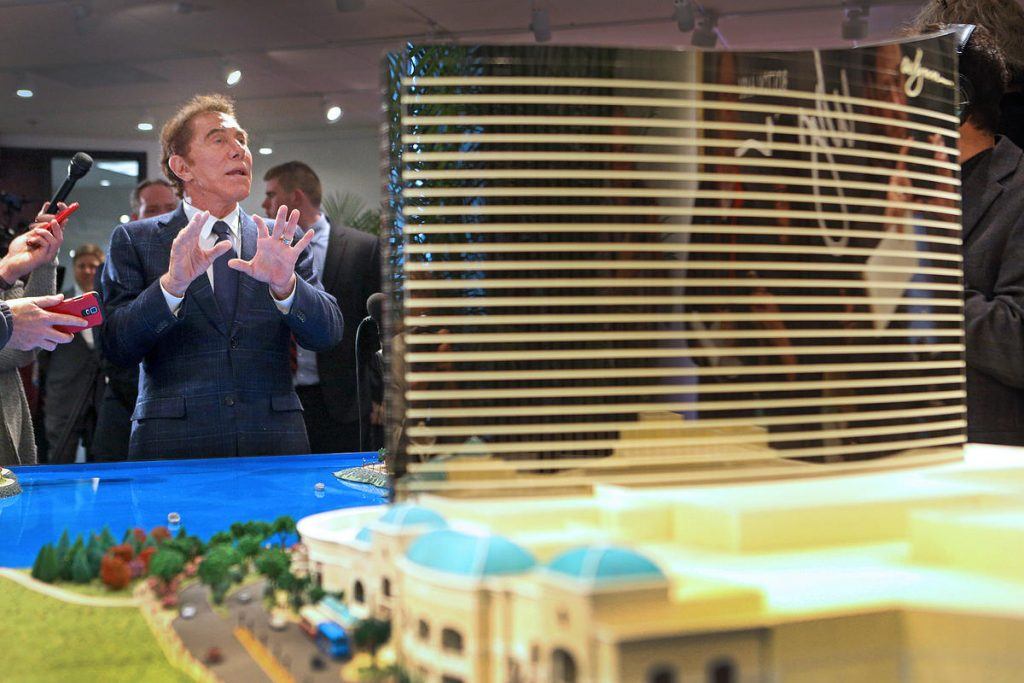
Steve Wynn’s Boston Harbor casino resort will open in 2019 and bring the northeastern gambling industry one giant step closer to possible market saturation. (Image: Nancy Lane/Boston Herald)

The gambling industry in the northeast region of the United States was confined to Atlantic City for decades. The first legal commercial casino opened in the New Jersey beachfront town back in 1978, and until the early 1990s Atlantic City largely enjoyed a monopoly on gambling on the East Coast.
The US Supreme Court ruled in 1987 that federally recognized Indian tribes have the right to self-regulate casino games not barred by state law. The ruling effectively ended Atlantic City’s stronghold.
By 1996, half of the 50 states had some form of land-based gaming. Today, analysts are worried the continued expansion across northeastern states will soon lead to market saturation.
“The market in New England is continuing to grow,” gaming analyst Clyde Barrow told the Associated Press this week. “But there will be a saturation point.”

The All-Mighty Slot

Massachusetts’ Plainridge Park Casino slot parlor opened in June 2015, and the state will welcome the $950 million MGM Springfield in 2018 and $1.7 billion Wynn Boston Harbor in 2019. New York’s slots-only racetrack parlor Resorts World Casino near JFK International Airport is considering expansion, and two upstate casinos are expected to open in 2017.
In northeast Pennsylvania, Sands Bethlehem controls the market over Mount Airy Casino Resort. The Philadelphia area is home to four casinos with a fifth possibly on the way.
Rhode Island has the Twin River Casino, and then there’s Connecticut’s Foxwoods and Mohegan Sun resorts. The Mashantucket Pequot, Mohegan, and Mashpee tribes are all looking to build additional casinos near the Connecticut-Massachusetts border to compete with MGM and Wynn.
And don’t forget that place called Atlantic City where seven casinos will remain after the Trump Taj Mahal closes in October.
The northeast is the most densely populated region in the US, but it’s becoming flooded with gambling destinations. For now, however, the market seems to support the numerous casino floors.
Gambling saturation is largely tested through slots revenue as the machines still generate the most income for operators.
According to Fitch Ratings, casino companies want and need each slot to win $200 per 24 hours. Anything below that number might signal an oversaturated market.
In June, Mohegan Sun’s 5,110 slots won $297 each day. Foxwood’s 4,451 machines took in $260.
Plainridge Park’s 1,250 slots collected over $370 daily in July, its best monthly performance in 2016.
While the gaming economy remains strong in the northeast, “saturation” remains a constant concern.
“I try not to use the word. No sense cursing the darkness,” Foxwoods CEO Felix Rappaport told the AP.

Diversifying Interests

MGM and Wynn are two of the most experienced gaming operatives in the industry. Their substantial investments in Massachusetts show their own research supports additional casino facilities in the northeast.
But unlike some venues in New England and the Mid-Atlantic, MGM Springfield and Wynn Boston Harbor will be focusing as much on the resort and entertainment aspect as gambling. For example, Wynn’s harbor walk will accompany the resort’s high-end shopping center and spa and feature four upscale restaurants.
Gambling revenue now plays second fiddle in Las Vegas to nongaming activities. Regional resorts are expected to follow the trend and adapt to market conditions.
Mohegan Sun is celebrating its 20th anniversary in October with a comedy gala featuring Kevin Hart and Sarah Silverman, and will welcome numerous A-list musicians including Tim McGraw, Bruno Mars, KISS, and Carrie Underwood.
The new casino, six years in the making, is Wynn Resorts Ltd.'s second in Macau, the only place in mainland China where casino gambling is ...


Tuesday, August 16, 2016

Sucking $$$ out of the local economy?


Where do you think the money comes from?


FROM MASSTERLIST
Despite strong month, Plainridge short of year-one projections
 
Gross gaming revenue at the Plainridge Park slots parlor rose to $13.8 million in July, a 9 percent increase over the month before and one of the strongest months since the state’s first casino opened last year, Gintautus Dumcius of MassLive reports. For its first year of operation, Plainridge paid just over $88 million to the state, short of the $105 million in revenue projected before it opened, the Massachusetts Gaming Commission said. 
Meanwhile, would-be casino operators at the Mashpee Wampanoag Tribe say they want to formally be party to an ongoing federal lawsuit filed by neighbors seeking to block them from opening the First Light casino in Taunton. George Brennan of the Cape Cod Times reports that the tribe filed a request Monday to be party to likely appeals to be filed by the Department of the Interior after a federal judge ruled that officials erred when allowing the tribe to place the Taunton land into a trust.


Slots ringing at Plainville

The Lowell Sun
UPDATED:   08/15/2016

Colin A. Young
State House News Service
BOSTON -- Plainridge Park Casino had its best month of the year in July, pulling in nearly $14 million in gross revenue during the month, the Gaming Commission announced Monday.
The $13,877,522.81 in gross gaming revenue collected from the slots parlor in July is the greatest yield since August 2015, the second full month the Plainville parlor was open.
In total, players put $185,086,244.23 into Plainridge's slot machines and video table games in July -- a record amount for the slots parlor. Revenue from the gambling facility, the first to open under the 2012 expanded gaming law, is taxed at 49 percent, the Gaming Commission said, meaning the state's cut for July was $6.8 million. Of that, 82 percent -- or $5,551,021.12 -- will be returned to the state to be distributed to cities and towns as local aid and 18 percent -- or $1,248,979.75 -- will go into the Race Horse Development Fund, an account designed to sweeten purses for live horse races in Massachusetts.
Since Plainridge Park opened in June 2015, the state has collected $71,969,795.87 for local aid and another $16,193,204.07 for the horse racing fund, a total of $88,162,999.94 in collected state taxes, according to the Gaming Commission.
Once two resort casinos under development open to gamblers, Massachusetts can expect to pull in close to $300 million in annual gaming revenue and municipalities can likely plan on more state aid flowing their way, Gaming Commission Chairman Steve Crosby said on the radio last week.


Monday, August 15, 2016

Massachusetts: Gaming projections can't be taken seriously


To SELL Predatory Gambling to an unsuspecting electorate, EXPERTS overstated revenue projections that were easily disproved. 

There are no consequences to the foolhardy, but there are for lawmakers who follow the same Yellow Brick Road. 


Gaming projections can't be taken seriously

The Lowell Sun
UPDATED:   08/14/2016


It would nice if the rosy tax revenue projections from the state's budding casino empire come true, but we're expressing caution.
Don't spend what you don't have.
But Gaming Commission Chairman Steve Crosby already is greasing the way for the tax-and-spenders on Beacon Hill to expand the budget belt buckle a few notches.
Crosby told the State House News Service that once the resort casinos in Springfield and Everett are opened, Massachusetts can anticipate $300 million in annual gaming revenue. His estimated breakdown follows:
n $100 million from the MGM casino in Springfield;
n $100 million from the Wynn Boston Harbor casino in Everett;
n $80 million from the slots parlor at Plainridge Park in Plainville.
Sounds all well and good -- if it happens.
We're not sure how Crosby arrived at his figures, but his expert analysis hasn't proved correct at the slots parlor.
In more than a year since it opened, Plainridge Park has yielded the state $68 million in tax revenue -- a far cry from the original annual projection of $83 million. At present, the slots parlor has a monopoly, but when the competition of two full-blown casinos arrives, it's going to be a tough slog for Plainville to increase its take -- and yet Crosby's estimating an $80 million tax haul.
Also at play is the impact of the Mashpee Wampanoag tribe's First Light casino in Taunton, a 30-minute drive from Plainville.
The first phase of the $1 billion project is expected to open next summer, although federal litigation over a land dispute could cause a delay.
Then there's Twin River Casino in Lincoln, R.I., which is but 20 minutes away from Plainville.
The competition is heating up both inside and outside the Bay State.
Massachusetts gaming law directs nearly all of the tax revenue derived from the casinos and slots parlor to local aid for cities and towns. That's a good thing. So even if Crosby's estimates don't turn out exactly as promised, the resulting yield will be a much-needed boost to municipalities.
But casino-gaming revenues -- just like capital-stock gains -- can't be counted on to deliver the same or higher returns from year to year. A Center for Gaming Research study (2001-2015) at the University of Nevada Las Vegas shows that gaming revenues in 23 states closely mirrored the ebbs and flows of the U.S. economy. And the growth is minimal at best. (In 15 years, total U.S. gaming revenue has grown from $35 billion to $40 billion annually -- a modest 14 percent increase largely attributed to the growing number of casinos.)
Massachusetts continues to run an annual "structural" deficit, now pegged at $240 million but more likely it's $350 million because of health-care premium increases that the Legislature left on the table.
The $39.1 billion budget is built on a Hail Mary pass that tax revenues will materialize down the road. A more realistic scenario is that Gov. Charlie Baker will be forced to make 9C emergency spending cuts during 2017 to balance the budget.
It's all comes down to a simple equation: the state shouldn't spend more than it takes in.
Likewise, it shouldn't count on gaming-tax revenues until the greenbacks are counted in the state treasury.


Sunday, August 14, 2016

Northeast’s casino landscape growing crowded


Northeast’s casino landscape growing crowded


Published August 13. 2016 5:35PM | Updated August 14. 2016 7:44AM

By Brian Hallenbeck  Day staff writer


Felix Rappaport doesn't even like to say it.
"I try not to use the word," Foxwoods Resort Casino’s top executive admitted in an interview this past week. "No sense cursing the darkness."
Nevertheless, most discussions of the state of gaming in the Northeast center on “saturation,” the point, theoretically, where supply equals demand.
Rappaport prefers the term “competitive landscape.”
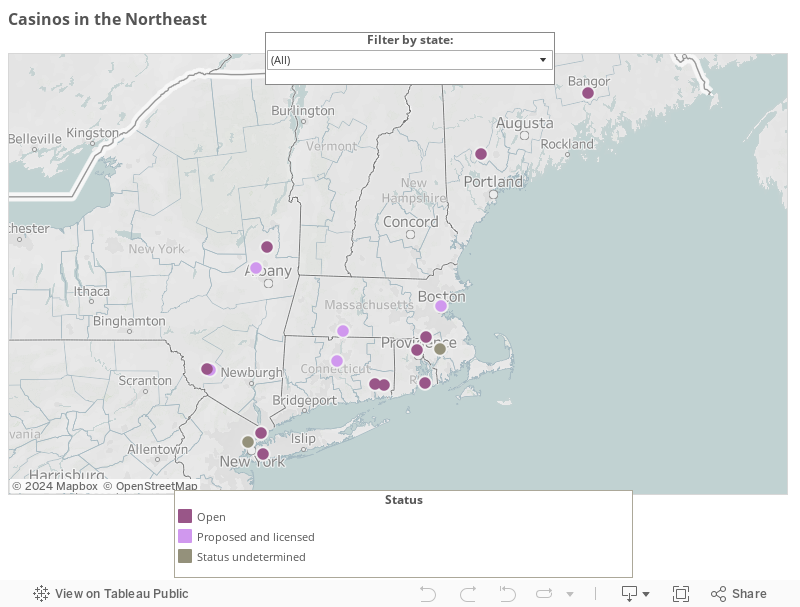
In New England alone, seven facilities operate in four states.
Foxwoods and Mohegan Sun are the reigning heavyweights. Rhode Island’s Twin River Casino in Lincoln and Maine’s Hollywood Casino & Raceway in Bangor and Oxford Casino in Oxford also qualify as full-fledged casinos, offering table games as well as slot machines.
Two of the facilities — Newport Grand in Newport, R.I., and Plainridge Park Casino in Plainville, Mass. — offer only slots and electronic versions of table games. Plainridge additionally offers harness racing.
Four more casinos have been licensed or proposed in the region, while Newport Grand could be shuttered in favor of a full-fledged casino in Tiverton, R.I., depending on the outcome of an Election Day referendum in November.
If everything that’s been proposed materializes — and that’s a sizable “if” — New England’s four gaming states could be home to 10 casinos and a slots parlor by, say, 2020.
West of New England, two upstate New York casinos are scheduled to open next year in Schenectady and Thompson.
To the south, slots-only racetrack casinos in and near New York City already cut into the Connecticut casinos’ share of the slots market.
One of them, Resorts World Casino at the Aqueduct track in Queens, has been talking about expansion.
And then there’s the prospect of a casino or two in northern New Jersey, if that state’s voters approve gaming outside Atlantic City in another Election Day referendum.
“Overall, the market in New England is continuing to grow,” Clyde Barrow, a gaming expert, said in an interview. “But there will be a saturation point.”
Barrow, a professor and chairman of the political science department at the University of Texas Rio Grande Valley in Edinburg, Texas, previously served as director of the Center for Policy Analysis at UMass Dartmouth.
He has studied Northeast gaming for decades and continues to do so.
Hired by the casino-owning Mashantucket Pequot and Mohegan tribes, Barrow analyzed the impact that the casinos proposed in Massachusetts and New York would have on jobs and revenues at Foxwoods and Mohegan Sun.
His 2015 report fueled the tribes’ campaign to win state authorization for up to three commercial casinos in Connecticut.
Eventually, the legislature approved a bill that allowed the tribes to form a partnership and jointly seek site proposals from Hartford-area municipalities willing to host a single “satellite” casino.
The facility would target MGM Springfield, the $950 million resort casino now under construction in Massachusetts.
So, how do you know when supply and demand are in balance?
Barrow and two colleagues, David Borges and Alan Meister, recently published a paper on the subject, calling attention to a metric involving slot-machine revenues.
Fitch Ratings, a credit-rating agency, considers a “win” per machine per day of $200 to be an important threshold, Barrow said, with win being the amount of slots wagers a casino keeps after paying out prizes.
When the average daily win per machine in a market sinks below $200, it becomes difficult for casinos to cover their overhead, Barrow said.
In June, Mohegan Sun’s average win per machine per day was nearly $300. Foxwoods’ was about $260.
If MGM Springfield and Wynn Boston Harbor, a $2.1 billion project underway in Everett, Mass., open as projected in 2018 and 2019, respectively, and Rivers Casino and Montreign Resort Casino open next year in Schenectady and Thompson, N.Y., the saturation point might be reached, Barrow said.
And that would be before any resolution of the Mashpee Wampanoag Tribe’s $1 billion project in Taunton, Mass. — halted weeks ago by a court ruling that overturned a federal land-into-trust decision — or the Mashantucket-Mohegan partnership’s bid to win the Connecticut legislature's approval of a Hartford-area casino.
The Mashpees, who broke ground on their First Light project in April, have had to secure $8.2 million worth of steel that had been delivered to the Taunton construction site.
They are expected to appeal the court ruling.
“I could easily envision that if things go well with MGM Springfield and Wynn, and Taunton’s not happening, they could make the decision to expand Plainridge by simply allowing table games there,” Barrow said, referring to the Massachusetts Gaming Commission. 

Felix Rappaport doesn't even like to say it.
"I try not to use the word," Foxwoods Resort Casino’s top executive admitted in an interview this past week. "No sense cursing the darkness."
Nevertheless, most discussions of the state of gaming in the Northeast center on “saturation,” the point, theoretically, where supply equals demand.
Rappaport prefers the term “competitive landscape.”
In New England alone, seven facilities operate in four states.
Foxwoods and Mohegan Sun are the reigning heavyweights. Rhode Island’s Twin River Casino in Lincoln and Maine’s Hollywood Casino & Raceway in Bangor and Oxford Casino in Oxford also qualify as full-fledged casinos, offering table games as well as slot machines.
Two of the facilities — Newport Grand in Newport, R.I., and Plainridge Park Casino in Plainville, Mass. — offer only slots and electronic versions of table games. Plainridge additionally offers harness racing.
Four more casinos have been licensed or proposed in the region, while Newport Grand could be shuttered in favor of a full-fledged casino in Tiverton, R.I., depending on the outcome of an Election Day referendum in November.
If everything that’s been proposed materializes — and that’s a sizable “if” — New England’s four gaming states could be home to 10 casinos and a slots parlor by, say, 2020.
West of New England, two upstate New York casinos are scheduled to open next year in Schenectady and Thompson.
To the south, slots-only racetrack casinos in and near New York City already cut into the Connecticut casinos’ share of the slots market.
One of them, Resorts World Casino at the Aqueduct track in Queens, has been talking about expansion.
And then there’s the prospect of a casino or two in northern New Jersey, if that state’s voters approve gaming outside Atlantic City in another Election Day referendum.
“Overall, the market in New England is continuing to grow,” Clyde Barrow, a gaming expert, said in an interview. “But there will be a saturation point.”
Barrow, a professor and chairman of the political science department at the University of Texas Rio Grande Valley in Edinburg, Texas, previously served as director of the Center for Policy Analysis at UMass Dartmouth.
He has studied Northeast gaming for decades and continues to do so.
Hired by the casino-owning Mashantucket Pequot and Mohegan tribes, Barrow analyzed the impact that the casinos proposed in Massachusetts and New York would have on jobs and revenues at Foxwoods and Mohegan Sun.
His 2015 report fueled the tribes’ campaign to win state authorization for up to three commercial casinos in Connecticut.
Eventually, the legislature approved a bill that allowed the tribes to form a partnership and jointly seek site proposals from Hartford-area municipalities willing to host a single “satellite” casino.
The facility would target MGM Springfield, the $950 million resort casino now under construction in Massachusetts.
So, how do you know when supply and demand are in balance?
Barrow and two colleagues, David Borges and Alan Meister, recently published a paper on the subject, calling attention to a metric involving slot-machine revenues.
Fitch Ratings, a credit-rating agency, considers a “win” per machine per day of $200 to be an important threshold, Barrow said, with win being the amount of slots wagers a casino keeps after paying out prizes.
When the average daily win per machine in a market sinks below $200, it becomes difficult for casinos to cover their overhead, Barrow said.
In June, Mohegan Sun’s average win per machine per day was nearly $300. Foxwoods’ was about $260.
If MGM Springfield and Wynn Boston Harbor, a $2.1 billion project underway in Everett, Mass., open as projected in 2018 and 2019, respectively, and Rivers Casino and Montreign Resort Casino open next year in Schenectady and Thompson, N.Y., the saturation point might be reached, Barrow said.
And that would be before any resolution of the Mashpee Wampanoag Tribe’s $1 billion project in Taunton, Mass. — halted weeks ago by a court ruling that overturned a federal land-into-trust decision — or the Mashantucket-Mohegan partnership’s bid to win the Connecticut legislature's approval of a Hartford-area casino.
The Mashpees, who broke ground on their First Light project in April, have had to secure $8.2 million worth of steel that had been delivered to the Taunton construction site.
They are expected to appeal the court ruling.
“I could easily envision that if things go well with MGM Springfield and Wynn, and Taunton’s not happening, they could make the decision to expand Plainridge by simply allowing table games there,” Barrow said, referring to the Massachusetts Gaming Commission. 


http://www.theday.com/article/20160813/NWS01/160819652