Meetings & Information


*****************************
****************************************************
MUST READ:
GET THE FACTS!


Showing posts with label Wyoming. Show all posts

Sunday, August 21, 2016

Kingston: How Wyo. abused gov’t power


Kingston: How Wyo. abused gov’t power

  • By Tim Kingston


On May 8, 2016, my good friend Ed Atchison died. Though Ed had a long history of health problems, his death was unexpected, with only his dog at his side.
Ed was an Army officer in Vietnam, and after his service, he became a licensed counselor at the Cheyenne VA, including becoming the director of the Cheyenne/Fort Collins Veterans Outreach Center. Later, Ed moved to Las Vegas, where he counseled vets at the largest homeless shelter in the city.
When Ed moved to Las Vegas, he became concerned with the issue of gambling addiction, or “problem gambling.” He saw how gambling can take over people’s lives and cause them to lose their savings, home, family and even their lives.
He learned that suicide is a particular problem among problem gamblers. National studies show one in six problem gamblers attempts suicide.
He was particularly concerned with the issue of problem gambler suicide in Wyoming, because Wyoming has one of the highest suicide rates in the country. Ed became one of the very first nationally certified gambling counselors and was the only such counselor in Wyoming.
The Wyoming Legislature approved a lottery in 2014.
The legislation required that a percentage of gambling funds be used for the prevention and treatment of problem gambling.
The legislation also created a state entity known as the Wyoming Lottery Corporation to start up and run the lottery. During the startup phase, Ed worked with the Lottery Corporation on the issue of problem gambling and provided them his unique expertise and experience. However, Ed came to believe that the Lottery Corporation was not concerned with the issue of problem gambling and was not taking steps necessary to address the problem. The relationship between Ed and the Lottery Corporation became contentious, and there was a parting of the ways.
But Ed did not give up. He continued to push executives of the Wyoming lottery, including Jon Clontz, its executive director, on the issue. It is fair to say that Ed became a thorn in the side of the Wyoming lottery. He also wrote numerous letters to the editor and was interviewed by reporters and commentators, where he expressed his belief that the Wyoming Lottery Corporation was not doing anything close to enough to address problem gambling.
And this is the point of this piece. Instead of addressing Ed’s concerns, instead of trying to work with him, instead of adequately addressing the issue of problem gambling, the state of Wyoming, through the Wyoming Lottery Corporation, sued Ed Atchison for defamation.
I represented Ed in that case. I have had a lot of experience with First Amendment cases, and I can say that I have never seen, certainly not here in Wyoming, a governmental agency suing one of its own citizens for defamation. It was and is absolutely unprecedented.
For an entity of the state of Wyoming, armed with all of the resources and power of the state, to use that power to sue a private person for being critical of the state is an absolute travesty and should cause great concern to Wyoming’s citizens. The First Amendment to the United States Constitution absolutely protects everything Ed said and did with regard to the lottery.
Yes, Ed was difficult. Yes, he pushed hard and was critical of the Wyoming Lottery Corporation. But for a state entity to sue someone for being criticized flies in the face of everything we as Americans believe about our role in our own governance and government.
Without engaging in hyperbole, what the Wyoming Lottery Corporation did, what the state of Wyoming did to Ed, is what totalitarian governments do. Totalitarian governments crush dissent, and this is what the state was trying to do, crush the dissent of Ed Atchison.
I hope that this is the last time that the state of Wyoming and its entities engage in this kind of abuse of governmental power. We all must be vigilant to ensure that it never happens again.
Tim Kingston has been a Cheyenne attorney in general practice here and throughout Wyoming for the last 23 years. He represented Ed Atchison in the lawsuit referenced in the op-ed. Email: Kingston@rockymtnlaw.com.


Sunday, January 24, 2016

Atchison: Fix total disregard for problem gamblers


Atchison: Fix total disregard for problem gamblers


Editor:
As a mental health professional and one of the many advocates in Wyoming for a person's well-being, I am totally baffled. The discussion continues by the governor and the legislators on how funds from the rainy day fund totaling $1.8 billion should be distributed for the benefit of its citizens and families. They still have no idea what to do with one of the largest "rainy day" funds in the United States.
Meanwhile no action to my knowledge has been initiated for mental health services for thousands of Wyoming problem gamblers and their families. This is happening despite the fact the mission of our state Department of Health specifically states "to promote, protect, and enhance the health of ALL (emphasis added) Wyoming residents." At this point no one (governor, legislators, etc.) has stepped up in doing their job.
The good news about this terrible dilemma is monies designated for this destructive addiction can not be "cut " -- as there are no monies! To further their total disregard of gambling and problem gambling consequences those same people in charge in protecting our rights as citizens have determined there is absolutely no need for a Gambling Control Commission.
This wrongful attitude is preposterous with the millions of dollars being generated in the state by lotteries, horse racing, bingo, poker, scratch cards, cock fighting, etc. . Our present philosophy is simply to turn our head regarding gambling's tremendous growth and ignore the fact more controls are essential in overseeing this industry while taking care of its social and moral issues (eg: problem gambling, suicides, etc.)
Take for instance: Just recently a former employee of the national Multi-State Lottery Association will spend 10 years in prison after being convicted of fraud for rigging the Hot Lotto game to win millions. It just so happens our own lottery is a member of the Multi-State Lottery Association. Wake up, folks: Gambling is fun, but there are certain consequences of this activity we have to be responsible for.

ED ATCHISON, executive director, Wyoming Council for Problem Gambling


Sunday, May 26, 2013

Getting ready for the lottery & Gambling Addiction


Getting ready for the lottery

The aim of a conference scheduled for Cheyenne next month is to give local mental health professionals and the general public a heads-up on gambling problems, including gambling addiction.

The June 6 session at Laramie County Community College is timely given that the state’s new lottery law goes into effect July 1.

The primary speaker at the conference is Joanna Franklin, an international gambling consultant and addiction specialist.

She was the first clinician hired by the first state-funded gambling treatment program run by Johns Hopkins University. She has been the director of training for the Taylor Manor Gambling Treatment program and the program manager for adult services at the Psychiatric Institute of Washington D. C.

The idea for the conference came from Ed Atchison of Cheyenne, who worked for 15 years at the Veterans Administration Center in Las Vegas, where he saw the downside effects of gambling up
close.

He learned that the center had its own Gamblers Anonymous group with meetings attended by everyone from lawyers, engineers and other top professionals in the community to the people on the street.

He joined a volunteer group council on problem gambling and ultimately became its chairman. He testified before a national commission on casino gambling.

His group, he said, also began knocking heads with the CEOs of the Las Vegas gambling casinos.

“They were in total denial. They said there was not an issue with problem gambling in Las Vegas.
That was 20 years ago,” he said.

Before he moved to Las Vegas, Atchison worked for the mental health division of the Wyoming Department of Health.

After he retired about four years ago and returned to Cheyenne,, he thought he was through with the gambling issue. But then he received a call from an acquaintance in Riverton who told of the difficulties resulting from the casino gambling on the Wind River Indian Reservation.

He organized the Wyoming Council on Problem Gambling, a small group that is sponsoring the conference.

He said he is not anti-gambling and is personally a “social gambler.” Wyoming already has a gambling problem in Fremont County.

People with the dual addiction of alcohol and gambling are common.

Atchison said he was irritated at the comments of state senators during the debate on the lottery bill last winter.They claimed that a lottery will not be harmful because it does not provide instant gratification.

It is inaccurate to say some games are worse than others, he said, because while there is a difference between the games, all of them are gambling.

“I’ve heard these stories for 20 years,” Atchison said.

He said he has also known Franklin for 20 years from their mutual involvement in gambling issues.

She is one of the top gambling authorities in the world, he said.
She agreed to speak at the workshop for no fee.

Franklin said that 1 percent to 3 percent of the population have problems with gambling.
Treatment recommended includes the 12-step programs like Alcoholic Anonymous.

Other strategies are available and no two gamblers are treated the same, she said in a telephone interview.

Although outcome studies showing the result of treatment are few, she estimated that 40 percent to 60 percent of gamblers do well, which is about the same success rate for alcohol addiction.
There is little standardization of treatment in this field, a lack that hinders the assessments of progress.

Unlike substance abuse and mental health, the federal government has no financed program and provides no leadership for gambling addiction.

The efforts in this field are coming from the states and occasionally through university projects.
“We’re not where the other addictions are,” Franklin said.

The conference is free to the public.

Behavioral health professionals who attend can earn 7.5 training hours approved by the International Gambling Counselor Certification Board.

http://trib.com/opinion/columns/getting-ready-for-the-lottery/article_46d4b72f-b73a-5cd0-aed4-114a2395fac5.html

Saturday, December 1, 2012

Gambling addiction in Fremont County could be on rise, but not on radar


Gambling addiction in Fremont County could be on rise, but not on radar
Fri November 30, 2012


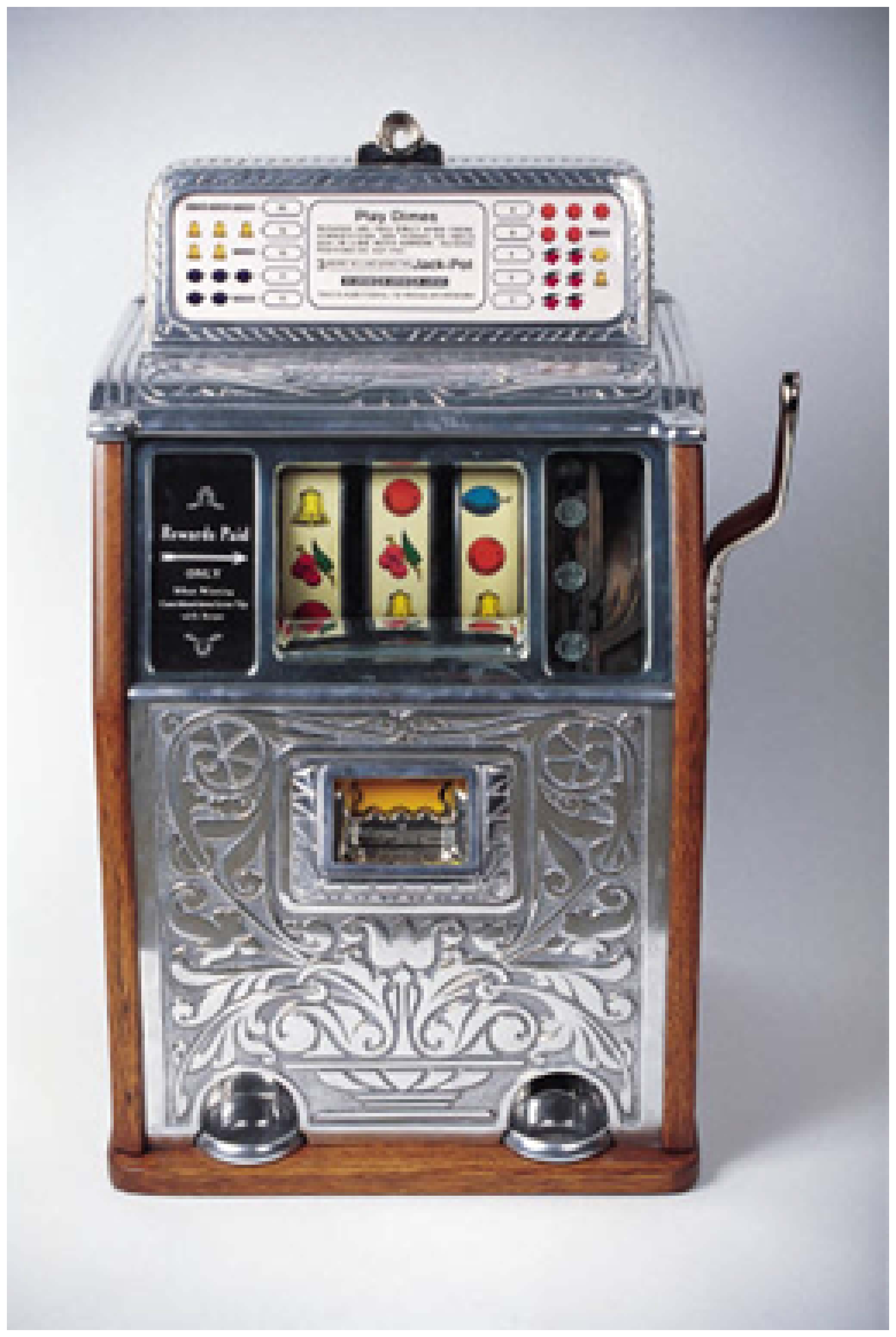
Credit Slot Machine Word

HOST: There have been rumors that Fremont County is experiencing a rise in gambling addiction amongst its residents. Wyoming Public Radio’s Irina Zhorov reports that whether the rumors are true or not is still unclear, but some services are popping up to address it regardless.

ZHOROV: The Wind River Hotel and Casino in Riverton is full of chirping slot machines, game tables, bright lights, and…gamblers.

There are differing opinions regarding how much good gaming has brought to the county and tribes. But there is also concern about gambling addictions.

ANNA: In 2006 is when I probably started gambling compulsively…

ZHOROV: That’s a compulsive-gambler-in-recovery we’ll call Anna, who did not want her real name used.

ANNA: Started out just like everyone else, going out with $20, went out with my friend, we would have dinner, play a little, laugh and joke, and it was all fun. And it continued to be fun for a while and then the amount of money we put in went up, and then it just got out of hand.

ZHOROV: Anna declined to share the details of her story except to say that it got REAL BAD. We met at a Gamblers Anonymous meeting in a church located just a couple minutes’ drive from the big casino.

Only two of the five regulars attended that particular meeting, one of whom was the Organizer, who also didn’t want her name used. She started the meetings when a friend sought help and found no resources in the community. She got in touch with the International Gamblers Anonymous office, found a space for the meetings, and bought materials out of pocket.

ORGANIZER: Gambling isn’t spoke of. Nobody talks about it even with all the casinos we have in Fremont County, nobody talks about gambling and people losing their houses, losing everything they own. It happens all the time.

ZHOROV: The organizer and Anna are both clear that it’s not the casinos’ fault.
But they say that gambling addiction is still very much a problem. There are no statistics about whether the number of gambling addicts is increasing.

Here’s Fremont County Prosecuting Attorney, Brian Varn:

BRIAN VARN: I don’t know that I can say there’s been an increase for certain. I know that in the last 4 years we’ve had somewhere around 8 cases in which the defendants themselves told us that the reason they had been involved in embezzlement and theft from their employers was because of their gambling.

ZHOROV: He suspects other cases were also linked to gambling, but can’t be sure. Varn says those numbers aren’t exactly an epidemic, and the Gamblers Anonymous meetings aren’t overflowing either.

But the National Council of Problem Gambling estimates that there are 8,000 problem gamblers and 4,000 pathological gamblers in Wyoming. Executive Director of the Council, Keith Whyte, says nobody actually counts, so the numbers could be higher. In the past six months, the Council’s hotline received an average of 50 calls a month from Wyoming.

Whyte says part of the problem is that gambling is legal, and gambling addiction isn’t often seen as an illness.

KEITH WHYTE: Until recently it hasn’t been seen as a public health problem. The state has been very slow to address and respond to it just like other diseases like diabetes or drug abuse and depression. Although the medical community sees them as all very similarly related.

ZHOROV: The Fremont County Counseling Service is one entity that is taking the issue seriously, despite the lack of data. They’re starting a gambling awareness group that will teach classes about signs and symptoms of gambling addiction, what to look out for and how to engage someone who may be a problem gambler. So far, demand for the class has been low.

For now, Director of Fremont Counseling Service, Gerry McAdams, says the class is still worth holding.

GERRY McADAMS: Need and demand are two different things. I’m not opposed to doing things when I know there’s a need, then at some point and time we have to catch up the need and the demand together where we can run a viable program.

ZHOROV: The Wind River Casino recognizes there is a problem, too. The Casino’s Andrea Clifford says they’ve seen it affect their employees. The casino has brought in specialists to train all staff on problem gambling awareness and train local counselors to specialize in gambling addiction. They also provide self-exclusion, where people self-identify themselves and are asked to leave the casino if found there, but the Organizer and Anna both said it doesn’t work. Finally, the casino used to help out with GA meetings in the past.

Currently, however, Clifford says casino staff is stretched thin and it doesn’t help that there aren’t other resources in the area…

ANDREA CLIFFORD: It was kind of hard for us because when we called the hotline for problem gambling they didn’t even realize that WY had casinos here. And we were kind of like yeah, we’re here, we’ve been here, and we need some services and some help.

ZHOROV: Current GA meetings convene at the Church of Christ in Riverton, every Monday at 6pm.

For Wyoming Public Radio, I’m Irina Zhorov.

http://www.wyomingpublicradio.net/post/gambling-addiction-fremont-county-could-be-rise-not-radar