Meetings & Information


*****************************
****************************************************
MUST READ:
GET THE FACTS!


Showing posts with label Potawatomi. Show all posts

Monday, February 22, 2016

Beating the odds


Beating the odds

Beating the odds

Players demonstrate the slot machines at The Pokagon Band of Potawatomi Indians’ Four Winds Dowagiac during media day in 2013. There appears to be a link between between casino gambling and embezzlment cases in Southwest Michigan, but there is debate over how much they’re linked.

Beating the odds


Posted: Sunday, February 21, 2016

Thousands of people visit Michigan casinos every day as a form of entertainment and socializing, with no severe impact on their lives.
For some, gambling can become an addiction, creating havoc for themselves and their families.
Jane (not her real name) began visiting casinos as a way to relieve stress and to have time away from her family, including a son with attention deficit disorder.
“I would sit for hours and play the games and not have to think about home,” Jane recalled.
She had retired after 20 years in the banking industry and had extra income, and had put away money for her retirement, with plans to live in Florida during the winter.
But her gambling snowballed, and within a couple of years she had drained every account, had lost her home and car, ruined her credit and was stealing Social Security money from her brother, who is disabled.
“That was my wake-up call,” said Jane, who saw a hotline number for gambling addicts on television and decided to make the call. “Here I am, broke. My retirement money is gone. It’s like I’m starting my life over again.”
She is attending therapy sessions with Melanie Page-Wood of the Bright Hope Counseling Center in St. Joseph and is learning about what drove her compulsive gambling and how to avoid the triggers that could start another spree.
Page-Wood, the only state-certified gambling addiction counselor in Berrien County, began working with gambling addicts four years ago, after being approached by a St. Joseph pastor whose church treasurer had embezzled from her congregation.
She has seen the devastating impact out-of-control gambling can have on a person’s life. She knew one woman, a widow in her mid-70s, who lost her savings, her home and later her apartment through gambling. Every month she would take her Social Security check and blow it at a local casino.
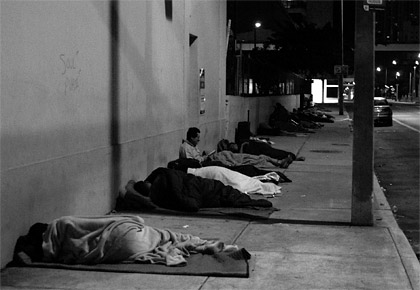
“She was literally homeless, walking the streets of St. Joseph, sleeping in hotel lobbies,” Page-Wood said.
Jane said she could have been homeless if her family hadn’t taken her in. And she said it was likely she would have taken money from work if she hadn’t been retired. Instead “I begged, borrowed and stole from my family,” she said.
Jane said casinos make it attractive and easy to keep gambling, by offering free food, free parking, even free rooms at the hotels, as well as extending credit and allowing players to make cash advances.
Page-Wood said that, around the Detroit casinos, there are numerous billboards with the number of the gambling addiction hotline, funded in part by the casinos themselves. But these billboards are nowhere to be seen in Berrien County, she said.
She called officials in Lansing to request the billboards here, without success.
Page-Wood said she is receiving an increasing number of calls about compulsive gambling, but not as many as she would expect, considering the pastime’s popularity.
Jane said that there are no Gamblers Anonymous meetings in this area, and she has been attending meetings in Kalamazoo. She is surprised that only six to eight people attend each meeting, considering the thousands crowding the casinos.
There is an area support group starting that addresses a number of problems, including gambling, as well as other addictions, depression and abuse, called Celebrate Recovery. It is being offered by Overflow Church in partnership with Fairplain Presbyterian Church, at 210 W. Napier Ave., Benton Harbor, and the group meets at 7 p.m. every Tuesday.
Information is at celebraterecovery@overflowchurch.org or by calling 944-6267.
Page-Wood can be reached at 944-7331. Her office is on the third floor of the Box Factory for the Arts on Broad Street in St. Joseph.
The National Problem Gambling Helpline number is 1-800-522-4700. The Michigan Association of Problem Gambling helpline is 800-270-7117 and the website is www.michapg.com.
Casinos chipping in
A spokeswoman for the owners of the Four Winds casinos said her organization is committed to curbing problem gambling.
“To ensure responsible gambling, Four Winds Casinos does everything in its power to prevent the two most common gambling problems: compulsive gambling and underage gambling,” according to Paige Risser, spokeswoman for the Pokagon Band of Potawatomi Indians, owners of the Four Winds casinos. “In addition, for the safety of our guests, we voluntarily monitor alcohol consumption and provide alcohol sensitivity training to appropriate employees and managers.”
The Four Winds Casinos list the following warning signs of a possible gambling problem:
• Extensive and/or frequent playing sessions.
• Remaining in the gaming area without playing or after their bankroll has been exhausted.
• Regular credit limit increase requests.
• Excessive credit card and/or cash machine use.
• Requests to borrow money from other guests and/or staff.
• Significant changes in betting pattern.
• Losing regard for health and/or hygiene.
The Mayo Clinic lists these other signs:
• Gaining a thrill from taking big gambling risks.
• Taking increasingly bigger gambling risks.
• Preoccupation with gambling.
• Reliving past gambling experiences.
• Gambling as a way to escape problems or feelings of helplessness, guilt or depression.
• Taking time from work or family life to gamble.
• Concealing or lying about gambling.
• Feeling guilt or remorse after gambling.
• Borrowing money or stealing to gamble.

Saturday, March 14, 2015

Potential casino coming to South Bend


Potential casino coming to South Bend

Posted: Mar 13, 2015

More slot machines and table games could be coming to Michiana if plans are approved to build a casino in South Bend.
The Pokagon Band of Potawatomi Indians got a response from the Federal Government on Thursday after a proposal they submitted two years ago.
They are seeking Trust Land to create a Tribal Village but now that they have a response, they are in the first step of a very lengthy process.

If they are able to get that Trust Land approved, it will be their decision in how they want to use it.

The Pokagon Band released a statement that said in part: "The Pokagon Band is seeking Trust Land to create a Tribal Village with the necessary infrastructure and services to support its citizens, including affordable housing, government and administrative offices, a community center, and health services. To fund this infrastructure and services, the Pokagon Band will also build a Four Winds Casino on the South Bend site, which will create jobs and provide continued economic support to the Pokagon Band and surrounding communities."

The Pokagon Band will use the Four Winds Casino to help sustain its community but some people are opposed to building a casino in South Bend.

According to Jake Teshka who is involved with the grassroots organization Citizens for a Better Michiana, he has seen studies based in cities where casinos are built.

“In areas where casinos are, crime can spike, violent crimes can spike as much as ten percent,” said Teshka.

He also thinks that small businesses could suffer as a result of the casino.

“By building a casino what we're doing is cutting off any future possibility of having major consumers in small business," Teshka added.

However, the Four Winds Casino in New Buffalo was built in 2007 and according to New Buffalo Township Supervisor Rose Dudiak it has been a success.

“This casino has been a win-win situation for us. The things we've been able to do in the township have been incredible. We would not be able to do them without the casino,” Dudiak said.

She also said the casino has brought in enough money that the New Buffalo Township Hall will soon go through a two million dollar renovation.

If the casino is built, it has the potential of bringing in about 2,000 permanent jobs and about 1,500 temporary construction jobs.

That is something South Bend Mayor Pete Buttigieg thinks will be good for the city.

“We got to work with them, figure out exactly what the plans are and how the city fits in but as long as this happens in the context of an overall agreement that benefits the city, benefits the community, then I think it could be a very positive thing for South Bend,” said Mayor Buttigieg.

The location of this land is near the U.S. 20 Bypass and covers 166 acres.


http://www.abc57.com/story/28491607/potential-casino-coming-to-south-bend

Sunday, October 5, 2014

Gambling Addict to Prison for EMBEZZLING + $1 MILLION spent at Potawatomi


Falls woman gets 15 months for embezzling to cover gambling debts

Saturday, May 10, 2014

Potawatomi tribe must turn over employment records, judge rules


Indian Gaming > Forest County Potawatomi casino must reply to EEOC subpoena - Indianz.Com
The Potawatomi Bingo Casino in Milwaukee, Wisconsin. ... That language seems to run counter to the Indian Gaming Regulatory Act of 1988. The law ...

Potawatomi tribe must turn over employment records, judge rules

Age discrimination case explores federal rights in tribal businesses


The federal government can subpoena employment records from the Potawatomi tribe as part of an investigation of an age discrimination complaint, U.S. District Judge Lynn Adelman said in an order issued this week.

Adelman's order rejects the tribe's claim that federal age discrimination employment laws do not apply to its lucrative Potawatomi Bingo Casino, which employs about 2,700 people. The decision is expected to add fuel to an ongoing national debate over what federal laws apply to tribal casinos.

"The casino is not an arm of the tribe's government and does not serve in a governmental role; instead, it is a business run by the tribe," Adelman wrote in an 11-page decision that gives the tribe 30 days to turn over the records. "Moreover the dispute involves a non-Indian, and the tribe has no internal process of adjudicating the dispute."

The U.S. Equal Employment Opportunity Commission demanded records detailing age-discrimination complaints from the casino last year after Ferdico Colon lost his casino job and filed a complaint with the agency. Colon alleged he was treated differently than younger employees.

The question of whether Indian casinos must abide by federal employment laws has been bouncing around Indian country and the federal court system for several years. Federal courts around the country have come down on different sides of the issue. The 7th Circuit Court of Appeals, which includes Wisconsin, has not yet ruled on the question.

"It's so strange that we're deciding questions of the reach of state and federal governments onto Indian land today," said I. Nelson Rose, a gaming law expert and Whittier College law professor. "It's something that you would think would have been resolved 200 or 300 years ago."

But, he added, "when the tribes had no money, the law basically didn't care."

Tribal casinos and their associated business posted gaming revenue of more than $28 billion — including about $1.2 billion in Wisconsin — and employed nearly 700,000 people in 2012, according to Casino City's annual Indian Gaming Industry Report. The Potawatomi casino won about $400 million from gamblers in the year that ended June 30, 2013, according to a Journal Sentinel estimate based on payments the tribe makes to local governments.

The fight between the EEOC and Potawatomi "is part of an ongoing battle between the EEOC and the NLRB (National Labor Relations Board) and tribes across the country," said R. Lance Boldrey, an attorney at Dykema Gossett in Michigan. "This is the type of case that has the issues that could make its way to the (U.S.) Supreme Court."

Boldrey is leading the team hired by Gov. Scott Walker's administration that is studying the issues in the fight over whether an off-reservation casino should be allowed to open in Kenosha.

Skip Durocher, co-chair of Indian Law Practice Group for Dorsey & Whitney in Minneapolis, agreed there is potential for a case to go to the Supreme Court because federal district and appellate "courts around the country have come down on both sides of the issue."

Durocher said that "state labor and employment law is easy — it doesn't apply" to tribal business unless the tribe agrees to abide by the state law. But, he added, "the applicability of federal laws is a trickier issue."

Rose said the U.S. Supreme Court has sent out signals that it doesn't like the sovereign immunity powers granted to tribes, and lower courts have been opening the door to federal agencies' exerting authority on tribal land.

"It's kind of turning Indian law on its head," Rose said. "Twenty years ago (the Potawatomi case) would have been decided the opposite way ...Now I think there is pretty good chance it will be upheld" on appeal.

Jeff Crawford, Potawatomi attorney general, said through a spokesman that the tribe "does not discriminate based on age" and it has not decided whether to appeal Adelman's decision.

In his ruling, Adelman rejected the tribe's arguments that it is not subject to the federal Age Discrimination in Employment Act and that it is does not fit the definition of "employer" under the act. He also rejected the tribe's claim that the information sought by the subpoena was irrelevant.

"There's an awful lot of employees nationwide" at tribal casinos, said Dennis McBride, the EEOC senior trial attorney who brought the case. "This decision could pave the way for opening new avenues for relief for people who thought they had no avenue for relief."


Read more from Journal Sentinel: http://www.jsonline.com/business/potawatomi-tribe-must-turn-over-employment-records-judge-rules-b99266393z1-258712021.html#ixzz31MPk2Y81
Follow us: @JournalSentinel on Twitter

Friday, June 21, 2013

Gun Violence Invades Potawatomi Casino


Potawatomi casino reviews security as charges loom in shooting

The scene from after the shooting on the gaming floor at Potawatomi Bingo Casino early Sunday.

Photo contributed by De Von Dent

The scene from after the shooting on the gaming floor at Potawatomi Bingo Casino early Sunday.

Spokesman says security officers trained to alert authorities, not intervene

Thursday, June 28, 2012

Patchak decision could have wide-ranging effect on tribes


Court decision could have wide-ranging effect on tribes, casinos
By Chris Sieroty
LAS VEGAS REVIEW-JOURNAL
Posted: Jun. 22, 2012
 
A lawsuit seeking closure of the tiny Gun Lake casino in Michigan could have a major effect on the nation's Indian casino market, an industry that posted $26.73 billion in revenue in 2010, according to the Indian Gaming Industry Report.

Analysts say this week's U.S. Supreme Court decision to remand the case to the U.S. Court of Appeals could make it more difficult to fund tribal casino projects or even delay some projects until the matter is settled. The $160 million resort targeted in the lawsuit is in Wayland Township, 20 miles south of Grand Rapids. It was developed and is managed by Las Vegas-based Station Casinos LLC.

"The decision has the potential to change how the federal government takes land into trust for tribes," said Steven Light, co-director of the Institute for the Study of Tribal Gaming Law and Policy at the University of North Dakota. "It's potentially a huge problem for expansion of gaming for recently recognized tribes."

Casino opponent David Patchak challenged the way the federal government took 147 acres in trust for the Match-E-Be-Nash-She-Wish Band of Pottawatomi Indians, also known as the Gun Lake Tribe, so it could build a casino.

The tribe announced plans for a casino shortly after being formally recognized by the federal government in 1999.

Patchak, who opposes the development because of its land use impact, argues the land could not legally be placed in trust under the Indian Gaming Regulatory Act of 1988 because the tribe was not recognized in 1934. Light said the high court's decision "lines up with the Carcieri (versus Salazar) decision of 2009," in which the Supreme Court held that only tribes "under federal jurisdiction" in 1934 are eligible to have land taken in trust on their behalf.

The federal government's ability to make land-in-trust decisions is crucial for tribal casino operations because if the land can't be held in trust, it's ineligible for Class III gaming that includes slot machines, blackjack, craps and roulette.

In a three-page report, Michael Paladino, senior director with Fitch Ratings in New York, wrote the ruling could have several key "credit implications for the gaming" industry. It's unclear how many casinos would be affected.

He said it is likely to result in increased challenges from anti-gaming interests regarding land-into-trust decisions as it lengthens the statute of limitations on judicial review to six years from 30 days. Casino operators faced with competition from tribal operations could benefit from a longer regulatory process.

"Raising capital for Native American casino projects could become more difficult (and) expensive as investors are likely to have heightened concern about potential challenges regarding land-into-trust decision," Paladino wrote.

Station Casinos executives declined comment on the high court's decision. The gaming company developed the 76,000-square-foot Gun Lake casino and manages it through MPM Enterprises LLC, in which Station Casinos is a 50 percent partner.

The company earns an annual management fee equal to 30 percent of net income over the seven-year contract.

Paladino noted that a separate $433 million tribal casino project between Station Casinos and the Federated Indians of Graton Rancheria in Northern California is not affected by the Patchak lawsuit.

The U.S. Department of the Interior's land-into-trust approval for that tribe was authorized by Congress in the Omnibus Indian Advancement Act of 2000.

A state compact that would allow the Graton Rancheria to operate the casino awaits Interior Department approval, though earth moving started Monday. The casino is on 254 acres in a affluent area of Sonoma County about 43 miles from San Francisco. Station Casinos expects construction on the 535,000-square-foot project to take 18 to 24 months. The 100,000-square-foot casino will operate up to 3,000 slot machines.

Station Casinos also has a development and management agreement with the North Fork Rancheria of Mono Indians, whose casino near Madera, Calif., was approved by federal officials last year and will be built on trust land. The deal requires Gov. Jerry Brown's support by Sept. 1 for planning to continue.

Light said it remains to be seen whether Patchak prevails in court.

"The growth of tribal gaming has been remarkable in the last 25 years," Light said. "There have been blips along the way. I wouldn't classify this as a blip. We don't know yet what will happen."

http://www.lvrj.com/business/court-decision-could-have-wide-ranging-effect-on-tribes-casinos-160063355.html

Monday, June 18, 2012

Patchak has a case!


COURTHOUSE NEWS
June 18, 2012
Casino Challenger Has a Case, High Court Finds
By BARBARA LEONARD
(CN) - A Michigan man can sue the government and an American Indian tribe over their plans to build a casino near his property, the Supreme Court ruled Monday.

David Patchak filed suit over the negative effects of a proposed casino that would occupy 147 acres of his rural farming community in Wayland Township, Mich., referred to as the Bradley Tract.

His complaint notes that the casino would bring an estimated 3.1 million visitors yearly, divert medical resources from residents, increase crime and contribute to air, noise and water pollution. Patchak further claims that the casino would destroy the area's rural character, diminish property values and sully the local scenery.

The government had taken the land into trust for a band of Pottawatomi, known as the Match-E-Be-Nash-She-Wish or Gun Lake Band, which owned the property and wanted to build a casino there.
Since the Gun Lake Band was not under federal jurisdiction during the Indian Reorganization Act of 1934, however, Patchak says the government's actions would violate the National Environmental Policy Act and Indian Gaming Regulatory Act.

A federal judge agreed that trust authority is limited to tribes under jurisdiction in 1934, but dismissed Patchak's suit on different grounds. The court noted that Patchak lacks prudential standing to challenge the authority of Department of the Interior Secretary Kenneth Salazar since his Patchak's interests "actively run contrary" to the Indian Reorganization Act. It also noted that the government may have pre-empted Patchak's claims under Quiet Title by taking the land into trust.
But in January 2011, the D.C. Circuit foundthat Patchak had a triable claim under the Administrative Procedures Act.
The three-judge panel noted that "it would be very strange to deny Patchak standing in this case."
"His stake in opposing the Band's casino is intense and obvious," Judge A. Raymond Randolph wrote.
The zone-of-interests test of the IRA is supposed to "weed out litigants who lack a sufficient interest in the controversy."
"Patchak is surely not in that category," the ruling states.
Since Patchak did not sue for monetary damages and filed a claim relating to the government's actions "under color of legal authority," the Administrative Procedures Act states that the government does not have immunity from the suit.
Randolph also found that the Quiet Title Act of 1972 cannot bar the suit since Patchak did not claim that he owned the land. This law "reflects a congressional policy of honoring the federal government's solemn obligations to Indians with respect to title disputes over Indian trust land," according to the court.
The Supreme Court affirmed Monday, having consolidated two related petitions over the case in December.

Judge Elena Kagan authored the court's lead opinion. Judge Sonia Sotomayor alone dissented.


Tuesday, December 13, 2011

SCOTUS tackles Indian Gambling

Gun Lake Casino lawsuit before Supreme Court is 'incredibly high-stakes case,' says legal expert
By Garret Ellison The Grand Rapids Press MLive.com

WAYLAND TOWNSHIP — The Supreme Court will decide next year whether the federal government properly took land into trust for the Gun Lake Tribe to build a casino, in a case that experts say reaches far beyond the borders of Allegan County.

On Monday, the court agreed to hear former Wayland Township trustee David Patchak’s reinstated lawsuit against the Gun Lake Band of Pottawatomi and the federal Interior Department, a case which could force the Gun Lake Casino to shut its doors.

The casino, which employs about 900 people, opened in February and has since paid out $10.4 million in state and local revenue sharing while raking in about $104 million in net profits on electronic games after payouts in less than a year of operation.

“This is an incredibly high-stakes case,” said Matthew Fletcher, a law professor at Michigan State University who specializes in Indian gaming law. “This casino is generating a lot of revenue — a lot more than they thought they would.”

But the Supreme Court, which accepts only about 3 to 4 percent of cases for which they’re petitioned each year, would not be scheduling arguments if the lawsuit were simply about jobs, profits and revenue sharing for municipalities, although that helps, said Fletcher.


Rather, the Roberts Court justices are likely hoping to clear-up a gray-area in the law that governs decisions by the Department of Interior about taking land in trust on behalf of Indian tribes; a wrinkle that bodes well for the tribe and the government, he said.

The Supreme Court typically reverses about 70 to 75 percent of cases they hear, Fletcher said. “They usually agree to hear a case when they think a lower court is wrong.”

In this case, that would be the D.C. Circuit Court of Appeals, which unexpectedly reinstated Patchak’s lawsuit in January, the same day the tribe announced the date of the $157 million facilities grand opening.

It proved an unwelcome surprise that has resulted in a kind of elephant-in-the-room scenario for Gun Lake officials this year, because if Patchak wins the day, the land under the casino would become ineligible for Class III gaming -- meaning no slot machines, blackjack, craps or other tables games.

“They could have the world’s most expensive bingo hall,” said Cooley Law School professor Curt Benson in January.

It would also open up the federal government to a potential flood of lawsuits over recent land-in-trust decisions, said Fletcher, who was warning of the threat the Gun Lake case posed to the government’s land-in-trust statues back in 2008.

Reinstatement of Patchak’s lawsuit was “pretty shocking,” he said, because the courts have been uniform for decades on interpreting the Quiet Title Act as giving the government immunity from litigation after the land-in-trust decision has been made.

The D.C. Circuit opinion, which reversed a U.S. District Judge Richard Leon's dismissal of Patchak’s lawsuit in August 2008, conflicts with case law going back decades, he said. “You’ve never been able to sue on the back end."

In the appellate decision, one of the judges wrote that Patchak's appeal presented two jurisdictional issues -- whether, as the U.S. District court held, he lacks standing to pursue a case; and whether, if he has standing, sovereign immunity bars his suit.

Parties in the case each issued brief statements, essentially saying the same thing, in response to Monday's news.

“We appreciate the court’s willingness to hear our case,” said D.K. Sprague, Chairman of the Gun Lake Tribe. The casino is managed by Las Vegas-based Station Casinos Inc.

“We look forward to the opportunity to present our case to the U.S. Supreme Court,” said Dan Ettinger, with Warner Norcross & Judd in Grand Rapids, representing Patchak. “We are optimistic that the Supreme Court will agree with our position and allow Mr. Patchak to have his day in court.”

Fletcher said the justices are likely to hear arguments in March or April with a decision around June, before the summer recess.

If they reverse the appellate decision, that becomes the final word on the case, which has been moving through the U.S. legal system in some form for the past decade.

If the justices affirm the appellate decision, it could result in an expensive trial in federal court to decide whether the Interior Dept. was authorized to take the casino land, 147 acres known as the Bradley Tract, in trust for the Gun Lake Band, also known as the Match-E-Be-Nash-She-Wish Band. Other legal maneuvers also could cut the case off before a trial could be set.

Friday, January 21, 2011

Gun Lake: Tribal Slot Barn loses appeal

Michigan casino foe wins appeal in lawsuit

A federal appeals court has revived a lawsuit challenging a new casino in southwestern Michigan's Allegan County.

The court said today that David Patchak of Wayland Township can challenge how the federal government placed the land in trust for the Gun Lake Tribe of Pottawatomi Indians.

The ruling came on the same day that the tribe plans to announce when it will open the casino in Wayland Township, about 20 miles south of Grand Rapids. Tribe spokesman James Nye says there will be no delay.

Patchak's lawyer, John Bursch, says the court order means the lawsuit will get a new start in federal court in Washington, D.C. He says the casino will "destroy the rural lifestyle."


Gun Lake Casino will open Feb. 11; anti-casino lawsuit casts shadow over announcement

The Gun Lake Casino in Wayland Township will open Friday, Feb. 11, despite a recent court decision that revives an anti-casino effort.

Earlier in the day, the Circuit Court of Appeals for the District of Columbia reversed a federal court's dismissal of a lawsuit challenging the legality of placing land in trust for the tribe, according lawyers for the firm handling the appeal.

John Bursch chairs the appellate practice at that Grand Rapids firm, Warner, Norcross & Judd LLP. He said the three-judge appellate reversal disagreed with both major points on which the dismissal was based.

The lawsuit filed by his client, former Wayland Township trustee David Patchak, challenges the U.S. Secretary of the Interior's 2005 decision to place 147 acres in the township in trust for the tribe, also known as the Match-E-Be-Nash-She-Wish-Band of Pottawatomi Indians

Patchak's case was dismissed in August 2009 on grounds that he had no legal standing to bring the case.

If the appellate court's overturning of that dismissal stands, the tribe's sovereign claim on its land would again be challenged.

If the tribe loses that sovereignty, the $160 million casino it has constructed during the last two years would no longer qualify for a Class III gaming license, a permit that enables it to offer most of the games of chance traditionally associated with modern casinos, such as slot machines, roulette tables and card tables for blackjack and poker.

Mike Jandernoa chairman of the anti-gambling organization "23 is Enough," responded to the news by saying that all work on and investment in the casino should halt.

"The D.C. Circuit Court of Appeals in their ruling confirmed that Mr. Patchak has standing and that the lower court should not have dismissed this case," Jandernoa said. "If victorious at the lower court, the land the casino is built on could be taken out of trust, which would make their operation illegal under the Indian Gaming Regulatory Act of 1988.

"Our fight all along has been that these venues do not increase economic activity and are given a competitive advantage over the many entertainment venues in Grand Rapids who adhere to all regulations and pay their fair share of taxes to all units of government."

What's next:
Bursch said the tribe and federal government have 14 days to request to have the appeal re-heard before the entire court of appeals. They have 90 days to request a review of the appeal in U.S. Supreme Court.

If the dismissal remains reversed, proceedings would transfer back to be handled by the U.S. District Court for the District of Columbia.

Sunday, October 10, 2010

Casino Junkies

The article below was included in Sandra Adell's blog, A Black Woman's Reflections on Casino Gambling, author of an inspiring book about her gambling addiction, CONFESSIONS OF A SLOT MACHINE QUEEN: A MEMOIR

Casino Junkies
What makes slot machines so seductive and blackjack so beguiling? Four compulsive gamblers wonder how they got hooked.
Monday 9/20/2010
by Rosalind Dawson


When Adam Resnick gambled at the Horseshoe Casinoin Hammond, Ind., he got the VIP treatment. On this particular day in June 2002, he had an exclusive blackjack table – just him and the dealer in a back room. Mr. R, as the obliging casino personnel addressed him, had enough money in his pockets to buy a couple Chopard “Super Ice Cube” watches.

Provided for him were his usual props: antibacterial wipes to keep his hands clean between plays, Stridex pads to cool his shaved head under the fluorescent lighting, and a savvy dealer who could fire cards at lightning speed and understood the high-roller’s need for absolute quiet once he was in the zone.

Within an hour, Resnick had lost most of the $2.3 million he’d started out with. Then his luck started to change; the right cards began to fall. Resnick was soon up to $3.3 million and on the roll of his life, playing three, four, five, even six hands at a time, doubling down, splitting pairs, maxing wagers, commanding the blackjack spirits.

“I could’ve broken bricks with my concentration,” he says.

Within another couple hours, he’d added another $5 million, bringing his total winnings to $8.6 million. Staring at the mound of chips in front of him, Resnick had an epiphany. He could pay off the millions he owed his creditors from past gambling debts, keep the balance and run far, far away from the casino.

“This was God giving me the chance to stop,” Resnick would later write. “I shook my head at what a lucky bastard I was.”

But then he went right back to playing more blackjack. By the time he left the casino, he didn’t even have enough to tip the valet.

Resnick, a Milwaukeean who first learned the attraction of games of chance as a child, was a compulsive gambler with an addiction he couldn’t control. When he lost, he needed to gamble to win it back; when he won, he needed to win again and again.

Resnick’s story, of “arguably the biggest gambling addict on the planet,” as he puts it, is told in the book Bust: How I Gambled and Lost a Fortune, Brought Down a Bank – and Lived To Pay For It (William Morrow, 2007), a hellishly fast-paced roller-coaster ride into the gambling addiction abyss. His book was recently joined by UW-Madison professor Sandra Adell’s harrowing account of her own casino compulsion, Confessions of a Slot Machine Queen (EugeniaBooks, 2010).

The growth of gambling – at places like Milwaukee’s Potawatomi Bingo Casino, the Oneida Casino in Green Bay, or more than a dozen other casinos in Wisconsin – is helping turn ever more people into problem gamblers. More than 14,604 of them called the state hotline for help last year. The addiction ensnared Milwaukee County Supervisor Toni Clark, who pleaded guilty this year to using campaign funds to support her gambling habit and went to jail. Also facing prosecution was Paula Dorsey, a longtime, highly regarded union official who pleaded guilty to embezzling money from a union financial account she oversaw.

Mark Borowski, outreach speaker for the Wisconsin Council On Problem Gambling, separates troubled gamblers into two groups: problem and pathological. Problem gamblers undermine health, work, studies, finances and interpersonal relationships by gambling excessively. When problem gambling becomes an uncontrollable urge that erupts into full-scale obsession by any means and at any cost, it is pathological, he explains.

Lying to significant others, committing illegal acts, and feeling restless and irritable when trying to stop are just a few of the signals that a gambler is sliding into pathological addiction. But each case is a unique tragedy. This is the story of how Resnick, Adell, Dorsey and Clark were trapped by this powerful addiction.


*****
Born and raised in Milwaukee, Resnick grew up the second of three sons in the upscale home of a health services executive and his homemaker wife. Resnick recalls being excited about gambling from an early age, whether for Trident gum, “Snoopy dollars” or cash while playing cards with Grandpa Ruben and the other adults.

“I was the only kid invited to sit at the table with the adults,” he recalls in his memoir. “I went in on every pot.”

After graduating from high school, Resnick relocated to Tucson to attend the University of Arizona, admittedly to be close to Las Vegas. After blowing through “tens of thousands of dollars” in tuition money and student loans in three semesters, as Resnick once recalled it, he transferred to UW-Madison in search of a fresh start. How long did it last?

“About 24 hours,” he admits. Ho-Chunk Casino in Baraboo was like a second home.

Resnick’s future wife, Meredith, was also studying at UW. Soon after they started dating, Meredith noticed his excessive gambling. “You have a problem,” she said, as his book recounts. “You’re out of control for a kid in college. I don’t know anyone who even knows a bookie.”

Meredith convinced Resnick to attend his first and only Gamblers Anonymous gathering, but they left just several minutes after arriving. “I’m just not like those people in that room,” Resnick recalls telling Meredith. They were losers.

After dropping out of UW, Resnick moved to Chicago and found a job selling lymphedema pumps, devices that relieve the buildup of lymphatic fluids. Resnick was so adept at sales that he started his own business selling the pumps out of his Clark Street apartment. The business flourished, and soon Resnick was hiring subcontractors in multiple states. “Within a year, I’d made a fortune for a 22-year-old without a college degree,” he writes.

There were other jobs to follow, some even more lucrative. But he gambled away the proceeds as quickly as he earned them. And neither Meredith nor their two children could stop the urge.

By the time he was 30, he was hopelessly addicted, and “headed for a crash of epic proportions,” Resnick writes. He was leading something of a double life: the respectable husband, father and white-collar worker who secretly won and lost millions on blackjack and sports bets, and was a regular patron of casinos and bookies.

National data shows that 65 percent of compulsive gamblers commit crimes to finance their gambling. Resnick did so on a grand and complicated scale. He was writing bad checks and having problems getting a checking account anywhere when he befriended two insiders at Chicago’s Universal Federal Savings Bank. The three became involved in a check-kiting scheme that enabled Resnick to write rubber checks worth $10 million from Universal and one other bank to help finance his gambling habit.

Just before arriving at the Horseshoe Casino for his memorable boom-and-bust blackjack session, Resnick had picked up a call in his Mercedes from a lawyer who said he represented Universal. “We know there’s a problem with you and the bank account,” the caller said plainly. “We need you to deposit $3 million within [24 hours].”

Resnick was playing with $2.3 million, much of it phony money from rubber checks. “My heart was pounding,” Resnick recalls in his memoir. “I’d never played where I felt like I had to win. This was a first, and I didn’t like it.”

Resnick, gambling all day, through the night and into the next morning, won big, lost big and was soon after arrested by federal investigators. The check-kiting scheme led to the collapse of Universal Federal Savings Bank. But the carnage didn’t end there: Resnick’s two fellow conspirators in the scheme, who were children of the bank’s president, went down with him.

Resnick would write his friends and family an oddly corporate-sounding apology: “I want you all to know that I am cognizant of the impact my current situation has on all of you. ... I will do my best to mitigate the preceding in any way possible.”

Resnick was indicted on a multicount felony charge, sentenced to 42 months in prison and ordered to pay $10.5 million in restitution. He ultimately served 25 months in federal prison and went on to use his insider knowledge to expose a kickback scheme between pharmacy Omnicare Inc. and Mariner Health Care Inc., a nursing home chain. His $2 million in rewards from the feds under its whistle-blowing laws will likely be applied toward the restitution he owes and a claim former Universal depositors have filed.

Resnick has also testified against Dominic Poeta, one of a host of bookies he used during his betting binges. Poeta received fraudulent payments from Resnick totaling $647,211. Meanwhile, the IRS recently brought a $1,449,614 tax liability claim against Resnick for tax years 1998, 1999, 2000 and 2002. It will be a long time before Resnick repays society for all the damage he caused.


*****

Sandra Adell seemed to exhibit none of the signs of a compulsive gambler. The popular, tenured professor in UW-Madison’s Afro-American Studies Department, who grew up in Detroit, had no interest in gambling and routinely turned down invitations from friends to go to casinos. Adell had her first taste of slot machines on April 30, 2005, at Ho-Chunk Casino. It was a vulnerable time for her. Her longtime romantic partner – the Poet, as she calls him – had suddenly left her and she was dealing with that loss when she accompanied a friend to the casino.

It was the first win that snagged Adell. She played $100 at a slot machine and won $1,000. “It was amazing,” she says.

She had always believed people work for the money they get, and now she’d won a grand by merely lifting a finger. From there, the thirst for beating the odds was unquenchable, even while each subsequent visit was “draining my spirit and my soul.

“Slot machines do something to your brain,” she says. “They trigger you to keep playing. They trigger the reward system in the brain.”

Despite the addiction, Adell was able to fulfill her teaching and other responsibilities. But her upbeat persona belied the inner tumult: “I was dying inside and nobody knew it.”

Adell began to keep a journal of her casino visits and even researched the gambling industry. “There was a rational part of me trying to do some research,” she writes, “but part of it was to try and figure out what was happening to me.” The book-length memoir she eventually wrote covers Adell’s challenging rise from unwed teen pregnancy (at age 14) in Detroit through a later marriage, divorce, earning her GED, entering college and ultimately earning her doctorate in comparative literature. En route, she took side work as a model and actress. The book is a page-turner, the writing visual, profound and humorous. Adell candidly describes her addiction and the rapid downslide that finally got her arrested for drunken driving.


“I felt that my life was in danger,” she says. “Because I was gambling and couldn’t seem to stop, I was drinking more.”

Adell, who recently turned 64 and looks 40, was headed to Ho-Chunk Casino when law enforcement spotted her wavering vehicle on the night of July 10, 2009. She ended up arrested, handcuffed and taken to the Sauk County Jail. “I’m glad I was taken off the road. I could’ve killed myself or somebody else.”

After her release, she promptly called Gateway Recovery in Madison and started psychotherapy to help overcome her addiction.

Adell still doesn’t know why her gambling spun out of control. There were red flags along the way: her long-troubled romantic relationship, her past as an “unwed, uneducated” teen mother – a “stigma,” she says, “I’ve carried around with me my whole life.” She also cites the extreme expectations of her father, his disappointment with her pregnancy, and her dropping out of high school to work and support her kids.

“By age 19, I was raising three children,” she explains. “I have always lived with high levels of stress. Gambling brought a lot more of it.”

These days, Adell is minding her soul. With the help of therapy, friends and speaking out publicly on her blog (saadell.wordpress.com
) about the negative socioeconomic effects of gambling, she has stood up to her addiction and stood up for other female gamblers.

“When I first started working on this book,” she writes, “I found few resources for women gamblers and there was almost nothing dealing with African-American women gamblers.”

*****

All signs suggest gambling is on the rise in Wisconsin, particularly among women. The Wisconsin Council On Problem Gambling runs a 24-hour helpline (1-800-GAMBLE5), and calls to it have risen by 325 percent since 1996. In 2008, there were 12,946 callers, including 43 who had thought about, attempted or were in the process of committing suicide. In 2009, 14,604 called, including 54 engaged in a suicidal thought or act. By the end of June 2010, the numbers were already at 7,980 calls
(43 suicidal), far ahead of the 2009 pace.

Gambling by women has grown particularly fast. In 1996, the state helpline’s calls were 80 percent men. “Now the calls are about fifty-fifty men and women,” Borowski says.

One woman who fell hard was Milwaukee County Supervisor Toni Clark, charged early this year for submitting a false campaign finance report in January 2007.

Clark was elected to the Milwaukee County Board in a special election in 2003 and re-elected in 2004 and 2008.

The John Doe investigation of her found a Friends of Toni Clark campaign finance account was closed in 2005 and a personal account was then opened into which campaign contributions were deposited. Clark’s problem went on for years: She started fudging the books within three days of her election and had “unaddressed gambling and financial management problems” from 2003 to 2009, investigators found.

“What this case shows is a gambling addiction that has risen to the level over the years of starting to blow her life apart,” Clark’s attorney, Jeremy Levinson, told the media.

Clark broke down in tears as she pleaded guilty. She resigned her position in March 2010 and is serving a six-month prison term. She must also pay $5,100 in restitution.

According to records, Clark began psychotherapy for compulsive gambling in November at Shorehaven Behavioral Health Inc. “I hope she works through this, ” says assistant district attorney Bruce Landgraf, who prosecuted her. “She never tried to deny [the crime],” he notes. “She always owned up to her shortcomings.”

During the same years Clark was using her campaign funds to finance her gambling habit, Paula Dorsey was embezzling from a union treasury to finance her addiction. Dorsey – former president of District Council 48 of the American Federation of State, County, and Municipal Employees (AFSCME) – was a highly regarded mover and shaker in the labor movement.

It was a shock to those who knew her, such as Rich Abelson, District Council 48 executive director. “She was, quite frankly, a very powerful woman who did very phenomenal work for a long period of time,” he told the Milwaukee Journal Sentinel.

Sitting in her modest, warmly decorated home in Sherman Park, Dorsey, an African-American woman like Adell and Clark, tries to understand how it happened. She is articulate, forthright and even chuckles as she tells her story. Yet you can see the sorrow in her eyes.

“I lost the respect of others,” she says. “I got myself into a mess and I can’t even explain how.”

According to court records, the “mess” began early in 2004. District Council 48 had received AFSCME funding to finance a program called Operation Big Vote aimed at increasing minority voter turnout. Dorsey, who had exclusive access to the funds, wasn’t accountable to anyone for how she used the money.

From roughly January 2004 through May 2009, Dorsey routinely used the OBV account at Associated Bank to write checks she deposited into her personal account (also at Associated), charge expenditures and withdraw cash to finance her addiction to the Potawatomi slot machines. Before the OBV withdrawals started, Dorsey says she had maxed out all of her personal resources, borrowed from family and was a regular at payday loan outlets.

Dorsey was busted on May 12, 2009, after Associated noticed the suspicious activity. She pleaded guilty and entered into an agreement with the court.

“We’re the best liars in the world,” she says of compulsive gamblers. “We’re very good at hiding it.”

So good, she says, many people reject the notion that it’s an illness. “People don’t believe gambling is a compulsive disorder because gambling addicts don’t look like other addicts. We’re not inhaling, drinking or shooting up. There are no physical characteristics that make it real for people. But inside, we’re dying.”

Like Adell, Dorsey doesn’t know when gambling took control of her life. She’d gambled with friends for years at Ho-Chunk, Potawatomi and in Las Vegas, and always enjoyed the excitement and camaraderie. But at some point, it became a compulsion, and the fun went away.

“You don’t know when you cross the line. You wonder, ‘How did I get myself like this?’ It’s shameful. You’re so sorry.”

Dorsey says she has been clean for more than a year. Officially retired, she is active in Gamblers Anonymous (GA), which she credits with helping turn her life around.

“This disease does not discriminate,” she says. “At GA, people come from all walks of life, all ages, races, job titles.”

When she went looking for a Milwaukee GA group, she was flabbergasted that she couldn’t find one. “I thought, ‘How can there not be a GA meeting here with a major casino located in the heart of the city?’ ”

So she started one. It meets at St. Joseph’s Hospital at 4 p.m. on Saturdays. She also chairs the Sunday 7 p.m. meetings at Aurora Psychiatric Hospital and sponsors new GA participants.

What hurt Dorsey most, she says, is the separation from people with whom she used to enjoy interacting: “People were told to not talk to me. That hurt.”

Dorsey hopes her life can be an example to others to avoid the mistakes she made. So what advice would she give to a first-time gambler heading to a casino?

“I’d tell them don’t go! And if that didn’t work, I’d say leave your credit cards and checkbook at home, and only take a small amount of cash.”

But what if a rookie hits it big, something gamblers knowingly refer to as beginner’s luck?

“Run! And don’t ever go back,” Dorsey warns, “ ’cause you can’t win forever!”


Rosalind Dawson is a freelance writer. Reach her at letters@milwaukeemag.com
.


Could you be a gambling addict?
Recreational gambling can turn into an addiction. Here are some signs to look out for:

* You struggle to accept the way things are. You gamble to escape.
* You gamble so others will think you’re a VIP.
* After you gamble, you feel you’re a bad person who deserves to be punished.
* You fantasize about the celebrity lifestyle you will lead after you hit it big.
* You gamble to pay rent, mortgage, utilities, child support and other primary expenses.
* Losing increases your anxiety to win back your losses.
* You lie about your gambling behavior to your spouse, partner, boss, kids, etc.
* You ask and expect others to finance your gambling habit.
* Winning increases your desire to win more.
* You gamble until your last dollar is gone.
* Arguments, disappointments and setbacks make you want to gamble more.
* You have committed crimes (forgery, fraud, theft, embezzlement) to finance gambling.
* You have jeopardized or lost a relationship, job, or educational or career opportunity due to gambling.
* You feel restless and anxious when you try to cut down or stop gambling.


CORRECTION/CLARIFICATION
Statements attributed to Adam Resnick in this story are from his book, Bust: How I Gambled and Lost a Fortune, Brought Down a Bank – and Lived To Pay For It and other media sources. Resnick was not arrested by federal investigators in 2002 for defrauding Universal Federal Savings Bank. He and a bank officer were indicted in 2005, and Resnick pleaded guilty for his role in a check-kiting scheme that cost the bank more than $10 million. According to the indictment, the bank officer suggested the scheme to Resnick. After serving 24 months in prison, Resnick made substantial payments to satisfy the court’s restitution order, including from his $3.47 million gross share of the proceeds of a civil health care fraud suit he brought as a whistleblower under the False Claims Act. The federal government separately recovered more than $10 million from that suit’s settlement, and Resnick has other similar suits pending. Resnick also testified in a civil suit the government brought to recover funds paid to Universal Federal Savings Bank depositors, in which he and one of his former bookies, Dominic Poeta, were defendants. Resnick says he wrote his book to help other addicts and maintains he has not gambled since 2002. Milwaukee Magazine has no information to the contrary.


Sunday, October 3, 2010

Michigan: Revenue declines, Municipal costs increase, Welfare payments at casinos

Four Winds Casino sees slots revenue decline $25 million
By LOU MUMFORD Tribune Staff Writer

Story Created: Oct 3, 2010 at 1:07 AM EDT

NEW BUFFALO — Is the bloom off the rose of the Four Winds Casino?

Although that’s open to conjecture, figures filed recently with the Michigan Gaming Control Board have revealed that the three-year-old gaming facility, for the first time, has seen a drop in net slot-machine revenue.

For the 12-month reporting period of Aug. 1, 2009, to July 31, 2010, figures filed with the state by the Dowagiac-based Pokagon Band of Potawatomi Indians, the casino’s owner, revealed that the 2 percent payment of slot-machine revenue that will be turned over to local governmental units amounted to $5,727,151. That’s nearly $500,000 less than the roughly $6.22 million that was distributed by the casino’s Local Revenue Control Board during the casino’s second year of operation.

Multiplying the 2 percent payment by 50 shows that the casino took in $286,357,550 in net slot-machine revenue during its third year. The figure for the previous year was $311,432,600, showing a decline of just more than $25 million.

In its first year, the casino generated $309,246,850 in net slot machine revenue. It opened in August 2007.

The figures don’t include revenue generated by table games, which is not subject to tribal payments made to state and local governments. Generally, however, money collected from table games provide casinos with about 10 percent of total revenue.

The tribe’s gaming compact with the state calls for a 6 percent share of net slot-machine revenue to be paid to the Michigan Economic Development Corporation. However, David Hicks, the audit manager for tribal casinos overseen by the state Gaming Control Board, said an amendment to the compact approved two years ago allows that figure to be reduced somewhat. It still wasn’t clear Friday how much that payment would be, he said.

“If it (slot-machine revenue) goes down (from the previous year), it can be reduced by a certain percentage,” he said.

As for why slot-machine revenue has declined, Hicks said it likely was tied to the opening of the Nottawaseppi Huron Band of Potawatomi Indians’ $300 million FireKeepers Casino in Battle Creek. Berrien County Coordinator Bill Wolf also mentioned the impact of FireKeepers on Friday when he was informed of the 2 percent payment that will be distributed to local governments.

The country’s continuing economic problems and remodeling carried out at the nearby Blue Chip Casino in Michigan City also may have been factors, he said.

“I’m very pleased the (Four Winds) numbers are staying up in the face of all the competition this last year,” he said.
Paige Risser, the Pokagon Band’s communications director, said the tribe would have no comment on the revenue figures. That’s been the tribe’s stance since the casino opened.

Further broken down, the figures show the tribe averaged about $23.86 million a month in slot-machine revenue during its third year, compared to $25.95 million a month during its second year and $25.77 million in its first year. The average daily slot-machine take for the just completed year was a little less than $800,000.

The Pokagon Band earlier this year announced plans to open a satellite casino on Interstate 94, just outside the east Berrien County line. The tribe’s gaming compact with the state limits that facility, however, to 1,000 slot machines.


Berrien County wants to Four Winds Casino to pay 911 costs
By TOM MOOR, Tribune Staff Writer

Story Created: Aug 11, 2010 at 3:42 PM EDT

NEW BUFFALO — Should Berrien County be reimbursed for 911 dispatches to Four Winds Casino and areas surrounding it?

The Pokagon-New Buffalo area local revenue sharing board will get the final say as it ponders the request over the next few weeks.

Berrien County Administrator Bill Wolf on Tuesday asked the board to distribute $101,376 to cover the county's 911 dispatch service cost in that area. A similar request for about $112,000 was denied last year.

"I believe they are legitimate," said Wolf, who added resubmitting the request was not out of disrespect to the board.

...Wolf said he came to the number based on an increase in calls the county has responded to since the casino was built in 2007. Since then, he said, there have been more than 3,000 additional calls to that area. The amount of money being asked for is the number of additional calls multiplied by an average of $32 per call.

Wolf said the local revenue sharing board is "very fair and considerate in distribution," but added: "I can't escape the fact. It should be presented as a cost."

The county also is asking for $39,231 for a Health Department cost impact and $9,959 for judicial and jail costs, all relating to Four Winds Casino. The judicial and jail costs are associated with people being arrested at the casino, and the costs the county pays as they go through the legal system. The Health Department costs will pay for various services, including maternal and infant support for families and employees of the casino, substance abuse treatment services for clients and addressing public health and communicable diseases for employees of Four Winds Casino.

The board also will review a request to reimburse about $555,000 to New Buffalo Township to pay Berrien County for providing police service to the township.

Bill would ban welfare benefits from casino ATMs
By Jason Overholt

Story Created: Sep 21, 2010 at 7:45 PM EDT


LANSING, Mich. (AP) — Legislation aimed at preventing Michigan welfare recipients from withdrawing taxpayer money from ATM machines while at casinos has passed the Senate.

The bill passed unanimously Tuesday and advances to the House.

Michigan uses a debit or "bridge" card to deliver food and cash benefits to public assistance recipients. Many automatic teller machines accept the card to withdraw cash benefits.

Republican Sen. Bill Hardiman of Kentwood wants the state to block access at casinos. He says most people would agree that gambling with taxpayer dollars "isn't an appropriate use."

Hardiman says the state has determined about $87,000 in assistance funding was withdrawn at Detroit's MotorCity Casino within a recent one-year period.

Couple gets jail for leaving baby in casino garage

ROSEVILLE, Calif. (AP) — A Northern California couple who left their newborn daughter in a casino parking garage while they went gambling are heading to jail.

A Placer County Superior Court judge sentenced Thuan Huy Nguyen and Panfila Phu Phan on Wednesday to 60 days. He also ordered them to attend a mandatory parenting class as part of a four-year probation sentence that could result in their regaining custody of the baby.

The couple were arrested in April after a security guard at Thunder Valley Casino found their 7-week-old infant alone in a car. Investigators determined the baby had been there for about 2½ hours.

The Rancho Cordova residents, both 27, pleaded no contest to felony child abuse charges in June.

Defense lawyer Anthony Palik says they know they made a poor decision.