Meetings & Information


*****************************
****************************************************
MUST READ:
GET THE FACTS!


Showing posts with label sports betting. Show all posts

Thursday, February 17, 2022

What you should know about the national headlines our members made last week


Hi, our members were featured in a massive amount of major national news stories in recent days. The stories below literally are just a sampling. If you're passionate about the serious problem of predatory gambling in America but question whether anything can be changed, it's time to rethink. Share these stories with your email and social media networks and help us educate more people about these dangerous and deceptive practices. Make the effort to follow us Facebook and Twitter for more. The train for reform is moving, thanks to the work and sacrifices of all our members. Keep pushing. Best, Les

Not sure how to navigate Facebook and Twitter? Download this guide to learn the basics and help us reveal the truth to more people.


NBC National News, Hallie Jackson Show

"Online betting spikes ahead of Super Bowl" featuring Stop Predatory Gambling's Director of Education Harry Levant  Watch Video


Fox National News

"31 million Americans will reportedly bet on Super Bowl LVI: Fox News reports on the growing sports betting industry ahead of Super Bowl 2022" including an interview with Stop Predatory Gambling member Drew Camard of California Watch Video

The Wall Street Journal

“Sports Leagues and TV Networks Like the Gambling Odds: Once you had to go to Nevada to wager legally on the big game. Now most can do it from the couch.”  (Harry Levant)


Associated Press

"31M Americans to bet on Super Bowl, gambling group estimates" (Harry Levant)


Christianity Today

"Super Bowl Betting Is a $7.6 Billion Problem Fewer Evangelicals Care About: As society doubles down on online sports gambling, older activists see a chance to renew the Christian conscience around the practice.” (Tom Grey)


Wisconsin NPR

“The rise of sports gambling: Wisconsin Public Radio” (Les Bernal)


Newark Star-Ledger (NJ)

“The hidden addiction: N.J. sports betting is raising millions in tax revenue. But it comes at a steep cost for some gamblers.” (Harry Levant)


Ethics and Religious Liberty Commission National Newsletter

“How sports betting has increased predatory gambling across the U.S.: The high cost to poorer communities” (Southern Baptist Convention)

CALL TO ACTION

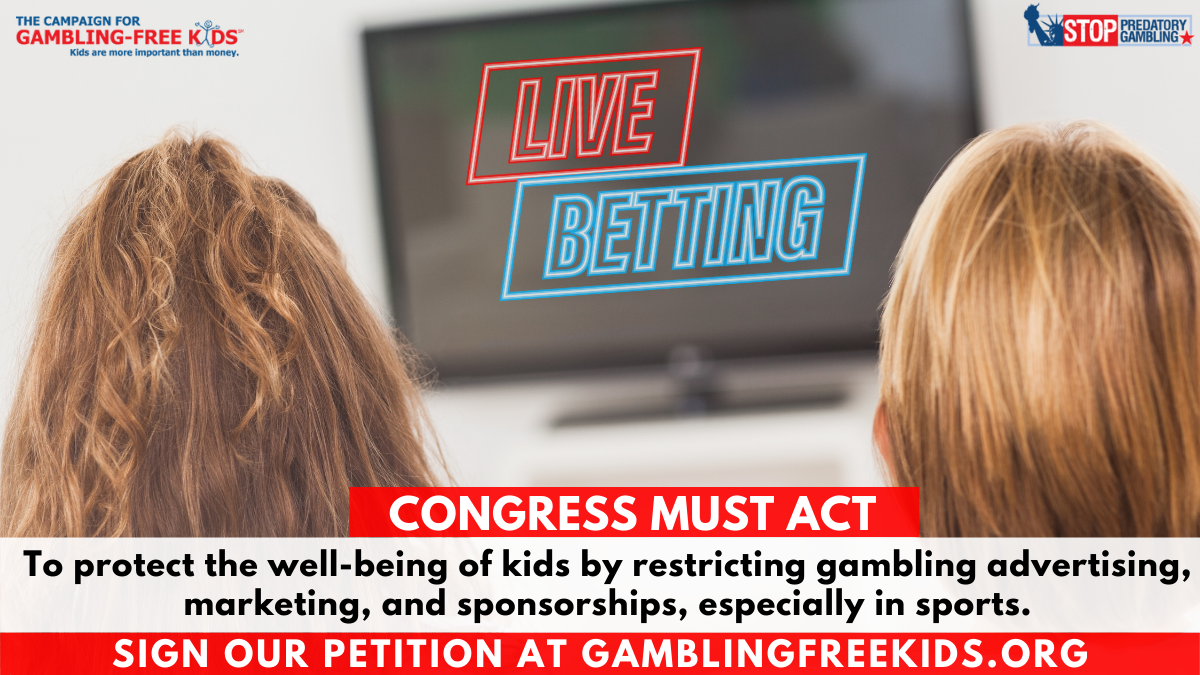
Sign our petition to encourage Congress to act to restrict gambling advertising, marketing, and sponsorships, especially in sports. Learn More & Sign

Stop Predatory Gambling Foundation
100 Maryland Avenue NE, Room 310  | Washington, District of Columbia 20002
(202) 567-6996 | les@stoppredatorygambling.org

Follow Us


Saturday, February 12, 2022

New plan to open a casino inside every Massachusetts home


In Massachusetts many citizens got involved in the movement to stop casinos because they opposed a casino where they lived.

Today there is a lobbying effort underway for state government to sponsor online gambling which will ultimately open a casino and lottery retailer right inside your home and on your smart phone, as well as for everyone else in your community.

Attorney General Maura Healey's office has proposed an initiative legalizing online gambling by regulations, a political strategy that contrasts the actions of the New York and Illinois Attorney Generals who have acted to shut down online gambling operations in their states.

The Attorney General's proposed regulations represent the biggest expansion of gambling in Massachusetts history. While it has been presented to the public as a bid to regulate online fantasy sports gambling, the end game for gambling interests is to offer more extreme forms of gambling to citizens through the internet.

Casino companies like MGM and Caesars have unsuccessfully lobbied for internet gambling to be legalized at the federal level.  Authorizing DFS would provide gambling interests like these and others a back door way to bring in internet casino gambling.

Legislation was recently filed in the Massachusetts Legislature to do just that. It's also why when the Mass Gambling Commission released its review of so-called "Daily Fantasy Sports" this week, it also looked at other forms of online gambling.

I urge you to please share your comments about this issue with Attorney General Healey and her staff by Friday, January 22. Here is the info about her proposal to introduce internet gambling. Comments can be emailed to DFSRegs@state.ma.us

A few items to help you learn more about the topic:

1) Read our national report.

2) Here is a colorful, recently published New York Times Magazine story titled “How the Daily Fantasy Sports Industry Turns Fans Into Suckers.”

3) Our testimony presented at the AG's hearing this past Tuesday.

4) National political comedian John Oliver's review of online fantasy sports gambling on his HBO show Last Week Tonight(If the image below doesn't show in your email, watch the segment here.)

We believe Attorney General Healey, her staff and others who propose to introduce internet gambling into Massachusetts are better leaders than this initiative demonstrates.

Best,

Les

____________

Les Bernal

National Director

Stop Predatory Gambling

Build a more humane and just society: end government-sponsored gambling because it is dishonest, financially damaging to citizens and contributes to rising inequality of opportunity.


Sunday, November 18, 2018

Big victories against predatory gambling at the ballot box on Election Day Tuesday


Image result for stop predatory gambling


There were some major victories against predatory gambling at the ballot box on Election Day Tuesday:

1) Florida citizens voted overwhelmingly to put the power to decide gambling expansion in the hands of the people instead of the Legislature. The state group No Casinos Florida organized the referendum and led the fight to pass it.

2) The people of Florida also voted to abolish greyhound dog racing after years of work by the greyhound protection organization Grey2K.

3) Idaho voters rejected the deceptive proposal to legalize slot machines at Idaho race tracks. Our chapter Stop Predatory Gambling Idaho played a key role in educating citizens about the issue.

4) In a history-making referendum, an Illinois community that introduced video gambling reversed that policy through a binding ballot question. Voters in Forest Park, Illinois shut down video gambling machines in their community.

There were also two efforts that did not go our way on Tuesday. In Arkansas, out-of-state gambling interests spent millions of dollars to initiate a referendum to pass regional casinos and then saturate the state with campaign advertising. And in Louisiana, sports gambling operators spent more than $1 million to lure voters in some state parishes to support "daily fantasy sports" gambling. It was a blatantly deceitful attempt to force online gambling into people's homes by disguising it as something harmless.  

I'm so proud to be a part of this just and important fight with you to improve the lives of the American people with compassion and fairness. Thank you!

Best,
Les Bernal
National Director
Stop Predatory Gambling
________________________________
Who We Are —
- A 501c3 non-profit based in Washington, DC, we are a national government reform network of individuals and organizations from across the U.S.
- We believe in improving the lives of the American people with compassion and fairness, freeing us from the lower standard of living, exploitation, and fraud that commercialized gambling spreads.
- We are one of the most diverse organizations in the United States, one in which conservatives and progressives work side-by-side with with a common national purpose.
What We Stand For —
- We believe everyone should have a fair opportunity to get ahead and improve their economic standing.
- We believe every person’s life has worth and that no one is expendable.
- We believe that a good society depends on the values of honesty, concern for others, mutual trust, self-discipline, sacrifice, and a work ethic that connects effort and reward.
- We believe no government body should depend on predatory gambling to fund its activities.
If you share our beliefs, please help sustain our work by making a tax-deductible, financial gift today of $10 or more. 


Monday, January 2, 2017

Casino Vulture in the White House


Transition: Gambling interests seek friend in Trump

The industry awaits policy positions from the president-elect and former casino owner on Internet gambling, sports betting and daily fantasy sports.
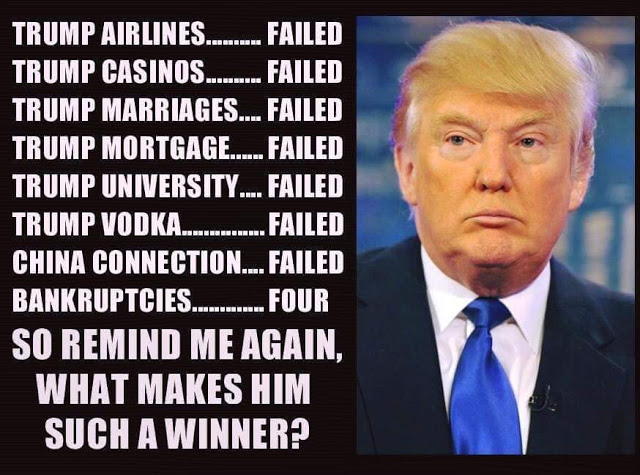
Donald Trump will be the first U.S. president to have ever owned a casino, and the gambling industry is wondering how he will handle three major issues: Internet gambling, sports betting and daily fantasy sports.
The industry has sent its wish list to the president-elect. The American Gaming Association told The Associated Press it has asked Trump for fewer regulations, approval of sports betting, a crackdown on illegal gambling, tax reform and immigration policies that don't dry up the flow of overseas gamblers - and workers - to U.S. casinos.
"President Trump, his administration and Congress will unquestionably implement policies that will directly impact our industry for years to come," Whitaker Askew, the association's vice president, told the AP.
Kirk Blalock, a lobbyist who worked for the George W. Bush administration, said Trump "comes to the table with a good, solid understanding of how the industry works and what the challenges are."
Just three states - New Jersey, Nevada and Delaware - allow Internet gambling, and well-financed opponents, backed by billionaire casino magnate and Trump backer Sheldon Adelson, want to ban it nationwide.
Trump and his daughter, Ivanka, formed a company in New Jersey to explore the possibility of offering Internet gambling in New Jersey before the state legalized it in 2013, but they never applied for a license to do it.
In a brief interview in September, Trump told the AP he had not settled on a position regarding online gambling.
His transition team did not respond to several recent requests for comment. The gaming association does not take a position on Internet gambling.
Sports betting is currently legal in four states: Nevada, Oregon, Delaware and Montana. And dozens of states are grappling with whether daily fantasy sports, in which players put up money to compete with each other to assemble teams of athletes who accrue points based on their real-world performances, constitutes a game of skill that does not need to be regulated, or gambling, which does.
In a November 2015 interview with Fox Sports 1, Trump indicated he would not oppose sports betting or daily fantasy sports.
Trump owned three casinos in Atlantic City, as well as one in Indiana for a time. Two of his former Atlantic City casinos, Trump Plaza and the Trump Taj Mahal, have closed. The third, Trump Marina, was sold to Texas billionaire Tilman Fertitta, who now runs it as the Golden Nugget.


ATLANTIC CITY, N.J. — Donald Trump will be the first U.S. president to have ever owned a casino, and thegambling industry is wondering how he ...


Donald Trump will be the first U.S. president to have ever owned a casino, and the gambling industry is wondering how he will handle three major ...


Sunday, August 7, 2016

Pete Iorizzo: Fantasy games pave way for sports betting


Pete Iorizzo: Fantasy games pave way for sports betting


Updated 7:34 pm, Saturday, August 6, 2016


If daily fantasy sports isn't gambling, then I'm going to be the starting quarterback for the New York Jets this season.
The bill signed into law by Gov. Andrew Cuomo on Wednesday makes it legal to win or lose money — or ... you know ... gamble — based on the performance of your imaginary team of real players.
Lawmakers essentially ran an end-around play to elude another state law that makes games of "chance" illegal, instead defining daily fantasy sports as games of "skill."
Please. If you've had your fantasy football season waylaid by a balky hamstring, then you know that even the geekiest stat-heads can't succeed without some good fortune.
To be clear, though, this isn't to argue that daily fantasy sports should be illegal.
Sure, I can think of better things to do with your paycheck than letting it ride on the Arizona Cardinals' kicker and Cleveland Browns' running back. But who am I — and who is the state of New York — to tell you how to spend your money? Some of us collect stamps, some of us have FanDuel accounts. To each his own.
But defining lottery games, daily fantasy sports and horse racing as legal forms of entertainment while prohibiting bets on the Cowboys-Steelers game as a threat to civil society is so blatantly hypocritical that it's not sustainable.
It won't happen overnight, but the real takeaway from the state's thumbs-up to daily fantasy sports should be that we've taken a step closer to fully legalized sports wagering.
The major hurdle remains a 1992 federal law called the Professional and Amateur Sports Protection Act (PASPA), which bans most forms of sports wagering in all but four states.
That law already has been challenged by New Jersey, where in 2012 Gov. Chris Christie signed a bill legalizing sports betting in the state. That's not to say there is now fully legalized sports betting in New Jersey. The state has lost suits from the four major sports leagues that have argued New Jersey is in violation of the 1992 federal law, though the appeals process continues.
But this is a case in which the court of public opinion could factor significantly. With public pressure and lobbying from the major sports leagues, Congress could change the 1992 law, an outcome that isn't all that far-fetched, several legal experts tell me.
Expanding the right to bet on sports seems to be one of the few issues on which most Americans agree. An estimated 57.4 million people play daily fantasy sports in the United States and Canada, according to the Fantasy Sports Trade Association. And each year an estimated $400 billion is wagered illegally.
Guess what: People like to bet on sports.
And though the major sports leagues vehemently have resisted New Jersey's push to have the federal law struck down, their opposition is much more nuanced than it might appear.
Many professional sports teams now are invested in daily fantasy companies, a sign they're not queasy about getting cozy with wagering. NBA commissioner Adam Silver even wrote an op-ed for the New York Times in 2014 calling for more widespread legalization. The NHL is putting a team in Las Vegas, and the NFL is talking about doing the same.
Their real opposition to New Jersey's push is that it would legalize sports betting without establishing a federal framework for regulation. Probably, the leagues have their self-interests in mind, too. If we're going to have fully legalized sports gambling, the owners will want a cut.
"It seems there is a lot of hypocrisy in the sports leagues' sustained opposition," says Marc Edelman, a professor of law at Baruch College's Zicklin School of Business. He'll appear Wednesday at the Saratoga Institute on Equine, Racing and Gaming Law Conference's panel discussion on sports wagering.
"They seem opposed to traditional sports gambling when they're not in a position to profit directly from the activity, but they're more willing to accept it if they are. ... It seems reasonably likely to believe that at least the four traditional sports leagues would support the repeal of PASPA if sports gambling would lead to direct profit to their owners."
How might that happen? Owners could become shareholders in sports wagering organizations, just as they have made chunky investments in daily fantasy companies.
In New York, repealing PASPA would make it possible for the new casino being built in Schenectady to include a sports book. In fact, it seems inevitable that someday you'll be able to drive down Erie Boulevard to bet the Giants and the over.
The effort to continue banning sports betting seems awfully futile when you consider that so many of us already do.


Tuesday, June 28, 2016

Big gamble: How families are suffering as men lose millions to sports betting


Big gamble: How families are suffering as men lose millions to sports betting

By Gardy Chacha | Monday, Jun 27th 2016 

Betting has taken a toll on many families in Kenya     Photo:Shutterstock
Sport betting is the latest scourge stealing happiness out of marriages and throwing relationships over the cliff. This is an industry valued at more than Sh5 billion by Betting Control and Licensing Board and through which men lose millions of shillings daily.
So far this year; a man in Eldoret committed suicide, leaving his family behind, after losing Sh45,000 which he had borrowed as loan from Kenya Commercial Bank. Kennedy Kosgei, it was reported, borrowed the sum to place as a wager on a match between Spanish football clubs Real Madrid and Atletico Madrid.
Real lost to Atletico, a topsy-turvy result for Kosgei, who had predicted a win for Real. Kosgei was later found dangling from a tree, lifeless.

“He was clearly devastated. I believe his intention was to win more money so that he could use the profits to attend to household needs. But he lost and he just couldn’t face his wife and family to tell them his misfortune,” comments David Otiato, a married sports fan himself.
Why Kosgei put Sh45,000 on the line is a secret that will forever remain with him in the grave.
Later, a gambler, John Muchanga, went berserk and slashed to death two managers of a casino after he had gambled and lost Sh30,000 in Nairobi’s Eastleigh estate. The man was, however, confronted and killed by a mob as he tried to attack a third person. All the three could be the sole bread winners to their families.
Genesis of betting craze
However, a quick survey Crazy Monday conducted from the streets of Nairobi indicates that many sport betting clients suffer illusions of grandeur, a scenario that is made worse by harsh economic times and high rates of joblessness.
“I saw on TV a couple who won Sh22 million and I just couldn’t stop fantasizing about winning such amounts. My life would change instantly. I would have a lot of money to buy land and build a mansion. Buying food would be light work,” Josiah Wanyama, an ardent AFC Leopards fan tells Crazy Monday.
Titus Osanjo, a self-confessed football addict, believes that sports was primarily consumed by fans as a form of entertainment. Hear him: “Betting has monetised sports. Now fans are shifting focus towards making quick bucks.”
Allure of quick cash
The allure of quick cash, made with nearly zilch calorie expenditure, is no doubt irresistible to many. “The betting companies have taken advantage of the human desire for riches,” observes Ken Andika, a frequent gambler. “I have lost so much money myself that I feel like I am depressed throughout the weeks.”
Andika works at a loading and offloading section of a shop owned by an Indian along River Road, Nairobi. The first time he tried it out the team that he had vouched for won and with it he received Sh3,000.
“From then on I couldn’t stop playing,” he says. Unbeknown to him Andika, who earns a meagre Sh8,000 at the end of the month and lives with a wife and two children in Mathare, was nonchalantly walking into gambling addiction. A spate of losses later the gambling took a toll on his life, family and marriage, sending the middle aged man tumbling towards insanity.
“Sometimes I used half of my salary to bet. I could walk to work and save the fare – just so that I could place a bet. If I had exhausted all options I would borrow from friends. The funny thing is every time I lost I felt like playing again to win back what I had lost.” 
Andika has never recovered his lost money. Instead he kept losing. First, his friends deserted him – at least those who lent him the hundreds when he cooed, promising to pay back at end month, and never meeting his end of the bargain. Then the warm welcome his wife treated him to back home dissipated like magic fog.
His wife stopped warming bath water for him. She grew reclusive and distant.
Stealing wives’ money
“I struggle – worse than I did before – to put food on the table. My wife does not want to understand. She despises me and tells me I am no longer a man,” he says.
Andika has spent thousands betting for wins and losses and has mostly enjoyed the latter. It is an ordeal that has put a wedge between him and those in his life. His marriage, he says, is practically over as his wife, since last month, has repeatedly shunned bedroom overtures and has covered herself in impregnable garbs that Andika can’t get past.
“We put up with a lot of nonsense from husbands. But when it reaches a point where they are ‘stealing’ from their wives, or from the family coffers to gamble, it is time the wives say it is enough,” states Millicent Kabuchi, a marketer for a leading telecommunications firm in Nairobi.
Millicent herself is not married and is merely reacting to reports that sports betting is leading many fanatics into financial problems worse than the Greek recession.
“A man should first make sure that everything at home is attended to and that the family is well taken care of.
He can then use whatever silvers left to place bets. Any man using money that is otherwise supposed to pay school fees for their children or pay rent for the house is deranged and does not deserve a woman’s affection,” comments Sheila Wacira, a married mother of three, the sneer on her face suggesting complete disgust.
Catherine Mbau is a psychologist at Arise Counselling centre in Nairobi.She says that sport betting is a form of gambling, which, like any other kind of gambling, can be addictive, “at which point it becomes trouble”.
“First, players are lured by the possibility of millions. It gives them a certain high to place a few hundreds or thousands in return for possible millions.” The truth is betting companies are in business – the more players lose the better for them,” Mbau says.
Yes! The allure has all the hallmarks of a Ponzi scheme; a hypnotising fetish that eventually consumes dreams whole.
As for the strife betting is putting on marriages and relationships, Mbau points out that spouses who have lost money through betting lose their partners’ trust because, in most instances, the offending spouse bets alone without discussing it out.
Unmet financial obligations
“The health of marriage depends very much on healthy communication. If one of you is risking money that belongs to the family, money that the family depends on, then it is only proper that a couple discusses it. If betting is done in secret then trust within the relationship is broken,” she admonishes. 
This year it was also reported that a 42-year-old banker lost Sh500,000 that he had borrowed to bet on the same match as Kennedy Kosgei.
From what we have learnt, betting losses come in twos, and so the man also lost his marriage when his wife decided to pack up and flee from his humongous self-inflicted debt.
The former Betting Control and Licensing Board chairman chairman Prof Paul Wambua Musili had alluded before that betting carries potential harm to the consumers and their families.
Betting companies, through terms and conditions drafted in microscopic fonts, also advise clients to place wagers with money they can afford to lose.
Men who stop working to bet fulltime
Tales abound of men who have abandoned their work to bet fulltime. However, the responsibility of the amount one bets rests with the player and the company is not liable.
“Bet for fun but it should not be taken as a fulltime economic activity,” Musili said
Sports betting, since the registration of the first online sports betting company in 2013, has pervaded Kenyans’ lives. The winners are paraded by the same betting companies through various media, attracting more wishful players.
Behind the façade though many relationships are taking a hit.
Moses Omwayo, another victim whose story got media attention, and a Maseno University student, lost Sh40,000 loaned to him by the Higher Education Loans Board.
Like Mose, Douglas Kinoti, a university student in Nairobi, won’t be attending lectures this semester after he lost Sh25,000 (given to him by his parents to pay fees) he had placed two months ago.
His girlfriend – a lady he says has expensive taste – has taken off and moved on into another relationship with a hunk whose pocket has no dents – at least not from gambling.
“The girl can go,” he says. “What I am worried about is my parents. They are yet to find out. They think I am in school when I am just shacking at a friend’s.”
Kinoti believes that his mother may forgive him but his father (who works hard in the miraa business) could consider denouncing him as his son.