Meetings & Information


*****************************
****************************************************
MUST READ:
GET THE FACTS!


Showing posts with label Mashpee Wampanoag Tribe. Show all posts

Tuesday, July 29, 2025

Former Mashpee Wampanoag leader pleads guilty to tax charges as tribe’s controversial casino grows


Former Mashpee Wampanoag leader pleads guilty to tax charges as tribe’s controversial casino grows

 | By Jess Marquez


Cedric Cromwell, a former tribal leader in Massachusetts, will face sentencing this fall for federal crimes related to a casino project that now seems to be on track after years of delays.

On Friday the US Attorney’s Office for the District of Massachusetts announced that Cedric Cromwell, the former chairman of the Mashpee Wampanoag tribe and president of its gaming operations, pleaded guilty to four counts of filing a false tax return. It is the latest chapter in a winding, multi-year legal saga surrounding the disgraced chairman and his former tribe.

Cromwell failed to report more than $177,000 in income on federal tax returns between 2014 and 2017, authorities said. About two-thirds of that was connected to the tribe’s First Light Resort and Casino project in Taunton, Massachusetts, which is a decade in the making and still ongoing. The other income came from side deals not related to the casino scandal.


Sentencing is set for 5 November before US District Court Judge Nathaniel M Gorton. Cromwell could face up to three years in prison, a year of probation and a $100,000 fine for each charge. But in addition to the tax counts, the 60-year-old Cromwell will also face sentencing for three extortion charges and one charge of conspiracy to commit extortion. Those charges were originally dropped by a lower court in 2022 but were reinstated by the First Circuit Court of Appeals in September 2024.

The extortion charges carry sentences of up to 20 years, three years of probation and a $250,000 fine, per count.

From bribery to extortion

Originally, Cromwell was indicted in November 2020 alongside David DeQuattro, CEO of prominent development firm RGB Architects. Authorities alleged that Cromwell conspired with RGB to be the “owner’s representative” for the casino project and that he received more than $57,000 from DeQuattro between 2014 and 2017 in exchange for a lucrative development contract. This was in addition to about $45,000 of other unreported income from a previous architectural partner who is not named.

According to prosecutors, Cromwell received a home gym and a hotel suite vacation from DeQuattro in addition to the money.

“Instead of working honestly on behalf of the Mashpee Wampanoags as their duly elected representative, Cedric Cromwell is accused of using his position as chairman of the tribe to enrich himself by extorting tens of thousands of dollars in bribes and engaging in a conspiracy with David DeQuattro to commit bribery,” Joseph Bonavolonta, special agent in charge of the FBI Boston Division, said at the time.

Both men were convicted of bribery in May 2022, although the trial court severed the tax charges and ruled only on the extortion and bribery charges. However, after appealing to the First Circuit, DeQuattro was ultimately acquitted of all charges in 2024, whereas all of Cromwell’s charges were reinstated.

Now back to work, DeQuattro has emerged as a victim, with Cromwell now pegged as the extorter and ringleader. He will now face his dual sentencing for both sets of charges this fall.

“One of the greatest things that has happened throughout this whole thing is it’s almost like you wear a set of X-ray glasses, where you can see people for who they are,” DeQauttro told GoLocalProv in March. “And I think I did that at a young enough age, where you know who your real friends were.”

Casino saga just as complicated

As Cromwell’s legal troubles have played out, his former tribe has had no better luck in its quest to develop the casino project without him.

The Mashpee Wampanoags were federally recognised in 2007, and the city of Taunton in 2012 signed an Intergovernmental Agreement with the tribe for a massive casino development that came to be known as First Light. The first phase of the project alone was slated for 3,000 slots and 150 tables.

More than a decade of legal battles ensued after the original agreement, keeping the project at a standstill. Several court rulings during that time flip-flopped on the legality of the project and the original agreement.

A detailed breakdown of these rulings, compiled through mid-2023, is available on PlayMA.com. In 2024, the tribe finally came out victorious in its legal defence of First Light and announced plans to build a temporary “welcome centre” in Taunton.

From 10 to 50 to 250?

Adding to the complexity of the case is the fact that Genting is funding the casino project and is partnered with the tribe to operate it. That relationship was rocky in previous years due to the project’s legal troubles but seems to have improved. When the temporary welcome centre was opened in January, Kevin Jones, chief strategy officer for Genting Americas, was on hand.

He told the Taunton Daily Gazette that the facility was meant to educate the public about the tribe and its future casino plans. It also included a “sampling” of gaming, in the form of 10 slots.

In the months since, the small facility has continued to expand. It has grown from 10 to 50 slots, lengthened its operating hours and obtained an alcohol licence. An updated agreement with the city could allow the centre to further expand to 250 slots.

The Daily Gazette has also noted the tribe is now directly referring to the center as a “casino” instead of a welcome centre, as it did previously. If the tribe does intend for the facility to become a permanent casino, it would still be far below the scope outlined in the original 2012 agreement under Cromwell.


iGB 


Friday, May 21, 2021

Mashpee Wampanoag Tribe elects Brian Weeden as new tribal council leader


MIDDLEBORO REMEMBERS


Mashpee Wampanoag Tribe elects Brian Weeden as new tribal council leader


Jessica Hill Cape Cod Times 
Published May 18, 2021 

MASHPEE — The Mashpee Wampanoag Tribe has a new chairman who aims to unite tribal members, promote economic development and preserve the tribe’s culture. 

In its May 16 election, members of the Mashpee Wampanoag Tribe elected 28-year-old Brian Weeden as chairman of the Mashpee Wampanoag Tribal Council.

“I feel ready to get to work,” Weeden said. “There’s a lot of things that need to be done for the tribe and the community.” 

Brian Weeden has been elected tribal council chairman of the Mashpee Wampanoag Tribe. He said he wants to improve the tribe’s finances and increase transparency in how the tribe operates.


Weeden won by 20 votes, garnering a total of 241 votes to 221 for Nelson Andrews Jr.. Aaron Tobey Jr. received 167 votes, and Robert “Kyle” Bassett had 20. Carlton Hendricks Jr. was elected vice-chairman, Marie Stone elected treasurer and Cassie Jackson elected secretary. 

“I hope the tribe’s future is bright with the newly elected leadership,” Bassett said. “I know everybody that got elected, and I hope that they’re up for the challenge.” 

Weeden is the youngest person to serve as Tribal Council chairman, the head of the tribe’s executive and legislative government branch.

Weeden graduated from Mashpee High School in 2011 and attended Cape Cod Community College. He works for the Mashpee Department of Public Works as a custodian at the K.C. Coombs School. 

For years, Weeden has been involved in both tribal and town organizations, such as the Mashpee Conservation Commission and the Mashpee Historical Commission. He was most recently elected to the Mashpee School Committee. He is also on Mashpee’s Town Seal Design Committee, and is representing the Mashpee Wampanoag Tribe on the state seal commission.  

In 2009, Weeden founded the Youth Council, and created the Mashpee Youth Commission in 2019 to give young people a voice and experience in tribal and local politics. 

Weeden said his main priority is to restore unity in the tribal community by talking with members and listening to them, he said. He said he plans to organize more unity conferences and ceremonial gatherings. Hendricks, the vice-chairman, also wants to have an open, transparent government where members are aware of what is going on, he said.

Weeden said another goal is to preserve and emphasize the tribe’s culture through more language classes and cultural programming, such as summer camps and Quahog Day for children. He said the tribe used to have a toddler hour at the tribal museum, where day care providers would come in with their children, and a member of the Mashpee Wampanoag Tribe would host a cultural activity. 

Weeden and Hendricks say they also want to find ways to improve the tribe’s financial status through the implementation of a finance committee as well as find new streams of revenue.  

The tribe has been in a dire financial situation for years, and with the plans to build a Taunton casino halted, there is a serious need for economic development.

Weeden’s past two predecessors, Cedric Cromwell and Glenn Marshall, were both indicted on felony charges while in office. Cromwell is currently facing bribery and extortion charges, and Marshall pleaded guilty to several charges in 2009, including embezzling nearly $400,000 from the tribe.

Weeden said he hopes to turn the tide and restore the tribe’s integrity.

“The Cromwell administration left the tribe devastated,” said Hendricks, who has a couple of plans to bring economic development to the tribe, although he declined to provide specifics until he shares them with tribal members and the Tribal Council. He hopes to see two viable economic plans bringing in revenue to the tribe within two years. 

One of Weeden’s ideas is to create a deer farm in Mashpee. The tribe could replenish the woods and restock the Cape’s game, he said, as there are a lot of tribal members who still hunt. The tribe could sell venison to local distributors, tan the deer hide and make traditional clothing. Another idea is to do canoe tours along Mashpee’s rivers and waterways, Weeden said. 

Now also president of the Mashpee Wampanoag Tribe’s Gaming Authority, Weeden plans to get input from members of the tribe and the Tribal Council about what route the tribe plans to take with its casino projects. 

Weeden said he plans to put policies and procedures in place so the tribe “can never be in this situation again.”

“I think people that do wrong by the tribe should not be allowed to receive services” or be a part of the tribal government, he said. 

As someone who attended White House gatherings as a tribal youth delegate, Weeden said he plans to continue making sure the tribe is represented on a national level and build relationships with potential economic partners, he said. 

And at a local level, Weeden said he will also negotiate with the Town of Mashpee and review their intergovernmental agreement, and make sure the town is consulting with the tribe on matters such as development projects. 

Tribal members continue to get harassed for practicing their aboriginal rights to fish and hunt, Weeden said. Members have been arrested for trespassing while trying to access waterways. The Mashpee Pond, for instance, is locked, and Weeden plans on working with the Town of Mashpee to improve treatment and access to waterways. 

He also wants to work on the tribe’s land-in-trust status and continue land and restitution negotiations with the commonwealth. The tribe’s constitution also needs to be reformed, he said. Certain clauses about Tribal Council requirements and tribal enrollment should be amended to give more power to tribal members, he said.

“The constitution took away the voice of the people and gave a lot of power and authority to the chairman and the council,” Weeden said. 

“This administration is going to lead the way for future generations and get everything back in order around here, culturally, spiritually, physically, mentally,” Weeden said. “And do what’s right by our people.


Friday, April 2, 2021

Cromwell, DeQuattro plead not guilty to bribe, extortion, tax charges


Cromwell, DeQuattro plead not guilty to bribe, extortion, tax charges


Jessica Hill Cape Cod Times
Published Apr 2, 2021 

BOSTON — Cedric Cromwell, former tribal council chairman of the Mashpee Wampanoag Tribe, and David DeQuattro, owner of a Rhode Island architectural firm that worked with the tribe, pleaded not guilty Thursday during their arraignment in U.S. District Court on charges of bribery and extortion, and, for Cromwell, filing false tax returns.

Cromwell, a 55-year-old Attleboro resident, was charged in March with four counts of filing a false tax return on top of other charges of bribery and extortion from November. He and DeQuattro were each indicted by a federal grand jury in November on two counts of accepting or paying bribes as an agent of an Indian tribal government, and one count of conspiring to commit bribery. Cromwell was also indicted then on four counts of extortion under color of official right and one count of conspiring to commit extortion.

Cedric Cromwell, former tribal council chairman of the Mashpee Wampanoag Tribe, on Thursday pleaded not guilty to federal charges related to a casino project.

They both had pleaded not guilty to the November charges, but were back in court Thursday after the "superseding indictment" was returned alleging the further tax-related charges against Cromwell.

The charges are in connection with the tribe’s plans to build a resort and casino in Taunton. DeQuattro’s company, Robinson Green Beretta Corp., was contracted to serve as the “owner’s representative” for the tribe for its casino project, and the indictment alleges that Cromwell used his role as chairman of the tribal council and his role on the tribe’s gaming authority to ensure that DeQuattro’s company would remain the representative for the project. 

DeQuattro allegedly provided Cromwell with a stream of payments and benefits valued at about $57,549.37. In exchange, DeQuattro’s company was paid approximately $4,966,287.16 under the contract between July 2014 and February 2018, the indictment alleges. 

Thursday's arraignment, conducted via Zoom teleconference, was on the superseding indictment for the tax charges. Cromwell on Thursday pleaded not guilty to all charges, including both the original bribery and extortion charges as well as the new tax charges. DeQuattro also pleaded not guilty on his charges from November.

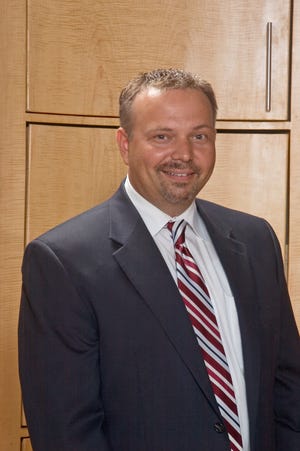
David DeQuattro, owner of a Rhode Island architectural firm, on Thursday pleaded not guilty to federal charges related to a casino project.

The defendants argued during the hearing that Judge Marianne Bowler should grant a motion for what is called a “bill of particulars,” saying that the plaintiff’s indictments were vague about the allegations and requesting more specific details about what happened. 

DeQuattro’s attorney, Martin Weinberg, wanted to know what exactly the government claims Cromwell communicated to DeQuattro as well as the times, places, manner and means by which the criminal conduct allegedly occurred.  


“Despite the allegations, there (are) no specifics as to what Mr. Cromwell told Mr. DeQuattro,” Weinberg said in the hearing. 

Prosecutor Christine Wichers countered that the 23-page indictment and the 31-page superseding indictment offer many details, including dates and payments. She said that she has produced all of the discovery on the underlying charges, although not yet on the recent tax charges, which will be submitted within two weeks.

Another hearing for Cromwell will be scheduled when the discovery evidence is presented on the tax charges.

The next status conference is scheduled for 3 p.m. May 18. In the interim, Bowler will send the case up to trial judge Douglas Woodlock to begin setting a date for the trial. 

When the case does go to trial, Wichers plans to call 30 witnesses and estimates the trial will last two weeks.  

On Thursday, Weinberg also filed a motion for the production of exculpatory evidence — or evidence that would free DeQuattro from blame — asking that the court review a limited subset of the discovery that includes the statements and testimony of Joseph Beretta, the former president of Robinson Green Beretta Corp.

Beretta is the government’s cornerstone witness in the case, Weinberg said during the meeting. 

Weinberg said that when Cromwell asked DeQuattro for a donation on June 25, 2014, DeQuattro did not immediately write a check. He went to his company’s then president, Beretta, and they discussed the request for the donation. Beretta went to the company’s longtime attorneys and asked for legal advice, Weinberg said. 

The attorneys provided opinions approving and/or not prohibiting or discouraging those donations, Weinberg wrote in the motion filed March 15. He argued that some of the attorneys told Beretta to proceed with caution and make sure the entity they were donating to was in good standing.

Beretta authorized each of the subsequent donations that DeQuattro made to Cromwell, Weinberg said. He authorized that in action and in words because he reimbursed DeQuattro, Weinberg said. 

“This goes right to (DeQuattro's) good faith,” Weinberg said. “Did he give these donations as a corrupt bribe, or as a good faith campaign or political donation?”

Weinberg asked the court and the government to take Beretta’s statements and see that it shows DeQuattro was acting in good faith and could be "exculpatory" for DeQuattro. 

Wichers said that Beretta’s statements do not include anything that would be exculpatory other than what she already disclosed in the discovery.

Bowler took the motion for a bill of particulars under advisement and denied the defendants’ motion for exculpatory evidence.  

The defendants also filed motions Thursday for a speedy trial, describing the harm that could come by waiting longer. Weinberg was concerned the delay could be nearly a year because of additional discovery and motions related to the tax charges against Cromwell.  

DeQuattro’s architecture firm has suffered a substantial loss of business as a result of the government’s allegations, Weinberg wrote in a motion. DeQuattro’s company had a contract canceled with Johnston, Rhode Island, schools for a project that was going to generate millions of dollars in fees, Weinberg wrote. 

“Continued delay of these proceedings will only cause further damage, quite possibly irreversibly so, to Mr. DeQuattro’s business interests,” Weinberg wrote. 


Saturday, March 27, 2021

Indictment: Cedric Cromwell failed to report alleged bribes as income


Indictment: Cedric Cromwell failed to report alleged bribes as income


Jessica Hill Cape Cod Times
Published Mar 24, 2021 

BOSTON — Cedric Cromwell, former tribal council chairman of the Mashpee Wampanoag Tribe, has been charged with filing false tax returns on top of pending bribery and extortion charges. 

A federal grand jury in Boston returned a superseding indictment Monday with the new charges, acting U.S. Attorney Nathaniel R. Mendell announced in a statement Tuesday night, along with the Federal Bureau of Investigation and Internal Revenue Service criminal investigation divisions in Boston.

Cromwell, an Attleboro resident, was charged with four counts of filing a false tax return, bringing the total number of charges he faces to12. He is scheduled to be arraigned on the new charges on April 1 before Magistrate Judge Marianne B. Bowler in federal court in Boston. 

The superseding indictment alleges that between 2014 and 2017 Cromwell failed to report a total of $177,392 on his tax returns. That includes $39,000 of personal income in 2014; $57,374 in 2015; $26,884 in 2016; and $54,134 in 2017.

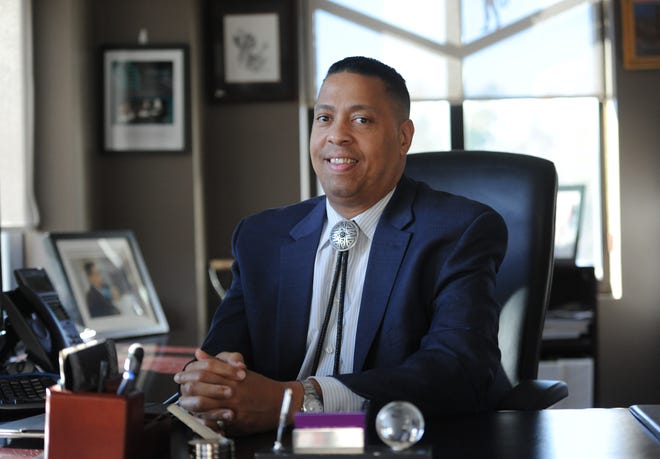
Cedric Cromwell

Cromwell's attorney, Tim Flaherty, said Wednesday that the "recent indictment relates to tax irregularities that have no overlap and no connection to the early allegations."

“Chairman Cromwell looks forward to presenting a vigorous defense to the extortion and bribery claims and continues to state his innocence," Flaherty said.

Cromwell was charged with bribery and extortion in November along with David DeQuattro, 54, the owner of a Rhode Island architecture firm, in connection with the tribe’s plans to build a resort and casino in Taunton. 

Cromwell, 55, and DeQuattro were each indicted on two counts of accepting or paying bribes as an agent of an Indian tribal government and one count of conspiring to commit bribery, according to Mendell's statement. Cromwell was also indicted on four counts of extortion under color of official right and one count of conspiring to commit extortion.

When Cromwell filed his personal income tax returns for tax years 2014 through 2017, he failed to report bribes that he allegedly received from DeQuattro’s company, Robinson Green Beretta Corp., which was contracted to serve as the tribe’s “owner’s representative” for the casino project, according to the superseding indictment. 

The indictment alleged that DeQuattro provided Cromwell with a stream of payments and benefits valued at about $57,549.37. In exchange, DeQuattro’s company was paid approximately $4,966,287.16 under the contract between July 2014 and February 2018. 

Cromwell did report receiving $180,377 in salary from the tribe in 2017 in his federal personal income tax returns, which he filed jointly with his wife, the indictment states. 

Cromwell is accused of failing to report payments for consulting services he performed for a company that developed and supplied forest carbon offsets. 

While being questioned in a civil lawsuit in 2018, Cromwell said he was a consultant/owner for three limited liability companies, and more specifically a “consultant on carbon sequestration and an Indian Country liaison to Tribal Carbon Forestry Markets,” according to the indictment. 

Cromwell was paid the consulting income through an intermediary identified as “P-Co.”, which was formed by a lawyer who was one of Cromwell’s business associates, the statement says. That associate was the only authorized signatory on a bank account identified as the “P-Co. Shell Company Account,” according to the indictment.

Cromwell also failed to report income made by his company, One Nation Development, which was paid through the P-Co. account and the bank account of a Florida limited partnership that originated with an investment holding company in Las Vegas, the indictment said.

On multiple occasions between December 2014 and January 2016, the Las Vegas investment holding company wired money to the Florida limited partnership, which wired money to the P-Co. Shell Company Account. P-Co. then wired money to the One Nation Development account controlled by Cromwell, the indictment alleges.

The only authorized signatory on the investment holding company’s bank account was the CEO of a Las Vegas-based architecture firm hired to be the architect for the tribe’s casino project, the indictment says. 

If found guilty, Cromwell could face up to three years in prison, one year of supervised release and a fine of $100,000,according to the statement. Cromwell and DeQuattro could have to forfeit any property constituting or derived from proceeds traceable to the offenses. 

Cromwell was first elected to the tribal council in 2009 and was reelected in 2013 and 2017.

When Cromwell was initially charged with extortion and bribery, the council voted to remove him from his post as chairman. But some tribe members had already been pressuring the tribal council for the previous few years to remove Cromwell.

Petitions bearing the signatures of 100 registered tribal voters were certified April 2019 calling for Cromwell’s resignation or removal, along with the removal of Treasurer Gordon Harris.

For several months before the indictment was returned, a grand jury subpoenaed the tribe multiple times for records from 2013 to 2020. Those records include Cromwell’s personnel records, the tribe’s financial records and expenditures, election records and internal communications between the tribe's Gaming Authority and its partners, including the Robinson Green Beretta Corp. and Genting Malaysia, the tribe’s financial backer that invested $440 million into the casino project.

In October 2020, another petition signed by 35 tribe members requested Cromwell's removal. 

"Cromwell’s conduct is a breach of public tribal trust and an abuse of authority," the petition stated. "Cromwell has been dishonest and exercises a lack of integrity by his unwillingness to be transparent about the $500 million dollars that was borrowed from the investors. He is and has been a target of a federal investigation and has not been transparent about it either."

Cromwell would not be the first tribal council chairman to be convicted of filing false tax returns if he is found guilty. The council's prior chairman, Glenn Marshall, was sentenced to 3½ years in federal prison after pleading guilty to embezzling nearly $400,000 from the tribe to pay his own bills, making illegal campaign contributions, filing false tax returns and fraudulently receiving Social Security benefits while holding a full-time job. 

“The new charges are extremely serious, and we are watching the proceedings closely,” Tribal Council Vice Chair Jessie “Little Doe” Baird said in a statement. “Of course, we will continue to work with the U.S. attorney’s office.” 


MIDDLEBORO REMEMBERS

Wednesday, March 24, 2021

Mashpee Wampanoag Tribe sets in-person election date


Mashpee Wampanoag Tribe sets in-person election date


Jessica Hill Cape Cod Times
Published Mar 24, 2021 

MASHPEE — The Mashpee Wampanoag Tribe has set a new date for its general election after a Mashpee District Court judge found that mail-in voting was against the tribe’s constitution. 

The election is set to take place in person on May 16.

The Tribal Council set the date during its emergency meeting Monday, although the tribe’s Election Committee still has some work to do, Tribal Council Vice Chair Jessie “Little Doe” Baird said. 

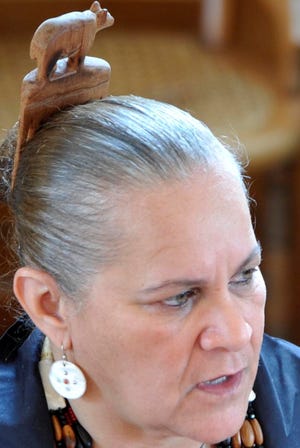
Jesse "Little Doe" Baird

Tribal Council member Aaron Tobey Jr., along with two other tribal members, sued members of the Tribal Council and the Election Committee regarding the election, which was originally set for March 26. The Tribal Council and Election Committee decided to hold the election solely through mail-in ballots instead of in person in light of the COVID-19 pandemic. 

Tobey and the other plaintiffs argued that it was against the tribe’s constitution, which states that voting in tribal elections shall be by “secret ballot cast at polls.” Mashpee Wampanoag Tribal Alternate District Court Judge Amanda L. WhiteEagle agreed.


On May 16, registered tribal voters will pick the next tribal council chairperson as well as other government positions. Nelson Andrews Jr., Kyle Bassett, Aaron Tobey Jr. and Brian Weeden are vying for chairperson.

Carlton Hendricks Jr. and Edwina “Winnie” Johnson-Graham are seeking the vice chair position on the tribal council. Ann Marie Askew and Cassie Jackson are running for tribal council secretary, and Kimberly Frye is running against incumbent David Weeden for a spot on the tribal council.

Charles “Bobby” Foster, Angela Marcellino, Winona Pocknett, Karen Edwards Siegel and Marie Stone are running to be the tribe’s next treasurer.


MIDDLEBORO REMEMBERS


Saturday, July 25, 2020

Spending bill includes protections for Mashpee tribe


Middleboro Remembers: Regulators want briefing on Mashpee ...


DID YOU EVER NOTICE THAT REP. BILL KEATING NEVER SEEMS TO FIGURE OUT WHERE HIS DISTRICT IS AND NEVER VISITS? 

DID YOU EVER NOTICE THAT IF YOU HAVE A PROBLEM, REP. BILL KEATING'S OFFICE NEVER CALLS YOU BACK?

DID YOU EVER NOTICE THAT IF YOU SEND AN EMAIL SEEKING A RESPONSE, YOU NEVER HEAR FROM REP. BILL KEATING? 


DURING THE LAST FEW ELECTIONS, REP. BILL KEATING WAS THE ANNOINTED DEMOCRATIC NOMINEE FOR NO GOOD REASON...IT CERTAINLY HAD NOTHING TO DO WITH HIS PERFORMANCE?  

YET HERE HE IS..... 

ALONG WITH CONGRESSMAN JOE KENNEDY EVEN THOUGH IS THIS EVEN WITHIN HIS DISTRICT OR SIMPLY BECAUSE HE RUNNING FOR SENATOR EVEN THOUGH KENNEDY HASN'T REPRESENTED ANY OTHER DISTRICT IN THE COMMONWEALTH WHEN SIGNIFICANT ISSUES EXIST? 

WHAT'S WITH THE CURRENT FEDERAL GRAND JURY? WHO'S ASKING? 

GENUFLECTING FOR VOTES!

Why Do Catholics Do That? – Page 3 – St. Matthias Catholic Parish


AND NO ONE ASKS ABOUT GENTING AND IF THESE MATTERS WERE EVER ADDRESSED: 


Genting was the Gambling Investor supporting the Mashpee Wampanoag lifestyle.

Genting Connected to Islamic Extremists? [THIS ARTICLE APPEARED FOR A SINGLE DAY, THE SITE WAS HACKED & WHEN IT WAS RESTORED, THIS ARTICLE HAD BEEN REMOVED. NOT TO WORRY, HACKERS! COPIES HAVE BEEN PRESERVED ON OTHER COMPUTERS.]

The money rush is on. A shady, but well-heeled Asian casino gambling giant swoops into town, buys an outdated office facility and valuable underlying real estate from the Miami Herald and launches a multi-million dollar campaign to approve non-Indian casino gambling in Florida and put a license on the former Miami Herald tract.

Kuala Lumpur-based Genting has multinational operations in tourism, resorts, gambling, plantations, power generation, and oil and gas. Genting’s market capitalization value, or net worth, reached $46 billion at the end of last year — making it one of Malaysia’s largest companies.

The Miami Herald suspends their normally skeptical eye, conducts no due-diligence on their new Chinese friends from Malaysia and their newspaper becomes a public relations machine for a client they don’t even really know.

Every glad-handing semi-corrupt politician in Miami-Dade and the City of Miami with their hand out will be jumping on the Genting gravy train. Genting is a target for every con-man lobbyist/political consultant/PR man which Miami-Dade County abounds with.

Recently a group of “Community Leaders” were flown to South East Asia including visits to Genting casinos in Malaysia and Singapore. Genting refuses to disclose the names of “Community Leaders” – including elected officials – who were flown to South East Asia in a private luxury jet and wined and dined at 5-Star resorts reserved for high-rollers in the Asian gaming world.

World Resorts Genting, also known as Genting Highlands, opened in 1965 and is the company’s flagship resort in Malaysia. The resort features Malaysia’s only land-based casino, six hotels, three theme parks, a convention center, and numerous restaurants and nightclubs, among other attractions.

Resorts World Sentosa, which opened last year in Singapore, features one of the world’s most expensive casinos, six hotels, a Universal Studios theme park and a Marine Life Park, among other features. The Florida Delegation visited both, reportedly racking up more than $790,000 worth of hotel, restaurant, spa and entertainment costs in both 5-Star resorts.

Genting has retained a team of slick lobbyists including Jonathan Kilman, with the law firm of Foley & Lardner. Kilman’s partner, Chris Kise, is under investigation for erasing email records generated during Governor Rick Scott’s Inauguration. The missing emails are thought to contain correspondence exposing the business dealings of Kise and Scott’s political adviser Enu Mainigi. Scott has ordered the FDLE review. Kise insists the emails were erased accidently. Foley and Lardner’s influence in the Governor’s office is not likely to be strong in 2012.


Before it’s over, expect that Genting, their lobbyists, and other retainers, will lavish the Republican Party of Florida and other selected party redistricting vehicles with millions of dollars. They’ll even buy Governor Rick Scott a golden toilet seat for the Governors mansion is he wants!

Genting, the Asian casino giant, does not hold a casino gaming license in any U.S. jurisdiction that has serious regulation. New York State requires relatively little scrutiny in the contract Genting has with the State of New York to operate slot machines at Aqueduct Racetrack.

Genting made millions of dollars as the money-men behind two controversial Indian Casino gaming developments in the Eastern United States. In both cases, Genting operations were directed by G. Michael Brown, a former New Jersey Attorney General who was later charged with embezzlement and cocaine use in the Seneca Tribal Court.

Brown was charged with putting various mistresses on the casino payroll and using casino funds to pay for luxury condominiums, imported sports cars and expensive jewelry for them. Brown famously drove a 4-door sedan owned by the Seneca Tribe through the picture window of a Niagara Falls resident while driving drunk.

Genting was the financier of the Seneca Niagara Casino Hotel in Niagara Falls, New York. Genting charged the tribe an exorbitant 28 percent interest rate, potentially in violation of the Indian Gaming Regulations under the Bureau of Indian Affairs. Genting also stayed in the deal for almost 15 years when they were legally limited to five. Seneca Tribal Council members have testified that armed Chinese thugs showed up to collect Genting’s money when tribal lawyers pointed out that Genting was violating the law.
All of this became known to the U.S. Senate Select Committee on Indian Affairs, which held hearings and launched an investigation into corruption in the Indian gaming industry in the United States. But what the Senate Committee found out about Genting was even more disturbing: an apparent pattern of multi-million dollar payments to Islamic extremist organizations in Malaysia who most definitely are not friends of the United States of America.

U.S. Senate Special Committee records regarding Genting and their financing of multiple Islamic-based organizations in Malaysia are classified. Some U.S. Senator needs to launch an investigation to determine whether Genting has relationships that would make their holding a casino license in Miami (a money machine) inappropriate. U.S. Senate staff investigators should get a firm understanding of Genting’s questionable relationships in Malaysia and China.

Genting executives told Senate investigators at the time that the millions of dollars funneled to various Islamic extremist organizations known to finance jihad were made under direst and viewed as a cost of doing business for a Chinese businessman in heavily Islam-run Malaysia. Investigators had reason to be skeptical when photos of K.T. Lim and North Korean dictator Kim Jong-il surfaced. The Senate investigators also obtained photos of Lim socializing with at least two Islamic figures wanted by the United States for terrorist activities.
Senate investigators were also interested in K.T. Lim’s relationship with Stanley Ho, the Asian casino magnate who has been identified as a member of the Chinese Triad, the Chinese crime organization, by the U.S. Justice Department and by the Royal Canadian Mounted Police. Ho has been denied a casino license in every jurisdiction except in Macau and North Korea. Genting has refused to address their business dealings with Ho and his company Shun Tak Holdings Ltd.

While the Miami Herald is telling us that Genting boss K.T. Lim is a brilliant businessman, he could be one of the largest funders of Islamic terrorist activity in Asia. Instead of giving press conferences to the Miami Herald, perhaps K.T. should be interrogated under subpoena by U.S. Senate lawyers.

The Miami-Dade politicians who suck up Genting’s food, drink and accommodations and support Genting’s development will jump off of them like rats when they learn where a substantial portion of Genting’s profits in Florida may be going. Just because Genting has a lot of money doesn’t mean that they are suitable to operate casinos in the United States based on their associations and business practices.

Neither Governor Rick Scott, nor Senate President Mike Haridopolos will agree to casino gaming without a local county referendum. Perhaps Miami’s Cuban voters should decide whether they want to approve a casino for a foreign company who could be financing Al-Qaeda and the Taliban.

Nothing short of full disclosure of all the finances and holdings of Genting should be required under Florida casino regulation. If they deny ties to radical Islam only full disclosure will verify this claim, a protection the public requires.

New Jersey Casino Control law is considered the toughest in the country and is the model for casino regulation in the rest of the country. Nevada’s regulations are similar, but the process in that small state is “more political.” Florida’s casino regulation must not and cannot be lax. We need to know far, far more about Genting and their friends before they get a casino license in Florida.


Spending bill includes protections for Mashpee tribe


By Jessica Hill
Posted Jul 24, 2020

Amendment passed by House would bar federal interference over reservation.
WASHINGTON — The House passed a spending bill Friday that includes an amendment to protect the Mashpee Wampanoag Tribe and its reservation land.
The amendment approved as part of the measure, a package of four fiscal 2021 appropriations bills, will protect the tribe from “endless litigation” and will fully recognize its tribal lands without interference from the federal government, according to a statement from U.S. Rep. Joseph P. Kennedy III, D-Mass.
The Senate will consider its own version of the appropriations bill and then work with the House to resolve any differences.
The Interior Department announced in March that it would revoke the Mashpee Wampanoag Tribe’s land-in-trust status, saying the department had no authority in the first place to put the land into trust in 2015. The tribe fought that, and in June a federal judge ordered that the department take a second look at the case and apply certain criteria that could help the tribe qualify for trust status.
“In recent months, the Trump administration has used the COVID-19 pandemic as cover to try to steal the Tribe’s land and define their people out of existence,” Kennedy said in the statement. “This amendment will put an immediate stop to those dangerous efforts.”
Kennedy and U.S. Rep. William Keating, whose congressional district includes the Cape and Islands, introduced the amendment with Reps. Deb Haaland and Lori Trahan. It will prohibit the Interior Department from using money to rescind the original September 2015 Record of Decision that took the tribe’s land into trust, revoke the proclamation recognizing the reservation lands of the Mashpee Wampanoag Tribe or to annul the determination that the lands are eligible for gaming pursuant to the Indian Gaming Regulatory Act.

[Rep. Deb Haaland represents New Mexico's 1st Congressional District.]
“I want to thank Congressman Kennedy and Congressman Bill Keating along with the Mass. delegation for their unwavering support for the Mashpee Wampanoag Tribe,” Tribal Council Chairman Cedric Cromwell said. 
Cromwell said the lawmakers understand the tribe’s historical footprint, as it helped establish the country and helped the Pilgrims through their first harsh winters 400 years ago.
“We’re looking for justice around our tribe to ensure our homelands are stabilized so we can continue to prosper and move forward,” Cromwell said. “This amendment is one step closer to helping us keep the integrity and ensure that we have our homelands in Massachusetts. It’s pretty important.”
Kennedy and Keating had introduced the Mashpee Wampanoag Tribe Reservation Reaffirmation Act, which passed the House in 2019 and could help the tribe if the Interior Department decides to appeal Judge Paul Friedman’s June decision. That legislation, however, has been stalled in the Senate. Last month, Haaland and Kennedy introduced the Tribal Reservation Pandemic Protection Act to protect reservation lands, but that bill was referred to the House Committee on Natural Resources.
“The fact that the Tribe of the First Thanksgiving is fighting for federal, tribal recognition should astound everyone,” Keating said in a statement Friday. “This amendment will limit the Trump Administration’s constant efforts to undermine the Tribe’s rights. We all know that for the President, this is about his casino lobbyist friends, but for us and the Tribe, this is about people, their rights, their health, their education, and their livelihoods.”
“This measure ensures that no more nefarious activity from the administration around taking our tribe’s land away could happen,” Cromwell said. “This has to go to the Senate; the House passed this and that’s important.”