Meetings & Information


*****************************
****************************************************
MUST READ:
GET THE FACTS!


Showing posts with label poverty. Show all posts

Monday, January 2, 2017

Audit: 213 Detroit casino employees need more financial scrutiny for gaming license upgrades


Casino Gambling paved Detroit's streets with GOLD [just as they did in Atlantic City]!


Audit: 213 Detroit casino employees need more financial scrutiny for gaming license upgrades
An audit of three Detroit casinos released this week concluded that 213 employees were not licensed within guidelines of state gaming rules. The Michigan Gaming Control Board disagrees with the finding, which was one of three in the report that examines the state's regulation of the $1.37 billion Detroit casino industry.

Detroit Gaming

12/29/2016

article Michigan gaming regulator criticized over Detroit casino licensing protocols
(MICHIGAN) -- A new report from the Michigan Office Of The Auditor General has controversially concluded that the Midwestern state’s gambling regulator has been...

12/28/2016

article Audit: 213 Detroit casino employees need more financial scrutiny for gaming license upgrades
(MICHIGAN) -- An audit of three Detroit casinos released this week concluded that 213 employees were not licensed within guidelines of state gaming rules. The Michigan...

Thursday, May 12, 2016

Bernie Sanders Criticizes Atlantic City’s Casino Industry


Will Sanders talk Trump, city troubles at Atlantic City rally?


ATLANTIC CITY — When Democratic presidential contender Bernie Sanders hosts a rally at Boardwalk Hall in Atlantic City on Monday morning, the backdrop will be appropriate.
First, the venue sits next to the shuttered Trump Plaza, one of a handful of casinos once owned by the man Sanders hopes to face for the White House in November: presumptive Republican nominee Donald Trump. 
Second, his speech comes at a time when Atlantic City, like Sanders, stares at an uphill battle. Economically crippled by the decline of its casino industry, the seaside gambling resort is teetering on the brink of bankruptcy as leaders of the New Jersey Legislature remain deadlocked on a rescue plan. 
One — or both — of those topics could be talking points as Sanders holds his second rally in two days in New Jersey. The U.S. senator from Vermont, the first 2016 candidate to host Garden State campaign events, spoke at Rutgers University in New Brunswick on Sunday. 
The question is: Will any of it help?
Sanders is mathematically eliminated from gathering enough pledged delegates to win the Democratic nomination over front-runner Hillary Clinton. He has an outside shot of winning over enough superdelegates to steal the nod.
New Jersey's primary is June 7, and the state has become a battleground of sorts this week. In addition to Sanders' visit, Clinton is scheduled to hold a rally in Blackwood in Camden County on Wednesday.
If Sanders were to overcome long odds and beat Clinton, he would likely face Trump, the billionaire businessman who owned up to four casinos in Atlantic City from 1984 to 2009. He left the city shortly after his casino company filed for bankruptcy for a fourth time.
"Atlantic City once represented the emblematic success of the Trump brand, and today the city symbolizes the demise of his casino empire," said Brigid Harrison, a political science professor at Montclair State University. "It's fitting that Sanders calls attention to this aspect of Trump's career that may be unknown to many of Trump's supporters throughout the country."
Down the boardwalk is also the Trump Taj Mahal, which is no longer owned but by billionaire investor Carl Icahn, who's been at odds with his workers.
A bankruptcy judge in 2014 allow Icahn to strip away health and pension benefits from workers amid the casino's struggles. The city's main casino union, Local 54, is appealing the decision.
Some say the setting is fitting for Sanders, a self-proclaimed democratic socialist who often rails against corporations and speaks out against poverty.
"Sanders has taken on the role of defender of the underdog," David L. Carr, a political science professor at Stockton University in nearby Galloway, told Bloomberg News this week. "If there is a city besides Flint, Mich., in the U.S. that is an underdog right now, it has to be Atlantic City."
Still, Patrick Murray, director of the Monmouth University Polling Institute, said because it's a long shot Sanders will be the Democratic nominee, "it's hard to say why he is bringing his message to Atlantic City."
Murray argues that it may end up benefitting Clinton.
"It's likely that Donald Trump's casino dealings will feature prominently in her negative attacks — they were already the butt of a joke by President Obama at last week's White House Correspondents Dinner," Murray said. "Perhaps Sanders wants to show how he can be a good surrogate."
Brent Johnson may be reached at bjohnson@njadvancemedia.com. Follow him on Twitter @johnsb01. Find NJ.com Politics on Facebook.


Bernie Sanders Criticizes Atlantic City’s Casino Industry

The Democratic presidential candidate brings campaign to New Jersey ahead of June primary


Updated May 9, 2016

ATLANTIC CITY—Sen. Bernie Sanders brought his message of economic revolution to the Atlantic City boardwalk Monday, drawing supporters to the struggling resort in southern New Jersey.

The Democratic presidential candidate, who is hoping to win as many delegates as possible in New Jersey’s June 7 primary election, criticized the “greed and recklessness” of casino owners who he said have attacked local workers’ pension and health-care benefits. Mr. Sanders didn’t address the political fight in Trenton that has left Atlantic City on the brink of bankruptcy.

Atlantic City, which held a 30-year monopoly on East Coast casinos, now competes with gaming parlors in neighboring states and has lost $2.8 billion in gambling revenue since 2006. Thousands of casino workers have lost their jobs in recent years, and, as of March, the city had a nonseasonally adjusted unemployment rate of 10.3%.

“When we talk about the decline of the American middle class and the increase in poverty, what we are talking about is workers right here,” Mr. Sanders said. “Billionaires like Carl Icahn…come in here and attack the standard of living of dishwashers and maids.”

Mr. Icahn owns two of Atlantic City’s largest casinos, Trump Taj Mahal and the Tropicana. He acquired Trump Taj Mahal, named for its former owner Donald Trump, after the casino entered bankruptcy court.

Mr. Icahn said in a statement that both casinos would have closed if he hadn’t invested millions of dollars in them, saving and creating thousands of jobs.

Mr. Trump, the presumptive Republican nominee, was loudly booed at the Atlantic City rally, held at Boardwalk Hall a little over a mile from his former casino.

“Oh, you know Donald Trump?” Mr. Sanders said in response to the crowd’s jeers. “You don’t think he’s a brilliant, successful businessman who can bring the kind of prosperity to America that he has brought here to Atlantic City, is that your point?”

Mr. Trump said through a spokeswoman that he had “great success” in Atlantic City before the market collapsed under competition from surrounding states.

Rally attendee Kerrie Scull said she has managed to hold on to her job as a makeup artist for Scores, a gentlemen’s club at Trump Taj Mahal, but her hours have been significantly reduced. The club, which used to operate daily, is now only open on the weekends, she said.


http://www.wsj.com/articles/bernie-sanders-criticizes-atlantic-citys-casino-industry-1462818047


Bernie Sanders supporters listen to the Democratic presidential hopeful during a campaign rally at Boardwalk Hall on Monday in Atlantic City, N.J.

PHOTO:MARK MAKELA/GETTY IMAGES

“Business is slow,” said Ms. Scull, 28 years old, who lives in neighboring Absecon. She said she is supporting Mr. Sanders because she believes the Vermont senator would create jobs and protect local unions if elected president.

Many members of Unite Here Local 54, the union representing Atlantic City’s casino workers, attended the rally. President Bob McDevitt said the union endorsed Mr. Sanders because he is willing to take on hedge funds, private equity and Wall Street investors that have taken over many of Atlantic City’s casinos and saddled them with unsustainable debt.

These casinos owners are “stripping the workers of their benefits and they’re not putting any money back into the economy,” Mr. McDevitt said.

The Casino Association of New Jersey, a trade group, didn’t return requests for comment.

Atlantic County Executive Dennis Levinson, a Republican, said he understands why Mr. Sanders’s message has resonated with voters. Still, the candidate’s economic proposals, such as increasing the minimum wage to $15, are unrealistic, Mr. Levinson said.

“He’s never understood that it’s not free,” Mr. Levinson said. “Someone’s paying for it.”

Mr. Sanders heads into next month’s primary as the underdog but has gained support in recent months among New Jersey voters, according to a Rutgers-Eagleton poll.

The April poll showed Democratic front-runner Hillary Clinton’s lead over Mr. Sanders narrowing for the first time to single digits, 51% to 42%.


Tuesday, June 16, 2015

Addiction, poverty, crime concerns surround New Bedford casino


Atlantic City is the poster child for all that is wrong with Predatory Gambling! 

Great book, list statistics and facts: 


Addiction, poverty, crime concerns surround New Bedford casino

Too much KoolAid consumption! 


NEW BEDFORD — Jamie Casey said he understands the need for jobs a casino could bring to employment-starved New Bedford, and the region. He gets it.

“What transcends jobs is quality of life,” said Casey, who leads a Christian ministry known as the Acts 29 Project in greater New Bedford and is on the pastoral team at Hope Evangelical Community Church in Dartmouth.

He said the ministry “deals a lot with addiction intervention,” through efforts including weekly recovery and “discipleship” meetings. He said while gambling addiction can be harder to track than drug and alcohol addiction, its impacts in SouthCoast are evident.

“Gambling is a major issue. It definitely destroys families and people lose their homes over it,” Casey said.

“Gambling can be very much an addiction for folks and can be very destructive to them as well as their families,” echoed Kathy Spear, area director for High Point Treatment Services, which provides substance abuse and mental health services in southeastern Massachusetts.

“People end up in debt, they need to re-mortgage, marriages end because of the financial stress,” Spear said.

Spear’s colleague, High Point director of clinical services Charles Carroll, said the presence of a casino doesn’t necessarily affect gambling addiction, though.

“All of the research that I found … indicated that there was absolutely no change or increase of gambling in the communities where casinos are available,” Carroll said Wednesday night, when he was a panelist for the casino forum at the Zeiterion Performing Arts Center in downtown New Bedford.

“That said, it doesn’t minimize the impact” casinos can have on communities, Carroll added.

Concerns about gambling addiction, effects on social services and people already close to the poverty line, and crime related to financial stresses have been prominent in SouthCoast casino conversations in recent months.

New Bedford residents will vote June 23 on the $650 million resort casino, hotel and conference center proposal by New York-based developer KG Urban Enterprises. The development is slated for the 43-acre, waterfront site of an abandoned NStar power plant, off MacArthur Drive and Route 18.

A $650 million Brockton proposal is New Bedford’s sole competition for the single resort casino license the state can allocate in southeastern Massachusetts, placing social impacts in the regional spotlight regardless of where a casino ends up.

Casey said the gambling issues he encounters in his ministry vary, but most heavily affect senior citizens and people with physical or mental disabilities. He said he often sees people with gambling problems misspend federal assistance.

“They’re waiting for those checks so they can get in and buy their lottery tickets,” he said. “To a point where they’ll go without food for it.”

Spear said High Point received state grant funding within the past two weeks that, for the first time, will boost the agency’s ability to address gambling addiction.

Spear said High Point has received funding from the substance abuse grant for several years, through the Bureau of Substance Abuse Services under the state Department of Public Health. This was the first year, though, that the bureau included gambling addiction in its request for applications.

“Being an addiction agency, we usually screen for gambling addiction,” Spear said. “It really tends to be, in this area, lottery tickets, scratch tickets, Keno.”

Spear said High Point serves low-income or unemployed people who often aren’t able to travel to a casino outside New Bedford. Placing one here, she said, could worsen local addiction problems.

“It would increase accessibility to different types of gambling,” Spear said.

High Point staff address amount and frequency of gambling when screening new patients, Spear said, but the “major factor is the problems that it’s creating” in their lives.

“Somebody might buy a $2 scratch ticket every day, and it might not create any problems for them,” Spear said. “Someone might buy two $10 tickets, which may then impact their ability to pay their rent or buy food. It might create trouble in a relationship.”

Spear said problems arise when people continue to gamble despite repeated negative consequences, while ignoring long-term impacts of daily habits.

“People aren’t always aware of the smaller problems,” Spear said.

A new state study took a snapshot of gambling across Massachusetts, which is on the verge of a casino boom whether New Bedford is included or not. Plainridge Park Casino, a slots parlor, opens June 24 in Plainville. Casino licenses also have been granted in Springfield and Everett.

About 7.5 percent of Massachusetts adults are at-risk gamblers, according to the state’s Social and Economic Impacts of Gambling in Massachusetts study, released Thursday. About 1.7 percent of adults in the state are problem gamblers, the data indicated.

The study was funded by the Massachusetts Gaming Commission and conducted by researchers from the University of Massachusetts at Amherst’s School of Public Health and Health Sciences. Researchers surveyed nearly 10,000 residents from September 2013 to May 2014.

The study is intended to set baseline data for future examination of how gambling is affecting the state, after casinos open.

The study’s primary investigator, Rachel Volberg, gave sobering comments to the Gaming Commission on Thursday.

“As gambling participation increases, socializing with family and friends, and supporting worthy causes, become increasingly less important,” Volberg said.

That statement reflects concerns raised by members of SouthCoast ministries and arts communities, who have expressed opposition to New Bedford’s waterfront casino proposal. The city’s casino bid is supported by Mayor Jon Mitchell, New Bedford City Council, members of the economic development community and others.

Casino supporters have touted the development’s ability to clean up the environmentally contaminated NStar site, at an estimated cost of $50 million, while bringing thousands of jobs to the city and revenue streams including taxes and annual payments to New Bedford of $12.5 million a year.

Casino opponents say the social costs of all that money would be too great.

There is no debate, either way, that gambling revenues are plentiful across the state.

The Massachusetts State Lottery generated nearly $4.9 billion in sales and fees across the state last year, from consumer gambling and spending that’s evident at corner shops, package stores, Keno machines and locations across New Bedford.

About 1 in 20 Mass Lottery players spent more than $5,200 in 2012, according to a 2013 survey by the Massachusetts Council on Compulsive Gambling. The survey questioned more than 1,000 adult respondents in Massachusetts. About 11 percent of those big spenders, identified as probable pathological gamblers, lived in Bristol County.

The study released Thursday adds more data onto the pile. Among 14 states that have conducted gambling studies in the past 11 years, Massachusetts’ 1.7 percent rate of adult problem gamblers was the fourth-highest.

Volberg said the data be invaluable in tracking statewide gambling trends and impacts in years to come.

“We are virtually the only state that has gotten a clean baseline (of problem gambling data) before casinos have become operational in the jurisdiction,” she said.

CRIME QUESTIONS

New Bedford Police Chief David A. Provencher has been looking at his share of data lately, as well. He said he’s read scores of studies about casino-related crime in recent months, and found the effects aren’t as drastic as some might think.

Provencher said that while the biggest argument against casinos is that “as gambling takes root, communities and regions will see an increase in bankruptcy, substance abuse, domestic violence and embezzlement,” that argument isn’t supported by the numbers.

“The evidence suggests, contrary to most of our gut feelings, that statistically it just doesn’t seem to be the case,” Provencher said.

Provencher also was a panelist Wednesday night at the Zeiterion.

“The types of crimes we all expect would come with a casino don’t occur in cities where casinos are established,” he told the crowd.

The 2013 state survey indicated otherwise, though, because of correlating problems frequently tied to gambling addiction.

“More than one half of probable pathological gamblers identified having at least one other problem behavior,” reads the Massachusetts Statewide Gambling Behavior, Opinions and Needs Assessment, released in 2013. “Thirty-one percent have had a drug problem, 24 percent have had an alcohol problem, 17 percent have had a sex addiction problem, 6 percent have had a problem stealing, and 4 percent shoplifting.”

Provencher acknowledged that the simple fact of casino crowds could affect local crime rates.

“Most of the crime rates you’re going to read about are based on population,” he said. “If you assume for the sake of argument that 20,000 people are coming into a casino every day, during that time, your (New Bedford) population is no longer 96,000.”

Problems on the casino site largely will be handled by casino security staff and surveillance cameras, he said. But spillover and regional impacts, should they occur, could be harder to track.

“I think we’ll see an increase in calls for service, because of the size and nature of the clientele,” Provencher said.

New Bedford native and South End resident R. Carleen Cordwell, an activist and entrepreneur who described herself at the Zeiterion forum as a second-generation Cape Verdean American and “the direct descendant of a whaler,” said a casino could change the city’s crime situation for the better.

A properly planned casino “could be the most innovative thing that’s happened in many, many years” in the city, she said, and could reduce crime by addressing a root cause: unemployment.

“You have children with nowhere to go, that [sic] end up criminals,” Cordwell said.

A casino could give young adults from low-income neighborhoods training in high-end service industry jobs, Cordwell said, creating opportunities that currently don’t exist in the city.

“If (a casino) made sure it was conscious of mental health issues and addiction issues … it could change the entire community,” she said.


http://www.southcoasttoday.com/article/20150613/NEWS/150619675/101061


Sunday, August 31, 2014

The Failure of Atlantic City: "....It doesn’t trickle down. “


The last old home on a block, center left, is seen near the Revel hotel and casino in Atlantic City, N.J.
 
The last old home on a block, center left, is seen near the Revel hotel and casino in Atlantic City, N.J.
Mel Evans/AP
 
Impending casino closures foreground Atlantic City’s great divide
Updated
 
When her hometown first legalized casino gambling in 1976, Atlantic City native Turiyah Abdur-Raheem had her doubts.

“I wasn’t here then, I was still away at college, but I was concerned about my family and friends who still lived here,” said Raheem. “I think my biggest concern was whether or not people in the community were going to really benefit; or was it going to still be a situation where these casinos and other casino-related businesses were going to thrive, and the community was going to suffer.”

That was nearly four decades ago. For three of those decades, Raheem lived elsewhere. When she returned to her hometown in 2008, what she found was “heartbreaking,” she says.
“It benefits one side of the city and not the other. It doesn’t trickle down.
Atlantic City councilman-at-large Moisse Delgado
“I was hearing more and more stories about hopelessness, about people not being able to be hired,” said Raheem, the author of a recent book about growing up in “the other Atlantic City.” “Last hired, first fired. Whereas we always had jobs as teenagers, the teenagers here were not being hired. Other teenagers were able to come in and get work, and our teenagers were not.”
For Abdur-Raheem and some other residents of Atlantic City, impending casino closures are just another bump in the community’s long, fraught relationship with legalized gaming. They see an industry that has grown fat in their backyard, while sharing little of the profit. In 2010, Atlantic City casinos took in $3.6 billion; meanwhile, the city’s median household income between 2008 and 2012 was just under $30,000.

Yet the gaming industry nationwide is on the ascent, even as three major Atlantic City casinos threaten to close within the next few weeks. Roughly two decades ago, casinos could only be found in six states; as of last year, 22 states have commercial casinos, according to an American Gaming Association (AGA) survey [PDF]. That same survey found that casinos raked in $37.34 billion nationwide in 2012. Only in 2007, the year before the financial collapse, did the industry collect more in revenue.
Melissa Harris-Perry, 8/31/14, 10:49 AM ET

The changing face of Atlantic City

MSNBC contributor Dorian Warren, Carmen Rita Wong from NYU Poly Tech, MSNBC.com’s Ned Resnikoff and Michael Pollock from the Spectrum Gaming Group join to discuss the changing face of Atlantic City and the closing of some of its major casinos.

The question facing Atlantic City, and a growing number of other communities around the United States, is where all that revenue goes. While industry spokespeople argue that commercial casinos do wonders for a local economy, not all Atlantic City residents agree.

“It benefits one side of the city and not the other. It doesn’t trickle down,” said Atlantic City councilman-at-large Moisse Delgado. “Tourism dollars are good for the industry. It’s not as much for the municipality and its residents.”

A significant chunk of the city’s revenue does come from casinos. According to Atlantic City’s 2013 audit report [PDF], local government collects about 65% of its taxes from the gaming industry. While in earlier times that might have allowed the city to share in the industry’s prosperity, today it means the municipality has no safety net when casino revenues decline. Earlier this month, Atlantic City Revenue and Finance director Michael Stinson told Reuters that impending casino closures could wipe out as much as half of the city’s tax base.

Adding to the city’s financial woes, its unemployment rate is markedly higher than the national average, and wages tend to be lower. Delgado alleges that’s because “front of the house” casino jobs – relatively high-paying jobs that require a greater degree of customer interface, such as tending bar or manning the blackjack tables – usually go to people who don’t live within city limits.

“People who have those jobs don’t live on this island,” he said. “They live in farther towns. They live 60 minutes away, two hours away. They don’t call it home, they don’t see it as home, they don’t invest in home.”

People who live in the city – most of whom are either African American or Latino – do the back of the house jobs, such as cleaning rooms and doing line cook work, said Delgado. But Joe Kelly, president of the Greater Atlantic City Chamber of Commerce, argued casinos “have done a wonderful job in creating employment opportunities.”

“I don’t think that’s consistent with what I’ve seen,” he said of Delgado’s concerns. “I’ve seen a number of professionals come through the local market that have gone on to take leadership roles in the casinos that were local citizens.”

For industry leaders and experts, the watchword in Atlantic City is “diversification.” The local Chamber of Commerce is trying to resuscitate business in Atlantic City by expanding tourism and hospitality services beyond just gambling. If that effort is successful, the city will come to more closely resemble Las Vegas, where gambling now accounts for just about 36% of revenue in the main tourism center known as the Las Vegas Strip. Dining, musical entertainment and retail have come to occupy a larger chunk of that city’s income. Industry analysts believe that developing those industries in Atlantic City would help to distinguish it from the myriad other Mid-Atlantic towns that now host casinos.

“It’s a tourism destination,” said Sara Rayme, senior vice president of public affairs for the AGA.

“As more markets have come online, clearly it’s up to the policy makers in tandem with the operators to make sure their business models are evolving and changing with what’s going on around them.”
“As an Atlantic City native, I can see it’s definitely been a boon.”
David Schwartz, the director of the University of Nevada
Rayme also believes that casinos have been good to Atlantic City overall, saying “gaming has been incredibly successful in Atlantic City for the past 30 years.” The AGA estimates that Atlantic City casinos have “directly supported 1.4 million jobs” and “generated $9.3 billion in tax revenue,” according to a fact sheet [PDF] shared by Rayme.
David Schwartz, the director of the University of Nevada, Las Vegas’ Center for Gaming Research, said “the city was completely moribund” before legalized gambling.

“As an Atlantic City native, I can see it’s definitely been a boon,” he said. “Created a lot of jobs, brought in a lot of development.”

The Federal Reserve of Philadelphia has expressed a little more ambivalence regarding the industry’s effects. In a recent survey [PDF] of the available literature regarding gambling’s economic impact, the Philadelphia Fed found that casino revenue can do some good for state tax revenues and generate jobs; however, the same report offered a grim prognosis for Atlantic City’s gambling industry.

Another report focusing on Atlantic City in particular [PDF] noted that the local gaming industry “has typically provided jobs for more than 10,000 city residents,” but added that “many of the problems that gambling was supposed to alleviate remain severe.”

The paradox of Atlantic City, they write, is that it is “a place where plentiful jobs are juxtaposed with high levels of poverty and unemployment.” The way forward is not yet clear.


http://www.msnbc.com/msnbc/atlantic-city-casinos-boon-for-city-not-residents


Wednesday, August 6, 2014

The Rape of Atlantic City!


Atlantic City squandered any chance to Pave The Streets With Gold with Predatory Gambling, was mired in racism and corruption.

The Casino Industry raped Atlantic City, took their profits....filed for bankruptcy and walked away!

They left the City and the State to pay their tab!

This is the FACE of Predatory Gambling and Short-Sighted Politicians!
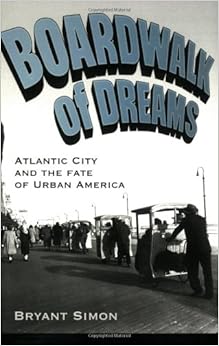
[Great Book: Boardwalk of Dreams, by Bryant Simon!]


Do your research, collect the FACTS before you get conned like Atlantic City!


The only reasonable solution:

REPEAL THE CASINO DEAL


NJ Senate President Steve Sweeney Wants Atlantic City Redo

New Jersey State Senate President Stephen Sweeney
New Jersey State Senate President Stephen Sweeney wants Atlantic City to look beyond the resort city for financial rejuvenation. (Image: William Perlman/The Star-Ledger)

Atlantic City is far removed from its glory days, when it was considered second only to Las Vegas in
the American casino scene. And now, New Jersey Senate President Steve Sweeney (D-Gloucester) has asked the city, the gaming industry, and officials from around the state to come up with ideas for how Atlantic City can “reinvent itself,” saying that the city has been far too dependent on casino revenues for far too long.

As casinos continue to close in the resort city at a staggering rate, it is becoming more and more apparent that a return to those glory times isn’t coming. That’s enough for many, like Sweeney, to call for the city to find new ways to generate revenue and get back on its feet.

Gaming Revenues In Spiral Since 2006

“Since its peak, the market for gaming has changed,” Sweeney wrote in an op-ed published in The Record. “Convenience gaming has proliferated throughout the United States with casinos in the backyards of one-time day trippers to Atlantic City.”

In particular, Pennsylvania used to be an excellent market for Atlantic City casinos to draw on. But that state began introducing casinos in 2006, and the effects on Atlantic City were immediate and devastating. The city’s revenues peaked that year at about $5.2 billion. But they’ve now fallen for seven consecutive years, and while the 2008 recession made things worse, it’s clear that increased competition in Pennsylvania, Delaware, Maryland, New York and other nearby states has been the main cause of the sustained decline. Last year, the 12 casinos operating in the city brought in just $2.9 billion, the lowest total in 25 years.
That decline has created mounting pressure on the gaming industry in Atlantic City, and that finally became too much to bear in 2014. In January, the Atlantic Club casino closed, with the Showboat closing this summer and Trump Plaza expected to shut down in September. The Revel could also close if a buyer isn’t found in a bankruptcy auction.
To Sweeney, this means that changes have to be made both inside and out of Atlantic City.
“It is time we consider whether to give voters the option of expanding gaming outside of Atlantic City in the near future,” Sweeney wrote. Sweeney has been a proponent of a North Jersey casino, which could be a way to draw in customers who might head over the border to current and future New York casinos. Under his plan, Atlantic City would still be the “premier gaming destination” in New Jersey, and any new casinos would have to be designed to avoid taking customers away from the city as much as possible.

Casinos Outside Atlantic City Not Yet a Popular Plan

But New Jersey residents may not be interested in such a plan. According to a recent poll by Fairleigh Dickinson University’s PublicMind, 50 percent of New Jersey adults are against expanding casinos outside of the city, while 42 percent are in favor.

Regardless of the future of gambling outside of Atlantic City, though, Sweeney believes that the city must expand beyond gaming if it wants to secure its future.

“But Atlantic City is going to have to expand beyond just gaming,” Sweeney wrote. “For too long, the city relied almost solely on gambling revenues to keep the engine running. That format was bound to run into problems eventually. We must totally reinvent how Atlantic City bills itself to the world.”


Read more: http://www.casino.org/news/nj-senate-president-steve-sweeney-wants-atlantic-city-redo#ixzz39f0Po8dq

Thursday, July 24, 2014

Nevada's Failure!


If Casinos pave the streets with GOLD....what happened to Nevada?

Can we talk about the HIGH CRIME, HIGH PERSONAL BANKRUPTCY RATES, HIGH DIVORCE RATES, HIGH POVERTY RATES ....and very sadly, HIGH SUICIDE RATE, The Gambling Industry's Dirty Little Secret?

REPEAL THE CASINO DEAL and protect ALL Massachusetts Communities from this destruction!

Nevada education system ranked last in nation, report says


Senate Majority Leader Harry Reid’s state ranks last in the nation in education for the third year in a row, according to a children's well-being report released by the Annie E. Casey Foundation.
 
According to the report, about 40 percent of Nevada’s high school seniors didn’t graduate on time in 2012. The percentage is the highest failure rate in the country and double the national average. 
Nevada also had the lowest preschool participation rate in the U.S., with 30 percent of children receiving schooling before kindergarten compared with a 46 percent national average. 
According to the Las Vegas Review-Journal, Nevada's children beat only New Mexico and Mississippi in an overall well-being category, which includes children's health, education and state of families. 
“Nevada continues to gain ground, but we remain in 50th place. That’s unacceptable,” Nevada Superintendent of Public Instruction Dale Erquiaga told the Review-Journal. 
Erquiaga told the Review-Journal that Nevada's 17 school districts should spend more time ensuring high school students earn credits and pass state-required exit exams. 
“Districts have to continue rethinking their efforts before students fall so far behind they can’t catch up in time," he said. 


Tuesday, April 15, 2014

Tolman: Spineless NIMBY! What a Disappointment!

Folks, Can we stop electing spineless clowns who have failed to conduct their Due Diligence, ignored the disasterous experience of other communities, other states and are delusional enough to believe Massachusetts is DIFFERENT?

Atlantic City is the Poster Child for Predatory Gambling!


Solely my words!


From: Alex Bloom <alex@warrentolman.com>
Date: April 15, 2014, 6:00:02 PM EDT
To: ......
Subject: Warren Tolman statement

Hi .....,

I'm sending along the following statement from Warren Tolman regarding casinos:

 
"The decision of whether the question will be on the ballot is in the hands of the SJC and the next Attorney General has no role in this decision. But if it is on the ballot I will vote against repeal. I support the Legislature's decision to allow individual towns and cities like Springfield and Plainville to decide if they want a casino in their backyard. The people in these communities want the jobs and economic development that will be created.

If casinos go forward in Massachusetts, the real issues for the next Attorney General are to enforce casino agreements and to be an advocate for consumers and taxpayers. I will ensure that agreements with host communities and surrounding communities are strictly enforced. I will be the leader on whom Massachusetts residents can depend so that casino operators are adhering to their agreements with regards to traffic mitigation, compulsive gambling, work rules, the impact on local economies, consumer bankruptcy and other issues. Finally, I will continue to be a watchdog on ethics and political corruption." -- Warren Tolman

Thanks,
Alex

--
Alex Bloom
Communications and Scheduling
215-872-8664

Sunday, April 13, 2014

Mass Live Reveals Itself as CASINO SHILLS!

Anyone who has followed the Predatory Gambling issue in Massachusetts is fully aware that the MEDIA censors information, presenting a BED OF ROSES!


....ignoring the CROWN OF THORNS REALITY!


Atlantic City is the Poster Child for all that is wrong with Predatory Gambling!


While The Republican has abandoned its journalistic responsibility, the FACTS are available.

Predatory Gambling promised to pave the streets with Gold and instead, Atlantic City is mired in debt, its residents impoverished, the community filled with crime and despair.

Where is there a community that has benefited from Predatory Gambling?

It doesn't exist.

States that have embraced this Failed Fiscal Policy have nothing left except the losing proposition of EXPANSION - sucking more $$$ from those least able to afford it.

Predatory Gambling is the ultimate 1% SCAM!

Let's protect ALL Massachusetts communities, support REPEAL THE CASINO DEAL and let's work together to create REAL jobs we can all be proud to work!
 
[These words are solely mine! Any objection to my snarkiness
is to be blamed solely on me!]


REPEAL THE CASINO DEAL! Donate Volunteer The Details


REPEAL THE CASINO DEAL!
BAD FOR COMMUNITIES, BAD FOR THE COMMONWEALTH


Read what the Springfield newspaper says about the people's right to vote

The following is an editorial that appeared on April 8 for 24 hours in the online version of the Springfield Republican. After protests and a presentation of the facts, the editorial was amended the next morning. It is outrageous.

Numerous publicly available documents reveal that the repeal petition was filed just ten days after the legislation to expand gambling was passed. Repeal the Casino Deal took every step necessary to get to where we are today in a timely fashion.

This news organizations' casino cheerleading and presentation of erroneous information is shameful.
 
We need your financial support to be successful. We are trying to raise $20,000 this month to hire a campaign  manager. We have a strong case for the appeal court and we will get on the ballot. But we need the funds to hire a staff person to begin the campaign now. DONATE


The Republican Editorials By The Republican Editorials

on April 07, 2014 at 4:02 PM, updated April 08, 2014 at 1:34 PM


Did the voters who have pressed for a repeal of the law that establishes three casinos and a slots parlor in Massachusetts have a sudden change of heart?


Or were they simply asleep at the wheel when the Massachusetts Legislature and Gov. Deval Patrick agreed on the law?


For the record, that law was signed in November of 2011 after ample debate and amendment. The public process was prolonged and transparent. There was ample time to write, call and lobby legislators prior to its passage.


Casino foes, if they were sincere, should have begun a repeal effort immediately following passage of the law, which, readers will recall, built local referendums into the process.

Wake up: It’s now 2014.


The time to take action, if voters wished to repeal the law, would have been immediately upon its passage, not a year and a half later.


At this point, MGM Resorts International lhas established a Springfield subsidiary, set up offices, begun spending money, time and energy establishing connections and building a vision of what Springfield’s South End will look like in 2017. Many other Western Massachusetts businesses have done the same. So have the city of Springfield and a large number of other local governments.

The same is true in eastern and central Massachusetts, all based on good-faith assumptions that the law was decided and finalized. Meanwhile, the local citizens directly involved have voted yea or nay for their cities, as the law prescribed. The process has worked, and worked very well.


It's not just that approval of such a referendum would hurt our region, the businesses and governments involved, while also depriving the commonwealth of critically needed tax revenue that currently largely goes to neighboring states.


We believe that even putting such a referendum on the ballot at this late date will likely have a deeply chilling effect on the business and investment environment for all of Massachusetts. In effect, Massachusetts would be saying that its word cannot be trusted. And who wants to invest in an uncertain situation such as that?


The Supreme Judicial Court is in the process of hearing a case made by Attorney General Martha Coakley requesting that the ballot question be nullified.


Coakley is on the money on this one.


The ballot question is an embarrassment and a waste of time and energy.


Repeal the repeal.


Clcik here to see the amended editorial and the comments. Masslive Editorial


Thank you for your support,
Steve, Kathleen, Paul, John and the RTCD team


Repeal The Casino Deal Committee ι (617) 701-7823


On Thursday, April 3, 2014 12:13 PM, "Abdow, Steven"


We’re on.
From: John Ribeiro [mailto:johnfribeiro@gmail.com]
Sent: Thursday, April 03, 2014 11:09 AM
To: John Ribeiro
Subject: Save The Date(s) Statewide Repeal Meeting 4/26 or 5/3
Hi Folks,
As many of you know, there are two significant milestones coming up in May for the Repeal effort. During the first week in May, the SJC will be hearing oral arguments on whether our question should appear on the November ballot. I can tell you that our legal team has put together a very strong argument, which, in my layman's opinion, is overwhelming. I don't see any way that the court can reasonably deny The People the right to vote on this.
Additionally, we need to collect another round of signatures, 11,500 certified (20,000 raw) in total. We should be able to knock this out in a couple of weekends, especially with the weather getting better (hopefully). Papers will be available on Friday 5/9.
We are planning for a two hour meeting with a full agenda:
  • Status of SJC Case
  • Signature Gathering
  • Campaign Messaging
  • Campaign Planning
We are shooting for 10-12 on Saturday, 4/26 in the Framingham area and using 5/3 as a fallback. Please only share this with your core leadership teams and known entities.
Please RSVP to my email. Looking forward to seeing as many of you there as possible. I will send details as soon as they are confirmed.
All My Best,
John Ribeiro
Chairman, Repeal The Casino Deal