Meetings & Information


*****************************
****************************************************
MUST READ:
GET THE FACTS!


Showing posts with label Pequots. Show all posts

Wednesday, July 1, 2015

Tribal casinos, protected by sovereign immunity, face challenges from gamblers claiming abuse


Tribal casinos, protected by sovereign immunity, face challenges from gamblers claiming abuse

The Associated Press
FILE - In this June 29, 2006, file photo, a table game area is reflected on a ceiling mirror in Foxwoods Resort Casino on the Mashantucket Pequot Indian Reservation in Mashantucket, Conn. Lawsuits making their way through federal courts are testing the principle of sovereign immunity when it comes to abuse claims at tribal casinos. So-called “advantage players” are made to feel unwelcome, regularly being tossed and and blacklisted. But gamblers have limited options to press claims of mistreatment at Native American-owned properties, which generally are shielded from lawsuits in outside courts by laws recognizing tribes’ sovereignty (AP Photo/Chitose Suzuki, File) 


By MICHAEL MELIA, Associated Press
MASHANTUCKET, Conn. (AP) — For gamblers skilled at counting cards, it can be especially risky to play at America's tribal casinos: Those who have gotten caught tell stories of seized winnings, wrongful detentions, or worse.
Casino bosses everywhere have ways of making so-called "advantage players" feel unwelcome, regularly tossing and blacklisting them. But gamblers have limited options to press claims of mistreatment at Native American-owned properties, which generally are shielded from lawsuits in outside courts by laws recognizing tribes' sovereignty.
Now, a pair of lawsuits in federal courts is testing the principle of tribal immunity in cases involving allegations of abuse and bias in tribal justice systems.
The cases, in Connecticut and Arizona, involve crackdowns on advantage players who say they use card-counting or other methods that shift the odds in their favor, but generally are not illegal.
"You do not have a level playing field," said Stanford Wong, a Las Vegas-based gambling expert who advises readers of his newsletters to be aware that tribal properties are governed by their own laws. "In a tribal casino, there's no recourse whatsoever. You can't sue them in regular court. The odds are all stacked against you."
At the country's largest Indian casino, Foxwoods in southeastern Connecticut, three gamblers from China claim the casino wrongly seized $1.6 million deposited as "front money" and $1.1 million in winnings after accusing them of cheating at mini baccarat during a graveyard shift on Christmas Eve 2011. The gamblers said they used a card-monitoring practice called edge-sorting, which involves players being able to tell the difference between some cards because of imperfections on their non-playing sides.
The gamblers including Cheung Yin Sun, a woman known as the "Queen of Sorts" for her card-monitoring skills, said they were denied the lawyer of their choice in tribal proceedings that ended with a ruling against them by the tribe's gambling commission.
When the gamblers filed suit in federal court, the casino's owner, the Mashantucket Pequot Tribal Nation, argued it had immunity, and a federal judge in early June dismissed the suit. An attorney for the plaintiffs on Wednesday filed notice of an appeal.
In the United States, there are 493 Indian casinos and 1,262 commercial casinos. In 2013, tribal casinos generated $28.3 billion in revenue while commercial properties had $37.7 billion, according to the Casino City research firm.
The options available to gamblers who want to press a claim depend on the contracts between tribes and the host states, which typically grant rights to operate locally in exchange for a share of revenue. The state of Connecticut, which does not require the tribe to waive sovereign immunity, has seven gambling regulation officers assigned to Foxwoods, but their role is limited to testing of the slot machines whose revenue is shared with the state. The state has no oversight of table games.
While tribal gambling commissions answer to the same tribes that own the casinos, National Indian Gaming Commission spokesman Michael Odle in Washington said they operate independently. He said those alleging a lack of impartiality could make the same argument about federal courts handling cases involving the U.S. government.
George Henningsen, chairman of the Pequot gaming commission, said it's difficult to dispel allegations of bias because it's typically only losers who speak out about their experiences with tribal justice.
A handful of lawyers around the country with expertise in gambling disputes say the worst horror stories are at tribal casinos. While some hope to bring pressure to put tribal properties on the same legal footing as commercial casinos, one attorney, Bob Nersesian, said he is more focused day to day on helping the clients who call with claims of abuse.
In the Arizona case, advantage players filed suit after they were detained on suspicion of cheating in 2011 at the Mazatzal Casino, owned by the Tonto Apache Tribe. A federal judge in Arizona last year ruled that sovereign immunity did not apply because tribal officials involved were named in their individual capacities, and an appeals court affirmed that decision on Tuesday.
One of the plaintiffs, Rahne Pistor, said the officers who detained him did not identify themselves as police and grabbed his genitals as they assaulted him.
"I simply had won more money than they liked," Pistor said, "so they kidnapped me, handcuffed me, forced me into an isolated back room in the casino and physically stole whatever money they could out of my pocket."
Nersesian, the plaintiffs' attorney in the Mazatzal case, said such disputes do not discourage advantage players from visiting tribal casinos. If anything, he said, they draw them out in greater numbers by showing the games can be beaten.
"It's more like somebody dying from a hot shot of heroin," he said. "As soon as that happens, the market goes up, not down."


http://www.usnews.com/news/business/articles/2015/07/01/gamblers-abuse-claims-test-sovereignty-of-us-tribal-casinos


Wednesday, May 6, 2015

Former Congressman speaks against casinos


Former Congressman speaks against casinos


By Diane Church


With the Mohegan and Mashantucket Pequot tribes seeking to build casinos in north central Connecticut, a new part of the state may soon experience issues that are now familiar to those in the southeastern region.

Both tribes want to build new casinos along the Interstate 91 and 84 corridors north of Hartford to compete with the MGM Casino now under construction in Springfield, Mass.

Reactions have been mixed. Officials in Windsor, Suffield and Enfield have said they don't want casinos. East Hartford has said it would welcome a casino at the former Showcase Cinemas on Silver Lane, which sits alongside I-84 and has been abandoned for years. Meanwhile, Bradley International Airport has been suggested as a possible location.

Robert Steele, a business executive, former U.S. Congressman and son of radio legend Bob Steele, wants area residents to know about how casino gambling can quickly change a community. He spoke about the issue on April 28 at a Suffield Women's Club meeting at the Suffield Senior Center. Steele lived in southeastern Connecticut and watched the developments firsthand, he said, coming to the conclusion that the casinos deal their communities a losing hand on many fronts.

"It started in 1988 when Congress passed the Indian Gaming Act," Steele said. "This allowed federally recognized tribes to start casinos to support themselves."

The Mashantucket Pequots, who received federal recognition in 1983, were the first to open a casino in 1992. Then another tribe, the Mohegans, received recognition in 1994 and opened their casino two years later.

Prior to that, Steele said, the only states that allowed legalized slot machines and table games were Nevada and New Jersey. Gamblers, he said, were affluent folks who usually visited the casinos occasionally.

Now 40 states have a combined total of more than 1,000 casinos. With this competition, the stakes have been raised. Casinos now aim for a more diverse audience while still keeping up their glittery, high-class façade, Steele said. Some people are lured into gambling addiction, hooked on the thrill and the promise that the next game could yield a jackpot.

Steele said that it's a myth that casinos contribute to the local economy by bringing in more customers. He said a friend of his who had a restaurant in New London County thought the casinos would increase his business. Instead, they had the opposite effect and the restaurant closed after a couple of years.

Steele said people go to the casino, eat at the casino, stay overnight in the casino hotel, attend events at the casino and drive home after fueling up at the tribal-owned gas station.

Although casinos bring in jobs, Steele said they are usually low-skilled, low-paying jobs. To supplant their workforce, casinos bring in immigrants who crowd into houses, often living in substandard conditions, he said.

In recent years, the tribes have watched the recession and new gambling operations in the area take away their casino monopoly and the profits that went with it. New York opened nine racetrack casinos and eight Indian casinos and has four more casinos planned or proposed. Slots parlors have opened in Rhode Island. Now the latest competitor, the MGM Casino, is poised to take customers from the Boston area.

When the casinos opened, the tribes agreed to give 25 percent of their slot machine revenue to the state in exchange for a monopoly on slot machines. Now that the state is hooked on that money, officials have been nervously watching their cut dwindle along with casino profits. They are hoping, along with the tribes, to increase casino revenue, so the proposed new casinos are getting little opposition from them, Steele said.

Steele wrote a book, "The Curse," to inform people about what happens when a casino comes to town. The work of historical fiction chronicles a fictional family dealing with some of the very real problems the casinos caused in southeast Connecticut. It starts with fictional character Ethan Williams, fighting in the real Pequot War. His wife is killed in the war, but he settles in the area and starts a farm.

Fast forward some 350 years to the late 1980s, and one of Williams' descendants, Josh Williams, moves home and wants to save the family farm in the fictional town of Sheffield. The Mashantucket Pequots and the Mohegans soon built their casinos nearby, causing the problems Steele spoke about.

Then a third tribe, the "Northern Pequots," seek federal recognition so they can build a casino near the farm. This is fact-based. There actually was a tribe called the Eastern Pequots that tried unsuccessfully to get federal recognition in the 1990s so they could build a casino in the area.

Steele said he plans to speak in Windsor Locks, but nothing has been scheduled yet. His schedule of public appearances can be seen at http://www.rhsteele.com.

"If a casino comes to your town, you will not recognize your community," he said. "The pressure for more casinos is a daunting prospect for those of us who think we have enough."


http://www.courant.com/reminder-news/windsor-locks-edition/rnw-wl-suffield-steele-casinos-book-the-curse-0514-20150505-story.html

Sunday, May 3, 2015

Connecticut races downhill


Hwang, church, civic leaders warn about casino expansion

Saturday, August 16, 2014

Bursting Bubbles? GO-GO DAYS of CASINO CAPITALISM Gone?


It was heady while it lastest.....if you IGNORED the COSTS!

PLEASE SUPPORT:

REPEAL THE CASINO DEAL


Casinos' slots revenues down in July
By Brian HallenbeckPublication: theday.com
Published August 15. 2014


Amount wagered at Foxwoods down 7 percent, at Mohegan Sun down 4.1 percent
Editor's note: This version reflects corrected slot "win" totals.

Declines in slot-machine revenues at Foxwoods Resort Casino and Mohegan Sun returned to single digits in July, figures the casinos released Friday show.

Foxwoods, which announced Thursday that it was in talks with senior lenders after failing to comply with “certain financial covenants,” reported keeping $44.3 million in slots “win” last month, an 8.9 percent decline over July 2013.


Mohegan Sun kept $52.6 million in July, 3.6 percent less than in the same month the previous year.
A month ago, Foxwoods and Mohegan Sun reported June slots-win declines of 13.1 and 10.3 percent, respectively.

Win is the amount of slots wagers the casino keeps after paying out prizes.

Foxwoods’ “handle” — the total amount wagered at its slots — fell 7.0 percent in July, while Mohegan Sun’s handle was down 4.1 percent.

“We’re focused on profitability,” Bobby Soper, Mohegan Sun’s president and chief executive officer, said. “We feel we’re using our marketing dollars wisely. Hopefully, some months of small declines and overall stabilization are ahead in the not-too-distant future.”

Soper said Mohegan Sun continues to monitor the mix of its slot machines and has made “no material changes on the gaming floor.”

The Connecticut casinos’ slot revenues have been eroding for the past seven years, wreaking havoc with their ability to meet their financial obligations.

In 2009, the Mashantucket Pequot Tribe, which owns Foxwoods, defaulted on debt of $2.3 billion, eventually reducing it to $1.7 billion in a restructuring process concluded in July 2013.

On Thursday, the casino announced that as of June 30, 2014, it was not in compliance with certain terms of the restructuring.

“That being the case, the Tribe and its financial and legal advisors have begun discussions with our lenders to address the situation,” the Mashantucket Pequot Tribal Council said in a notice distributed to tribal members.

The tribe has offered no details of its current financial predicament.

Late last month, the Mohegan Tribal Gaming Authority, which operates Mohegan Sun and Mohegan Sun at Pocono Downs in Wilkes-Barre, Pa., reported that as of June 30, 2014, it was in compliance with all of its financial covenants.

b.hallenbeck@theday.com
Twitter: @bjhallenbeck

Mohegan Sun
$52.60 million

Tuesday, July 16, 2013

Foxwoods June slot machine revenues down 12.3%


Foxwoods June slot machine revenues down 12.3%

Other business lines performing well, CEO says

By JAMES MOSHER
Posted Jul 15, 2013

 
Foxwoods Resort Casino’s June slot machine revenue fell 12.3 percent, continuing a downward trend that’s last well more than a year.

Revenue, or what the gambling industry calls “win,” fell to $43.4 million from $49.5 million a year earlier, the Mashantucket Pequot Tribal Nation-owned casino said.

Total intake, or what the industry calls “handle,” declined 12.1 percent to $505.9 million.
Performance in other parts of Foxwoods’ business bolstered overall results for the month, President and CEO Scott Butera said.

Slot machines are the casino’s largest revenue source.

“June produced solid financial results despite the decrease in slot revenue as other business lines performed well,” he said in a press release. “In addition, the closing of our restructuring earlier this month puts us in solid financial condition and allows us to continue to make significant investments in our entertainment facilities.” [Only slot revenue is taxed by the State of Connecticut.]

The restructuring enabled the Mashantucket Pequot tribe to reduce its debt load by $550 million.


Read more: Foxwoods June slot machine revenues down 12.3% - Norwich, CT - The Bulletin http://www.norwichbulletin.com/news/x624130112/Foxwoods-June-slot-machine-revenues-down-12-3#ixzz2ZDZqLkpk
Follow us: @WickedLocal on Twitter | 119311408344 on Facebook


Wednesday, July 3, 2013

Foxwoods Bailed Out With Tax Dollars

Taxpayer dollars bailed out Foxwoods, an overextended Tribal Casino that pays no taxes.
Foxwoods is salivating to invade Milford, Massachusetts.


Indian tribes seek federal bailout money for casinos
By Cheryl K. Chumley
-
The Washington Times
Wednesday, March 27, 2013
 
A native-American tribe struggling to keep its Foxwoods Resort Casino in the red is now turning to the U.S. government for a helping hand.

The Associated Press reports that the Mashantucket Pequot Tribal Nation has already received more than $4.5 million in grants from the Department of Health and Human Services and from the Interior Department in the last five years. But now members are facing tough times with its casino — which used to be a billion-dollar empire — and are looking at the government for more grants, AP says.

Critics are outraged, because the grants were supposed to be used for economic development that would wean Indians off federal aid. So tribes used much of the money to build casino businesses — and now that those businesses are suffering from tough financial times, these same tribes are turning back to the government for a bailout, AP reports.

“The whole purpose of the 1988 law which authorized Indian casinos was to help federally-recognized tribes raise money to run their governments by building casinos on their reservations,” said Robert Steele, an ex-congressman from Connecticut, in the AP report.

Federal money is supposed to help “struggling tribes,” he said, not Mashantucket Pequots who are struggling with casino issues, AP reports.
 

Thursday, April 25, 2013

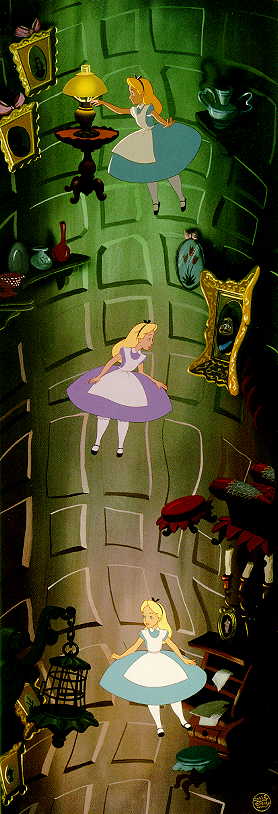
Bankrupt yourself in your pajamas!

Where's Alice?


Beware. There is no end to the fleecing once the foot is in the door!

Foxwoods tribal owner inks Internet gambling deal

AP / April 22, 2013
 
MASHANTUCKET, Conn. (AP) — The Mashantucket Pequot Tribe, owner of Foxwoods Resort Casino in eastern Connecticut, says it will partner with a provider of an Internet gambling provider to begin offering online games this year.
 
The Mashantuckets and GameAccount Network announced the deal on Monday. It must be approved by regulators.
 
The tribe and the London company say they will initially focus on play-for-fun online gambling in the United States. The two parties will be ready for real-money gambling if online is gambling is legalized.
 
The tribe and GameAccount say they will provide business-to-business services to other U.S. gambling operators.
 
Mohegan Sun, Foxwoods’ Connecticut competitor, reached an agreement last year with Las Vegas-based Bally Technologies to provide free-play online poker.


Wednesday, April 10, 2013

Bob Steele's Provocative Novel


Bob Steele’s Provocative Novel Demands Readers Face Ongoing Casino Saga


Catherine Avalone/The Middletown Press Former Congressman Robert Steele in his office at his Essex home is the author of "The Curse: Big Time Gambling's Seduction of a Small New England Town." Mr. Steele's novel describes the wrenching when the federal government allowed two Indian casinos to open in eastern Connecticut.     

Are Indian casinos the just revenge against the white man for the genocide of Native Americans?

This point of view is not dismissed easily.

The tension and interplay of race, money and politics in the tribal recognition process, however, can make the search for truth a murky process. Who is really descended from Native Americans? Does genealogy count? Jeff Benedict’s book published in 2000, “Without Reservation,” raised those issues and challenged the legitimacy of the Mashantucket Pequot Tribal Nation.

Even then, what could we reasonably expect from records kept by the occupiers who certainly displaced the indigenous people, time and time again?

As the casino and internet gambling industries evolve in a fragile economy, a companion narrative to “Without Reservation” has emerged. This time it’s an historical novel, written from the point of view of an old-line Connecticut family. “The Curse: Big-Time Gambling’s Seduction of a Small New England Town,” is former Congressman Bob Steele’s vehicle to put a lot of touchy issues back on the table.

Steele is one of those rare talented and successful guys secure enough to remain open, accessible and not full of himself. He is a striking figure in the most understated way, especially given his life roles which have also included CIA agent, bank president and international retail consultant.

The last time I saw Steele was in a Stamford warehouse in 1997. The 30,000-square-foot facility was hidden in plain sight. I remember Steele pushing a button in one of the building’s theaters opening up a wall that led to a mock city street. It was sort of a Disneyworld for bankers, filled with prototype branches of the future designed to lure and serve customers. Steele didn’t seem to mind when I told him the scene was reminiscent of 1960s TV secret agent Maxwell Smart’s journey to headquarters.

Now he tops it off with this novel set mostly in eastern Connecticut where he lived near the Mashantucket’s Foxwoods Resort Casino for 21 years.

His story begins with events leading to the massacre of Pequot Indians in Mystic in 1637, then jumps to the 1980s and 1990s when as many as a dozen tribes sought federal recognition and the opportunity to get rich quick via legalized gambling. The narrative plays out through a family with intriguing genealogy and local townspeople whose lives are impacted by embezzlement, organized crime, international finance and, of course, political corruption. It would be challenging to count the number of ironies presented within the characters and their deeds.

Steele’s strategic skills developed from other endeavors are evident in the pacing of the novel and the unraveling of history and intrigue. The sympathetic characters and the villains and their dialogue are credible for the most part, although perhaps a bit forced toward the finale. The nitty-gritty of local, state and national politics is revealed by a master. He uses the device of a stone wall late in the narrative to tie together most of the story of 13 generations on native or Connecticut land. It is among the elements that keep the reader in suspense.  

There are some good action scenes, including occasional doses of fisticuffs, sex and homicide. We even get to see how “bill collectors” from Providence set up lucrative scams and otherwise ply their trade preying on growing numbers of gambling addicts.

Also striking was an example of how the federal government systematically stiffs citizens who try to use the Freedom of Information Act to retrieve documents the public owns, employing delays and omissions to frustrate and drive people away.

Steele mixes fictional characters with actual historical figures including former Gov. Lowell Weicker, Hartford Courant columnist and former state Sen. Kevin Rennie and former U.S. Rep. Sam Gejdenson, who followed Chris Dodd and Steele himself serving in the Second District seat.

In interviews and radio broadcasts, Steele makes the point that gambling has grown to become a politically-active, $63 billion industry. “The Curse” is about the sordid underbelly of what Steele says happened and almost happened in eastern Connecticut.

It is also a frame of reference for how Connecticut will be affected by our border states – Rhode Island, Massachusetts and New York – as they deal with the rise of casino gambling. Will on-line gambling, as Steele predicts in his public appearances and interviews, put a casino on everyone’s “Smartphone?”

Steele continues to make almost daily rounds of libraries and social and professional clubs throughout the spring. He appeared in Litchfield last week and has upcoming appearances scheduled in Cheshire, Wethersfield, Griswold, South Windsor, New Canaan, Salem and Hebron over the next few days.

Andy Thibault is a contributing editor for Journal Register Co.’s Connecticut publications and the author of Law & Justice In Everyday Life. He formerly served as a commissioner for Connecticut’s Freedom of Information Commission. Reach Thibault by email at tntcomm82@cs.com. Follow him on Twitter @cooljustice.

http://www.countytimes.com/articles/2013/04/09/opinion/doc51641ef0854f8678824850.txt?viewmode=default


Monday, March 25, 2013

Media Awakens to Subsidies to Mismanaged Tribes

Bear in mind that 'stipends' were tax-exempt.


Maybe it's time for the media to conduct some in-depth research into all of the funding Tribes receive, including health care that other Americans don't receive. And very little oversight exists.

As casinos struggle, tribes seek more federal aid


By MICHAEL MELIA
Associated Press
March 24, 2013

LEDYARD, Conn. (AP) — Once the envy of Indian Country for its billion-dollar casino empire, the tribe that owns the Foxwoods Resort Casino has been struggling through a financial crisis and pursuing more revenue from an unlikely source: U.S. government grants.

The money provided annually to the Mashantucket Pequot Tribal Nation through the Interior Department and the Department of Health and Human Services has risen over the last five years to more than $4.5 million, according to documents obtained by The Associated Press through the Freedom of Information Act. One former tribal employee says department leaders were encouraged to offset dwindling resources by seeking more federal grants.

The Pequots, who once distributed stipends exceeding $100,000 annually to adult members, are not alone among gaming tribes seeking more federal aid. Several, including the owner of Foxwoods’ rival Connecticut casino, the Mohegan Sun, say they have been pursuing more grants — a trend that critics find galling because the law that gave rise to Indian casinos was intended to help tribes become financially self-sufficient.

‘‘The whole purpose of the 1988 law which authorized Indian casinos was to help federally-recognized tribes raise money to run their governments by building casinos on their reservations,’’ said Robert Steele, a former Congressman from Connecticut. ‘‘I would argue strongly that federal money was meant for struggling tribes. Certainly the Mashantucket Pequots and the Mohegans couldn’t under any circumstances be put in that category.’’

As long as they have federal recognition, casino-owning tribes are eligible for the same grant programs as the larger tribes based on large, poverty-stricken reservations in the American West. The grants, which don’t need to be paid back, support tribal governments by paying for programs such as health screenings, road maintenance and environmental preservation.

‘‘The Mashantucket Pequot Tribal Nation is proud of the work they do with the use of federal funds when it comes to assisting the region and fellow Native Americans,’’ said Bill Satti, a tribal spokesman, who said the grants have supported the tribe’s medical clinic and repair work on local roadways.

Thomas Weissmuller, who was chief judge of the Mashantucket Pequot Tribal Court until 2011, said that near the end of his tenure the tribal council said they had distributed too much money to members and urged department leaders to pursue more federal grants. He said there was resistance from some council members, who raised questions about the effects on sovereignty, but he was personally encouraged to pursue grants by officials including the tribal chairman, Rodney Butler.

Weissmuller said he was not comfortable seeking such assistance for the tribal court system because most of the issues it dealt with were related to the casino, which is essentially a commercial enterprise.

‘‘A billion-dollar gaming enterprise should fully fund the tribal government,’’ said Weissmuller, who said that he was forced out of the job by tribal officials who told him he did not appear to have the tribe’s interests at heart on other matters.

The reversal of fortunes for the Pequots began around 2008, when Foxwoods completed a major, costly expansion with the 30-story MGM Grand hotel and casino just as the recession began to show its teeth. The following year the tribe defaulted on debt exceeding $2 billion.

Since then, the tribe of some 900 people in rural southeastern Connecticut has ended its member stipends. The Pequots have kept some other benefits in place, covering payments for members pursuing higher education and offering supplemental pay for tribal members taking entry-level jobs at the casino.

The federal grants provided to the Pequots through the Interior Department and its Bureau of Indian Affairs, meanwhile, rose from $1 million in 2008 to $2.7 million in 2011, with partial records for 2012 showing $1.7 million in grants for the year. Grants provided to the Pequots through the Indian Health Service, a division of Health and Human Services, increased gradually from $1.7 million in 2008 to $1.9 million in 2012. That money is to support health care services such as community health, nutrition, substance abuse treatment and pharmacy services.

The federal money opened the door to scrutiny by the FBI, whose investigation of tribal finances led to the January indictments of the tribe’s treasurer, Steven Thomas, and his brother Michael Thomas, a former tribal chairman. The two are accused of stealing a combined $800,000 in tribal money and federal grants. The tribal council has expressed full confidence in its treasurer.

Mohegan Tribe officials said they took pride in refusing federal grants for years, in acknowledgment that there were needier tribes. But tribal officials said they had relaxed that position as their Mohegan Sun casino, like Foxwoods, has faced growing gambling competition from neighboring states.

‘‘It’s a sign of the times. Everybody is’’ seeking grants, Mohegan Chairman Bruce ‘‘Two Dogs’’ Bozsum said. ‘‘There’s some that we qualify for and it helps us to keep everybody healthy and working. At the end of the day, why shouldn’t we apply for it? If we get approved, it’s always for a good cause, usually health or jobs created.’’

Tribal officials said they receive modest grants to contribute to the cost of health care for their 2,000 members.

The tribe that owns the Soaring Eagle Casino and Resort in Michigan, one of the country’s largest Indian casinos outside of Connecticut, has been aggressively pursuing grants in areas including environmental protection and health services as it struggles with the weak economy, according to Sylvia Murray, grants and contracts manager for the Saginaw Chippewa Indian Tribe.

Sam Deloria, director of the American Indian Graduate Center in Albuquerque, N.M., said he has no issue with tribes pursuing grants for which they are eligible. It’s no different, he said, from the state of Alaska participating in federal programs despite the annual payouts to residents from the state’s oil savings account.

As the federal money reflects financial distress for gaming tribes, however, he does worry that their struggles ultimately could have a ripple effect throughout Indian Country and affect the ability of tribes to participate in the marketplace.

‘‘It has got to raise a set of issues that either in the courts, or in the Congress, or in the marketplace, eventually it will get people looking at tribal participation in business in a different light,’’ he said.

http://www.boston.com/news/local/rhode-island/2013/03/24/casinos-struggle-tribes-seek-more-federal-aid/ZEhesuKCsuSsBTnuBT2NSL/story.html

The Sun Chronicle : Your source for local news


As casinos struggle, tribes seek more federal aid. LEDYARD, Conn. - Once the envy of Indian Country for its billion-dollar casino empire, the tribe that owns the ...


As casinos struggle, tribes seek more federal aid | Boston Herald


bostonherald.com/.../as_casinos_struggle_tribes_seek_more_federal_...
21 hours ago – Several other gaming tribes have been pursuing more federal grant money — a trend that critics find galling because the primary purpose of ...


Tuesday, January 29, 2013

With casinos slumping, Conn. tribes that once fought bitter war work as allies


With casinos slumping, Conn. tribes that once fought bitter war work as allies


By Associated Press, January 22, 2013
 

UNCASVILLE, Conn. — At sunrise one day last spring, the leaders of the Connecticut tribes that own two of the world’s largest casinos stood together at the site of a 1637 massacre, commemorating the Pequot War attack in which one of their tribes took part in nearly wiping out the other.
The Mashantucket Pequots, who own the Foxwoods Resort Casino, hold the event annually to celebrate survival from the slaughter of so many of their forebears. Last year was the first time they invited a member of the Mohegan Tribe, which owns the Mohegan Sun casino, to participate in the fireside ceremony in Mystic, Conn.
“That was pretty big,” Mohegan Chairman Bruce “Two Dogs” Bozsum said in an interview last month with The Associated Press.

The commemoration was a symbolic moment in the close relationship between the two chairmen. With their rival casinos each struggling through slumps, the men see each other not only as friends, but also as allies in a relationship that may be a key to their tribes’ future prosperity.

Although the tribes once kept their external affairs entirely separate, Bozsum and the Pequots’ chairman, Rodney Butler, have sought to speak in a single voice on issues of mutual interest. In joint talks with Connecticut’s governor, they have won concessions including a reduction in the presence of state police at the casinos to lower the amount they have to reimburse the state.

They are also exploring the possibility buying goods and services together to reduce costs for their massive casinos, which are only seven miles apart in rural southeastern Connecticut.

“It was only good fortune, or good misfortune, that both of us were going through the same economic challenges at the same time,” Butler said in a separate interview this month. “How much more successful can we be simply working together?”

Bozsum, 52, first met Butler years ago when he would play golf with Butler’s father, but they became close in recent years after each was elected chairman. The friendship has influenced relationships between the tribes, which hold intertribal socials more than ever. Bozsum and Butler, 35, are golfing partners, their families have socialized together, and they speak frequently over the phone.

When talk turns to business, they have plenty of shared challenges to discuss.

Foxwoods and Mohegan Sun opened after the Pequots won federal recognition in 1983 and the Mohegans followed in 1994. After years of success, they have struggled with a steady decline in gambling revenue brought on by the economic downturn and new competition in neighboring states.

The Mohegan Tribal Gaming Authority, which owns casinos in Uncasville and Wilkes-Barre, Pa., announced in March it had refinanced debt of about $1 billion, and the Pequots said in October that creditors had signed on to its plan to restructure $2.2 billion in debt.

Bozsum said the two men discuss industry trends and joke together about their marketing and other strategies, but they do not share proprietary information.

“We do our own thing, but we watch each other. And we both probably adjust to what’s happening across the street,” Bozsum said.

One area where they have not agreed is how to handle Internet gambling if it is legalized. While the Pequots have expressed interest in running online versions of casino games, Bozsum has argued that legalizing online games other than poker will hurt brick-and-mortar casinos. Bozsum said that he believes the matter should be handled through federal legislation, but that if it becomes a state issue, he and Butler would probably “lock wrists for a while until we figure it out.”

The ceremony last spring marked the 375th anniversary of the massacre in which the Mohegans, in alliance with the English and the Narragansett tribe, killed 150 elderly men, women and children in a May 26, 1637, raid on a Pequot village.

Mistrust stemming from that massacre had been the biggest impediment to better tribal relations until now, according to both chairmen, and some members in each tribe have expressed skepticism of the new relationship.

“You’d be surprised how long people hold a grudge,” Bozsum said. “We’re both fighting for the same things, sovereignty, protect your sovereignty, do what’s right for your people and make sure we’re here 300 years from now. People can say what they want.”

A meeting between the two tribal leaders and Gov. Dannel P. Malloy soon after he took office in 2011 was said to be the first of its kind in hundreds of years. The governor’s office, which has renegotiated the agreements requiring the tribes to reimburse the state for public safety services and increased their free-play allowance to boost promotions, said it is eager to help the tribes because their casinos contribute so much to the economy.

“The more we can help them, the more they can help the employees they have and help our state,” Lt. Gov. Nancy Wyman said in an interview.

Butler said he is eager to find other areas to cooperate with the state and the Mohegans. Despite challenges both casinos are facing, he said Bozsum’s participation in the ceremony in Mystic showed obstacles can be overcome.

“It was just this amazing, spiritual, emotional moment of, What if we can all stand here together on the grounds of where your people slaughtered our people and say, ‘This is a beautiful day, and we’re celebrating together? Then we can get past anything,’” he said.

http://articles.washingtonpost.com/2013-01-22/business/36477761_1_rival-casinos-pequots-tribes

Monday, January 28, 2013

The Curse


Essex man writes book warning of effects casinos have on Connecticut


ESSEX -- At a time when neighboring states are rushing to legalize gambling in an attempt to cash-in on their share of gaming revenues in the region, Robert Steele has written a novel warning of the disastrous effects casinos have had on Connecticut.

“The Curse – Big-Time Gambling’s Seduction of a Small New England Town” is the fictional story of a family with deep roots to the earliest settlers in the area who see their traditional New England way of life slip away before their eyes because of the construction of two Indian casinos.

Steele was compelled to write this novel — which is part history book and includes an extensive bibliography — after seeing first-hand the effects Foxwoods and Mohegan Sun casinos had on his beloved state.

The author lived in Ledyard for 21 years, leaving the area in 1998 after the two casinos were completed. The son of Connecticut radio legend Bob Steele also represented Eastern Connecticut, including Middletown, for two terms in the U.S. Congress.

“I watched the political maneuvering. I watched the building of the casinos and the impact on the region,” Steele said.

Steele got the idea for the book about what he calls a fascinating story when he lived in Ledyard and watched the political battles unfold.

“I was fascinated by the history of the Pequots and the Mohegans and how they were mortal enemies,” Steele said. “They virtually disappeared and then reemerged to build two of the worlds biggest casinos.”

After Foxwoods, opened by the Mashantucket Pequot Tribal Nation in 1992, and Mohegan Sun, opened by the Mohegan Tribe of Connecticut in 1996, the state started to benefit from deals made with the Indians for a portion of the slot machine revenue. Since peaking five years ago, however, slot revenue has steadily declined, because of the recession and increased competition mostly from gambling sites at the Aqueduct and Yonkers, N.Y., race tracks, while social costs such as gambling addiction, divorce, and embezzlements have increased. Between 1992 and 2007, embezzlements alone rose 400 percent in Connecticut, or 10 times the national average, according to the author’s research.

“We made this huge bet on casino gambling in Southeastern Connecticut,” Steel said, and he’s afraid we’re coming up snake eyes.

“Meanwhile, the state and the casinos are spending tens of millions of dollars to encourage you to gamble in ads where everyone in winning and having a good time,” Steele said. Continued...

And the author fears that it is only going to get worse. Recently, U.S. Sen. Harry Reid, D-Nev., proposed the Internet Gambling Prohibition and Poker Consumer Protection Act which would legalize poker on the internet, including on mainstream websites like Facebook.

“If internet gambling happens, you won’t need to leave your living room, your dorm room, to place a bet,” Steele said. “Then they’ll have everything they want.”

Steele worked on the book on and off for 10 years, finishing it last summer.

The process was possibly more difficult because of the style Steele chose, blending fact and fiction.

“I wanted to tell the whole story, but in a way that hadn’t been done before. I wanted to write a novel what would appeal to a different audience than just a book of non-fiction,” Steele said, adding, “But weaving imagination and fact is infinitely more difficult.”

“It’s been very rewarding seeing it in print, especially when I think of all the time I put into it,” Steele said.

Steele, who lives in Essex with his wife, is now traveling to 37 libraries and historical societies throughout New England to discuss the book. He will be at the Meriden Public Library on Saturday, March 2, at 2 p.m. and at the Russell Library in Middletown on Saturday, March 9, at 2 p.m.

“This book is about where we are,” Steele said. “We have to talk about where we’re going.”

“The Curse – Big-Time Gambling’s Seduction of a Small New England Town” is available in soft-cover from Amazon and RJ Julia Booksellers in Madison and as an eBook on Amazon and Barnes & Noble.

http://www.nhregister.com/articles/2013/01/24/news/doc51019bdd997c1353225079.txt?viewmode=fullstory

Monday, January 21, 2013

CT: Removing Protection at Casinos


Gov. Malloy: Don't withdraw police from casinos
By David CollinsPublication: The Day
Published 01/20/2013

For those of us who do not belong to the Mashantucket Pequot Tribal Nation, it should be none of our business that tribal officials don't seem to be at all rattled by criminal history or criminal charges.

For example, last week the tribe named as its new chief of staff - in charge of, among other things, its police department - a tribal member who has a substantial criminal history.

Antonio Beltran had some fairly recent run-ins with the law, in 1999 and 2000, including alleged drunken driving and speeding and some other motor vehicles charges related to two hit-and-run accidents in Preston.

But it was his earlier crimes, as a young man, that likely would disqualify him for a management role in most any gambling jurisdiction in the country.

Beltran was 17 when prosecutors said he was out on a joy ride with friends and told them he wanted to "kill a white boy." The victim, found walking alone down a dark street, was stabbed in the back and paralyzed.

Beltran later denied the racial remark and told a reporter in 1998 that he was "angry at the world, about my upbringing and poverty" but said only that night that he wanted to stab someone.

After being led from the California courtroom in which he was sentenced as an adult for the stabbing, according to press accounts, he told the victim, who was in a wheelchair: "You may be smiling … but at least I'm walking."

He also later denied having said that, although witnesses stood by their reporting.

Beltran was arrested some 10 years after the stabbing incident on aggravated assault charges following a confrontation in a bar.

Beltran's criminal history surfaced in Connecticut when he was elected to the Tribal Council in the late 1990s.

But tribal officials said then that, given their sovereignty, they had every right to elect whoever they wanted to run their government. They are free to forgive and forget.

Tribal Chairman Richard A. Hayward, even then a bit of a recluse, went out of his way to praise Beltran in a rare interview as respected and hard-working. Hayward said Mashantucket is a place where tribal members, many deprived earlier in life, could make new lives for themselves.
Tribal officials were right then. And they are well within their rights now to defend another councilor who recently came under a criminal cloud of his own.

Pequot Tribal Chairman Rodney Butler reportedly told members this month that the tribe will pay for the legal defense of Steven Thomas, the treasurer of the Tribal Council, who has been indicted on federal charges of stealing from the tribe. The allegations arose from a period of time before Thomas served on the council.

But while the tribe, like any family, is free to help and come to the defense of any member, this reaction is by no means any kind of legal extension of its sovereignty.

The federal government has clear and unambiguous jurisdiction on the Mashantucket reservation, and tribal officials are just as subject to prosecution as government or corporate leaders anywhere else in Connecticut.

I suspect, though, that if a board member of any major corporation here was indicted after a lengthy FBI investigation, the board would not likely rally around and pitch in for the accused member's defense.

What is worrisome about what can look like a casual treatment of criminal charges on the reservation is the movement by Gov. Dannel P. Malloy to retreat from the state's obligation to police Connecticut's two casinos.

The compact that gives the state's two tribes the right to allow casino gambling on their reservations clearly calls for the state to have a substantial police presence at the two casinos and for the tribes to reimburse the state for what that costs.

It is hard to imagine how the governor can continue to explore the idea of withdrawing state police from the casinos, especially now that the tribal police department at Mashantucket is overseen by someone with a substantial criminal record.

Never mind that tribal police don't even have the right to arrest non-tribal members. They can only try to detain the bad guys and wait for state authorities to arrive.

Pequot tribal members have every right to decide who will run their government.
Connecticut residents, too, can elect their own leaders.

And in coming elections, they should pay attention to any of those leaders who choose to abandon police powers in the state's two biggest petri dishes for crime culture, where big crowds mix daily with lots of cash, gambling and free liquor.

This is the opinion of David Collins.

http://www.theday.com/article/20130120/NWS05/301209928


Even more interesting considering this recent article:

UPDATED:Three people stabbed on Mashantucket reservation
By Kathleen EdgecombPublication: theday.com
Published 01/20/2013

Friday, September 28, 2012

"The Curse: Big-Time Gambling's Seduction of a Small New England Town


Former Connecticut Congressman Writes Novel On Casino Gambling
 
Posted on September 27, 2012
 
 
Cautionary, epic tale comes as more states embrace casinos
 
NEW LONDON, Conn., Sept. 27, 2012 /PRNewswire/ -- At a time when more and more states are rushing to legalize or expand gambling, former Connecticut Congressman Robert H. Steele has written a novel set against the explosion of casino gambling in Connecticut during the 1990s, when two Indian tribes built the world's two biggest casinos just eight miles apart in southeastern Connecticut.

(Photo: http://photos.prnewswire.com/prnh/20120927/NE82390)

Steele tells his story from a unique vantage point. He represented eastern Connecticut in Congress before the arrival of the two casinos (Foxwoods and Mohegan Sun) and subsequently lived on the edge of the Mashantucket Pequot Reservation, providing him with a keen appreciation of the political maneuverings that brought the casinos into being and a first-hand view of their impact.

Available now from Levellers Press, "The Curse: Big-Time Gambling's Seduction of a Small New England Town," begins in 1637 with the massacre of the Pequot Indians and a Pequot sachem's curse aimed at the young English soldier who is about to kill him. The story then jumps 350 years as the soldier's 13th-generation descendant becomes embroiled in a battle to stop a fictional Indian tribe from building a casino that threatens his town and ancestral home.

The lure of easy money drives everyone, from the tribe's chief to a shadowy Miami billionaire, venal politicians, and Providence mobsters, while a small Connecticut town must choose between preserving its character or accepting an extraordinary proposal that will change it forever.

Since Foxwood's opening in 1992, the number of U.S. casinos has increased fourfold to approximately 1,000, while according to a 2009 state study, the impact of the casinos on Connecticut has ranged from the creation of thousands of jobs to a surge in gambling-related social problems. One startling example is the 400 percent rise in embezzlements in Connecticut between 1992 and 2007, a rise 10 times the national average.

Connecticut author Martin Shapiro has described the novel as "an epic story of politics, identity and greed that will leave you wondering where America is headed."

The book's release comes as all three of Connecticut's neighboring states—Massachusetts, New York and Rhode Island—are moving to open new casinos, and the U.S. Justice Department has taken a first step toward the legalization of Internet gambling.

For more information please visit www.rhsteele.com.

SOURCE Robert H. Steele

http://finance.boston.com/boston/news/read?GUID=22361877


Wednesday, August 15, 2012

Foxwoods revenue drops 16 and 18 percent


Let me get this clear...to justify the Gambling Arms Race, the excuse was used about the $$$ flooding across the Massachusetts border, ignoring other isssues like out-of-state airports attracting Massachusetts residents because Boston-centric politicians because Logan is such a Hell-Hole


or Masschusetts consumer flocking to New Hampshire for booze, cigarettes and big ticket items sales tax-free.

And now Foxwoods, suffering month after month declines, re-negotiates its debt?

 Ya think we were snookered?


Foxwoods July slot revenue drops 16 percent

By Ira Kantor
Wednesday, August 15, 2012
 
Foxwoods Resort Casino said today its July slot revenue totaled $51 million on handle of $589.4 million, declines of nearly 16 percent and 18 percent respectively from the same period last year.

This is the 12th consecutive month the casino has reported slot revenue in the $46 million to $53 million range, the Mashantucket Pequot Tribal Nation said.

Foxwoods contributed $12.8 million to the Connecticut Special Revenue Fund last month, bringing the cumulative contribution to the state of Connecticut since the casino opened in 1992 to $3.38 billion. [What other business would be reported as 'cumulative contributions? What other business would operate ignored the COSTS?]

Earlier this month, the casino’s owners reached an agreement with steering committees of its lenders and bondholders to restructure $2.2 billion in debt.

Under terms of the agreement, the Mashantucket Pequot’s senior secured credit facility and Kien Huat  [Genting] loans would be restructured into two term loans with five and seven-year maturities, respectively. Bondholders are to receive new securities with lengthened maturities of 13, 18, and 23 years based on the seniority of the existing bonds. Maturities will be set from the restructuring date.

Holders of the tribe’s subordinated special revenue obligations and 8.5 percent notes will receive new debt at a discount to face value of accrued principal and interest. Bank of America and Wells Fargo will arrange a $30 million working capital facility for the tribe with a 30-month term beginning on the restructuring date.


Sunday, August 5, 2012

The Wonder of it All! $2.2 Billion Debt!


Foxwoods Casino Owner to Restructure $2.2 Billion in Debt

By Christopher Palmeri on August 03, 2012
The Mashantucket Pequot Tribal Nation, owner of the Foxwoods Resort Casino in southeastern Connecticut, reached a preliminary agreement with lenders to restructure $2.2 billion in debt.

The accord lowers the debt balance and extends maturities at favorable rates, Foxwoods Chief Executive Officer Scott Butera said yesterday in a statement, without disclosing specifics. The tribe will work with lenders and bondholders to build support for the agreement over the next several months.

“This represents a critical step forward for our business,” Butera said in the statement. “It provides for a capital structure that will support significant investments in our gaming and hospitality businesses.

The tribe's senior secured credit facility and Kien Huat [Genting] loans will be restructured into two term loans with five- and seven-year maturities, according to the statement. Bondholders will receive new securities with lengthened maturities of 13, 18 and 23 years based on the seniority of the existing bonds.

Holders of its subordinated special revenue obligations and 8.5 percent notes will receive new debt at a discount to the face value of accrued principal and interest, the tribe said.

Bank of America and Wells Fargo will arrange a $30 million working capital facility for the tribe with a 30-month term.

Hud Englehart, a spokesman for the tribe, declined to discuss additional details of the proposal.

Foxwoods, among the largest casinos in the U.S. by gambling space, is located on tribal land in the town of Ledyard. It opened a casino hotel expansion under the MGM Grand brand in 2008 just as the recession began to pinch gambling revenue and nearby states expanded their gaming offerings.

No Foreclosure

Foxwoods generated slot-machine winnings of $614 million in the 12 months ending June 30, a 5.5 percent decline from the same period last year, according to statistics from the State of Connecticut. In its peak year, 2005, slot winnings totaled $819 million.

Since it is located on tribal land, lenders cannot foreclose and the property cannot be restructured in a Chapter 11 bankruptcy proceeding, Butera told the New York Times this year. He described the situation as ‘‘sort of like being stuck in no man’s land.’’

There have been nine Native American gambling defaults since the recession, affecting more than $4 billion of capital, according to Michael Paladino, a Fitch Ratings analyst.

‘‘The marketplace will welcome the upcoming visibility from the resolution of the largest and most complex Native American gaming default to date,’’ Paladino said in an e-mail.

http://www.businessweek.com/news/2012-08-03/foxwoods-casino-owner-to-restructure-2-dot-2-billion-in-debt

Below is the lengthy article published in March 2012 by NYT - worth reading in its entirety --


Foxwoods Is Fighting for Its Life

Mark Peterson/Redux, for The New York Times
Foxwoods pays Connecticut 25 percent of the ‘‘hold’’ from its slots, which was $46 million over all in January.


In the early 1970s, just one resident remained on a Pequot reservation in Ledyard, now the site of Foxwoods — an elderly woman named Elizabeth George. Her grandson was Richard Hayward (known as Skip), a pipe welder and a former short-order cook with an audacious vision, innate political skills and a flair for dealmaking. Through his efforts, the tribe won federal recognition in 1983. In 1986, it opened a high-stakes bingo hall. Full-blown casino gambling came to Foxwoods in 1992 and in the two decades since has produced not millions but billions of dollars of revenue. Not surprisingly, the casino and its largess rejuvenated the tribe, whose population is now about 900. (Members trace their bloodlines to 11 Pequot families counted in a 1900 census.)

These days the tribe is dealing with the latest improbability in its turbulent history: financial havoc. The casino is underwater, like a five-bedroom Spanish colonial in a Nevada subdivision. The Pequots misjudged the market, borrowed too much and expanded unwisely. Foxwoods’s debt is on a scale befitting the size of the property — $2.3 billion.
      
It would be easy to look at what has occurred at Foxwoods and think, Here are people who fell into money and didn’t know how to handle it. Which happens to be true. But how the casino reached this point, and the challenges its owners and operators now confront, is part of a much larger story — one involving the gradual relaxation of moral prohibitions against gambling, a desperate search for new revenue by state governments and the proliferation of new casinos across America. Casino gambling has become a commodity, available within a day’s drive to the vast majority of U.S. residents. Some in the industry talk of there being an oversupply, as if their product were lumber or soybeans.
      
Foxwoods has had its own in-state competition since 1996 from the Mohegan Sun, which lies just west, across the Thames River. Owned by the Mohegan Tribe, it is a more modest property, though only by comparison — Mohegan is the second-largest casino in the hemisphere. In October, a casino opened at the Aqueduct racetrack in Queens with 4,500 slot machines, and Gov. Andrew Cuomo is pushing an expansion plan for the site that includes a hotel and what would be the nation’s largest convention center. And lawmakers in Massachusetts recently voted to issue licenses for a slots parlor and three full resort casinos — an especially ominous development for the Connecticut casinos, which draw about 30 percent of their clientele from Massachusetts, because many gamblers are ruled by what is known in the business as the law of gravity. They stop where the pull is the strongest, which is usually the nearest casino.
      
Scott Butera is Foxwoods’s chief executive, its seventh since 2007. Some of the Pequots call him Eagle, for Eagle Eyes, because he notices everything, whether it’s an error in a financial document or a slight stain in a carpet. Some also refer to the tall, gaunt Butera as Woody, after the character in the “Toy Story” movies. Butera, who is 45, has managed troubled casino operations for Donald Trump and Carl Icahn, so he is accustomed to difficult bosses and jobs. In the industry, he is known as a turnaround artist. “My wife keeps telling me to get out of the restructuring business,” he said recently as we sat in his spacious office across from the Grand Pequot Tower, one of several high-rises in the Foxwoods complex. “It just sucks you dry.”

(Page 2 of 9)
This job is Butera’s most complex yet. The initial lender to Foxwoods was Genting, a Malaysian conglomerate, but the tribe is now indebted to an enormous tangle of banks and bondholders. The fact that Foxwoods is on sovereign tribal land complicates everything. It means the lenders cannot foreclose and take control of the gambling operation but also that Foxwoods probably doesn’t qualify for Chapter 11 — a conundrum that Butera described as “sort of like being stuck in no man’s land” and one that financial backers of Indian casinos apparently did not foresee until Foxwoods tanked.

“We have six layers of creditors and, within each layer, 20 to 40 institutions,” Butera told me.“It’s unbelievable. What you have to do is convince them that $2.3 billion of debt is not worth $2.3 billion. And it’s not. Our junior debt was trading at 5 cents on the dollar. So you want to come to a place where even though the lenders are getting a haircut on the face value, they know they’re getting an incredible lift on what it’s actually worth. That’s the magic.”
Mark Peterson/Redux, for The New York Times
The Foxwoods Resort Casino has been open every minute of every artificially picturesque day since it opened Feb. 15, 1992.
Mark Peterson/Redux, for The New York Times
Including all of its amenities, Foxwoods measures 6.7 million square feet, more than the Pentagon.                           

Butera’s interactions with the Pequots, his bosses, involve a different kind of magic — something more like family therapy. The tribe built new housing, a child-development center, ballfields and tennis courts, a spacious community building with a health club and an indoor-outdoor pool; just about everything on the reservation, which lies “across the swamp” from the casino, as tribal members put it, is faced in exquisitely crafted stone. The pièce de résistance was a $225 million museum to commemorate the Pequots’ tragic history and stunning resurrection.
      
The costliest regular expenditures were the annual dividends of at least $100,000 given to each adult member of the tribe. Cumulatively, they amounted to as much as $500 million over nearly two decades. They were called incentive payments, though for many they were actually disincentives to work. Children began getting the disbursements when they turned 18. Luxury automobiles abounded.

The payments stopped just before Butera arrived in late 2010, and more Pequots have been going to work at Foxwoods. “You had this big moneymaking enterprise with a limited amount of mouths to feed,” Butera said. “But everything’s about austerity now. It’s no different than what a family would do. You’ve got to get rid of the cable TV. You’ve got to get rid of the Cadillac. You’re not going to go out to eat anymore.”
      
Butera and I set off on a walk around Foxwoods’s gambling floors and hotel and retail spaces, a tour he takes a couple of times a day. He was limping, though not as badly as before recent hip-replacement surgery. He had put off the operation as long as he could but decided that the leader of such a struggling venture should not look as if each step he takes may be his last. “Have you been up to the Paragon?” he asked me, referring to a rooftop restaurant and casino designed for high rollers.

“We have like 15 kinds of Brazilian wood in there. It’s just insane.” He said he had seen plans for future improvements, all based on expectations that the money would never stop flowing.

“Incredible, creative stuff,” he said. “Water parks. Monorails. Indoor skiing. It was going to be Disneyland under a glass roof.”
      
The glamour and sexiness of casinos can be highly overrated. Depending on your mood (and how much you’ve had to drink), Las Vegas can be alluring, weirdly fascinating or just disgusting. Foxwoods, under any circumstances, is not really sexy. It’s New England. The furniture in the hotel rooms is big and overstuffed and makes you think about curling up and reading a book. (A renovation to modernize them is under way.) Some of the retail space in the vast corridors between its four large casinos is meant to look like a flea market. In one of these hallways, a brick facade has a sign that says “Town Hall” and is meant to evoke . . . well, it’s not clear. Perhaps a polling place for the New Hampshire primary.
      
Foxwoods planned to close at 2 a.m. after its grand opening on Feb. 15, 1992, but hundreds of gamblers remained inside, so the lights stayed on, the dealers kept dealing and ever since — through hurricanes, blizzards and national crises — it has remained open every minute of every day. The region was starved for gambling. Located halfway between New York City and Boston, Foxwoods expanded as quickly as it could build, adding casino space and hotel rooms with little regard for cost or coherence.

(Page 3 of 9)
In 2006, the tribe began construction on a new tower, the MGM Grand at Foxwoods. The project is what finally sent Foxwoods into a financial tailspin. By the time it opened in 2008 — with 800 hotel rooms, 1,400 slot machines and a 4,000-seat theater — the recession had hit and was deepening. “I can understand the mind-set at the time that behemoth was coming out of the ground,” Rodney Butler, who was elected chairman of the Pequot tribe in 2009, said when I visited his office. “The human spirit wants to believe that everyone is entrepreneurial. And it’s fun to do, right? You figure you had one great success, you can have more. That’s the American way.”
Mark Peterson/Redux, for The New York Times
Scott Butera, who has worked for Donald Trump and Carl Icahn, is Foxwoods’s seventh chief executive since 2007.
Mark Peterson/Redux, for The New York Times
Playing the slots at Foxwoods.                           

It was not just entrepreneurial zeal that caused the Pequots to overreach. “Every consultant, every analyst and every banker on the planet encouraged us to keep getting bigger,” Butler said. “If it wasn’t for that, I’d say, Jeez, maybe we’re just idiots. But these were smart people. Then we opened the doors at the MGM Grand, and five months later, Lehman crashes and the world falls apart.”
Some people erroneously address Butler as Chief, a ceremonial and spiritual position that the Pequots have not filled for decades. If you didn’t know his background, you might assume he is a light-skinned African-American. The 11 family lines include strains of many other ethnicities, and most Pequots are a mix of several. Some just look white. (In “Hitting the Jackpot,” published in 2003, Brett D. Fromson documents a history of racial tension in the tribe that deepened with the building of Foxwoods and the money it produced.) Butler, 35, played football at the University of Connecticut, earned a degree in finance and serves on the board of the local United Way. He is analytical and low-key, a contrast to Skip Hayward, the tribal leader who cut the deals that built Foxwoods in a joint called Mr. Pizza and held court late into the night at local bars.

I told Butler that I found the Pequot Museum impressive. “You don’t think it’s a little over the top?” he said. Well, yes, but the exhibits make clear, in a way a casino never could, that the Pequots were a significant people whose reach once extended across much of southern New England. In the raid that nearly wiped out the Pequots, the Mohegans were among the colonists’ primary allies. “And now we’ve got dueling casinos,” Butler said. “This year will be the 375th anniversary of the year they rallied against us with the colonists. There’s still some bad blood over that, a little animosity, but mostly, we recognize them as our cousins, and we work well together.”

The Pequots, even with their substantial political clout in Connecticut, may not have been able to keep the Mohegans out of the casino market. But they never really mobilized against them. “They thought the cluster of casinos would bring more business,” Butera told me. “It didn’t work out that way. Would we be better off if Mohegan wasn’t here? Yeah, but they’re not going away.”
      
The Mohegan Sun enjoys several advantages, starting with its location. It is just off an exit on I-395, while Foxwoods is a 20-minute ride down a winding two-lane road. Mohegan has a younger clientele and a hipper vibe. When you enter its main hotel lobby, you notice right away that the lighting is better and the music more current. The idea behind Foxwoods’s new MGM Grand Tower was to add an element of glitz and to create an ambience — right down to the revealing outfits of the servers in the casino — that might attract some of Mohegan’s younger patrons.
      
Mohegan is smaller, but in recent years it has generated more revenue. The Mohegans own a second casino, in the Pocono Mountains in Pennsylvania, and are expected to compete for a license in Massachusetts. (Foxwoods won a license to build a casino in Philadelphia, but its financial problems prompted the state’s gaming control board to revoke it in 2010.) The Mohegan Sun has struggled recently, too, and the tribe is seeking to restructure its debt, but the casino’s problems are not considered as deep, and its management has been more stable and nimble. Speaking to a gathering of financial analysts in 2009, Mitchell Etess, the Mohegan Sun’s C.E.O., said, “We’ve been very cautious, especially lately, to make sure everybody realizes we’re not Foxwoods.”

(Page 4 of 9)

Casinos came to Nevada in 1931 and were not legalized anywhere else in the U.S. for nearly five decades, an indication of how many Americans regarded gambling as squarely within the realm of vice and sin. In 1978, casinos opened in a second location, Atlantic City. It is not coincidental that the seaside resort was already a fallen place, poor and crime-ridden and hanging on to its one unique attraction, the annual Miss America Pageant.

You can still hear echoes of a time when gambling was widely considered wicked. When Rodney Butler raised the prospect of dropping the gambling age in Connecticut from 21 to 18 and allowing liquor sales until 4 a.m., The Hartford Courant’s editorial page objected, writing, “Why not just open a brothel?”
      
Resistance to gambling, however, has been overwhelmed by the need for new sources of public revenue in an era when it has become nearly impossible, at any level of government, to raise taxes or even to let temporary tax cuts expire. A kind of self-perpetuating momentum fuels gambling’s growth: the more states that legalize it, the more politicians in states that haven’t done so argue that if their citizens are going to throw money into slot machines, they might as well do it at home. “Those people would lose that money anyway,” Ed Rendell, the voluble former governor of Pennsylvania, said in a tense appearance on “60 Minutes” last year. Teeth clenched, he continued, “You’re simpletons, you’re idiots if you don’t get that.”
      
Butera reacts to the debates over gambling with a sense of amusement. “Few governors or senators or House members want to say, ‘I absolutely love having casinos in my market,’ ” he said. “It’s more like: ‘We can manage this. And here’s what we’ll do. We’ll put it in the right place, it won’t impact our society too much and we’ll make some money.’ ”

Casino gambling exists in 36 states. Congress passed the Indian Gaming Regulatory Act in 1988, and around 450 Indian casinos now dot the American landscape. Some are no more than trailers on barren, remote land, but several are large resort casinos near major population centers.
      
Connecticut’s agreement, or compact, with the Pequots permits various table games at Foxwoods, including blackjack, poker and roulette, along with lesser-known games of chance like chuck-a-luck, pan game, money-wheels and bouncing ball. The main action at Foxwoods and everywhere in the U.S. casino market, though, is slots, which in most casinos account for at least 70 percent of gambling revenues. Foxwoods agreed to pay the state 25 percent of the “hold” from slot machines — the money that gamblers put in and is not returned to them in winnings. While casino opponents in Connecticut have attributed increased traffic, crime and gambling addiction to Foxwoods and Mohegan, those problems would have to be breathtakingly deep and costly to equal the dollars that have flowed to the state.
      
In January, Mohegan’s hold from its slots was $52 million; Foxwoods’s was $46 million.

Connecticut’s share from both came to $24.8 million. Over the last two decades, the monthly payments have added about $6 billion to the state treasury. About half of that is estimated to have come from out-of-state residents, the majority of them from Massachusetts and New York. “Some states weren’t paying attention — they just thought Indian casinos were going to be big bingo halls,” Clyde W. Barrow, director of the Center for Policy Analysis at the University of Massachusetts, Dartmouth, and an expert on the New England casino market, told me. “Connecticut was ahead of the game. They understood the potential.”
      
Non-Indian gambling operations, known as commercial casinos, have multiplied in every region of the country: from the stolid Midwest, where Iowa alone has 17 commercial casinos, to Mississippi’s Gulf Coast, which has become a mini-Las Vegas, to the mid-Atlantic region, the latest boom market.

A proposed $1 billion casino in Maryland has attracted powerful business and political support. It would be on the banks of the Potomac, about 10 miles south of the White House.

Page 5 of 9)

Most people probably would not guess which state reaps the most revenue from its casinos. It is Pennsylvania, which in 2010 collected $1.3 billion from slots and table-game revenues. The state had just 10 casinos, but Rendell negotiated an agreement that requires them to turn over 55 percent of the hold from their slots to the state — an advantageous deal for the public and one that showed other states what casino owners will tolerate to gain entry into a market. “It is considered a privilege to be in this industry, and we pay for that privilege in very high taxes,” Frank Fahrenkopf, the president of the American Gaming Association, told me when I visited his office in Washington.

The silver-haired Fahrenkopf, a chairman of the Republican National Committee in the Reagan years, is known as an adroit Washington player, the type who can make light of his high status while also fully inhabiting it. He showed me what he called his “I love me” wall, pictures of him with other important people. “Everybody in Washington has to have one,” he said. “That’s me with Helmut and Margaret,” he said of one picture, signaling his first-name relationships with Helmut Kohl and Margaret Thatcher.
      
The A.G.A. represents only commercial casinos, 566 of them in 22 states. An economic impact study commissioned by the organization last year counted $34.6 billion in nationwide gambling revenues in 2010. That represents money that individuals bet, lost and left behind in casinos. According to the study, casinos supported 820,000 jobs, created $125 billion in spending and accounted for close to 1 percent of the U.S. gross-domestic product. (Those figures come from only commercial casinos. Foxwoods, Mohegan and other Indian casinos were not included.) “I know there are people who hate this industry and who are always going to hate this industry,” Fahrenkopf said. “If you look at polling, it’s a solid 15 percent, and the other 85 percent are O.K. with it. But you see the contribution we make, in terms of jobs, and the taxes we pay. We’re proud of that.”
      
The name of the organization Fahrenkopf leads, the American Gaming Association, drops the “b” and the “l” from “gambling.” In fact, no one in the casino business says “gambling.” They are in the business of “gaming” — an enterprise that could not exist without euphemisms and various legal workarounds. There are, for example, the so-called riverboat casinos that get around prohibitions against gambling on land; most of the boats never leave the shoreline. Some Midwest casinos are plopped down in shallow water in concrete basins and are known as “boats in a moat.”
      
The racino, a more recent innovation, is a slots parlor built at an existing horse-racing track — ground already touched and therefore tainted by gambling. In February, I took the A train from Midtown Manhattan to South Ozone Park in Queens, where a racino has been joined to the century-old Aqueduct racetrack. It is called the Resorts World Casino New York City and is owned by a subsidiary of the Genting Group, the corporation that financed the construction of Foxwoods. Even on a Monday afternoon, thousands of people — white, black, Asian and Hispanic, drawn from the great melting pot of Queens and nearby boroughs and suburbs — were playing the slot machines. Except technically they weren’t slots, but video lottery terminals, or V.L.T.’s.
      
What’s a V.L.T.? It’s a slot machine.

Under New York state law, however, slots are illegal. With a V.L.T., the result of each play is determined by a central computer and not by circuitry within the machine itself, as is the case with slot machines. That somehow makes it legal. Most gamblers wouldn’t notice a difference, and no one I talked to inside Aqueduct, not even people who worked there, had ever heard of a V.L.T.

(Page 6 of 9)
Governor Cuomo wants New York to change its state constitution to permit Las Vegas-style gambling with table games, live dealers and slot machines that can be called slot machines. His pitch is based on the prospect of gaining new revenues for the state — and overturning the hypocrisy of the current system. “In a perfect world, there would be no casinos,” he told the editorial board of The Syracuse Post-Standard in February. Referring to New York’s “hodgepodge” of Indian casinos and state-sanctioned racinos, he said: “We have 29,000 gambling machines in this state, more than Atlantic City. . . . You have gaming! You’re just in denial of the reality.”

A casino floor can seem like a throwback to a time decades ago when personal habits were judged less harshly and physical fitness was not considered such a virtue. “Sometimes, it’s a beautiful day out, and you think to yourself, Oh, God, nobody’s going to come in here,” Scott Butera told me in one of our conversations. “But they do. Our crowd wants to sit in front of a slot machine, smoke a cigarette and drink. They’re not going water skiing out at Mystic Seaport.”
      
A substantial number of casino patrons have mobility issues, and you see a lot of wheelchairs. People who work on casino floors take pride in getting to know their regular customers, the names of their children and grandchildren and even their health issues. “You look around here, and 45 is young,” Butera said as we walked between rows of slots at Foxwoods.
      
The slot machines themselves, in the cartoonish and often hilarious political incorrectness of their imagery, hark back to some other era — for example, crudely drawn geishas, Asian “emperors” and a “bandito” in a game called More Chilis that would embarrass the proprietor of the lowest-end Tex-Mex joint you can imagine. At the casino industry’s big annual convention in Las Vegas, which is in part a trade show for slots manufacturers, a machine called Girls Day Out included a leather purse and a purple cocktail dress among its spinning icons. The featured icons in its companion game, Guys Night, were things meant to get men excited: dancing girls, cigars, overstuffed hamburgers. The big new rollout at the show was a “Ghostbusters” slot machine, a homage to the 1984 movie. The game’s audio played a section of dialogue from the movie, which seemed like a sly insertion of the designers’ dark humor: “We’d like to get a sample of your brain tissue.”
      
Foxwoods does have table games, including blackjack and poker. Most casinos of any size court big players, those who will risk hundreds of thousands or even millions of dollars. High rollers are brought in by private jet and helicopter, installed in sumptuous suites with butler service and sometimes granted specially tailored rules on their game of choice. In some cases, casinos will even agree in advance to discount losses: if a player comes in with, say, a $1 million bankroll and loses it all, $200,000 will be returned.
      
The table games pose some risk for casinos. When I was at Foxwoods, the casino had just been “beaten,” as Butera put it, for close to $1 million by a blackjack player. “It happens,” he said.
      
Butera told me about another blackjack player who had recently beaten several Atlantic City casinos for more than $15 million. According to published reports, the player, a Pennsylvania businessman named Don Johnson, won $5.8 million at the Tropicana in just 12 hours. The word in the industry was that Johnson benefited from his own solid strategy, a run of great luck and rules that were tilted too much in his direction. He apparently was allowed to bet relatively small amounts when the deck was not in his favor, and up to $100,000 on a single hand when it was. (Also, under typical casino rules, if a blackjack player is dealt two aces, he can split those aces and play two hands, but if he gets another on the next deal, he can’t split again. Johnson was allowed to split aces a third and even a fourth time.)

(Page 7 of 9)
The lesson that Butera and others on his management team drew was that the Atlantic City casinos had negotiated away too much of their house advantage, something they said was common at Foxwoods under previous management teams. Butera told me that he has instructed those under him to “just say no and let a guy walk down the street and play somewhere else” rather than agree to rules that shave off too much of the casino’s advantage. We were on the gambling floor, and Butera was focused, as he often is, on his dealers. He wants them to be friendly and to “root for the player to win” but to keep the game brisk. “The more hands a player is dealt, the better it is for us,” he said.

Butera, who has an M.B.A. from N.Y.U., invoked a gambling term — “vig,” short for “vigorish,” meaning the house’s cut of the action. “The math is the math,” he said. “Over time, we’ll make our vig.”

At the annual Global Gaming Expo in Las Vegas last October, I listened as A. K. Singh, a mathematician and professor of gaming at the University of Nevada, Las Vegas, advised a roomful of casino executives that they could probably increase the hold on their slot machines by a percentage point or two without losing business. He said that some academic literature suggested that skilled slots players would notice, but he disagreed. “What is a skilled player?” he said with a laugh. “There is no skill.”
      
The difference between table games and slot machines is that slots are entirely predictable. They’re like A.T.M.’s, but in reverse — programmed to take money from players, usually about 9 cents of every dollar wagered, while producing frequent near misses, the illusion that a big jackpot was at hand if only, say, just one more overstuffed burger had landed on the pay line. The lower the house’s hold on a slot machine — and the higher the number of small payouts — the longer a player’s T.O.D. (time on device). It’s a fine balance. Casinos want customers to lose their money, but not so rapidly that they’ll feel the whole experience was a bummer and not want to return.

The gaming confab, known as G2E, offers a sort of crash course in the state of the industry. “We have the power to control luck,” Michael Meczka, a veteran casino marketing consultant from Los Angeles, said at another session. But much of the rest of his presentation was about the uncertainty gripping the business, what casinos cannot control. His remarks, in fact, were a bit grim — they reminded me of the despair you hear in the newspaper business over the advanced age of the core customers and the fear that younger people do not like the product enough to replace them.

Millions of younger Americans who like to gamble are playing online poker, hosted on offshore sites.

They may never become casino habitués. So at the same time that brick-and-mortar casinos are proliferating, the demographics may be working against the industry. The A.G.A. is lobbying for legalization of online poker in the United States and for strict regulation of it — a rare case of an industry’s seeking regulation. The strategy would likely put those who already own casinos in a favored position in the new online world.

The big buzzword in the business right now is “cannibalization.” It refers, in this context, to casinos’ gobbling up one anothers’ customers, which for some of them may be the only route to survival.

Fahrenkopf, the A.G.A. president, said he was not worried. “What about Starbucks?” he said as I sat in his Washington office. “A block east of here, a block west, a block north is a Starbucks. How much is too much? The market will decide.”
      
Las Vegas, still the anchor of the gambling industry in the U.S., was battered by the recession, and its revenues from gambling still lag far behind 2007 levels. The city’s recovery could be hurt by a building boom in big Indian casinos in California — and, over time, by new properties in New York, Massachusetts and other Northeast states. The biggest winner in Las Vegas in recent years has been Sheldon Adelson, chairman of the company that owns the Venetian, but what has made him one of the wealthiest men in the world is not his U.S. holdings but his ownership of hugely profitable casinos in the Chinese territory of Macao. (Adelson has been in the news recently because he and his wife have contributed more than $10 million to support Newt Gingrich’s presidential campaign.)

(Page 8 of 9)
Farhrenkopf acknowledged that when the market does decide, it can have adverse consequences — in Atlantic City, for example, where casino revenue is down 37 percent since 2006 and the city’s future as a gambling mecca is very much in doubt. Rooms at hotel casinos have been going for as little as $19 a night. At least four casinos have been in bankruptcy, and people are no longer crowding onto buses to head south down the Atlantic City Expressway. “The Pennsylvania casinos are killing Atlantic City,” he said. “That’s where the Philadelphia market used to go, but now they can stay home.”

It’s that specter — once-loyal players who disappear — that Foxwoods must worry about. At the Las Vegas conference, Meczka said that when people in the industry tell him they want new customers, his response is: “There aren’t any new customers out there. Gaming is an aged community. . . .
Anyone who has ever wanted to try a casino has tried a casino.” In other words, the market is not expanding — only the venues meant to cater to a finite number of gamblers.

When I toured Foxwoods with Christopher O’Connell, the vice president for hotel operations, we looked at some of the back-room operations: a call center, where about 130 people, divided among three shifts, book reservations and answer other inquiries; a corridor with a long line of lockers, where dealers store their personal belongings; cafeterias that serve about 5,000 meals a day to employees. In better economic times, these might seem like lower-level service-industry jobs. In the current climate, they just looked like jobs.
      
O’Connell grew up in Ledyard, Conn., and was a basketball star at Ledyard High. “There was no reason to ever go to this side of town,” he told me. “It was a swamp, that’s all, and a reservation, but there was hardly anything on the reservation.” He has worked there for most of his adult life. “I’m interested to see what happens with Aqueduct,” he said. “They don’t have table games yet, but everyone figures they will. With Massachusetts, it’s only a matter of time before they get casinos. It’s scary from my perspective.”

When Butera showed me around the property, it was clear that much about it irritates him. The restaurant choices, for starters. “You want a steak, we’ll give you a steak,” he said. “You want a doughnut, you can have that. We just don’t have much in between. We need a Yard House, an Applebee’s, a T. G. I. Friday’s, a Cheesecake Factory.” He noted the absence of a seafood restaurant.

“We’re in New England, and we don’t have a fish house?” We walked by some of the flea-market-like retail. “All this honky-tonk has to go,” he said.
      
What encourages Butera is the immensity of the property and the richness of what has already been built. “I mean, you look at this place, the money that’s in the ground, nobody could afford to do that now. But the good news is it’s already here. We’ve got it. The business needs to evolve, but the foundation that exists is unbelievable.”

A successful turnaround artist does more than negotiate favorable terms with lenders. He must tell a story. He elucidates what went wrong in the past and how it will be better in the future. It can help to be blunt about previous management, even harsh — like a defense lawyer pleading for a new trial for his client on the basis that the previous attorney was incompetent. Butera brought in an almost entirely new management team, including people he knew from Las Vegas and Atlantic City. It wasn’t easy to attract them, because everyone had to relocate — and to an entity perceived as failing.

“There was poor management here for an extended period of time,” Butera told me. “So we needed to make a lot of changes.”

(Page 9 of 9)
Revenues have continued to fall at Foxwoods, as they have for the last half-dozen years. But lately, the casino’s profits have been increasing. “We changed our focus to profitability,” Butera said, which sounds a little like something out of a story in The Onion. (The previous focus was on unprofitability?) But what he meant was that Foxwoods had stopped chasing unproductive customers — table-game players whose perks added up to more than their losses — just to increase traffic.

On Feb. 15, the 20th anniversary of casino gambling at Foxwoods, Butera and Rodney Butler, chairman of the Mashantucket Pequot Tribal Nation, proposed a broader plan for how the business would go forward. In one way, it was a return to the past. Foxwoods will expand. But this time, in a different way. It will not be adding gambling capacity. Instead, the plan is to build a 300,000-square-foot retail center, including 75 outlet stores, between the new MGM Grand Tower and the rest of Foxwoods. The area is currently dead space, a long walk for a lot of people who don’t enjoy walking.

Luxury outlet malls are considered a good mix with casinos, because the core customer is the same as a typical slots player: a middle-aged woman with money to spend. “It’s going to be a fabulous tenant roster,” Butera said. “If you’re a retailer, what’s your biggest concern? You’re going to open the store, and nobody’s going to come. We’ve got 40,000 people here every Saturday wanting to do something and not wanting to go anywhere else. They’re captive.”
      
But of course, nothing is really as profitable as the casino end of a resort casino. No goods or services, in a traditional sense, are exchanged. People come through the door for the experience of risking — and usually losing — their money. Gambling, like professional sports, is entertainment — but without the multimillion-dollar salaries for the performers. And no pro sports franchise generates cash hour by hour, day after day, like a big thriving casino.
      
By the beginning of this year, Butera and the tribe were close to an agreement with their lenders, though the details will still take months to finalize. The $2.3 billion debt is expected to be reduced to about $1.7 billion, but with lower interest rates that will ensure financial flexibility for Foxwoods.

The plan for the outlet mall was a signal to lenders that two decades of grandiosity at Foxwoods have come to an end. Foxwoods had been an early mover, built to stand astride a huge geographic area — much like the Pequot tribe once dominated a big swath of New England. But as the casino business in America has expanded, Foxwoods’s piece of it has become smaller and will continue to shrink.
      
“You can’t fight the tide,” Butera said as we sat in his office. He brought up the example of Atlantic City. The State of New Jersey is likely to reap less money from its tables and slots — just as Connecticut and other states that have come to rely on gambling will see their share decrease as others get into the market. But he believes individual casinos with a good plan can survive. “It’s the exact same thing here,” Butera said. “We can still have a great business. We just can’t have the same business we used to have.”