Meetings & Information


*****************************
****************************************************
MUST READ:
GET THE FACTS!


Showing posts with label Middleboro. Show all posts

Sunday, May 20, 2018

Mashpee Wampanoag Tribe to vote on dwindling budget


Image result for MIDDLEBORO REMEMBERS MASHPEE WAMPANOAG WYNN


CHECK OUT REEL WAMPS


The Tribe purchased land owned by investors in Middleboro. 
Will that be included as another casino? 
Is the Tribe paying taxes on that land? 


Mashpee Wampanoag Tribe to vote on dwindling budget

By Tanner Stening
Posted May 18, 2018


MASHPEE — The Mashpee Wampanoag Tribe is facing a future with far fewer financial resources, at least temporarily, as it continues to fight to secure its reservation land and build a $1 billion casino, according to its proposed budget for fiscal year 2018.
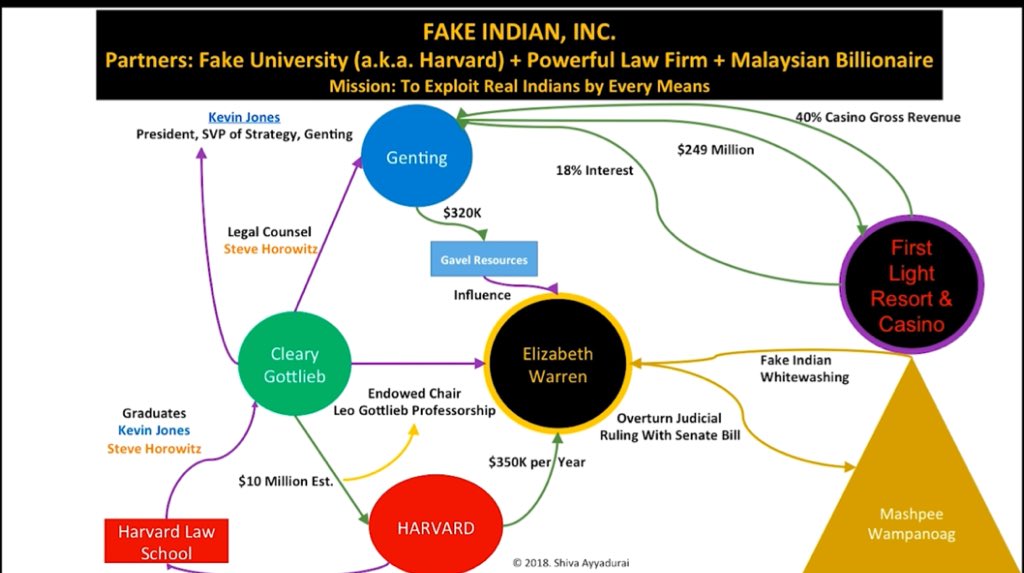
The tribal council approved a budget on May 3 that includes a steep decline in loan dollars from Genting Malaysia — the development firm backing the tribe’s effort to build a casino in Taunton — deep cuts to tribal salaries, and sizeable rollbacks in most spending categories across all departments, according to a copy of the proposed budget obtained by the Times.
The document was distributed to tribe members earlier this week and the general membership is scheduled to vote on it Sunday, according to the tribe’s website and a source familiar with the tribe’s finances.
For the coming fiscal year, the tribe is receiving $5.4 million in loans from Genting, which is less than half of what it received for fiscal year 2017. That year, the tribe received $11,944,567, an increase of approximately $250,000 over fiscal year 2016.
According to Genting’s most recently quarterly report, the Malaysian-based casino group has invested roughly $388.3 million in promissory notes issued by the tribe, which carry fixed interest rates of 12 percent and 18 percent per year. In November, a robocall announcing a meeting for tribe members to address longstanding concerns about the tribe’s mounting debt claimed its debt had grown to $425 million and that services had been cut.
Neighbors of the proposed Taunton casino had sued the Interior Department in February 2016 seeking to overturn the agency’s decision to take land into trust. U.S District Court Judge William Young remanded that decision back to the federal agency, suggesting in a later ruling that an alternative approach might allow the Interior Department to take the land into trust. Since then, the agency has been considering whether the state of Massachusetts had exercised authority over the Mashpee Wampanoag Tribe in a manner that could be viewed as a surrogate for the federal jurisdiction requirement under the Indian Reorganization Act.
Genting’s ability to recover its investment is “dependent on the outcome of the pending legal case and review by the relevant government authority,” according to the report.
There are significant cutbacks proposed to tribal employment. Tribal leaders will spend only $4,433,385 on salaries this year, down from $7,226,643 in fiscal year 2017. In 2016, the tribe spent $8,397,569 on salaries. As a result of that reduction, the tribe has had to lay off 31 members, according to a source with knowledge of the reductions, including both of its grant writers. The tribe employed roughly 100 members before the cutbacks, the source said.
The employees who were laid off received letters in December and January, informing them that “recent changes to the tribe’s funding source and litigation around potential gaming enterprise” were responsible for the layoffs.
Tribal council salaries will see an 11.5 percent reduction, with payouts for the 12 legislative personnel — including fringe benefits — totaling $938,206. That figure is down from roughly $1,060,468 in 2017.
But despite spending cutbacks, tribal leaders still enjoy a sizeable piece of overall spending on tribal salaries; their share of salaries across all departments has increased from 14.7 percent in 2017 to 21.2 percent, despite reductions in their annual pay.
Tribal Chairman Cedric Cromwell’s proposed salary, including fringe benefits, for the coming fiscal year is $181,794, down from $219,186 in 2017. Tribal Vice Chairwoman Jessie “Little Doe” Baird will be making $134,439, down from $160,269.
There are two council members who make considerably less than the other members. Rod Dias’ proposed salary for the coming fiscal year is listed at $1,200 and Carlton Hendricks’ salary is $11,800; under the proposed spending plan other council members would make between $84,255 and $103,566, fringe benefits included.
Critics within the tribe have repeatedly raised questions about the rising debt associated with planning and building the casino, and have criticized tribal leaders for taking home what they believe to be excessive paychecks.
After tribal land had been taken into trust in 2015, Cromwell saw his salary increase 42 percent from $125,453 to $178,200 in the span of three weeks. That spike was tied to a vote that sought to bring tribal council members in line with officers in other tribes and municipal governments.
In a statement emailed to the Times, Cromwell said the budget and its financing go through an exhaustive review and approval process through general membership votes and tribal council approvals.
“Tribal citizens then vote on the budget,” he said. “This year we are exploring ways to become more efficient in our operations and we are making some adjustments.”
Spending on legal fees and professional services has taken the greatest hit in the proposed budget. The tribe has allocated only $500,000 for legal spending in the coming fiscal year, which is down from $1,193,795; and spending to professional services will plummet from $3,989,495 in 2017 to $518,000, according to the proposed budget provided to the Times.
The decline in legal fees and lobbying efforts may be tied to a bill that was introduced in March that would end the ongoing legal challenge to the tribe’s efforts to secure its reservation land, consisting of 171 acres in Mashpee and 150 acres in Taunton where the tribe’s casino would be built.

Tribe concerned about proposed changes to bill


Tribe concerned about proposed changes to bill


CHECK OUT REEL WAMPS


The Tribe purchased land owned by investors in Middleboro. 
Will that be included as another casino? 
Is the Tribe paying taxes on that land? 


Image result for middleboro remembers mashpee wampanoag


Tribe concerned about proposed changes to bill

By Tanner Stening 
Posted May 18, 2018


The Mashpee Wampanoag Tribe has responded to a letter issued by the Mashpee Board of Selectmen last month that took exception to a bill that, if passed, could end the tribe’s ongoing legal woes.
U.S. Rep. William Keating, D-Mass., introduced the legislation in March, which seeks to reaffirm a 2015 decision by the U.S Department of Interior to take 171 acres in Mashpee and 150 acres in Taunton of tribal reservation land into trust, and create statutory safeguards to bar future litigation on the matter in federal court. U.S. Sen. Edward Markey, D-Mass., has since introduced the same bill in the Senate.
The original letter, which was signed by the board on April 18 and released at its regular meeting, said the town believes the legislation should include language about a 2008 intergovernmental agreement between the town and the tribe that “memorialized” the tribe’s commitment to not renew land claims that led to a degradation of relations between the two governments in the late 1970s.
In a response letter addressed to Selectmen Chairman Thomas O’Hara, Mashpee Wampanoag Tribal Chairman Cedric Cromwell said the tribe has “deep concerns” about the “potential negative impact” of altering the legislation on the tribe’s ability to “get it enacted before the Department of the Interior moves to disestablish our reservation.” The congressional action is intended as a fix to a 2009 Supreme Court decision, known as Carcieri v. Salazar, that held the Secretary of the Interior could not take land into trust for tribes that were not under federal jurisdiction before 1934.
The town wants to add a number of provisions to the proposed law, including directing that the tribe “waive and release” any claims concerning real property within Mashpee and owned by private property owners; “not exercise control over or limit access to” town land; and not construct or operate a casino conducting either Class II or Class III gaming authorized under the Indian Gaming Regulatory Act in town.
Cromwell said he is confident there are other ways to address the board’s concern. The language in the bill “strictly adheres” to similar legislation that has reaffirmed reservations for other tribes, he said. Two such bills were passed by overwhelming majorities in Congress. Cromwell argues that changing the language to include the town’s revisions may “imperil” the bill’s passage.
The legislation would actually work to maintain existing agreements between the town and the tribe, Cromwell added.

Mashpee Wampanoag Tribe to vote on dwindling budget


Wednesday, December 4, 2013

Mashpee Wampanoag/Genting Tribe resorts to name-calling!

To those blind supporters who have blindly accepted the Fools' Gold offered and failed to consider FACTS: how can you think the crime and poverty and unemployment of Atlantic City will avoid you?

This is what you're supporting:


Re-wind the tape to Mashpee Wampanoag performances in Middleboro.


Before becoming a guest in federal prison, Glenn Marshall responded to simple questions about the casino impacts with irrational accusations of racism.....


The Mashpee Wampanoag/Genting Tribe seems to have continued its name-calling, blinded to the debt they've incurred courtesy of Genting and living well beyond their means!


You sold your souls, folks!

You don't even understand what you've done....

The day this was posted, it was saved in its entirety. The site was hacked.

When the site was restored, this entry was missing:

Genting Connected to Islamic Extremists?

No one even asks who you got in bed with?


FROM SHNS:

STICKS AND STONES: According to
Mashpee Wampanoag Tribal Vice Chairwoman Jessie "Little Doe" Baird, there were
certain kinds of people at last night's Bureau of Indian Affairs hearing about
the tribe's plan to build a casino in Taunton: tribal members and their allies -
okay, fine - "NIMBYs" - as you would expect - 
"xenophobes" and "skinheads" - hey now! You can image that casino opponents weren't thrilled with the characterization.

 
Casino backers, opponents clash at Taunton public hearing
By Gerry Tuoti
Posted Dec 04, 2013

 
The Bureau of Indian Affairs came to town Tuesday as supporters and opponents of the Mashpee Wampanoag tribe’s proposed casino shared their views and concerns, occasionally clashing with one another.

“Acquiring the land that is subject to this land-in-trust application is essential to the sovereignty of the Mashpee Wampanoag tribe,” Tribal Chairman Cedric Cromwell said.

The BIA held the hearing Tuesday at Taunton High School to solicit public comments on the draft environmental impact statement. The study details impacts the Mashpee Wampanoag tribe’s proposal to build a $500 million resort casino on 151 acres in and around Liberty Union Industrial
Park in East Taunton would have on infrastructure and the environment.

The issuance of the draft environmental impact statement and the public review of the study is a standard step in the complex land-in-trust application process the tribe is undergoing.

Tribal Vice Chairwoman Jessie “Little Doe” Baird said the land is part of the Mashpee’s ancestral territory. She then told the BIA officials that they would hear comments from all types of people, including “xenophobes”, “skinheads” and “NIMBYs”, as well as tribal members and their allies.
Some casino opponents said they found Baird’s comments unfair.

“Jessie ‘Little Doe’ Baird has offended me,” said Francis Legace, who lives on Stevens Street, 1/8 mile away from the proposed casino site. “I’m not a xenophobe; I’m trying to protect my home... Her statement was very inflammatory.”

The tribe’s plans call for a 400,000-square-foot resort casino featuring a 15-story hotel tower, a total of 900 hotel rooms, a 132,000 gambling floor and multiple restaurants. A 25,000-square-foot water park would be added in the final round of construction

“This project will create jobs that are desperately needed in southeastern Massachusetts,” casino supporter David Fenton said.

Some opponents questioned the conclusions in the report.

“I find so many half truths, lies of omission and outright lies in this report, I can describe it only as fraudulent,” Middleboro Selectman Allin Frawley said.


The Mashpee signed an agreement with Middleboro in 2007 to build a casino in that town, and Frawley accused the tribe of failing to uphold the terms of the pact.

The report describes the current conditions at the proposed casino site, projects the impacts a casino would have on the area and details planned mitigation. It also describes the impacts two scaled-down alternatives would have, as well as a no-build option.

The tribe’s preferred plan would result in a number of impacts on existing infrastructure, including more than 20,000 new vehicle trips on peak days, an increase of more than 300,000 gallons per day drawn from Taunton’s water system and 225,000 additional gallons of wastewater generated each day, according to the report.

The traffic figure includes more than 10,000 trips in and out of the casino.

Epsilon Associates Project Manager David Hewitt, who helped prepare the study, said the proposed infrastructure mitigation would make traffic flow “equal to or better” than it currently does at many intersections in the city, despite the large increase in volume.

Proposed mitigation includes enhanced water infrastructure and dozens of improvements to offsite roads, including routes 24 and 140 and the Hart’s four Corners intersection.

“How many businesses come to Taunton, come to your community, and mitigate everything?” casino supporter Terry Quinn said.

Some casino opponents, however, said the mitigation wouldn’t cover all the affected intersections.

State Rep. Keiko Orrall, R-Lakeville, also noted that the study doesn’t examine impacts in Lakeville, Berkley or Middleboro, or address the Route 79/Route 140 interchange.

Taunton casino opponent Dave Littlefield urged the BIA to more closely examine potential impacts on Taunton Municipal Airport. He cited a 2008 letter Gov. Deval Patrick wrote in opposition to the tribe’s Middleboro casino proposal, in which the governor listed impacts on airports as a concern.

The hearing came as questions continue to swirl regarding the tribe’s ability to qualify for sovereign land, which is needed to build a tribal casino. A 2009 Supreme Court decision ruled that tribes that were not under federal jurisdiction prior to the passage of the Indian Reorganization Act in 1934 are ineligible to have land taken in trust. Mashpee leaders claim that although the tribe wasn’t federally recognized until 2007, they were under a form of federal jurisdiction.

The draft environmental impact statement is available online at www.mwteis.com, at the Taunton Public Library or at Mashpee Wampanoag tribal Headquarters in Mashpee.

The BIA is accepting written comments until Jan. 17. Comments can be mailed to: Mr. Franklin Keel, Eastern Regional Director, Bureau of Indian Affairs, Eastern Region, 545 Marriott Drive, Suite 700, Nashville, TN 37214.

http://www.tauntongazette.com/news/x915449816/Tribal-official-lashes-out-at-opponents-at-Taunton-casino-hearing?zc_p=1&utm_campaign=20131204ML&utm_medium=email&utm_source=ML+13%2F12%2F04


Sunday, June 23, 2013

Count on Adam Bond for Levity!

It's taken several days for many in Middleboro to recover from Adam Bond's statements.

This was the reaction to ALL who remember Mr. Bond's history......


Bellicose Bumpkin posted this in response to the article below:

Yes – let’s have a Middleboro casino


Middleboro: Selectmen reject casino proposal without public input; some cry foul


MIDDLEBORO – Selectmen are dismissing an informal proposal for a commercial casino with little public input. The casino proposal comes from a developer who asked to remain unidentified until the deal is firmed up.

The developer floated his casino proposal to Middleboro Town Manager Charles J. Cristello but selectmen kyboshed the plan without public discussion. Former selectman Adam M. Bond questions selectmen’s decision and called for an open debate.

“The people in town have a right to know about it,” Bond said.

Chairman Stephen J. McKinnon is sticking to the board’s stance that the town already has a deal with the Mashpee Wampanoags, despite the tribe’s deal with the city of Taunton.

Bond, who was the chief negotiator between the town and tribe in 2007, says McKinnon’s logic is off base.

“What deal?” said Bond noting the tribe has signed a deal with Taunton.

Vice Chairman Allin Frawley rejected the proposal saying he wouldn’t put the town through the ordeal it faced in 2007 when the question for a tribal casino was put to a vote and garnered 2,387 in favor – 1,335 in opposition. The hullabaloo leading up to the historic town meeting pitted rivaling factions of anti and pro casino supporters against each other, which in many cases was neighbor against neighbor.

No matter how McKinnon and Frawley cut it, former selectman Adam M. Bond is calling foul.

“To have a potential business proposition of that size be offered in without even disclosing to the public that that offer was in doesn’t make sense,” Bond said.

Both McKinnon and Frawley lobbied for greater transparency after the 2007 negotiations and called the seated Board of Selectmen to task. Bond says the pair are guilty of their own accusations.

The dynamics have changed since 2007 when gambling was illegal in the state and the Mashpee purposed a casino under the federal Indian gaming laws. Gambling is legal, the new proposal is for a different location and comes from a different entity, and Bond says he is certain the tribe would not get support if they returned to Middleboro.

http://959watd.com/blog/2013/06/middleboro-selectmen-reject-casino-proposal-without-public-input-some-cry-foul/


Far too many remember the temper tantrums thrown by Mr. Bond while he was secretly meeting with his coven to fan the flames of animosity during this pathetic saga....

Was there a name he neglected to call the casino opposition?

Mr. Bond likened those who opposed the Mashpee Wampanoag Folly to Braying Donkeys, compared them to Nazis, called us racists.....

Below, are Mr. Bond's ignorant comments likening opponents to Nazis:

That being said, I was speechless, a truly rare event, when I discovered Mr. Bond's comments, as follows (emphasis mine, misspellings his):

What concerns me, and makes me comment in the way I do, is that the theory that is being presented--unwittingly by most--is the nation within a nation theory. This is a theory that was used by Hitler to irradicate [sic] millions of jews in Europe, including many of my ancestors. So when you start talking about how dangerous it is to have a sovereign nation in the midst of the Town, because they will be self serving and mistreat anyone who is not a part of their group, you begin to highlight for me a theory which has little merit--since they have already received sovereign status and that is not the fight in front of us.
From: Random Thoughts From A Shikseh

Mr. Bond didn't stop there, but accused me of calling him an anti-semite [which never occurred to me], as well as reporting him to a non-existent organization.


Snookered!
Middleboro BOS: Misplaced Indignation #4
Mitigation or What? #2
Middleboro Chairman of BOS Resigns
Middleboro BOS: Misplaced Indignation #1
WXBR 1460 AM
Adam Bond

From:
The Book of Adam


Adam's New Tool

The Blogfathers

Goodbye Mr. Chips

Votestock

The Blog is a Harsh Mistress

If You Want a Friend, Get a Dog

Tank Man

The Goons on the Ice

Pulp Fiction


Adam Bond Deflowers Middleboro


There's far more to Mr. Bond's opportunism that a google search will reveal.

As far as his opinion?


Wednesday, June 19, 2013

Middleboro in line with others for $$$$


Middleboro upping casino tab to tribe to $1 million.
By Jennifer Bray
Posted Jun 18, 2013


The meter is still running on mitigation payments the town claims it’s owed for the Mashpee Wampanoag casino that was never built – a tab that will rise soon to $1 million, according to a selectman.

On July 1, Middleboro will send another bill to the tribe for an annual payment of $250,000, which will bring to $1 million the amount the town says it’s entitled to under the casino agreement signed with the tribe in 2007.

The $1 million, according to selectmen Vice Chair Allin Frawley, is part of a contract dispute – a dispute he says was never settled.

“We want the tribe to know that we are not going away and that this is not settled in any way, shape or form,” Frawley said.

The tribe’s counsel declined to speak with The Enterprise about the contract dispute. Instead, the tribe provided a copy of a three-page letter sent to the town in March 2012, which says: “The tribe has long made it clear to the town that it has no legal obligation to go forward with a casino in Middleboro.”

In July 2007, residents of the town voted for an $11 million a year host agreement that would have provided $250 million in infrastructure improvements for a tribal casino.

The IGA provided for $7 MILLION annually and then 'promises' that were overestimated.

According to Frawley, the 2007 agreement stated the $250,000 annual payment to the town would be in effect until the casino opened or until the agreement was terminated by both parties. Frawley said the last mitigation payment the town received was in 2008.

The plan for the resort casino off Route 44 fell apart amid the nation’s economic downturn in 2008 and other issues.


The problem with reporters who fail to conduct their due diligence is comic!


In 2010, the tribe announced they were eyeing a casino site in Fall River. That plan was later nixed and the Mashpee Wampanoags now are looking to seal a deal with the state for a casino in Taunton.

The lost mitigation payments have forced Middleboro to delay some projects, said Frawley.

“There are so many things that the town put off, like the wastewater treatment facility, updating ambulance services and the new police station,” said Frawley.

When asked if the town would take the tribe to court over the mitigation money, Frawley said he’s hopeful a settlement can be reached without going to court.

The state gaming law allows there casinos in Massachusetts, one in the southeastern part of the state and the other two in greater Boston and western Mass. The law also permits one slots parlor license in the state.

Jennifer Bray may be reached at jbray@enterprisenews.com.

READ MORE about this issue.


Read more: http://www.tauntongazette.com/news/x2126342252/Middleboro-upping-casino-tab-to-tribe-to-1-million#ixzz2WgZtLxIQ
Follow us: @enterprisenews on Twitter | EnterpriseBrockton on Facebook

Monday, June 10, 2013

Middleboro: Always Good For Comic Relief!


Middleboro officials claim agreement with Mashpee Wampanoag tribe still valid
By Jennifer Bray
Posted Jun 09, 2013


It’s been a while since visions of crowded casino tables, a five-star hotel and endless buffets danced in the heads of Middleboro residents.

Meanwhile, in nearby Taunton, casino plans by the Mashpee Wampanoag tribe – which had courted Middleboro in 2007 – are moving forward.

At a recent meeting in Taunton, architectural plans were rolled out. Presenters showed off renderings of a 200-seat entertainment lounge, 400-seat buffet, two fine-dining restaurants and retail shops. Plus, a water park would be built as construction progresses.

According to officials, a casino in Taunton would support an estimated 2,560 permanent jobs and an $80 million annual payroll.

But at one time, Middleboro was in line to be the site for a Wampanoag tribe resort casino.

At one time, Middleboro hoped to put its townspeople to work building and staffing a casino. The town hoped it would garner the tax revenue flowing into local coffers from hosting a destination gaming resort.

That was six years ago.

Today, Middleboro has been left in the dust in the casino game, but insists it still has a pact with the tribe.

“We feel our agreement is still valid,” Town Manager Charlie Cristello said last week. “The terms under which they would build a casino we feel were never settled.”

In July 2007, a massive event was staged for Middleboro voters to weigh in on an $11 million-a-year host agreement that would have provided $250 million in infrastructure improvements for a tribal casino.

The town meeting took place on a scorching hot Saturday and brought 3,722 people out to cast votes under four huge tents set up on a 25-acre field behind the high school on Route 28.

The town provided bus service to shuttle voters in from satellite parking sites. Some 1,500 bottles of water were brought in to quench the thirst of townspeople.

It was the largest town meeting the state had ever seen. And when the votes were tallied, 2,387 voted in favor of the casino and 1,335 against. [In a non-binding question, when asked if townspeople wanted a casino, the response was overwhelmingly "NO!"]

Then, plans took a turn for the worse.

Glenn Marshall, council chairman for the Mashpee Wampanoag, came under fire for reports of a past rape conviction and misstatements about his military service. He stepped down in August 2007.

Cedric Cromwell took over for the tribe [After Shawn Hendricks] and initially the pact with Middleboro was honored.

But in 2010, the tribe announced it intended to open a casino in Fall River. That plan later fell through and the tribe turned to Taunton as a site.

Middleboro was left behind – but town leaders say they believe the pact with the tribe still stands.
According to town manager Cristello, the town has sent the tribe bills for $750,000, which he says haven’t been paid yet. The charges are for pre-planning involved in the casino resort plan.

The tribe disagrees, and in a March 2012 letter to selectmen, criticized the town for what it called “irresponsible, false and improper efforts to promote via the media a merit-less claim that the town somehow possesses legal rights against the tribe concerning the tribe’s pursuit of a destination resort and casino in Taunton.”

The town’s efforts “are also a transparent effort to try, improperly, to leverage financial concessions to which the town is not entitled,” said the tribe.


Read more: http://www.enterprisenews.com/news/x779478004/Middleboro-clings-to-casino-pact#ixzz2VoWNNzlX
Follow us: @enterprisenews on Twitter | EnterpriseBrockton on Facebook

Monday, April 22, 2013

Assessing Disaster....

Watching the pathetic unraveling of the Casino Follies, others offered their perspectives -- 

Gladys Kravitz

Reel Wamps

Sunday, March 31, 2013

Tribes make most of Indian gambling law


Tribes make most of Indian gaming law


By George Brennan

March 31, 2013

The seeds of a $500 million casino in Taunton proposed by the Mashpee Wampanoag Tribe were planted in 1988 in the waning days of President Ronald Reagan's second term.

Reagan signed a law that allowed Indian casinos on reservation land, a direct reaction to a 1987 U.S. Supreme Court decision in California v. Cabazon that ruled states had no authority over Indian government activities, including gaming.

"The backdrop for all of this really predates the (Indian) gaming of the 1970s," Steven Light, an Indian gaming expert, said. "The true backdrop is a lot of poverty and few economic development opportunities for the rural, mostly reservation-based tribes, across the United States."

Light and Kathryn Rand are co-directors of the Institute for the Study of Tribal Gaming and Policy at the University of North Dakota and have co-authored two books on Indian gaming.

"Both Congress and the tribes were desperately looking for some means to build tribal economies," Rand said.

At the time, Indian gambling was a fledgling $100 million industry — mostly bingo halls — with little or no oversight. The 1988 law signed by Reagan, known as the Indian Gaming Regulatory Act, was considered a compromise aimed at providing federally recognized Indian tribes an opportunity for economic development and, with that, an opportunity for self-sufficiency for tribes facing serious poverty. At the same time, it provided federal oversight and an opportunity for state governments to cut a deal with tribes looking to offer gambling inside their borders.

One of the biggest misconceptions about Indian casinos is that tribal sovereignty means they are unregulated, Light said. "In fact, it is the most highly regulated form of gambling in existence in the U.S.," he said. "There is a regulatory role for the federal government, the state government and tribal governments — three levels of regulation. Commercial casinos — Trump's casino, Wynn's casino — are not regulated by three levels of government."

Few could have predicted that passage of the Indian Gaming Regulatory Act would make tribes synonymous with casinos. The new law opened the floodgates and paved the way for behemoths like Foxwoods Resort Casino and Mohegan Sun in Connecticut.

Today, Indian gaming is a $27.4 billion industry with 242 tribes operating casinos in 28 states as of 2011, according to the Indian Gaming Industry Report, an annual research report conducted by economist Alan Meister of Nathan Associates Inc. and published by Casino City Press.

"I think it's pretty clear now that Congress had no idea the Pandora's box it was opening when it created this law," said Robert Steele, a former congressman from Connecticut and author of "The Curse: Big Time Gambling's Seduction of a Small New England Town." The 2012 novel is based on Connecticut's experience with the Mashantucket Pequot tribe, which opened Foxwoods in Ledyard, Conn., in 1992. "It opened the door to tribal casinos, but also the spread of non-Indian commercial casinos as well."

game changer

Indeed, it was the 2007 acknowledgement by the federal Bureau of Indian Affairs of the Mashpee Wampanoag Tribe's existence that ignited the push for legalizing casinos in Massachusetts. Various proposals had languished for decades until the state Legislature agreed to a bill in November 2011 that provided for three casinos in the Bay State, including one that recognized the federal rights of Indian tribes, as well as a single slot parlor.

The Mashpee tribe has applied with the Bureau of Indian Affairs for an "initial reservation" under that 1988 federal law, an exemption that allows a tribe recognized after 1988 to open a casino on tribal lands. That application is still pending with the Bureau of Indian Affairs and faces a legal tangle.

Tribe leaders say it's that federal law that makes its casino in Southeastern Massachusetts "inevitable." Opponents say the hurdles tossed in the way by two U.S. Supreme Court rulings make a tribal casino highly unlikely. The Carcieri decision calls into question the authority of the Department of the Interior to take land into trust for tribes recognized after 1934. And the Patchak decision gives property owners opposed to a casino up to six years to file a lawsuit.

The Massachusetts Gaming Commission has been given a role under state law to determine whether a tribe casino is "inevitable" or "unlikely." It's a task that commission Chairman Stephen Crosby acknowledged is daunting at a March 21 public meeting on the topic.

"We know there are strong interests, strong rights, strong economic impacts, strong emotions on many sides of this issue," Crosby said during the meeting.

The tribe has estimated it could have shovels in the ground by the end of 2014. Opponents put the estimate at six to 10 years, if ever.

corruption concerns

With the onslaught of Indian casinos in the 1990s and 2000s came something else inevitable.

Rand said Congress had worried when it passed the law in 1988 that organized crime would infiltrate Indian casinos. That never materialized.

Political corruption, on the other hand, was rampant — much of it surrounding disgraced lobbyist Jack Abramoff.


Abramoff's misdeeds are well-documented — using political payoffs and influence to help tribes gain federal recognition that ultimately would lead to the right to build casinos.

The Mashpee Wampanoag had a leadership scandal of its own. Former tribal council Chairman Glenn Marshall pleaded guilty to political corruption and embezzlement charges in 2009 and served more than three years in federal prison.


Despite what happened with Abramoff and the Mashpee tribe, Light and Rand say the Indian Gaming Regulatory Act has by and large done what it was supposed to do. Most Indian gaming facilities across the country are not like the Connecticut giants, but are more modest facilities aimed at providing jobs for tribe members and a revenue stream for the tribe.

"Folks tend to think about Foxwoods and the Pequots as the example of Indian gaming," Rand said. "But out here in North Dakota, our tribes more typically have thousands of members, our tribes have more typically experienced generations of extreme poverty — 50 percent unemployment or more on our reservations."

That 50 percent matches the unemployment rate among the 2,600 members of the Mashpee Wampanoag Tribe, Chairman Cedric Cromwell said. The tribe's casino would not only provide much-needed jobs, but would boost health care outreach, housing and education, Cromwell said.

"We want to create a situation where our people can be lifted out of poverty," Cromwell said. Indian gaming will give the tribe the ability to provide self-determination and self-sufficiency by giving resources to a tribe that he said has been "underfunded" and "severely neglected" by the federal government. "It's very important for us to provide for our services to our people and lift our people — give them a hand up so they can have a better quality of life."

In recent days, after an Associated Press story on the tribe that owns Foxwoods receiving $4.5 million in federal grants over the past five years despite years of earning millions in casino cash, Indian casino opponents have pointed to that as galling.

Rand said while she understands the outrage, federal support for tribes is not need-based. "That's part of federal government's obligation to protect and assist tribes because of the long historical circumstances between tribes and the federal government," she said. "That responsibility exists regardless of the relative wealth of the tribe."

too many casinos?

Connecticut got hooked on the revenue it receives from Foxwoods and Mohegan Sun, Steele said. The tribes were in the right place at the right time and have had a nearly two-decade monopoly on the New England gambling market, he said.

Now with Massachusetts about to enter the game and New York expanding, the Connecticut casinos are hurting from the competition.

The proliferation of Indian and commercial casinos is reaching a saturation point, Steele said. Revenue from Foxwoods and Mohegan Sun to the state of Connecticut is down more than $130 million per year from its peak of $430 million, he said. Once Massachusetts casinos open and New York expands, the future doesn't look bright for the Pequot or the Mohegan tribes, he said.

"I keenly appreciate how enormously attractive and seductive these offers seem to be on the surface," Steele said of casino revenue. "You look at what's happening in Connecticut and if you were having the same debate again in Massachusetts about legalizing casinos, it's hard to believe you'd come to the same conclusion."

Both Light and Rand said that, back in 1988, there was no crystal ball to predict the explosion of Indian casinos across the country or the voracious appetite of consumers for gambling.

Tribes have proven they are capable of operating successful, complex enterprises like casinos and leverage them into fairly robust tribal economies. Ultimately, that's what the intent of the Indian Gaming Regulatory Act was all about, Rand said.

"There may have been an assumption that this wouldn't go very far because tribes didn't have the capacity to take it very far," Rand said. "But tribes have taken the opportunity of Indian gaming and used it to as full advantage as they possibly can for tribes and tribe members."


http://www.capecodonline.com/apps/pbcs.dll/article?AID=/20130331/NEWS/303310326/-1/NEWSLETTER100

Sunday, February 24, 2013

Mashpee Wampanoag/Genting Tribe Faces Changes


Tribe faces change at top
MASHPEE — Votes cast in next Sunday's Mashpee Wampanoag Tribe election could send one of two messages — tribe members want to blaze the same trail for the next four years or shake things up dramatically.
All four top officers on the 11-member tribal council, including the chairman and the vice chairman, are on Sunday's ballot, and there are contested races for all five seats. In all, 17 tribe members are running for chairman, vice chairman, treasurer, secretary and an at-large tribal council post.

CHAIRMAN CANDIDATES

Cedric Cromwell
Age: 47
Lives in Attleboro
Employment: Worked for Fidelity Investments before becoming tribe chairman
Education: Bachelor's degree, University of Massachusetts, Boston
Previous tribal council experience: Served on council for six years before being elected chairman

David Pocknett
Age: 59
Lives in Mashpee
Employment: Maintenance worker for town of Mashpee
Education: Attended University of Southern Colorado; bachelor's degree, University of Massachusetts, Boston
Previous tribal council experience: Served as vice chairman from 2007-09

Richard Oakley
Age: 60
Lives in Wareham
Employment: Retired DPW worker for town of Mashpee
Education: Barnstable High School
Previous tribal council experience: Served for 13 years ending in 2009

* * * * * * * * * * * *
Read more about the tribe's quest to build a casino at www.capecodonline.com/casino.
 
The election at Mashpee High School starts at 1 p.m. with elders only for the first hour. From 2 to 4 p.m., polls open at the high school for the rest of the tribe's eligible voters.
 
It was delayed for two weeks by a February nor'easter that shut down much of the Cape for several days.
 
Several tribe members reached by the Times declined to comment on the record, though one said this is a "tough election" and has caused divisiveness among members that makes it hard to declare allegiances publicly.
 
Tribe member Paula Peters, whose husband Mark Harding is running for re-election as treasurer, disabled her Facebook page in recent days because she is tired of the "scrapping" between tribe members, many of them family. "No one has said anything personally about me or my husband, but it's the way the community is acting right now that's put me off," said Peters, who is a former columnist for the Times.
 
Still, Peters said she's proud and impressed by the sheer number of people willing to run in the election. Having been kept out of a race for chairman against Glenn Marshall in 2005 because she couldn't show she had attended the minimum number of tribal council meetings in a year (records were unavailable for some of those meetings), Peters said the number of candidates this year is a sign that the tribe has come a long way.
 
"People are jumping up and saying, 'I want to serve my tribe.' I'm proud of all of them," Peters said.
 
"The idea that 17 people got up on stage and talked from the heart about why they want to run for office for the tribe is impressive. It's a really challenging time. That's a huge commitment."
 
Cedric Cromwell, who has led the tribe since 2009, faces challenges from David Pocknett and Richard Oakley for tribal council chairman.
 
Cromwell, 47, has campaigned on a platform of continuing to move the tribe forward. He took over amid a leadership scandal and switched gears from the tribe's $1 billion casino in Middleboro. After starts and stops in Fall River, Cromwell has an approved deal to build a $500 million casino in Taunton.
 
Cromwell, a former employee of Fidelity Investments who lives in Attleboro, is currently in talks with Gov. Deval Patrick to renegotiate a tribal-state compact after the initial deal was rejected by the federal Bureau of Indian Affairs. He is also attempting to guide the tribe's application to have land taken into federal trust for an initial reservation through the federal process.
 
"It's been a renaissance time for our tribe," Cromwell said, noting strides made in grant funding, as well as health and human services. "The word I'm hearing from tribe members is we can't have change at this time, especially with so many positive things happening. Any change would be a negative to our tribe."
 
A leadership change would affect the tribe's relationship with the governor's office, the BIA, Taunton and other leaders at a critical time for the casino project, he said. "Why mess with success?" he said. "Our tribe is very successful right now."
 
Incumbents always believe that it's never a good time to change leaders, Pocknett said.
 
Pocknett, 59, served as vice chairman leading up to the 2009 election, having defeated Cromwell and two other candidates in a 2007 special election. He was not part of Marshall's administration, but was elected after Marshall's right-hand man Shawn Hendricks moved up to the top job.
Hendricks and Pocknett did not seek re-election in 2009.
 
Pocknett, a maintenance worker for the town of Mashpee who lives in the town, said while he is supportive of the Middleboro casino, he's not running to stop the process that's in place for a Taunton casino. "My message is that we can't keep jumping around. We have to stay the course but try to right the ship," Pocknett said.
 
Pocknett said it's a hugely important election. "Every (election) is an important one," he said. "This one, because it happens every four years, is the most important because it's the top brass."
 
Oakley, 60, a retired employee of the Mashpee Department of Public Works and a resident of Wareham, has been more vocal about the decision of the Cromwell administration to abandon Middleboro and its initial investors. "We had a good relationship with the people we were negotiating with in Middleboro," he said last month. "Financially, and everything else, Middleboro was the best option for the tribe to have a casino."
 
Oakley did not return calls for this story, but in a previous interview said he is hoping to bring unity to the tribe. "I don't want to be a disruptive force," he said. "Win, lose or draw, I'm hoping whoever is in office can bring our tribe together and help us become a self-sufficient tribe."
 
Cromwell said the number of candidates running for office should not be seen as a sign of unrest throughout the 2,600 members of the tribe. "Anyone has a right to run for office. I understand that, I get that, and I support that," he said. "I think it's special that everyone gets their opinions, ideas, thoughts and rights"» We're moving forward together."
 
Vice Chairman Aaron Tobey, a former employee of the U.S. Postal Service, faces a challenge by Jessie "Little Doe" Baird, who is director of a program aimed at reclaiming the tribe's native language.
 
Both have worked on the tribe's casino plans — Tobey as a chief negotiator of the tribal-state compact and Baird in helping to tell the history of the tribe's ties to Taunton in a key document under consideration by the BIA.
 
Meanwhile, Harding faces three challengers for treasurer — Robert Hendricks, Diane Johnson and Angela Shwom.
 
Marie Stone, the tribal council secretary, is running against Nellie Ramos, Michelle Hughes-Fernandes, Suzette Spinola, and Michelle "Shellie" Tobey.
Council member Selena Jonas is being challenged by two candidates, Charles Foster III and Joanne Peters.
 
Jim Peters, a Mashpee Wampanoag member and chairman of the state's Commission on Indian Affairs, said next Sunday's vote is critical.
 
"I do get concerned that elections are sometimes based on popularity rather than looking at the bigger picture," he said. "Significant changes in makeup would have a real impact on where we are trying to go."
 

Sunday, February 17, 2013

Mashpee Wampanoag/Genting Tribe Faces Changes


Check out Reel Wamps and WampLeaks for additional perspectives.

Tribe faces change at top
MASHPEE — Votes cast in next Sunday's Mashpee Wampanoag Tribe election could send one of two messages — tribe members want to blaze the same trail for the next four years or shake things up dramatically.
 
All four top officers on the 11-member tribal council, including the chairman and the vice chairman, are on Sunday's ballot, and there are contested races for all five seats. In all, 17 tribe members are running for chairman, vice chairman, treasurer, secretary and an at-large tribal council post.

CHAIRMAN CANDIDATES

Cedric Cromwell
Age: 47
Lives in Attleboro
Employment: Worked for Fidelity Investments before becoming tribe chairman
Education: Bachelor's degree, University of Massachusetts, Boston
Previous tribal council experience: Served on council for six years before being elected chairman
 
David Pocknett
Age: 59
Lives in Mashpee
Employment: Maintenance worker for town of Mashpee
Education: Attended University of Southern Colorado; bachelor's degree, University of Massachusetts, Boston
Previous tribal council experience: Served as vice chairman from 2007-09
 
Richard Oakley
Age: 60
Lives in Wareham
Employment: Retired DPW worker for town of Mashpee
Education: Barnstable High School
Previous tribal council experience: Served for 13 years ending in 2009
Read Times coverage at capecodonline.com/casino.
 
The election at Mashpee High School starts at 1 p.m. with elders only for the first hour. From 2 to 4 p.m., polls open at the high school for the rest of the tribe's eligible voters.
 
It was delayed for two weeks by a February nor'easter that shut down much of the Cape for several days.
 
Several tribe members reached by the Times declined to comment on the record, though one said this is a "tough election" and has caused divisiveness among members that makes it hard to declare allegiances publicly.
 
Tribe member Paula Peters, whose husband Mark Harding is running for re-election as treasurer, disabled her Facebook page in recent days because she is tired of the "scrapping" between tribe members, many of them family. "No one has said anything personally about me or my husband, but it's the way the community is acting right now that's put me off," said Peters, who is a former columnist for the Times.
 
Still, Peters said she's proud and impressed by the sheer number of people willing to run in the election. Having been kept out of a race for chairman against Glenn Marshall in 2005 because she couldn't show she had attended the minimum number of tribal council meetings in a year (records were unavailable for some of those meetings), Peters said the number of candidates this year is a sign that the tribe has come a long way.
 
"People are jumping up and saying, 'I want to serve my tribe.' I'm proud of all of them," Peters said.
 
"The idea that 17 people got up on stage and talked from the heart about why they want to run for office for the tribe is impressive. It's a really challenging time. That's a huge commitment."
Cedric Cromwell, who has led the tribe since 2009, faces challenges from David Pocknett and Richard Oakley for tribal council chairman.
 
Cromwell, 47, has campaigned on a platform of continuing to move the tribe forward. He took over amid a leadership scandal and switched gears from the tribe's $1 billion casino in Middleboro. After starts and stops in Fall River, Cromwell has an approved deal to build a $500 million casino in Taunton.


Cromwell, a former employee of Fidelity Investments who lives in Attleboro, is currently in talks with Gov. Deval Patrick to renegotiate a tribal-state compact after the initial deal was rejected by the federal Bureau of Indian Affairs. He is also attempting to guide the tribe's application to have land taken into federal trust for an initial reservation through the federal process.
 
"It's been a renaissance time for our tribe," Cromwell said, noting strides made in grant funding, as well as health and human services. "The word I'm hearing from tribe members is we can't have change at this time, especially with so many positive things happening. Any change would be a negative to our tribe."
 
A leadership change would affect the tribe's relationship with the governor's office, the BIA, Taunton and other leaders at a critical time for the casino project, he said. "Why mess with success?" he said.
 
"Our tribe is very successful right now."
 
Incumbents always believe that it's never a good time to change leaders, Pocknett said.
Pocknett, 59, served as vice chairman leading up to the 2009 election, having defeated Cromwell and two other candidates in a 2007 special election. He was not part of Marshall's administration, but was elected after Marshall's right-hand man Shawn Hendricks moved up to the top job.
Hendricks and Pocknett did not seek re-election in 2009.


Pocknett, a maintenance worker for the town of Mashpee who lives in the town, said while he is supportive of the Middleboro casino, he's not running to stop the process that's in place for a Taunton casino. "My message is that we can't keep jumping around. We have to stay the course but try to right the ship," Pocknett said.
 
Pocknett said it's a hugely important election. "Every (election) is an important one," he said. "This one, because it happens every four years, is the most important because it's the top brass."
 
Oakley, 60, a retired employee of the Mashpee Department of Public Works and a resident of Wareham, has been more vocal about the decision of the Cromwell administration to abandon Middleboro and its initial investors. "We had a good relationship with the people we were negotiating with in Middleboro," he said last month. "Financially, and everything else, Middleboro was the best option for the tribe to have a casino."
 
Oakley did not return calls for this story, but in a previous interview said he is hoping to bring unity to the tribe. "I don't want to be a disruptive force," he said. "Win, lose or draw, I'm hoping whoever is in office can bring our tribe together and help us become a self-sufficient tribe."
 
Cromwell said the number of candidates running for office should not be seen as a sign of unrest throughout the 2,600 members of the tribe. "Anyone has a right to run for office. I understand that, I get that, and I support that," he said. "I think it's special that everyone gets their opinions, ideas, thoughts and rights"» We're moving forward together."
 
Vice Chairman Aaron Tobey, a former employee of the U.S. Postal Service, faces a challenge by Jessie "Little Doe" Baird, who is director of a program aimed at reclaiming the tribe's native language.
 
Both have worked on the tribe's casino plans — Tobey as a chief negotiator of the tribal-state compact and Baird in helping to tell the history of the tribe's ties to Taunton in a key document under consideration by the BIA.
 
Meanwhile, Harding faces three challengers for treasurer — Robert Hendricks, Diane Johnson and Angela Shwom.
 
Marie Stone, the tribal council secretary, is running against Nellie Ramos, Michelle Hughes-Fernandes, Suzette Spinola, and Michelle "Shellie" Tobey.
 
Council member Selena Jonas is being challenged by two candidates, Charles Foster III and Joanne Peters.
 
Jim Peters, a Mashpee Wampanoag member and chairman of the state's Commission on Indian Affairs, said next Sunday's vote is critical.
 
"I do get concerned that elections are sometimes based on popularity rather than looking at the bigger picture," he said. "Significant changes in makeup would have a real impact on where we are trying to go."


Wednesday, February 13, 2013

Wonder where the letter is?


Mashpee Wampanoag Tribe says it has received a favorable preliminary opinion from the BIA

Tribe receives a positive letter from the Bureau of Indian Affairs