Meetings & Information


*****************************
****************************************************
MUST READ:
GET THE FACTS!


Showing posts with label Rhode Island. Show all posts

Monday, August 15, 2016

Amy Veri: Proposed Tiverton casino a bad deal for everyone


Amy Veri: Proposed Tiverton casino a bad deal for everyone


Posted Aug. 14, 2016 at 2:01 AM 

The proposed casino in Tiverton is not the shining grace that Twin River is marketing. Under newly enacted legislation, the state will receive less revenue than it does currently from the Lincoln and Newport casinos. There is a 0.5 percent reduction in revenue for the state, from 16 percent to 15.5 percent.
Twin River is “guaranteeing” the Town of Tiverton $3 million in annual revenue. However, what Twin River fails to underscore is that the state will be on the hook for any shortfall. That means if Twin River does not meet projected earnings, the taxpayers of Rhode Island will have to make up the difference.
This is important because Twin River’s revenue projections for the proposed Tiverton casino were based upon their assumption that no casino would be built in Taunton, Mass. However, the $1 billion First Light Resort and Casino broke ground in Taunton in April.
A closer inspection of Twin River’s revenue projections for the Tiverton casino shows an anticipated loss of revenue for 2019. So, within one year of the casino opening, Twin River expects that it will lose money. Be ready to break out your checkbooks, taxpayers.
Finally, what has not been emphasized is the increase in insurance premiums that Tiverton residents will face. Homeowners insurance and car insurance will increase because of the social ills associated with casinos (e.g. increased crime). Tiverton residents should anticipate a tax hike too, to cover the cost of the demand placed on police and rescue.
Casinos are built to keep business inside, not to benefit local businesses or the community. Rhode Islanders: Think twice about how you vote on Question One. Do we really need another taxpayer-backed mistake?
Amy Veri
Little Compton
The writer is a candidate for the state Senate, District 12 (Little Compton, Tiverton, Middletown, Newport).

 http://www.providencejournal.com/opinion/20160814/amy-veri-proposed-tiverton-casino-bad-deal-for-everyone


Sunday, August 14, 2016

If a Tiverton casino opens, there needs to be a plan for social justice


Guest Opinion: If a Tiverton casino opens, there needs to be a plan for social justice be a plan for social justice


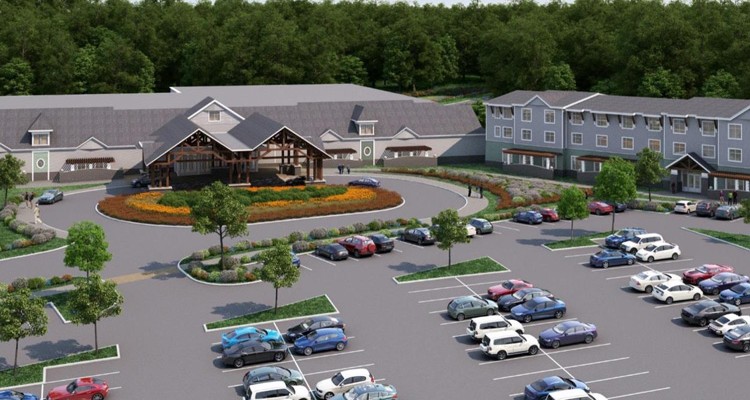
An artist's rendering of the proposed 85,000-square-foot Tiverton casino. It would have 1,000 video lottery terminals and 32 table games. It would be attached to an 84-room hotel.

Drawing Courtesy of Twin River Management Group

Friday 

Posted Aug 12,2016


As a priest, pastor and President of the Tiverton Interfaith Clergy Group opposing the expansion of gambling in Rhode Island in general and the placement of a casino in Tiverton specifically, I asked the Tiverton Planning Board to begin working on a social plan. If there must be a casino placed in Tiverton, then there must be a social plan for the sake of social justice. I am asking the Planning Board to consider developing, approving and submitting a social plan to the Tiverton Town Council, as soon as possible, in the event Tiverton voters approve the casino referendum on Election Day, Nov. 8, a mere 90 days away.

The Rev. John E. Higginbotham

As a priest, pastor and President of the Tiverton Interfaith Clergy Group opposing the expansion of gambling in Rhode Island in general and the placement of a casino in Tiverton specifically, I asked the Tiverton Planning Board to begin working on a social plan. If there must be a casino placed in Tiverton, then there must be a social plan for the sake of social justice. I am asking the Planning Board to consider developing, approving and submitting a social plan to the Tiverton Town Council, as soon as possible, in the event Tiverton voters approve the casino referendum on Election Day, Nov. 8, a mere 90 days away.

A social plan will help facilitate and help to provide Tiverton residents who become addicted to casino gambling with access to resources they will need when they, and their families, suffer the financial fallout from a gambling addiction as a direct result of a casino coming into this town. Some of the resources needed would include psychiatric treatment for gamblers suffering from this addiction, legal resources when criminal activity, eviction, bankruptcy or utility shut offs are involved. There should be access to emergency financial resources such as low- interest rate loans providing residents with food, utility payments, rent money to prevent eviction and emergency mortgage payments to prevent foreclosure. Employment assistance must be made available when the gambler has been terminated as a direct result of their gambling addiction.

These resources are all about survival. We all know our finances go much deeper than basic survival. However, a gambling addiction does not discern between disposable income and survival income. The addiction just knows that money is the fuel needed for the high the “action” gives the gambler when playing slot machines or any of the table games in the casino. This addiction not only takes away the luxury of disposable income from the gambler, a gambling addiction takes away all the money an addicted gambler can get their hands on.

A casino can easily create a gambling addiction in a model citizen’s life. For example, a Tiverton resident goes into this proposed casino one night just for the fun of it to play the slots and winds up a year or two later with a full blown gambling addiction. The person becomes an active gambler and craves the excitement of the “action” playing the slots only to end up broke, borrowing from Peter to pay Paul, maxing out the credit cards at the ATM machine, which the casino so conveniently provides. Finally, when there is nothing left but toxic shame, bankruptcy becomes a way out for many gamblers.

Unfortunately, there is embezzlement from the gambler’s place of employment just to keep gambling because the addiction whispers “Keep playing. You can hit it big. You can save the house and the car and the 401(k) and replace the kid’s college tuition money that you have been saving since birth. You can save face. You can be a hero and still have fun.” That’s a gambling addiction controlling what was a model life, a good life, a healthy life. In the end, a person with a chronic gambling addiction can end up ruining their life and the life of their family and loved ones who depend upon them for their survival. In chronic cases they could end up in bankruptcy court or doing 3-to-5 years in prison for embezzlement or even worse taking their own lives. It’s not just about your money; it’s about your life. In this case, it is the life of this beautiful town.

I know the Tiverton Town Council and many proponents of the casino say, “This is just hyperbole. These are just scare tactics. This is just an over exaggeration of the facts.” When asked about the addiction issue, casino executives usually point out that most people don’t have a gambling problem, which is true. Just over 1 percent of the population is considered to be compulsive gamblers, those with the most serious level of gambling addiction and another 3 percent to be problem gamblers, those folks with somewhat lesser levels of addiction.

However, as documented in the landmark Institute of American Values report “Why Casinos Matter” (www.americanvalues.org), multiple independent studies show that 35-50 percent of casino gambling revenues come from that 4 percent of the population who are collectively referred to in the gambling literature as “problem gamblers.”

This means that the casino industry’s very business model is dependent upon preying upon addicted gamblers. That is people with some level of gambling addiction and that up to half the money government obtains from casino gambling comes from exploiting addicted citizens and the people close to them. This is the basis of the argument that it is unethical for government to support and promote gambling. The bottom line: It is difficult to take seriously the casino industry’s claims that casinos do everything possible to identify, bar, and help addicted gamblers get treatment since most casinos would be hard pressed to stay in business if they lost 35-50 percent of their revenue.

If the voters approve the referendum, then this town must be prepared for the social fall out. You see, the town is our people. We have a responsibility to our people. This is a matter of social justice. As an advisory body to the Town Council, the Planning Board has an obligation and a duty to at least plan for any eventuality, especially the placement of a casino in this beautiful New England village and to protect the people they serve from harm and when that harm is done, be there to help them. Otherwise, our town will be changed, and not for the better. Otherwise, there will be no peace in our town because there will be no justice. Otherwise, we are saying, I just don’t give a damn.

The Rev. John E. Higginbotham is president of The Tiverton Interfaith Clergy Group.


http://www.heraldnews.com/opinion/20160812/guest-opinion-if-tiverton-casino-opens-there-needs-to-be-plan-for-social-justice

Friday, June 24, 2016

Vote no on 'predatory gambling' in Tiverton


  • Guest Opinion: Vote no on 'predatory gambling' in Tiverton


  • Here are 10 reasons to oppose the expansion of state-sponsored predatory gambling in Rhode Island.


    Sunday, May 29, 2016

    Anti-gambling, recovery activist Kenneth MacGregor dies at 74 at home in Pawtucket


    Anti-gambling, recovery activist Kenneth MacGregor dies at 74 at home in Pawtucket


    MacGregor
     Zoom
    MacGregor

    Posted May 26, 2016 at 6:39 PM
    Updated May 26, 2016 at 7:40 PM 


    By Lynn Arditi 
    Journal staff writer

    His name was Kenneth G. MacGregor but everybody knew him as “Kenny Mac.”
    At an age when many men are perfecting their golf swings, MacGregor, a retired engineer from Pawtucket, found his calling. He testified at the State House about the dangers of gambling addiction. He opened a recovery house — and sometimes his own home — to people trying to beat addiction.
    “He’d take in a lot of people who other people had rejected,’’ his son, Joseph MacGregor, 32, of Burrillville, said. “He tried to help them out and get them on the straight and narrow. ''
    MacGregor — anti-gambling activist, head of Highlander House, in Pawtucket, and founder of the Rhode Island Council on Problem Gambling — died at home in Pawtucket on Saturday. He was 74.
    “He had been in recovery for [over] four decades and helped hundreds of people find and sustain their recovery,” said Thomas Coderre, a senior adviser to the Substance Abuse and Mental Health Services Administration, in Washington. “He helped me tremendously, without judgment, and I am forever grateful for it.”
    The former Rhode Island senator recalled how MacGregor came to visit him in 2003, when Coderre was in treatment.
    “Kenny showed up at the treatment center with all sorts of baked goods and donations for the residents,” he wrote in an e-mail. “In fact, he came every week, and not just to our center, but to centers and shelters for [the] homeless and victims of domestic violence throughout the state.”
    Coderre recalled his mother, former state Rep. Elaine Coderre, describing how on Saturday mornings the children in the homeless shelter in Pawtucket that she used to run would wait on the front steps for MacGregor, who would arrive with two dozen doughnuts and two gallons of milk.
    A U.S. Army veteran of the Vietnam War, where he served with the 101st Airborne Division, MacGregor later worked as an industrial engineer and consultant before retiring in his 50s and focusing on helping people trying to beat addiction.
    His personal life was marked by tragedy. His 29-year-old stepdaughter, Marie A. Gonder, was murdered in 1994 by her husband, leaving behind their three young boys, Joseph, Jaime and Justin. MacGregor and his wife, Phyllis, took in the boys, their grandsons. Then, less than two months after her daughter’s murder, Phyllis MacGregor died at age 52.
    “He raised those kids virtually all by himself,” Coderre said. In 1997, MacGregor adopted the three boys as his sons.
    He also had four other children — two sons, Rob Roy and Kenneth F. McGregor, from a previous marriage, and Phyllis' children, Lynn and Joseph P. MacGregor, whom he also adopted.

    “He was a class act,” his son Joseph said. “He was very humble. He did a lot of things under the radar.”
    Calling hours are on Friday, May 27, from 4 to 8 p.m. at the William W. Tripp Funeral Home, 1008 Newport Ave., Pawtucket. Services, with military honors, will be on Saturday, May 28, at 10 a.m. at Calvin Presbyterian Church, 126 Angell Rd., Cumberland, followed by burial at Highland Memorial Park Cemetery, 1 Rhode Island Ave., Johnston.

    http://www.providencejournal.com/article/20160526/NEWS/160529419 


    Saturday, June 13, 2015

    Rhode Island's Addiction to Gambling Revenue


    New gaming ‘supply’ on tap in Mass., R.I.


    “An important part of our business philosophy has been to listen to what our customers want, and the addition of a poker room is one of the most often heard requests,” Taylor said in a statement. “We’re thrilled to increase the number of table games we currently offer, which also means we will expand our workforce once again.”

    Twin River, formerly a slots-only racetrack facility, installed its first 66 table games two years ago and, due to their success, added 14 more six months later. The additional 28 games, bringing Twin River's complement to 108, have been approved by the Rhode Island Department of Revenue’s lottery division and should all be in place by early fall.

    Twin River will continue to operate more than 4,225 slots. By comparison, Foxwoods Resort Casino operates about 4,700 slots and Mohegan Sun some 5,300. Foxwoods has about 250 table games and a 90-table poker room that's the largest on the East Coast. Mohegan Sun has about 275 tables as well as a 42-table poker room.

    Twin River also plans to add a hotel.

    “Our product is more robust than what is envisioned for Plainville, Mass., due to open later this month, and we will continue to explore ways to remain competitive in this challenging regional market,” Taylor said.

    Twin River’s parent is seeking to buy Newport Grand, Rhode Island’s only other gaming facility, and plans to transfer the gaming license to a facility it would build in Tiverton, a town on the Massachusetts border. The move is subject to state approval and state and local referendums that would be held in 2016.


    http://www.theday.com/business/20150610/new-gaming-supply-on-tap-in-mass-ri-


    Friday, June 12, 2015

    Tiverton Rhode Island: “Always sell the sizzle”


  • Guest Opinion: Gambling for Tiverton's soul

  • There is a saying in sales, “Always sell the sizzle.” Recently, I attended a presentation by Twin River's Chairman John Taylor in which he laid out the details of his proposed casino off Route 24 in Tiverton for approximately a dozen attendees.


    • By Revs. John E. Higginbotham, William Sterrett, Missy Quay, Patrick Crough, Joseph Runner and Charles Simonson
      Posted Jun. 11, 2015 at 5:24 PM 


      There is a saying in sales, “Always sell the sizzle.” Recently, I attended a presentation by Twin River’s Chairman John Taylor in which he laid out the details of his proposed casino off Route 24 in Tiverton for approximately a dozen attendees.
      Taylor was low key, relaxed, pleasant and most of all, confident. He spoke about a 75,000 square foot facility, with 1,000 slot machines and gaming tables. He projected approximately 300-350 jobs for Rhode Islanders and $4 million dollars turned back to the Town of Tiverton annually. He quieted concerns about garish signage, security within the facility, safety and the presence of state and local police officers along with EMTs 24/7/365 days a year. In great detail, he gave us a glimpse into the world of casino gambling as he compared and contrasted the gaming industry by using examples of other facilities spread across the country and in the state of Rhode Island. Taylor artfully and in a truly understated manner sold the ‘sizzle’ to a receptive and supportive audience.
      As the priest and pastor of Holy Trinity Episcopal Church in Tiverton, I am the spiritual leader of a congregation of souls many of whom live in the town of Tiverton. For the most part, the parish priest speaks with a pastoral voice, but there are times when the priest by virtue of the vocation, must speak with a prophetic voice to the community, as well. The interfaith clergy of Tiverton believes state sponsored predatory casino gambling is a direct threat to the soul of every gambler and to the soul of the Town of Tiverton because this casino is about one thing and one thing alone. It’s all about the money. The rest is “sizzle.” The rest is packaging to sell a short sighted ‘quick fix’ to a cash strapped town. The problem with selling a casino with all that ‘sizzle’ and all those benefits is that it tends to conveniently overlook the assault inflicted upon the human soul by casino gambling, namely addiction.
      Taylor addressed this after a question was asked concerning the effect of casino gambling upon the poor by pointing out that on each of his slot machines there is a 1-800 number for Gamblers Anonymous and if that’s not enough 1 in 10 casino employees is trained to spot a “problem gambler” upon which the gambler will receive information pointing them to the United Way and free psychotherapy. You can even place yourself on a “self-exclusion” list that is used by the casino to prevent you from gambling when it becomes problematic.
      By the time a person gets to this point of desperation, when the last bet has been made at the gaming tables, when the last dollar has been taken by the slot machine, it’s too little, too late because over time this addiction will have given the casino the player’s paychecks, savings, mortgage, car payments, the kid’s college tuition fund, and the IRA meant for retirement, etc., until the money is gone. We shouldn’t be angry because that is what the “house” is designed to do. With the odds so heavily stacked in its favor, it cannot help but separate the player from their money. The insidious part of casino gambling is that the gambler’s life and the life of their family is deeply affected and damaged by this disease. The soul of everyone who loves and cares for this person is offended and often feels betrayed.
      The most significant problem for the gambler comes with a very real addiction and a life time of recovery and reconciliation with themselves and their effected family members. Gambling is not a solitary disease. There is plenty of collateral damage to go around. Spouses, children and loved ones will have to recover from the emotional, psychological and spiritual betrayal caused by a family member’s gambling addiction. So, where do they go to get their lives back?
      If the voters of Tiverton allow Taylor to plant this pathogen in their town alongside Route 24, the disease it creates will have a profound effect upon the collective soul of Tiverton. The town of Tiverton, as we now know it, will not be changed for the better. It will be ruined. Gambling is not and never will be the financial panacea sold by casino operators to any town, city or state. Look at Reno, Nevada; Atlantic City, New Jersey and even the state of Connecticut. Just look at the odds and ask yourself this question.
      Is gambling with the soul of Tiverton worth losing it?
      The Rev. John E. Higginbotham, Holy Trinity Church and the Interfaith Clergy of Tiverton, Rev. William Sterrett, Amicable Congregational Church, Rev. Missy Quay, Community of Christ Church, Rev. Patrick Crough, First Old Stone Baptist Church, Rev. Joseph Runner, retired UCC and Rev. Charles Simonson, retired UCC.

  • http://www.heraldnews.com/article/20150611/OPINION/150618627


  • Sunday, May 24, 2015

    Tiverton Casino: A Necessary Evil?


    Tiverton Casino: A Necessary Evil?


    So Twin River’s parent company wants to build a new casino in Tiverton. The idea is likely to raise a few eyebrows, but RIPR political analyst Scott MacKay says it has to be done.

    There are many Rhode Islanders who don’t believe that state government should be in the business of promoting gambling. Those critics point out the lottery games and slot-machine emporiums that speckle New England like daffodils these days are little more than cheap taxes on the poor.

    State-sponsored gambling gives taxpayers the false impression that we can have good services without paying for them. This goes against the grain of Oliver Wendell Holmes famous dictum that taxes "are the price we pay for civilization.’’

    Having the government urge citizens to gamble also runs up against the distinctly New England work ethic. It lulls citizens into thinking they can get rich by putting their money in slot machines or buying scratch tickets. It also preys on the weak who become addicted to gambling and the collateral damage of fractured families and lives destroyed by the over indulgence in a get-rich-quick attitude.

    Then there is the New Reality of state-backed gambling, as expressed by Rhode Island’s House Speaker, Nick Mattiello, a Cranston Democrat. "Whether you like it or not, gambling is the third largest source of state revenue,’’ he says.

    Now, our state’s more than $300 million annual gambling tax haul is threatened on several fronts.

    There are plans in Connecticut and Massachusetts to build even more new casinos near Rhode Island’s borders. And during last November’s election, Newport voters emphatically rejected, for the second time, installing table games at the Newport Grand slot parlor, a faded venue that has seen a decline in patrons willing to pony up to the video slot machines.

    The sad reality is that even if we don’t like gambling, there is very little that Rhode Island can do to stop citizens from plopping their dollars into the slots or on a blackjack table. A state that you can drive across in 45 minutes without breaking the speed limit will never keep its citizens from spending their gambling money elsewhere.

    That’s why the Twin River plan to shift gambling from Newport to a new facility in a rural section of Tiverton makes sense. It would help stanch the bleeding of gambling money to new venues in the works in Massachusetts. It would serve as a potent aspirin to the fiscal headache caused by Newport voters who turned thumbs down to making Newport Grand a full-fledged casino.

    There will, of course, be the usual blush of Not-In-My-Backyard skepticism from a slice of Tiverton voters, who must approve any casino plan. But history informs us that Tiverton voters may not be as averse to legal gambling as their Newport neighbors. During the 2014 election, the planned expansion of gambling in Newport won by better than 65 percent in Tiverton. It remains to be seen whether Tiverton voters will feel the same when the proposed casino is located within their town borders. (In Rhode Island, a gambling expansion requires voter approval at both the municipal and state levels).

    The other advantage of the 45-acre Tiverton site is that it is large enough to build amenities that the Newport location lacked, such as restaurants, conference centers and shopping facilities. The link with Lincoln’s Twin River would also encourage cross-promotion of the two Rhode Island gambling venues. The Four Tops Farewell Tour, say, could be promoted as appearing on Friday night in Lincoln and on Saturday in Tiverton. (As we all know, The Four Tops Farwell Tour never really ends).

    Another plus is that the proposed Tiverton location is only an eight iron from the Massachusetts border, meaning the Bay State would have to put up with at least some of the impact on traffic or law-enforcement from a new casino.

    Twin River’s parent company says this new casino would employ more than 200 workers. Hopefully some of the workers displaced by the closing of Newport Grand could find jobs at the new location.

    At some point, Southern New England will become saturated with gambling emporiums. Rhode Island lawmakers should begin planning for that day by investing in programs that will bring better jobs than those separating gamblers from their money. This means spending public money on education, infrastructure and energy conservation initiatives.

    But for now, the state relies on gambling for so much money to fix the roads, finance the schools and chase the crooks. It’s depressing, but it’s the reality, so the General Assembly ought to allow this project to move forward by putting it to voters in 2016.

    Scott MacKay’s commentary can be heard every Monday at 6:45 and 8:45 on Morning Edition and at 5:44 on All Things Considered. You can also follow his political reporting and commentary at the `On Politics’ blog at RIPR.org


    http://ripr.org/post/tiverton-casino-necessary-evil


    Saturday, May 23, 2015

    Twin River slots not expected to rise in move to Tiverton


    Twin River slots not expected to rise in move to Tiverton

    The Associated PressMay 22, 2015
     
     
    — The head of Twin River says a proposed casino in Tiverton would include about 1,100 slot machines, about the same number as at Newport Grand.
     Twin River Worldwide Holdings Chairman John E. Taylor Jr. said at a question-and-answer session Thursday that table games would include blackjack, craps and roulette, but probably not poker.
    The Newport Daily News reports (http://bit.ly/IX5CGL ) that he says a casino of the size being proposed would likely contribute about $4 million a year in taxes on gambling, property, food and beverages.

    Twin River Worldwide Holdings, which operates the gambling center in Lincoln, is seeking to buy Newport Grand and move to Tiverton. Taylor said the sale awaits state regulatory approval.

    Tiverton officials and state lawmakers also must approve a November 2016 referendum on the state and local ballots.

    Monday, May 11, 2015

    ....states' gambling way to financial health not a good bet


    Fitz's Hits: .... states' gambling way to financial health not a good bet


    By Edward Fitzpatrick
    Journal Columnist
    Posted May 9, 2015

    YouGottaBeKiddingMe
    Twin River Management Group is hoping to shut down the Newport Grand slots parlor and build a casino near a stream in Tiverton, and guess what the name of that stream is? Sucker Brook. Apparently, sites adjacent to Chump Creek and The River Sap were unavailable. Now certainly, I understand the importance of gambling revenue to Rhode Island's budget. Lottery transfers to the general fund are expected to total $383 million in fiscal year 2015, up from $376 million last fiscal year. But I wonder about the larger trend that has New England awash in gambling proposals such as a Plainville slots parlor and a casino proposed for New Bedford. Apparently, states are planning to gamble their way to financial health and prosperity. And even from the banks of Sucker Brook, that doesn’t look like the best bet.


    http://www.providencejournal.com/article/20150509/NEWS/150509285

    Saturday, May 2, 2015

    Rhode Island's Taxpayer Subsidies


    9/25/2006: Safety net for current slot halls: Taxpayers

    By SCOTT MAYEROWITZ
    Journal Staff Writer
    Posted May. 1, 2015 at 11:44 AM

    If business at Lincoln Park and Newport Grand declines because of the proposed West Warwick casino, Rhode Island taxpayers will have to cover their losses -- potentially millions of dollars -- because of a deal crafted by state lawmakers last year.

    At that time, the company that owned Lincoln Park faced federal corruption charges and questions swirled throughout the State House about the impact of a guilty verdict.

    If the owners were convicted - which they later were -- then the track would lose its license and be forced to close, costing the state $525,000 a day.

    So when prospective buyer BLB Investors showed up, the state's leaders did everything possible to make a sale possible, including promising to protect Lincoln Park from any losses caused by a casino.

    "Obviously, the specter of a casino was a big concern of theirs," House Majority Leader Gordon D. Fox said last week. "It was important for both the administration and the legislature to get the BLB deal done because . . . at the time we were dealing with a potential felon running a central money-making institution for the state."

    Now, as Rhode Islanders debate whether they want to amend the state Constitution to allow a casino, that promise -- called a slippage clause -- has returned to the spotlight.

    The casino proposed by Harrah's Entertainment and the Narragansett Indian Tribe promises to bring millions of new tax dollars to the state. But the casino would also probably hurt business at Lincoln Park and Newport Grand.

    Gambling is the state's third-largest source of revenue. Slot machines last year accounted for $255.7 million of the state's budget.

    Nobody is sure exactly how much damage the casino would cause to Lincoln Park and Newport Grand. Harrah's says it would be minimal; Lincoln Park and Newport Grand say it would be catastrophic. And the slippage clause -- which was also extended to Newport Grand -- complicates the matter further.

    For taxpayers, the key to the debate is: will the new revenue from Harrah's be enough to offset the state's losses from the two existing facilities?

    THE SLIPPAGE CLAUSE was the product of months of private negotiations between BLB, Governor Carcieri and top lawmakers.

    In order to close the deal, both sides wanted something. An agreement had to be reached before BLB would commit to purchase the track.

    The state sought a commitment from BLB to make at least $125 million in much-needed improvements at the aging track. BLB asked for 1,750 additional slot machines and to have its tax rate locked in for 15 years.

    BLB also wanted something else: protection from a potential casino.

    Carcieri and Senate President Joseph A. Montalbano, a North Providence Democrat whose district includes Lincoln, added a clause into the deal.

    The state gets a bit more than 60 percent of the slot revenues at Lincoln Park and Newport Grand. Harrah's was proposing in 2004 to pay just above 25 percent. If the ballot question passes, lawmakers would then negotiate a tax structure for the casino.

    The version the Senate passed said that if a casino was approved, it would have to have the same tax rate. Either Harrah's would pay 60 percent or Lincoln Park's rate would drop to 25 percent.

    That didn't sit well with House Speaker William J. Murphy, a Democrat who had long been pushing for a casino in his hometown of West Warwick.

    While the Senate quickly passed the deal, Murphy stalled and ended the House's session for the year.

    But then a last-minute deal was struck and Murphy called back his members for a special session.

    The tax-parity clause was dropped, and in its place the House inserted the slippage protection. Newport Grand was also given authorization for additional slot machines, a locked-in tax rate and its own slippage clause in exchange for a $20-million capital investment.

    Harrah's could still pay a lower tax rate, and BLB was assured that its business would not lose money because the state would have to make up its losses.

    Carcieri said he didn't like adding more slots at Newport and never spoke favorably about the slippage clause, which he points out came from lawmakers.

    But he said he still signed onto the deal because it cleared the way for a change in ownership at Lincoln Park.

    "We needed to get somebody else in there," he said last week.

    Murphy and Montalbano did not respond to numerous requests for interviews.

    THERE IS NO clear picture about what a Harrah's casino would do to Lincoln Park and Newport Grand.

    Both facilities predict a 40-percent drop in revenue. A 2004 report by gambling analyst Sebastian Sinclair, prepared for the Town of West Warwick, forecast a 12.5-percent decline at Lincoln Park and a 33.6-percent decline at Newport Grand. Harrah's also says there will be a drop, but that it won't be nearly that steep.

    The deal the state struck with Lincoln Park protects it through 2020; Newport Grand is protected through 2015.

    The slippage clause takes the average revenue at each facility in the two years prior to a casino opening and assumes that income there should grow each year by inflation. If revenues drop below that figure, the state has to make up the loss.

    Lincoln Park estimates that by 2010 its slot machines will generate $547 million. The state would get $335.3 million. Lincoln Park would take $152 million. The rest of the money is split among other parties, including the Town of Lincoln, the slot manufacturers and GTECH, which manages the system.

    If a casino caused a 10-percent drop in revenue, the state would be short $33.5 million. However, because of the slippage clause, the state would also have to pay out an additional $15.2 million to Lincoln Park, creating a $48.7-million shortfall, according to Journal calculations.

    Harrah's estimates that its casino would provide the state with $113 million in new tax revenue that year, which would more than make up the hypothetical 10-percent loss at Lincoln Park.

    But if revenues at Lincoln Park dropped by 30 percent, the state would lose $146.1 million. Even with Harrah's $113 million, there would still be a budget shortfall.

    The state also has to consider potential revenue losses at Newport Grand.

    House Majority Leader Fox noted that lawmakers have yet to agree with Harrah's on the terms of the casino's operation. That would happen after the Nov. 7 referendum.

    "If this vote should pass, nothing prevents a discussion with the casino, with Harrah's, that if there is slippage . . . that they make it up," Fox said last week.

    However, Harrah's doesn't appear so willing to make such payments.

    Jan L. Jones, Harrah's senior vice president for communications and government relations, said last week that her company would be willing to cover any state losses in the first two years. But that offer does not extend to the slippage payments.

    "I can't imagine any private company," Jones said, "that's going to make up another company's inability to operate."


    Sunday, April 26, 2015

    Here's how it goes.....we told ya so!


    Lincoln, Rhode Island residents overwhelmingly OPPOSED 24/7/365 GAMBLING.
    Guess what they got from the bankruptcy court?

    Lost Local Control!


    Anticipating Massachusetts Slot Barns, Twin River got table games.


    During one of the Edumacational Forums conducted by the Massachusetts Gambling Commission [no longer available on their web site - the video seems to have disappeared], it was readily acknowledged that Plainridge [AKA Penn National] would return for table games, an expansion of Predatory Gambling.


    During one of the early Gambling Hearing held on Beacon Hill in Gardner Auditorium, the public was told that the state becomes a partner in the success of Predatory Gambling, the state becomes addicted to the Gambling Revenues.


    There will never be a limit.


    RHODE ISLAND

    Twin River wins approval for hotel


    By Jennifer Bogdan

    Journal State House Bureau
    Posted Apr. 25, 2015 at 9:16 PM


    PROVIDENCE, R.I. — Gov. Gina Raimondo has signed legislation clearing the path for Twin River to build a hotel at the state's only full-fledged casino.

    State law prohibited a hotel from being built on the casino's sprawling Lincoln property in recognition of concerns once voiced by the Providence hotel industry, which feared competition.

    But with the state facing imminent competition from Massachusetts casinos, elected officials favored lifting the restriction. Massachusetts' first gambling facility — a slots parlor in Plainville — will open in June just 12 miles from Twin River.

    "As our neighboring states look to draw revenue and economic development away from Rhode Island, we need to examine every possible way to remain competitive and create more economic opportunities here in Rhode Island," Raimondo said in a statement.

    Twin River Management Group will now vet the site plan with officials in Lincoln.

    "We're grateful for the support we receive from the legislature and governor in lifting the prohibition on a hotel at Twin River," casino spokeswoman Patti Doyle said.

    Twin River officials have said the hotel will be built in the style of a Courtyard Marriott or a Hampton Inn. The four-story hotel will have 150 to 250 rooms and cost $30 million to $35 million to construct.

    The project is expected to create roughly 200 temporary construction jobs and 100 full-time jobs for employees needed to operate the hotel.

    The House legislation was sponsored by Rep. Jeremiah T. O'Grady, D-Lincoln. The Senate bill was sponsored by Majority Whip Maryellen Goodwin, D-Providence. There was no substantive difference in the bills signed into law aside from sponsorship.

    Twin River officials have said the hotel is not intended to draw in gambling from a larger radius. Instead, officials have said the focus remains on retaining "convenience gamblers" within the surrounding area who might be tempted to cross the Massachusetts border.

    Casino officials have said they will not seek any tax breaks or concessions for the project.

    Twin River and Newport Grand, the sources of a large share of state revenue, are under threat from gambling expansion in Massachusetts. Plainridge Park Casino — with 1,250 slot machines — will open this summer just 12 miles northeast of Twin River in the Massachusetts town of Plainville. In 2017, three resort casinos — with table games, hotel rooms, shops and other amenities are scheduled to begin opening across the the Bay State.

    That competition — possibly joined by a tribal-run casino in Taunton — will drain millions of dollars in revenue from Twin River and Newport Grand.

    The Rhode Island Public Expenditure Council, citing a recent analysis conducted for the Chafee administration by Christiansen Capital Advisors, forecasts a 13.8-percent decline in the state’s video-gambling revenue in 2016, and as much as 40 percent in later years.

    “A hotel would complement table games and help Twin River to differentiate itself from the Plainridge casino,” said Alex Bumazhny, a Fitch Ratings financial analyst. “It could soften the blow from the new competition in Massachusetts but not offset it entirely.”


    http://www.southcoasttoday.com/article/20150425/NEWS/150429507/101193/NEWS0301

    Thursday, October 30, 2014

    Newport Slot Barn a losing proposition


    Eugene J. McKenna: Newport casino a losing proposition


    Jobs, jobs, jobs! Economic development! We hear these words shouted at us many times a day. Of course these are major concerns in Rhode Island and throughout the country. But Citizens Concerned About Casino Gambling do not think that the introduction of casino gambling in Newport is a satisfactory response to these concerns. Therefore we oppose statewide Questions 1 and 2.
    We believe that true economic development should provide goods and needed services that will benefit the residents. Gambling is a dead-end proposition with no added wealth for the community. One needs only to look at the closing of four casinos in Atlantic City in one month and the lessening of revenue in so many casinos nationwide, including Rhode Island.
    CCACG believes that all the energy, time and money spent over the last few years in trying to expand a slots parlor into a full-scale casino in Newport could be better spent finding other ways to increase employment.
    A good start would be with the North End Master Plan prepared for Newport in 2006. It should be given more attention and action for continued crucial development of the North End and the pursuit of high-quality technical and marine research jobs.
    Gaming is an oversaturated industry. It seems that anyone who has ever wanted to try a casino has done so. The market is not expanding. Only the venues meant to cater to a finite number of gamblers is growing, oftentimes to close within a few years and lay off faithful employees.
    Eventually, unless the anti-casino vote prevails in Massachusetts and on-line gambling continues to grow, there will be a further loss of gambling revenue for Rhode Island. We think it would be wise to overcome the ever-increasing losses by finding new areas of development in Rhode Island instead of just going blindly to the trough of gambling revenue.
    The University of Rhode Island’s new and beautiful School of Pharmacy and the outstanding Oceanographic Institute along with all the possibilities of medical and educational districts in Providence are good signs that we can once again have a growing economy without casinos. Our flourishing tourist industry can also be further expanded without the branding of “casino” hanging over our heads.
    Worse, Newport and the other communities in Rhode Island could easily lose control over any casino with the General Assembly legislating exceptions to zoning or alcohol laws as it did with a smoking ban.
    Rhode Island has been receiving more revenue from gambling per capita than any other state in the country. The introduction of full casino gambling could even increase the frightening number of problem and addicted gamblers in Rhode Island with the attendant social costs caused by problem gambling, namely embezzlement, theft, bankruptcies, mortgage defaults, divorce and even suicides.
    Baylor University Professor Earl L. Grinols, an expert on the costs and benefits of casino gambling, shows that for every dollar of casino revenue gained for the state, there are social costs of three dollars.
    Revenue could also drop for Rhode Island if full casino games are allowed at Newport Grand, because the share for the state would only be 16 percent to 18 percent from the table games whereas the state now receives about 61 percent from the Twin River and Newport Grand slot machines. Surely not a winning proposition.
    Therefore we encourage all Rhode Islanders to reject Questions 1 and 2 on Nov. 4, so that Rhode Island will not become an even more dangerous predator on its residents, very often on the very people least able to afford gambling losses.
    The Rev. Eugene J. McKenna is president of Citizens Concerned About Casino Gambling.