Special Report: Casino’s attempt to collect debt exposes world of Chinese high-rollers
| LAS VEGAS
By the time the Las Vegas Sands Corp tried to collect on the gambling debts last year, the two women owed $6.4 million, lost during a few disastrous days of baccarat.
But when the Sands asked prosecutors to press criminal charges against Xiufei Yang, 59, and Meie Sun, 52, over the bad debts, attorneys for the two women struck back with a surprising allegation.
Yang and Sun weren’t high-stakes gamblers, their attorneys said in court filings. They were local housekeepers, recruited with the cooperation of Sands personnel to take out millions of dollars in credit in their names and sit near the players as they gambled with the borrowed chips. The real gamblers then were able to play without a paper trail at the company’s Venetian and Palazzo casinos at the heart of the Las Vegas Strip.
The attorneys for the women, Jeffrey Setness of the law firm Fabian VanCott and Kevin Rosenberg of Lowenstein & Weatherwax LLP, contend the Sands may have violated federal anti-money laundering rules prohibiting casinos from helping players keep their names off the books.
The lawyers describe the women as the bottom rung of a network of hosts and handlers who court wealthy gamblers from China and sometimes help them play anonymously.
Since all sides knew the debts were a sham, the attorneys argued, Sun and Yang’s markers – the IOUs players sign to get credit from casinos – should be null and void. The women were “the real victim(s) here,” the attorneys alleged, and the court should dismiss any effort to have them convicted for activities the Las Vegas Sands “initiated and to which it was completely complicit.”
Sands spokesman Ron Reese called the allegations a “smokescreen” intended to distract from the debts the women owe. The company has no “clear evidence” these women were recruited by Sands employees, he said.
The case, unreported in the media until now, opens a window into how Las Vegas casinos keep multi-million-dollar bets sloshing freely across gaming tables in the post-9/11 era, when big cash transactions have come under tighter U.S. regulatory controls.
In interviews, Las Vegas industry executives, casino floor employees and independent agents said the use of shills is a frequent practice at some casinos catering to high-stakes Chinese players.
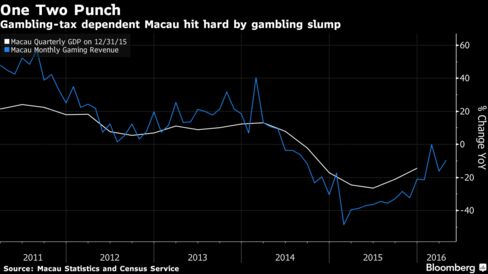
The episode also shows how crucial Chinese money has become to the American gambling capital at a time when Macau has eclipsed Las Vegas as the world’s biggest betting hub. In recent years, Vegas has tried to draw wealthy mainland Chinese gamblers, often to the baccarat tables, by loading up casinos with exclusive VIP rooms featuring the décor of Macau.
REVENUE STREAM WITH A CATCH
The effort paid off. Over the past decade, as overall gambling revenue on the Strip stagnated, baccarat winnings for casinos nearly doubled to $1.3 billion – 40% of take from all games, state records show.
Asians account for as much as 90% of baccarat gambling in Las Vegas, with the majority being Chinese, said Steve Rosen, president of the casino consulting company Marketations. Asian players now represent around 75% of Las Vegas’ high-rollers, he said.
But the Chinese revenue stream comes with a catch: Most of these games are played on credit, because the sums are so large. Two-thirds of all table bets placed at the Sands Las Vegas properties are made through borrowing from the house, according to the company’s financial filings. And gambling debt isn’t recognized as valid by Chinese courts, so it is largely unenforceable in China, said Andrew Klebanow, a casino specialist at the consulting firm Global Market Advisors.
Gamblers use shills to gain additional credit lines after bad losing streaks, or because they wish to avoid disclosing the source of funds on casino records, according to six industry veterans with experience catering to high-stakes Chinese players.
“It happens every day,” said an agent who specializes in bringing in Chinese high rollers.
Four people with extensive experience working at Sands’ Venetian and Palazzo casinos say the practice was well-known by the executives and hosts who specialized in drawing this clientele.
Unlike the crowded main betting floors at the Venetian and Palazzo, the high stakes rooms are intimate, often seating one or two tables of players. The shills, who signed for the credit, would sit near the gamblers. Little effort was made to conceal the shill arrangements, former employees said. “It was obvious,” said one.
The Sands says that even if Yang and Sun were shills, it was beside the point: “Ultimately those people signed credit on behalf of their name and that debt should be collected,” spokesman Reese said.
In a later statement, Reese said: “If credible proof is presented that an employee or employees were complicit, we will promptly take appropriate action as required by our policies. However, even a scenario in which a company employee was involved still does not void the debt.”
MONEY LAUNDERING TARGET
U.S. law enforcement officials have become increasingly concerned that inadequate vetting of customers and huge cash transactions could make Las Vegas a target for money launderers. It’s a violation of federal anti-money laundering laws to help gamblers evade financial reporting requirements and stay anonymous.
“I fear there may be a culture within some pockets of the industry of reluctant compliance with the bare minimum, if not less,” Jennifer Shasky Calvery, then director of U.S. Treasury’s Financial Crimes Enforcement Network, FinCEN, said at a 2013 Las Vegas gambling industry convention.
Such concern has triggered a crackdown and record penalties against casinos for alleged violations of anti-money laundering rules.
The Sands, for instance, paid $47 million in 2013 to settle a U.S. Justice Department investigation after the discovery that an alleged Chinese–Mexican drug trafficker, Zhenli Ye Gon, lost more than $84 million at the Venetian.
U.S. authorities said the Sands continued to do business with Ye Gon, even when he told casino employees he was wiring money incrementally to avoid government scrutiny, according to a statement of facts the Sands agreed to as part of its settlement with the Justice Department.
Ye Gon is currently in a U.S. jail in Virginia awaiting extradition to Mexico on drug charges. Gregory Smith, an attorney for Ye Gon, said his client was running a legitimate pharmaceutical company and was not a narcotrafficker.
More recently, federal authorities have been scrutinizing practices at U.S. casinos that allow gamblers to play without leaving a paper trail.
For example, last year FinCEN fined a Caesars Entertainment Corp casino $8 million for poor anti-money-laundering controls in its VIP salons. Caesars Palace, in a civil settlement with the Treasury Department, admitted permitting high-stakes gamblers to play using other people’s credit, potentially allowing “guests to conceal their identities and transactions” and play anonymously.
This year, the regulator fined southern California Hawaiian Gardens Casino $2.8 million for violating anti-money-laundering rules. Hawaiian Gardens admitted allowing players to gamble anonymously, even after gamblers had attracted suspicion at the casino.
SHILLS FOR DEBTORS?
In the Sands case, exactly how the two women each ended up owing more than a million dollars came under question after prosecutors brought the criminal charges in separate cases last year. In Nevada, failing to pay a gambling debt is a felony criminal offense comparable to passing a bad check.
Defense attorneys say the women, Chinese citizens living in the United States, made their living working as housekeepers and assisting high-rolling Chinese gamblers in their visits to casinos.
Reuters could not reach the women for comment. Their attorneys would not say how they became involved in the case or who was paying their fees. The attorneys also declined to make the women available for interviews or provide documentation to confirm their occupations and backgrounds, but said they are still in the United States.
The attorneys filed motions that sought to turn the tables on the casinos. One filing contended “the Venetian/Palazzo’s conduct may have run afoul of federal criminal anti-money laundering laws.”
Setness and Rosenberg are former federal prosecutors, and this is not Rosenberg’s first time confronting the Sands. As a former assistant U.S. attorney, Rosenberg helped lead the Ye Gon money laundering case against the company in 2013.
Casino marketing employees could have an incentive to skirt the rules, Rosenberg said in an interview, since they are paid based partly on how much customers play. “They need to be incentivized to care,” he said.
To prepare for trial, the attorneys subpoenaed casino surveillance footage of the women in the betting rooms, and the names and credit files of a score of high-rollers. The attorneys believed those records would support their claim: that the women were recruited by employees at the Sands’ Venetian and Palazzo to help high-rollers from China gamble millions without documents signed in their names.
In court papers, a Sands attorney said the subpoenas were merely to intimidate the casino into dropping its claim by airing “unsupported, specious and highly speculative allegations.”
After the defense attorneys raised the counter-allegations, Clark County prosecutors dropped the charges against Sun and Yang this spring during preliminary hearings in Las Vegas Justice Court.
In court filings, prosecutors said they now intend to pursue the charges through a grand jury, rather than before a judge. Often, prosecutors in the state pivot to a grand jury if preliminary hearings before a judge show proving their case will be harder than expected.
The Clark County District Attorney’s Office declined to comment on the cases.
The prosecution marked a rupture of years-long relationships between the shills and the casino company, the defense contends.
Starting in 2009, the attorneys said in court filings, a host at the Palazzo – named only as David in court records – told Sun she could make money by fronting for other players. She would sign markers – a gambling IOU form – and then sit near the actual players, who used the borrowed chips for baccarat, “sometimes losing more than a million dollars in a matter of hours,” the attorneys wrote.
In exchange, Sun would pocket $2,000 to $3,000 in tips from the player, her lawyers wrote. Employees of the casino told her, in substance, that they had no expectation she would be responsible for those debts.
Yang was offered a similar arrangement in 2011 by another Palazzo host, the lawyers said.
The women continued the arrangement for years, obtaining millions of dollars in chips for high-stakes baccarat players such as one identified by their attorneys as WeiDang Wang. In two days in January 2012, the restaurant owner from Shenyang, China, lost around $2 million after Sun signed for his credit.
Reuters was unable to locate Wang. The Sands’ Reese said most of the players named by the women were known gamblers at the casino, but declined to comment further.
For years, as players lost millions in Sun’s and Yang’s names, all was good. The wealthy players apparently repaid those debts once home in China, the defense attorneys said. The women never made payments themselves, and the Venetian and Palazzo never asked, they said.
But during 2012, Sun and Yang’s relationship with the casino changed, their attorneys said, after the players for whom the women signed credit stopped paying the casino back.
In February 2012, Yang signed for credit for a player named Quanlong Wang; she sat nearby as he played with the borrowed chips. He initially won $5 million before leaving for a trip to Los Angeles. Later that month he returned, placing bets as high as $300,000 a time, losing all his previous winnings and nearly $5 million more. Reuters was unable to reach Wang at addresses listed for him in Las Vegas.
In August of that year, a player Sun shilled for lost $1.38 million that was never repaid, the lawyers said.
Unlike in years past, those debts went unpaid. And in January and August of 2015, almost three years later, Clark County’s Bad Check Unit pressed charges.
The criminal complaint filed against each woman was just two pages, charging them for defrauding the Sands.
Chinese regulators have tightened currency controls as part of a crackdown on corruption and capital flight in recent years. Those controls, among other factors, may have made it harder for Sun’s and Yang’s gamblers to make good on the debt, the lawyers said.
Reese said it was possible some players who overextended their credit lines entered a private arrangement with the women to borrow money on their behalf. But a debt is still a debt: “They are the ones that signed the credit – they are responsible for it,” he said.
In a follow-up email, Reese said it is not “a common practice for agents or anyone else for that matter, to sign markers on someone else’s behalf.”
'ON THE FLY IN THE PIT’
The case highlights how Las Vegas’ unusual credit policies allow money to flow with little scrutiny on the casino floor.
Casino gambling credit is loosely regulated in Nevada, industry veterans say. Typically, a casino will run a credit check the first time a customer seeks a loan. Casinos generally use a service called CentralCredit – a kind of Experian for the gaming industry showing a person’s gambling history around town.
For example, Sun’s credit line spiked during a single visit in December 2010 from $100,000 to $2 million, according to credit documents included in the court record. Yang’s credit line went from $1 million to $5 million during subsequent visits.
Casinos do check if the player has outstanding gambling debts at other establishments. But Joe Flippen, a former vice president of credit at Caesars Entertainment, said some casinos often won’t do a deeper credit check on a foreign player if they get a strong recommendation from a host or a junket operator. Junkets are independent agents who bring players to the casino in exchange for a percentage of what the gamblers spend.
Casinos don’t calculate their risk the same way a bank does when making a loan. When a player loses, “The money is not leaving the building ... It’s not a mortgage,” Flippen said. “For the high-end gaming, the main risk is the lost opportunity” if the gambler doesn’t play.
For that reason, when players get buried by cascading losses, the hosts – who get commissions based on how much customers spend – will sometimes extend a credit line for the session by as much as three or four hundred percent, as long as it’s done during the same visit.
“It’s done on the fly in the pit. We want to make it fast because it’s customer service,” Flippen said.
The state’s gaming board requires casinos to record some justification for customer credit limits. But that justification may be just the recommendation of hosts or an outside junket operator who has a relationship with the player.
In Sun’s case, she was introduced to the casino in 2009 by junket operators Liming Jiang and her husband, Fai Wong, who was Sun’s guarantor, according to Reese.
FAMILIAR FACE AT BACCARAT SALONS
Wong was well known in the Venetian and Palazzo baccarat salons. He often brought high-stakes players who would gamble millions of dollars over the course of a visit, said two former casino employees with direct involvement in his transactions.
Wong’s relationship with the Las Vegas Sands deepened in 2013 when he produced Panda!, a Cirque-Du-Soleil-style acrobatic show that ran at the Palazzo for over a year, using more than a million dollars of his own money, according to court papers filed in an unrelated lawsuit.
Wong often brought women to the casino to act as shills on behalf of other high-stakes players, two former employees said. After signing for the credit, the women would sit at a nearby table as the players gambled, sometimes passing them chips. The practice was easy to spot, they said, because the women would be sitting at a vacant nearby table without playing.
In July, a person who identified himself as an assistant for Wong but wouldn’t give his name returned Reuters’ calls to Wong. The caller said the two women were part of Wong’s junket organization. They were used by the organization with the encouragement of the casino staff to keep deeply indebted gamblers coming back to the table.
Once a player owes money from a previous visit, “the system is barred from dispensing more cash to you. It can’t give you more credit,” the assistant said. “For the sake of business, the casino will find another ‘human head’ to borrow the credit to do more business.”
The assistant invited Reuters to discuss the matter with Wong in person in Las Vegas, declining to provide more detail over the phone.
The phone number of the caller was identified as Wong’s on the Chinese social media app WeChat.
Previously, lawyers Setness and Rosenberg declined to say whether they had heard of Wong. But a day after reporters agreed to meet with Wong in Las Vegas, Setness and Rosenberg asked Reuters to stop contacting the man. They represented Wong, too, they said.
Reuters was unable to reach Wong or his wife in trips to homes he owned in Las Vegas and Los Angeles. Wong hasn’t been charged; the attorneys would not discuss why he retained them.
In a gated community 10 miles away from the Las Vegas-strip, Wong owns a handful of houses. His neighbors said Wong could often be seen in a golf cart shuttling an ever-changing group of guests between his homes. Neighbors would see casino limousines picking up people outside Wong’s homes.
Sands spokesman Reese declined to comment on what, if anything, the casino knew of the relationship between Wong and the housekeepers.
But in arguing that their clients were shills, Reese said, the defense attorneys were essentially admitting the women were part of a much larger scheme. “It’s a very unusual defense,” he said.
(Additional reporting by Farah Master in Macau and Brett Wolf in St. Louis. Editing by Ronnie Greene)


 The Philippine bank at the center of those


 Posts
Posts


