
DID YOU EVER NOTICE THAT REP. BILL KEATING NEVER SEEMS TO FIGURE OUT WHERE HIS DISTRICT IS AND NEVER VISITS?
DID YOU EVER NOTICE THAT IF YOU HAVE A PROBLEM, REP. BILL KEATING'S OFFICE NEVER CALLS YOU BACK?
DID YOU EVER NOTICE THAT IF YOU SEND AN EMAIL SEEKING A RESPONSE, YOU NEVER HEAR FROM REP. BILL KEATING?
DURING THE LAST FEW ELECTIONS, REP. BILL KEATING WAS THE ANNOINTED DEMOCRATIC NOMINEE FOR NO GOOD REASON...IT CERTAINLY HAD NOTHING TO DO WITH HIS PERFORMANCE?
YET HERE HE IS.....
ALONG WITH CONGRESSMAN JOE KENNEDY EVEN THOUGH IS THIS EVEN WITHIN HIS DISTRICT OR SIMPLY BECAUSE HE RUNNING FOR SENATOR EVEN THOUGH KENNEDY HASN'T REPRESENTED ANY OTHER DISTRICT IN THE COMMONWEALTH WHEN SIGNIFICANT ISSUES EXIST?
WHAT'S WITH THE CURRENT FEDERAL GRAND JURY? WHO'S ASKING?
GENUFLECTING FOR VOTES!
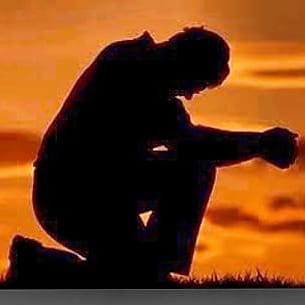
AND NO ONE ASKS ABOUT GENTING AND IF THESE MATTERS WERE EVER ADDRESSED:
Genting was the Gambling Investor supporting the Mashpee Wampanoag lifestyle.
Genting Connected to Islamic Extremists? [THIS ARTICLE APPEARED FOR A SINGLE DAY, THE SITE WAS HACKED & WHEN IT WAS RESTORED, THIS ARTICLE HAD BEEN REMOVED. NOT TO WORRY, HACKERS! COPIES HAVE BEEN PRESERVED ON OTHER COMPUTERS.]
The money rush is on. A shady, but well-heeled Asian casino gambling giant swoops into town, buys an outdated office facility and valuable underlying real estate from the Miami Herald and launches a multi-million dollar campaign to approve non-Indian casino gambling in Florida and put a license on the former Miami Herald tract.
Kuala Lumpur-based Genting has multinational operations in tourism, resorts, gambling, plantations, power generation, and oil and gas. Genting’s market capitalization value, or net worth, reached $46 billion at the end of last year — making it one of Malaysia’s largest companies.
The Miami Herald suspends their normally skeptical eye, conducts no due-diligence on their new Chinese friends from Malaysia and their newspaper becomes a public relations machine for a client they don’t even really know.
Every glad-handing semi-corrupt politician in Miami-Dade and the City of Miami with their hand out will be jumping on the Genting gravy train. Genting is a target for every con-man lobbyist/political consultant/PR man which Miami-Dade County abounds with.
Recently a group of “Community Leaders” were flown to South East Asia including visits to Genting casinos in Malaysia and Singapore. Genting refuses to disclose the names of “Community Leaders” – including elected officials – who were flown to South East Asia in a private luxury jet and wined and dined at 5-Star resorts reserved for high-rollers in the Asian gaming world.
World Resorts Genting, also known as Genting Highlands, opened in 1965 and is the company’s flagship resort in Malaysia. The resort features Malaysia’s only land-based casino, six hotels, three theme parks, a convention center, and numerous restaurants and nightclubs, among other attractions.
Resorts World Sentosa, which opened last year in Singapore, features one of the world’s most expensive casinos, six hotels, a Universal Studios theme park and a Marine Life Park, among other features. The Florida Delegation visited both, reportedly racking up more than $790,000 worth of hotel, restaurant, spa and entertainment costs in both 5-Star resorts.
Genting has retained a team of slick lobbyists including Jonathan Kilman, with the law firm of Foley & Lardner. Kilman’s partner, Chris Kise, is under investigation for erasing email records generated during Governor Rick Scott’s Inauguration. The missing emails are thought to contain correspondence exposing the business dealings of Kise and Scott’s political adviser Enu Mainigi. Scott has ordered the FDLE review. Kise insists the emails were erased accidently. Foley and Lardner’s influence in the Governor’s office is not likely to be strong in 2012.
Before it’s over, expect that Genting, their lobbyists, and other retainers, will lavish the Republican Party of Florida and other selected party redistricting vehicles with millions of dollars. They’ll even buy Governor Rick Scott a golden toilet seat for the Governors mansion is he wants!
Genting, the Asian casino giant, does not hold a casino gaming license in any U.S. jurisdiction that has serious regulation. New York State requires relatively little scrutiny in the contract Genting has with the State of New York to operate slot machines at Aqueduct Racetrack.
Genting made millions of dollars as the money-men behind two controversial Indian Casino gaming developments in the Eastern United States. In both cases, Genting operations were directed by G. Michael Brown, a former New Jersey Attorney General who was later charged with embezzlement and cocaine use in the Seneca Tribal Court.
Brown was charged with putting various mistresses on the casino payroll and using casino funds to pay for luxury condominiums, imported sports cars and expensive jewelry for them. Brown famously drove a 4-door sedan owned by the Seneca Tribe through the picture window of a Niagara Falls resident while driving drunk.
Genting was the financier of the Seneca Niagara Casino Hotel in Niagara Falls, New York. Genting charged the tribe an exorbitant 28 percent interest rate, potentially in violation of the Indian Gaming Regulations under the Bureau of Indian Affairs. Genting also stayed in the deal for almost 15 years when they were legally limited to five. Seneca Tribal Council members have testified that armed Chinese thugs showed up to collect Genting’s money when tribal lawyers pointed out that Genting was violating the law.
All of this became known to the U.S. Senate Select Committee on Indian Affairs, which held hearings and launched an investigation into corruption in the Indian gaming industry in the United States. But what the Senate Committee found out about Genting was even more disturbing: an apparent pattern of multi-million dollar payments to Islamic extremist organizations in Malaysia who most definitely are not friends of the United States of America.
U.S. Senate Special Committee records regarding Genting and their financing of multiple Islamic-based organizations in Malaysia are classified. Some U.S. Senator needs to launch an investigation to determine whether Genting has relationships that would make their holding a casino license in Miami (a money machine) inappropriate. U.S. Senate staff investigators should get a firm understanding of Genting’s questionable relationships in Malaysia and China.
Genting executives told Senate investigators at the time that the millions of dollars funneled to various Islamic extremist organizations known to finance jihad were made under direst and viewed as a cost of doing business for a Chinese businessman in heavily Islam-run Malaysia. Investigators had reason to be skeptical when photos of K.T. Lim and North Korean dictator Kim Jong-il surfaced. The Senate investigators also obtained photos of Lim socializing with at least two Islamic figures wanted by the United States for terrorist activities.
Senate investigators were also interested in K.T. Lim’s relationship with Stanley Ho, the Asian casino magnate who has been identified as a member of the Chinese Triad, the Chinese crime organization, by the U.S. Justice Department and by the Royal Canadian Mounted Police. Ho has been denied a casino license in every jurisdiction except in Macau and North Korea. Genting has refused to address their business dealings with Ho and his company Shun Tak Holdings Ltd.
While the Miami Herald is telling us that Genting boss K.T. Lim is a brilliant businessman, he could be one of the largest funders of Islamic terrorist activity in Asia. Instead of giving press conferences to the Miami Herald, perhaps K.T. should be interrogated under subpoena by U.S. Senate lawyers.
The Miami-Dade politicians who suck up Genting’s food, drink and accommodations and support Genting’s development will jump off of them like rats when they learn where a substantial portion of Genting’s profits in Florida may be going. Just because Genting has a lot of money doesn’t mean that they are suitable to operate casinos in the United States based on their associations and business practices.
Neither Governor Rick Scott, nor Senate President Mike Haridopolos will agree to casino gaming without a local county referendum. Perhaps Miami’s Cuban voters should decide whether they want to approve a casino for a foreign company who could be financing Al-Qaeda and the Taliban.
Nothing short of full disclosure of all the finances and holdings of Genting should be required under Florida casino regulation. If they deny ties to radical Islam only full disclosure will verify this claim, a protection the public requires.
New Jersey Casino Control law is considered the toughest in the country and is the model for casino regulation in the rest of the country. Nevada’s regulations are similar, but the process in that small state is “more political.” Florida’s casino regulation must not and cannot be lax. We need to know far, far more about Genting and their friends before they get a casino license in Florida.
Genting Connected to Islamic Extremists? [THIS ARTICLE APPEARED FOR A SINGLE DAY, THE SITE WAS HACKED & WHEN IT WAS RESTORED, THIS ARTICLE HAD BEEN REMOVED. NOT TO WORRY, HACKERS! COPIES HAVE BEEN PRESERVED ON OTHER COMPUTERS.]
The money rush is on. A shady, but well-heeled Asian casino gambling giant swoops into town, buys an outdated office facility and valuable underlying real estate from the Miami Herald and launches a multi-million dollar campaign to approve non-Indian casino gambling in Florida and put a license on the former Miami Herald tract.
Kuala Lumpur-based Genting has multinational operations in tourism, resorts, gambling, plantations, power generation, and oil and gas. Genting’s market capitalization value, or net worth, reached $46 billion at the end of last year — making it one of Malaysia’s largest companies.
The Miami Herald suspends their normally skeptical eye, conducts no due-diligence on their new Chinese friends from Malaysia and their newspaper becomes a public relations machine for a client they don’t even really know.
Every glad-handing semi-corrupt politician in Miami-Dade and the City of Miami with their hand out will be jumping on the Genting gravy train. Genting is a target for every con-man lobbyist/political consultant/PR man which Miami-Dade County abounds with.
Recently a group of “Community Leaders” were flown to South East Asia including visits to Genting casinos in Malaysia and Singapore. Genting refuses to disclose the names of “Community Leaders” – including elected officials – who were flown to South East Asia in a private luxury jet and wined and dined at 5-Star resorts reserved for high-rollers in the Asian gaming world.
World Resorts Genting, also known as Genting Highlands, opened in 1965 and is the company’s flagship resort in Malaysia. The resort features Malaysia’s only land-based casino, six hotels, three theme parks, a convention center, and numerous restaurants and nightclubs, among other attractions.
Resorts World Sentosa, which opened last year in Singapore, features one of the world’s most expensive casinos, six hotels, a Universal Studios theme park and a Marine Life Park, among other features. The Florida Delegation visited both, reportedly racking up more than $790,000 worth of hotel, restaurant, spa and entertainment costs in both 5-Star resorts.
Genting has retained a team of slick lobbyists including Jonathan Kilman, with the law firm of Foley & Lardner. Kilman’s partner, Chris Kise, is under investigation for erasing email records generated during Governor Rick Scott’s Inauguration. The missing emails are thought to contain correspondence exposing the business dealings of Kise and Scott’s political adviser Enu Mainigi. Scott has ordered the FDLE review. Kise insists the emails were erased accidently. Foley and Lardner’s influence in the Governor’s office is not likely to be strong in 2012.
Before it’s over, expect that Genting, their lobbyists, and other retainers, will lavish the Republican Party of Florida and other selected party redistricting vehicles with millions of dollars. They’ll even buy Governor Rick Scott a golden toilet seat for the Governors mansion is he wants!
Genting, the Asian casino giant, does not hold a casino gaming license in any U.S. jurisdiction that has serious regulation. New York State requires relatively little scrutiny in the contract Genting has with the State of New York to operate slot machines at Aqueduct Racetrack.
Genting made millions of dollars as the money-men behind two controversial Indian Casino gaming developments in the Eastern United States. In both cases, Genting operations were directed by G. Michael Brown, a former New Jersey Attorney General who was later charged with embezzlement and cocaine use in the Seneca Tribal Court.
Brown was charged with putting various mistresses on the casino payroll and using casino funds to pay for luxury condominiums, imported sports cars and expensive jewelry for them. Brown famously drove a 4-door sedan owned by the Seneca Tribe through the picture window of a Niagara Falls resident while driving drunk.
Genting was the financier of the Seneca Niagara Casino Hotel in Niagara Falls, New York. Genting charged the tribe an exorbitant 28 percent interest rate, potentially in violation of the Indian Gaming Regulations under the Bureau of Indian Affairs. Genting also stayed in the deal for almost 15 years when they were legally limited to five. Seneca Tribal Council members have testified that armed Chinese thugs showed up to collect Genting’s money when tribal lawyers pointed out that Genting was violating the law.
All of this became known to the U.S. Senate Select Committee on Indian Affairs, which held hearings and launched an investigation into corruption in the Indian gaming industry in the United States. But what the Senate Committee found out about Genting was even more disturbing: an apparent pattern of multi-million dollar payments to Islamic extremist organizations in Malaysia who most definitely are not friends of the United States of America.
U.S. Senate Special Committee records regarding Genting and their financing of multiple Islamic-based organizations in Malaysia are classified. Some U.S. Senator needs to launch an investigation to determine whether Genting has relationships that would make their holding a casino license in Miami (a money machine) inappropriate. U.S. Senate staff investigators should get a firm understanding of Genting’s questionable relationships in Malaysia and China.
Genting executives told Senate investigators at the time that the millions of dollars funneled to various Islamic extremist organizations known to finance jihad were made under direst and viewed as a cost of doing business for a Chinese businessman in heavily Islam-run Malaysia. Investigators had reason to be skeptical when photos of K.T. Lim and North Korean dictator Kim Jong-il surfaced. The Senate investigators also obtained photos of Lim socializing with at least two Islamic figures wanted by the United States for terrorist activities.
Senate investigators were also interested in K.T. Lim’s relationship with Stanley Ho, the Asian casino magnate who has been identified as a member of the Chinese Triad, the Chinese crime organization, by the U.S. Justice Department and by the Royal Canadian Mounted Police. Ho has been denied a casino license in every jurisdiction except in Macau and North Korea. Genting has refused to address their business dealings with Ho and his company Shun Tak Holdings Ltd.
While the Miami Herald is telling us that Genting boss K.T. Lim is a brilliant businessman, he could be one of the largest funders of Islamic terrorist activity in Asia. Instead of giving press conferences to the Miami Herald, perhaps K.T. should be interrogated under subpoena by U.S. Senate lawyers.
The Miami-Dade politicians who suck up Genting’s food, drink and accommodations and support Genting’s development will jump off of them like rats when they learn where a substantial portion of Genting’s profits in Florida may be going. Just because Genting has a lot of money doesn’t mean that they are suitable to operate casinos in the United States based on their associations and business practices.
Neither Governor Rick Scott, nor Senate President Mike Haridopolos will agree to casino gaming without a local county referendum. Perhaps Miami’s Cuban voters should decide whether they want to approve a casino for a foreign company who could be financing Al-Qaeda and the Taliban.
Nothing short of full disclosure of all the finances and holdings of Genting should be required under Florida casino regulation. If they deny ties to radical Islam only full disclosure will verify this claim, a protection the public requires.
New Jersey Casino Control law is considered the toughest in the country and is the model for casino regulation in the rest of the country. Nevada’s regulations are similar, but the process in that small state is “more political.” Florida’s casino regulation must not and cannot be lax. We need to know far, far more about Genting and their friends before they get a casino license in Florida.
Spending bill includes protections for Mashpee tribe
By Jessica Hill
Posted Jul 24, 2020
Amendment passed by House would bar federal interference over reservation.
WASHINGTON — The House passed a spending bill Friday that includes an amendment to protect the Mashpee Wampanoag Tribe and its reservation land.
The amendment approved as part of the measure, a package of four fiscal 2021 appropriations bills, will protect the tribe from “endless litigation” and will fully recognize its tribal lands without interference from the federal government, according to a statement from U.S. Rep. Joseph P. Kennedy III, D-Mass.
The Senate will consider its own version of the appropriations bill and then work with the House to resolve any differences.
The Interior Department announced in March that it would revoke the Mashpee Wampanoag Tribe’s land-in-trust status, saying the department had no authority in the first place to put the land into trust in 2015. The tribe fought that, and in June a federal judge ordered that the department take a second look at the case and apply certain criteria that could help the tribe qualify for trust status.
“In recent months, the Trump administration has used the COVID-19 pandemic as cover to try to steal the Tribe’s land and define their people out of existence,” Kennedy said in the statement. “This amendment will put an immediate stop to those dangerous efforts.”
Kennedy and U.S. Rep. William Keating, whose congressional district includes the Cape and Islands, introduced the amendment with Reps. Deb Haaland and Lori Trahan. It will prohibit the Interior Department from using money to rescind the original September 2015 Record of Decision that took the tribe’s land into trust, revoke the proclamation recognizing the reservation lands of the Mashpee Wampanoag Tribe or to annul the determination that the lands are eligible for gaming pursuant to the Indian Gaming Regulatory Act.
[Rep. Deb Haaland represents New Mexico's 1st Congressional District.]
[Rep. Deb Haaland represents New Mexico's 1st Congressional District.]
“I want to thank Congressman Kennedy and Congressman Bill Keating along with the Mass. delegation for their unwavering support for the Mashpee Wampanoag Tribe,” Tribal Council Chairman Cedric Cromwell said.
Cromwell said the lawmakers understand the tribe’s historical footprint, as it helped establish the country and helped the Pilgrims through their first harsh winters 400 years ago.
“We’re looking for justice around our tribe to ensure our homelands are stabilized so we can continue to prosper and move forward,” Cromwell said. “This amendment is one step closer to helping us keep the integrity and ensure that we have our homelands in Massachusetts. It’s pretty important.”
Kennedy and Keating had introduced the Mashpee Wampanoag Tribe Reservation Reaffirmation Act, which passed the House in 2019 and could help the tribe if the Interior Department decides to appeal Judge Paul Friedman’s June decision. That legislation, however, has been stalled in the Senate. Last month, Haaland and Kennedy introduced the Tribal Reservation Pandemic Protection Act to protect reservation lands, but that bill was referred to the House Committee on Natural Resources.
“The fact that the Tribe of the First Thanksgiving is fighting for federal, tribal recognition should astound everyone,” Keating said in a statement Friday. “This amendment will limit the Trump Administration’s constant efforts to undermine the Tribe’s rights. We all know that for the President, this is about his casino lobbyist friends, but for us and the Tribe, this is about people, their rights, their health, their education, and their livelihoods.”
“This measure ensures that no more nefarious activity from the administration around taking our tribe’s land away could happen,” Cromwell said. “This has to go to the Senate; the House passed this and that’s important.”




 Posts
Posts


