| REPEAL THE CASINO DEAL! Donate Volunteer The Details | |
REPEAL THE CASINO DEAL! BAD FOR COMMUNITIES, BAD FOR THE COMMONWEALTH | |
| Please
join us on Saturday, April 26 from 10-noon in
Framingham Good news! Our speaker will be Somerville Mayor Joe Curtatone. The Mayor has been an outspoken critic of the failed casino policy speaking forcefully against the proposed projects. Mayor Joe on casinos Also in attendance will be noted authors Robert Goodman and Bob Steele. Click through to see what these two experts have to say. Professor Goodman on casinos Congressman Steele on casinos The statewide meeting of Repeal the Casino Deal will take place at Wesley United Methodist Church, 80 Beacon St., Framingham. www.framinghamumc.com All are welcome. RSVP to repealthecasinodeal@gmail.com. Agenda:
• Status
of SJC Case
• Signature
Gathering
• Campaign
Messaging
• Campaign
Planning
• Guest
Speaker Mayor Curtatone
John Ribeiro and the Repeal the Casino Deal team | |
Repeal The Casino Deal Committee ι (617) 701-7823 | |
Showing posts with label Professor Robert Goodman. Show all posts
Showing posts with label Professor Robert Goodman. Show all posts
Friday, April 25, 2014


Wednesday, October 30, 2013
The Casino Fix
Early in the proposed invasion of Middleboro by Gambling Interests, someone recommended Professor Godman's book that was out of print, purchased from Alibris:

FROM Casino Watch:

Professor Goodman methodically presented the many negative impacts of Predatory Gambling on communities in an easily read style, my copy now dog-earred and highlighted.
I have since heard him speak. laying out how Government Sponsored Gambling effects us all because taxpayers subsidize the Industry.

Wednesday, October 30, 2013

FROM Casino Watch:

Professor Goodman methodically presented the many negative impacts of Predatory Gambling on communities in an easily read style, my copy now dog-earred and highlighted.
I have since heard him speak. laying out how Government Sponsored Gambling effects us all because taxpayers subsidize the Industry.

The Casino Fix
Local gambling expert Robert Goodman urges Massachusetts to stay out of the luck biz.
Wednesday, October 30, 2013
Thomas Northcut | Photodisc
Pile of gambling chips, overhead view
It’s been 18 years since Hampshire College professor Robert Goodman issued his sober warnings about what the proliferation of casino gambling would do to our economy, our society and our democracy in his book, The Luck Business: The Devastating Consequences and Broken Promises of America’s Gambling Explosion.
As more and more state and local governments looked to expand legalized gambling as a “magic-bullet cure for their economic woes,” they were ignoring the very real, and likely irreversible, problems that trend would create, wrote Goodman, who’d served as director of the United States Gambling Study, an independent project funded by the Ford Foundation and the Aspen Institute.
The creation of new casinos and other gambling venues shifts discretionary spending away from local restaurants, theaters, shops and other businesses in the community, he wrote. It leads to increased problem gambling and the attendant social and legal problems, like higher rates of personal bankruptcies and crime. And it distracts both attention and capital from other, more sustainable forms of economic development. A reliance on gambling “helps to shape a society that harvests short-term profits, while accumulating a large residue of costs for the future,” Goodman wrote.
“[D]o we really want our governments so dependent on gambling that they are forced actively to promote an activity that takes disproportionately from those who can afford it least, does great damage to existing economies, and can be highly addictive?” he asked.
Goodman’s warnings—like those of many other casino skeptics—have, apparently gone unheeded, at least by policy makers. Until the late 1980s, casinos were legal in only two states, New Jersey and Nevada. Today, according to a report from the American Gaming Association, 39 states have some form of casinos, with a total of 464 land or riverboat commercial casinos, 466 tribal casinos and 49 racetrack casinos. And several more states are poised to join the fray, including Massachusetts, where the state Gaming Commission is scheduled to award three casino licenses, including one in Western Mass., next year.
The explosion in the number of casinos has provided ample evidence of the kinds of social and economic consequences that Goodman warned about in The Luck Business—consequences that can we can expect to see in Massachusetts as well, he said in an interview with the Advocate.
“It’s not rocket science. It’s not like I’m some kind of seer into the future,” Goodman said. “All we have to do is look at what’s happening in other parts of the country.”
Under Massachusetts’ gaming law, casino developers need the approval of their host communities for their license applications to be considered by the Gaming Commission. Next week, voters in Palmer will weigh in on Mohegan Sun’s casino proposal for their town. In July, Springfield voters approved MGM’s plan to build a casino in the South End; in September, West Springfield residents rejected Hard Rock’s proposal for a casino at the site of the Big E.
The idea of legalizing casinos in Massachusetts has been kicking around since the late 1970s. Various casino proposals continued to emerge over the years until finally, in 2011, the Legislature passed a law that authorizes three casinos and one slots parlor, with a portion of their revenue going to the state and local governments. Backers of the law argued that it was necessary to compete with the two casinos already operating in Connecticut; when Gov. Deval Patrick, who made the issue a centerpiece of his administration, first introduced a casino bill in 2007, he pointed to a report from UMass Dartmouth that found that Massachusetts residents were spending $876 million a year at the Connecticut casinos.
That’s a common scenario, Goodman said; typically, when one state legalizes casinos, its neighbors rush to do the same, arguing that it will lose potential revenue if homegrown gamblers cross state lines with their rolls of quarters. “We are approaching in many places market saturation or have already reached it,” he said.
That includes this region, which is fast becoming crowded with casinos and casino proposals. Like Connecticut, Maine and Rhode Island each now have two casinos. On Election Day, residents of New York—already home to nine racetrack-based casinos, or “racinos”—will vote on a proposal to allow up to seven casinos there. New Hampshire, with a wary eye on the impending opening of three venues in Massachusetts, also is considering legalizing casinos.
The proliferation of casinos has helped the industry, overall. According to the AGA report, casinos earned $37.3 billion in gross gaming revenue in 2012, a 4.8 percent increase from the previous year (a rise some attribute to new venues in places not typically associated with high rollers, like Kansas). That increased revenue, the report said, led to increased payments made by casino companies to their host states and municipalities: $8.6 billion total, up 8.5 percent from 2011. The AGA also reported that the gaming industry employed 332,000 people in 2012, down 0.9 percent from the previous year.
Those industry figures notwithstanding, Goodman isn’t the only expert to point to signs of market saturation. Slot revenues at Connecticut’s casinos have been flat or declining in recent years, even without competition from Massachusetts and New York. Casino revenue in Atlantic City, too, has been on the decline for years, as competing casinos have opened in Pennsylvania, Delaware and Maryland. Even that mecca of gambling, Las Vegas, has had adjust as competition has become stiffer; earlier this year, Time magazine reported that while the city has seen its tourism-based economy rebound after several shaky years, its gambling revenue is still down, as would-be players find places closer to home to gamble.
Those newer, closer casinos, Goodman said, are often very different than the high-glamour spots associated with Vegas. He uses the term “convenience gambling” to describe the kinds of casinos springing up in places like the Midwest—and, he predicted, Western Mass. “They rely on local gamblers,” he said. “No one flies in to Des Moines. And they’re not going to fly in to Springfield.”
When casinos draw from a small geographic area, Goodman continued, that area feels the economic effects more deeply. The money local people spend at casinos is money they’re not spending at local restaurants or movie theaters, or on new clothes, cars and other goods. And the effects of that spending shift, Goodman said, won’t be limited to the host town; a Western Mass. casino will affect the entire Valley, including places like Northampton, whose economy relies on local and regional visitors.
There are also social costs, he said. Goodman is part of the Council on Casinos, an independent group of scholars who recently released a report, called “Why Casinos Matter,” that pulled together casino-related research from the health and social science fields. Among its findings: that living closer to a casino increases a person’s chances of developing a gambling problem; that problem gambling has broad negative effects on families and communities; and that working in a casino is linked to poor health. The report also cited research suggesting that while a new casino might initially boost the local economy, “the stimulus fades over time, as the presence of a casino drives out established local businesses and attracts other gambling-linked businesses, such as payday lenders, pawn shops, auto title lenders, and check cashing stores.”
Pro-casino lawmakers often talk of the necessity of being competitive with casinos in neighboring states—of “fighting fire with fire,” Goodman noted. But, he added, “What happens when you fight fire with fire is you get a bigger fire.”
When state lawmakers passed the casino legislation in 2011, Goodman said, “They looked at it as a static situation.” Massachusetts was losing gambling revenue to Connecticut, they reasoned, so it needed to build its own casinos to recapture that money.
But, Goodman said, they failed to take into account many other factors, including the shrinking pot of revenue that will be available for Massachusetts as other nearby states open their own casinos and the Connecticut casinos offer more appealing deals to keep their customers. “This is not a static situation,” he said. “This is a very dynamic situation.”
In the summer of 2012, at a meeting of the Mass. Gaming Commission, Goodman urged the body to slow down its casino-licensing process to allow time for more study. He warned that the state was relying on incomplete data and projections generated by the gaming industry and was failing to take into account fully the broad economic and social effects casinos could have.
The commissioners’ response, as Goodman put it? “Thanks, but our job isn’t to decide whether it’s a good idea; it’s to make this happen.” Indeed, the Gaming Commission’s charge isn’t to evaluate the pros and cons of casinos or decide whether expanded gaming is a good idea for the state—it’s to, in the words of its mission statement, “create a fair, transparent, and participatory process for implementing the expanded gaming law.”
Meanwhile, Goodman added, lawmakers failed to serve a watchdog role. State legislators who once opposed casinos “caved” to pressure from Statehouse leadership, he said. State Rep. Ellen Story (D-Amherst) a one-time casino opponent who voted for the bill, put it this way at the time: “My sense is that there may well be consequences for people voting against this bill, particularly people in [House Speaker Robert DeLeo’s] inner circle.”
On the local level, officials in communities targeted as possible casino sites have served as cheerleaders for the industry, urging voters to support the plans—and, in some cases, intimating grave repercussions if they didn’t. In Springfield, Mayor Domenic Sarno, just weeks before the MGM vote, balanced his city’s budget using casino revenue and warned that without it, layoffs and cuts in services would be necessary. (“Could you imagine a business owner going to a bank for a loan based on projected revenues—revenues that would only come if a ballot question passes?” Goodman asked.)
Of course, many in Springfield are counting on a casino to provide the elusive key to reviving the city’s struggling economy. MGM promises that its casino will create 2,000 construction jobs and 3,000 permanent jobs, with 90 percent going to residents of the region; will generate at least $25 million in annual payments to the city, in addition to $15 million in one-time, upfront payments; and will support the city’s larger economy, by, for example, contracting with local vendors for goods and services—all very attractive propositions in a post-industrial city with high unemployment and poverty rates, and no doubt a large part of why city voters approved the project last summer.
Mohegan Sun is promising annual payments of $15.2 million to Palmer, plus tens of millions more for infrastructure improvements, and says the casino would employ about 3,150 people.
It’s no accident that a community like Springfield would be targeted by casino developers, Goodman noted: “Where did these casino companies go to locate? They didn’t go to Amherst. They didn’t go to Lincoln.”
Instead, he said, across the country, casino developers set their sights on poor cities with seemingly few other economic prospects, from Springfield to East St. Louis to Detroit: “Community after community—just find the place that’s most depressed, and they welcome you with open arms.”
But Massachusetts, Goodman continued, would be wise to consider what casinos have (or have not) done for other struggling communities. Detroit now has three casinos, but, as the city’s recent decision to file for bankruptcy would suggest, “[they] did not turn the economy of Detroit around.”
In other places, Goodman said, governments have granted or are considering public bailouts of gaming operations that were once looked to as economic engines. This summer, Delaware gave $8 million to the state’s three racetrack casinos, which had seen their revenue drop in recent years after casinos opened in neighboring states. Indiana lawmakers have considered a taxpayer bailout of that state’s Indian casinos, which began cutting jobs as revenue declined.
In 2011, New Jersey approved a $261 million tax reimbursement deal for the then half-completed Revel casino, whose developers did not have the money to finish building it. State officials justified the deal by pointing to the thousands of jobs and billions in tax revenue the massive casino complex would generate. The casino opened in April of 2012 and filed for Chapter 11 bankruptcy 10 months later. It’s since been through a restructuring that eliminated $1.2 billion of its $1.5 billion debt, according to the Associated Press, which earlier this month reported that the casino, like others in Atlantic City, is still seeing declining revenue.
In each case, Goodman said, lawmakers had initially embraced casinos for their promised jobs and revenue—only to later find themselves justifying government breaks and bailouts to shore up struggling casinos and stem the loss of those jobs and that revenue. “That’s Massachusetts five, six years down the road,” he predicted.•
Monday, July 29, 2013
RTCD: Repeal The Casino Deal!
It's always a good reminder of the Ballot Question.......

FRAMINGHAM — Gambling opponents from across Massachusetts mapped out plans in a church basement Saturday to repeal the 2011 state law allowing resort casinos.
The first significant step for the group is to gather more than 70,000 signatures from registered voters by late November of this year. If the signature drive is successful, they probably will ask voters to repeal the casino law in a statewide ballot question in November 2014.
The anticasino group, called Repeal the Casino Deal, includes activists who are fighting specific casinos in their own communities; a national antigovernment-sponsored gambling organization called Stop Predatory Gambling; a former state senator; and a Hampshire College architecture professor who wrote a book on gambling in the United States.
“This was rammed through without a democratic process,’’ Robert Goodman, author of “The Luck Business: The Devastating Consequences and Broken Promises of American’s Gambling Explosion,” said of the state law during Saturday’s strategy session. “Whether you are for it or against it, let’s get it on the ballot.’’
The 2011 casino law authorized up to three resort casinos in Massachusetts — no more than one in each of three regions of the state — and one slots parlor that can be built in any region. Opponents argued passionately that casinos promote addiction and prey on the poor.
But in the end, the Legislature and Governor Deval Patrick decided casinos would create thousands of jobs and bring tens of millions of dollars in new tax revenue to the state.
Eleven developers, including three in Greater Boston, have applied to the state gambling commission for the casino and the slots parlor licenses. The bulk of the $4.4 million in applications fees collected by the state pays for the commission to investigate each developer, to weed out any company with shaky finances, or with people of questionable character in key positions.
Developers must win approval from their host communities in a voter referendum to complete their applications for a casino license. The state gambling commission will award licenses through a competitive process.
The statewide ballot initiative would give opponents a second shot at keeping out casinos.
Opponents may have several factors working in their favor: The economy has improved since the Legislature debated the 2011 casino law, and a number of casinos nationwide are struggling financially. They include Revel AC Inc., in Atlantic City, N.J., which received significant government support in the form of tax rebates that helped it raise construction funds.
John Ribeiro, who lives in Winthrop and is leading the ballot initiative, said the group has until September to have the repeal language approved by the attorney general’s office. Then, activists will have 8 to 10 weeks to collect signatures. About 70,000 names are required, but the group plans to collect 100,000 to ensure they have the necessary number of registered voters.
“There are 70,000 signatures out there easily,’’ said Charlotte Burns, who heads Quaboag Valley Against Casinos in Western Massachusetts. “A lot of people are disgusted with the whole thing and disappointed with [Governor] Patrick. I am hoping this is going to be the beginning of a movement.’’
Former state Senator Susan Tucker, who represented Andover and neighboring communities, said she opposes casinos because the industry “makes its profits off of addiction.’’ But she warned that developers and their supporters will work hard to thwart the ballot drive.
State Senator Stan Rosenberg, a Northampton Democrat who favors the gambling law, agreed that “a lot of money will be spent’’ to defeat the repeal effort and that most polls show the public supports giving people the option of gambling.
Rosenberg said he could not predict the outcome of a referendum, but it is possible that some developers will have already begun construction in November 2014. If the repeal measure passes, he said, “that would be quite an interesting mess.’’
http://www.bostonglobe.com/metro/2013/03/09/gambling-foes-organize-statewide-ballot-initiative-repeal-casino-law/1b27wQPhh4kGtYj50oY8HJ/story.html
Mass. gambling foes aim for a referendum
By Liz Kowalczyk
Jon Chase for the Boston Globe
A group of casino opponents met at Wesley United Methodist Church in Framingham to plan for a statewide ballot question to repeal the state’s casino law.FRAMINGHAM — Gambling opponents from across Massachusetts mapped out plans in a church basement Saturday to repeal the 2011 state law allowing resort casinos.
The first significant step for the group is to gather more than 70,000 signatures from registered voters by late November of this year. If the signature drive is successful, they probably will ask voters to repeal the casino law in a statewide ballot question in November 2014.
The anticasino group, called Repeal the Casino Deal, includes activists who are fighting specific casinos in their own communities; a national antigovernment-sponsored gambling organization called Stop Predatory Gambling; a former state senator; and a Hampshire College architecture professor who wrote a book on gambling in the United States.
“This was rammed through without a democratic process,’’ Robert Goodman, author of “The Luck Business: The Devastating Consequences and Broken Promises of American’s Gambling Explosion,” said of the state law during Saturday’s strategy session. “Whether you are for it or against it, let’s get it on the ballot.’’
Getting the question before voters — and persuading them to back a repeal — will be a steep climb that requires considerable work and money.
The 2011 casino law authorized up to three resort casinos in Massachusetts — no more than one in each of three regions of the state — and one slots parlor that can be built in any region. Opponents argued passionately that casinos promote addiction and prey on the poor.
But in the end, the Legislature and Governor Deval Patrick decided casinos would create thousands of jobs and bring tens of millions of dollars in new tax revenue to the state.
Eleven developers, including three in Greater Boston, have applied to the state gambling commission for the casino and the slots parlor licenses. The bulk of the $4.4 million in applications fees collected by the state pays for the commission to investigate each developer, to weed out any company with shaky finances, or with people of questionable character in key positions.
Developers must win approval from their host communities in a voter referendum to complete their applications for a casino license. The state gambling commission will award licenses through a competitive process.
The statewide ballot initiative would give opponents a second shot at keeping out casinos.
Opponents may have several factors working in their favor: The economy has improved since the Legislature debated the 2011 casino law, and a number of casinos nationwide are struggling financially. They include Revel AC Inc., in Atlantic City, N.J., which received significant government support in the form of tax rebates that helped it raise construction funds.
John Ribeiro, who lives in Winthrop and is leading the ballot initiative, said the group has until September to have the repeal language approved by the attorney general’s office. Then, activists will have 8 to 10 weeks to collect signatures. About 70,000 names are required, but the group plans to collect 100,000 to ensure they have the necessary number of registered voters.
“There are 70,000 signatures out there easily,’’ said Charlotte Burns, who heads Quaboag Valley Against Casinos in Western Massachusetts. “A lot of people are disgusted with the whole thing and disappointed with [Governor] Patrick. I am hoping this is going to be the beginning of a movement.’’
Former state Senator Susan Tucker, who represented Andover and neighboring communities, said she opposes casinos because the industry “makes its profits off of addiction.’’ But she warned that developers and their supporters will work hard to thwart the ballot drive.
State Senator Stan Rosenberg, a Northampton Democrat who favors the gambling law, agreed that “a lot of money will be spent’’ to defeat the repeal effort and that most polls show the public supports giving people the option of gambling.
Rosenberg said he could not predict the outcome of a referendum, but it is possible that some developers will have already begun construction in November 2014. If the repeal measure passes, he said, “that would be quite an interesting mess.’’
http://www.bostonglobe.com/metro/2013/03/09/gambling-foes-organize-statewide-ballot-initiative-repeal-casino-law/1b27wQPhh4kGtYj50oY8HJ/story.html
Friday, January 4, 2013
Massachusetts: The Hidden Costs of Gambling
[Keep your hand on volume control because of audio problems]
Monday, October 22, 2012
Exhausting the Supply of Gambling Addicts
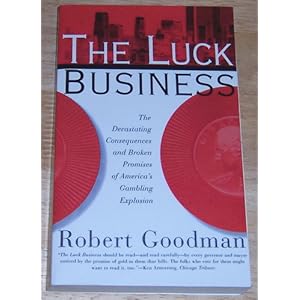
When I was pretty new to the issue of Predatory Gambling, someone recommended that I read Professor Goodman's "The Luck Business."
I remember being struck by the simple logic - Slot Barns quickly exhaust the local supply of potential Gambling Addicts. Pretty simple! And he wrote about much else and forced many of us to consider the issue.
The supply of Gambling Addicts is finite. The novelty quickly fades.
Please keep watching the declining revenues caused by GAMBLING MARKET SATURATION that many deny - including the Bobble Heads in Massachusetts.
Think about it.

Casino revenues fall in Mississippi in September
Businessweek
JACKSON, Miss. (AP) — Casino revenue on the Mississippi Gulf Coast showed some improvement in September, but the state's gamblers lost less along the Mississippi River, dragging down overall receipts. Statewide casino revenue fell 4.3 percent from ...
Gaming revenues decline for third straight month in Ohio
GamingTodaySlotsToday
Reno's Silver Legacy Resort Casino has reached an agreement to settle its $142.8 million debt with creditors. The Reno Gazette-Journal reports the agreement, which will go before U.S. Bankruptcy Court in Reno on Monday for approval, would allow the ...
Connecticut Budget Deficit Rises to $60 Million
Patch.com
Casino revenues are also off by $25 million. At the start of October, the budget deficit was projected at less than half the current deficit. Comptroller Kevin Lembo forecast $26.9 million deficit for the fiscal year, citing a decline in sales tax and ...
Casino revenues fall in Mississippi in September | Hattiesburg ...
JACKSON — Casino revenue on the Mississippi Gulf Coast showed some improvement in September, but the state's gamblers lost less along the Mississippi ...
I remember being struck by the simple logic - Slot Barns quickly exhaust the local supply of potential Gambling Addicts. Pretty simple! And he wrote about much else and forced many of us to consider the issue.
The supply of Gambling Addicts is finite. The novelty quickly fades.
Please keep watching the declining revenues caused by GAMBLING MARKET SATURATION that many deny - including the Bobble Heads in Massachusetts.
Think about it.

Casino revenues fall in Mississippi in September
Businessweek
JACKSON, Miss. (AP) — Casino revenue on the Mississippi Gulf Coast showed some improvement in September, but the state's gamblers lost less along the Mississippi River, dragging down overall receipts. Statewide casino revenue fell 4.3 percent from ...
Gaming revenues decline for third straight month in Ohio
GamingTodaySlotsToday
Reno's Silver Legacy Resort Casino has reached an agreement to settle its $142.8 million debt with creditors. The Reno Gazette-Journal reports the agreement, which will go before U.S. Bankruptcy Court in Reno on Monday for approval, would allow the ...
Connecticut Budget Deficit Rises to $60 Million
Patch.com
Casino revenues are also off by $25 million. At the start of October, the budget deficit was projected at less than half the current deficit. Comptroller Kevin Lembo forecast $26.9 million deficit for the fiscal year, citing a decline in sales tax and ...
Casino revenues fall in Mississippi in September | Hattiesburg ...
JACKSON — Casino revenue on the Mississippi Gulf Coast showed some improvement in September, but the state's gamblers lost less along the Mississippi ...
Thursday, October 11, 2012
'A vote for a casino is a vote for failure'
Anti-casino forum panelist in Palmer: 'A vote for a casino is a vote for failure'
Published: Wednesday, October 10, 2012
 Palmer community members gather in the Palmer High School auditorium on Wednesday evening to participate in an Anti-Casino Forum. Left to right on stage: Michael Kogut, Les Bernal, John Epstein and Robert Goodman.
http://www.masslive.com/news/index.ssf/2012/10/anti-casino_forum_held_in_palm.html
Saturday, August 11, 2012
Foxwoods: Exhausting the Supply of Gambling Addicts
Prosfessor Goodman wrote about exhausting the supply of locally available Gambling Addicts in "The Luck Business."
No one seemed to notice.


No one seemed to notice.
AP Interview: Foxwoods CEO sees business shift
Published: Thursday, August 09, 2012
Thursday, July 19, 2012
Academic offers grim outlook for gaming in Massachusetts
Experts have informed the Gamb[l]ing Commission about MARKET SATURATION.
They don't want to hear!


They don't want to hear!


Academic offers grim outlook for gaming in Massachusetts
By Andy Metzger / State House News Service
Wednesday, July 18, 2012
Wednesday, July 18, 2012
The most enticing casino games might involve cards, dice and flashing lights, but in academic Robert Goodman’s telling, the spread of gaming across the country has been more like a collapsing string of dominoes.
“The more that this happens in Massachusetts, the more it’s going to happen in Rhode Island and Maine and all the surrounding states,” Goodman told reporters outside the Massachusetts Gaming Commission meeting on Tuesday, saying “New Hampshire is very likely to argue for several casinos.”
Testifying before the commission, Goodman laid out a grim picture of casinos’ impact and suggested that the commission put a halt to casinos licenses until an economic study is complete.
“I think a lot of comments that he poses maybe have been better suited for when we were having the debate about bringing casinos or not. I think that debate is already over,” commissioner Enrique Zuniga told the News Service after the meeting.
[Commissioner Zuniga, Maybe you weren't paying attention, but Professor Goodman has offered those comments repeatedly, as have others.]
In late spring, Rep. Joseph Wagner (D-Chicopee) publicly admonished commission chairman Stephen Crosby for suggesting that the commission might issue less than the maximum three casinos permitted by law, depending on the results of an economic analysis.
"The clear legislative intent was for the Gaming Commission to license three resort casinos if private sector market conditions supported that capacity," Wagner’s press release said. He went on to say,
"The private sector will determine market capacity. Therefore, the job of the Gaming Commission is to secure the best agreement for the citizens and taxpayers for each region."
[Braniac Rep. Wagner hasn't noticed that Foxwoods and Moehgan Sun have declining revenues and are mired in debt or that other states have been forced to bailout the Gambling Industry. One can only speculate that Rep Wagner may have an employment promise since he was so convinced of his brilliance.]
Zuniga was more amenable toward Goodman’s ideas for a study, though Goodman himself was incredulous that the state passed the gaming law last November without a thorough academic study.
[It took Governor Slot Barns Patrick more than two years to meet with casino opponents. The Governor agreed to support an INDEPENDENT COST ANALYSIS and developed amnesia after his re-election.]
“In terms of looking at the actual economic impacts of problem gamblers, there was very little. In most cases nothing,” said Goodman, an emeritus professor at Hampshire College who said studies that preceded passage of the law were funded by the gaming industry and did not delve deeper than forecasts on the number of jobs created.
Even those jobs created by casinos could become a liability, leaving lawmakers open to pressure if the casinos hit rough financial times and need a bailout.
“You’ll have thousands of people working at the casinos and should they run into trouble you’ll have people at the State House saying, ‘Keep our jobs,’ ” said Goodman, who claimed Indiana has been paying $60 million per year to subsidize the racing industry and New Jersey gave $261 million in tax breaks to an Atlantic City casino developer after Morgan Stanley walked away from a $1.2 billion investment.
An unabashed critic of the gaming industry, Goodman wrote “The Luck Business” and has debated gaming with casino proponent Congressman Barney Frank in the pages of Commonwealth Magazine.
The Luck Business: The Devastating Consequences and Broken Promises of America's Gambling Explosion
by Robert Goodman, Ph.D.
He said “any” casino would be “too much” in what he describes as an already saturated market for gambling.
“You’re the commission. You’re the gambling or Gaming Commission, I’d call a halt of this whole thing until you had a serious economic impact analysis,” Goodman said.
Goodman said an economic study into a casino’s impact should look at the effect on nearby businesses and the potential secondary effects of problem gambling, including debts, bankruptcies, fraud and other crime.
In its proposed budget the Gaming Commission is planning for nearly $1.2 million to be spent on research projects, including $100,000 on economic impact and $937,000 for a baseline study of compulsive gambling.
Other effects of gaming in Massachusetts could include a shift in the political culture, as the gaming lobby maintains power and state officials begin to rely on gaming revenues.
“The state will shift from being a regulator of gambling. But they will primarily become a promoter of gambling,” Goodman said.
http://bostonherald.com/news/politics/view.bg?articleid=1061146687
“The more that this happens in Massachusetts, the more it’s going to happen in Rhode Island and Maine and all the surrounding states,” Goodman told reporters outside the Massachusetts Gaming Commission meeting on Tuesday, saying “New Hampshire is very likely to argue for several casinos.”
Testifying before the commission, Goodman laid out a grim picture of casinos’ impact and suggested that the commission put a halt to casinos licenses until an economic study is complete.
“I think a lot of comments that he poses maybe have been better suited for when we were having the debate about bringing casinos or not. I think that debate is already over,” commissioner Enrique Zuniga told the News Service after the meeting.
[Commissioner Zuniga, Maybe you weren't paying attention, but Professor Goodman has offered those comments repeatedly, as have others.]
In late spring, Rep. Joseph Wagner (D-Chicopee) publicly admonished commission chairman Stephen Crosby for suggesting that the commission might issue less than the maximum three casinos permitted by law, depending on the results of an economic analysis.
"The clear legislative intent was for the Gaming Commission to license three resort casinos if private sector market conditions supported that capacity," Wagner’s press release said. He went on to say,
"The private sector will determine market capacity. Therefore, the job of the Gaming Commission is to secure the best agreement for the citizens and taxpayers for each region."
[Braniac Rep. Wagner hasn't noticed that Foxwoods and Moehgan Sun have declining revenues and are mired in debt or that other states have been forced to bailout the Gambling Industry. One can only speculate that Rep Wagner may have an employment promise since he was so convinced of his brilliance.]
Zuniga was more amenable toward Goodman’s ideas for a study, though Goodman himself was incredulous that the state passed the gaming law last November without a thorough academic study.
[It took Governor Slot Barns Patrick more than two years to meet with casino opponents. The Governor agreed to support an INDEPENDENT COST ANALYSIS and developed amnesia after his re-election.]
“In terms of looking at the actual economic impacts of problem gamblers, there was very little. In most cases nothing,” said Goodman, an emeritus professor at Hampshire College who said studies that preceded passage of the law were funded by the gaming industry and did not delve deeper than forecasts on the number of jobs created.
Even those jobs created by casinos could become a liability, leaving lawmakers open to pressure if the casinos hit rough financial times and need a bailout.
“You’ll have thousands of people working at the casinos and should they run into trouble you’ll have people at the State House saying, ‘Keep our jobs,’ ” said Goodman, who claimed Indiana has been paying $60 million per year to subsidize the racing industry and New Jersey gave $261 million in tax breaks to an Atlantic City casino developer after Morgan Stanley walked away from a $1.2 billion investment.
An unabashed critic of the gaming industry, Goodman wrote “The Luck Business” and has debated gaming with casino proponent Congressman Barney Frank in the pages of Commonwealth Magazine.
The Luck Business: The Devastating Consequences and Broken Promises of America's Gambling Explosion
by Robert Goodman, Ph.D.
He said “any” casino would be “too much” in what he describes as an already saturated market for gambling.
“You’re the commission. You’re the gambling or Gaming Commission, I’d call a halt of this whole thing until you had a serious economic impact analysis,” Goodman said.
Goodman said an economic study into a casino’s impact should look at the effect on nearby businesses and the potential secondary effects of problem gambling, including debts, bankruptcies, fraud and other crime.
In its proposed budget the Gaming Commission is planning for nearly $1.2 million to be spent on research projects, including $100,000 on economic impact and $937,000 for a baseline study of compulsive gambling.
Other effects of gaming in Massachusetts could include a shift in the political culture, as the gaming lobby maintains power and state officials begin to rely on gaming revenues.
“The state will shift from being a regulator of gambling. But they will primarily become a promoter of gambling,” Goodman said.
http://bostonherald.com/news/politics/view.bg?articleid=1061146687
Wednesday, October 5, 2011
Gambling Industry's Revolving Doors
Senator Baddour has done nothing to assuage the well deserved public cynicism that surrounds Beacon Hill.
From: Can't ignore gambling industry's revolving door
Hampshire Gazette
http://www.gazettenet.com/category/opinion
Gambling Industry's Revolving Doors
Massachusetts state senators denounced a proposed casino bill amendment that would have required lawmakers to wait five years after leaving office before taking a gambling industry job. “We are contributing to cynicism in government,” Senate President Stanley Rosenberg complained. But there’s more than enough evidence that it’s not just cynicism but reality that required that ban. Throughout the country, former politicians who supported state-sponsored casinos have personally profited from their actions.
Here are just a few examples: In Illinois, former governor Jim Thompson, former Senate President Philip Rock, former House Majority Leader James McPike, who had all been instrumental in pushing a casino bill through the legislature, became lobbyists for casinos after leaving office. Shortly after Stephen Perskie, a former state senator who drafted the law that legalized the Atlantic City casinos, left his post as Chairman of New Jersey’s Casino Control Commission, he become a vice-president of Players International casinos.
If our Senate is so intent on ignoring the danger of this revolving door with the gambling industry, I am willing to give any of its members 2 to 1 odds on a $100 bet that within less than two years after passage of a casino bill, former Massachusetts lawmakers will be working for the industry.
Robert Goodman is the author of The Luck Business and was Director of the United States Gambling Study at the University of Massachusetts, Amherst (funded by the Ford Foundation and the Aspen Institute), and the former Director of the United States Gambling Research Institute (funded in part by the MacArthur Foundation). He is Professor Emeritus of Environmental Design at Hampshire College.
Robert Goodman
Professor of Environmental Design
Hampshire College
Amherst, MA 01002
If you haven't read "The Luck Business," it is highly recommended.
The Professor highlights all of the reasons "Casinos" [Slot Barns] make no economic sense.
Although it's out of print, it's available on Alibris.
Editorial reviews of The Luck Business: The Devastating Consequences and Broken Promises of America's Gambling Explosion
Publishers Weekly, 1995-08-21
Americans legally gambled almost $400 billion in 1993, according to Goodman, who headed the United States Gambling Study of 1992-94. He asserts that the gambling industry produces no product and siphons off money not only from retail businesses but also from manufacturing. He claims that gambling interests have enlisted the support of governments by holding out false hopes to legislators and other officials eager to find new sources of income without raising taxes. These hopes convince voters that gambling is a major contributor to funds for the ``four E's''?education, environment, the elderly and economic development?which, Goodman asserts, it is not. As governments seek to increase revenues, they have turned to ``convenience gambling,'' installing slot machines in retail businesses, bars and restaurants. Believing it would be impractical to outlaw gambling altogether, Goodman (After the Planners) offers suggestions for a ``rational gambling policy.'' But in answer to the question, does gambling as a strategy for economic development really work, he warns: don't bet on it.
From: Can't ignore gambling industry's revolving door
Hampshire Gazette
http://www.gazettenet.com/category/opinion
Gambling Industry's Revolving Doors
Massachusetts state senators denounced a proposed casino bill amendment that would have required lawmakers to wait five years after leaving office before taking a gambling industry job. “We are contributing to cynicism in government,” Senate President Stanley Rosenberg complained. But there’s more than enough evidence that it’s not just cynicism but reality that required that ban. Throughout the country, former politicians who supported state-sponsored casinos have personally profited from their actions.
Here are just a few examples: In Illinois, former governor Jim Thompson, former Senate President Philip Rock, former House Majority Leader James McPike, who had all been instrumental in pushing a casino bill through the legislature, became lobbyists for casinos after leaving office. Shortly after Stephen Perskie, a former state senator who drafted the law that legalized the Atlantic City casinos, left his post as Chairman of New Jersey’s Casino Control Commission, he become a vice-president of Players International casinos.
If our Senate is so intent on ignoring the danger of this revolving door with the gambling industry, I am willing to give any of its members 2 to 1 odds on a $100 bet that within less than two years after passage of a casino bill, former Massachusetts lawmakers will be working for the industry.
Robert Goodman is the author of The Luck Business and was Director of the United States Gambling Study at the University of Massachusetts, Amherst (funded by the Ford Foundation and the Aspen Institute), and the former Director of the United States Gambling Research Institute (funded in part by the MacArthur Foundation). He is Professor Emeritus of Environmental Design at Hampshire College.
Robert Goodman
Professor of Environmental Design
Hampshire College
Amherst, MA 01002
If you haven't read "The Luck Business," it is highly recommended.
The Professor highlights all of the reasons "Casinos" [Slot Barns] make no economic sense.
Although it's out of print, it's available on Alibris.
Editorial reviews of The Luck Business: The Devastating Consequences and Broken Promises of America's Gambling Explosion
Publishers Weekly, 1995-08-21
Americans legally gambled almost $400 billion in 1993, according to Goodman, who headed the United States Gambling Study of 1992-94. He asserts that the gambling industry produces no product and siphons off money not only from retail businesses but also from manufacturing. He claims that gambling interests have enlisted the support of governments by holding out false hopes to legislators and other officials eager to find new sources of income without raising taxes. These hopes convince voters that gambling is a major contributor to funds for the ``four E's''?education, environment, the elderly and economic development?which, Goodman asserts, it is not. As governments seek to increase revenues, they have turned to ``convenience gambling,'' installing slot machines in retail businesses, bars and restaurants. Believing it would be impractical to outlaw gambling altogether, Goodman (After the Planners) offers suggestions for a ``rational gambling policy.'' But in answer to the question, does gambling as a strategy for economic development really work, he warns: don't bet on it.
Monday, February 1, 2010
The Ladder Approach
If you watch the expansion of gambling around the country, the mushroom pattern in the face of dwindling revenues, declining discretionary income and market saturation is clear.
Steve Norton, ever persistent suitor of all things Massachusetts from which no city or town is immune, who pretends to save us from ourselves while enriching himself from afar, posted this recently in response to my comments:
You mention Centaur, which is not in Bankruptcy, but has been
unable to pay interest due.
But you fail to mention the extraordinary
But you fail to mention the extraordinary
up front fee to Indiana of $250 million for 2,000 slots and a tax
that averages nearly 50%.
My reply:
.
The public is entitled to an explanation of how a company that has filed bankruptcy in one state and seeks to renegotiate its agreement with another is a viable financial entity in the Commonwealth of Massachusetts.
.
Beacon Hill would be remiss if it failed to protect Bay State taxpayers from the consequences of a "partner" lacking financial solvency.
.
Mr. Norton, your company agreed to the terms in Indiana and promoted slots at tracks as a solution, yet you now claim ---
.
"... you fail to mention the extraordinary up front fee to Indiana of $250 million for 2,000 slots and a tax that averages nearly 50%"
If you made a poor business decision, should a state bail you out?
This seems to portend your future dealings.
Bankruptcy is becoming another common tactic employed by the Gambling Industry to achieve its goals, expand its operations, renegotiate terms.
The following was found as part of the revelation of the tactics:
Another political tactic used to gain public approval is to understate
the extent of the gambling that is likely to occur after legalization.
Promoters do this by first introducing on limited and tightly regulated
plans for such ventures as riverboats and ships, and only later moving
on to larger, land-based operations. Nancy Todd, president of a consulting
firm specializing in political campaigns to expand gambling, suggests
this strategy, which she refers to as the "ladder" approach. "Gaming
can be limited to one or more metropolitan areas, rivers, lakes, bays or
oceans," she wrote in a 1994 article for a political campaign trade journal.
Todd, who helped run the campaign to legalize riverboats on Mississippi's
Gulf Coast, continued: "A good rule of thumb is to look at it as a ladder.
Areas that have no gambling at all warm up to the 'cruises to nowhere' as
the first rung of the ladder. The next step would be dockside. At the top
would be landbased casinos." **
Once casino companies gain a foothold in a community and people become
dependent on gambling for revenues and jobs, the casino owners can more
readily lobby for changes in gambling restrictions. They can, for example,
argue for more floor space devoted to gambling, the elimination of limits
on betting stakes, the legalization of new games, or the reduction of
taxes on their profits. As explained in Chapters 2 and 5, this has already
happened in a number of instances, such as with the casinos in Atlantic
City and with the riverboats in Iowa. Ventures that begin as low-stakes
gambling were soon changed to high-stakes gambling, casinos that were
restricted to certain games were allowed to add new games; in some cases
gambling ventures were even given government subsidies to keep them
in business.
** Nancy Todd, "Legalizing Gambling and Doing It Right," Campaigns and
Elections (April 1994).
Taken from "The Luck Business," by Professor Robert Goodman, page 70.
The book was written in 1995 and the tactic has been employed successfully ever since.
So, you see, it is not simply just a FEW slot parlors, but an ever increasing infestation that Nancy Todd described. THEY know where they're going. YOU don't.
Subscribe to:
Posts (Atom)

 Posts
Posts


