Meetings & Information


*****************************
****************************************************
MUST READ:
GET THE FACTS!


Showing posts with label Oklahoma. Show all posts

Thursday, October 6, 2016

Drug Money Laundering at Downstream Casino in Quapaw, Oklahoma


15 indicted in Springfield meth distribution ring


Harrison Keegan&nbsp, HKEEGAN@NEWS-LEADER.COM

October 5, 2016


Fifteen people have now been indicted in a conspiracy to distribute large quantities of meth in the Springfield area.
Four men were charged in March after authorities say they were busted with 12 pounds of meth and 6 pounds of heroin in a Springfield garage, but Tuesday's 37-count superseding indictment implicates 11 more people in the large-scale meth distribution ring.
According to a news release from the U.S. Attorney for the Western District of Missouri, the 15 people indicted in the conspiracy are Patrick Roger Brigaudin, 54, Timothy Garth Hall, 55, Jennifer Louise Minor, 41, Amber Marie Vantuyl, 35, Gary Lee Driggers, 64, William Frank Eft, 66, Leah Renee Binney, 55, and William David Watts, 58, all of Springfield, Gayla Rochelle Phillips, 41, and Richard Todd Sherwood, 58, both of Willard, Mo., Adrian Ortiz-Corrales, 41, and Eduardo Diaz, 52, both of Las Vegas, and Carlos Alberto Luna, 42, Federico Herrera-Preciado, 51, and Maria Zetina-Ortega, 28, who have no known address.
A criminal complaint in the case says that on Feb. 29, authorities set up surveillance outside Brigaudin's house at 1720 E. McDaniel St.
A Dodge pickup truck pulled into the open garage at Brigaudin's house at about noon, and authorities quickly raided the property with a search warrant they had secured a few days earlier, according to the complaint.
Agents from the Drug Enforcement Administration, Springfield Police Department, Homeland Security and the IRS entered the garage and found 12 pounds of meth and 6 and a half pounds of heroin in a secret compartment under the bed of the truck, according to the complaint.
Three other men who were allegedly at the scene that day with Brigaudin — Hall, Ortiz-Corrales and Diaz.
The February seizure came about a year after authorities say they stopped a man in Texas with 15 pounds of meth — nine of which were bound for Brigaudin, the complaint says.
The 15 defendants are accused of participating in a conspiracy to distribute meth in Greene County from October 2013 to February 2016.
Brigaudin, Ortiz-Corrales, Phillips, Luna, Herrera-Preciado and Zetina-Ortega are also accused of participating in a money-laundering conspiracy during that time, according to the release.
Court documents say that between January 2009 and April 2015, Brigaudin put more than $10 million into slot machines at Downstream Casino in Quapaw, Oklahoma and withdrew about $8.4 million from the slot machines.
The release says Ortiz-Corrales and Diaz are also charged together with one count of possessing heroin with the intent to distribute.
In addition to the drug-trafficking and money-laundering conspiracies, Brigaudin is charged with four counts of distributing methamphetamine and one count of attempting to possess methamphetamine with the intent to distribute. Brigaudin, Ortiz-Corrales and Diaz are charged together in one count of possessing methamphetamine with the intent to distribute, according to the release.
The release says Brigaudin and Phillips are charged together in one count of money laundering. Ortiz-Corrales and Luna are charged together in two counts of money laundering. Ortiz-Corrales and Herrera-Preciado are charged together in two counts of money laundering. Ortiz-Corrales, Herrera-Preciado and Zetina-Ortega are charged together in two counts of money laundering.
Vantuyl, Hall, Binney, Eft and Sherwood are each also charged with one count of possessing methamphetamine with the intent to distribute, according to the release.
The release says Minor is also charged with two counts of distributing methamphetamine, and Phillips is charged with one count of distributing methamphetamine.
Driggers is also charged with four counts of using a telephone to facilitate the drug-trafficking conspiracy. Binney is charged with two counts of using a telephone to facilitate the drug-trafficking conspiracy. Minor, Eft, Hall, Phillips, Watts and Sherwood are each charged with one count of using a telephone to facilitate the drug-trafficking conspiracy, according to the release.
Watts is also charged with maintaining a premises that he made available for unlawfully storing, distributing, and using meth, the release says.


Tuesday, March 8, 2016

Feds say 'large-scale' meth dealer gambled millions at Downstream Casino


Feds say 'large-scale' meth dealer gambled millions at Downstream Casino


Prosecutors say the man at the center of a large-scale Springfield meth distribution ring was a high roller at a nearby casino.
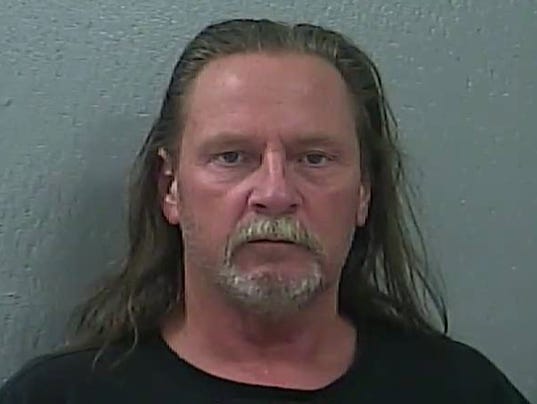
Patrick Brigaudin, 54, is one of four men charged last week with conspiracy to distribute large amounts of drugs after authorities allegedly found 12 pounds of meth and 6 and a half pounds of heroin in his garage.
In court filings asking that Brigaudin be held without bond, federal prosecutors say Brigaudin is a flight risk because between January 2009 and April 2015 he put more than $10 million into slot machines at Downstream Casino in Quapaw, Oklahoma.
Court documents say he withdrew about $8.4 million from the slot machines.
Court documents say Brigaudin's arrest Feb. 29 was the culmination of a two and a half year investigation that resulted in authorities seizing more than 50 pounds of meth. Documents say the investigation found that Brigaudin was a "large-scale methamphetamine distributor" in southwest Missouri.
A criminal complaint used to charge Brigaudin and three other men with conspiracy to distribute meth and heroin says that on Feb. 29, authorities set up surveillance outside Brigaudin's house at 1720 E. McDaniel St.
A Dodge pickup truck pulled into the open garage at Brigaudin's house at about noon, and authorities quickly raided the property with a search warrant they had secured a few days earlier, according to the complaint.
Agents from the Drug Enforcement Administration, Springfield Police Department, Homeland Security and the IRS entered the garage and found 12 pounds of meth and 6 and a half pounds of heroin in a secret compartment under the bed of the truck, according to the complaint.
Three other men who were allegedly at the scene that day with Brigaudin — Timothy Hall, 54, Adrian Ortiz-Corrales, 41, and Eduardo Diaz, 51 — have also been charged with conspiracy to distribut
Court documents say Ortiz-Corrales traveled to Springfield at least three times since the start of the year for "drug-related business" with Brigaudin.
Ortiz-Corrales and Brigaudin allegedly went to Springfield banks and deposited large sums of cash in quantities just beneath what would trigger mandatory reporting requirements from the banks.
Diaz, court documents say, crossed the US-Mexico border at border control checkpoints at least nine times in the previous 10 months.
Narcotics investigators have told the News-Leader several times over the last few years that the bulk of the meth in Springfield is transported here from Mexico and southwestern parts of the United States.
Court documents made public so far don't describe how the defendants in this case acquired the meth and heroin that was seized last week.
The complaint does, however, link the defendants to a 15-pound meth seizure in north Texas in March 2015. The meth in that case was reportedly from Mexico.
If convicted, all four defendants in this case face a minimum of 10 years in prison and a maximum sentence of life in prison, according to court documents.


Monday, August 31, 2015

Oklahoma has one of the highest gambling-related embezzlement rates in the nation.


As recent cases show, gambling addiction drives white-collar crime

Oklahoma has one of the highest gambling-related embezzlement rates in the nation.


Posted: Sunday, August 30, 2015 
Once under treatment, a compulsive gambler will be told to stay away from casinos, much like a recovering alcoholic will be encouraged to avoid bars and liquor stores. But that’s the easy part.
“Money is the drug,” said Wiley Harwell, the executive director of the Oklahoma Association for Problem and Compulsive Gambling. “If they have money, they’ll gamble.”

A typical treatment plan will include three to six months with absolutely no direct contact with cash or credit of any kind, Harwell said. Not even change for a parking meter.
“That means taking a sack lunch to work,” he said. “Somebody else pays the car bill. Somebody else deposits your paycheck. You don’t have a checkbook or a credit card or anything. The temptation is just too much.”
Now imagine a compulsive gambler with access to large sums of cash, not necessarily his own, with little or no oversight. Former state Sen. Rick Brinkley, for example, who was president of the Better Business Bureau of Eastern Oklahoma and pleaded guilty this month to embezzling $1.8 million. Or Lorna Jean Vanlandingham, a retired police officer who was the trusted treasurer of the Tulsa Fraternal Order of Police for more than 15 years and is now serving a prison sentence for taking more than $400,000.
It’s like an alcoholic going to work at a brewery, Harwell said. The urge to skim off the top becomes irresistible.
“They lie to themselves,” he explains. “They tell themselves it’s not really stealing because they are going to pay it all back and nobody will ever miss it. But, of course, they aren’t going to pay it back. They’re going to lose it.”
Oklahoma has one of the highest gambling-related embezzlement rates in the country, with only California and New York seeing a higher number of reported cases in 2013, the most recent year with available statistics, according to the national Marquet Report on Embezzlement, published by a security consulting firm.
Most cases, of course, never make the front page, or even the back page, since the alleged perpetrators aren’t public figures. In fact, prosecutors suspect that the vast majority of cases go entirely unreported, with employers simply firing the culprits instead of bringing charges. So nobody really knows the full extent of the problem.
Harwell estimates that 3 percent of the population, or more than 116,000 Oklahomans, have a gambling addiction.
“With many more on their way to a problem,” he said.
Most of them will never break the law. Even so, they will still suffer consequences, from maxed-out credit cards to wrecked relationships.
Gambling addiction changes brain chemistry much the way drug addiction does, Harwell said. Or perhaps a better analogy would be porn addiction — the repeated stimulus produces a craving that requires ever more stimulation to satisfy.
It’s easy to blame casinos, which have expanded exponentially across Oklahoma since Vegas-style gaming was legalized in 2004. But like porn addicts, compulsive gamblers don’t even need to leave home to find temptation, delivered 24 hours a day through the Internet.
“I think that’s one reason it has become such a problem,” said U.S. Attorney Danny Williams, the top federal prosecutor in Tulsa. “It’s so easy to do and so easy to hide, at least at first.”
Embezzlement accounts for only a small fraction of Williams’ caseload. But when he does see it, the odds are that he will find a link to a gambling addiction, Williams said.
“They generally aren’t using the money to improve a lifestyle. They aren’t buying new cars or new homes or a boat or something. At least, that isn’t where most of the money goes. They’re gambling.”
In such cases, courts will often require counseling as a condition for release from custody, as well as a promise to stay away from casinos. But even after treatment, 80 to 90 percent of compulsive gamblers relapse within the first year, according to the National Center for Responsible Gaming. That’s basically twice the relapse rate for recovering alcoholics, according to some estimates.
After all, people can get along just fine without alcohol.
And porn addicts can unplug from the Web. But sooner or later, everybody needs a little cash.
“Money is a necessity of life,” Harwell said. “You can’t go forever without it.”

Embezzlement

The following are criminal cases involving public officials or figures who are convicted of embezzling due to, in some part, having gambling problems.
Rick Brinkley: The former state senator from Bartlesville pleaded guilty on Aug. 21 in Tulsa federal court to five counts of wire fraud and one count of signing a false tax return. He took at least $1.8 million from his employer, the Better Business Bureau of Eastern Oklahoma, over more than nine years. Sentencing is set for Nov. 20.
Lorna Jean VanLandingham: The retired Tulsa police officer pleaded guilty in March in Tulsa federal court on charges of embezzling more than $400,000 from the state and Tulsa fraternal orders of police. She was sentenced to two years and nine months. After release, she will be on three years of supervised release and pay a $15,000 fine.
Scott E. Cooper: The former treasurer of the Society for Professional Journalists Oklahoma Professional Chapter entered a blind plea in August 2014 in Cleveland County District Court. He admitted writing checks to himself on the organization’s account and depositing into his personal account, totaling $43,220 during about a four-year span. He received a 10-year deferred sentence, four consecutive weekends at the county jail, community service and repayment of the embezzled amount.
Roger Barnett: The former second chief of the Muscogee (Creek) Nation pleaded guilty in October 2014 in Tulsa federal court of taking more than $200,000 in tribal funds. The theft was in $200 to $800 increments for personal use, including gambling. He was sentenced to 33 months in prison, three years of probation and about $212,000 in restitution. As part of his probation, he will not be allowed at or near any casinos and will be required to undergo gambling addiction treatment.
The Rev. Willard Jones: The former pastor of the Greater Cornerstone Baptist Church in Tulsa pleaded guilty in October 2014 to three counts of wire fraud and one count of subscribing to a false tax return related to a scheme that took nearly $1 million from a nonprofit he led. He received a 37-month prison term and ordered to repay the amount. Prosecutors said he used the money on a lavish lifestyle and “gambled quite a bit.”
Danny Rennels: The former executive secretary of the Oklahoma Secondary Schools Athletic Association pleaded guilty in October 2013 to embezzlement and agreed to repay $421,500. He was sentenced to five years of probation and had several conditions for “gambling addicted persons.” Those conditions included staying away from casinos and attending gambling recovery programs.
Timothy A. Klotz: The former FBI special agent pleaded guilty in July 2012 in Oklahoma City federal court to taking $43,190 in public funds. The money was supposed to be given to confidential informants for tips on criminal activities. He was sentenced to six months in prison and restitution. He was ordered to be on probation for three years after release with the first six months on monitored home detention. He was ordered not to gamble while on probation and to attend a gambling addiction program.
Wesley Scott McGuiness: The former HOW foundation director pleaded guilty in August 2012 in Tulsa federal court for defrauding the agency of more than $1.5 million during an 8-year span. He was sentenced to one year and three months in prison and ordered to pay the amount back in restitution.
Roger Q. Melson: The former auditor for the Commissioners of the Land Office in Oklahoma pleaded guilty in November 2010 in Oklahoma County district court to 174 counts of embezzlement. He was accused of stealing more than $1 million from the state agency and received a 10-year prison sentence with 50 years of probation. His attorney described him as a “gamblaholic.”

http://www.tulsaworld.com/homepagelatest/as-recent-cases-show-gambling-addiction-drives-white-collar-crime/article_959b6bcc-ac22-5a37-89d9-6bc8ac205720.html


Tuesday, June 23, 2015

Former Tulsa FOP Treasurer Sentenced For Embezzlement


Former Tulsa FOP Treasurer Sentenced For Embezzlement

Posted: Jun 22, 2015


TULSA, Oklahoma -
A former Tulsa police officer and Fraternal Order of Police treasurer has been sentenced to almost three years in prison.
Lorna "Jean" Vanlandingham admitted to stealing nearly half-a-million dollars from the FOP.
That money was meant to go toward helping police officers in their time of need and for community outreach events, but it went toward helping feed an addiction.
Vanlandingham said she stole to pay for her gambling addiction, an addiction she said she didn't realize she had until it was too late.
Covering her face with papers, Vanlandingham walked out of the federal courthouse in silence, but her former Tulsa Police colleagues were not so quiet.
“As police officers we have felt betrayed and stabbed in the back,” said Tulsa FOP President, Sergeant Clay Ballenger. “Yes, she was a friend and colleague, but now she's a criminal and we feel like justice has been served.”
Ballenger discovered money was missing from the organization last April. Vanlandingham, who spent 25 years as a Tulsa Police officer, was the police union treasurer at the time.
“She was like family for many, many, many years. We trusted her, not only with our lives as police officers, but obviously with our money,” Ballenger said.
According to court documents, Vanlandingham stole $67,278.53 from the Fraternal Order of Police Oklahoma State Lodge and at least $403,126.98 from Lodge 93 from 2010-2014.
She pleaded guilty this February, and on Monday was sentenced to 33 months in prison and ordered to pay back what she took.
As part of the plea deal, she has to pay a $15,000 fine and restitution in the amount of $291,127.59. She'll be on probation for three years once she gets out of prison.
Vandlandingham's attorney, April Seibert said, “She saw members, friends of hers, in the audience and obviously she feels very badly, and it was very emotional for her seeing them there.”
In the courtroom, the 71-year-old woman apologized to her former colleagues.
"The first 65 years of my life I made good choices, but then something happened, I can't explain," she said.
She blamed the theft on a gambling addiction, saying it started slowly - at first repaying what she stole - then got out of hand.
She said she not only destroyed her reputation, but also the trust of her fellow officers - men and women who said they're not ready to forgive.
“Obviously there was no regret until after she got caught, as most criminals do. So as I sat there and listened to her excuses, it just made me more angry as a police officer and a representative of all Tulsa Police officers,” Ballenger said.
Vanlandingham has already paid back about a quarter of what she stole.
She was ordered to surrender to the department of corrections before noon on August 26th.
Some of the information in this news story may have been provided by law enforcement with the request News On 6 inform the public of, and/or assist in locating a person in connection with, a police investigation. News On 6 can make no independent verification of the accuracy of the information, photographs and/or video provided to it by police or other law enforcement agencies.


http://www.newson6.com/story/29379901/former-treasurer-for-tulsa-fop-sentenced-for-embezzlement


Thursday, January 22, 2015

Lottery Addiction


Local lottery fans average $31 per year

Reese

Reese

Danny Reese owns the Hit N Run 1 Stop, which led Cherokee County in lottery ticket sales with $176,719 during state fiscal year 2014.


Posted: Wednesday, January 21, 2015

by Sean Rowley


While Cherokee County is most assuredly home to more than a few gambling addicts, it seems most of them aren’t pouring money into the lottery.

A comparison of Cherokee County to other counties around Oklahoma indicated local gamblers spend less on the lottery than in other counties of similar size or income levels.

While there is research on gambling addiction, virtually none exists on lottery addiction. Most media reports about lottery addiction focus on particular addicts with horror stories.
 
They may include someone’s spending hundreds of dollars at a time and ending up in jail on embezzlement charges, but one story highlighted a woman who claimed lottery addiction because she always spent $20 a week.
 
What little research does exist on lottery addiction suggests low income and less education are more likely to produce a lottery player. Age is also a factor; older people are less likely to play.
 
Cherokee County has one of the state’s highest poverty rates. It is one of only eight Oklahoma counties with at least 24 percent of its population living below the federal poverty income threshold.

Others are Adair, LeFlore, McCurtain, Pushmataha, Okfuskee, Greer and Harmon.

When comparing data, the Daily Press could not identify a correlation between poverty rates and lottery play in Oklahoma. Correlations between population and lottery spending were also elusive.

Lottery ticket sales totaled $1,308,110 in Tahlequah during Oklahoma fiscal 2014. The Hit N Run 1 Stop had the most sales, with $176,719. The Fuel Mart in Park Hill sold another $170,231, the second most in the county. Tahlequah’s second-leading seller was Reasor’s, with $130,607. Cherokee County, with a population of 48,000, accumulated $1,478,341 in lottery sales. Annual lottery spending per capita was about $32.

Danny Reese, owner of Hit N Run, was neither aware nor surprised that his store led the county in lottery ticket sales.


“I definitely believe [lottery sales] are good for business,” Reese said. “A person may come in to buy a ticket, and decide to buy something else, like a pop. A lot of customers come here planning to buy other items, along with their lottery ticket.”

Reese did not agree with suggestions that low-income people spend more on the lottery, and said his customers are conscious of the odds.

“I’m not saying I’ve never seen someone buy a ticket who maybe shouldn’t,” he said. “But almost all the lottery customers spend small amounts. When the jackpot gets high, someone may come in with $50 or $100, but they are part of a pool with four or five people who have agreed to split if they win.”

Speculating on why his store sold the county’s most lottery tickets, Reese suggested the convenience store format was a draw, and that his is “a great location,” on the southwest corner of Muskogee Avenue and Fourth Street.

Sales in Adair County amounted to just over $1 million. LeFlore County, with about the same population as Cherokee, sold nearly $2 million in tickets. With about 60 percent of Cherokee County’s population, McCurtain County had just over $1 million.

Pushmataha County, with a population of about 11,000, sold $693,000 in lottery tickets. Okfuskee County lottery sales totaled $278,683, with a population of 12,000. With a population of 6,000, Greer County sales amounted to $520,000. With a population of less than 3,000, sales in Harmon County were more than $250,000.

Estimated annual per capita spending in Adair County was $45, $33 in McCurtain County, $40 in LeFlore County, $63 in Pushmataha County, $23 in Okfuskee County, $87 in Greer County, and $83 in Harmon County.

Texas County, with a population of 22,000, had sales of nearly $2.5 million. Guymon, the county seat, population 12,000, had $1,281,201 in lottery sales. Dizzy B’s Corner Mart in Guymon led all stores with sales of $642,483. OnCue Express No. 28 in Enid was second, with $583,704. Enid is the county seat of Garfield County.

Texas and Garfield counties have moderate poverty rates of 12-14 percent. Per-capita lottery spending in Texas County is $114 per year, and $107 in Guymon. In Garfield County, it is $88 per year. Sales are $100 per capita, per year in Enid.

If population and poverty are not accurate indicators of lottery spending, other factors may be in play. Cherokee County gamblers may be less inclined to play the lottery due to proximity to casinos. Some sales may be transitory, purchased by people visiting, or crossing state borders.


Dr. Kenny Paris, chair of the Department of Psychology and Counseling at Northeastern State University, said an unequivocal finding of gambling research is that cases of addiction increase with availability.

“If there are more opportunities to gamble, then more problems with gambling behavior follow closely behind,” Paris said. “They really go hand-in-hand. Like any addiction, it knows no boundaries. It can affect rich, poor, black, white – anybody. But research does suggest that those with less education and less available funds are more likely to engage in gambling.”
 
However, Paris noted there is less data on lottery addiction, and said he sees it less frequently than addictions to online gambling sites, sports betting, and gaming.
 
“I don’t hear of nearly as many people struggling with lottery addiction,” he said. “It could be less prevalent because there isn’t that immediate gratification often associated with other forms of gambling. You buy a ticket on Monday or Tuesday and wait until Wednesday or Saturday for the drawing.”
 
Oklahoma voters approved the lottery a decade ago and the first scratch tickets were sold in late 2005. More than a half-billion dollars have been generated for state education.
 
While a $70 million annual windfall helps schools, it is not the panacea touted by supporters at the turn of the century, and income is less than half what was projected.
The Oklahoma lottery still has enemies, especially among Republicans, who now control both houses of the legislature. Detractors say the income doesn’t justify the problems.

Supporters say $70 million a year is justification, and that the lottery operates under numerous operational and advertising restrictions. They say the minimum profit regulation demanding 35 percent go to education reduces chances to win. It also reduces payouts, and hence, sales.

Eight states have reported sales and income increases that easily exceeded their reductions in mandatory profit.


http://www.tahlequahdailypress.com/news/features/local-lottery-fans-average-per-year/article_8fafceb2-a1ad-11e4-97cd-47f4225bfef6.html


Thursday, May 2, 2013

Employer Blames Casino for $4 Million Embezzlement

The Predators have access to your financial records, know your income, know that you are exceeding your personal funds.

Why are they allowed to keep stolen funds? Is this racketeering?


Employer Blames Casino for $4 Million Embezzlement

Tuesday, April 16, 2013

Suspect Carries Gun Into River Spirit Casino


Suspect Carries Gun Into Casino At End Of Cross-town Crime Spree

Posted: Apr 15, 2013 7:50 AM EDT
Posted by: Dan Phillips -

Joseph Giroux
Joseph Giroux


Giroux in custody outside RiverSpirit Casino

Giroux in custody outside RiverSpirit Casino


A man is jailed and accused in a long string of crimes that include carrying a gun into a Tulsa casino.

It began Sunday evening around 10:30pm at a QuikTrip in east Tulsa. Police were called there when a man, later identified as 36-year-old Joseph David Giroux - was threatening to kidnap a woman at the store.

According to arrest documents, Giroux confronted two more groups, one at another QuikTrip and the other at Normandy Apartments.

By 10:50pm, police said Giroux was involved in a hit-and-run crash near 61st and Riverside. He drove away from the scene and eventually wound up at the Sand Dollar Apartment complex on 61st Street.

Police said witnesses saw Giroux crashed his pickup through the fence into the complex.

He parked the truck on a lawn, yelled at someone in one of the units and then fired a shot gun through the front door. Police said Giroux knew a woman who lived there, but it wasn't clear how they knew each other. There was no one inside.

By that time, officers in Tulsa Police helicopter had their sights Giroux's truck. He drove back out of the complex smashing AC units, other equipment and cars along the way.

He headed down Riverside at high speeds stopping finally at River Spirit Casino. Police said Giroux parked his truck in a garage below the casino and grabbed a sawed-off shotgun.

He took the gun and went up to the casino floor, where police officers arrested him with out incident. Police said there were no shots fired or injuries in the incident.

Giroux was booked into the Tulsa County jail on 8 complaints, including attempted kidnapping, pointing a deadly weapon, carrying a weapon with intent and others.

http://www.ktul.com/story/21977751/suspect-carries-gun-into-casino-at-end-of-cross-town-crime-spree

Friday, March 29, 2013

NEO to host public policy forum on gambling addiction


NEO to host public policy forum on gambling addiction
Posted: Wednesday, March 27, 2013

Staff Reportsnews@miaminewsrecord.com
Miami News Record

Northeastern Oklahoma A&M College (NEO) will host a public policy forum entitled “Dealing with Gambling Addiction” from 2-3:30 p.m, April 2, in the Blue and Gold Room of the Bruce Carter Student Union on NEO A&M campus.
 
The NEO Social Sciences Department is sponsoring the event. This benefits anyone who may have a gambling addiction or knows of someone who may have a gambling addiction.

“We have an excellent panel assembled for this topic. We have Wiley Harwell, a counselor for the Oklahoma Association for Problem and Compulsive Gambling, Lori Kurtz, a counselor and psychology instructor at NEO A&M, Linda Percy, the director of human resources at Buffalo Run Casino, and Cathy Scott, the accounting supervisor at Buffalo Run Casino,” said Dr. Jeff Birdsong, chair of NEO’s social science department. “This should be a very informative and useful for the students at NEO and for the community.”

http://www.miamiok.com/news/article_653d6ea3-e2c9-5ff4-93ce-6eb93609544b.html


Wednesday, March 13, 2013

Creating Addicts


Losing bet

Oklahoma’s casino gaming has exploded, but funding of gambling addiction programs hasn’t kept pace.

C.G. Niebank
March 13th, 2013

Although addicted gamblers in Oklahoma are estimated to number well more than 100,000, only $750,000 is allotted by the state to treat the problem. As the number of problem gamblers grows, those charged with administering treatment are tasked with doing more and more with only allocated portions of that yearly $750,000.
Credit: Shannon Cornman
Twelve certified gambling treatment programs in the state receive that money from the state Department of Mental Health and Substance Abuse Services. The amount was set when casino gambling in Oklahoma began in 2004.

While such treatment programs receive additional funds from anonymous donors and grants from some American Indian tribes that run the casinos, the money is supposed to provide help for an estimated 100,000 problem gamblers. That amounts to $7.50 per problem gambler annually — less than the average cost of two boxes of Girl Scout cookies — to treat gambling addiction, as well as the training of counselors and community outreach by the treatment centers.

With 117 casinos in Oklahoma, Indian gaming in the state earned $2.9 billion in fiscal year 2010 and $3.23 billion in fiscal year 2011. Nevertheless, the 2004 compact agreements signed by the state and the tribes provide just $250,000 annually through 2019 for treatment of gambling addiction. The other $500,000 earmarked for yearly treatment comes from the Oklahoma State Lottery.

And that’s caused a headache for those who provide the counseling. Karen Cathey, executive director of A Chance to Change Foundation, said her organization provided services to problem gamblers in fiscal year 2012 that exceeded its Department of Mental Health contract by 35 percent. She said A Chance to Change last year saw a 53-percent increase in services to problem gamblers than the year before.

“The money that we get from the Department of Mental Health doesn’t cover all the services we could provide,” she said.

Lack of foresight
Wiley Harwell, executive director of the Oklahoma Association for Problem and Compulsive Gambling, said no one anticipated the state’s booming growth of gaming when the tribes’ share of the gambling treatment funds was agreed upon.

“That’s not an accusation on any one’s part, and this isn’t the tribes’ fault. This is the way the legislation set it up in the very beginning of the compact agreements,” he said. “Nobody imagined we’d be where we are today. They thought there’d be a handful of casinos.”

Just like Massachusetts!

In fact, Harwell said Oklahoma has the country’s third-largest number of slot machines, located everywhere from gas stations and smoke shops to the second-largest gaming floor in the country at WinStar World Casino in Thackerville.

But requests for additional funding to treat problem gambling are hampered because treatment centers are barred from keeping waiting lists of those seeking help.

“The dilemma is, since we only have ‘x’ amount of dollars for treatment and every bit of that gets used every year, how do we have the statistics to prove we need more money when we use exactly what we have and they’re not allowed to keep waiting lists?” Harwell said. “It’s hard to justify without hard numbers that we need more money.”

Moreover, he said the estimate of 100,000 problem or addicted gamblers in Oklahoma is conservative. The figure is based on a 1999 national survey that reported 1.5 percent of the population are pathological gamblers at any one time. The percentage doubles if susceptible individuals live within 50 miles of a casino.

“The vast majority of the population of Oklahoma lives within 50 miles of a casino,” said Harwell.


Other funds

Some tribes make direct donations to Harwell’s organization while others contribute a percentage of money collected when problem gamblers sign self-exclusion agreements with some of the tribes.
“If a casino patron self-excludes themselves from a casino but they go back in and win anyway, [the casinos] check them compared to this self-exclusion list, and then [the patrons] don’t get that money,” he said.

Harwell’s group is administering a statewide self-exclusion list, which has the participation of 17 tribes and allows gamblers to self-exclude at casinos run by those tribes.

Because gambling can create an actual physical craving akin to substance abuse, Harwell said he anticipates the inclusion of gambling addiction in the upcoming edition of the American Psychiatric Association’s Diagnostic and Statistical Manual of Mental Disorders.

“Gambling enhances serotonin, norepinephrine and dopamine levels of the brain,” he said. “So then if you’re not able to gamble, or if you’re trying to cut back your gambling, you have withdrawal symptoms of agitation and irritability because your body is literally saying, ‘Hey, where are my levels of excitement? Where’s my serotonin? Where’s my norepinephrine and my dopamine?’”

http://www.okgazette.com/oklahoma/article-17788-losing-bet.html

Thursday, November 29, 2012

Oklahoma Man Who Struggled With Gambling Addiction Speaks


Oklahoma Man Who Struggled With Gambling Addiction Speaks
Posted: Nov 28, 2012
Lacie Lowry, News On 6


Bob says he never gambled, because he thought it was silly, until he tried it once and was hooked.


He says whether it's sports betting or slot machines, it's all the same rush of excitement to a compulsive gambler.

He says whether it's sports betting or slot machines, it's all the same rush of excitement to a compulsive gambler.

TULSA, Oklahoma -
For some gamblers, it's not just a hobby—it's an addiction.

As one recovering gambler tells us, it took him losing everything before he realized he had a problem.

Bob says he never gambled, because he thought it was silly, until he tried it once and was hooked.

He says whether it's sports betting or slot machines, it's all the same rush of excitement to a compulsive gambler.

"I gambled like a crazy person. I was a crazy person. I would do anything to gamble," Bob said.

Bob has been in recovery for seven years, after gambling compulsively for just one year.

"It grabbed me like no one's business and within just a few months, I was definitely a gambling addict, although I wouldn't admit it," Bob said.

Bob's fix was slot machines. He was introduced to them on a cruise. He came home to play at a casino and didn't get up from his seat the entire weekend.

"It was always a secret, from the littlest bet on, until I was betting a lot. It was something I did on my own," Bob said.

He went after work several times a week, and then started going every single day, giving in to that little voice.

"I wanna, I gotta, I must," Bob said. "The only way to quiet that urge, until you find recovery and help, is by putting money on some type of bet."

Bob took several loans out to feed his addiction. Gambling became the only thing he could do with money.

"It was the only thing that meant anything, and I lost a lot," he said.

Bob won't say how much money he lost, but says that's the least important thing. He threw away relationships.

"It took a long time to get some people's trust back and some I never got back, and I say, rightfully so," Bob said.

Bob says compulsive gambling doesn't discriminate.

"Ministers to housewives, retired folks to young people just on the way up, any race, ethnicity, income," he said.

He almost lost his job, but got help in time.

Recovery hasn't been easy, but he's in control again.

"I am so blessed to have a second opportunity to grab it again and life is good," Bob said.

Bob said his advice to anyone who gambles is, "Don't let it control your life."

If you or someone you know needs help with a gambling addiction, find a Gamblers Anonymous meeting here.

http://www.newson6.com/story/20212027/oklahoma-man-who-struggled-with-gambling-addiction-speaks

Wednesday, November 14, 2012

Controversy in Broken Arrow


Rendering of the Red Clay Casino in Broken Arrow. Courtesy

Overview: On Dec. 20, a Broken Arrow city planning official confirmed that the Kialegee Tribal Town was planning to build a gaming establishment in the city and call it the Red Clay Casino.

The federally recognized tribe plans to open a temporary facility in March that would consist of about eight to 12 prefabricated buildings with slot machines. The tribe plans to build a permanent casino building that would be complete around the beginning of 2013.

The land is at the southwest corner of South Olive Avenue (129th East Avenue) and West Florence Street (111th Street), just north of the Creek Turnpike.

This announcement came to a surprise to Broken Arrow residents, resulting in public meetings, protests and a legal battle.

This page provides continuing coverage of the controversy.

Kialegee casino appeal hangs in circuit courtKialegee casino appeal hangs in circuit court 10/10/2012

Investors behind the stymied Red Clay Casino in Broken Arrow did not have much luck recently in getting the Muscogee (Creek) Nation to breathe new life into their court-defeated casino effort.
Casino buildings in Broken Arrow defendedCasino buildings in Broken Arrow defended 8/18/2012

Developers behind the stymied Red Clay Casino staunchly defended the construction methods used in the installation of a series of modular buildings that have been criticized by a local architect.
Tulsa law firm sues MCZ Development Corp. for fraud after representing Kialegee Tribal Town in its quest for a casinoTulsa law firm sues MCZ Development Corp. for fraud after representing Kialegee Tribal Town in its quest for a casino 8/4/2012

A local law firm that withdrew its representation of the Kialegee Tribal Town, its town king and Florence Development Partners LLC because it has not been paid is now suing a Chicago real estate developer that is behind the stymied casino development in Broken Arrow for fraud.
Judge won't stop Kialegees from running nongaming business at BA site 8/1/2012

The U.S. District Court will not stop the Kialegee Tribal Town from operating a restaurant, sports bar or other nongaming businesses on a Muscogee (Creek) allotment in Broken Arrow.
Broken Arrow casino ruling won't be reconsidered 7/31/2012

Chief U.S. District Judge Gregory Frizzell will not reconsider his previous granting of an injunction against the operation of an Indian casino in Broken Arrow.
Injunction stopping Broken Arrow casino construction standsInjunction stopping Broken Arrow casino construction stands 7/30/2012

Chief U.S. District Judge Gregory Frizzell will not reconsider his previous granting of an injunction against the operation of an Indian casino in Broken Arrow.
Fans, foes of proposed Kialegee Tribal Town casino in Broken Arrow claim racismFans, foes of proposed Kialegee Tribal Town casino in Broken Arrow claim racism 7/18/2012

Accusations of racism were thrown between supporters and opponents of a proposed Kialegee Tribal Town casino at Tuesday night's City Council meeting.
Racism charges levied by Broken Arrow casino supporters, opponentsRacism charges levied by Broken Arrow casino supporters, opponents 7/17/2012

Accusations of racism were thrown between supporters and opponents of a proposed Kialegee Tribal Town casino at Tuesday night’s City Council meeting.
Judge says fireworks sales at Kialegee casino construction site didn't violate court order 7/10/2012

The Kialegee Tribal Town did not violate a court-ordered injunction against the construction of an Indian casino by operating a fireworks stand this summer, a federal judge ruled Monday.
BA casino defendants say fireworks sales at site were legal 7/6/2012

The defendants behind a proposed Indian casino in Broken Arrow say they do not believe that selling fireworks was a violation of a court injunction against further construction of a gaming facility at the site.


Sunday, October 21, 2012

Overstated Projections


The graphic below illustrates the consistently overstated projections by the Gambling Industry.

Please note that this only considers REVENUES and not the wild projections about JOB CREATION.

If the 'experts' or the Gambling Industry were penalized for the overstated projections, how fast do you think their projections would become more honest? 


They've done much the same in Massachusetts where lawmakers wave the phony numbers as if they're real when any not so bright person [like myself] can easily refute them. In Massachusetts, those overstated projections, based on flawed assumptions, were generated by Spectrum and Clyde Barrow, among others.  


 Stateline is a nonpartisan, nonprofit news service of the Pew Center on the States that provides daily reporting and analysis on trends in state policy.”
http://www.pewstates.org/projects/stateline/headlines/infographic-have-gambling-investments-paid-off-85899375402


Infographic: Have Gambling Investments Paid Off?


Return to related story "Gambling revenue promises rarely met"
2012_02_23_gambling_infographic