Meetings & Information


*****************************
****************************************************
MUST READ:
GET THE FACTS!


Showing posts with label Dover Downs. Show all posts

Wednesday, June 15, 2016

Dover Downs scheme follows money laundering trend


Dover Downs scheme follows money laundering trend


Men are accused of funneling ill-gotten cash through casino, a tactic authorities are well aware of


The scheme recently revealed to have used Dover Downs Hotel & Casino slot machines to wash drug money was doomed from the start.
The effort made a man, now in custody, a celebrity on casino cameras for his flamboyant playing habits and eventually linked him to a ring of heroin peddlers in Kent and Sussex counties, casino and police officials said. The capture proves the house always wins.
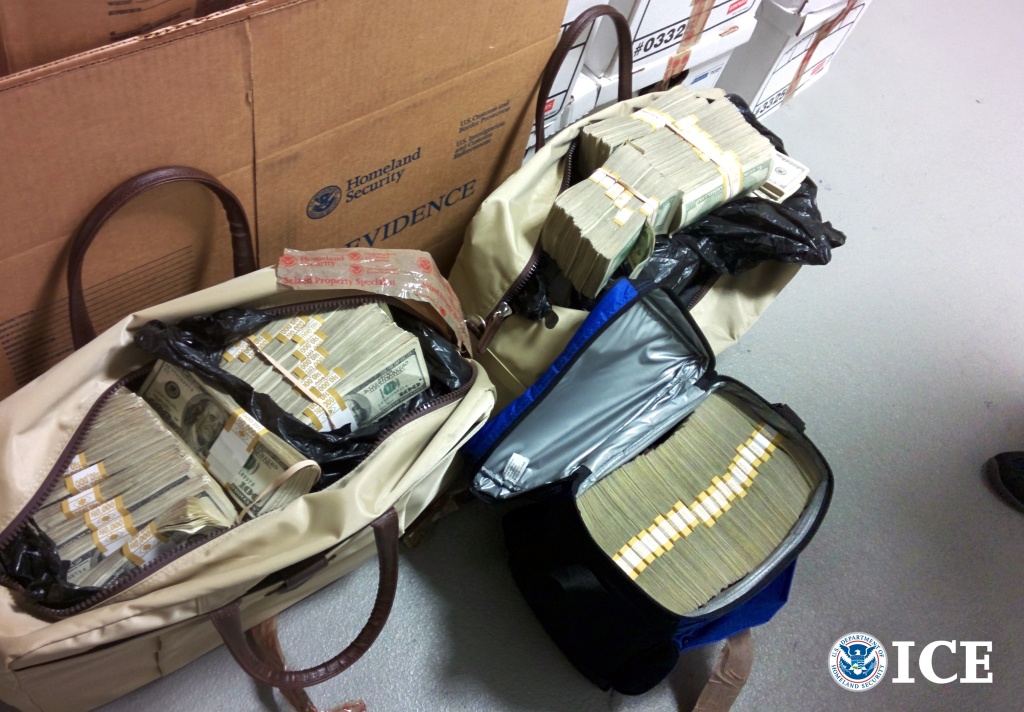
Operation Duck Hunt was a Delaware State Police investigation that concluded in May targeting the heroin distribution ring. Thirteen people were indicted and during the investigation police confiscated 1.75 kilograms of heroin, a cache worth $1.2 million on the street.
Salman Choudhary was one of those arrested and is accused of funneling the ill-gotten cash through real estate and local businesses in an effort to legitimize the drug money. But police said he also brought large sums of cash to Dover Downs hoping to essentially exchange bills that'd make the IRS curious for ones that could be written off as gambling winnings.
"When we found out he was here on the floor, our cameras were trained on him. We cooperated with the regulatory people for over two years," said Ed Sutor, CEO and president of Dover Downs. "If it had not been for us following regulations properly, he wouldn't have been caught, at least not from his activities here."
Gambling establishments nationwide have fought — and earned — a reputation associated with organized crime and shady money practices. For those reasons, they're tightly controlled by state and federal regulations that makes cheating on either side of the blackjack table much more difficult.
But Dover Downs didn't know where Choudhary's money was coming from, nor was it their prerogative to care. And the money went securely into the casino's vault over the course of the two-year investigation.
What the casino knew was how much money Choudhary was spending on each trip, and that their bosses at the Delaware Department of Homeland Security wanted him watched.

When washing goes wrong

It didn't take long before the all-seeing eyes at Dover Downs were focused onto Choudhary, Sutor said.
The casino's 2,400 slot machines are connected to a single mainframe which can track how much money is put into individual devices, and when a gambler uses his rewards card — as Sutor said Choudhary did — how much money an individual is spending and making also can be tracked.
"He came in and started playing slot machines with a lot of cash. Now, we don't have people standing over their shoulder counting how much money they're placing into the machine. We, like all casinos, have a computer behind the scenes," Sutor said. "It got the attention of our state regulators."
If a player feeds a machine more than $10,000 in a single day, the law requires a casino to file a Currency Transaction Report. Sutor said Choudhary came often and the casino was required to file multiple CTRs over his playing habits.
It wasn't just high-dollar machines that kept Choudhary busy on the gaming floor, Sutor said. He became a regular and did little to try and hide the money he brought along.
Delaware Department of Safety and Homeland Security Division of Gaming Enforcement spokeswoman Wendy Hudson declined to comment on anything that had to do with the investigation at Dover Downs or the money laundering activities that happen at casinos in general. She cited an ongoing investigation as the reason for her silence.
STORY CONTINUES BELOW GRAPHIC:

The same was true at a news conference last month where the results of Operation Duck Hunt were announced. Police kept mum on the details of the laundering scheme.
"I know you have some good questions, but we have to hold off on that," Delaware State Police spokesman Sgt. Richard Bratz told reporters.
Police did say the laundering scheme and the heroin ring weren't initially linked, but the one investigation proceeded the other.
"It began as a possible money laundering case and evolved into one of the largest heroin seizures in Delaware, along with other asset seizures throughout Sussex County to include money, property and guns," Greg Nolt, director of the Division of Gaming Enforcement, said at the news conference.

A well-documented practice 

The practice of washing illicit money through casinos, however, is well documented.
"I don't think casinos are a very good place to launder money. An idiot would do it. Sure, there's other ways you could dream of doing it. But to come in and gamble, to put your money in a machine knowing the casino wins, you're already starting with your foot in a hole," Sutor said. "However, we have all sorts of procedures in place in order to avoid people trying to exchange currency."
A 2014 investigation at Harrington Raceway and Casino centered around a similar theme — and in this case the money was dirty in a literal sense.
"Harrington Casino surveillance confirmed three subjects introduced the bills into machines and cashed out tickets with little or no play. The tainted money was recovered from the machines by DGE Detectives and linked to a bank robbery in Maryland," Hudson said. "The suspects and their vehicle were identified through surveillance video footage.  The information was shared with Maryland State Police and the FBI.  All three suspects were arrested in Maryland."

The U.S. Department of the Treasury 2015 money laundering report points to the practice of "structuring" — generally, parceling out what would otherwise be a large cash transaction to avoid reporting requirements — as the most commonly reported practice for washing money through casinos. This is especially prevalent in Nevada, the only state where sports betting is legal which allows their books to funnel illegal out-of-state money.
Another common practice is purchasing chips with cash or depositing funds into a casino account before a minimal amount of play on the casino floor, essentially trading dirty bills for the casino's clean money. This can work with fake money as well, and according to the Treasury report an average of $40,000 a week in counterfeit currency is reported by Nevada casinos.
"If someone came into our facility with a large amount of small bills — 5s, 10s, 20s — and tried to get that changed to hundreds or even a check, we wouldn't do it," Sutor said. "That would be facilitating money laundering, and it didn't happen in this case. The people in the cage right behind me, they're all trained. The people in the pits, they're all trained. And we use computers to catch people after the fact."
That training, Sutor said, extends to cashiers offering players advice on how to get around reporting their winnings or having the casino report of the same.
Casinos in New Jersey and Nevada file the most casino suspicious activity reports nationwide, according to the Treasury report, and are the venues most often cited in criminal prosecutions involving money laundering through casinos. In 2013, casinos and card clubs in the United States filed more than 27,000 SARs, more than 40 percent of which came from Nevada and New Jersey.
Delaware casinos filed 26 SARs in 2015 and eight between January and March of this year.
Contact Adam Duvernay at (302) 324-2785 or aduvernay@delawareonline.com.

Examples of money laundering through U.S. casinos

  • New York, 2012: 25 people were indicted on charges of illegal gambling and money laundering, including using nominees to open accounts, place bets and collect  winnings at a licensed Las Vegas sports book on behalf of out-of-state bettors. 
  • New Jersey, 2011: a woman was convicted of fraudulently misrepresenting herself as a U.S. government official who, for a fee, could help immigrants achieve permanent legal resident status. She earned hundreds of thousands of dollars. Among her expenditures were trips to Atlantic City casinos where she allegedly spent tens of thousands of dollars in cash.  
  • Maryland, 2011: a man and woman who managed a multimillion dollar heroin ring in the Baltimore area were indicted on drug trafficking and money laundering charges. They allegedly used drug cash for gambling in Las Vegas casinos and bought lottery tickets from winners. 
  • New York, 2011: a man was indicted for allegedly using casino slot machines to launder illicit proceeds. The transactions took place on an Indian reservation on the U.S./Canadian border. The farmer allegedly routinely visited the Mohawk Bingo Palace on the reservation, putting tens of thousands of dollars in U.S. currency into slot machines and then receiving a casino check for the credit balance.
  • Arizona, 2010: a man was indicted for operating a fraudulent gambling enterprise in which he allegedly solicited funds based on claims of an insider advantage that would allow him to generate gambling profits for investors. He allegedly wired approximately $4 million from the credit union to accounts at Las Vegas casinos where he either used the money to gamble or converted it to cash.
Source: U.S. Department of the Treasury 2015 money laundering report
[Editor's note: The graphic below is the same as the one above that mobile users may not be able to see.]
http://www.delawareonline.com/story/news/crime/2016/06/03/dover-downs-scheme-follows-common-trends-money-laundering/84910692/

Wednesday, May 18, 2016

DELAWARE: Heroin money laundered at casinos, police say


VIDEO ON LINK


Heroin money laundered at casinos, police say


James Fisher, The News Journal

May 17, 2016

A 31-year-old Felton man, Deangelo Mcglotten, is the "ringleader" of a large-scale heroin distribution effort that a two-year police investigation just broke apart, authorities said announcing the indictment of Mcglotten and 12 other people on drug, conspiracy, racketeering and money laundering charges.

Police also said the investigation uncovered a money-laundering scheme that sent proceeds of illegal drug sales through casinos. A Georgetown businessman, Salman Choudhary, 37, was charged with involvement in organized crime, racketeering, money laundering, attempting to evade tax and failing to file tax returns. He was held on a bond of $1.7 million, the largest cash bond of any of the people indicted after what authorities called "Operation Duck Hunt."

"A heroin distribution ring operating in Kent and Sussex Counties was led by Deangelo Mcglotten along with his closest associates, Timothy Felix and Adrian Coverdale," said Nathaniel McQueen Jr., superintendent of the Delaware State Police. "The illegal proceeds of the drug organization were being laundered by Salman Choudhary through casinos, businesses and personal property."

Felix, 30, of Dover, faces eight criminal charges including drug dealing, conspiracy, racketeering and money laundering. He was held on $750,000 cash bond. Coverdale, 34, of Blades faces six similar charges and was held on $400,000 cash bond.

Police declined to specify exactly how the suspects allegedly laundered ill-gotten money at casinos, saying the investigation had not yet wrapped up and pointing out some of that information should be withheld pending the suspects' trials. "I know you have some good questions, but we have to hold off on that," Bratz told reporters.

Comments law enforcement officials made at the news conference suggested the alleged money laundering happened at the Dover Downs casino, and that discovering it was key to getting the investigation off the ground.

"It began as a possible money laundering case and evolved into one of the largest heroin seizures in Delaware, along with other asset seizures throughout Sussex County to include money, property and guns," said Greg Nolt, director of the Division of Gaming Enforcement, at the news conference.

A DSP spokesman, Sgt. Richard Bratz, said the operation began in April 2014 and culminated in multiple search warrant executions and arrests on May 11. Earlier, on Jan. 13, he said, police searched Mcglotten's home and an Acura vehicle linked to him but didn't arrest him in connection with the probe until last week.

Still, Mcglotten had been detained on heroin-related charges during the course of the two-year probe. He was arrested by Dover police in July 2014 after a tip that he was in possession of a lot of heroin; at the time, police said 1,300 bags of heroin weighing 19.5 grams was in his car.

In all, police confiscated 1.75 kilograms of heroin during the investigation, with a street value of $1.2 million, Bratz said. On May 11, police arrested eight people, including Mcglotten, Choudhary, Felix and Coverdale.

Six others were indicted by a Sussex County grand jury but have not yet been located or arrested, police said. They are:


  • Linda Mcglotten, 49, of Milford, the mother of Deangelo Mcglotten
  • Reginald Mcglotten, 30, of Millsboro
  • Obrien Morris, 26, of Millsboro
  • Luis Manzanet-Garlaza, 27, of Milford
  • Sohail Zeeshan, 39, of Rehoboth Beach
  • Luis Manzanet-Garlaza, who police said has ties to Milford, northern New Jersey, Florida, and Puerto Rico.


  • If anyone has any information in reference to the location of the listed wanted subjects, they are asked to contact Sgt. M. Dawson at (302) 752-3815.  Information may also be provided by calling Delaware Crime Stoppers at (800) TIP-3333, via the Internet at www.delaware.crimestoppersweb.com or by sending an anonymous tip by text to 274637 (CRIMES) using the keyword "DSP."

    "Where possible, we want to try to eliminate entire networks of drug dealers and hold those at the very top of the organization responsible. The time and the effort necessary to do that is extensive," said Delaware Attorney General Matt Denn at a news conference in Georgetown. "We are going to continue to diligently pursue ops like this one, to disrupt trafficking operations and hold responsible those who put this poison into our communities, but until our state is successfully treating the addiction crisis that has gripped our state, the demand for these drugs is going to continue, and eventually new dealers are going to seek to replace these ones.”

    Contact James Fisher at (302) 983-6772, on Twitter @JamesFisherTNJ or jfisher@delawareonline.com.

    EDITOR'S NOTE: An earlier version of this story had an incorrect number of people indicted. The correct number is 13 in all.


    http://www.delawareonline.com/story/news/local/2016/05/17/heroin-money-laundered-casinos-cops-say/84439438/


    Tuesday, May 27, 2014

    Taxpayers Subsidizing the Casino Industry


    Bill Kearney

    Massachusetts ‘GAMING’ Future

    First casinos giveth, then they taketh away

    News Works - MAY 13, 2014 - Lawmakers introduce bill to help Delaware’s ailing casinos

    To improve the fortunes of Delaware's casinos, lawmakers have proposed reducing the state's share of gaming revenue.

     The legislation would save the casinos about $20 million a year by reducing the state’s cut of gross table game revenue from 29.4 percent to 15 percent. The state would also eliminate its table game licensing fee and would share the cost of vendor fees.

    The three casinos, which contribute more than $200 million to the state budget annually, have reported low revenues due to the recession and increased competition from neighboring states. To help fill a budget deficit in 2009, the state also increased its share of gross revenue from slot machines from 36.8 percent to 43.5 percent.

    Read more - http://www.newsworks.org/index.php/delaware/item/67899-lawmakers-introduce-bill-to-help-delawares-ailing-casinos


    To improve the fortunes of Delaware's casinos, lawmakers have proposed reducing the state's share of gaming revenue.

    The legislation would save the casinos about $20 million a year by reducing the state’s cut of gross table game revenue from 29.4 percent to 15 percent. The state would also eliminate its table game licensing fee and would share the cost of vendor fees.
     
    The three casinos, which contribute more than $200 million to the state budget annually, have reported low revenues due to the recession and increased competition from neighboring states. To help fill a budget deficit in 2009, the state also increased its share of gross revenue from slot machines from 36.8 percent to 43.5 percent.

    Senate Bill 220, sponsored by Sen. Brian Bushweller, was developed following recommendations from a study by the Lottery and Gaming Commission.

    Bushweller said that the state can’t afford not to help the casinos, as they create jobs and are a major revenue stream for the state.

    “At its heart, this is a jobs bill because Delaware Park, Dover Downs and the casino at Harrington Raceway either directly or indirectly employ thousands of our friends and neighbors,” Bushweller said. “If we don’t try to fix some of the things the state has done that, along with increased out-of-state competition, are undercutting those businesses, we could see dramatic job losses and that’s something that we can’t afford either as a state or as caring neighbors.”

    The legislation, currently assigned to the Senate Finance Committee, also asks for an independent report, commissioned by Secretary of Agriculture, to examine the harness and thoroughbred industries.

    “I think this bill represents an honest first step that makes the state a better business partner with our gaming industry while ensuring that we can meet our financial obligations as a state,” Bushweller added.


    http://www.newsworks.org/index.php/delaware/item/67899-lawmakers-introduce-bill-to-help-delawares-ailing-casinos

    Tuesday, October 15, 2013

    “Gambling is just never going to recover,”................


    “Gambling is just never going to recover,”.................

    Lawmakers and voters delude themselves into believing somehow, the $$$$ will fall from the heavens like manna even though the GAMBLING MARKET IS SATURATED.

    In the case of Massac...
    husetts, Rhode Island bailed out their 'casinos' and Rhode Island is not doing as well economically as Massachusetts.

    Connecticut is a financial basket case that couldn't even afford to fully fund the Spectrum Report. They're bailing out the Tribal Casinos, taking a hit because of declining revenues, excessive debt and GAMBLING MARKET SATURATION.

    Will folks wake up?

    University of Delaware professor says Delaware casinos won't recover

    James Butkiewicz says lawmakers wishing on a star if they think so


    Oct. 12, 2013
    Written by Jonathan Starkey
    The News Journal

    The head of the University of Delaware’s Department of Economics says state officials should find ways to reduce Delaware’s reliance on casino revenues, with regional competition squeezing Delaware’s three casinos and the state budget.

    “Gambling is just never going to recover,” said James Butkiewicz, department chair.

    “They’re kidding themselves if they think it is. You don’t go from a monopoly to competition and make the same rate of return.”

    Butkiewicz’s comments come as a public task force continues to meet to review Delaware’s casino industry, and possibly recommend changes to gambling taxes.

    Finance Secretary Tom Cook chairs the Lottery and Gaming Study Commission, and several state lawmakers are members.

    In public presentations before the task force on Tuesday, all three of Delaware’s casinos said they are experiencing drops in revenues due to regional competition.

    Delaware Park is forecasting a 17-percent drop in revenues in 2013. Harrington expects to lose about 4 percent. Dover Downs’ revenue from slot machines has fallen more than 20 percent since 2007, executives said.

    Taxes on slot machines represent, by far, the largest portion of Delaware’s lottery revenues, which also include money from table games, a sports lottery and traditional lottery tickets.

    State tax collections on gambling are predicted to fall to $227 million in the current year, which would be the lowest total since 2004. The revenue funded more than 6 percent of the state’s operating budget last year.

    Butkiewicz said state officials are “whistling in the dark” if they expect to reverse the trend.

    Cook defended the state’s policy on gambling, saying lawmakers and members of the Markell administration have diversified by adding table games and Internet gambling.

    “I don’t think you can be in this game and just throw up your hands and just give up,” Cook said.


    http://www.delawareonline.com/article/20131013/NEWS02/310130041/UD-professor-Casinos-won-t-recover

    Saturday, July 13, 2013

    Kid yourself not.......

    Coming to Massachusetts!

    Taxpayer subsidies to the Gambling Industry when the Overstated Projections fail to materialize!

    Massachusetts 'GAMING' Future

    WHYY - July 12, 2013 - Gambling on Delaware's casinos

    There was one part of the recently completed legislative agenda in Delaware that caught Rob Tornoe's attention. The $8 million given as aid to Delaware's 3 casinos.
    ...
    Here is Rob's commentary.

    A number of years ago, I drew a cartoon that really angered the folks over at Dover Downs. It featured a suit with a bag of money as a head, pushing a shopping cart filled with Delaware politicians. My contention was the casinos were using their influence to get their way in Dover, and despite their rebuke, I don't think I was wrong at the time.

    Fast-forward to today. Delaware taxpayers are officially bailing out our three casinos to the tune of $8 million due to increased competition from new casinos in Maryland and Pennsylvania. A case of the casinos buying influence again, right? No so fast...

    Read more: http://www.newsworks.org/index.php/local/item/57219-the-tornoe-spin-/
    See More

    Saturday, May 25, 2013

    Dover Downs threatens layoffs if casino taxes aren't lowered

    This is what the Predatory Gambling Industry does after it saturates the market --
    Massachusetts ‘GAMING’ Future

    May 24, 2013 - Dover Downs threatens layoffs if casino taxes aren't lowered

    Dover Downs, the casino operator and one of Dover’s largest employers, said it is considering laying off hundreds of its workers and shuttering restaurants if state lawmakers don’t act to lower the company’s taxes in the next month.

    Read more: http://www.delawareonline.com/article/20130524/NEWS02/130524017
    Massachusetts ‘GAMING’ Future

May 24, 2013 - Dover Downs threatens layoffs if casino taxes aren't lowered

Dover Downs, the casino operator and one of Dover’s largest employers, said it is considering laying off hundreds of its workers and shuttering restaurants if state lawmakers don’t act to lower the company’s taxes in the next month.

Read more: http://www.delawareonline.com/article/20130524/NEWS02/130524017


    Dover Downs threatens layoffs if casino taxes aren't lowered

    Written by Doug Denison and Jonathan Starkey
    The News Journal
    May 24, 2013

    Dover Downs, the casino operator and one of Dover’s largest employers, said it is considering laying off hundreds of its workers and shuttering restaurants if state lawmakers don’t act to lower the company’s taxes in the next month.

    Gov. Jack Markell continues to resist such a deal, as the state continues to rely heavily on casino revenue to balance its budget.

    Casino executives have been meeting with state legislators and members of Markell’s administration to continue to lobby for a tax break, as regional competition continues to drain customers. Time is a factor, with the current legislative session set to close on June 30.

    Saddled with $60 million in debt and targeted by new casinos across the Maryland line, Dover Downs lost $283,000 in the first quarter of this year, compared to a $2.4 million profit during the same period in 2012.

    Top officials there met this week with state Finance Secretary Tom Cook, coming on the heels of a recent sit-down with Markell. But a deal to lower taxes does not appear to be in the works.

    “The governor recognizes the casino industry is facing competitive challenges but does not believe the state is in a position to reduce tax rates at this time,” said Mike Barlow, Markell’s chief of staff, who added he was not “at liberty” to characterize the casino’s meetings with Cook and Markell.

    Casino executives still insist the administration has been sympathetic to their plight in recent discussions.

    “We’re talking to the administration,” said Dennis McGlynn, chief executive of Dover Downs. “They’re aware of this. They’ve indicated that this is a problem, and we have to try to fix it.”

    McGlynn said Dover Downs would take the best deal the company can get.

    “There’s no demand here,” he said. “It’s us laying ourselves at the feet of the administration and the Legislature, saying, ‘Look, this is where we are. If you think we’re valuable enough from a revenue generation standpoint and a jobs provision standpoint, do something to help us.’”

    Delaware casinos are in the middle of an increasingly crowded mid-Atlantic gambling market and are facing competition from four casinos in the Philadelphia area and three in neighboring Maryland, plus the stalwart venues in Atlantic City, N.J.

    Hollywood Casino in Perryville, Md., is just 30 miles south of Delaware Park on Interstate 95, and Ocean Downs Casino in Berlin, Md., draws beach-area gamblers who might otherwise bet at Harrington Raceway and Casino.

    The toughest competition comes from the massive Maryland Live! casino south of Baltimore, right in the heart of Delaware’s customer base.

    Maryland’s fourth casino, located at Rocky Gap State Park in the state’s western panhandle, opened this week. A casino in downtown Baltimore is scheduled to open next year, followed in 2016 by a new venue just east of Washington, D.C., at the National Harbor shopping and entertainment complex.

    Delaware relies heavily on gambling revenues and brought in $269 million in total lottery revenue, including taxes from casinos, in fiscal year 2012, which ended last July. Dover Downs alone contributed $86 million to state coffers in 2012.

    State projections anticipate $237 million in similar revenue this year, a decline forecasters directly attribute to regional competition.

    Markell and the Legislature changed the tax rate for slot-machine revenues in 2009 as part of a bill that reauthorized sports betting in the state — an effort to help account for a massive budget shortfall that year. The slots tax rate paid by the casinos jumped from 37 percent to 43.5 percent.

    Table games were legalized in Delaware in 2010, with a tax rate of 29.4 percent.

    Maryland taxes slots at a rate of 67 percent, the highest in the nation, and table games at 20 percent. In Pennsylvania, the slots tax rate is 55 percent, and the table game rate is 16 percent. New Jersey’s tax rate for gross gambling revenues is between 8 percent and 10.5 percent.

    Massachusetts let the Predators in for a pittance!

    Without a deal to lower tax rates and protect Dover Downs, the state risks losing out on some of that money, casino executives said.

    “If they don’t give something back, the $86 million they get from us is at risk,” said Tim Horne, Dover Downs’ chief financial officer.

    Horne warned of “draconian” cuts starting next month in the absence of a deal, including layoffs and the closing of shifts inside Dover Downs.

    “It’s that death spiral,” McGlynn said.

    Executives from the state’s other casinos at Harrington Raceway and Delaware Park did not respond to requests for comment.

    House Speaker Pete Schwartzkopf staunchly opposes tax breaks for the casino industry and said casino representatives have been scheduling one-on-one meetings with some lawmakers, but he knows of no plans for legislation granting relief.

    “I do know they’ve been trying to talk to people so they have a better idea of the financial situation. As far as I know, nobody is asking to lower their tax rates,” Schwartzkopf said. “Maybe because the governor has said he’s not going to do it.”

    Lobbyist Robert Byrd, who represents Dover Downs, said the casinos have been asking for tax relief for more than a year, but that he doesn’t see any progress coming until the governor makes a move.

    “The casinos are always talking about what their issues are, and they’ve been continuing to do that, and I think they’ll continue to do that,” Byrd said. “My sense is there is probably some sentiment for it in the Legislature, lukewarm sentiment in the Legislature, but this is an issue that will be driven by the administration.”

    Schwartzkopf also said he believes Delaware’s casino operators need to adjust to a new reality for their industry in this highly competitive region.

    “They made so much money in the days they had their heyday, if they start to make what a normal casino would make, they think they’re going broke,” he said. “I think they’re chasing utopia; it doesn’t exist.”

    http://www.delawareonline.com/article/20130524/NEWS02/130524017


    Sunday, April 28, 2013

    Partnering with the Gambling Industry


    Massachusetts ‘Gaming’ Future

    What’s next Russian roulette? http://www.youtube.com/watch?v=3t33HXyN6WM


    Philadelphia Enquirer - April 25, 2013 - Casino begs state for online gambling as bets drop
    ...
    Dover Downs Gaming & Entertainment, Inc., which owns Dover Downs Hotel & Casino in central Delaware, says sales tumbled to $50.5 million last quarter vs $64.1 million a year earlier "primarily as a result of increased competition" in Pennsylvania and other states that are promoting their own gambling halls. Delaware has been trying to legalize forms of NFL game betting and keno, among other gambling.

    In a statement, CEO Dennis McGlynn said he was lobbying Delaware state government to cut its gambling tax and allow Internet-based betting and other new games: "A business model that addresses the current competitive environment is in the best interest of all stakeholders... There are a lot of iGaming providers extremely anxious to do business in Delaware. We are pleased to see that the State remains on its timetable and we expect to begin our first online offerings on or about the end of September.”


    Saturday, March 9, 2013

    Defining Insanity!

    The Gambling Industry saturates the market, sucks discretionary income from local communities, then whines for tax cuts, never delivering the overstated promises.

    Gone is the pretense of 'job creation' and phony revenue claims.

    Lawmakers obsess about the monthly revenue claims, ignoring sensible fiscal policy or the damage wrought.  

    REGION: Maryland chips away at Delaware's gambling revenue


    Mar 6, 2013
    Newly installed table games at the Hollywood Casino in Perryville, Md., will open for play Thursday.
    Newly installed table games at the Hollywood Casino in Perryville, Md., will open for play Thursday. / ROBERT CRAIG/THE NEWS JOURNAL

    WILMINGTON — Bright and early Thursday morning, gamblers at Hollywood Casino in Perryville, Md., will start cashing chips, tossing dice and playing cards in the venue’s new table game section, the first to open in the state since a November referendum legalizing the games.

    Many of those players will be from Delaware, or they’ll be customers who might otherwise have taken their business to a casino in the First State – at least that’s what Hollywood’s owners hope.

    For Delaware’s three racetrack-casinos, the launch of table games in Maryland is expected to be the latest in a series of gambling expansions in the region that have taken a slice out of their profits – and the state’s revenues.

    Delaware’s tax receipts from gambling fell 6 percent in fiscal year 2012, and are down 6 percent to date in fiscal 2013. Last year the state reaped $269 million in lottery proceeds, $18 million less than the year before.

    State gambling revenues are projected to fall a total of 12 percent this year before leveling off in 2014, according to the Delaware Economic and Financial Advisory Council. The dismal DEFAC estimates are based almost entirely on growing regional competition.

    Hollywood Casino, located in Cecil County, will open about 20 table game stations on its floor at 8 a.m. Thursday. Delaware Park, just 30 miles north of Hollywood on I-95, is expected to see losses sooner than other casinos in the state.

    “When Perryville opened their slot parlor, the first one to feel the biggest hit was Delaware Park,” said Ed Sutor, CEO of Dover Downs Hotel and Casino.

    Executives from Delaware Park did not respond to calls seeking comment.

    Pennsylvania is experiencing similiar [sic] declines. Gross revenue from slot machine play at the state’s 11 casinos was down 9.2 percent last month. The casinos generated $195.9 million in gross revenue from slots in February, down from $215.7 million during the same period the year before, according to Pennsylvania Gaming Control Board figures released this week.

    The four casinos in the crowded Philadelphia market were down significantly as well. Parx Casino in Bensalem, Pa., and Harrah’s Philadelphia in Chester were down 11.5 percent and 12 percent, respectively, over the same period the year before. Sugarhouse Casino in Philadelphia was down 9.7 percent.

    Since its first casino opened, Pennsylvania has seen rapid growth in its casino industry and it’s now the nation’s second-largest gambling market, behind Las Vegas. But the state is now facing increased competition from new or added gambling in Maryland, New York, Ohio and Delaware.

    Hollywood Casino spokeswoman Jennifer Miglionico knows the regional gambling competition is fierce, which is why her company worked to get table games up and running quickly.

    “Our focus is pulling any players that are currently leaving the state to play table games, going to Delaware, Pennsylvania, New Jersey,” she said. “That’s the intent, to bring new business.”

    But Sutor said Perryville’s relatively small facility poses much less of a threat to Delaware venues than the launch of table games at the massive Maryland Live! casino south of Baltimore, scheduled for April 11.

    “Our real concern is Maryland Live! They’ll have ten times as many tables [as Hollywood] in a market we heavily rely on for customers,” he said.

    Hollywood has yet to recover from the hit it took when Maryland Live! opened in June of last year.

    “When we opened, we were the first in the state,” Miglionico said. “The numbers we’re reporting show year-over-year we’ve seen a loss. That’s because Maryland Live! opened up.”

    Even though table games will be the new draw, slots are casinos’ biggest moneymakers and are expected to see gains from the increased foot traffic brought by table games.

    “Slots is still over 85 percent of the total revenues,” Sutor said. “It’s going to further dilute the pool of customers.”

    Delaware casinos already are seeing their table-game dealers and supervisors hired away by Maryland casinos, Sutor added.

    “They’ve been advertising locally. Who do you think they’re coming after, advertising in the local papers?” he said.

    Casino operators can only guess at the impact of a new Harrah’s casino set to open in downtown Baltimore next year, or a new Maryland venue just outside Washington, D.C., approved by voters in the table games referendum and scheduled for completion in 2016.

    However, the other casino on Delaware’s doorstep, Ocean Downs in Berlin, Md., does not have plans to add table games to its slots parlor – at least not yet. Ocean Downs and Delaware Park are both owned by William M. Rickman Jr.

    Sutor said Delaware’s casinos have a chance to make up competitive ground with the launch of Internet gambling in the state later this year, but he doesn’t expect a huge windfall from the high-overhead venture.

    The real strategy is to continue lobbying lawmakers for lower gambling tax rates, as the industry has done consistently in recent years, to limited effect.

    “We’re hoping the Legislature and the administration will give us an opportunity as an industry to revisit the revenue sharing, because right now it’s not working,” Sutor said.

    http://www.delmarvanow.com/article/20130306/NEWS01/130306004/REGION-Maryland-chips-away-Delaware-s-gambling-revenues