Meetings & Information


*****************************
****************************************************
MUST READ:
GET THE FACTS!


Showing posts with label MGM Springfield. Show all posts

Thursday, October 12, 2017

CLG: 'Betting on the downfall': George Soros had a $42 million short open on MGM


 News Updates from CLG
12 October 2017
 
Previous edition: Terror in Las Vegas: People run for their lives as at least one gunman opens fire near Mandalay Bay
 
Special Las Vegas Shooting 'Oddities' Edition - compiled by LRP --An online copy of this edition can be found here: http://www.legitgov.org/Las-Vegas-Shooting-Oddities-Compiled-CLG-News.
 

'Betting on the downfall': George Soros had a $42 million short open on MGM | 10 Oct 2017 | On Tuesday, September 5th, 2017, the board of MGM Resorts International decided to approve a $1 billion share repurchase program. At 17.7 billion today, the program represented a significant portion of its current market cap. By the end of the week, MGM's CEO, James Murren, had coolly divested himself of 80% of the shares he owned in his company. The divestment came just days before the ex-dividend date on September 8th, 2017. The sales were originally disclosed in a document filed with the Securities and Exchange Commission (SEC). Murren had previously divested 57,269 shares on July 31st and August 9th, 2017. It's currently unclear why Murren chose to sell when he did...Mr. Murren and his fellow board members were not the only speculators who were bearish on MGM's prospects. Billionaire investor George Soros also bought $42 million worth of puts on the company, according to SEC filings from mid August. [Notes: MGM Resorts International is the owner of the Mandalay Bay Resort and Casino, the site of the October 1, 2017, shooting. See definitions of 'put option' (here) and 'Short (or Short Position)' (here). More info can be found here. --LRP]

CLG needs your support.
Or, please mail a check or m*ney order to CLG: Citizens for Legitimate Government (CLG) 
P.O. Box 1142 
Bristol, CT 06011-1142
 
Contributions to CLG are not tax deductible.
Feel free -- and CLG encourages you -- to forward this newsletter to your lists and friends!
Those who wish to be added to the list can go here: http://www.legitgov.org/#subscribe_clg and add your name. Please add clg_news@legitgov.org to your contacts or approved senders list. For subscription questions, please write signup at legitgov dot org.
 

CLG News Editor-in-Chief: Lori Price. Copyright © 2017, Citizens for Legitimate Government ® All rights reserved.


Wednesday, September 20, 2017

The Ultimate 1% SCAM!


FROM MASSTERLIST:

MGM reassures nervous Springfield after it unveils plan for $675M casino in Bridgeport, Conn.
In a major escalation of the ongoing casino war in southwestern New England, MGM Resorts announced yesterday ambitious plans for a new $675 million waterfront casino in Bridgeport, Conn., halfway between New York and New Haven and 80 miles south of Springfield, Mass., where MGM is building a $950 million casino in the city’s downtown. The Hartford Courant has the details. It’s just the latest development in the ongoing battle between MGM, Foxwoods and Mohegan Sun, which, it should be noted, has its own proposal for a new casino in East Windsor, Conn., just across the border from Springfield.
In Springfield, Mayor Domenic Sarno said he’s spoken to MGM CEO James Murren and has been assured that the company remains focused on building a "very successful and robust" casino in Springfield, reports Dan Glaun at MassLive. But how successful and robust, with so many current and planned casinos in the region, is the question.
Hartford Courant


Read The Atlantic | “How Casinos Enable Gambling Addicts”


Sunday, August 21, 2016

Gambling Industry Approaching Saturation in Northeast United States


Gambling Industry Approaching Saturation in Northeast United States


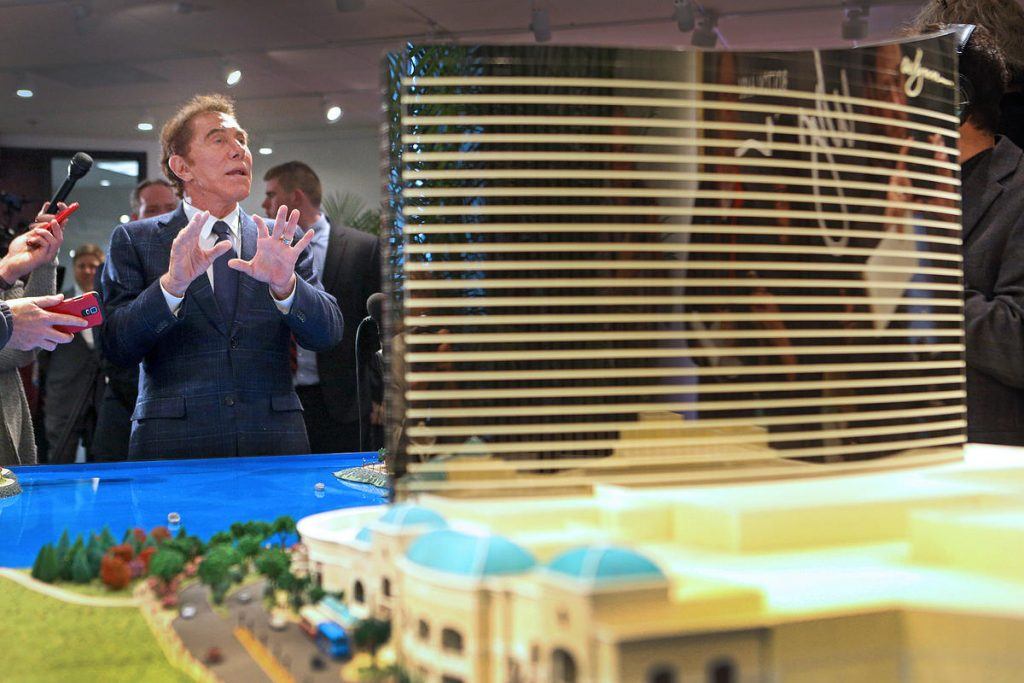
Steve Wynn’s Boston Harbor casino resort will open in 2019 and bring the northeastern gambling industry one giant step closer to possible market saturation. (Image: Nancy Lane/Boston Herald)

The gambling industry in the northeast region of the United States was confined to Atlantic City for decades. The first legal commercial casino opened in the New Jersey beachfront town back in 1978, and until the early 1990s Atlantic City largely enjoyed a monopoly on gambling on the East Coast.
The US Supreme Court ruled in 1987 that federally recognized Indian tribes have the right to self-regulate casino games not barred by state law. The ruling effectively ended Atlantic City’s stronghold.
By 1996, half of the 50 states had some form of land-based gaming. Today, analysts are worried the continued expansion across northeastern states will soon lead to market saturation.
“The market in New England is continuing to grow,” gaming analyst Clyde Barrow told the Associated Press this week. “But there will be a saturation point.”

The All-Mighty Slot

Massachusetts’ Plainridge Park Casino slot parlor opened in June 2015, and the state will welcome the $950 million MGM Springfield in 2018 and $1.7 billion Wynn Boston Harbor in 2019. New York’s slots-only racetrack parlor Resorts World Casino near JFK International Airport is considering expansion, and two upstate casinos are expected to open in 2017.
In northeast Pennsylvania, Sands Bethlehem controls the market over Mount Airy Casino Resort. The Philadelphia area is home to four casinos with a fifth possibly on the way.
Rhode Island has the Twin River Casino, and then there’s Connecticut’s Foxwoods and Mohegan Sun resorts. The Mashantucket Pequot, Mohegan, and Mashpee tribes are all looking to build additional casinos near the Connecticut-Massachusetts border to compete with MGM and Wynn.
And don’t forget that place called Atlantic City where seven casinos will remain after the Trump Taj Mahal closes in October.
The northeast is the most densely populated region in the US, but it’s becoming flooded with gambling destinations. For now, however, the market seems to support the numerous casino floors.
Gambling saturation is largely tested through slots revenue as the machines still generate the most income for operators.
According to Fitch Ratings, casino companies want and need each slot to win $200 per 24 hours. Anything below that number might signal an oversaturated market.
In June, Mohegan Sun’s 5,110 slots won $297 each day. Foxwood’s 4,451 machines took in $260.
Plainridge Park’s 1,250 slots collected over $370 daily in July, its best monthly performance in 2016.
While the gaming economy remains strong in the northeast, “saturation” remains a constant concern.
“I try not to use the word. No sense cursing the darkness,” Foxwoods CEO Felix Rappaport told the AP.

Diversifying Interests

MGM and Wynn are two of the most experienced gaming operatives in the industry. Their substantial investments in Massachusetts show their own research supports additional casino facilities in the northeast.
But unlike some venues in New England and the Mid-Atlantic, MGM Springfield and Wynn Boston Harbor will be focusing as much on the resort and entertainment aspect as gambling. For example, Wynn’s harbor walk will accompany the resort’s high-end shopping center and spa and feature four upscale restaurants.
Gambling revenue now plays second fiddle in Las Vegas to nongaming activities. Regional resorts are expected to follow the trend and adapt to market conditions.
Mohegan Sun is celebrating its 20th anniversary in October with a comedy gala featuring Kevin Hart and Sarah Silverman, and will welcome numerous A-list musicians including Tim McGraw, Bruno Mars, KISS, and Carrie Underwood.
The new casino, six years in the making, is Wynn Resorts Ltd.'s second in Macau, the only place in mainland China where casino gambling is ...


Sunday, August 14, 2016

Northeast’s casino landscape growing crowded


Northeast’s casino landscape growing crowded


Published August 13. 2016 5:35PM | Updated August 14. 2016 7:44AM

By Brian Hallenbeck  Day staff writer


Felix Rappaport doesn't even like to say it.
"I try not to use the word," Foxwoods Resort Casino’s top executive admitted in an interview this past week. "No sense cursing the darkness."
Nevertheless, most discussions of the state of gaming in the Northeast center on “saturation,” the point, theoretically, where supply equals demand.
Rappaport prefers the term “competitive landscape.”
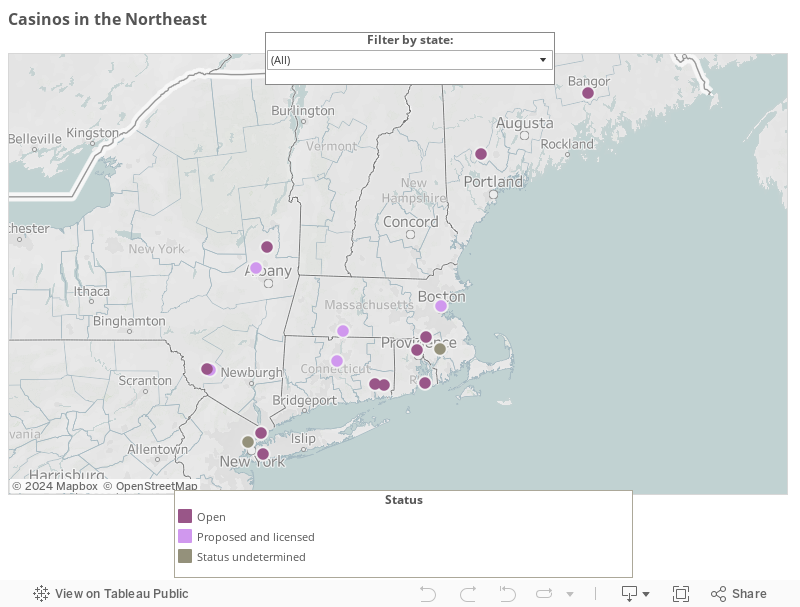
In New England alone, seven facilities operate in four states.
Foxwoods and Mohegan Sun are the reigning heavyweights. Rhode Island’s Twin River Casino in Lincoln and Maine’s Hollywood Casino & Raceway in Bangor and Oxford Casino in Oxford also qualify as full-fledged casinos, offering table games as well as slot machines.
Two of the facilities — Newport Grand in Newport, R.I., and Plainridge Park Casino in Plainville, Mass. — offer only slots and electronic versions of table games. Plainridge additionally offers harness racing.
Four more casinos have been licensed or proposed in the region, while Newport Grand could be shuttered in favor of a full-fledged casino in Tiverton, R.I., depending on the outcome of an Election Day referendum in November.
If everything that’s been proposed materializes — and that’s a sizable “if” — New England’s four gaming states could be home to 10 casinos and a slots parlor by, say, 2020.
West of New England, two upstate New York casinos are scheduled to open next year in Schenectady and Thompson.
To the south, slots-only racetrack casinos in and near New York City already cut into the Connecticut casinos’ share of the slots market.
One of them, Resorts World Casino at the Aqueduct track in Queens, has been talking about expansion.
And then there’s the prospect of a casino or two in northern New Jersey, if that state’s voters approve gaming outside Atlantic City in another Election Day referendum.
“Overall, the market in New England is continuing to grow,” Clyde Barrow, a gaming expert, said in an interview. “But there will be a saturation point.”
Barrow, a professor and chairman of the political science department at the University of Texas Rio Grande Valley in Edinburg, Texas, previously served as director of the Center for Policy Analysis at UMass Dartmouth.
He has studied Northeast gaming for decades and continues to do so.
Hired by the casino-owning Mashantucket Pequot and Mohegan tribes, Barrow analyzed the impact that the casinos proposed in Massachusetts and New York would have on jobs and revenues at Foxwoods and Mohegan Sun.
His 2015 report fueled the tribes’ campaign to win state authorization for up to three commercial casinos in Connecticut.
Eventually, the legislature approved a bill that allowed the tribes to form a partnership and jointly seek site proposals from Hartford-area municipalities willing to host a single “satellite” casino.
The facility would target MGM Springfield, the $950 million resort casino now under construction in Massachusetts.
So, how do you know when supply and demand are in balance?
Barrow and two colleagues, David Borges and Alan Meister, recently published a paper on the subject, calling attention to a metric involving slot-machine revenues.
Fitch Ratings, a credit-rating agency, considers a “win” per machine per day of $200 to be an important threshold, Barrow said, with win being the amount of slots wagers a casino keeps after paying out prizes.
When the average daily win per machine in a market sinks below $200, it becomes difficult for casinos to cover their overhead, Barrow said.
In June, Mohegan Sun’s average win per machine per day was nearly $300. Foxwoods’ was about $260.
If MGM Springfield and Wynn Boston Harbor, a $2.1 billion project underway in Everett, Mass., open as projected in 2018 and 2019, respectively, and Rivers Casino and Montreign Resort Casino open next year in Schenectady and Thompson, N.Y., the saturation point might be reached, Barrow said.
And that would be before any resolution of the Mashpee Wampanoag Tribe’s $1 billion project in Taunton, Mass. — halted weeks ago by a court ruling that overturned a federal land-into-trust decision — or the Mashantucket-Mohegan partnership’s bid to win the Connecticut legislature's approval of a Hartford-area casino.
The Mashpees, who broke ground on their First Light project in April, have had to secure $8.2 million worth of steel that had been delivered to the Taunton construction site.
They are expected to appeal the court ruling.
“I could easily envision that if things go well with MGM Springfield and Wynn, and Taunton’s not happening, they could make the decision to expand Plainridge by simply allowing table games there,” Barrow said, referring to the Massachusetts Gaming Commission. 

Felix Rappaport doesn't even like to say it.
"I try not to use the word," Foxwoods Resort Casino’s top executive admitted in an interview this past week. "No sense cursing the darkness."
Nevertheless, most discussions of the state of gaming in the Northeast center on “saturation,” the point, theoretically, where supply equals demand.
Rappaport prefers the term “competitive landscape.”
In New England alone, seven facilities operate in four states.
Foxwoods and Mohegan Sun are the reigning heavyweights. Rhode Island’s Twin River Casino in Lincoln and Maine’s Hollywood Casino & Raceway in Bangor and Oxford Casino in Oxford also qualify as full-fledged casinos, offering table games as well as slot machines.
Two of the facilities — Newport Grand in Newport, R.I., and Plainridge Park Casino in Plainville, Mass. — offer only slots and electronic versions of table games. Plainridge additionally offers harness racing.
Four more casinos have been licensed or proposed in the region, while Newport Grand could be shuttered in favor of a full-fledged casino in Tiverton, R.I., depending on the outcome of an Election Day referendum in November.
If everything that’s been proposed materializes — and that’s a sizable “if” — New England’s four gaming states could be home to 10 casinos and a slots parlor by, say, 2020.
West of New England, two upstate New York casinos are scheduled to open next year in Schenectady and Thompson.
To the south, slots-only racetrack casinos in and near New York City already cut into the Connecticut casinos’ share of the slots market.
One of them, Resorts World Casino at the Aqueduct track in Queens, has been talking about expansion.
And then there’s the prospect of a casino or two in northern New Jersey, if that state’s voters approve gaming outside Atlantic City in another Election Day referendum.
“Overall, the market in New England is continuing to grow,” Clyde Barrow, a gaming expert, said in an interview. “But there will be a saturation point.”
Barrow, a professor and chairman of the political science department at the University of Texas Rio Grande Valley in Edinburg, Texas, previously served as director of the Center for Policy Analysis at UMass Dartmouth.
He has studied Northeast gaming for decades and continues to do so.
Hired by the casino-owning Mashantucket Pequot and Mohegan tribes, Barrow analyzed the impact that the casinos proposed in Massachusetts and New York would have on jobs and revenues at Foxwoods and Mohegan Sun.
His 2015 report fueled the tribes’ campaign to win state authorization for up to three commercial casinos in Connecticut.
Eventually, the legislature approved a bill that allowed the tribes to form a partnership and jointly seek site proposals from Hartford-area municipalities willing to host a single “satellite” casino.
The facility would target MGM Springfield, the $950 million resort casino now under construction in Massachusetts.
So, how do you know when supply and demand are in balance?
Barrow and two colleagues, David Borges and Alan Meister, recently published a paper on the subject, calling attention to a metric involving slot-machine revenues.
Fitch Ratings, a credit-rating agency, considers a “win” per machine per day of $200 to be an important threshold, Barrow said, with win being the amount of slots wagers a casino keeps after paying out prizes.
When the average daily win per machine in a market sinks below $200, it becomes difficult for casinos to cover their overhead, Barrow said.
In June, Mohegan Sun’s average win per machine per day was nearly $300. Foxwoods’ was about $260.
If MGM Springfield and Wynn Boston Harbor, a $2.1 billion project underway in Everett, Mass., open as projected in 2018 and 2019, respectively, and Rivers Casino and Montreign Resort Casino open next year in Schenectady and Thompson, N.Y., the saturation point might be reached, Barrow said.
And that would be before any resolution of the Mashpee Wampanoag Tribe’s $1 billion project in Taunton, Mass. — halted weeks ago by a court ruling that overturned a federal land-into-trust decision — or the Mashantucket-Mohegan partnership’s bid to win the Connecticut legislature's approval of a Hartford-area casino.
The Mashpees, who broke ground on their First Light project in April, have had to secure $8.2 million worth of steel that had been delivered to the Taunton construction site.
They are expected to appeal the court ruling.
“I could easily envision that if things go well with MGM Springfield and Wynn, and Taunton’s not happening, they could make the decision to expand Plainridge by simply allowing table games there,” Barrow said, referring to the Massachusetts Gaming Commission. 


http://www.theday.com/article/20160813/NWS01/160819652


Monday, August 8, 2016

Holdups Continue To Be The Story For Land-Based Casino Developers In Massachusetts


Holdups Continue To Be The Story For Land-Based Casino Developers In Massachusetts


Back in 2011, Massachusetts passed a law that allowed for up to three commercial casinos and a single slots casino to be built in the state.

Five years later, only the slots parlor has opened, and the commercial casinos are still two to three years away from being completed.

Delays and denials the story so far

The MGM Springfield and Wynn Everett projects have dealt with a number of delays, ranging from the 2014 effort to repeal the casino expansion, to arbitration hearings, and even lawsuits largely stemming from payments to surrounding communities.
These delays have pushed back the openings of these casinos by several years — Wynn Everett is now planning to open its doors in the spring of 2019 (eight years after the casino expansion law was passed in Massachusetts) and MGM in the fall of 2018.
They also left the door open for the Mashpee Wampanoag tribe to beat the two commercial casinos to the punch, despite the project being green lit several years after Wynn and MGM.
The Mashpee Wampanoag had its land put into trust earlier this year, paving the way for the federally recognized tribe to begin construction on a tribal casino.
This contributed to the Massachusetts Gaming Commission’s decision to deny a proposal by Mass Gaming & Entertainment for a commercial casino in Brockton.

First Light Casino

After breaking ground in April, the tribe planned on opening its First Light Casino in Taunton, Mass., in 2017, with a hotel to follow in 2018. But the tribe has now hit a snag of its own.
lawsuit filed by Taunton resident Michelle Littlefield, who lives adjacent to land where the proposed casino will be built, challenged the Department of the Interior’s authority to take land into trust for tribes that were federally recognized after 1934. The Mashpee Wampanoag tribe was federally recognized in 2007.
On July 28, US District Court Judge William Young ruled in favor of Littlefield.
The ruling by Judge Young states:
“In light of the Supreme Court’s interpretation of ‘now under Federal jurisdiction’ to mean under federal jurisdiction in June 1934, the Secretary (of the Interior) lacked the authority to acquire the land in trust for the Mashpee, as they were not then under federal jurisdiction.”

Supreme Court ruling at 

the center of discussion

As Judge Young noted in his ruling, the challenge stems from a 2009 Supreme Court case,Carcieri v Salazar, where the Supreme Court ruled against the Narragansett tribe and the Bureau of Indian Affairs, nullifying the decision to put 31 acres into trust for the tribe.
The opinion was written by Justice Clarence Thomas who wrote that the case hinged on the phrase “now under Federal jurisdiction,” and precisely when “now” is.
According to Thomas, the BIA is only able to take land into trust if the tribe was federally recognized in 1934 (his definition of now). The Narragansett tribe was federally recognized in 1983.
However, there seems to be some judicial wiggle room, dependent on your definition of the word “now.”
In their concurrence, Justices David Souter and Stephen Breyer noted that prior treaties or agreements could override the 1934 bright line for federal recognition.
Furthermore, Souter and Justice Ruth Bader Ginsburg also issued a concurrence in part and a dissent in part, where they argued  “under federal jurisdiction” and being “federally recognized” were not one in the same, allowing for tribes recognized after 1934 to still have land put in trust provided they were under federal jurisdiction prior to 1934.
If your head isn’t spinning yet, there are also two definitions of the word “Indian” that seem to allow for even more wiggle room.

Alternative ruling favors 

Mashpee Wampanoag tribe

It only took a day before evidence emerged that shows this matter is far from settled.
A day after Judge Young’s ruling against the Mashpee Wampanoag tribe, the US Court of Appeals for the District of Columbia issued a ruling in favor of the Cowlitz tribe of Washington state, which was facing the same challenge on the same grounds.
Even to a layperson, the two rulings are obviously incompatible.

What to expect going forward

First, the Mashpee Wampanoag tribe is expected to appeal the decision. According to the Boston GlobeCedric Cromwell, chairman of the Mashpee’s tribal council, said the tribe was reviewing the decision, and that an appeal is likely.
The larger question is whether the tribe will halt construction of its casino.
A delay could cost the tribe its first-mover advantage in Massachusetts
And considering it planned on opening a casino with hotel to follow, it would appear the Mashpee Wampanoag tribe was putting a lot of stock into being first: The name of the casino, First Light, would fit well with being the first full casino in Massachusetts.


Sunday, July 31, 2016

Casinos feel heat from neighboring states


Casinos feel heat from neighboring states


Updated 7:56 am, Sunday, July 31, 2016


For nearly a decade, Connecticut gaming revenue has declined. Competition from other forms of entertainment and the effects of the recession are among the reasons often cited for this trend.
But it’s a third factor that has driven efforts to build a third casino, this time in the Hartford area.
“The gaming revenues have declined over the last nine years, in part because of new competition coming on from neighboring states,” said Colin Mansfield, associate director at Fitch Ratings.
With the anticipated 2018 opening of an MGM casino in nearby Springfield, Mass., the tribes that operate the state’s casinos, Mohegan Sun and Foxwoods, have warned the new venture could cause Connecticut to lose $702 million in revenue, up to $100 million in annual tax receipts and 9,300 direct and indirect gaming jobs.
“Convenience and drive time are important factors in interstate gaming,” Mansfield said. He said when a casino opened in New York City, near John F. Kennedy Airport, several years ago, it affected local revenue as people in southern Connecticut gravitated south.
In the same way, a casino in Massachusetts could draw in people from the northern part of the state. “Since convenience is such an important factor, it may be attractive to residents of northern Connecticut,” Mansfield said.
Because of this, he said it makes sense that locations in the Greater Hartford area are being considered for a third casino. “That’s just strategic in a sense that it could help keep residents from going across the border,” he said.
Last year, the Mohegan Tribe and the Mashantucket Pequot Tribal Nation together received state approval to build a new casino along Interstate 91.
“They employ thousands of people directly and support small businesses throughout the state,” said Andrew Doba, a spokesman for the two tribes. “Given the state’s fiscal outlook, these jobs and the revenue these two facilities send to the state are more important now than ever.”
MGM is now suing the state, claiming that the law that allowed the joint venture between the tribes on non-tribal land is unconstitutional.
The Schaghticoke Indian tribe, backed by MGM, has also filed a lawsuit claiming the law is unconstitutional because it excludes other possible casino operators from bidding on a facility.
“We have believed for some time that Connecticut is an attractive marketplace, and we continue to think that,” said Alan Feldman, executive vice president of MGM Resorts International. “We’d like the opportunity to compete.”
He added he believed the state should conduct a thorough review of where a third casino should be located.
“If the state believes a third casino — its first commercial casino — can benefit the state economically, why is that discussion being limited to north central Connecticut?” Feldman said. “If maximizing job creation and revenue is the goal, why not take a step back and look at the entire state to see where a third casino might best be able to flourish?”
Mansfield noted Fitch analysts have a cautious view on regional gaming because other avenues of entertainment, like social gaming and the lottery, are growing in popularity.
“Those segments are seeing healthy growth rates, and they’re alternative forms of gambling,” Mansfield said.
“There are so many more forms of entertainment today than there were 30, 40 or 50 years ago,” added Alex Bumazhny, senior director at Fitch Ratings.
He said the number of slot machines across the country has declined over the years due to less interest in that form of gambling.
“Historically, the baby boomers and Generation X have gambled considerably more,” Bumazhny said, noting that these generations have more free time and more disposable income.
According to a study released in 2014 by the American Gaming Association, the gaming industry contributes $240 billion to the U.S. economy, including revenues of more than $81 billion from casinos.
The study, conducted by Oxford Economics, also found that gaming directly employs approximately 734,000 U.S. workers and generates nearly $17.3 billion in federal taxes, about $11 billion in state and local taxes and nearly $10 billion in state and local gaming taxes.
Connecticut’s gaming revenue has steadily declined over the last decade, but recently state gaming revenues appear to be stabilizing, and have remained more or less flat over the last 12 months, Mansfield said.
Bumazhny attributed this to several factors, including lower gas prices and a milder winter. “People tend to drive less to casinos when the weather is bad,” he noted. The lower gas prices, meanwhile, helped boost discretionary income for many people.
He also noted that no new casinos have been built in the area. “You haven’t had a ton of new supply coming in recently,” Bumazhny said.
That will change in 2018.