Gamblers lost $67.93 million playing poker and other table games at Pennsylvania casinos last month, the highest total since table games began in July 2010, the Pennsylvania Gaming Control Board reported Wednesday.
The total was $551,490 more than the figure for March 2013, the previous high.
Sands Casino Resort Bethlehem, which has been up for sale for nearly a year, continued to hold the top spot in table games, with $15.3 million in revenue, slightly less than the figure a year ago.
The biggest gain in dollars was registered by SugarHouse, which logged a $825,555 increase in table games revenue. A $155 million expansion of the Fishtown casino is expected to open next year.
The state collected $9.8 million in tax revenue from table games, the board said.
Two casino companies seeking the gaming board's blessing to build a casino in Philadelphia said Wednesday that they were joining forces to pursue a license in New York's Hudson Valley-Catskills region.
Penn National Gaming Inc. and the Cordish Cos. said they would propose a $750 million casino and resort in South Blooming Grove, Orange County. The casino would operate under Cordish's Live! brand.
The partners in what would be a 50-50 joint venture are also weighing the possibility of pursuing a casino in the Albany region, where they would use Penn National's Hollywood Casino brand.
Penn National, of Wyomissing, Pa., this year won the single license for a Massachusetts slot parlor, beating out Cordish, of Baltimore, and the owners of Parx Casino.
Cordish and Parx owner, Greenwood Gaming & Entertainment Inc., are partners in a bid to win Philadelphia's second license.
A decision by Pennsylvania's gambling regulators is expected this spring.
By Bob SalsbergFebruary 26, 2014Updated Feb 26, 4:55 pm
BOSTON — The chairman of the Massachusetts Gaming Commission gave a boost Wednesday to a proposal by Cordish Cos. for a slots parlor in Leominster, as the panel moved closer to awarding the state’s first license for expanded gambling.
Cordish is competing for the slots parlor license with Penn National Gaming, which hopes to add slot machines at the Plainridge harness racetrack in Plainville, and Raynham Park, a former dog racing track. The five-member commission has been using several categories to evaluate the applications.
The Leominster and Plainville proposals received the strongest grades over two days of discussions, with Raynham Park trailing the others in nearly every category.
Stephen Crosby, the panel’s chairman who led a general overview of the projects, gave Leominster a grade of “very good,” the highest in that category, saying Cordish’s proposal demonstrated creativity and the potential to be the strongest regional location for a slots parlor.
“Thus our analysis suggests that the strategic value of the Leominster location, filling a relatively unserved part of the state and creating a bulwark to a potential Southern New Hampshire facility, has the highest strategic competitive value,” Crosby wrote in his report.
Cordish was also praised by Crosby for reaching “outside the box” with its proposal to dedicate at least $1 million in annual gambling revenues to help startup medical device companies in the north-central Massachusetts region.
Penn National was rated sufficient in the general overview, with Crosby’s report saying the greatest strength of Plainville’s proposal was its promise to maintain horse racing, but that it otherwise offered “few really distinctive features.”
Raynham’s answers to many questions posed by evaluators were “minimally responsive,” the report said, and it received a grade of “sufficient to insufficient,” though the park’s longtime owner George Carney was praised for the strong support he has in the community.
Crosby stressed to reporters after his presentation that he had not yet made a final determination on which applicant he supports for the slots parlor license, adding that his report was only one of five submitted by members of the commission. Each commissioner has an equal say in awarding the license, and a unanimous vote is not required.
A report submitted Wednesday by Commissioner Gayle Cameron, who oversaw a review of mitigation efforts by each applicant, gave Penn National a grade of “very good,” while Cordish Cos., which proposes building a slots parlor in Leominster, and Raynham Park, a former dog track, were both given grades of “sufficient.”
The mitigation category includes community outreach and support, efforts to reduce traffic impacts, and plans to address problem gambling and help the state Lottery avoid a downturn in sales due to competition from casinos.
Cameron said Penn National had demonstrated “integrated responsible gaming practices” at gambling facilities it operates in other states.
Commissioner Bruce Stebbins, who oversaw an evaluation of economic development efforts by each of the applicants, rated both Plainville and Leominster as very good in the category, and Raynham Park sufficient. The category includes job creation, work with local businesses and tourism promotion.
After it awards the slots parlor license, the commission will then turn its attention to choosing destination resort casino operators in the eastern and western parts of the state, with decisions on those licenses expected by midyear.
On Tuesday, Revere voters approved a referendum that would allow for a resort casino proposed by Mohegan Sun on land owned by Suffolk Downs.
The vote sets the stage for Mohegan Sun to compete with Wynn Resorts, which has proposed a $1.6 billion facility along the Mystic River in Everett, for the eastern resort casino license.
MGM Resort, planning a casino in Springfield, is the only western Massachusetts applicant.
The state's five gaming commissioners will have their noses to the grindstone next week, with a marathon series of meetings in advance of Friday's award of the state's lone slot parlor license.
The license will also be the first gaming license to be issued in Massachusetts.
In meetings on Tuesday, Wednesday and Thursday, the commissioners will report on the results of their comprehensive evaluation of three applicants, one each in Raynham, Plainville and Leominister.
Each commissioner has taken the lead on overseeing a group of advisers and industry experts to evaluate each gaming proposal in key categories: overview of project, finance, economic development, building and site design and mitigation.
"This is truly the culmination of an incredible amount of hard work put forth by the commissioners, commission staff and the dedicated members of the five evaluation teams," chairman Stephen Crosby said on the commission's blog.
Crosby said that as a result of a "highly competitive process, the commission has had the difficult and exciting task of evaluating absolute first-rate proposals."
He said the commission is "eager to take this final step in bringing to bear the thousands of jobs and revenue benefits that await the citizens of the Commonwealth."
The applicants are:
Raynham Park, a partnership between Greenwood Racing Inc. and George Carney, owner of the former greyhound race track, to develop and operate a $220 million slots facility on 125 acres near both Route 495 and Route 24 in Raynham.
Penn National of Wyomissing, Penn., which has partnered with Plainridge Racecourse for a $225 million slots parlor near Routes 495 and 1 that the developers said would save harness racing in Masschusetts.
Cordish Companies of Baltimore, which hopes to develop the $200 million Massachusetts Live! Casino off I-190 and Route 117 in Leominister.
Each meeting will begin at 9:30 a.m. at the Boston Convention and Exhibition Center. A live stream will be available on the MassGaming website and live meeting updates will be provided by the commission on Twitter, @MassGamingComm.
In addition, the Gaming Commission will meet at 1:30 p.m. Monday to discuss surrounding community designations for Eastern Massachusetts and recent correspondence from the City of Boston relating to resort-casino applications in Everett and Revere.
The first resort casino licenses — in Greater Boston and Western Massachusetts — are scheduled to be awarded by May. A license for Southeastern Massachusetts will not be awarded until November.
Police: Mother Left 4-Year-Old In Car At Maryland Live! Casino For More Than 8 Hours
January 1, 2014
HANOVER, Md. (WJZ)—A Baltimore Citymother is in jail after her child was found freezing and hungry in a car parked at the Maryland Live! casino. Police say the mother left her daughter in the car for eight hours.
Rochelle Ritchie has more.
The little girl left alone is now with a relative while her mother will face a judge Thursday during her bail review.
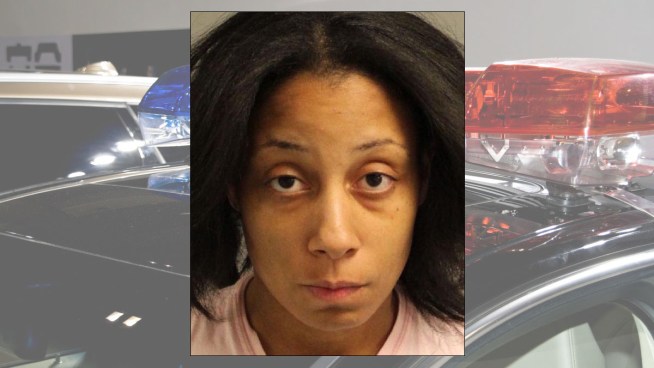
Alicia Brown, 24, has been charged with child abuse and neglect after a shocking discovery by patrol officers at Maryland Live! Casino.
“Very disturbing situation,” said T.J. Smith, Anne Arundel County Police.
According to police, Brown was seen pulling into the parking garage at the casino with her daughter in the car around 10 a.m. New Year’s Eve. She parked on the fourth level and left the child unattended for hours while in the casino.
The girl was found sobbing in the car just after 6:30 p.m.
Anne Arundel County Police say the little girl was left inside the car for eight hours with no food and no heat as temperatures plummeted below freezing.
Police say Brown returned to her car shortly after her daughter was found; she wasimmediately arrested.
“You should almost turn around and put your hands behind your back yourself,” Smith said. “There’s no excuse.”
Maryland Live! Casino would not comment on the investigation.
Police say Brown is not an employee at thecasino.
WJZ stopped at the address listed on the charging documents but there was no answer.
Parents learning of the crime say the decision to ever leave their child behind is unfathomable.
“Totally irresponsible,” said one man.
“Obviously her child is not that important to her,” said one woman.
A Maryland mother has been charged with child abuse after leaving her 4-year-old child unattended at a casino parking garage for approximately eight hours.
According to Anne Arundel County Police, crews responded to a Maryland Live! Casino parking garage around 6:30 p.m. on New Year's Eve for an unattended child inside a parked car.
An investigation revealed that the child's mother, 24-year-old Alicia D. Brown of Baltimore, entered the garage around 10 a.m. then went to the casino.
The child appeared to be in good health and showed no signs of physical abuse. According to a police report, blankets covered the rear windows of the vehicle so that no one could see the child inside.
Brown was charged with child abuse, confining an unattended child and neglect of a minor. She was released on a $150,000 bond Wednesday.
President and General Manager of Maryland Live! Casino Rob Norton released the following statement to News4:
"Incidents of parental neglect and lack of personal responsibility are disturbing. We are thankful that our security team was able to intervene and get the appropriate authorities involved and that we found the child unharmed."
Town argues that casino would affect traffic, police
BY CHRISTINE SMITH
STERLING CORRESPONDENT
Town Administrator Terri Ackerman expressed surprise last week after Sterling’s petition to be designated as a “surrounding community” of a gaming facility proposed for a site on Jungle Road in Leominster was denied.
The Massachusetts Gaming Commission unanimously voted to deny the town’s petition at its public meeting held in Boston on Nov. 21. At the same meeting, state officials also voted against the City of Fitchburg’s petition but granted the Town of Bolton’s.
Elaine Driscoll, director of communications for the Massachusetts Gaming Commission, said that Sterling’s “surrounding community” status was denied due to a “lack of identified impacts.”
Ackerman hesitated to make a full statement on the matter, but noted that she felt that the town had identified and documented a number of issues that Sterling officials believe would impact the town, which they had submitted to the state for review. She is currently seeking an explanation of the Commission’s decision.
Without the designation as a “surrounding community” Sterling cannot seek arbitration at the state level, forcing The Cordish Companies, also known as PPE Casino Resorts MA, LLC, the company proposing the slot facility, to pay annual mitigation fees to the town for any impact that the facility will have on the town.
It its petition to the state, the town had argued that the Sterling border’s onefourth mile proximity to the proposed slot facility on Jungle Road was significant and would mean additional traffic on town roads and place a strain on town emergency departments. However, Cordish stated that the location is on a dead-end street, with no access directly from Sterling.
The Gaming Commission had reviewed the August study by the Massachusetts Regional Planning Council, which “raised significant concerns about traffic on Route 117 in Lancaster and Bolton,” with recommendations to review the impact on both of those towns. The study made no mention of roads in Sterling.
An analysis conducted by consultants from Green International Affiliates, Inc., also reviewed by the Gaming Commission, said that traffic would most likely travel to and from the site on Interstate 190, rather than on Sterling’s town roads.
Green International noted there would be about an annual 22.5% increase, or another 2.33 million, in vehicles coming from south of the site and traveling the six-mile portion of Route 190 located within Sterling on their way to the slot parlor. Based on numbers that currently use the highway and a yearly average of 33 accidents on this stretch of road, Green International estimated the potential crashes would increase by less than one per year as a result of the increase.
Sterling officials had argued, however, that there would be negative impacts on Routes 12 and 62, as well as Chocksett and Pratts Junction roads, all of which service roads leading to the slot parlor and which are patrolled by officers of the Sterling Police Department. Town officials had also stated concern regarding Sterling’s responsibility in being first responders to accidents and incidents on I-190, which they feel will significantly increase as a result of the additional traffic flow.
Other concerns regarding the facility included the potential increases in larcenies and other crimes, reduction of property values, and a need for expanded social service programs as a result of problem gambling.
Ackerman had noted at the Board of Selectmen’s meeting on Nov. 20 that the town would continue to negotiate with Cordish, but that both parties have not reached common ground on “a lot of issues.”
The town is hoping to reach an agreement with the company for some amount of annual mitigation directly from Cordish.
Driscoll noted that a portion of revenues from the gaming facilities will be placed into a mitigation fund, which would be available for communities to tap into, “if impacts present themselves after licensing that were not originally anticipated.” She noted that towns could petition the state for these funds after preparing a clear analysis of impacts based on specific data.
Cordish received approval from voters in Leominster earlier this fall for a 125,000 square foot facility to contain 1,250 slot machines, three restaurants, and a small entertainment venue. However, Cordish still has to wait until the beginning of January, when the Gaming Commission is expected to announce which of three proposed slot parlors will receive the single state license.
The other two proposed slot parlors include locations in Raynham and Plainville.
A public hearing on the issue will be hosted by the Gaming Commission at Leominster City Hall on Dec. 3 from 4-6 p.m.[Another 'public hearing' at a time inconvenient for most of the public]
Cordish was booted from 3 other communities before their slick pr campaign......
Three times a loser and we took the bait!We were the fourth community on the selection list. Danvers, Boxborough, and Salisbury all had the good sense to refuse the Las Vegas style Live! brand slots parlor. These communities had town selectmen who were engaged in discussion and the selection process. Residents in these towns had a chance to speak. All we got was a well-funded, biased marketing campaign. See the Boston Business Journal article for details.
Communities that education themselves OPPOSE PREDATORY GAMBLING!
I join my nosy neighbor in saluting Leominster for recognizing the only way to protect every community in the Commonwealth is
No Slots in Leominster puts Repeal the Casino Deal right at the top of their home page - thanks, NSL!
Get involved: Repeal the Deal Signature Drive!
This is a bipartisan, statewide, volunteer initiative to get a referendum question on the November 2014 ballot that would repeal casinos, including slots parlors, in Massachusetts. Join us in gathering signatures at the Leominster Market Basket on Sat. 10/28/13 or stop by to sign the petition. We will be there between 8-10 and need volunteers between 10-12. If you can volunteer some time, please send an email to nocasinosinleominster@gmail.com and include your name, address, and phone nuhttp://www.noslotsleominster.com/noslots/index.htmlmber.
Massachusetts Gaming Commissioner Bruce Stebbins, left, takes notes, as William P. Devereaux, of Pannon Lopes Devereaux & West, representing Fitchburg, speaks at the podium during a public hearing Monday in Lancaster. See video and slide show at sentinelandenterprise.com. SENTINEL & ENTERPRISE / BRETT CRAWFORD
LANCASTER -- While there wasn't any new ground broken Monday in an ongoing debate about the proposed slots casino, it was good to hear opinions first-hand, said commission Chairman Stephen Crosby.
Members of the state Gaming Commission spent 3 1/2 hours informing residents and municipal leaders from communities outside Leominster about the merits of a slots casino if it grants a license to open on the border of Lancaster and Leominster.
"Hearing from you will help us inform our thinking going forward trying to make this difficult decision," Crosby said.
The Cordish Companies is proposing a $200 million slots casino on Leominster's Jungle Road, which is near the Lancaster line.
The proposed casino will be 125,000 square feet with 1,250 slot machines and electronic games.
Other developers are proposing similar plans in Plainville and Raynham.
The commission has one license to issue and expects to make a decision by early January. It is also responsible for issuing licenses next year for three full casinos that will be placed in the western, eastern and southern parts of the state.
Monday was the first time for many speakers to voice their opinions publicly since the proposal was introduced this summer. Seventy-nine people signed up to address the commission, though some left before getting a chance. Most were from Leominster and Lunenburg, but there were also residents from Sterling and Bolton.
Crosby warned the audience that the meeting was not to debate whether the state should allow casinos at all; rather, comments should focus on the Leominster proposal.
A similar meeting is scheduled to be held in Wrentham for the Plainville proposal tonight and a meeting in Easton to discuss the Raynham proposal Wednesday.
The commission plans to hold another meeting in Leominster in early December.
Casino opponents hold signs outside the Lancaster Community Center during the state Gaming Commission's public hearing on Monday.
Proponents and opponents talked about jobs created, the negative impacts on traffic along roads such as Route 117, the impact on area businesses, the impact on response times for emergency services due to traffic, and the size of the project -- it was originally planned as 16 acres and could now be 26 acres.
Opponents walked past windows outside the Community Center, holding signs denouncing the proposal and then pushing them up against the windows.
Casino supporters reminded the commission that it will create 500-700 permanent jobs and about 600 temporary construction jobs to help stimulate employment and the economy.
State Rep.
Lynn Percuoco, 19, of Leominster, talks to the Gaming Commission panel.
Dennis Rosa argued the project will help the Gateway Cities of Leominster and Fitchburg, which each have more than 40,000 residents and have been targeted by the state for economic revitalization.
"You can affect almost 100,000 people in two communities, two Gateway communities, out of 26 in the state," Rosa said.
Opponents painted a picture of David versus Goliath, in which The Cordish Companies has spent lavishly to build support but No Casino in Leominster has had few donations and little time to prepare but managed to find its own supporters.
"If there is more time, there's a possibility Leominster wouldn't even be in the running right now," said Corey Shields, of Leominster.
Traffic along Route 117 was a popular concern.
Lancaster Selectman Stan Starr makes a point.
"This project will have a significant impact on traffic in Bolton and Lancaster," said Bolton Town Administrator Don Lowe.
Fitchburg sent a contingent of lawyers and Housing Director Ryan McNutt to say The Cordish Companies is not giving their concern about impact enough credence.
"Their dialogue with the city of Fitchburg has not exactly been overwhelming," said attorney William P. Devereaux said. "We would ask the commission to monitor how Cordish deals with the surrounding communities."
Fitchburg City Solicitor John Barrett said it isn't fair to compare the impact of the proposed Leominster casino with The Cordish Companies' full casino in Hanover, Md.
Anti-casino leader Arline Stith speaks to the Gaming Commission panel.
"We expect there will be residual traffic issues given the close relationship between Fitchburg and Leominster," he said.
Lancaster residents said it isn't fair they didn't get a vote as to whether to allow the proposal as Leominster residents did.
David Joyce, of Brockelman Road, Lancaster, said his house is a quarter-mile from the proposed casino and he didn't get to vote but Leominster residents on the other side of the city did get to cast ballots.
Voting should have been based on distance to the casino rather than municipal boundaries, Joyce said.
"I used to see the stars from my house, now I can see half the stars," he said. "When there's a 15-story hotel I won't see any of the stars."
LOTS OF UPS AND DOWNS: Signs for and against the proposed Suffolk Downs casino abound in East Boston neighborhoods. Suffolk Downs officials are racing to secure a new casino company partner before the Nov. 5 referendum on the proposal.
Tuesday, October 22, 2013
Suffolk Downs, under pressure to lock down a new gaming partner before a do-or-die Nov. 5 vote on the $1 billion project, is in talks with at least four casino companies potentially interested in joining forces as shockwaves from last week’s bombshell Caesars disqualification continue to reverberate throughout the industry.
“We are in active conversations and encouraged by the high level of interest from top-class gaming operators,” Suffolk Downs Chief Operating Officer Chip Tuttle told the Herald last night.
“The most important thing is that we find someone that is suitable for the gaming commission and is accepted by Boston and Revere.”
Sources close to the situation said four companies are at the top of Suffolk Downs’ wish list, including three that have already been deemed suitable by the Massachusetts Gaming Commission: Penn National Gaming, which is seeking a slots license for Plainridge Racecourse in Plainville; Rush Street Gaming, a Chicago-based company that had been pursuing a slots parlor in the Worcester area; and Cordish, a Baltimore firm that wants to build a slots palace in Leominster.
[What a card! A SLOT BARN is ow a SLOTS PALACE! He's not biased...No!]
The fourth, Hard Rock, had been pursuing a casino in West Springfield, but the project was rejected by voters.
The company, which runs the Seminole Hard Rock Casinos in Tampa and Hollywood, Fla., has not been vetted by the state gaming panel.
Hard Rock and Cordish already have strong ties to Suffolk Downs owner Richard Fields, who worked with Cordish to co-develop the Florida Hard Rock casinos.
Rush Street Gaming honcho Neil Bluhm, meanwhile, has strong Boston ties as one of the developers of Copley Place and Faneuil Hall. He also runs successful urban casinos in Chicago, Philadelphia and Pittsburgh.
A Penn National spokesman said he would not comment on “rumor,” while a Rush Street spokeswoman declined to comment. Officials from Hard Rock and Cordish did not respond to requests for comment.
“Suffolk Downs has to get a partner to put this behind them,” said City Council President Stephen J. Murphy. “That’s going to be the most important thing. I think they’ll have one by the end of the week.”
“I’d like to see the casino part decided by the vote. I would say as quickly as possible,” said Mayor Thomas M. Menino.
Suffolk Downs launched a new TV ad today touting the project and assuring supporters that the Caesars split is not a deal killer.
“There are thousands of elements to this proposal and the gaming operator was only one,” Tuttle said.Suffolk Downs abruptly parted ways Friday with Las Vegas gaming giant Caesars over issues raised in a 900-page gaming commission background report, including reputed Russian mob ties to a Caesars business partner. Officials at Caesars — the largest casino company in the world — have blasted the findings and say it sets an impossible standard for international companies.
Leominster passed their referendum last month and now Cordish Gaming, the company vying for the sole slots parlor location in the state, is before the MA Gaming Commission to file their phase 2 application....but it appears the amount of land presented to the MGC for development is MORE than was originally presented to voters....
Bait and switch?
Can we trust Foxwoods to do the same? How much land will they use? Will their footprint remain the same, but their buildings be TALLER?
I am very concerned over the announcement made by the Cordish Companies owner, David Cordish, at the presentation of plans for a casino in Leominster given before the Massachusetts Gaming Commission on Oct. 7.
I use the term announcement because this was the first time that this detail has been stated publicly.
The host agreement made with the mayor of Leominster states that the project involves land totaling approximately 16 acres located on Jungle Road. The ballot used in the Sept. 24 referendum state the facility would be on about 16 acres of land on Jungle Road.
However, on Oct. 7, Cordish Companies disclosed an alternate plan, announcing the purchase of an additional parcel of approximately 10 acres for casino development.
This means the company could be working with two contiguous plots, a total of 26 acres on Jungle Road, not just the original 16 acres.
This is stated on slide 21 of the presentation, available at www.massgaming.com.
Very clearly this does not meet a reasonable definition of a "fair and transparent process" as specified in the mission statement of the Massachusetts Gaming Commission.
Citizens of Leominster deserve a fair shake. It is not fair and transparent to the city and her citizens, who are ultimately the most important part of this project.
Is there an expansion plan in place for a full casino at some date in the future?
Slot parlor hopefuls make their pitch to the gambling commission
David L Ryan/Globe Staff PhotoThe state gambling commission heard presentations from Cordish Cos., Penn National Gaming, and Raynham Park. All of the plans had price tags of more than $200 million
By Mark Arsenault
Globe Staff
October 7, 2013
Gambling companies opened the competition for the state’s sole slot machine parlor license Monday with glitzy renderings and lots of big promises, in dueling presentations before the state gambling commission.
The 90-minute presentations at the Boston Convention and Exhibition Center by Cordish Cos., Penn National Gaming, and Raynham Park marked the end of a long application period — 18 months from the commission’s first meeting in 2012 — and the beginning of the competition for the first Massachusetts casino license.
The companies tried to impress the commission with videos with soaring music, testimonials, and pictures of good-looking people enjoying a good time at a casino. Behind the flash of the presentations were revenue projections, maps, and traffic plans.
It will be up to the five-member commission to weigh the details of each proposal and award the slots license, as soon as December or early January.
Each of the three finalists gave credible presentations, offering different strengths. Each has passed state background checks and survived a referendum in its host community.
Each of the companies emphasized their proposed locations, but each plan had different strengths.
Cordish Cos. of Baltimore has proposed a $204 million slots parlor near the intersection of Route 117 and Interstate 190 in the north-central city of Leominster, the hometown of Johnny Appleseed. It is about an hour from Boston, just off Route 2, the main east-west highway in the northern part of the state.
The company pushed hard on its proposed location, saying its more remote site would not cannibalize business from the three resort casinos the commission also plans to license.
“A state goes into the gaming business for a couple reasons,” said company chairman David Cordish.
“One of the primary, primary reasons is to make money.”
Cordish maintained that his Leominster location would make more than his competitors, both of which would compete with the Twin River casino in Lincoln, R.I., and a proposed Mashpee Wampanoag tribal casino in Taunton.
The slot parlor, by law, will pay the state 49 percent of its gambling revenue in taxes.
Cordish’s presentation also focused on the company’s family ownership, in its fourth generation, and its commitment to a $1 million to $1.5 million annual grant to a University of Massachusetts business program that supports emerging medical technology companies.
Penn National Gaming, the second presenter, has proposed a $225 million project at Plainridge Racecourse, which would be renamed Plainridge Park Casino, a departure from the company’s Hollywood casino brand name.
Penn’s argument to the commission leaned heavily on saving harness racing in Massachusetts. Plainridge is the state’s only active harness track, and the sport probably will not survive at Plainridge if Penn does not win the license.
“Horse racing is in our DNA,” said Tim Wilmott, the company’s chief operating officer. If Penn wins the license, the company would preserve racing-related jobs at Plainridge, as well as the livelihood of horse farmers and others connected to the industry, he said.
Like Cordish, Penn bragged about its location, but with a different argument. Penn’s proposed site, at the junction of Route 1 and Interstate 495 in Plainville, about 5 miles south of Gillette Stadium, is best positioned to intercept potential customers heading to Connecticut tribal casinos or to Twin River, the company said.
“We view our location as the last line of defense,” said Jay Snowden, Penn senior vice president of operations.
The firm announced that former New England Patriots quarterback Doug Flutie would open a sports pub at Plainridge, at which Flutie and the Heisman Trophy he won at Boston College would make regular appearances.
Penn is the second applicant to pitch a slots parlor at Plainridge. The original applicant, Ourway Realty, was disqualified from the bidding after state investigators discovered that the track’s former president had taken more then $1 million from the Plainridge money room over several years
The final applicant, Raynham Park and casino partner Greenwood Racing, are planning a $227 million slots facility at the simulcast parlor and former dog racing track in Raynham. Greenwood chief executive Tony Ricci said the company plans to renovate buildings on the site for a temporary slots parlor that could be open just six months after Raynham won the license. Ricci said the quick opening would be “a powerful benefit for the state,” that could open a stream of tax revenue as soon as next July.
The company would construct a new building on the 100-acre property as the permanent home for the 1,250 slot machines permitted at the facility. Part of Raynham’s pitch is that the vast size of the property could accommodate related development in the future.
Raynham Park also offered a sweetener for the harness racing industry. If Raynham wins the license and Plainridge closes, Raynham would modify the thoroughbred track at the Brockton Fairgrounds for harness racing, Ricci said. With the gambling commission’s permission, the company would hold harness racing from August to October, 2014, said Ricci, to “give the industry a soft landing place” and keep the sport alive in Massachusetts.
Like his competitors, Ricci insisted he had the best location. He said putting a slot parlor near a proposed Mashpee casino would benefit Massachusetts by siphoning money from a tribal facility, which may not be required to share much gambling revenue with the state, to a highly taxed commercial development.
BOSTON (AP) — Three firms competing to operate the state’s first and only slots parlor made pitches Monday to the Massachusetts Gaming Commission, with each touting their respective locations as superior to the others.
Cordish Cos., Penn National Gaming and Raynham Park made formal presentations to the five-member panel that expects to award the slots-only license in late December or early January.
After hearing their presentations, commissioner Chairman Stephen Crosby said the panel faces a ‘‘tough choice.’’
The winning firm would be the first facility licensed and almost certainly the first to open under the state’s 2011 expanded gambling law, which also allows for up to three regional resort casinos.
All three companies promised to install the maximum 1,250 slot machines allowed under the state law.
Penn National said it would continue harness racing at the Plainridge track in Plainville, while Raynham Park said it would seek to be a ‘‘safety net’’ for harness racing if it won the slots parlor license and Plainridge subsequently closed.
Cordish, with no plans to offer racing, touted its location in Leominster as ideal because it is at least one hour from any of the proposed resort casinos in Massachusetts and ‘‘would not cannibalize the big three,’’ said David Cordish, chairman of the Baltimore-based company.
By contrast, he said, Plainridge and Raynham were both near where the Mashpee Wampanoag tribe hopes to build a resort casino in Taunton.
Cordish also said it would create jobs beyond gambling in the region by providing up to $1.5 million a year to help startup medical device firms through a partnership with the University of Massachusetts.
Cordish projected a July 2015 opening date for its $200 million slots parlor, adding it could open six months earlier under an alternative construction plan.
But Penn National Gaming and Raynham Park officials both told the commission they could begin slots gambling sooner because they would be building upon existing facilities.
Wyomissing, Pa.-based Penn National touted easy access to Plainridge from Route 1 and Interstate 495, and promised $4 million in other traffic improvements. They also said the site’s close proximity to Rhode Island would help it capture business that now leaves Massachusetts and goes to the Twin Rivers casino in Lincoln, R.I.
The company said its proposal would save harness racing in Massachusetts.
‘‘Horse racing is in our DNA,’’ said Timothy Wilmott, president of Penn National, which operates combined racing and casino operations in other states.
Longtime Raynham Park operator George Carney has partnered with Greenwood Racing, owner of Parx Casino outside Philadelphia, for a $168 million slots parlor at the facility that has been offering simulcasting since voters outlawed dog racing in Massachusetts four years ago.
‘‘It seemed like four lifetimes before I would get here today,’’ Carney said. ‘‘Just to be one of the finalists in the selection process makes me feel very good.’’
Tony Ricci, Greenwood’s chief executive, said Raynham was the superior location because it’s just 30 miles from Boston and near a proposed commuter rail stop. Ricci also contended that Raynham posted superior revenues to Plainridge when both operated as race tracks.
Raynham would apply for 40 days of harness racing in Brockton if it won the slots license and Plainridge, the only current harness track in Massachusetts, subsequently shut down, Carney said.
The MA Gaming Commission will hold a public
meeting to hear presentations from the three bidders on the slots
license:October 7th, 10:00AM Boston Convention Center 415 Summer Street, Room 151B Boston,
MA
Leominster is the fourth community in Massachusetts that the Cordish Companies
have approached to build a slots parlor. In Boxboro, Danvers and
Salisbury before us, for one reason or another, residents
and community leaders made it clear that a slots parlor was not welcome.
House to debate new Wampanoag Casino Compact Wednesday The House plans to take up Gov. Deval Patrick’s revised compact (H 3376) with the Mashpee Wampanoag tribe, which hopes to open a $500 million casino and hotel complex in Taunton if it can receive necessary federal approvals. House Democrats plan a noon caucus in Room A-1 followed by formal floor deliberations beginning at noon on Wednesday.
This is the second compact the Governor signed with the tribe. The first was rejected by the BIA. This new compact mandates how much the tribe would pay the state if it wins federal approval to proceed. Under the terms of the new compact, the Mashpee Wampanoag tribe would pay from 21 percent to 0 percent of gross gambling revenues based on the level of competition in Southeastern Massachusetts, known as Region C in the legislation that authorized casinos.
Three vie for sole Slots license
Leominster, Plainville and Raynham could be home to the state’s lone slots license, as three gaming developers hoping to build in those communities submitted final applications to the Massachusetts Gaming Commission Friday.
Cordish Companies hopes to build a slots parlor in Leominster. Raynham Park, which operated greyhound races until voters’ 2008 decision to outlaw dog racing went into effect, hopes to build a slots parlor on its site.
Penn National, which has seen its proposals drummed out of town in Tewksbury and passed over in Springfield, hopes to develop a slots parlor at Plainridge Racecourse, a harness horse racing track.
Plainridge had originally sought to develop a slots parlor on its own, but those plans were scrapped when the Gaming Commission ruled against the track’s suitability, following revelations that former track president Gary Piontkoski made personal cash withdrawals from the money room.
After awarding a slots license in either December, January or February, the Gaming Commission plans to begin evaluating casino license applications with goal of awarding casino licenses in April. The Gaming Commission will hear 90-minute presentations from the three entities seeking a slots license in the state on Monday
Gaming Commission to discuss Racing Regulations
Changes to state racing regulations are up for a public hearing Wednesday before the Massachusetts Gaming Commission. According to the commission, the regulations subjecting to penalty any licensee found to have administered a prohibited substance to a racehorse, preventing the transfer of a horse in a suspended trainer’s care to his or her spouse during the suspension period, incorporating a schedule of controlled therapeutic medication and an associated threshold and treatment restriction window, and incorporating a point penalty scheme to address licensees who incur multiple violations. (Wednesday, 12:30 p.m., 84 State St., 7th floor, Boston)
HANOVER, Md. — More than two dozen instances of underage gambling at Maryland casinos will cost casino operators tens of thousands of dollars in fines.
A consent agreement signed last week by gambling regulators and earlier by Maryland Live casino marks the state’s first penalty for underage violations. Under the agreement, Maryland Live agreed to pay $20,000 for four incidents of underage gambling. Soon Hollywood Casino in Perryville will pay $10,000 for two similar incidents.
There have been 30 known violations of underage gambling this year. The state can impose a maximum fine of $5,000 per incident.
Joe Weinberg, managing partner for Maryland Live casino, says casino operators will work toward zero tolerance at the 21-and-older establishment.
There is no state penalty for the young people who violate the policy.




 Posts
Posts


