Meetings & Information


*****************************
****************************************************
MUST READ:
GET THE FACTS!


Showing posts with label host communities. Show all posts

Monday, December 19, 2016

Some Pa. casinos pledge to pay host fee, but not Sands Bethlehem
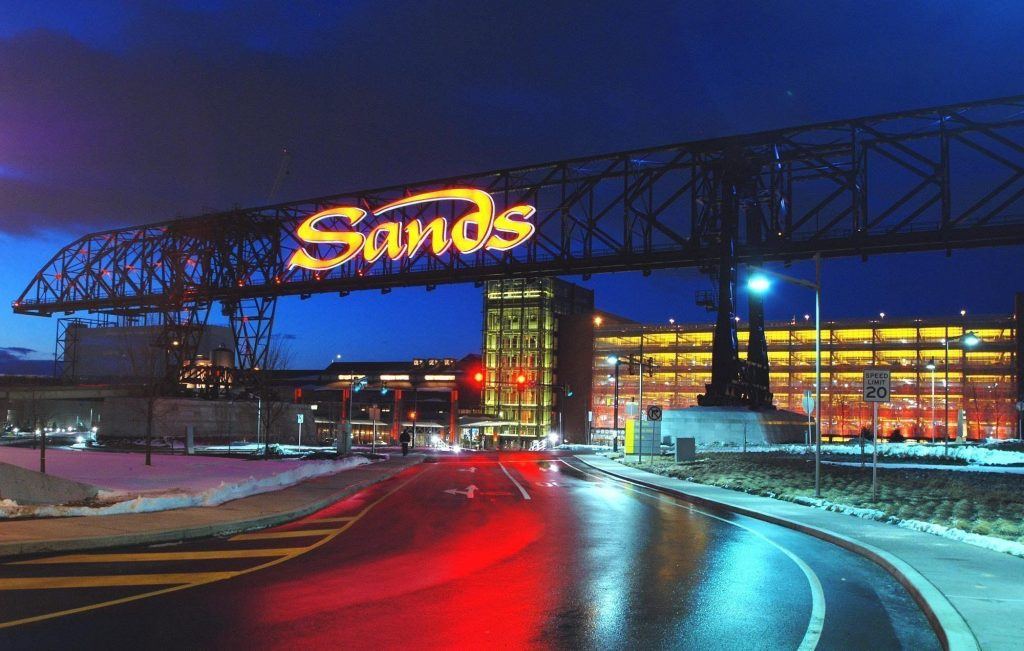


Some Pa. casinos pledge to pay host fee, but not Sands Bethlehem

Four casinos have committed to giving their communities the host fees that have been deemed unconstitutional. Sands is not among them.
 (FRANK WARNER/THE MORNING CALL)

By Matt Assad
Morning Call 

Even though the state Supreme Court has struck down the $10 million casino host fee as unconstitutional, casinos across the state have begun to cut deals to make sure their host communities still get the money they've been using to fund police, fire and even homeless shelters.
Sands Casino in Bethlehem will not be among them — at least not anytime soon.
Parx Casino in Bensalem last week became the fourth gambling hall to agree to give its host communities their casino money next year, even if state legislators can't follow through on their promise to restore the fee before the money is cut off in January.
Hollywood in Dauphin County, Harrah's in Chester and Rivers in Pittsburgh had already struck deals, while others are expected to follow in the coming weeks. But Sands officials who met with Bethlehem Mayor Robert Donchez last week told him they're going to take their cue from state legislators, who tried and failed to tackle the host fee issue before they went on break in November.
That wait-and-see approach leaves the city rolling the dice on when, or if, it will get money equivalent to the pay for 100 police officers.
"We're not going to speculate on any future outcome by the Legislature," said Ron Reese, spokesman for Las Vegas Sands Corp., which owns the Bethlehem gambling hall. "As it unfolds, we'll follow and act accordingly."
Donchez said he's not worried — yet.
"We met with the Sands and we're all hopeful legislators will find a fix," Donchez said. "If nothing happens by April, we'll talk [with Sands] again and take it from there."
All this talking, waiting and hoping is happening in the wake of a September state Supreme Court ruling that struck down the $10 million host fee and the 2 percent tax on slot machines revenues funneled to counties. Justices agreed that the tax put a much greater burden on smaller casinos such as Mount Airy Casino Resort than big-revenue casinos such as Sands Casino Resort Bethlehem.
Mount Airy, in Monroe County, challenged the $10 million fee, arguing successfully that it violates the tax uniformity clause in the state constitution.
Justices stayed their opinion for 120 days, until Jan. 26, to give legislators a chance to fix the law before the flow of money stops. But frantic attempts by House and Senate leaders to do that before the session ended in November failed. That's left communities that balance budgets with the the collective $140 million in host fees statewide relying on legislators to come together when they return to Harrisburg next month.
However, some casinos have decided to remove all doubt. Hollywood Casino, in Grantville near Harrisburg, was the first, striking a deal in November to pay the host fee through June, even if legislators fail to restore it.
"If they don't get a fix by June, we'll extend through December and keep extending it until the matter is settled," said Eric Schippers, a senior vice president with Hollywood Casino owner Penn National Gaming. "They're counting on that revenue for critical needs and we don't want them worrying about whether it's going to be there. It's going to be there. That's our commitment."
Rivers followed a few weeks later.
"To reinforce Rivers Casino's strong commitment to our hometown, we have worked collaboratively with city officials to ensure that $10 million in annual local share payments from Rivers Casino to Pittsburgh will continue uninterrupted through 2017," said Rivers General Manager Craig Clark.
As for the remaining six casinos — smaller resort casinos in Valley Forge and Lady Luck Casino in Fayette County were not affected by the ruling — the payment schedule gives host communities a little breathing room. Casinos make their host fee payments quarterly, and they'll make their Jan. 15 payment before the money stops.
Legislators will be back in session by mid-January. That gives them time to fix the law before casinos would miss their next scheduled payment April 15. The problem is that law changes often don't get passed until legislators are deep inside their annual June horse-trading session to pass the state budget.
Sen. Pat Browne, R-Lehigh, said he's hoping to beat the April deadline.
"With so many moving parts, there are no guarantees," Browne said. "But we'll be working as quickly as possible toward a fix. We know how important this money is."
Twitter @matthewassad21
610-820-6691
ALL IN
Casinos that have agreed to pay host fees through 2017
•Hollywood Casino, Grantville
•Rivers Casino, Pittsburgh
•Harrah's Casino, Delaware County
•Parx Casino, Bucks County

http://www.mcall.com/business/mc-pa-casinos-host-deal-20161218-story.html

Saturday, October 1, 2016

UPDATED: Court strikes down casino payments to host communities in Pennsylvania


Geoff Freeman, CEO of the American Gaming Association, said as the ... made by casinos since the state passed the casino gambling law in 2004.


After rejecting city budgets in 2014 and 2015 and withholding about $20 million in gambling tax revenues, the Pittsburgh Tribune-Review reported that ...


The Sands Casino Resort Bethlehem provides its host city with almost $10 million annually in slot-machine revenues. (Express-Times file photo).


HARRISBURG, Pa. (CN) — The Pennsylvania Supreme Court ruled that a municipal tax on slot machines outside Philadelphia violates the state ...


With revenues at every casino always falling below $500 million a year, the $10 million has always been higher than the percentage take would be.

Casinos, with their flashy slot machines, lavish buffets and smoky table games, came with heavy strings attached that now serve as fiscal lifelines in ...


Former Harrison Mayor Jeff Crockett said he saw enough economic potential in the proposedcasino amendment that he hosted petitions for people in ...


Sands Casino Resort Bethlehem, for example, pays $16 million in fees to local communities. The $8.8 million Bethlehem gets is equivalent to 100 ...


The state's highest court on Wednesday ruled a formula in the state gaming act that determines how much gaming revenue casinos are required to ...


The state Supreme Court has struck down casino host fees that cities have come ... By striking down the tax paid by casinos, the court strips more than $16 ... state gaming law imposes a 2 percent fee on gross slot machine revenues, ...

High court strikes down casino payments to host communities
HARRISBURG, Pa. (AP) — Pennsylvania's highest court is striking down the tax that casinos pay their host communities, potentially devastating local ...

Local Governments Could Lose Funding From Casinos - Erie News Now
Millions of dollars are given to local governments each year, from fees paid by Presque Isle Downs, and other casinos in the state. But now, those ...


Hollywood Casino at Penn National Racetrack in Dauphin County. A court ruling will force the state legislature to reconsider payments to casinos' host ...


That difference cost nine Pennsylvania casinos a total of $48.5 million in the year ended June 30, according the Pennsylvania Gaming Control Board's ...


Luzerne annually receives approximately $12 million on average in Local Share Account program money from gambling revenues from the Mohegan ...


HARRISBURG, Pa. —Pennsylvania's highest court on Wednesday struck down a requirement that has forced casinos to pay tens of millions of dollars ...


PLAINS TOWNSHIP — Communities where Pennsylvania's casinos are located could lose tens of millions of dollars, thanks to a state Supreme Court ...


People sit at the bar at Mohegan Sun Pocono casino on Christmas day. ... because it is not uniform and affects Pennsylvania's 12 casinos differently.


HARRISBURG — Pennsylvania's highest court on Wednesday struck down a requirement that has forced casinos to pay tens of millions of dollars to ...


Farmland preservation could suffer if state lawmakers fail to restore $16 million in casino host fees paid out by Sands Casino Resort Bethlehem.

Court strikes down casino payments to host communities in Pennsylvania

Published  12:16 PM EDT Sep 29, 2016

The Pennsylvania Supreme Court ruled that the roughly 4 percent "local share assessment" is unconstitutional because it is not uniform and affects Pennsylvania's 12 casinos differently.
The justices said they would delay the effect of their decision striking down the tax for four months to give lawmakers an opportunity to fix it.
"We are mindful that our decision may significantly affect many counties and municipalities that have ordered their affairs in reliance upon" the casino tax revenue, Justice David Wecht wrote in the 18-page opinion.
Under the state's original 2004 casino law, casinos must pay at least 4 percent of gross slot-machine gambling revenues to their host communities. That includes 2 percent to counties and 2 percent or $10 million, whichever is greater, to municipalities.
  
SugarHouse Casino in Philadelphia is exempt, as are two smaller "resort" casinos: Valley Forge Casino in suburban Philadelphia and Lady Luck Casino Nemacolin in southwestern Pennsylvania.
  
But Mount Airy Casino in northeastern Pennsylvania's Pocono Mountains had asked the court to strike down the $10 million host fee, arguing that it violates the state constitution by imposing a heavier tax burden on lower performing casinos.
  
Some $141 million in slots revenue was paid in the last fiscal year to counties and municipalities, according to Pennsylvania Gaming Control Board data. That included about $48 million paid by casinos to satisfy the $10 million host fee requirement.
  
Gov. Tom Wolf's office declined comment on the ruling Wednesday. Senate officials said the decision could have far-reaching effects.
  
"We will take action and we'll do it in such a way to maintain the casino obligation to our local communities," Senate Appropriations Committee Chairman Patrick Browne, R-Lehigh, told the Morning Call of Allentown. "This would absolutely devastate these towns."
  
Douglas Hill, executive director of the County Commissioners Association of Pennsylvania, said the money is significant for counties.
  
"Very clearly, the gaming revenue has gone to legitimate and worthwhile local purposes, all aimed at improving the community, and equally for the host municipalities," Hill said.
  
The amount of the host fee is equivalent to the cost of 100 police officers, Bethlehem Mayor Robert Donchez told the Morning Call.
  
"So this is something that we're very concerned about," Donchez said.
  
The court also awarded relief to Mount Airy Casino, although the amount was not immediately clear.


Sunday, August 21, 2016

Could Bethlehem lose casino cash cow?


Could Bethlehem lose casino cash cow?


 Of The Morning Call
AUGUST 20, 2016

Pennsylvania lawmakers and casino executives have been squabbling for months about whether things such as online gambling or satellite casinos could help close the state's budget deficit, but another fight winding through the state Supreme Court could have a far bigger impact on Main Streets across the state.
Mount Airy Casino is asking the court to strike down the $10 million host fee most casinos pay to the towns where they are located, arguing it violates the state constitution by putting a much heavier tax burden on lower performing casinos.
If Mount Airy wins its case, it could eliminate a large chunk of the annual fee casino towns across the state use to pay for a wide variety of items.

"Our host fee is equivalent to the salaries of 100 police officers," said Bethlehem Mayor Robert Donchez. "That's a significant amount of money. That host fee is extremely important to our budget."
Sands Casino in Bethlehem is not contesting the fee it pays Bethlehem, but any decision issued by the Supreme Court likely would dictate how every casino must pay — or not pay.
A Mount Airy win would be a devastating blow to the budgets of most casino towns that collect the fee, but there's no need for those municipal leaders to panic, just yet. State legislators suggest they'd move quickly to alter the law to replace the fee — or at least they'd try. State legislators have spent much of the past year debating how to expand gambling to raise more money to balance the budget, but have not been able to reach consensus.
"I don't know exactly how we'd go about it, but given that this fee has been established for a decade, we're not just going to let this money be stripped from municipalities that rely on it," said Sen. Pat Browne, who chairs the powerful Senate Appropriations Committee.
Unequal tax
The case is being defended by attorneys from the state attorney general's office, which argues the tax scheme does not violate state law.
The case started in April 2015, when Mount Airy filed a legal challenge that argues the "local share tax" violates the uniformity clause in the state constitution, which requires that "all taxes shall be uniform, upon the same class of subjects." As a constitutional challenge to the gaming law, the matter was eligible to bypass lower courts and be filed directly to state Supreme Court.
The 2004 state gaming law imposes a 2 percent fee on gross slot machine revenues, to be paid to the municipalities where the casinos were built. However, the law also states that a minimum of $10 million must be paid. Therefore, the 2 percent would only really come into play once gross slot machine revenues for a casino went above $500 million.
Because that's never happened, the nine casinos affected by the law — SugarHouse Casino in Philadelphia and two resort casinos aren't subject to the minimum requirement — simply pay $10 million a year.

That creates an unequal tax that has some casinos paying a much bigger portion of their revenues to their host community. So, while the $10 million paid by Pennsylvania's most lucrative casino, Parx in Bensalem, was just 2.8 percent of the casino's 2014 gross slot machine revenue, the $10 million Mount Airy paid was more than 7 percent of its $140 million in revenue for 2014.
Each day, the Department of Revenue siphons 2 percent of all slot machine revenues from each casino and distributes it quarterly to the host community. At the end of the year, if that casino hasn't generated $10 million in fees then state regulators instruct the casino to make the payment needed to reach the $10 million minimum.
That "true-up" payment is what Mount Airy is contesting. For Mount Airy, the payment was $7.2 million for 2015, but even successful casinos have to write big checks. Sands, for example, had to pay $4 million to reach its minimum for last year.
In Sands' case, $3.2 million of that true-up payment went into Bethlehem's general fund and about $800,000 went to Allentown, under a deal struck between the cities before the gaming license was given to Bethlehem. It's a similar story in casino towns across the state, where casinos — depending on their revenue — pay end-of-year true-up fees ranging from Parx's $2.4 million to the $7.7 million paid by Presque Isle Casino, Erie.
"All we're asking for is uniformity and fairness, and that $10 million rate is neither," said Michael Sklar, the Atlantic City attorney who is co-counsel for the Mount Airy suit. "We think if the court strikes down the $10 million minimum, the 2 percent tax passes constitutional muster."
In addition to asking that $10 million minimum be struck down, Mount Airy is asking the court to award damages. While it doesn't specify how much, it has paid $57.4 million in true-up fees since it opened in 2007, second only to Presque Isle's $61.8 million.
Not a surprise
Part of Mount Airy's argument is not only that lesser performing casinos are unfairly burdened, but also that not every casino must pay the $10 million minimum. SugarHouse Casino in Philadelphia pays a straight 4 percent of its gross revenue. That consists of the same 2 percent all state casinos pay to their host county, plus another 2 percent that represents the local share, but without the $10 million minimum Mount Airy and other casinos pay.
Christopher Craig, a Pennsylvania Treasury attorney and former legislative counsel who wrote much of the gaming law, wouldn't predict how the court will rule, but he explained why the law was written the way it was.
The proposed Philadelphia County casinos in the law weren't given a $10 million minimum because the city was expected to be the only municipality that would have two casinos, therefore there was no need for a minimum. As it turned out, SugarHouse has been the only casino built so far, while the other gambling license has been delayed for years.
More to the point, Craig said the host fee is just that — a fee that every casino applicant was aware of when they applied for a gambling license in 2004. Though the Mount Airy suit repeatedly refers to it as a "Local Share Tax," it was actually called a "Local Share Assessment" in the law, Craig noted.
"A cost was identified for the impact gambling would have on a municipality and that cost was $10 million," Craig said. "In exchange for engaging in an activity that would otherwise be illegal, the licensee agreed to pay a minimum of $10 million."
That's how Sands Casino CEO Mark Juliano interprets it.
"We knew exactly what we were getting into when we applied for the license," Juliano said. "We're not trying to get out of it. We don't intend to join in the suit."
But two other casinos also have raised similar challenges. Harrah's Casino in Chester filed a similar suit last year and Rivers Casino in Pittsburgh filed a nearly identical suit in July. Harrah's suit was stayed while the Mount Airy case runs its course, and Rivers withdrew its case just a few weeks after filing it, presumably to wait for the Mount Airy decision.
Both sides have spent months filing preliminary objections and briefs, and oral arguments have already been made. There's no time limit on how long the court has to deliberate on the matter, so a decision could come any day, or it could be months away.
Analysts say the court could do everything from deny the challenge, to strike down the $10 million minimum requirement — or even strike down the entire local share fee altogether. It also will have to decide whether Mount Airy and the other casinos deserve a refund of any of the the more than $320 million in true-up payments they've made the past decade.
"This is one everyone is watching closely," Browne said. "There's a lot at stake."

AT ISSUE
• Mount Airy Casino is asking the Supreme Court to strike down the $10 million host fee most casinos pay to the towns where they are located.
• All casinos pay 2 percent of all slot machine revenues to the state Department of Revenue to be distributed to host communities. However, if that amount is less than $10 million annually, casinos are required to kick in the difference.
• That difference, a "true-up" payment, is what Mount Airy is contesting. In 2015, Mount Airy's true-up payment was $7.2 million.


Sunday, February 22, 2015

Ohio Defunding Host Communities


The article at the bottom goes far beyond PREDATORY GAMBLING, IMPACTS and the costs to HOST COMMUNITIES.

This defines the Failed Fiscal Policies.....

How Ohio Pulled $4 Billion+ from Communities and Redistributed It Upwards


Ohio: Poster Child for Mindless Global Self-Destruction


Racino communities looking to governor for payment plan


When the governor vetoed a legislative proposal to provide $500,000 each to Austintown and Dayton for hosting racinos, we thought he would lay out his ideas for the payments in the executive biennium budget he submitted to the Ohio General Assembly earlier this month.

But much to our surprise, Gov. John Kasich’s budget makes no mention of the racino communities.

Thus, we, along with Austintown Township officials, state Rep. Ronald Gerberry of Austintown, D-59th, and Senate Minority Leader Joe Schiavoni of Boardman, D-33rd, wonder if the governor has had a change of heart, or if there’s a hitch.

Last December, Kasich vetoed an amendment that would have required Penn National Gaming to pay $250,000 to each community, with the other $250,000 coming from the $150 million Penn National will be paying into a special fund over the next 10 years.

The governor contended that Penn National should be responsible for the entire amount, and then he went a step further: He said that four other communities that host racinos, North Randall, Northfield, Lebanon and Cincinnati, must also receive annual payments from the owners of the gaming facilities.

Excluded from his plan is Franklin County, which is home to Scioto Downs Racino. Hollywood Casino Columbus already is paying the county government.

In addition to Penn National, other gaming companies operating in Ohio are Rock Ohio Caesars, MTR Gaming, Hard Rock International, Miami Valley Gaming and Pinnacle Entertainment.

We praised the governor for coming up with a fair solution, but Gerberry issued a warning at the time that may be coming to pass.

Here’s what the veteran legislator said in the wake of Kasich’s action:


“I’m just hopeful that the persuasion of the governor’s office is very strong in 2015 on the majority party of the Senate.

The reason that this is not getting done is that there are some folks in the majority that believe that the host racino communities shouldn’t be paid $500,000 a year, and they’ve been able to stop it.

That’s unfortunate.”

We were skeptical about Gerberry’s claim that some senators do not believe racino host communities should be paid, but recent developments have given us pause.

ReluctanceFor instance, Gerberry and Schiavoni have been trying to get leaders from the four communities the governor added to the list to publicly support Kasich’s payment proposal, but their unwillingness to take a stand does raise questions.

After all, it’s their constituents who stand to benefit.“I think there should be at least 10 to 15 state reps crying over here saying, ‘Why haven’t these communities gotten their money?’

I don’t know why there isn’t more of a push from every racino community ... Don’t you think you would have gotten involved? Actively involved?”

We certainly would think so.In the end, however, it’s up to Gov. Kasich to press the GOP leaders in the House and Senate to take up the issue.

After all, he said no to the original proposal that would have resulted in Austintown and Dayton being paid by now.

The two communities have already budgeted for the $500,000, which is not a handout.

While the seven racinos in Ohio — there also are four Vegas-style casinos in Cleveland, Columbus, Cincinnati and Toledo — have spurred economic growth, they also forced governments to spend more on police and fire protection and road maintenance.


 - See more at: http://www.vindy.com/news/2015/feb/21/racino-communities-looking-to-governor-f/#sthash.ewD4jH8J.dpuf


Tuesday, May 27, 2014

Question - How many times does the American Gaming Association (AGA) Sr. VP for public affairs, Sara Rayme, and other employees/members gamble in casinos?


Bill Kearney
 
Massachusetts ‘GAMING’ Future
 
Question - How many times does the American Gaming Association (AGA) senior vice president for public affairs, Sara Rayme, and other employees/members gamble in casinos?
 
Answer - None
 
Las Vegas Sun - May 27, 2014 - Campaign launched to promote benefits of casino gaming
WASHINGTON — Tired of negative stereotypes and high taxes, one of gaming’s most prominent trade associations is going on the offensive.

The American Gaming Association is launching an aggressive campaign today aimed at promoting gaming’s positive benefits for the growing number of communities hosting casinos.

“I think the companies do an excellent job at telling their own story,” said Sara Rayme, AGA’s senior vice president for public affairs. “But from the association’s perspective, we need to tell the full picture of what gaming means to communities and the economic impact that it has.”

So AGA is throwing “significant resources” in the “high six to seven figures” into its “Get to Know Gaming” campaign.

Read more: http://www.lasvegassun.com/news/2014/may/27/campaign-launched-promote-benefits-casino-gaming/