
Meetings & Information


*****************************
****************************************************
MUST READ:
GET THE FACTS!


Showing posts with label Cape Cod. Show all posts

Tuesday, July 23, 2019

Source: Mashpee Wampanoag end contract with former congressman


Image result for wampaleaks


REEL WAMPS

WAMPALEAKS

GLADYS KRAVITZ


Waking Up In Vegas - Part One from Mary Tufts on Vimeo.


carverchick


Image result for wampaleaks

Source: Mashpee Wampanoag end contract with former congressman

By Tanner Stening
Posted Jul 22, 2019

MASHPEE — The Mashpee Wampanoag Tribe is no longer paying The Delahunt Group LLC, but the longtime lobbyist will continue working for the tribe on a pro-bono basis, according to sources.
The Delahunt Group, which is led by former Cape and Islands congressman Bill Delahunt, D-Quincy, filed a termination report on July 3 as a lobbying disclosure. The group received $30,000 during the first quarter of 2019 for work connected to the tribe’s ongoing effort to pass federal legislation that would protect the tribe’s sovereignty status and off-Cape land claims.
Last year, the tribe paid the firm $120,000, according to the lobbying database filings.
The Lobbying Disclosure Act requires that lobbyists file quarterly reports with the government if a client’s spending exceeds $3,000.
The tribe hired The Delahunt Group in March 2011 after working closely with the congressman in the tribe’s bid for federal recognition a decade earlier. Delahunt did not return a message requesting comment on the firm’s relationship with the tribe.
Tribal Council Chairman Cedric Cromwell could not be reached Monday through a spokesperson. He told the Times previously that Delahunt originally helped the tribe pursue gaming and navigate the federal bureaucracies for health care, housing and education for tribe members.
“He supported us in our pursuit of federal recognition,” Cromwell said. “He understands the tribe’s sovereign rights and the fight we had for 30-plus years for federal recognition.”
At the time, Delahunt had decried a federal government “replete with bureaucracy, impasse, inertia, and sometimes outright hostility” to tribes.
Delahunt’s lobbying firm has helped to identify and facilitate grants, sources said.
The tribe still has an arsenal of high-powered lobbyists working for it, including Dentons US LLP, Gavel Resources LLC and Ballard Partners, among others.
Lobbying disclosures reflect a $50,000 payment from Genting Malasia, the tribe’s financial backer, to Ballard Partners during the second quarter of the year, according to a July 17 filing.
Ballard Partners is run by Brian Ballard, who was President Donald Trump’s Florida finance chairman for his 2016 campaign. Dubbed “the most powerful lobbyist in Trump’s Washington” by Politico, Ballard has given hundreds of thousands of dollars to Republican causes over the past two years, according to data from the Federal Election Commission’s website.
But because of the tribe’s ongoing financial woes — and because Genting has stopped providing the tribe with loans — it is unclear if the lobbying firms are being paid for the work.
The Malaysian-based casino developer had fulfilled its contractual obligations to the tribe, according to tribal leaders, but is still backing efforts to stop a legal effort threatening the tribe’s 151 acres of reservation land in Taunton, where the tribe is looking to build a $1 billion casino.


ONE OF THE FIRST THINGS DONE IN MASSACHUSETTS WAS THE PUSH TO EXPAND ALCOHOL SERVICE....IT WAS PREDICTED THAT BEFORE THE INK WAS DRY, LOBBYISTS WOULD SEEK TO AMEND THE LEGISLATION.....
JUST WAIT.....


Conn. ended push for 24-hour bars at casinos after crash

State had hoped to collect more slot machine profits

DRIVER CHARGED A sailor, Daniel E. Musser, 24, is charged with manslaughter and driving under the influence and faces up to 19 years in prison.DRIVER CHARGED
A sailor, Daniel E. Musser, 24, is charged with manslaughter and driving under the influence and faces up to 19 years in prison.
By Gregory B. Hladky
Globe Correspondent / March 22, 2009

HARTFORD - Officials looking to help solve Connecticut's multibillion-dollar deficit thought they had found an easy way to raise another $5 million a year: allow casinos to serve alcohol 24 hours a day.

A sailor, Daniel E. Musser, 24, is charged with manslaughter and driving under the influence and faces up to 19 years in prison.
DRIVER CHARGED
More hours of bar service would mean more gambling, they figured, which would mean the state could collect more slot machine profits.

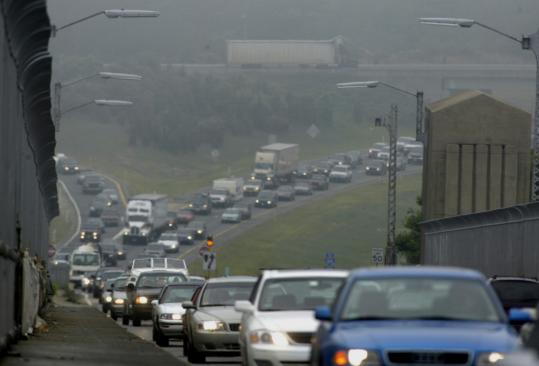
But the proposal by Governor M. Jodi Rell's administration came to a sudden end at about 3:30 a.m. on March 7, when a car leaving the Mohegan Sun casino turned the wrong way down Interstate 395, headlights off, and slammed into a van full of college students on their way to Logan International Airport. They were scheduled for a flight to Uganda, where they had plans to help out at an orphan age over spring break.

Elizabeth Durante, a 20-year-old pre-med student at Connecticut College in New London, was killed.

The car's driver, Daniel E. Musser, 24, a sailor from the Naval Submarine Base in Groton, was charged with manslaughter and driving under the influence and faces up to 19 years in prison.

The next day, Rell called Durante's death "an unconscionable tragedy" and pulled back her budget proposal to make alcohol available 24 hours at the casinos.

"Even though this accident occurred under the laws as they have been for many years, the governor said it does give one pause to question the wisdom of extending liquor service hours at the casinos," Christopher Cooper, Rell spokesman, said recently. "We don't believe the bill is going to move forward this session."

Chuck Bunnell, chief of staff for the Mohegan Tribal Council, agreed.

"The Tribal Council in general has taken the position that it's time to pause and mourn the loss of this very bright light of humanity," Bunnell said, "that it's not appropriate to have those discussions right now."

Bunnell said the tribe was originally "approached on a bipartisan basis" by lawmakers looking for ways to increase state revenue.

Lori A. Potter, a spokeswoman for the Mashantucket Pequot Tribal Nation, said analysts at the tribe's Foxwoods Resort Casino stand by their prediction that extending casino bar hours would result in an increase in state revenue.

"It is important to note that it would be impossible to find a more heavily regulated serving establishment in the state of Connecticut than the two casinos," Potter said.

Connecticut law requires the casinos' bars to stop serving by 1 a.m. Sunday through Thursday and by 2 a.m. Fridays and Saturdays. One of the arguments originally used in favor of allowing longer serving hours was that their competitors in Atlantic City serve alcohol 24 hours a day.

Legal hours for bars to serve alcohol vary greatly across the United States, according to Steven Schmidt, vice president for public policy at the National Alcohol Beverage Control Association.

In Massachusetts, for example, state law allows service until 11 p.m., but local governing bodies can extend the hours to 2 a.m. In states such as New Jersey and Nevada, Schmidt said, local authorities are allowed to set bar closing hours.

Charles H. Gartman, one of the students with Durante in the van that night, has difficulty understanding why anyone thought round-the-clock liquor at the casinos was a good idea.

"Twenty-four-hour bar service is a little bit ridiculous," Gartman said last week in a phone interview from his New York City home. "You can't trust everyone to drink and drive safely."

Gartman, 19 and a sophomore at Connecticut College, has not yet recovered from injuries he suffered in the crash.

The five other passengers also suffered injuries, some minor.

"Both my legs were pretty banged up, and at first I couldn't walk," he said. "I have pretty severe lacerations on my chin."

Nor has he recovered from the loss of Durante, of West Islip, N.Y. Gartman said it was Durante who got him interested in going to Uganda to aid orphaned children. "It was her enthusiasm for helping people," he recalled.

Stephanie Hinman, who was Durante's roommate and one of the students on the Uganda trip, finds it ironic that her friend would die at the hands of an accused drunk driver.

"Neither Liz nor I ever drank," Hinman said from her home in Norfolk, Conn.

"We lived together in the substance-free dorm."

In a 2007 interview with a college publication, Durante said she wanted to become a surgeon and work in Africa with Doctors Without Borders.

For Janice Heggie Margolis, executive director of the Connecticut chapter of Mothers Against Drunk Driving, Durante's death provided tragic evidence of why casino liquor hours should never be expanded.

She said the potential price to society of more fatal crashes is simply too high, no matter how much money might flow to the state. "This is exactly the reason why," Heggie Margolis said.
"You can never put on paper the cost of a life."


http://archive.boston.com/news/local/connecticut/articles/2009/03/22/conn_ended_push_for_24_hour_bars_at_casinos_after_crash/



Thursday, December 20, 2012

Not on Cape Cod!


Barnstable's Lynch to developers: Forget about local casino
BARNSTABLE — If the Massachusetts Gaming Commission eventually opens Southeastern Massachusetts up to commercial casino bids, Barnstable Town Manager Thomas Lynch has a message: not here.
 
In a letter to the commission Tuesday, Lynch said he has "grave concerns" about the potential impact that a casino would have on Barnstable.
 
The Cape and Islands are included in Region C in the state legislation that authorizes three casinos and one slot parlor in the Bay State, but no one has publicly proposed locating one of the gambling halls on the Cape. "The impacts inherent with the large-scale development contemplated for gaming in Region C cannot be supported in Barnstable — not by our environment, not by our infrastructure and not by our economy," Lynch wrote.
 
In a phone interview Wednesday, Lynch said he's not concerned about the tribe seeking to build on the Cape. He is worried that a commercial developer could find the Cape desirable, he said.
 
"If it's going to be open up to other bidders and someone starts looking from afar at Cape Cod, we wanted to say for our type of environment, infrastructure and economy, we would rather not see it in Barnstable," Lynch said.
 
A developer might see Barnstable and particularly Hyannis as being attractive because there is a regional transportation system and an available workforce, he said.
 
"Barnstable being the largest town, it often gets targeted," he said.
 
Lynch sent the letter on his own and expects to fill in Barnstable Town Council at tonight's meeting, he said.
 
In a statement Wednesday, the tribe reiterated that its focus is across the bridges and not on Cape Cod where leaders have promised not to build.


"Our plan for a destination resort casino is in the City of Taunton, which has been a great partner in our efforts," tribal council Chairman Cedric Cromwell said in a statement.
 
The tribe is seeking to build a $500 million Indian casino in Taunton that still faces significant hurdles. On Tuesday, the gaming commission agreed to give the Wampanoag three months to make progress on a compact with Gov. Deval Patrick. In March, the commission will reevaluate whether to open up the region to commercial bidders.
 
Clyde Barrow, a casino expert at the University of Massachusetts, Dartmouth, Center for Policy Analysis, said Lynch and others on Cape Cod need not worry about a casino developer looking at the Cape.
 
The narrow roads can't handle the 12,000 to 20,000 car trips per day and the Cape Cod Commission remains a major deterrent for potential developers, he said. Class III gaming, which includes slot machines and Las Vegas-style table games, is prohibited on the Cape under the commission's regional policy plan because of the "stresses it places on the region's environment, transportation infrastructure, and economy."
 
Meanwhile, polls done by UMass consistently show that the majority of Cape Codders do not favor casinos, which makes getting a positive vote by the host community unlikely, he said.
 
"It's a bad location, the access is horrible," Barrow said of the Cape. "If you're a developer, you're going to walk away from that in a couple of minutes."


Saturday, July 21, 2012

Showing their cards


The Cape Cod Casino Cheerleader has posted the unattributed editorial below praising the $$$ and ignoring the costs, impacts and consequences of increased crime, infrastructure cots, the gross flaws in both the Taunton IGA and the State Compact.

Too much KoolAid consumption!


Showing their cards


When the commonwealth and the Mashpee Wampanoag came to an agreement concerning the future of casino gambling in southeastern Massachusetts last week, it represented the most recent milestone in a journey that still has some miles to go.

In essence, the new compact is a memo of understanding between the two groups that outlines who is responsible for what as the process moves forward. The Wampanoag get the state's approval to build a casino in Taunton, and the tribe agrees to pay 21.5 percent of the casino's gross gambling revenues to the state. The tribe agrees to allow state law enforcement to police the facility. The Mashpee Wampanoag also receive exclusive rights to the southeastern Massachusetts gambling market for 15 years. If the state violates that exclusivity, the tribe's yearly payment drops to 15 percent.

In a separate agreement reached earlier this year, the tribe also pledged $13 million annually to the town of Taunton, as well as $33 million for infrastructure improvements. It appears, as Gov. Deval Patrick has suggested, to be a win-win situation for all parties concerned.


There remain a handful of significant unknowns, however, as the project begins to accelerate. For example, the compact must still be approved by state lawmakers and the Department of Interior. In fact, the tribe must still secure several federal approvals for the $500 million project, which includes the casino, hotels, shops, and even a water park.

Patrick's imprimatur will likely help make this process less tenuous, but there are no guarantees, especially in a year of national elections and a potential change of administrations. For example, a second Obama administration would likely be more sympathetic to Patrick's backing than a Romney administration.

There is no question that the tribe deserves its shot with this new casino; they have come too far and worked too hard to both acquire federal recognition and to establish their own independent identity.
[And many of us remember how they got there.]


Although there may be some perilous legislative hurdles ahead, none seem insurmountable given the tribe's track record. The House is expected to vote today and the Senate will take it up Thursday, with both expected to pass the measure.

What remains uncertain is just how many gamblers a Taunton-based casino will be able to draw away from more distant, but longer established, casinos such as Mohegan Sun and Foxwoods.
[Whose revenues are declining.]

Massachusetts is also planning to enter into two additional casino agreements for other areas in the commonwealth, which may also reduce the potential draw of the Wampanoag's efforts.

Make no mistake: it would be nice to see some of the gambling revenues that have been drifting across the border remain here in Massachusetts. Similarly, it would be even nicer if the Mashpee Wampanoag were finally able to generate the income they need to help make many of the tribe's individual and collective dreams a reality. Regardless of the odds, the tribe is doubling down and betting on the future. Here's hoping that dice remain lucky for them.

Thursday, April 28, 2011

Cape Cod Illegal Gambling Corruption

From Frederica Cade's blog, was this seemingly innocuous release:

PRESS RELEASE: Cape Cod Gambling Group Charged with Illegal Gambling and Obstructing a State Law Enforcement Investigation

The Boston Globe offered:
3 to plead guilty in gambling ring
DA O’Keefe denies link to Cape operation
By Milton J. Valencia

An investigation into illegal gambling on Cape Cod that triggered a wider federal probe of alleged public corruption involving Cape and Islands District Attorney
[Republican] Michael D. O’Keefe has resulted in charges against three members of an alleged gambling ring. All three are now cooperating with authorities and have agreed to plead guilty, according to documents unsealed yesterday

The Globe, citing people with direct knowledge of the investigation, reported in April 2010 that the State Police probe of Hart had sparked a federal investigation of O’Keefe. The investigation was launched after a relative of Hart’s made a comment on a wiretap that suggested the district attorney may have protected illegal gamblers in the past
.


Delving further, the plot thickens with additional information, worth consideration:

From CapeCodToday:
DA O'Keefe denies he's a crook


The DA's New Clothes, or, McCowen Unbound
Everything you always wanted to know about the Christa Worthington murder,
But couldn't get District Attorney Michael O'Keefe to tell us
By Walter Brooks


The comments are interesting as well. This bears watching as it unfolds.

Friday, November 12, 2010

Gambling Addiction: Cape Cod Attorney

A Cape Cod attorney, John "Jack" Roberts, betrayed his clients, destroyed his life and sacrificed his license to practice law because of his gambling addiction. Even smart people can succumb.

Builder repaid for lawyer's theft

A contractor bilked out of more than a half million dollars by a Cape attorney is getting his money back.

It's the second largest award ever granted by the Massachusetts Clients Security Board, a quasi state panel that makes good on money stolen from attorneys' clients.

Norman Sasville, 63, of Middleboro was awarded $656,000 by the state board. He's one of 92 clients awarded $2.4 million by the board this year, according to a press release issued this week.

The board, which the Supreme Judicial Court established 35 years ago to restore a level of trust in the legal profession, uses money from a $300 fee licensed attorneys pay annually.

Sasville was bilked out of the money by John "Jack" Roberts, 60, a Dennis attorney who has since been disbarred. Roberts pleaded guilty in May to embezzling the money from Sasville.

Though Roberts was ordered to make restitution, it's doubtful Sasville would have seen his money any time soon. Roberts was disbarred in 2007 and had just finished serving house arrest when Sasville's case came to light.

In 2007, Roberts was found guilty of stealing $137,000 from the estate of Alice May, a Sandwich woman who died at 95. The state board has also reimbursed May's estate.

Reached by phone Thursday evening, Sasville declined to comment.

In 2009, Sasville told the Times that Roberts took advantage of him when he was at his most vulnerable. Sasville hired Roberts in 2001 and gave him power of attorney to pay his bills, including the college tuition for his children, while he was in jail serving two years of a four-year sentence for operating under the influence of alcohol.

According to the website for the Massachusetts Clients Security Board, Roberts was hired by Sasville in 2001 after the Middleboro man was severely injured in a motorcycle crash and convicted on a drunken driving charge.

Sasville agreed to pay Roberts $6,000 to take care of his financial affairs "because he had known him for 25 years and trusted him," according to the state board's website.

"Mr. Roberts collected $1,356,909.49, disbursed $700,994.89 to or for the benefit of (Sasville), and misappropriated the balance for his gambling addiction," the board stated in its narrative on the case.

Before his motorcycle crash, Sasville had been a successful framing contractor on Cape Cod, where he worked on projects such as Deer Crossing in Mashpee and Ballymeade in Falmouth, he told the Times in 2009.

"Do you know how many nails you have to bang to amass that kind of money?" Sasville said at the time. "I'm back swinging a hammer again. I was hoping to retire."

In the theft of money from the Sandwich woman's estate, Roberts was named the trustee of the woman's will, again taking advantage of a trusted relationship, May's daughter Nancy Allen told the Times in 2009.

Roberts also used that money to fuel his online gambling habit, records show.

Friday, October 15, 2010

Tom Keyes: Senate Candidate Perpetuating Ignorance

Dear Candidate Tom Keyes:

The information contained in your public statement below is filled with a total lack of understanding of the federal IGRA process, 2009 SCOTUS decisions and amounts to little more than fear-mongering for which you should be ashamed.

There will be NO Land placed in Trust by the BIA/DOI as a consequence of 2 SCOTUS decisions:

1. Carcieri v Salazar (argued by Theodore Olson, for which AG Coakley wrote an amicus)

Because of the manner in which Carcieri was written, there is NO "Carcieri Fix" as some claim.

2. Hawaii v the Office of Hawaiian Affairs (joined by 29 other states)

This could not be more clear:

In the 9-0 decision on Hawaii v. the Office of Hawaiian Affairs. Justice Alito wrote, "It would raise grave constitutional concerns" [if] Congress sought to "cloud Hawaii's title to its sovereign lands" after it had joined the Union. "We have emphasized that Congress cannot, after statehood reserve or convey....lands that have already been bestowed upon a state".

Prior to those 2 SCOTUS decisions, the Mashpee Wampanoags did NOT qualify for placing Middleboro land into trust for numerous reasons. The simplest of those disqualifying reasons are:

1. the distance from Mashpee to Middleboro exceeded to 30 mile distance specified in IGRA to prevent "Casino Shopping," which this is.

2. the Mashpee Wampanoags have NO historical ties to Middleboro and claimed solely Mashpee in their application for recognition

Governor Patrick filed a lengthy opposition response with the BIA regarding the LIT application for the Middleboro property that's worth reading.

Cedric Cromwell recently claimed an 'amended' application was submitted to the BIA.

The application cannot be 'amended,' as claimed, but must be re-submitted. It has not appeared in the federal register acknowledging 'receipt,' but a FOIA request has been submitted to both the BIA and the NIGC (National Indian Gaming Commission, whose approval would be required for any 'management agreement.')

FOIA provides 21 days for a response.

There will be NO LIT issued by the BIA/DOI!

I would also point out that since the Mashpee Wampanoag Tribe lacks the financial resources and expertise to erect and manage a "Bingo Hall" or "Slot Barn," a management agreement with others is required.


NIGC MUST approve that agreement or risk this:

Tribe Renegs on $50 Million Bond

The process of approval by NIGC requires 5-7 years. A recent response from NIGC indicates NOTHING has been submitted by the Mashpee Wampanoag Tribe.


THANK SENATE PRESIDENT MURRAY FOR A CAPE COD CASINO
Day 75 OF Murray Holding Casino Bill Hostage
Sandwich—Today Tom Keyes, Sandwich’s Delegate and Deputy Speaker to the Barnstable County Assembly of Delegates and Republican candidate for State Senate in the Plymouth & Barnstable District, hopes the people of Cape Cod and the Islands want casinos in their backyards because it might happen due to Senate President Therese Murray’s failure to pass the casino bill.

Right now, the Mashpee Indians are spending hundreds of thousands of dollars lobbying to have tribal land federally recognized. Once that happens, the tribe can move forward with a class 2 gaming facility. They don’t need the casino bill. The Aquinnah have already have land on Martha’s Vineyard that is designated. They can start building tomorrow if they wanted.


DESIGNATED? That you have used that term clearly indicates your failure to comprehend the distinctions of this issue.

The Massachusetts SJC ruled that the Aquinnah couldn't build a shed without a building permit, but let's, simply for the sake of discussion consider that they might be able to do as you suggest.

For any type of SLOT BARN to be profitable, you need TRAFFIC, water, waste water treatment and a host of other things that make this consideration folly.

Silly Season gets even sillier


It is well known that both tribes have been trying to work with the state to build destination style gaming resorts (Class 3). Negotiating with the state is the faster route for getting these facilities built, but it is not the only way. If the state continues to fail to pass the casino bill, the tribes can still proceed ahead.

Faster route? Again, you have misunderstood. IF the Commonwealth approves Class 3, that will open the floodgates. The Tribes CANNOT PROCEED, as you claim.


The state of Connecticut only receives a small portion of the slots money, because that state dragged their feet too long on negotiating over their Indian casinos. With this being day 75 of Murray holding the bill hostage, it looks like Massachusetts is on the same path. Not only will the Commonwealth lose out on revenue, but the Cape and Islands may get unwanted casinos.


The State of Connecticut has a "Compact" with both Tribes that's worth reading.
A little more research is required on your part about the required "Compact."

“Where’s the leadership? Senator Murray knows that the tribes are going to push forward without a bill. Her failure to act will cost the state millions and millions of dollars,” said Keyes. “Now is the time for new leadership rather than more Beacon Hill drama.”

The Tribes CANNOT push forward, as you claim.

Instead, I would argue that were that Commonwealth to approve legislation, it will open the floodgates. There is no mechanism in state law to limit the numbers of SLOT BARNS around the Commonwealth.


Keyes, 43, is in his second term on the Barnstable County Assembly of Delegates. A two term Sandwich Selectman, he has also served on numerous boards and committees including: Water Quality Review Committee, Board of Selectmen Economics Liaison, Cemetery Commission, Assembly of Delegates Standing Committee on Economic Affairs, the 21st Century Taskforce to review the Cape Cod Commission and draft operational changes to the County Commissioners, President of the Cape Cod Selectmen and Councilors’ Association and Board of Directors, and member of the Massachusetts Municipal Association’s Selectmen and Councilors’ Association.

Keyes founded his private practice, Keyes Quality Systems in 1998, providing consulting and contract services in management, ethics and compliance. He and his wife, Melissa have two daughters, Madelynn, four, and Julia, one.


Mr. Keyes,

The refusal of Beacon Hill to conduct an Independent Cost Benefit Analysis is pretty striking, yet you have failed to include that issue.

What will the impacts of a SLOT BARN be to a Host Community or the surrounding region? (For $600 million, you get a Destination SLOT BARN, not the elegant facility some pretend.)

Along with SLOTS, comes increased crime. What costs will that impose on Host Regions?

Along with free alcohol 24/7/365 come increased DUIs (as included in the Spectrum Gaming Report prepared for the CT DOSR that surely you have read.)

Massachusetts, at present, is unable to appropriately address DUIs. What will it cost to increase police presence to make our roads safe?

What is the cost of the BLOATED REGULATORY BUREAUCRACY that will be required? Does that include the costs of expanding the Attorney General's Office to monitor and enforce new laws, such as money laundering? What about court costs, local costs of investigation, enforcement and prosecution? Are property owners going to pick up the tab for wealthy gambling investors?

As a Republican, are you supporting increasing the size of government?

It might appear that in your desperation to create a phony campaign issue, your analysis has been superficial, lacking substance and ignoring glaring flaws in the hastily drafted legislation.

A federal report determined that every $1 in tax revenue gambling paid costs taxpayers $3. What are your thoughts about that equation?

I would recommend that you review the information at
United to Stop Slots in Massachusetts.