Meetings & Information


*****************************
****************************************************
MUST READ:
GET THE FACTS!


Thursday, September 1, 2016

Man accused of leaving kids in car, gambling in casino


Man accused of leaving kids in car, gambling in casino

August 30, 2016
Associated Press

DETROIT (AP) — Authorities say a father has been charged in connection with leaving his infant and toddler sons locked in a car in a Detroit casino parking structure while he gambled inside.
Twenty-five-year-old Montez Sistrunk of Ypsilanti was arraigned Tuesday afternoon on two counts of second-degree child abuse. He was issued a $75,000 bond and his next hearing set for Sept. 13.
Detroit police say officers were called to the MotorCity Casino parking garage Monday morning after the 5-month-old and 2-year-old boys were found by an employee and rescued by a security guard. Prosecutors say the children, who weren't hurt, had been left for about an hour.
It wasn't immediately clear if Sistrunk has an attorney.
The Detroit News reports the children are now with their mother. Child Protective Services is investigating.


'I LOST THREE HOMES' ‘I was £135,000 down when I was earning £130,000 a year’ – Chelsea legend Kerry Dixon reveals his extreme gambling addiction that left him in jail


'I LOST THREE HOMES' 

‘I was £135,000 down when I was earning £130,000 a year’ – Chelsea legend Kerry Dixon reveals his extreme gambling addiction that left him in jail

Former England striker admitted his gambling addiction started at the age of 13


THEY say gambling is a mug’s game and I am one of the biggest mugs going.
It’s true that gambling is something of a disease in the football profession, but I went much further.
Former Chelsea player Kerry Dixon endured a terrible gambling addiction
GETTY IMAGES
5
Former Chelsea player Kerry Dixon endured a 
terrible gambling addiction
"I was £135,000 down when I was earning £130,000 a year"
ARFA GRIFFITHS / GRIFFITHS PHOTO
5
“I was £135,000 down when I was earning £130,000 a year”
Some of my experiences proved to be downright surreal, even life-threatening.
Gambling was the root of all evils for me. It left me penniless and desperate, led me into many dangerous situations until I eventually ended up in prison.
There were occasions when I would have a drink late at night then drive home because I couldn’t afford a taxi.
How stupid could I be?
The chaos I caused personally would eventually derail my football career. My wages were good for those days, but I didn’t keep hold of a penny. It was all frittered away.
I became addicted to gambling aged 13 but I had no idea it was an obsession that would be my downfall.
By the time I reached the peak of my career it had become a disease that had taken a firm grip on my life.
I remember nipping down to Ascot one day and leaving with £35,000 in cash. One bookie had to close up as a result of my big betting.
I bet on some horses that I think are still running. I once put £4,000 on a horse that didn’t even run.
Dixon went on to play 335 times for Chelsea
PA:PRESS ASSOCIATION
5
Dixon went on to play 335 times for Chelsea
The losses mounted up alarmingly quickly and I began to find myself in terrible trouble with bookies, to the extent that over the years I have lost three homes.
I played football and gambled in a vicious circle in which all the money made playing went into gambling.
At one point in my Chelsea career, I was £135,000 down when I was earning £130,000 a year at my peak.
I urgently needed bailing out and went to the manager, Bobby Campbell, for help.
I’m guessing he went to the chairman and, whatever they decided to do, they sorted out some sort of deal. The bookies settled for £25,000 as a one-off payment and the club insisted that all my betting accounts were closed down.
Kerry Dixon talks about his favourite goal for Chelsea against Arsenal in 1984
But it was probably only a matter of weeks before the debts began mounting up again.  I was out of control.
This was when the bookies began to send threatening messages. They were plain in saying they would soon be dispatching the heavies.
It got to the point where Chelsea chairman Ken Bates sent me to an addiction centre. I was supposed to go two days a week for a ten-week course but I only went three times.
I never wanted to leave Chelsea, but when Southampton came in with an offer in 1992 I had no option but to take it. My accumulated debts were to be paid out of my new contract, so it was a problem solved overnight.
Dixon revealed the time he lost his money, his brewery and went to jail
EMPICS SPORT
5
Dixon revealed the time he lost his money, his brewery and went to jail
An awful lot of money came in but it went out just as quickly. No one knew how badly I had fallen on hard times and I am sure they wouldn’t have sympathised if they did. I’d had enough chances and squandered them.
Towards the end of my career I took over a pub in Dunstable and had a nasty shock when the brewery demanded a business plan and £40,000 up front.
I was already more than £5,000 behind in beer sales, so the brewery began foreclosure and demanded £10,000.
I just didn’t have it. So they set a date by when I had to quit the pub.
I looked around at other potential venues as I liked being a landlord. But in 2000 the brewery had me declared bankrupt, ending any hopes I had of continuing the career.
When I went to prison last year, my lifelong gambling addiction actually helped me in a perverse sort of way.
You needed a thick skin and I had developed that through taking so many knocks and learning to fight back.
When I was inside I hoped at least the rest of the world would leave me in peace.
Not a bit of it. I received a threatening letter from the legal-aid system claiming I owed more than £5,000 in legal fees and that the bailiffs had been called.
People say that it’s tough at the top, but it’s a damn sight tougher at the bottom.
Extracts from Up Front by Kerry Dixon and Harry Harris (John Blake Publishing) available Friday priced  £17.99.


More Than $100M Defrauded by Australians to Gamble


BROADCAST ON LINK

Wednesday, 31st August 2016 at 10:28 am
Probono Icon

More Than $100M Defrauded by Australians to Gamble


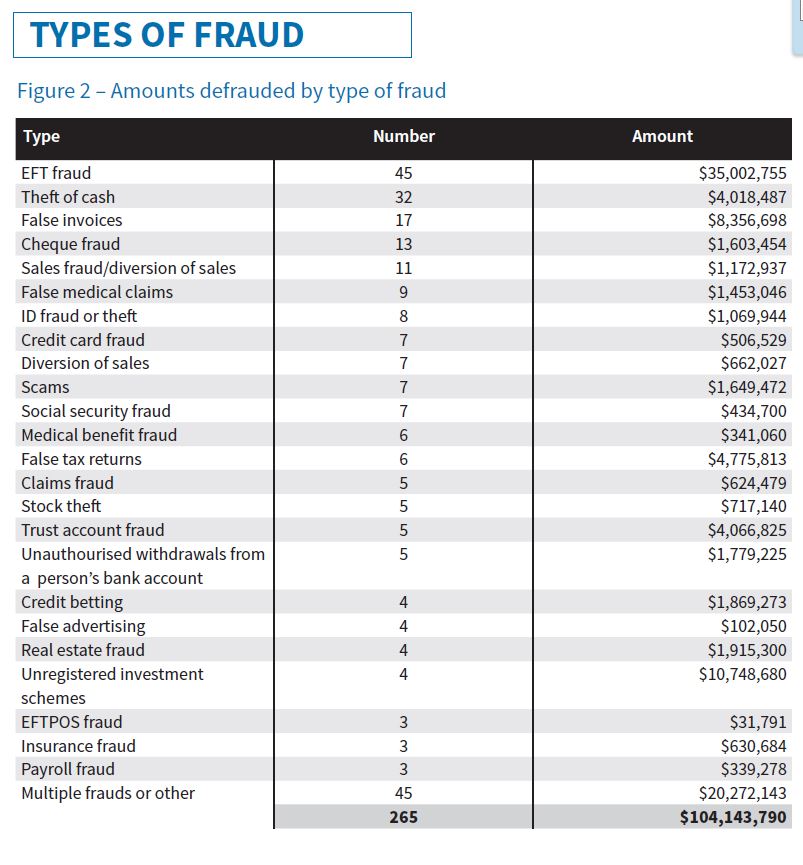
A new report into fraud has found more than $100 million has been stolen in the last five years in Australia by people needing to satisfy their gambling addiction, and the report authors believe the finding is just the tip of the iceberg.

The report, Gambling Motivated Fraud in Australia 2011-2016, by Warfield and Associates said the impact on the lives of the fraudsters, their families and the people and organisations they defrauded, was profound.  
“The impact has included people losing their jobs, having court orders issued requiring them to repay the stolen money, losing their homes and businesses having to close down. Some attempted suicide,” the report said.
“Carers have stolen from those who rely on and trust them. Bank staff have raided their customers’ accounts. Lawyers and accountants have thieved from their clients. Those giving their time to associations and other Not for Profits have abused their positions. Family has stolen from family and friends from friends.”
Online gambling is now a booming industry, and banks allow Australians to use their credit cards to fund the practice. Not for Podcast follows a group of responsible investors, consumer rights advocates and financial counsellors who are campaigning to get the major banks to cut the credit.


Report author Brett Warfield told Pro Bono Australia News: “Businesses have been particularly hit hard with 148 new cases of employees who stole from their employers to feed their gambling addiction and this includes some Not for Profit organisations.
“This is consistent with the two previous research studies that show a strong correlation between problem gambling and employee fraud.
“The research clearly shows that there is a strong correlation between poker machines being the main influence on women who steal to satisfy their gambling addiction.”
In particular Warfield said this latest study found a greater increase in the theft of cash and Not for Profits were particularly vulnerable.
“While there had been noted cases of fraud against large charitable organisations there was an increasing incidence of fraud at sporting organisations when people who held honorary roles had access to cash and cheques,” Warfield said.
“This is where cash is being transported… physical cash theft has been a problem more so this time than in the last two surveys.
“There are certainly a number of Not for Profits in there and they range from the organisations that are working on behalf of other people to provide services… including some of the large charities.
“But there have also been the NFPs such as the sporting associations. We have had quite a few of those… where people in an honorary role such as a treasurer or president etc who weren’t full-time employees, who were doing it for of the love of the sport or whatever it is, and they were defrauding and they had access to the cheques or cash or funds transferred and taking thousands of dollars away from the association.”
Warfield said that in some NFPs the controls weren’t always as effective “because you don’t have the number of people doing the finance or operational functions and so it reduces the internal controls and overseeing supervision”.
He said the 260 cases they identified during the study were just the tip of the iceberg in estimating the full extent of fraud where the proceeds were used for gambling.
“There’s a multiplying effect where it could be many many more times the $100 million estimated in the report.
“Offences may never be detected by employers, government welfare agencies, ASIC, the ATO or other organisations.Even if the offences are detected, the offence may not be reported to the police or relevant prosecuting authorities.
“This may be due to a lack of interest, compassion for the alleged offender, or because of a poor likelihood of recoverability of assets, or the thefts may be resolved privately by offering the offender the opportunity to repay money stolen. The potential impact on an organisation’s reputation or brand may also be a consideration for failing to report a matter to the police or relevant prosecuting authorities.
fraud file
“It really only shows a small proportion of what the problem is because of the limitations of getting access to all of the court records around the country.
“An example in one case we looked at was where one of the judges said in his sentencing remarks, ‘This is the fourth person today in my court-room that has stolen to gamble.’
“[This is] one little example of how many times it has come through and a number of magistrates and judges make similar comments… so it’s a multiplier. It is many, many times the hundred million dollars.”
The report found poker machines were the big drawcard for women and for the cases where the courts provided the mode of gambling.
“I think it was 60 out of 70 fraud cases were women and they were poker machine related,” Warfield said.
“When they get hooked on the poker machines it definitely increases the chances that they will steal to continue that addiction… for men they will gamble on everything, there is no real area, and they don’t seem to be hooked on poker machines like women.”
Warfield said the report aimed to raise awareness so people could try to identify these signs earlier on whether they were an employer, family member or a NFP and they could realise it was a major concern and they needed to prevent it from happening.


Monday, August 22, 2016

Local event for National Week of Action to Stop Predatory Gambling


National Week of Action to Stop Predatory Gambling is Sept 25 through Oct 1.

One of the major actions that week is to organize more than 200 local screenings of the new film “Out of Luck” across the United States during that week. Just released in June, it’s the first feature-length documentary film to examine predatory gambling and has received rave reviews on AmazonGoogle andiTunes.
It is very easy to organize a screening in your region. This brief guide shares the few steps involved about How to Organize a Movie Screening.
We are calling for 100% participation from you and everyone who believes in improving the lives of the American people, freeing us of the dishonesty, exploitation, addiction and inequality that commercial gambling spreads.

Do your part. Please commit two hours during the week of 9/25-10/1 to participate in organizing a movie screening in your area. If you can't commit the time, then please participate by making a gift of $25 or more tax-deductible to support our work locally.

You can sign up online to hold a screening at this link, and then share the link with your email and social media networks. Or, you can send an email to SPG at mail@stoppredatorygambling.org

You and I have the power to stop the policy of predatory gambling in our region and our nation but don't think it will happen without your sacrifice because it won't. To phase it out in your community, you need to stop it in your state. To stop it in your state, you need to stop it nationally.

A major step in such an effort is to awaken people’s conscience about the issue. The film Out of Luckprovides a powerful opportunity to stir people’s consciences to take action. Let’s make the most of it.

Thank you.
Best,
Les Bernal
National Director
Stop Predatory Gambling


________________________________
Improving the lives of the American people, using education and advocacy to free us of the dishonesty, exploitation, addiction and inequality that commercial gambling spreads.

West Virginia: Lawsuit against Mountaineer dismissed


Lawsuit against Mountaineer dismissed


AUG 21, 2016

STEPHEN HUBA


WHEELING — A judge has dismissed a wrongful death lawsuit that touched on the question of whether casinos and slot machine manufacturers have a responsibility to prevent compulsive gambling by patrons.
The lawsuit against Mountaineer Casino, Racetrack & Resort, filed by the widow of Scott Stevens in 2014, claimed the Hancock County casino had a duty to intervene in the compulsive gambling habits that allegedly drove him to suicide in August 2012.
U.S. District Court Judge Frederick P. Stamp Jr.’s order of dismissal came nearly four years to the date after Stevens fatally shot himself in a Jefferson County park — and a day after Stacy Stevens voluntarily withdrew her case.
Her attorney, James G. Bordas Jr. of Wheeling, could not be reached for comment. Mountaineer routinely does not comment on litigation.
The lawsuit claimed that, from 2007 to the day he died, Stevens was a regular patron at Mountaineer, where he played the slot machines and, over time, became hopelessly addicted to gambling.
To support his habit, he embezzled more than $7 million from his workplace, where he was chief financial officer, and emptied his family’s savings, retirement account and his children’s college funds, the lawsuit said.
Even after an IRS audit discovered the embezzlement and Stevens was fired, he continued playing the slot machines at Mountaineer for 10 more months, never telling his wife about his secret life as he dragged his family deeper into debt, the lawsuit said.
The lawsuit also named as a defendant Reno, Nev.-based slot machine manufacturer International Game Technology Inc. and former Mountaineer parent company, MTR Gaming Group. Its main allegation was that the IGT slot machines used at Mountaineer are“inherently dangerous” and are designed to keep people playing to the point where they can’t stop.
“The products were not a passive medium through which gamblers enacted a pre-existing addiction but, rather, an interactive force that eroded players’ capacity to make reasoned decisions,” the lawsuit said.
The lawsuit also accused IGT of intentionally concealing from patrons algorithms and other design features that govern slot machines’ win-loss functions — features that have been written about in books such as “Addiction by Design: Machine Gambling in Las Vegas” by MIT anthropologist Natasha Dow Schull.
“No other form of gambling is known to manipulate the human mind as much as slot machines,” the lawsuit said. “Playing these machines produces in numerous gamblers a trance-like state in which their ability to make rational decisions is eroded. Players become addicted to a dissociated mental state of diminished self-awareness and the suspension of a sense of time, money value and one’s immediate surroundings.”
Ultimately, the lawsuit stalled on the question of whether casinos and slot machine suppliers have a “duty of care” to protect patrons from compulsive gambling.
Stamp put the question to the West Virginia Supreme Court of Appeals, the state’s highest court, in order to address motions filed by the defendants to dismiss the case. Justice Brent D. Benjamin, who wrote the opinion, concluded that no duty of care exists under West Virginia law and, therefore, a lawsuit claiming negligence could not be sustained.
Benjamin cited similar cases in Indiana and New Jersey in which courts found that the state’s prerogative in regulating the gaming industry superseded any responsibility on the part of casinos and vendors.
In the case of West Virginia, racetrack casinos such as Mountaineer are already heavily regulated by the West Virginia Lottery Commission, operating under strict rules set by the state Legislature.
“The hardware and software components of the (slot) machines are required to precisely comport with statutory parameters, and ‘each video lottery terminal approved for placement at a licensed racetrack must conform to the exact specifications of the video lottery terminal prototype tested and approved by the commission,'” Benjamin said, citing the West Virginia Code.
What’s more, Benjamin said the state sets aside $150,000-$500,000 annually for its Compulsive Gambling Treatment Fund and maintains an exclusion list whereby patrons with a compulsive gambling disorder can be prevented, either voluntarily or involuntarily, from entering casino premises.
Because legal gambling is so entwined with the state, the duty of care rests with the Legislature not the private sector, Benjamin concluded.
“State law regulates virtually every facet of casino gambling and its potential impact upon the public,” he said. “The state has so thoroughly integrated itself into the provision and operation of the (slot) machines on every level … that its involvement cannot readily be divorced from that of its licensees and key suppliers.”
Stamp said the supreme court’s ruling was “dispositive,”meaning it settled the issue.


Sunday, August 21, 2016

Christie, New Jersey, Expanded Gambling, Trump


A deputy New Jersey attorney general wrote in 2007 that Donald J. Trump's flagship casino, the Taj Mahal, had reported that it paid $2.2 million in ...


New Jersey governor Chris Christie said he plans to cast his ballot in favor of expanding casinos outside of Atlantic City and into parts of northern New ...


TRENTON, N.J. (CBSNewYork/AP) — New Jersey Gov. Chris Christie said Tuesday that he plans to cast his ballot in favor of expanding casinos to the ...


In 2010, New Jersey auditors had been working for years to collect overdue taxes—totaling nearly $30 million—owed by Trump's casinos in the state.


Questionable Tax Deal Between Trump Casinos Under Gov Christie
There are questions about whether Governor Christie gave Donald Trump a tax break on his bankrupt Atlantic City casinos. Donald Trump's casinos ...

christie: i'm good with north jersey casinos
Governor Christie says he wants casinos to come to North Jersey. Christie told reporters on Tuesday that he will vote in favor of a ballot question that ...


Gambling Industry Approaching Saturation in Northeast United States


Gambling Industry Approaching Saturation in Northeast United States


Steve Wynn’s Boston Harbor casino resort will open in 2019 and bring the northeastern gambling industry one giant step closer to possible market saturation. (Image: Nancy Lane/Boston Herald)

The gambling industry in the northeast region of the United States was confined to Atlantic City for decades. The first legal commercial casino opened in the New Jersey beachfront town back in 1978, and until the early 1990s Atlantic City largely enjoyed a monopoly on gambling on the East Coast.
The US Supreme Court ruled in 1987 that federally recognized Indian tribes have the right to self-regulate casino games not barred by state law. The ruling effectively ended Atlantic City’s stronghold.
By 1996, half of the 50 states had some form of land-based gaming. Today, analysts are worried the continued expansion across northeastern states will soon lead to market saturation.
“The market in New England is continuing to grow,” gaming analyst Clyde Barrow told the Associated Press this week. “But there will be a saturation point.”

The All-Mighty Slot

Massachusetts’ Plainridge Park Casino slot parlor opened in June 2015, and the state will welcome the $950 million MGM Springfield in 2018 and $1.7 billion Wynn Boston Harbor in 2019. New York’s slots-only racetrack parlor Resorts World Casino near JFK International Airport is considering expansion, and two upstate casinos are expected to open in 2017.
In northeast Pennsylvania, Sands Bethlehem controls the market over Mount Airy Casino Resort. The Philadelphia area is home to four casinos with a fifth possibly on the way.
Rhode Island has the Twin River Casino, and then there’s Connecticut’s Foxwoods and Mohegan Sun resorts. The Mashantucket Pequot, Mohegan, and Mashpee tribes are all looking to build additional casinos near the Connecticut-Massachusetts border to compete with MGM and Wynn.
And don’t forget that place called Atlantic City where seven casinos will remain after the Trump Taj Mahal closes in October.
The northeast is the most densely populated region in the US, but it’s becoming flooded with gambling destinations. For now, however, the market seems to support the numerous casino floors.
Gambling saturation is largely tested through slots revenue as the machines still generate the most income for operators.
According to Fitch Ratings, casino companies want and need each slot to win $200 per 24 hours. Anything below that number might signal an oversaturated market.
In June, Mohegan Sun’s 5,110 slots won $297 each day. Foxwood’s 4,451 machines took in $260.
Plainridge Park’s 1,250 slots collected over $370 daily in July, its best monthly performance in 2016.
While the gaming economy remains strong in the northeast, “saturation” remains a constant concern.
“I try not to use the word. No sense cursing the darkness,” Foxwoods CEO Felix Rappaport told the AP.

Diversifying Interests

MGM and Wynn are two of the most experienced gaming operatives in the industry. Their substantial investments in Massachusetts show their own research supports additional casino facilities in the northeast.
But unlike some venues in New England and the Mid-Atlantic, MGM Springfield and Wynn Boston Harbor will be focusing as much on the resort and entertainment aspect as gambling. For example, Wynn’s harbor walk will accompany the resort’s high-end shopping center and spa and feature four upscale restaurants.
Gambling revenue now plays second fiddle in Las Vegas to nongaming activities. Regional resorts are expected to follow the trend and adapt to market conditions.
Mohegan Sun is celebrating its 20th anniversary in October with a comedy gala featuring Kevin Hart and Sarah Silverman, and will welcome numerous A-list musicians including Tim McGraw, Bruno Mars, KISS, and Carrie Underwood.
The new casino, six years in the making, is Wynn Resorts Ltd.'s second in Macau, the only place in mainland China where casino gambling is ...