Thursday, April 24, 2014
Hoping for riche$ — Part 3
April 23, 2014
Hoping for riche$ — Part 3
By WANDA MOELLER
Courier Editor
The Ottumwa Courier
Wed Apr 23, 2014, 05:09 PM CDT
OTTUMWA — At first, George bought a lottery ticket once or twice a week. Nothing big.
Spent $1 or $2 at a time.
As the big jackpots rolled around, he’d purchase a few more tickets. No big deal, he thought. Soon, playing the lottery became his obsession. His $1 to $2 twice a week spending became $50 to $100.
What George didn’t realize was that he was spending the bulk of his paycheck on lottery tickets. As his addiction became greater, he began selling items to purchase tickets, neglecting his financial responsibilities and avoiding his family and friends.
While George is fictitious, his story is not.
Some people play the lottery because they just know they’ll eventually win. There have been some people who actually have won a small lottery and just know it will happen again. Before they know it, they have lost it all while trying to win again.
The same scenario can be applied to scratch-off tickets. Many people who are obsessed with purchasing lottery tickets are just as compulsive and out of control.
We’ve read about these people in the news. In one example, a woman was charged with stealing hundreds of thousands of dollars from her employer to fuel her addiction to scratch-off lottery tickets.
There are others, too. A lottery addiction led to a 42-year-old man’s death. He shot himself because of his gambling addition. He won big once and thought he could do it again. Instead, he blew through his life savings to fuel his addition.
Lisa Bachman, a problem gambling counselor with ADDS Gambling Treatment Services in Ottumwa, says people who have gambling addictions are not immune to any social stigma.
“It’s a silent addiction,” she said. “They don’t realize they have problem until they can’t pay the rent or mortgage or put food on the table. That’s usually when there is a call for help.”
- See more at: http://www.ottumwacourier.com/local/x2117347793/Hoping-for-riche#sthash.2Xh2zCBI.dpuf


No one else wanted Steve Wynn!
Push yourselves back from the issue with both arms and look at it dispassionately.
Steve Wynn, the aging Nip 'N Tuck King, has been tossed out of every single community he previously salivated to invade for numerous reasons.

Even Steve Wynn's slick salespitch and blond trophy wife didn't convince Foxborough. [Read a little about what they had to say.]

Wynn, after being tossed by South Boston and Foxborough because he's tone deaf, finds a friend in Everett and begins to dictate policy....'the state should do....' ???
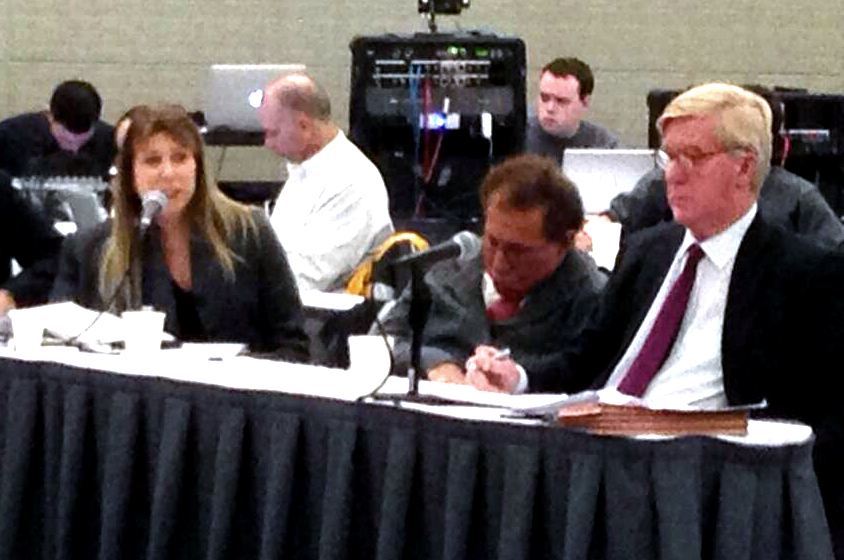
Steve Wynn was rejected by Connecticut, Pennsylvania [couldn't stand the criticism], New York [because of his anti-union stand], squeezed out of Florida.
And now this screwiest deal ever?
REPEAL THE CASINO DEAL is the only sensible solution!
April 16 Everett, MA
Mayor Carlo DeMaria of Everett wants the city to acquire the property where Steve Wynn has proposed building a $1.6 billion casino, and then resell it to the Las Vegas mogul, using the city’s power of eminent domain to remove a roadblock that has threatened to kill Wynn’s chances of getting a casino license.
Under DeMaria’s plan, Everett would buy the casino site and seven other nearby properties for approximately $41 million and then resell them at the same price to Wynn Resorts. City officials said that their urban renewal proposal for the long-depressed area along the Mystic River was under development before Wynn proposed a casino and is not solely for his benefit.
“This area, as you are well aware, is critical to the future success of the entire city and will serve as a gateway to the entire region,” DeMaria said in a letter to Everett city councilors dated April 10. “My administration is committed to realizing the extraordinary potential of this area and the city as a whole.”
But City Council president Michael Marchese said he views DeMaria’s proposed “Lower Broadway Urban Renewal Plan” as a favor to Wynn.
Wynn Resorts has previously offered to buy the former industrial land for $35 million if regulators approve his casino, but Massachusetts Gaming Commission investigators found that the current owners were being dishonest about the involvement of convicted felon Charles Lightbody, one of their original partners.
One co-owner of the proposed casino site, Anthony Gattineri, has refused to sign a pledge that there are no secret partners in the deal, rekindling speculation that Lightbody is still involved, even though he insists he sold his interest in the 30-acre parcel long ago. The commission has required the sworn statements as a condition for approving Wynn’s license.
“We assumed this is Wynn’s deal,” Marchese, the City Council president, said in an interview. “They’re trying to bypass Gattineri. To avoid it, they’ll have someone else buy it.”
Marchese said Assistant City Solicitor David Rodrigues told him that the city’s land purchase, called a taking in legal terms, would go forward even if Wynn does not win a casino license, suggesting that other developers would want to build on the land. It is a former Monsanto Co. site that has been unused for decades.
“We haven’t had a developer here in over 20 years,” Marchese said in an interview. “We only know what we hear, and what we hear we don’t trust.”
The 54.8 acres the city wants to acquire is part of a larger urban renewal area that covers 128 acres that DeMaria argues is ripe for redevelopment, noting that it is dotted with abandoned oil tanks, dilapidated buildings, and contaminated land. The city plans to spend tens of millions upgrading the area in addition to the land taking.
The question of whether Everett’s urban renewal plan benefits the city or mainly Wynn could loom large, because, under state law, government taking of private land has to serve a public purpose — in this case, redeveloping a blighted section of the city — and not just for the benefit of a private party.
Everett voters overwhelmingly approved a referendum on the casino proposal last year, largely on the promise that a casino could bring in thousands of jobs.
However, this is the first time that Everett voters are being asked to put up tax dollars to support the casino. Although DeMaria’s plan calls for Wynn to reimburse the city for the land, the broader urban renewal effort also calls for more than $30 million in other improvements in the areas, some of them paid for with city funds or bonds. Marchese is skeptical residents would support it if they think the deal is primarily for Wynn’s benefit.
The land-taking would be a substantial boost to Wynn Resorts, acquiring not only the casino site, but several nearby properties that Wynn also had planned to purchase. Once Everett controls the property, the law does not require the newly created Everett Redevelopment Authority to go through public bidding procedures, allowing it to resell directly to Wynn.
Michael Weaver, a spokesman for Wynn Resorts, declined to comment on DeMaria’s proposal, saying, “Because this is a city of Everett action, we really don’t have any comment.”
DeMaria’s land-taking plan is the latest twist in a high-stakes battle between two blue-collar cities, Everett and Revere, for the Boston area’s only casino license . Wynn’s proposal appeared to gain the upper hand last year when Everett voters approved his plan, while East Boston rejected a proposal that would have straddled the Boston-Revere line, forcing the developers to revise their plan so that no part of the casino was in Boston.
Then Wynn ran into problems with the owners of the proposed casino site, FBT Everett Realty.
Lightbody, who has served prison time for assault with a dangerous weapon and has pleaded guilty in a massive identity theft ring in New York, was one of the original partners of the site, but he has claimed he sold his interest long before Wynn came along. However, gambling commission investigators said Lightbody and his partners may be hiding his continued stake in the company even after Wynn attempted to renegotiate the land deal last year to squeeze Lightbody out.
The Globe reported this month that ownership of the casino site is under state and federal investigation.
Hoping to avoid the taint of criminal investigation, state gambling commissioners ordered all three owners of FBT Realty to sign a pledge that there are no other secret partners. Two did, but Gattineri refused on the advice of his criminal attorney.
DeMaria’s urban renewal plan, presented to the City Council Monday night, appears to be on a fast track, and the mayor has asked for a public hearing on April 28. If the council approves the urban renewal plan, it will go to state community development officials for review before the Everett Redevelopment Authority can begin taking the land.
In addition, the gambling commission would need to review Everett’s proposal, said spokeswoman Elaine Driscoll.
City officials say the entire process could be completed in months, in time for Wynn to begin constructing his casino. Under state law, if Wynn gets Boston’s only casino license, he must have control of the proposed site within 60 days.
However, many questions remain, including how much the eminent domain acquisitions would actually cost. DeMaria’s proposal estimates the total price to the city will be $41 million, but that is based on rough estimates, rather than appraisals, city officials concede, and at least one land owner said the estimated purchase price for his land was very low.
Gerry Berberian, owner of an office building at 3 Charlton St., said that he paid $3 million for the property in 2007 and that Wynn had previously offered to pay significantly more. But DeMaria’s proposal estimates the cost of acquiring 3 Charlton St. at $1.2 million.
“That price is too low; I want a fair price,” said Berberian, who added that he had not previously heard about the proposed acquisitions.
The urban renewal plan also includes a number of favorable assumptions that may or may not come true. For instance, DeMaria’s proposal plans to use tens of millions in state and federal grant money to pay for improvements in the urban renewal area, but the city has not applied for them yet, state officials say.
Likewise, the plan calls for the city to acquire a sliver of land from the MBTA, which, as a government agency, cannot be the target of an eminent domain action, state officials say. MBTA officials have stated they will not sell the land without a competitive process.
Finally, it is unclear if DeMaria’s plan would prevent Lightbody or other criminals from profiting from a Wynn casino. In a taped conversation with a state prison inmate last June, Lightbody boasted he had the strip club near the casino site “locked up tight as a drum,” according to a transcript provided by the gambling commission.
Under DeMaria’s plan, King Arthur’s Lounge, less than a mile from the casino site, would remain in private hands, and two Lightbody associates have announced plans to redevelop the strip club if Wynn’s casino is approved.
DeMaria said there is more at stake in his plan than Wynn’s casino or people seeking to profit from it.
“This entire process represents the reclaiming of Everett’s future from decades of underutilization and contamination,” DeMaria said in a statement. “We will continue to ensure that this process proceeds for the benefit of every resident and business in that area and in the entire city of Everett.”
But Marchese said councilors need to know a lot more before they can approve the plan.
“This is the first time anything like this ever happened in the city of Everett,” he said.
Mark Arsenault of the Globe staff contributed. Andrea Estes can be reached at andrea.estes@globe.com; Sean P. Murphy at sean.murphy@globe.com.
Evmorphia Stratis This is unbelievable. Wake up America!! Your government can take property by eminent domain and do what they want with it. It is supposed to be for public use....the house I live in is the house my parents bought in 1957. no sooner did we move in , the city of everett wanted to make a parking lot and tear our house down, a historical one built in 1822 with an even older barn in the back yard. My father,a Marine in WWII, and my mother, fought to keep their home. They succeeded with much work. But the city tore down 3 homes in the now public lot. My father passed away in 2001. He would be so disgusted to see what is going on in Everett. I live with my mother in the family home and we are still fighting for our right to a quality of life. We are two of 800 Everett residents who don't want a casino in our back yard. 6000 residents voted yes for a casino. Steve Wynn funded 'everett united' to the tuune of hundreds of thousand s of dollars. I did outreach to Charlestown before we voted, but I didn't get the help. Now Charlestown is actively involved in the process, they want a say in the infrastructure of a casino, and the negative impact it WILL have in their community. Well, we are one big community in all of greater Boston, all of Massachusetts, this whole country. We are all part of a bigger picture. This casino 'crawl' in America is extremely detrimental to our economy, health and well being. We do NOT need casinos for jobs! We do not need more drug problems, more human trafficking, more gambling addicts. We can create jobs in Massachusetts in far better ways then casinos. Please read the Bosotn Globe article. It is shocking. I am actively looking into this deal Everett wants to make.
Under DeMaria’s plan, Everett would buy the casino site and seven other nearby properties for approximately $41 million and then resell them at the same price to Wynn Resorts. City officials said that their urban renewal proposal for the long-depressed area along the Mystic River was under development before Wynn proposed a casino and is not solely for his benefit.
“This area, as you are well aware, is critical to the future success of the entire city and will serve as a gateway to the entire region,” DeMaria said in a letter to Everett city councilors dated April 10. “My administration is committed to realizing the extraordinary potential of this area and the city as a whole.”
But City Council president Michael Marchese said he views DeMaria’s proposed “Lower Broadway Urban Renewal Plan” as a favor to Wynn.
Wynn Resorts has previously offered to buy the former industrial land for $35 million if regulators approve his casino, but Massachusetts Gaming Commission investigators found that the current owners were being dishonest about the involvement of convicted felon Charles Lightbody, one of their original partners.
One co-owner of the proposed casino site, Anthony Gattineri, has refused to sign a pledge that there are no secret partners in the deal, rekindling speculation that Lightbody is still involved, even though he insists he sold his interest in the 30-acre parcel long ago. The commission has required the sworn statements as a condition for approving Wynn’s license.
“We assumed this is Wynn’s deal,” Marchese, the City Council president, said in an interview. “They’re trying to bypass Gattineri. To avoid it, they’ll have someone else buy it.”
Marchese said Assistant City Solicitor David Rodrigues told him that the city’s land purchase, called a taking in legal terms, would go forward even if Wynn does not win a casino license, suggesting that other developers would want to build on the land. It is a former Monsanto Co. site that has been unused for decades.
“We haven’t had a developer here in over 20 years,” Marchese said in an interview. “We only know what we hear, and what we hear we don’t trust.”
The 54.8 acres the city wants to acquire is part of a larger urban renewal area that covers 128 acres that DeMaria argues is ripe for redevelopment, noting that it is dotted with abandoned oil tanks, dilapidated buildings, and contaminated land. The city plans to spend tens of millions upgrading the area in addition to the land taking.
The question of whether Everett’s urban renewal plan benefits the city or mainly Wynn could loom large, because, under state law, government taking of private land has to serve a public purpose — in this case, redeveloping a blighted section of the city — and not just for the benefit of a private party.
Everett voters overwhelmingly approved a referendum on the casino proposal last year, largely on the promise that a casino could bring in thousands of jobs.
However, this is the first time that Everett voters are being asked to put up tax dollars to support the casino. Although DeMaria’s plan calls for Wynn to reimburse the city for the land, the broader urban renewal effort also calls for more than $30 million in other improvements in the areas, some of them paid for with city funds or bonds. Marchese is skeptical residents would support it if they think the deal is primarily for Wynn’s benefit.
The land-taking would be a substantial boost to Wynn Resorts, acquiring not only the casino site, but several nearby properties that Wynn also had planned to purchase. Once Everett controls the property, the law does not require the newly created Everett Redevelopment Authority to go through public bidding procedures, allowing it to resell directly to Wynn.
Michael Weaver, a spokesman for Wynn Resorts, declined to comment on DeMaria’s proposal, saying, “Because this is a city of Everett action, we really don’t have any comment.”
DeMaria’s land-taking plan is the latest twist in a high-stakes battle between two blue-collar cities, Everett and Revere, for the Boston area’s only casino license . Wynn’s proposal appeared to gain the upper hand last year when Everett voters approved his plan, while East Boston rejected a proposal that would have straddled the Boston-Revere line, forcing the developers to revise their plan so that no part of the casino was in Boston.
Then Wynn ran into problems with the owners of the proposed casino site, FBT Everett Realty.
Lightbody, who has served prison time for assault with a dangerous weapon and has pleaded guilty in a massive identity theft ring in New York, was one of the original partners of the site, but he has claimed he sold his interest long before Wynn came along. However, gambling commission investigators said Lightbody and his partners may be hiding his continued stake in the company even after Wynn attempted to renegotiate the land deal last year to squeeze Lightbody out.
The Globe reported this month that ownership of the casino site is under state and federal investigation.
Hoping to avoid the taint of criminal investigation, state gambling commissioners ordered all three owners of FBT Realty to sign a pledge that there are no other secret partners. Two did, but Gattineri refused on the advice of his criminal attorney.
DeMaria’s urban renewal plan, presented to the City Council Monday night, appears to be on a fast track, and the mayor has asked for a public hearing on April 28. If the council approves the urban renewal plan, it will go to state community development officials for review before the Everett Redevelopment Authority can begin taking the land.
In addition, the gambling commission would need to review Everett’s proposal, said spokeswoman Elaine Driscoll.
City officials say the entire process could be completed in months, in time for Wynn to begin constructing his casino. Under state law, if Wynn gets Boston’s only casino license, he must have control of the proposed site within 60 days.
However, many questions remain, including how much the eminent domain acquisitions would actually cost. DeMaria’s proposal estimates the total price to the city will be $41 million, but that is based on rough estimates, rather than appraisals, city officials concede, and at least one land owner said the estimated purchase price for his land was very low.
Gerry Berberian, owner of an office building at 3 Charlton St., said that he paid $3 million for the property in 2007 and that Wynn had previously offered to pay significantly more. But DeMaria’s proposal estimates the cost of acquiring 3 Charlton St. at $1.2 million.
“That price is too low; I want a fair price,” said Berberian, who added that he had not previously heard about the proposed acquisitions.
The urban renewal plan also includes a number of favorable assumptions that may or may not come true. For instance, DeMaria’s proposal plans to use tens of millions in state and federal grant money to pay for improvements in the urban renewal area, but the city has not applied for them yet, state officials say.
Likewise, the plan calls for the city to acquire a sliver of land from the MBTA, which, as a government agency, cannot be the target of an eminent domain action, state officials say. MBTA officials have stated they will not sell the land without a competitive process.
Finally, it is unclear if DeMaria’s plan would prevent Lightbody or other criminals from profiting from a Wynn casino. In a taped conversation with a state prison inmate last June, Lightbody boasted he had the strip club near the casino site “locked up tight as a drum,” according to a transcript provided by the gambling commission.
Under DeMaria’s plan, King Arthur’s Lounge, less than a mile from the casino site, would remain in private hands, and two Lightbody associates have announced plans to redevelop the strip club if Wynn’s casino is approved.
DeMaria said there is more at stake in his plan than Wynn’s casino or people seeking to profit from it.
“This entire process represents the reclaiming of Everett’s future from decades of underutilization and contamination,” DeMaria said in a statement. “We will continue to ensure that this process proceeds for the benefit of every resident and business in that area and in the entire city of Everett.”
But Marchese said councilors need to know a lot more before they can approve the plan.
“This is the first time anything like this ever happened in the city of Everett,” he said.
Mark Arsenault of the Globe staff contributed. Andrea Estes can be reached at andrea.estes@globe.com; Sean P. Murphy at sean.murphy@globe.com.
Evmorphia Stratis This is unbelievable. Wake up America!! Your government can take property by eminent domain and do what they want with it. It is supposed to be for public use....the house I live in is the house my parents bought in 1957. no sooner did we move in , the city of everett wanted to make a parking lot and tear our house down, a historical one built in 1822 with an even older barn in the back yard. My father,a Marine in WWII, and my mother, fought to keep their home. They succeeded with much work. But the city tore down 3 homes in the now public lot. My father passed away in 2001. He would be so disgusted to see what is going on in Everett. I live with my mother in the family home and we are still fighting for our right to a quality of life. We are two of 800 Everett residents who don't want a casino in our back yard. 6000 residents voted yes for a casino. Steve Wynn funded 'everett united' to the tuune of hundreds of thousand s of dollars. I did outreach to Charlestown before we voted, but I didn't get the help. Now Charlestown is actively involved in the process, they want a say in the infrastructure of a casino, and the negative impact it WILL have in their community. Well, we are one big community in all of greater Boston, all of Massachusetts, this whole country. We are all part of a bigger picture. This casino 'crawl' in America is extremely detrimental to our economy, health and well being. We do NOT need casinos for jobs! We do not need more drug problems, more human trafficking, more gambling addicts. We can create jobs in Massachusetts in far better ways then casinos. Please read the Bosotn Globe article. It is shocking. I am actively looking into this deal Everett wants to make.
In Good Conscience
Please support a candidate who has thoughtfully considered the experiences of others and has the courage to speak out....
Wednesday, April 23, 2014

http://www.valleyadvocate.com/article.cfm?aid=17818
In Good Conscience
AG candidate Maura Healey thinks Massachusetts should ditch its casino law.
By Maureen TurnerWednesday, April 23, 2014
Like a number of political figures in the state, Maura Healey acknowledges that she wouldn’t want to see a casino built in her neighborhood in Charlestown.
But unlike most of her fellow candidates for state office, she opposes a casino’s being built anywhere in Massachusetts.
Last week, Healey, a Democratic candidate for attorney general, announced via an op-ed on the political website BlueMassGroup that she supports repealing the 2011 law that legalized casinos in the commonwealth. “I oppose casinos because I believe they hurt people and they hurt communities, and they don’t yield what they purport to promise in terms of economic gains, in terms of families and communities,” she said in an interview with the Advocate.
“We’ve seen the impact on communities that have welcomed in casinos. We’ve seen the lost jobs, the lost homes, the lost livelihoods, bankruptcies, foreclosures, addictions, crime,” Healey said. “As somebody who has stood up against these issues, I think it’s important to stand up to them here.”
Healey comes to the AG’s race after six years working in that office, including time as head of its Public Protection and Advocacy Bureau. “I spent many years in the Attorney General’s Office fighting for people who were disempowered, who were vulnerable, who could be taken advantage of. … I fought off predatory lenders, unfair debt collection, foreclosures,” she said. And those are the very sorts of problems (along with gambling addiction and public safety woes) that experience in other states shows increase with casino development, she said.
“I can’t in good conscience support gambling here in the state as a way out, a way to economic opportunity,” she said. “The casino industry business model is based on profits over people, on taking advantage of those who can least afford it.”
Healey said she’s sympathetic to the argument that casinos would bring much-needed jobs to Massachusetts, particularly in hard-hit cities like Springfield, where voters last year approved a proposed MGM casino. But there are better, more innovative ways to create jobs and boost the economy, like building on existing industries such a technology and healthcare and investing in infrastructure, she said: “Gambling just isn’t the way out.”
As for people who say efforts to overturn the law come too late, Healey said, “I don’t come at this believing that it’s all a done deal. … We’re still at a point where the people can make a decision.”
In point of fact, it remains to be seen whether the people of Massachusetts will be able to make that decision. While casino opponents have worked to get a casino-repeal ballot initiative before voters this November, that effort was halted last fall when incumbent Attorney General Martha Coakley—Healey’s former boss and now a candidate for governor—ruled the question unconstitutional (“Do You Want Casinos?” Oct. 8, 2013, www.valleyadvocate.com). The repeal backers have appealed that decision; the Mass. Supreme Judicial Court is due to take up the case this spring.
That matter, Healey said, “will be up to the court to decide.”
For her part, she continued, “I wanted to be out front on this issue, because whether gambling comes into the state or not, the attorney general will have a big role. … A core part of your job is to protect consumers [from] predatory practices.” If she’s elected, Healey said, that work would start with putting together a strong state Gaming Division focused on “mak[ing] sure that we are taking actions to protect against predatory lending, loan sharking, unfair debt collection, that we’re fighting gambling addiction and organized crime.”
Healey’s rival for the Democratic nomination for AG, former state senator Warren Tolman, does not support repealing the casino law. In a statement sent by his campaign to the Advocate, Tolman noted that the fate of the proposed ballot question will be determined by the SJC, not the next attorney general.
“But if it is on the ballot I will vote against repeal,” Tolman said. “I support the Legislature’s decision to allow individual towns and cities like Springfield and Plainville to decide if they want a casino in their back yard. The people in these communities want the jobs and economic development that will be created.
“If casinos go forward in Massachusetts, the real issues for the next Attorney General are to enforce casino agreements and to be an advocate for consumers and taxpayers,” Tolman continued. “I will ensure that agreements with host communities and surrounding communities are strictly enforced. I will be the leader on whom Massachusetts residents can depend so that casino operators are adhering to their agreements with regards to traffic mitigation, compulsive gambling, work rules, the impact on local economies, consumer bankruptcy and other issues. Finally, I will continue to be a watchdog on ethics and political corruption.”•
http://www.valleyadvocate.com/article.cfm?aid=17818
Wednesday, April 23, 2014
Woman conned $375,000 from friends, lovers
Woman conned $375,000 from friends, lovers
QueenslandA cunning female con artist tricked friends and lovers into giving her tens of thousands of dollars by posing as a savvy financial adviser.
The "ruthless" gambling addict who used internet dating sites to meet her victims was sentenced to six years' imprisonment on Tuesday for frauds totalling $375,000.
Denise Irene Hogan, 44, portrayed herself to her victims as either a savvy financial adviser or a successful businesswoman.
In reality she was a Telstra worker with a serious betting problem.
Brisbane's District Court heard Hogan had the ability to trick intelligent people - including a teacher and a member of the defence force - into handing over large sums of cash without any paperwork.
Former girlfriend Nadine Harrington met Hogan on the internet and fell for claims she was a successful options trader who'd "look after her".
Ms Harrington let her new girlfriend access her bank account and even lent her $100,000, which the serial fraudster pumped into her Centrebet account.
Another woman who met Hogan on the internet invested more than $100,000 with her, thinking she'd get double her money back.
However Hogan took the money and stole more from the woman's bank account, to which she'd also been given access.
And two female acquaintances lost $35,000 and $36,000 after falling for Hogan's investment ruse.
Prosecutor Katrina Overell called the former telecommunications worker a "convincing and ruthless fraudster" who'd been jailed in NSW for swindling a man out of his inheritance money.
Defence barrister Alastair McDougall asked the judge to take into account his client's gambling addiction and a childhood of horrific sexual abuse.
However Justice Leanne Clare said Hogan hadn't learned from her previous convictions and sentenced her to six years' imprisonment, with parole after 15 months.
"You showed ruthlessness in the execution of your offending as well as a gross abuse of trust which caused a great deal of pain and suffering," the judge told Hogan.
The fraudster has already served more than nine months in jail and will be eligible for parole in October.
Read more: http://www.brisbanetimes.com.au/queensland/woman-conned-375000-from-friends-lovers-20140422-3720h.html#ixzz2zhhdSrHy
You don’t realise how much you’re putting in to machines
You don’t realise how much you’re putting in to machines

Published on the 22 April 2014
A compulsive gambler who took out 13 bank loans and ended up behind bars after stealing more than £300,000 from work to feed his addiction has pleaded with other addicts to get help.
Matthew Kettell, aged 42, from north Sheffield, became so dangerously addicted to gambling he swiped funds from the remortgaging of his house, took from his children’s moneyboxes, and had six credit cards, running up more than £60,000 debts gambling £2,000 to £3,000 a day at his peak.
The father of two young children began his addiction on fruit machines, but spent £3,500 on a fixed-odds betting terminal in 20 minutes on one occasion, eventually losing his marriage and becoming suicidal before his workplace found out and he was handed a three-year prison sentence.
He said: “I had 13 bank loans, two debit cards, six credit cards and I was juggling all that as well as betting.
“Once I collected £3,540. I was going to round it down to £3,500, so I put £40 in a fixed odds betting terminal. Twenty 20 minutes later I had £1 left in my pocket because I had to get a pint of milk on my way home.
“Fixed odds terminals are highly dangerous. You don’t realise how much money you are putting in. It’s so addictive.”
Matthew began to steal money from work, taking cash wherever he could to feed his habit.
He said: “It was small amounts at first but it ended up with hundreds of thousands. I’m ashamed I stole money from work.
“I emptied my children’s moneyboxes. It’s disgusting. I’m ashamed of myself. I put the money back, but the fact I resorted to that is despicable to me.”
He lied to his then-wife and family and friends - which ultimately saw his marriage break down and landed him a three-year prison sentence.
He said: “I was fantastic at lying. But most addicts are. Sometimes it was bizarre and ridiculous.
“I would make a bet for £2,000 at the bookies, then fill out a separate bet for £10 and leave it on the side for my ex-wife to see.
“I found myself going into the shed saying I needed to get something, and I would place a bet in the shed.
“I virtually climbed into the boot of the car and phoned up and placed a bet. I didn’t see anything wrong in it. I had to get those bets on.
“Often I would delay myself going to work so I could wait for the postman in case there was something in there.
“We always had shopping in, and food on the table. I made sure we went on holiday every year. The rest I gambled.
“I spent some of the money from the house remortgage on gambling without my ex-wife knowing.
“I always thought, ‘I’m going to pay it back’. Always.
“When I got a big win I thought I was invincible. I just put more money in because I thought I had cracked it.
“If I had won the lottery I would have carried on gambling.
“You don’t live in the real world. You think, ‘I’m going to have a huge house, a villa, cars, I’m going to treat my family and friends.
“It’s just a load of rubbish.”
He spoke about how the addition gripped him, changing his personality, despite being in denial for so long about the scale of the problem.
Matthew added: “It also makes you a selfish person as well - stealing and being argumentative.
“It’s just hell. Any addiction is hell for yourself, and then there’s the impact on your family or friends.
“I kept it secret. I was a lone gambler. I looked after the finances and nobody knew about it until it all came to a head.”
Ultimately, Matthew’s addiction led him to suicidal thoughts.
“I didn’t ever think I was an addict. But I thought I was dying inside. I thought about suicide almost daily.
“I couldn’t bring myself to tell my ex-wife or friends.
“I just had an illness. I couldn’t help myself.”
He said more needs to be done to monitor gamblers’ activity, adding: “I staked a quarter of a million pounds in one year with one betting account. They gave me £500 credit at first, then raised it to £2,500 and never asked for a wage slip, proof of income, anything.
“I’m not saying it’s their fault. But if they had looked at my account they would have seen me betting on horses, greyhounds, golf, rugby league, rugby union, they would see ‘this guy has a problem’.”
Matthew has now turned his life around, getting a job from his prison placement, and praised the support of his ‘amazing’ partner, family and friends.
“I was still gambling the day I knew I was going to get found out at work,” he said.
“I had to tell my ex-wife, I had to tell my parents. My ex-wife was so shocked and upset.
“It was the hardest thing I have ever done. My family and friends were really supportive.
“You should never gamble more than you can afford to. As a compulsive gambler, I wouldn’t even buy a lottery ticket now. That one win might tempt me back in.
“Everyone who goes back goes back 10 times worse.
“But anyone can stop an addiction. You have to change your character. You have to change things like what you do or who you hang around with.
“It’s only 2.5 per cent of people that stop an addiction first time. You have to be completely prepared to change the way you live your life.”
He also praised the help he has received from Gamblers Anonymous, which he attends every week, and urged anyone going through similar problems to contact the group for help.
“I did this article because if one person reads it and gets help, that will do for me. If it helps one person’s family not go through the hell.”
New ‘world-leading code’ in a bid to promote responsible gambling
The Association of British Bookmakers wrote to Sheffield Council leader Julie Dore, outlining a new code for responsible gambling being put in place at most bookies across Britain from last month.
The body, which represents 80 per cent of the market, says the ‘world-leading code’ offers new ‘harm minimisation measures over and above those already in place in betting shops’.
It states customers are now able to set their own voluntary limits on the amount of time and money spent, with pop-up alerts when this amount is reached.
Alerts will also flash up after every 30 minutes or £250 spend on a machine, with an increased break in play, and gameplay suspended for 20 to 30 seconds while responsible gambling messages are shown.
It also said staff are encouraged to spend more time on the shop floor and will also receive the alerts, with increased staff training enabling them to recognise a ‘wider range of problem gambling indicators’.
The removal of cash machines from betting shops, as well as the ability for a customer to access information on their time and money spent on a machine, were also outlined.
The letter added it was committed to ‘Think 21’ policies and a ‘commitment to working with local authorities and community organisations’ to tackle local issues, while it will also create increased guidance on anti-money laundering and more prominent display of responsible gambling information, including helplines and website links.
It added: “We are pleased to be introducing this new raft of measures aimed at improving adult informed choice, building on the substantial existing regulations and voluntary measures which all betting shops already comply with.
“Through these new measures we are committed to providing a safe, enjoyable popular leisure experience.”
It also pointed out the gambling sector funds the Responsible Gambling Trust, investing £6 million a year in research and treatment of problem gambling.
About 45,000 people are employed in the gambling sector, it added, contributing £3.2m to the UK gross domestic product, paying £1bn in taxes and £58m in business rates per year.
The average customer, it said, placed £8 on a sports bet, while 74 per cent of gaming machine users play once a month or less, adding: “Those with the lowest income have the lowest prevalence of gambling and use fewer products.”
Campaigners call for tighter restrictions
Two-thirds of people think there are too many betting shops on the high street, with most people agreeing gambling machines fuel betting addictions, a new poll has revealed.
Half of those surveyed in a new poll also think bookies are deliberately placed in poorer areas.
The survey revealed 63 per cent think fixed-odds betting terminals encourage problem gambling, and 56 per cent want the maximum stake cut from £100 to £20.
The Government recently announced a tax increase on the terminals to 25 per cent duty, but campaigners are still pushing for tighter restrictions.
A review is being conducted by government and Prime Minister David Cameron is expected to announce details shortly.
Adrian Parkinson, of the Campaign for Fairer Gambling, said: “This polling shows conclusively where people stand on the issue of casino machines in betting shops.
“Two-thirds of people agree with a stake reduction, which means Cameron has to start listening.
“If he doesn’t cut the stakes then he is completely out of tune with voters. As for the bookmakers, every single argument they have put forward has been trashed by this poll.
“Cameron needs to decide - does he believe the bookmakers, who say there are no problems with these machines, or is he going to listen to the electorate, who quite clearly say there’s a problem and it needs sorting?”
http://www.thestar.co.uk/news/business/you-don-t-realise-how-much-you-re-putting-in-to-machines-1-6572870
Tuesday, April 22, 2014
Casino Shill Resigns! Says 'Why's everybody always picking on me?'
What just one minute!
Clyde has a lengthy and somewhat curious history.

Clyde did a cable segment of 'Commonwealth Journal' with Senator Pacheco, during which he swore 'independence, no connection to the industry...' blah, blah, blah. [Always curious that his footnotes credited other Casino Shills.]
I video taped that segment and suppose I need to wade through the dust to determine the date....
It happened to be AFTER Ryan Adams had posted links of Clyde's 'consulting firm' at Clyde's home address to MAINE. [Must have been the aliens!]

Clyde threatened to sue...never defining the 'pseudo blogs' he intended to target.
I sent Ryan's links to Maine to Senator Pacheco who responded 'Not so.'
Clyde is a minor sleaze, of little importance and credible journalists don't quote him.

Clyde used to count license plates at out-of-state Slot Barns.
Now who's gonna do it?
As a curious side note, Clyde did a polling on the Brockton Power Plant that was widely criticized for its failures. Clyde threatened to sue. [Maybe still archived by Brockton Enterprise....if anyone cares.]
The bottom line is: Don't believe an 'expert'!
Previously posted:
Clyde Barrow: Duh?
Casino Shill Barrow Exposed -- Again! #2
Casino Shill Barrow Exposed -- Again!
Some Facts
Clyde has a lengthy and somewhat curious history.
Clyde did a cable segment of 'Commonwealth Journal' with Senator Pacheco, during which he swore 'independence, no connection to the industry...' blah, blah, blah. [Always curious that his footnotes credited other Casino Shills.]
I video taped that segment and suppose I need to wade through the dust to determine the date....
It happened to be AFTER Ryan Adams had posted links of Clyde's 'consulting firm' at Clyde's home address to MAINE. [Must have been the aliens!]
Clyde threatened to sue...never defining the 'pseudo blogs' he intended to target.
I sent Ryan's links to Maine to Senator Pacheco who responded 'Not so.'
Clyde is a minor sleaze, of little importance and credible journalists don't quote him.
Clyde used to count license plates at out-of-state Slot Barns.
Now who's gonna do it?
As a curious side note, Clyde did a polling on the Brockton Power Plant that was widely criticized for its failures. Clyde threatened to sue. [Maybe still archived by Brockton Enterprise....if anyone cares.]
The bottom line is: Don't believe an 'expert'!
Previously posted:
Clyde Barrow: Duh?
Casino Shill Barrow Exposed -- Again! #2
Casino Shill Barrow Exposed -- Again!
Some Facts
DARTMOUTH — "Why are so many of the institution's most successful faculty all deciding to leave at the same time?"
That's what UMass Dartmouth professor Clyde Barrow asks in a public resignation statement titled "The Book of Exodus" that he submitted to the provost Monday.
After 27 years at the university, the prominent director of the Center for Policy Analysis said he will retire effective July 31, joining "several others" who he alleges have left in recent months having "grown tired of Chancellor Divina Grossman's habitually abusive treatment."
University spokesman John Hoey denied the allegations and said Barrow's statement is riddled with "factual inaccuracies and misleading statements."
"I am known for telling the truth, and my colleagues will back me up," Barrow said.
"He is well known on campus for embellishing criticism of the administration and his fellow faculty members," Hoey said.
Hoey said he is not sure if it is a coincidence that Barrow's angst comes at a time when the administration has been asking "hard questions" about the financials regarding his center and "his relationship to his consultancy firm."
Barrow, whose salary is $185,000, said there have been no questions raised that he knows of. He said he has a signed letter of authorization from the UMass General Counsel's Office "authorizing my consulting activities as not being in conflict with my directorship of the Center for Policy Analysis" and that he has regularly filed quarterly conflict-of-interest statements with the provost's office since 2006 "and no one has ever raised a single question."
"This is exactly the problem. Rather than dealing with issues directly, they turn everything into a personal attack," he said. "These types of unwarranted and malicious attacks on faculty are exactly why people are leaving the campus in such large numbers."
Bal Ram Singh, biochemistry professor and director of the Indic Center at UMass Dartmouth whose multimillion dollar Botulinum Research Center was shut down by the administration, said Barrow's departure will be a loss.
"It's very sad. He's a very prominent scholar and an internationally known figure who has done a lot of important work in this community. I don't think there'll be much left of the Center for Policy Analysis when he leaves," Singh said.
Barrow pointed to several faculty members who he said have "been pushed out" in recent months.
They include former director of the Center for Portuguese Studies and Culture Frank Sousa, who is now at UMass Lowell; Susan Jennings, who quit last fall after her office of sustainability studies was dissolved; former management professor Susanne Scott, who is now associate dean of the School of Business at Brooklyn College, City University of New York; former chair of the Teaching and Learning Department Joao Rosa, who is now at Bridgewater State; and Karen O'Connor, director of the center for University School Community Partnerships, who Barrow said is retiring soon.
"It is important to mention that no one is leaving UMass Dartmouth because of last year's tragedy," Barrow said in the letter, referring to the Boston Marathon bombings. "Instead, the real underlying problem at UMass Dartmouth continues to be an administrative crisis that is getting worse as senior administrators literally isolate themselves from the campus behind multiple walls of glass, key code security systems, and body guards."
The "most egregious" of Barrow's statement include allegations of a safe house and bulletproof glass for senior administration that Hoey said are not true. However, the university did provide about $7,200 in security upgrades like key card access to the administrative building, that includes the chancellor's office, which is "fairly common," he said.
Lester Cory, director of Center for Rehabilitation Research, who Barrow said in his letter "retired due to a lack of campus support," denied it. He said he retired five years ago because it was time but remains director of the center he founded.
"The administration had no role to play in my retirement," Cory said. "I think the university has been very supportive of the work we are doing."
Cory also said he is aware of "a couple of disgruntled center directors" but thinks the university has hired "some very good people" in recent years and is "making progress."
Grant O'Rielly, faculty senate president and physics professor, said people are leaving due to retirement or advancement in their careers. There will be more people retiring in the future due to demographics, he said.
"It is true that there are a number of senior faculty leaving the university this year, possibly more than in an average year, but this is not that unusual in any large organization," he said. "Others (like Professor Barrow) may well be disillusioned, it is certainly true that some groups saw their level of support change under Chancellor Grossman compared with what they got from Chancellor MacCormack."
This is an opportunity for the university to hire new, young faculty to replace its outgoing senior members, O'Rielly said.
"If we don't see this happen, then I would be worried that the departure of so many senior faculty does indeed not bode well for the future of the institution," he said.
Hoey was unable to immediately provide a number for how many faculty members have left in the past year but said that many of them either retired or moved to better opportunities as is "the nature of the higher education market." He said the university continues to look to hire qualified people "committed to transformative teaching, research and community engagement."
This is not the first time the UMass Dartmouth administration and faculty have butted heads.
Last year, faculty members called for increased dialogue at one of several faculty and student panels organized. Many called the administration "deaf to their concerns" and "several placed the blame on faculty members themselves or called for changes to the university's bureaucratic management structure," according to an article in The Standard-Times on April 30, 2013.
Correction
This story was modified on Tuesday, April 22, 2014, to reflect the following:
Lester Cory's name was incorrect in an article in The Standard-Times on Monday. Clyde Barrow's last name was incorrect on two occasions in the same article.
Text of Clyde Barrow's resignation statement
The Book of Exodus (from UMass Dartmouth): and an open letter of resignation
Almost one year ago, the Boston Herald (05-06-2013) published an excellent and insightful editorial documenting how the Dzhokhar Tsarnaev terrorist incident at UMass Dartmouth opened a window onto the entrenched “moral bankruptcy” of our senior administration. Unfortunately, the only thing that has changed since Rachelle Cohen's brutally truthful editorial is that UMass Dartmouth has continued sinking deeper into organizational and programmatic chaos, and each day ushers in a new reminder of the institution's disintegration and decay. Consequently, I will be resigning (actually retiring) from the University of Massachusetts Dartmouth, effective July 31, 2014, to accept a new faculty position as department chair at a doctoral-granting research university in a sunbelt state that is dedicated to conducting “applied research to address critical local, state, national, and global needs.”
During my 27 years at UMass Dartmouth, I have twice chaired the department of political science, founded a department of public policy, and reestablished the Center for Policy Analysis as a resource for state and local governments, school departments, non-profit organizations, labor unions, and private businesses. I have served as President and Treasurer of the UMass Faculty Federation, Director of the Master of Public Policy Program, and chaired the national Caucus for a New Political Science. However, like so many other senior faculty at UMass Dartmouth, I have decided to exit the campus, despite profound misgivings about leaving friends and colleagues that I have known for many years. In addition, I have had the opportunity to work in partnership with people in virtually every city and town in Massachusetts and I learned a great deal from every one of those individuals. I look forward to continuing those constructive partnerships as I will be maintaining an active presence in New England through Pyramid Associates, LLC, a private consulting firm which I founded in 2006.
Over the past several months, I interviewed for nearly 20 jobs at universities in nine states from coast to coast. One of the first questions posed to me in each interview was: “Why would you leave UMass Dartmouth at this stage of your career?” My answer was that “the real question is not why am I leaving UMass Dartmouth, but why are so many of the institution's most successful faculty all deciding to leave at the same time?”
And that list gets longer every day.
It includes the former co-director of the Massachusetts Marine Fisheries Institute, who despite being a world renowned fisheries expert who brought millions of dollars in federal dollars to UMass Dartmouth, finally retired in frustration with the current administration. It includes the former director of the Center for Portuguese Studies, who raised millions of dollars in endowments, helped established a new department, and founded a Portuguese-American archive. He left to take charge of a new million dollar center focusing on the same subject at UMass Lowell. The former director of the Center for Botulinum Research and the Indic Center has taken a sabbatical and will retire to pursue his internationally recognized research through an independent non-profit organization. A former professor of management and associate dean of the Charlton College of Business left to become an associate dean at Brooklyn College. The former director of the Center for Rehabilitation Research, which has generated millions of dollars to support the development of custom designed technology to assist the physically challenged, has retired due to a lack of campus support. The director of the Kaput Center for Innovation in STEM Education is leaving to become a dean of education at Southern Connecticut State University. The former chair of the now defunct Department of Teaching & Learning left to accept a position as the director of a multi-million dollar research center at Bridgewater State University. The founder and director of UMass (Dartmouth) Lisbon left to accept an executive position at the multi-billion Luso-American Foundation. After generating more than $10 million in grants to support K-12 teacher training, the director of the Center for University and School Partnerships (CUSP) is retiring to pursue other career alternatives because of the administration's “ambiguous” responses to proposals for future development.
This is not the entire list of refugees, which also includes many promising but discouraged junior faculty who left as soon as it became evident that the new administration was dismantling UMD from the inside, and more by ineptitude than by design. And I should not forget the exodus of numerous and talented professional staff, who have simply grown tired of Chancellor Divina Grossman's habitually abusive treatment. This will not be the end of the exodus, because once marketable faculty and professional staff accept the reality that their friends and colleagues have actually left, it will set off a second wave of departures next year. Meanwhile, Provost Mohammad Karim, ostensibly the university's chief academic officer, has responded to this intellectual meltdown with practiced indifference.
It is important to mention that no one is leaving UMass Dartmouth because of last year's tragedy.
Instead, the real underlying problem at UMass Dartmouth continues to be an administrative crisis that is getting worse as senior administrators literally isolate themselves from the campus behind multiple walls of glass, key code security systems, and body guards.
Yet, hiding from the truth does not change the fact that the individuals who are leaving UMD account for millions of dollars in grants, fundraising, and public service contracts, as well as hundreds of scholarly publications, and thousands of media mentions that will no longer carry the UMD imprimatur. Further, each of these individuals carries a story into the wider world of academia that will be retold in scholarly articles, discussed at professional conferences, passed around in emails and social media, and become part of the global academic grape vine that will impact UMD's future funding and academic reputation.
More people -- from the UMass Board of Trustees, to constitutional officers and state legislators, to a media that should expect more from a state university system that singularly belies our reputation as the world's center of educational excellence -- need to start asking what's wrong with UMass Dartmouth? And UMass President Robert Caret has an obligation to step forward and accept responsibility for this academic disaster.
Clyde W. Barrow is [WAS] the Director of the Center for Policy Analysis at UMass Dartmouth.

Saturating the market
Land-Based Casinos See Declining Revenues in Most Areas of the United States
By Steve Larson
Harrah’s Casino in Tunica, Mississippi will be closing on June 2, costing the local economy 1,300 jobs. The casino’s fate was used as an example of the overall decline of the American gambling industry in a recent Bloomberg Business article. The Tunica casino complex features everything a resort would want, says Bloomberg, except customers.
From an all-time high of $1.2 billion in revenues in 2006, Harrah’s Casino saw revenue fall to $738 million in 2013. That’s why Caesars Entertainment plans to close the resort on June 2. The move will put 1,300 Mississippians out of work.
Saturated Land-Based Gaming Market
John Payne, president of the central markets division at Caesars, was asked recently about the closing. His answer was eye-opening. Payne said “There’s too much supply in the system.”
The gambling industry is like any other market: it follows the laws of supply and demand. In the 1990′s and early 2000′s, big land-based casinos were being built as quickly as the governmental systems could approve them. Resorts like Mohegan Sun and Foxwoods in Connecticut were making money hand-over-fist, while Tunica was quickly becoming America’s third most famous gambling hub.
American Casino Cities in Trouble
Now, Las Vegas, Atlantic City, and Tunica all have their problems. The global recession hurt the brick-and-mortar gaming interests in America worst of all. Atlantic City revenues are down from $4.9 billion in 2007 to $2.8 billion in 2013. Mississippi’s numbers are down from $2.9 billion in 2007 to $2.1 billion in 2013.
The Las Vegas Strip casinos weathered the financial storm the best, but their revenues shrank from $6.8 billion to $6.5 billion from 2007 to 2013–in a time their executives expected to see major growth. This is bad news for most of the companies in the US gaming industry, because they leveraged growth with big debts. Caesars Entertainment alone owes over $22 billion in debt.
When the financial numbers cannot hit what the projections were–and miss it by billions of dollars–businesses suddenly have trouble.
Leveraged Debt Versus Declining Revenues
The five-and-a-half year economic recession is the major reason casinos are having so much trouble, though. While a profit-making business can weather an economic downturn of one or two years, it becomes difficult for any business to sustain itself when the troubles last half of a decade.
Joel Simkins, a Credit Suisse analyst, says, “Gaming can skew a little more blue-collar and middle-income, and if you look at the national economic statistics, that’s a subset that remains challenged. We need a much more robust economic climate for some of these markets to do better.”
An executive from Penn National Gaming put it a pithier way: “The low end has been wiped out.”
The executive was talking about the over-50 women who used to lose $50 to $75 on the slot machines on their trips. These ladies’ gambling budget is severely curtailed, if not gone, these days.
Without the low stakes gamblers providing a constant, dependable stream of revenue, casinos are trying to appeal to the high rollers more than ever. That is why Missouri is considering joining the list of states which allow “markers”, a type of casino credit for anyone gambling over $10,000. Such credit is meant to attract high stakes gamblers, whose losses often can single-handedly affect the budgets of a brick-and-mortar casino operation.
More Competition Than Ever
With such decisions being made and more states turning to gambling for extra revenues, competition across the USA is greater than ever. The slowed economy combines with a saturated market to have caused these issues. Back in 1988, only Nevada and New Jersey allowed casino gambling. Now, 39 different U.S. states have land-based casinos inside their borders. The inception of Native American casinos was bound to hurt the business in Las Vegas and Atlantic City. These combined with state-licensed non-tribal gaming casinos to saturate the market. Then the race tracks started allowing gaming machines, so the racinos got into the action. Then the multistate lotteries began taking some of the betting dollars. Then online gambling came along.
Foxwoods Casino was in the middle of a massive building phase when the recession of 2008 and 2009 hit. Now, the world’s largest casino by floor space is now facing major financial troubles. Faced with competition in Massachusetts and Rhode Island, Foxwoods is hoping to move into the Massachusetts market or else see 30% of their business go away.
Online Gambling Seen as the Answer
With the land-based gaming operations often in trouble, state lawmakers are starting to turn towards online gambling as a solution. That is the states which allow licensed online gambling sites tie these licenses to their native land-based gaming ventures. In tough times, the additional cash boost that an online casino and poker room offers can make all the difference.
http://www.legaluspokersites.com/news/land-based-casinos-see-declining-revenues-in-most-areas-of-the-united-states/3365
From an all-time high of $1.2 billion in revenues in 2006, Harrah’s Casino saw revenue fall to $738 million in 2013. That’s why Caesars Entertainment plans to close the resort on June 2. The move will put 1,300 Mississippians out of work.
Saturated Land-Based Gaming Market
John Payne, president of the central markets division at Caesars, was asked recently about the closing. His answer was eye-opening. Payne said “There’s too much supply in the system.”
The gambling industry is like any other market: it follows the laws of supply and demand. In the 1990′s and early 2000′s, big land-based casinos were being built as quickly as the governmental systems could approve them. Resorts like Mohegan Sun and Foxwoods in Connecticut were making money hand-over-fist, while Tunica was quickly becoming America’s third most famous gambling hub.
American Casino Cities in Trouble
Now, Las Vegas, Atlantic City, and Tunica all have their problems. The global recession hurt the brick-and-mortar gaming interests in America worst of all. Atlantic City revenues are down from $4.9 billion in 2007 to $2.8 billion in 2013. Mississippi’s numbers are down from $2.9 billion in 2007 to $2.1 billion in 2013.
The Las Vegas Strip casinos weathered the financial storm the best, but their revenues shrank from $6.8 billion to $6.5 billion from 2007 to 2013–in a time their executives expected to see major growth. This is bad news for most of the companies in the US gaming industry, because they leveraged growth with big debts. Caesars Entertainment alone owes over $22 billion in debt.
When the financial numbers cannot hit what the projections were–and miss it by billions of dollars–businesses suddenly have trouble.
Leveraged Debt Versus Declining Revenues
The five-and-a-half year economic recession is the major reason casinos are having so much trouble, though. While a profit-making business can weather an economic downturn of one or two years, it becomes difficult for any business to sustain itself when the troubles last half of a decade.
Joel Simkins, a Credit Suisse analyst, says, “Gaming can skew a little more blue-collar and middle-income, and if you look at the national economic statistics, that’s a subset that remains challenged. We need a much more robust economic climate for some of these markets to do better.”
An executive from Penn National Gaming put it a pithier way: “The low end has been wiped out.”
The executive was talking about the over-50 women who used to lose $50 to $75 on the slot machines on their trips. These ladies’ gambling budget is severely curtailed, if not gone, these days.
Without the low stakes gamblers providing a constant, dependable stream of revenue, casinos are trying to appeal to the high rollers more than ever. That is why Missouri is considering joining the list of states which allow “markers”, a type of casino credit for anyone gambling over $10,000. Such credit is meant to attract high stakes gamblers, whose losses often can single-handedly affect the budgets of a brick-and-mortar casino operation.
More Competition Than Ever
With such decisions being made and more states turning to gambling for extra revenues, competition across the USA is greater than ever. The slowed economy combines with a saturated market to have caused these issues. Back in 1988, only Nevada and New Jersey allowed casino gambling. Now, 39 different U.S. states have land-based casinos inside their borders. The inception of Native American casinos was bound to hurt the business in Las Vegas and Atlantic City. These combined with state-licensed non-tribal gaming casinos to saturate the market. Then the race tracks started allowing gaming machines, so the racinos got into the action. Then the multistate lotteries began taking some of the betting dollars. Then online gambling came along.
Foxwoods Casino was in the middle of a massive building phase when the recession of 2008 and 2009 hit. Now, the world’s largest casino by floor space is now facing major financial troubles. Faced with competition in Massachusetts and Rhode Island, Foxwoods is hoping to move into the Massachusetts market or else see 30% of their business go away.
Online Gambling Seen as the Answer
With the land-based gaming operations often in trouble, state lawmakers are starting to turn towards online gambling as a solution. That is the states which allow licensed online gambling sites tie these licenses to their native land-based gaming ventures. In tough times, the additional cash boost that an online casino and poker room offers can make all the difference.
http://www.legaluspokersites.com/news/land-based-casinos-see-declining-revenues-in-most-areas-of-the-united-states/3365
Getting Up to Speed on Casinos
Getting Up to Speed on Casinos

Developer David Flaum (585-703-2821) wants us to believe that his proposed casino in Albany is the panacea to our city’s economic and social ills. But we say not so fast! Get informed and make your voice heard!
Articles and Resources related to the Proposed Albany Casino
- “Reverse Robin Hood” Metroland
- “Bets vary on casino plan” Times Union
- “Instead of Meet the Press… meet David Flaum” Capital Confidential
- “Getting real with casino’s local impact” Times Union (Editorial)
- “Public meeting on E23 casino proposal” Time Warner Cable News
- [PRESS RELEASE] No Casinos in the Capital District
- “Why Casinos Matter” Institute for American Values
- “Casino gambling causes crime” University of Illinois Institute of Government and Public Affairs
- “Studies: Casinos bring jobs, but also crime, bankruptcy, and even suicide” Washington Post
- “Casinos and Offshore Gaming Sites Furiously Battle Over Billions in Gambling Revenue” AlterNet
http://www.occupyalbany.org/getting-up-to-speed-on-casinos/

Monday, April 21, 2014
Not a done deal – Yes, We Can STOP Casinos - Here's how you can help!
The message below is from Former Attorney General Scott Harshbarger.....
Massachusetts has proven time and again the importance of 'grassroots - you and me!
A few dollars, some information to friends, family and acquaintances.
Please join. Please support. Let's do this to protect ALL Massachusetts communities!


LANE TURNER/GLOBE STAFF/FILE 2013
Massachusetts has proven time and again the importance of 'grassroots - you and me!
A few dollars, some information to friends, family and acquaintances.
Please join. Please support. Let's do this to protect ALL Massachusetts communities!
My
friends – I received this note last evening from a supporter of, and donor to,
the REPEAL effort:
“Hey Scott – I read the Vennochi piece in the Sunday
Globe (See Below), and I know Tom Bean. I’m glad he is fighting on your behalf
– top-notch lawyer.
Let me know what I can do to further
spread the word about the cause.”
To
which I replied:
“Thank you. I agree! Joan’s piece is great and I’m
glad to share the briefs
with you any time, but, now more than ever, we need to raise money – in whatever
increments anyone can afford or is willing to contribute, even if merely
symbolic.”
Frankly, my friends, if everyone who we
know who is opposed or neutral, or simply believes there ought to be more
information, debate and a vote, contributed a small amount, we could fund
our valiant, lean, mean legal and media effort, and a core campaign manager to
staff our amazing grass roots citizen leaders all over the state.
A
request to your networks, enclosing the link, also serves to raise awareness and
remind folks this is not a done deal! In fact, we are winning!!
Thanks, my friend
Scott Harshbarger
On
casinos, SJC holds trump card
| GLOBE
COLUMNIST APRIL 20, 2014
LANE TURNER/GLOBE STAFF/FILE 2013
Guy Romano (left) and Nancy Wojick
(center) held signs opposing a casino in Milford.
THE
SUPREME Judicial Court is the next and last stand in the battle to keep casinos
out of Massachusetts.
If you have any doubts, listen to former
mayor Thomas M. Menino, talking last week on
WBZ-TV’s “Keller at Large.” Asked by host Jon Keller if voters will
still support casinos in Massachusetts if the SJC allows a ballot measure on the
question to go forward in November, Menino said, “I really believe that if it
goes on the ballot, it’ll lose.”
“If it goes on the ballot” is entirely up
to the SJC, which is scheduled to hear arguments on that question in early May.
After a year of controversy and confusion over the license-granting process, recent polls show
slippage in support.
If
Menino — once the key political force behind a casino in East Boston and always
an astute reader of public opinion — now believes the tide has turned enough to
trigger repeal, the industry must be nervous. So nervous that it is determined
to keep the question off the ballot.
Last
August, the group that wants to kill casinos filed a petition with Attorney
General Martha Coakley. It proposed a law that would essentially overturn the
expanded gambling law passed by the Massachusetts Legislature in 2011. In
September, Coakley — the current front-runner in the Democratic race to be
governor — blocked the petition. In a ruling that essentially put the AG on the
side of gaming, she argued that the millions that casino operators put on the
table to take part in the state’ s licensing process amounts to an “implied
contract.” Therefore, if the ballot question wins and the law is repealed, the
outcome amounts to an unfair and unconstitutional taking of property.
Put
aside the irony of trying to protect from risk the investments of an industry
that makes its fortune off other people’s risks.
The “No Casino” group, which appealed
Coakley’s ruling, contends the weight of the law falls on the side of the people
and their right to vote. According
to the brief they filed with the SJC, Coakley’s argument of an
“implied contract” runs up against a US Supreme Court decision — Stone v.
Mississippi. The case, which goes back to 1879, eerily echoes the
circumstances at issue in Massachusetts today.
In
Stone, the Mississippi legislature granted a 25-year charter to a lottery
company in exchange for an initial $5,000 fee, an annual $1,000 tax, and a
percentage of receipts from the sale of tickets. A year later, voters adopted a
new state Constitution which outlawed lotteries. The holder of the lottery
charter argued that it had contracted with the state to operate a lottery and
that the new Mississippi Constitution violated it and, with it, the contract
clause of the US Constitution.
But the
Supreme Court ruled that no contract existed. The fundamental principle, which
the SJC has adopted, is that the state cannot bargain away, even by express
grant, the right to exercise its police powers to protect the public welfare,
said Thomas O. Bean, one of the lead lawyers for the “No Casino”
plaintiffs.
In Massachusetts, there is more recent
precedent. The SJC ruled in a 2008
case that owners of a dog-racing track had “no compensable property”
in their racing license after voters approved a ballot question banning dog
racing.
The
ballot initiative process followed by “No Casino” advocates was added to the
state Constitution almost 100 years ago. It allows citizens to adopt laws they
want enacted, or repeal those with which they disagree. After gathering nearly
70,000 signatures, casino repeal backers are hoping that Menino’s prediction
holds true. But first, they have to get the question before the
voters.
But there are huge business interests at
stake, and the casino industry is rallying to protect them. MGM Resorts, for
example,has asked the state
gambling commission to delay the formal award of its license until after the SJC
makes a ruling. The license award would trigger some $200 million in
obligations to Massachusetts. MGM doesn’t want to pay that sum — and still risk
losing the right to build a casino if the ballot measure goes forward and is
approved by voters.
This is
an industry that understands risk better than any other. To improve its odds of
cashing in, it must stop the people from cashing out. How lucky that, on the
next legal battlefield — before the SJC — gaming has the state’s AG on its
side.
Joan
Vennochi can be reached at vennochi@globe.com. Follow her on Twitter @Joan_Vennochi.
'Common knowledge' about slot machines often wrong
'Common knowledge' about slot machines often wrong
By Mark Gruetze
Published: Sunday, April 20, 2014, 9:00 p.m.Updated 14 hours ago
Here's a quick true-or-false quiz:
• The American Psychiatric Association recently declared that posting selfies is a mental disorder.
• Obamacare requires every participant to implant a microchip holding medical information and a link to the user's bank account.
• Oracle CEO Larry Ellison tops this year's Forbes list of “most punchable” CEOs, followed by BP's Bob Dudley, Amazon's Jeff Bezos and Rupert Murdoch of News Corp.
All are myths, the work of imaginative writers trying to be funny or make a point.
The danger is that they sound plausible enough that some people might take them as fact.
That sounds like a lot of the “common knowledge” about slot machines. Many gamblers, refusing to concede that machines are indeed machines, assign them superhuman powers to explain personal losing streaks and others' winning spins. Here are a few common slot myths:
Running hot or cold
It's a frequent question by players on the way to the casino floor: Are the machines hot today? Slots don't have cycles. With each spin, you have the same chance of hitting a jackpot, regardless of what the machine paid on the last spin or the last thousand spins. Each machine contains a random-number generator that constantly spews out combinations that determine the outcome of a spin. The instant you hit the spin button, the RNG locks in a combination that tells the machine whether to pay out. How the symbols line up and whether you advance to a bonus round are just entertainment for you.
That was my jackpot!
Some players wait for a big bettor to leave a machine after losing, figuring it's “due” to hit. Nope. While each machine is programmed to pay out a specific percentage of what's wagered, that's calculated for the lifetime of the slot, meaning millions of spins over years of use. What happens in an hour or two doesn't matter. Even if the newcomer hits a jackpot on the first spin after taking over the seat, the player who left can't legitimately claim “that should have been my jackpot.” The winning combination was set at the millisecond the second player pushed the button; even if the original gambler had stayed, it is highly unlikely he would have hit the button at the same instant.
The secret code
Some people swear casinos place loose machines on the aisles, while tight ones go near the restrooms. A gambling buddy used to insist that a meter sometimes visible underneath the reels revealed the machine's hit frequency. In general, players have no way of learning a machine's payout rate. The list of possible combinations and payouts is on a top-secret PARS (Paytable And Reels Strip) sheet, accessible to casino officials and regulators.
The Omniscient Machine
Some people say using a player's club card reduces the number of payoffs. Others swear the machine automatically pays less for free play than for cash. Those who refuse to use their player's cards throw good money after bad; not only are they playing against a high house advantage, they're refusing valuable comps. The points earn free play, free food, free drawings; in essence, you get back a portion of what you bet. Why give that up? The machine can't tell the difference between free-play credit and cash credits. Again, each spin is independent; you have the same chance of winning each time.
I never win
Never say never. You do win here and there, but most people put the winnings back into the machine. The occasional profitable visit gets overshadowed by a string of losses. Recognize that slots are a horrible bet; although big jackpots hit often enough to keep players hopeful, overall the house wins about 10 percent of all wagers. If slots are your gambling choice, play slowly to make your money last longer. You're better off learning games with a lower house edge, such as video poker or blackjack.
Read more: http://triblive.com/aande/gambling/5959439-74/million-machine-percent#ixzz2zX7nKGwX
Follow us: @triblive on Twitter | triblive on Facebook
About Mark Gruetze
 Mark Gruetze 412-320-7838
Administrative Editor
Pittsburgh Tribune-Review
Mark Gruetze has been a recreational gambler for more than 30 years, focusing on blackjack, video poker and poker. He is administrative editor of the Tribune-Review.

Keith Hodan | Tribune-Review
Slot machines are the most popular form of casino gambling.
Details
Money trail
Statewide casino win for March: $284.1 million, down from $296.7 million in March 2013, the state's best month on record. Last month's total includes $67.93 million from table games and $216.21 million from slot machines.
Statewide slot payout rate since July 1: 89.9 percent; for every $100 bet, machines return an average of $89.90
High and low payout rates: 90.74 percent at Lady Luck Nemacolin; 89.19 percent at Penn National near Harrisburg
Rivers: 89.69 percent slot payout; March table-game revenue, announced last week, was $6.14 million, down from $6.74 million last year
Meadows: 89.94 percent; March table-game revenue $3.01 million, down from $3.32 million
Presque Isle: 89.49 percent; March table-game revenue $1.15 million, down from $1.3 million
Lady Luck Nemacolin: 90.74 percent payout; March table game revenue $496,884; not open last year
Source: Pennsylvania Gaming Control Board
Casino sues over $9.6 million baccarat win
Borgata Casino in Atlantic City claims pro poker player Phil Ivey cheated when he won $9.6 million playing baccarat on four occasions in 2012.
The lawsuit says Ivey knew of defective cards made by Gemaco Inc. in Missouri and gained an advantage over the casino when the casino used them in the game. Ivey, companion Cheng Yin Sun and Gemaco are defendants.
The casino says Sun asked the dealer to turn “good” cards one way and “bad” cards another as they were dealt. Because of a slight difference in the pattern on the back of the cards, Ivey could predict the value of the first card of each hand in subsequent deals, the suit says. The house normally has a 1.06 percent edge in baccarat, but the suit says the knowledge gave Ivey a 6.765 percent edge over the casino.
Read more: http://triblive.com/aande/gambling/5959439-74/million-machine-percent#ixzz2zX8ZndLp
Follow us: @triblive on Twitter | triblive on Facebook
Subscribe to:
Posts (Atom)

 Posts
Posts


