...
keep the doors open at Idaho racetracks, but opponents insist that the machines
are too similar to slot machines, which are illegal in the Gem State.
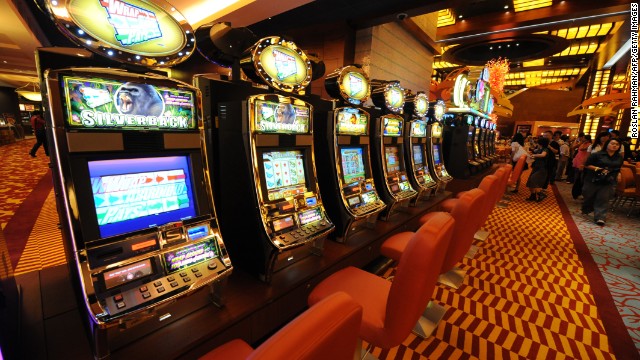
HARTFORD — A bill that would legalize slot machines outside the state's two Indian casinos took a huge hit Friday when both the Mashantucket Pequot and Mohegan tribes said the plan would violate their revenue-sharing compacts with the state.
Representatives from the tribes did not testify this week when House Bill 5378 was debated at a public hearing. But spokesmen said Friday that both tribes oppose the idea of expanding gambling at offtrack betting parlors in Windsor Locks, New Haven and Bridgeport.
"The Mashantucket Pequot Tribal Nation's position is that HB 5378 would violate the memorandum of understanding between the State of Connecticut and the tribe,'' said spokesman William Satti. "We feel any discussions of this nature should be on a government-to-government basis with the present administration to discuss ways to protect jobs and revenue for the State of Connecticut."
The compacts with the tribes that operate Foxwoods Resort Casino and Mohegan Sun requires the casinos to pay 25 percent of their slot machine revenue to the state. The agreements have brought the state $6.5 billion since the arrival of slots in 1993. In return, the tribes have the exclusive right to operate the lucrative slot machines.
The issue of expanding slots is important because the money sent to the state from the casinos has been dropping sharply and is forecast to plummet further.
Slot revenues peaked at $430 million in the 2007 fiscal year and have since fallen to $267 million in the current fiscal year. The revenue is projected to fall to $191 million in the 2018 fiscal year as the tribes face competition in Springfield, Mass., and from places like Aqueduct in Queens, N.Y., and Yonkers Raceway in Westchester County, N.Y.
Chuck Bunnell, chief of staff for the Mohegan tribe, said that even a small number of new slots outside the casinos would knock out the entire amount of money the tribes are currently providing to the state.
"Two slot machines at Windsor Locks would violate the agreement — the whole thing,'' Bunnell said.
"One slot machine. The state has done extraordinarily well based on the exclusive right of the two tribes.''
With fast-growing competition in New York, Rhode Island and soon in Massachusetts, Bunnell said Mohegan Sun is "acutely aware'' of venues that are drawing away Connecticut customers.
"At this point in time, we have done a lot of analysis,'' Bunnell said. "It is our desire to share that data with the state so that they're fully informed and again offer our willingness to sit and work together, if that is something the state wants to do, to protect the jobs that we have created. We are not presenting a plan at this point in time.''
With a casino scheduled to open just over the state line in Springfield in 2017, some Connecticut legislators say the state needs to act to preserve thousands of jobs and millions in state revenues.
Lawmakers are pushing ahead with the proposal to allow slot machines in Windsor Locks, Bridgeport and New Haven so residents will not be tempted to gamble out of state.
The push is particularly strong in north-central Connecticut, where supporters say that slot machines would provide a boost to the Bradley Teletheater in Windsor Locks. The town of fewer than 15,000 residents has 1,500 hotel rooms because of the nearby international airport. State Rep. Peggy Sayers, a Windsor Locks Democrat, said the slots would be popular because "people fly in for meetings and frequently look for evening entertainment.''
State Rep. David Alexander, D-Enfield, said the opening of the $800 million MGM Resorts International casino in Springfield will immediately draw gamblers from Enfield and surrounding towns.
"We're bleeding money now to Rhode Island and New York, and soon to be Springfield,'' Alexander said. "We can stop some of that bleeding. We're not expanding the market. It's three isolated facilities. We can keep some revenue here, as opposed to other states.''
Sayers and Alexander supported the plan during a public hearing this week, the first step in moving a bill through the legislature.
Expansion Of Gaming 'Complicated'
But state Rep. Stephen Dargan, co-chairman for more than 20 years of the legislative committee that oversees gambling, said the tribes' opposition did not surprise him, and that the state must be careful not to break the tribal compacts.
"The expansion of gaming is complicated,'' Dargan said. "If you have someone outside the two tribes who want to do it, it complicates it. They feel they have exclusivity with the compact agreement.''
Dargan says the plans to expand slot machines to the state's three offtrack betting sites — the Bradley Teletheater, Sports Haven in New Haven, and Shoreline Star in Bridgeport, do not include the exact number of slot machines.
"I haven't seen any comprehensive plan,'' Dargan said. "There needs to be broader discussions.''
Malloy has largely stayed out of the issue, saying he would not play a "lead role'' in expanding slot machines.
"It's not something I've been actively thinking about or pursuing,'' Malloy said previously. "I don't see Connecticut doing it, but, you know, that's a legislative matter, at least initially. … I don't think that there is a consensus in Connecticut that people want a lot more gaming.''
Former House Speaker James Amann, now a lobbyist for Shoreline Star, said the two major new gambling venues in New York — Aqueduct and Yonkers — have drawn large numbers of gamblers out of Fairfield County.
"When MGM opens, the erosion will continue, and if there is inaction taken by this General Assembly, it will only get worse,'' Amann said. "This is not about promoting or expanding gambling opportunities. It's about the fight the state is forced to wage with neighboring states for gaming dollars. … Other states are taking the fight to Connecticut. We need to protect what we have and keep Connecticut dollars in Connecticut.''
While some lawmakers are focused on jobs and revenues for the state, other advocates say the state is not paying enough attention to the social costs of gambling. State Sen. Tony Hwang, R-Fairfield, was strongly opposed to keno proposals and he is also opposing the expansion of new slots.
"Gambling addiction is a disease,'' Hwang said. "We're not treating it as a disease in these discussions.''
Hwang has teamed up with former U.S. Rep. Bob Steele, a Republican who represented the state's Second District from 1970 to 1975.
"Today's slots have become highly addictive computers'' that "produce relatively few jobs,'' Steele testified Thursday to the legislature's public safety committee. "They drain wealth from communities.''
In the same way, Cheryl Chandler of the Connecticut Council on Problem Gambling raised questions about the proposal.
"This would not only be an expansion of gambling, but an introduction to communities of the form of gambling found to be most closely associated with addiction,'' Chandler said. "One example close to home is that fact that 46 percent of problem gamblers who called the problem gambling helpline identified slot machines as the form of gambling with which they have a problem.''
But Amann said that additional slot machines would not be disruptive because Connecticut residents have been dealing with various forms of gambling for decades.
"For those critics who argue that the promotion of gambling under any circumstances is wrong, they need to realize that gambling is nothing new to the state,'' Amann said. "For the past four decades, Connecticut has been a gaming state, beginning with jai alai, lottery, bingo, and most recently, casinos. … This has the potential to be a win-win for the state of Connecticut and its taxpayers.''
The Oneida Indian Nation, owner of the renowned Turning Stone Resort Casino in Verona, announced plans to expand its Upstate New York operations with a new $20 million, 67,000-square-foot casino in the Village of Chittenango. (Oneida Indian Nation )
CHITTENANGO, N.Y. — The Native American tribe leading the movement to change the name of the Washington Redskins plans to open a $20 million casino that pays homage to the work of L. Frank Baum, who was born in this village outside Syracuse and later wrote “The Wonderful Wizard of Oz.”
Just one problem with the Oneida Indian Nation’s Yellow Brick Road Casino: A decade before Baum wrote one of this country’s most celebrated children’s tales, he campaigned for a Native American genocide.
“The Whites, by law of conquest, by justice of civilization, are masters of the American continent, and the best safety of the frontier settlements will be secured by the total annihilation of the few remaining Indians,” he wrote in late 1890 for the Aberdeen Saturday Pioneer in South Dakota. “Why not annihilation? Their glory has fled, their spirit broken, their manhood effaced; it’s better that they should die than live the miserable wretches that they are.”
Two weeks later, Baum, the newspaper’s publisher, reiterated his point in an editorial written after the slaughter of as many as 300 Sioux at Wounded Knee. He demanded that the U.S. government “wipe these untamed and untamable creatures from the face of the earth.”
So why would the Oneida — a small tribe that has condemned the Redskins for a name they consider patently racist — embrace the legacy of a writer whose own descendants have apologized for his patent racism?
L. Frank Baum (Courtesy of Peter E. Hanff, President, International Wizard of Oz Club via AP)
That apology is the reason, said Oneida leader Ray Halbritter, calling the tribe’s future casino the product of reconciliation.
“I think that’s a wonderful message — that we’re able to overcome by repentance and by forgiveness,” Halbritter said. “It’s looking forward rather than backward.”
But some Native Americans have voiced astonishment over the tribute to Baum.
Ernestine Chasing Hawk, a descendant of the Wounded Knee victims, called the Oneida’s decision a betrayal.
“How can they be so ignorant of history and traitors to their own race?” she asked in an essay published in the Native American Times. “Would the Jews build a casino to honor Adolph Hitler?”
Halbritter insisted that the homage does not represent a “whitewashing of Baum’s writings,” but noted that his popular stories have noble themes and, obviously, immense commercial appeal. The tribe said no references to Baum will appear in the casino.
“We are aware that some people have difficulty separating the good from the bad,” he said. “I think we can separate and try to extract the good and focus on the good.”
The sidewalks in downtown Chittenango, N.Y., are lined with yellow bricks, an homage to L. Frank Baum who authored “The Wonderful Wizard of Oz.” (John Woodrow Cox/The Washington Post)
In the battle for moral high ground, those who oppose the name of the Redskins often note that it was given to the team by another racist, George Preston Marshall. Halbritter referred to the former owner as a “famous segregationist” in a December 2013 Post op-ed.
Halbritter also argued the name was a demeaning term commonly used by conquering settlers — the very same settlers Baum urged to massacre the remaining Indians.
“The word is a slur that was screamed at Native Americans as they were forced from their lands at gunpoint,” Halbritter wrote, arguing that it was “unacceptable for a professional sports league to continue promoting such a derogatory epithet.”
In his two editorials, Baum most often referred to Native Americans as “Indians.”
Three times, though, he called them something else: “Redskins.”
‘A kind of madness’
In Chittenango, where the downtown sidewalks are paved with yellow bricks, any evidence of Baum’s diatribes is hard to find.
A weathered, wooden Tin Man welcomes visitors to the village in which Baum was born 158 years ago. The town of 5,000 holds an “Oz-Stravaganza!” festival each summer, and features a museum devoted to Baum called All Things Oz.
Many of Chittenango’s businesses also embrace his legacy. At the Land of Oz & Ends, a specialty antique shop, the shelves are stacked with themed kitsch: Wicked Witch shot glasses, Scarecrow “Ken” dolls and figurines with ruby slippers that click together as they play “Somewhere over the Rainbow.”
In 1888, Baum left New York and moved his family to South Dakota, determined to succeed in the burgeoning West. He opened a variety store, Baum’s Bazaar, but when it failed, he took over a weekly newspaper at a time when violence often erupted between whites and Native Americans. That climate of intense fear, his biographers say, may help explain his hateful rants.
“He was just reflecting back the ethos of the time,” said Evan I. Schwartz, author of “Finding Oz: How L. Frank Baum Discovered the Great American Story.” “This was not an unusual thing to say, it was just unusual that it was L. Frank Baum, and we’re looking at it in the context of today.”
Still, even in the context of that age, those who have studied Baum’s life struggle to understand his motivation.
His mother-in-law, Matilda Joslyn Gage, was a central figure of the women’s suffrage movement and a significant influence on Baum. At almost the exact same time he called for the mass murders of Indians, Baum was campaigning for women’s rights.
“The key to the success of our country is tolerance,” Baum wrote in an editorial that appears in Schwartz’s book. “Bigotry, if not wholly unknown, is so intolerable, as to be nearly entirely suppressed.”
Baum published his first controversial editorial soon after the death of Sitting Bull, who, in the author’s estimation, was the last Indian worthy of life.
“With his fall the nobility of the Redskin is extinguished,” Baum wrote, “and what few are left are a pack of whining curs who lick the hand that smites them.”
The ensuing carnage at Wounded Knee drew no sympathy from Baum, who argued that only genocide would prevent a vengeful Indian uprising.
“Baum’s vicious response was a kind of madness,” wrote Rebecca Loncraine, author of “The Real Wizard of Oz: The Life and Times of L. Frank Baum.” “His thoughtless comments were incoherent, full of the pain and frustration of his own life out on the prairie.”
His newspaper soon closed, and Baum, then a failure in all he had pursued, moved back East. There, a decade later, he introduced readers to the world of Oz, penning 14 books in the popular series.
In 1919, Baum died famous and successful, achieving even more notoriety two decades later when “The Wonderful Wizard of Oz” was made into a movie. According to the Library of Congress, it is the most-watched film of all time.
And yet, the editorials so deeply stained his legacy that — 87 years after he died — two of his descendants traveled to a South Dakota reservation in 2006 to ask for forgiveness. Gita Morena and Mac Hudson apologized to Sioux families whose ancestors were killed in the massacre.
“We stand before you and before the citizens of both our great nations to suggest,” their statement read, “that ‘The Wizard of Oz,’ a great American fairy tale, and the Massacre at Wounded Knee, a great American tragedy, be forever joined in the hearts, minds and memories of all our people.”
The power of ‘Oz’
The Oneida, a tribe of just 1,000 members, have ruled gambling in central New York for two decades.
Turning Stone Resort Casino sprawls over 3,400 acres of Indian land 30 miles east of Syracuse and attracts more than 4.5 million guests a year. With its four hotels, 72 holes of golf and enough gaming space to hold two football fields, the casino would look at home on the Las Vegas Strip.
Turning Stone generates hundreds of millions of dollars in revenue for the Oneida, which has helped fund the “Change the Mascot” campaign for nearly the past two years. The tribe has commissioned studies, hosted a symposium, paid for radio ads in cities where the Redskins are playing football and supported a bevy of demonstrations nationwide.
But the tribe’s highly profitable stranglehold on gaming in central New York could be nearing its end.
In mid-December, a state board recommended that three non-Indian casinos receive casino licenses, including an extravagant $425 million project planned to open 45 miles west of Syracuse.
Less than a week later, Halbritter announced the Yellow Brick Road Casino, a more casual and much smaller gambling venture than Turning Stone. It’s scheduled to open this spring and offer 430 slot machines, a 500-seat bingo hall, two dining options, a bar and a general store — all paying tribute to Oz.
The tribe, which has also sponsored the village’s annual festival, chose the theme in part because it honors Chittenango’s central identity, and the Oneida wanted local support.
“We think this can be mutually beneficial,” said tribe spokesman Joel Barkin. “With any development project, if you have buy-in from the town and the political leadership and the community, that’s always better.”
But the Oneida also recognized a potentially lucrative business opportunity. The Oz brand has immense marketing value. News of the casino appeared in the Guardian, the Boston Globe and the New York Times.
“It went kind of crazy when we announced it,” Barkin said. “There are few things that are more Americana than ‘The Wizard of Oz.’ ”
The location also provides the Oneida a competitive advantage over their would-be rival.
They own thousands of acres in central New York, but few parcels are more accessible from Syracuse, the region’s hub, than the selected site along Route 5. Drivers from the city can reach Chittenango in just 25 minutes — about half the time it would take them to reach the anticipated non-Indian casino.
Chittenango Mayor Ronny Goeler said he hopes the casino, expected to create 250 jobs, will revitalize a place that has struggled for a decade.
First, a highway project diverted traffic away from downtown, then came the recession. Some businesses didn’t survive, including Oz Cream and the Emerald City Grill.
Maybe, Goeler said, the Oneida can change things. “I thought it was great,” he said, “that someone wanted to invest that much time and money and energy into our village.”
During a meeting of the Carle Place Civic Association on Jan. 21, 2015, people stand in opposition to the proposed building of an OTB gaming parlor at the vacant Fortunoff site in Westbury. Photo Credit: Newsday / Thomas A. Ferrara
The latest schemes to fill budget gaps reveal the abject desperation of our legislators to scare up money without inconveniencing their benefactors: the 1 percent ["OTB relents on casino," News, Feb. 1].
In what rational plan are video slot machines and automated traffic fines a benefit to our citizens? These schemes simply siphon money from our middle class while offering nothing in return -- not education, not culture, not tourism, not infrastructure improvement. And then officials are shocked when we protest.
At least Las Vegas casinos give you dinner and a show before emptying your wallet and leaving you in an alley!
Legislators, if you are really this bereft of ideas, would you please step down and let people with more imagination and integrity take a crack at it?
HARTFORD, Conn. (AP) - An advocate for slot machines at some off-track-betting sites has told state legislators that Connecticut’s two casinos are in a “fight for survival” that can be won by installing the gambling devices.
The Day of New London reports (http://bit.ly/18TISojJim ) that Jim Amann, former House speaker and now a lobbyist, called on the General Assembly Thursday to pass legislation potentially authorizing video slot machines at OTB facilities.
The Mashantucket Pequot and Mohegan tribes that own the casinos have the exclusive right to operate slots in Connecticut.
Supporters of the legislation say installing slots at OTB facilities would not be an expansion of gambling but would redistribute Connecticut slots inventory.
Cheryl Chandler, interim executive director of the Connecticut Council on Problem Gambling, said slot machines are particularly addictive for problem gamblers.
___
Information from: The Day, http://www.theday.com
Chinese Gambling Hub Struggles Amid Construction Boom
ENLARGE
Pedestrians cross a road in front of the Venetian Macao resort and casino, operated by Sands China Ltd., a unit of Las Vegas Sands Corp. Photo: Bloomberg News
The “build it and they will come” strategy that has earned billions for casinos in Macau is facing its biggest test yet as a construction binge in the Chinese city bumps up against plummeting revenue.
Analysts and investors are questioning the strategy amid Macau’s worst-ever downturn. The Macau government reported Monday that January gambling revenue in the territory fell 17% from the same period last year to 23.75 billion patacas ($2.97 billion). The decline follows December’s record 30% drop and extends a dramatic eight-month losing streak that ended five years of uninterrupted growth. During the slump, share prices of Macau’s six Hong Kong-listed casino operators have fallen an average of 34%.
Meanwhile, casino operators are in the middle of a $23 billion spending spree on new projects that are set to open in the next few years, according to Union Gaming Research, an industry research firm. The city is expected to add 62% more gambling tables and 51% more hotel rooms by the end of 2017, Union Gaming says.
The decision to invest was made when Macau, a $44 billion market that still rakes in seven times more gambling revenue than the Las Vegas Strip, was growing by the size of the Strip each year.
ENLARGE
But the world has changed since those plans were made. Executives and analysts attribute Macau’s sharp reversal of fortune primarily to a crackdown on corruption led by China’s President Xi Jinping . In addition to bringing down many top mainland officials, the sweeping campaign has scared off highrollers and decimated the city’s junket system, they say.
The number of Macau-registered junket operators—middlemen that use underground banking networks to facilitate high-stakes gambling—dropped 16% in January from the previous year to 183 from 217, according to official data released last month.
A laundry list of other challenges has also affected Macau’s lower-spending but higher margin mass market customers including tighter visa policies for mainland Chinese visitors to Macau, increased oversight of UnionPay cards many gamblers use to access funds in Macau and new smoking restrictions at casinos.
All of this has put pressure on margins and forced casino operators to re-evaluate costs. Las Vegas Sands Corp. , the first Macau casino operator to report fourth-quarter results, said it now was looking closely at costs. “We’re charged with running our business more efficiently, examining all layers of cost…But this has been a sea change, as you know, in a very short period of time,” said Sands President Rob Goldstein on the company’s earnings call last week.
Declining revenue isn’t the only problem for expansion plans. Casino operators remain hamstrung by the Macau government’s tight control over the supply of both labor and gambling tables. At the same time, leaders in China and Macau have made it clear casino operators need to invest significantly more in nongambling facilities to further their goal of transforming the city into a diversified entertainment hub.
ENLARGE
Signage for the Wynn Palace project, developed by Wynn Resorts, displayed on a fence outside the construction site in Macau on Jan. 12. Photo: Bloomberg News
It is unclear, however, what the demand may be for such offerings in the only place in China where gambling is legal.
Galaxy Entertainment Group Ltd. and Melco Crown Entertainment Ltd. , which each say they will open expansion projects this year, highlighted planned nongambling elements at their resorts at news conferences last month.
Martin Scorsese directed a short film starring Robert De Niro, Leonardo DiCaprio and Brad Pitt to promote Melco Crown’s new Hollywood-inspired resort, which will also feature a Batman virtual-reality ride and what is being billed as Asia’s highest Ferris wheel “inspired by having two asteroids shooting through a Gotham City building,” according to a statement from the company.
Galaxy’s expansion plans include a 3,000-seat Broadway-inspired theater, a mall with more than 200 shops and what was described as “the world’s longest skytop aquatic adventure river ride.”
But visitors to Macau have so far been much more interested in gambling than in other forms of entertainment. In response to a question about whether there would be enough demand for all the new theaters and arenas coming to Macau, Galaxy deputy chairman Francis Lui said: “My short answer is: not right now.”
Union Gaming analyst Grant Govertsen, who recently upgraded the sector to “Buy,” took a contrarian view on the building boom: “At today’s stock prices you’re basically getting it all for free.”
Gambling in the U.S. is making a comeback. At least that's the way it would seem with the rise in Las Vegas visitation and revenues as well as the renewed construction on casino resorts in the U.S. Northeast. However, just as we saw in the years leading up to the market crash in 2008, over-investment in new, massive projects financed by heavy debt loads can be very dangerous if visitation and gambling revenue start to decline unexpectedly.
Caesars Palace in Las Vegas. Photo: Caesars Entertainment.
Such was the case for Caesars Entertainment (NASDAQ: CZR) . While trying (and mostly failing) at expanding, the company took on far more debt than it could manage, and after it went through years of losses following the crash of 2008, one of its main subsidiaries (Caesars Entertainment Operating Co.) recently filed for Chapter 11 bankruptcy protection. While the company thought that it could use debt to finance potential growth, the plan backfired when the market took a downward turn leaving Caesars with way too much debt supported by largely under-performing properties.
Now, MGM Resorts International (NYSE: MGM) , another company that gets most of its revenue from the U.S. -- unlike Las Vegas Sands (NYSE: LVS) , which is more diversified throughout Asia -- is also taking on a large debt load to finance new resorts in the U.S. and China. Which of course raises the question: Could MGM be following Caesars' catastrophic debt path?
MGM's big bet on a growing market The U.S. economy continues to push upward, with rising consumer confidence helping spur revenue growth for companies that rely on discretionary spending, such as casino companies. MGM Resorts, the biggest player in the industry by U.S.-earned revenue, was one of the stronger bets in the casino market in 2014. MGM's relative success last year was due to the resurgence of gambling and non-gambling revenue in the U.S, during a time when competing casinos were getting beaten down by falling revenue in China.
With MGM's recent success in its domestic market, it makes sense that the company would want to continue expanding and gaining more ground on a regrowing U.S. market. But is the timing right for the amount of growth (and debt) it's taking on now? The company was continually renovating and improving its Vegas properties in 2014 to make them more appealing to visitors and to add more hotel capacity and it has two massive projects in the U.S. Northeast on tap.
A rendered view of what the National Harbor resort will look like. Image: MGM Resorts.
MGM is currently continuing constructing its newest resort in National Harbor in Maryland, and it's set to open in 2016. This 1.7-million-square-foot complex is expected to house about 4,000 slot machines. On the heels of this project, the company also got necessary licenses for a new resort in Massachusetts, and it's been reporting its plans for a Springfield, Mass., resort to start construction this year.
MGM is also still expanding in China, with a huge resort planned to be opened in Macau in 2016. The potential benefit of these new resorts is big, and Nomura Securities predicts that these new casinos combined could drive up MGM's total annual EBITDA by 56%, to over $3.5 billion, in the next three years.
Expanding at the peak?
Investors who are looking at MGM's current growth as a reason to bet on this company should also consider the cost of all of this growth and that the company is taking on very large amounts of debt. This has been done to finance the Macau and National Harbor projects, and it will likely do the same to build the Massachusetts resort. As of now, MGM's total debt stands at $12.9 billion, and is the highest in the industry (behind Caesars). This is about 30% more debt than Las Vegas Sands holds even though Las Vegas Sands also has a new resort coming to Macau that will be completed a full year earlier than MGM's resort there.
MGM's interest coverage ratio (EBIT/interest expense, showing ability to use earnings to then pay interest expense) is just 1.5, well below Las Vegas Sands at 14.5. MGM's interest coverage ratio is one of the lowest in the industry and is a red flag that such a high portion of its earnings are spent on debt expense.
Although there doesn't seem to be a liquidity risk in the near term, thanks to the new round of financing, this could be a major issue in the medium to long term. Of the $11.7 billion in debt the company had at the end of 2014, before the new round of financing, $1.3 billion of that debt matures in 2015, but MGM has said that some of the new round of debt raised at the end of 2014 will be used to pay this year's debt expense. This is essentially just pushing the problem down the road a little further, even though MGM still has debt that matures every year between now and 2023.
This system of continually taking on new debt is dangerous when the company doesn't have a very large cash cushion to work with. Even though MGM has more debt than Las Vegas Sands and will have a bigger debt interest expense to pay in the near future, MGM has only about $2.50 worth of operating cash flow per share, compared to over $6.00 of operating cash flow per share for LVS.
For these reasons, I'd be wary of MGM's current growth trajectory. If the U.S. market continues to grow, then these big new projects could prove very beneficial to MGM, but it looks oddly similar to how Caesars looked in the years leading up to the U.S. market crash of 2008 -- and we see how poorly that turned out.
1 great stock to buy for 2015 and beyond
2015 is shaping up to be another great year for stocks. But if you want to make sure that 2015 is your best investing year ever, you need to know where to start. That's why The Motley Fool's chief investment officer just published a brand-new research report that reveals his top stock for the year ahead. To get the full story on this year's stock -- completely free -- simply click here.
The competition for Massachusetts’s final casino license, reserved for the state’s southeast region, is slowly coming into focus, as state regulators announced on Friday that Mass Gaming & Entertainment had met the application deadline.
The company, an affiliate of Chicago-based Rush Street Gaming, joins New York-based KG Urban Enterprises, as potential rivals for the license.
The Massachusetts Gaming Commission said Friday that it also is evaluating application extension requests from Somerset On The Move, Crossroads Massachusetts and the Seafan Trust. All five groups will be invited to address the commission at its next meeting on Feb. 5.
Applicants were to submit by Friday detailed financial information about key players and investors in their projects as well as a $400,000 non-refundable fee to defray costs of the commission’s background investigation.
But only three of the five possible applicants – Mass Gaming & Entertainment, KG Urban Enterprises and Crossroads Massachusetts — have paid the required fee, the commission said. Applicants must pass the background check before they can continue to the next phase of the process, which focuses on the project proposal itself.
Mass Gaming & Entertainment operates Philadelphia’s SugarHouse Casino and Pittsburgh’s Rivers Casino. It had previously sought a slot parlor license for a development in Millbury but eventually dropped that plan in the face of local opposition. The company declined to release its application materials or any information about the proposed project Friday. But George Carney, owner of the Brockton Fairgrounds, said the company is eying his facility. He declined to elaborate further.
KG Urban Enterprises, a real estate development firm already has said it wants to build a casino on the New Bedford waterfront.
Kathryn Wheaton, who runs the Brookline-based Seafan Trust Corp., has said her group wants to develop a $4 billion casino called the Sun Moon Resort at a 500-acre location she declined to identify.
Somerset on the Move LLC, is headed by David Hanlon, a former president of Harrah’s Atlantic City operations and the Rio hotel and casino in Las Vegas. Somerset town leaders hope the company develops a casino on 100 acres of town-owned land just off Interstate 195. The company did not respond to requests for comment Friday.
Crossroads Massachusetts LLC is an investment group that included the late David Nunes, who had been working with Connecticut-based casino operator Foxwoods to bring a resort to Milford before residents rejected the proposal in a 2013 referendum.
The southeast region faces a number of challenges for casino gambling, including a relatively weak economy and competition from area casinos.
Twin River Casino is just over the state line in Lincoln, Rhode Island, and the Mashpee Wampanoags are seeking a federal tribal reservation in Taunton, Massachusetts, where they hope to build a resort casino that does not require a state license. The tribe on Friday touted a “key milestone” in its efforts: approval of the project’s environmental impact report. The tribe said it’s the final step in the state’s environmental review process.
Massachusetts already has awarded two resort casino licenses: one to Wynn for a $1.6 billion development in Everett just north of Boston and another to MGM for an $800 million casino in Springfield. Penn National Gaming also holds a slot parlor license for the harness racing facility it’s expanding in Plainville, a town in the state’s southeast region.
A FORMER Post Officer worker yesterday admitted pocketing £1,420 of customers’ money to fund his gambling addiction.
Richard Horsfield-Frost, 22, of Notley Road, Braintree, was a counter assistant at Marks Tey Post Office when he took the cash last year.
He collected money from eight people for their road tax discs, but never passed the money to the DVLA.
Horsfield-Frost, who now works at a high street bank, admitted at Colchester Magistrates’ Court a charge of fraud by abuse of position.
The court heard the DVLA contacted the eight people, saying they had not paid for their tax discs.
When each could prove they had handed over the cash, the Post Office investigated.
Horsfield-Frost was the only person, aside from the manager, who could issue the discs and he used his own system log-in for the transactions.
The offence happened between August 29 and September 15, 2014.
Horsfield-Frost’s solicitor, Ms Maidment, told the court Horsfield- Frost had been battling gambling addiction since he was 18, and took the cash to fund his habit.
Ms Maidment said the offence “didn’t take place over a long period of time.
“This was three days over two weeks. It was far from sophisticated.”
She told the court Horsfield- Frost’s new job was at risk due to the conviction.
She said said: “It’s a job he loves and he’s doing really well.
“The consequences of this are absolutely devastating.
Horsfield-Frost has attended Gamblers Anonymous meetings and now had better control of his addiction.
He now only gambles about £20 a week, but is trying to stop.
Horsfield-Frost will have to do 180 hours of unpaid work and pay £145 in costs and victim surcharge.
He was also ordered to repay the money to the Post Office.
Graphic shows Citigroup draft wording and then actual wording that ended up mysteriously in the final spending bill. Courtesy David Johnson and SmirkingChimp. Chronicle News & Opinion
(MONROE, WA.) -- You might have noticed that much if not most of the national and local news media has been hard at work of late feeding you copious amounts of bread and circuses mostly in the form of an infinitely long strand of meaningless trivia having to do with "deflated footballs" and who'll be eating what for snacks during the Super Bowl game.
Seeing this day after day some Americans, perhaps those who possess an IQ slightly above room temperature might be tempted to give in to the ongoing conspiracy theory that this is not an accident; it is a calculated plan of the corporate media elite to keep working class Americans stupid, happy and drooling at high noon on Main Street with that thousand-mile stare in their eyes.
You know. The patented Alfred E. Neumnan look replete with the goofy grin.
"What? Me worry?"
The "elite" in total being comprised mainly (it appears) of large, corporately owned media now firmly in bed with lawmakers who are now virtually (if not outright) owned by huge corporations, the Wall Street investment banks and billionaires -- all the people and entities your lawmaker needs to be reelected.
And, as you well know there is no need more pressing than a lawmaker being reelected.
How else, some ask, other than a grand conspiracy to explain the sheer tonnage of stories about deflated footballs and $7500 Super Bowl tickets when the mass media told you so little of how you and your family were sold down the river last month by your elected leaders in a move that may cost you dearly during the next Wall Street ignited Second Great Recession meltdown?
And there will be another one because your lawmakers unlocked for Wall Street the only door that had been separating the Street from gambling with your money as it did during the wild, crazy days of insane (and ultimately worthless) "derivatives" that sparked the Great Recession and virtually sank the American economy.
Did you enjoy losing your job/and or business and/or home during that time? Still haven't quite recovered you say?
Well, don't get too comfy attempting to crawl back up that ladder of middle class success because the next meltdown may be only a few years away and it may hit even harder and last longer than the first Great Recession.
GOT THAT RIVERBOAT GAMBLER FEVER
The huge banks can now, once again legally gamble with your (taxpayer) money thanks to the government spending bill Congress and the President agreed to last month.
Buried deep within that bill was a Weapon of Mass Economic Destruction: a clause that repeals part of the Dodd-Frank Act.
That clause was the only door protecting you and your family from the insatiable greed and uncontrollable gambling habits of the huge investment banks on Wall Street.
The ultimate hosing of the Great Unwashed has begun.
The act was designed to stop Wall Street from using other peoples’ money to support its gambling addiction, as it displayed quite nicely before the near-full economic meltdown of 2007-2008. Dodd-Frank had stopped the banks from using commercial deposits that belong to you, your aunt Sally and Uncle John (which are insured by the government) to make the kind of risky bets that got the "too big to fail" banks into trouble and forced taxpayers to bail them out so they could survive to do it again another day.
The reason they were too big to fail is because they had access to gambling with your money and then your money again to bail them out once they got into trouble.
And now at a time when those same banks are bigger and far more powerful than before the Great Recession, they have that open door once again to gamble with your money.
HERE'S SOME OF THE PEOPLE WHO PUT YOUR FUTURE IN WALL STREET'S CROSSHAIRS
In Washington State, here's the lawmakers that voted yes for the "cromnibus" spending bill - a vote that allowed Wall Street and billionaires to get at your money again - and those who voted no.
Doc Hastings - Washington 4th R YES Dennis Heck - Washington 10th D NO Jaime Herrera Beutler - Washington 3rd R YES
Derek Kilmer - Washington 6th D VOTED NO Rick Larsen - Washington 2nd D VOTED NO Jim McDermott - Washington 7th D VOTED NO
Cathy McMorris Rodgers - Washington 5th R YES David G. Reichert - Washington 8th R YES Adam Smith - Washington 9th D NO
Now you know who to call up and complain to after the next Wall Street ignited meltdown of the economy that just might claim your job and/or your house.
And just where did that clause in the cromnibus bill come from almost word for word?
Citigroup.
A Dec. 16, 20914 story by David Johnson over at SmirkingChimp.com put it this way:
"Citibank (the consumer division of Citigroup) literally wrote the provision and paid someone to put it in the bill. This “Citibank” provision undid months of hard work getting the Dodd-Frank bill in place. No one in the House or Senate would admit to putting it in the bill. No one would say they supported the provision. But House/Senate leadership would not take it out of the bill because it was part of a “deal.” And, of course, it was put in at the last minute, making the choice “vote for it or shut down the government.”
Check the graphic at upper right he ran with the story showing the Citigroup draft of the bill and then the final wording.
Any questions now about who owns your lawmakers?
And just who is Citigroup? Only one of the largest "too big to fail" banks in the world.
ONE HUGE FINANCIAL GORILLA. IT GETS WHAT IT WANTS
Citigroup is a massive multinational banking and financial services corporation headquartered in New York City that was formed from one of the world's largest mergers in history by combining the banking giant Citicorp and financial conglomerate Travelers Group in October 1998.
As of January 2015, it is the third largest bank holding company in the US by assets. Its largest shareholders include funds from the Middle East and Singapore. At its height until the global financial crisis of 2008 Citigroup was the largest company and bank in the world by total assets with 357,000 employees.
Citigroup suffered huge losses during the global financial crisis of 2008 and was rescued in November 2008 by you the generous, always giving taxpayers of the United States in a massive stimulus package handed to it by your government.
They gambled and won-won with your money then, and they will do it again now that that the Dodd-Frank protection door is toast.
Former U.S. Labor Secretary Robert Reich put it this way in a recent column:
" The new legislation, incorporating language drafted by lobbyists for Wall Street’s biggest bank, Citigroup, does just this. It reopens the casino. This increases the likelihood you and I and other taxpayers will once again be left holding the bag."
Johnson asks this question in his December 2014 piece:
"How could something like this be in a bill if no one put it in the bill and no one indicated support for it? How is it that We the People not get it taken out if no one would say they put it in and no one would say they support it?
How FAR can we go from the principles of democracy, transparency, accountability and everything the country, the Constitution and the Congress are supposed to stand for?
This is one more example of how the economy is rigged against We the People. It is an example of how the government now works for a wealthy few against the interests of the rest of us.
In an honest system this would be a scandal deserving of a full, public, transparent investigation followed by prosecution of those responsible. In our current system what we got was “it must pass or the government will shut down.”
Johnson forgot one thing. In our current system we also get the pleasure of the major news organizations of our day - and almost all the local TV stations and newspapers - giving us a story after story about deflated footballs, 12th man flags above Space Needles and on buildings and football game nachos so those goofy, blank, thousand mile, what-me-worry stares shall never vanish from our faces.
As bread and circuses go, it's pretty effective stuff.
Wayne T. Price, Ilana Kowarski and Dave Berman 12:10 a.m. EST January 31, 2015
We all know what Sunday is — it’s Super Bowl Sunday, the day for one of the most-watched sporting events in the world.
For hardcore wagerers, as well as the casual “You wanna bet” types, Sunday also is known as the Super Bowl of gambling. The website superbowlbets.com predicts more than 200 million people will bet on the game, part of an estimated about $10 billion Super Bowl betting industry in the United States.
“The Super Bowl is fun to bet on simply because it is such a cultural event these days,” said Jimmy Boyd, who runs the Walnut, California-headquartered BoydsBets.com. “Trying to win a few extra bucks is always fun, but when you can combine it with something that virtually everyone you know is going to be watching, it really amplifies the enjoyment.”
For Brevard County, and all of Florida, sports betting is illegal, though still very common.
There are straight-up bets between individuals and organized office pools where managers often turn a blind eye to the activity. At many gatherings tonight, party goers will pick a Super Bowl square for a small cash payout. And of course, there’s also betting through online gambling sites.
Sports gambling is growing so large that last month the U.S. Treasury Department threw a warning flag at casinos.
“Increases in sports betting conducted on behalf of third parties are facilitating criminal activity and posing a money laundering risk to the U.S financial system,” Treasury said in a letter on Dec. 24.
Because of the popularity of the Super Bowl, and sports betting, FLORIDA TODAY took a look at what’s happening with this issue on the Space Coast.
Victory Casino
There is only one place to gamble — legally — on the Super Bowl in Brevard County and that’s on the Victory Casino Cruise ship. Even then, you have to be international waters to make your bet and collect your winnings.
Passengers already have been laying plenty of action .
“The betting is happening on every cruise” for the past two weeks said Pete Lynch, the casino marketing manager at Victory Casino Cruises, Lynch said.
And the betting isn’t just on who will win the game. Gamblers can bet on dozens of things related to the game — even which team wins the coin toss before the game starts and how long it will take Idina Menzel to sing the national anthem.
Naturally, all the ship’s televisions will be tuned into the game — 20 screens in the ship’s sports book area and 10 at other locations.
Some additions:
•A Super Bowl “tailgate” party with burgers, chicken wings and nachos. •Cocktail servers and card dealers in referee-striped outfits. •At least five former National Football League players mingling with the customers. Lynch said some of them have played in previous Super Bowls.
“It’s going to be a fun day,” Lynch said.
It costs $10 to get on the ship. Sunday cruises are noon to 6 p.m. and 7 p.m. to midnight.
Drinks are free for customers actively betting in the slot machine or table game areas. But if you’re just there to watch the game, be prepared to buy your own beers. Sports bars and office pools
The beers and cocktails will be flowing at Duffy’s Sports Grill in Melbourne, where a full house is expected. Duffy’s has been selling tickets for $25 each for guaranteed seating.
While you can expect wings galore and loud cheering, don’t expect to see any gambling. And if anyone at Duffy’s is seen wagering, they can expect a swift reprimand.
“Frankly I’ve never come across that,” said Renee Masse, assistant general manager at Duffy’s. “If we saw something like that taking place, we’d tell them to stop and go some place else.”
Though there are probably informal office pools in Brevard, there are few employers that sanction them. Many strongly discourage any kind of gambling in a work setting.
In the weeks leading up to the Super Bowl, it is common for human resources departments to send out warnings to workers telling them not to make sports bets on office property, said John Challenger, CEO of Challenger, Gray, & Christmas, Inc., a national employment consultancy based in Chicago.
Challenger said betting in the workplace is a risky move, since it can result in a formal reprimand or termination.
“In the banking industry or the financial sector, in particular, gambling is counter to the culture,” he said. “Those are companies that make their name by keeping people’s money safe and making wise investments, which is the complete opposite of gambling.” Arguments against gambling laws
Some in Brevard say that gambling in moderation is harmless, and believe that Florida’s laws against sports betting are hypocritical, given that there is an official state lottery.
That’s the view of Jamie Nance, an attorney for Nance Cacciatore law firm in Melbourne.
“I imagine that there is a vocal minority that opposes gambling for moralistic or religious reasons, but look, man has been gambling since the dawn of time,” Nance said. “It’s probably one of the world’s oldest professions.”
Nance said given strained government resources it seems unwise for law enforcement to spend money on the incarceration of gamblers and bookies “for relatively victimless vices.” If any punishment was warranted, it should be a small fine.
“There supposedly is a big libertarian movement in this country, but for some reason with the libertarians I know, their philosophy stops with gambling and prostitution,” Nance said. “Even if you disapprove of those activities, regulating them is still a government intrusion.” Enforcement
State gambling statutes say sports betting is a second-degree misdemeanor. Those convicted can get up to 60 days of prison time and a maximum fine of $500.
There are stiffer penalties for “bookies,” a person who accepts bets based on set odds..
Bookmaking is a third-degree felony for first-time offenders and a second-degree felony for repeat offenders. A bookie’s first conviction can lead to a five-year prson sentence and $5,000 pine. The penalties escalate for repeat offenders. Those who are twice convicted of bookmaking can get a 15-year prison sentence and a $10,000 fine.
Bill Respess, the chief trial attorney in Brevard, said that law enforcement rarely prosecutes individual bettors and primarily focuses its energy on “the people that are making money off the operation.”
In the past, Brevard has prosecuted operators of internet gambling cafes, but gambling prosecutions are rare, Respess said.
“I don’t see us spending a lot of time enforcing the gambling law to prevent Super Bowl bets between friends, but that doesn’t mean it’s legal,” he said. “There are lots of things that go on that are illegal. I hear fireworks go off around the holidays all the time. When people are caught breaking the laws, we enforce them.” Addiction
Arnie Wexler, a self-described former compulsive gambler who operates a national hotline for gambling addicts, said that the Super Bowl is the time of year when temptations for gambling addicts are the most prevalent and intense.
“The Super Bowl is a hotbed for gambling. Compulsive gambling is an all-year kind of thing, but what happens is that the Super Bowl is the last game for gamblers to bet on in the football season,” he said. “With compulsive gamblers, if they’ve won money before, they’re putting it all on the line right now, and if they’ve lost money, they’re trying to get it back during the Super Bowl. It’s the get-out bet for a gambler.”
Wexler said that every year after the Super Bowl, he gets inundated with desperate phone calls to his hotline, 1-800-LAST-BET. In his new book, “All Bets Are Off,” he shares how he recovered from a gambling addiction and describes how others can do the same.
“Nobody really cares about gambling addicts. They look at alcoholics and drug addicts as sick people, but they see compulsive gamblers as crooks,” he said. “The motive of my book is to get people to understand that compulsive gambling is an addiction, and it’s treatable.”
Contact Price at 321-242-3658 or wprice@floridatoday.com. You can also follow him on Twitter @Fla2dayBiz.
Giving props
A big part of Super Bowl gambling is proposition, or “rop” betting, wagering on aspects of the game other than the outcome of the score. Examples:
Will the winning coin toss land on heads or tails?
Will the performer singing the National Anthem remember the words?
Which player will score the first touchdown?
Which team will score first?
Which team will score last?
Will the first score of the game be a field goal or touchdown?
How many songs will the half-time performer sing?
Which team will have the most penalty yards?
Which quarterback will have the most passing yards?
Who will be named Super Bowl MVP? Source: American Gaming Association, Indianapolis Star research
Super Bowl XLIX is coming up on Sunday. It's the world's biggest sports spectacle, and also the event with the heaviest bets. Legal betting will rake in over $100 million this year, but that's dwarfed by illegal betting, which may total $3.7 billion.
So for problem gamblers, the Super Bowl may be a the last chance for a big win. A loss could be especially catastrophic.
Think you're a big roller?
"I lost a hundred thousand dollars on one bet," said a man we're calling Al. He's the head of Gamblers Anonymous in Hawaii. He lost the 100 grand rolling dice.
"I had 4, and I did not make the 4. I threw a 7," he said. "And it's the worst feeling of your life. But if you make the 4, it's the best feeling of your life."
Al said he even had to ask his relatives for about a quarter of a million dollars to pay gambling debts.
"During my 16 or 17 years gambling compulsively, we estimate that I lost over two million dollars."
According to the National Council on Problem Gambling, 10,000 people in Hawaii are pathological gamblers, those whose wagering has a severe negative effect of his or her job, relationships or mental health. Another 20,000 are problem gamblers, who wager despite possible negative consequences.
The Washington, D.C., group said last year, it received 2,759 calls for help from Hawaii because there are no local hotlines for gambling addiction. And since legal gambling doesn't exist in Hawaii, there's no public funding for treatment and prevention. Those programs could be useful on Monday, as Al expects hardcore gamblers to go big on Super Sunday.
"Football season is ending. The Super Bowl is the wrap up of this. So people are running out of games to bet on, and they can't recover all their losses and they can't bet enough to recover their season."
"I wouldn't be surprised if there were an increased number of people calling G.A. (Gamblers Anonymous) after the Super Bowl," said Dr. Robin-Marie Shepherd, a University of Auckland professor who has done research on gambling in Hawaii. "That would be interesting to find out if that's the case." Meanwhile, Al is glad to have kicked the addiction: "The two most important things in my life was my children and my wife, and I was willing to give that away to continue to gamble." For help in Hawaii, Gamblers Anonymous has help here.
HONOLULU (HawaiiNewsNow) -
Super Bowl weekend is not just the climax of the football season -- it is the biggest weekend of the year for legal and illegal gambling.
Only social betting is legal in Hawaii, but the state still has its share of desperate gamblers according to the leader of Hawaii's only chapter of Gamblers Anonymous.
"Football season is ending the Superbowl is the wrap-up of this, so people are running out of games to bet on."
Speaking under the pseudonym "Al" the chapter leader said the festive weekend is a frightening time for many players.
"They can't recover all their loses and they can't bet enough to recover their season. So we are getting a lot of phone calls from people asking about how to stop."
Al says recovery is similar to recovery from a drug addiction and can take years. He himself took nine years and multiple lapses before he gave up betting completely 21 years ago. National experts say Hawaii does not have the enough resources to prevent chronic gambling or help wean gamblers of the addiction, primarily because of the assumption that gambling addictions would not be as common in a state with no legal gaming.
Click HERE for more information on how to get help in Hawaii.








 Posts
Posts


