Meetings & Information


*****************************
****************************************************
MUST READ:
GET THE FACTS!


Sunday, March 9, 2014

Ask Dorothy!

Why would any community think it's DIFFERENT?

Predatory Gambling has destroyed communities across the country and across the globe.


Ignoring the experience elsewhere.....where has Predatory Gambling created 'ECONOMIC DEVELOPMENT'?


Sullivan County on casinos: We're not going to sit around and let someone else win the war

Sullivan County is battling back against a possible casino in Orange - or anywhere else that could take the long-sought prize it says it deserves.
 
The county that's fought for a casino for nearly half a century is launching a three pronged attack - on the business, government and economic development fronts - to corner the market on the up to two casinos allowed in the Catskills/Hudson Valley region.
 
“It's a flank system,” says Sullivan County Partnership for Economic Development President Marc Baez. “If we come together, we can win the war.”

The county's economic development arm, the Industrial Development Agency, just hired the lobbying firm of Wilson, Elsner, Moskowitz, Edelman and Dicker to fight for its casino interests in Albany, “and all economic development in Sullivan,” says IDA Chairman Ira Steingart, who noted it's a long term deal for up to $100,000.
 
Sullivan's business community - led by hotel and restaurant owner Randy Resnick, who fought to get the November casino referendum passed, is mobilizing its forces.
 
“We're really concerned about an Orange casino,” said Resnick, whose Bernie's Holiday Restaurant and Sullivan hotel in Rock Hill hosted rallies to pass the referendum. “The legislation was written for us, not them. We can't let these guys in at the 11th hour.”
 
And Legislature Chairman Scott Samuelson says Sullivan political leaders will work to remind Albany leaders why the legislation allowing up to two casinos in the Catskills was written.
 
“To bring economic development upstate, to us,” he says, noting that several county officials will be in Albany Tuesday to get that message across.
 
They'll also stress that Sullivan, with its long history of now faded hotels, is the perfect spot for new casino resorts.
 
“To take the old sites and make them new again,” says Baez. “It's an adaptive use and that's exactly what we're supposed to do. That's huge. And the jobs mean a lot more to Sullivan than Orange.”
 
The one site in Orange that's been most prominently mentioned - vacant land near Woodbury Common - would be the exact opposite of Sullivan's proposed casino resorts, which would mostly be built on the sites of former resorts.
 
“Orange County would just have a stand alone casino,” says Resnick. “Ours would be family resorts that would attract all sorts of tourists.”
 
But this new casino push, which was formalized late last week during a meeting that included casino developers, isn't just for the minimum one casino allowed in the Hudson Valley/Catskills region - of four allowed upstate. Since the legislation allows up to two in one region - and that region has been widely presumed to be the Catskills - Sullivan wants both.
 
“From a historical perspective, for tourism, for economic clustering, we think two makes sense and we're going to make that happen,” said Baez. “This is Sullivan's signature issue and we're not going to sit around and let someone else win the war.”


...being played for fools....


Casinos a risky bet


By:


I just feel bad for the people of Everett and Revere, who are being played for fools (Feb. 28). The prospect of steady income in a troubling economic time is blinding them to the reality of what a casino brings.

We don’t know exactly what impact such a casino will have in a congested urban environment. You can’t predict how many small families will be destroyed because mom or dad can’t resist. You can’t predict how many 18-year-olds with decent fake IDs will start their gambling addiction in their hometown.

Believe it or not a two-hour drive to Connecticut just might be saving a lot of lives. People need to take the blinders off and realize what they risk is the future of their cities.

— Zack Assarian, Waltham

http://bostonherald.com/news_opinion/opinion/letters_to_the_editor/2014/03/casinos_a_risky_bet


Huh? Spoon-fed Propaganda!

It's always disappointing when an article lacking substance such as this is posted after all the information, evidence and studies have been presented.

Other than being spoon-fed the Casino Vulture's Propaganda, is there any independent thought?

This is an interesting resource:


If Casino Gambling is such a great deal, what happened to Atlantic City, the Poster Child for all that is WRONG with Predatory Gambling?


The Federal Reserve conduct a study about Atlantic City. Have you read?

Poverty, CRIME, homelessness, unemployment were higher AFTER the Casinos.


Small, local businesses were destroyed in Atlantic City.

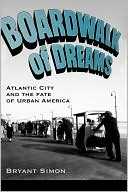
There's a great book, 'Boardwalk of Dreams' by Bryant Simon, that documents the failures of the promises of Predatory Gambling.


Want to know how 'wonderful' Predatory Gambling is?


Look at the slums in Atlantic City!
http://youtu.be/_SmTxSVVkF8


Casinos Will Bolster the Economy

 
Anti Casino groups have filed a request to place a referendum on the 2014 ballot prohibiting gambling in Massachusetts.

The Secretary of State has approved the request that will pose the casino question on a statewide level.

Opponents have managed to get several religious organizations on their bandwagon preaching no casinos.

Unless we’ve missed something, there are no religious laws handed down by God condemning gambling.

Having casinos and a slot parlor statewide is no sin, it’s a way of raising much needed new revenue.

These groups are mounting a crusade, a movement that will take away money from state, cities and towns that could badly use the revenue for variety of things that could be accomplished like roadway repairs, bridge repairs, street lighting and the list goes on and on.

Casinos will also generate jobs during and after construction.

Although the referendum results will be presented to the State Legislature, elected officials do not have to vote on the final results (yes or no) they can vote as they choose.

Getting casinos in Massachusetts has become harder than talking your way out of hell.

http://www.northendregionalreview.com/2014/03/03/casinos-will-bolster-the-economy/


Empty promises


Massachusetts fell for the EMPTY PROMISES and OVERSTATED PROJECTIONS.

New Hampshire doesn't seem as willing.


My Turn; Empty promises on casino revenue, jobs

By GORDON ALLEN
For the Monitor
Wednesday, March 5, 2014

Many legislators leaning toward allowing casino gambling in New Hampshire do not like the social costs and risks it will bring. But they believe in the promises that gambling will provide stable tax revenue and good-paying jobs for New Hampshire residents.
 
The problem here is that these promises are just talk. Nowhere in the actual bill (HB 1633) being pushed by gambling interests is there anything in writing backing up these promises. There are absolutely no written guarantees for tax revenue and jobs in HB 1633. None. Nada. Zip.
 
To be specific, there is absolutely nothing in writing in all 99 pages of HB 1633 that requires even minimum levels of the tax revenue promised, or good pay and benefit levels for jobs, or even that most jobs will not go to Massachusetts workers. And despite the promises legislators hear over and over again, there is no answer to “show me the money” and “show me the jobs.”
As every legislator knows, if promises are not in writing in a bill, they are not real. Legislators can’t count on them or promise them. And passing HB 1633 based on these empty promises is not only unwise and irresponsible – it will be a disaster for our state.
 
The revenue promise that legislators hear all the time is a minimum of $104.6 million per year for the first year (increasing to $143 million in the 10th year) from the slots and table games at a 35 percent (slots) and 18 percent (table games) tax rate. In fact, the gambling lobbyists and their supporters often promise more because they say $104.6 million is a low estimate. But unless these promises are put in writing in HB 1633, they mean nothing – and it would certainly be foolhardy for the state to include this empty promise of $104.6 million in its budget.

New Hampshire deserves better. Lawmakers need to be sure those making the promises put their money where their mouth is. And if the gambling interests are so confident that New Hampshire will get at least this $104 million per year, why wouldn’t they jump at the chance of putting this requirement in HB 1633 and put these doubts and fears to rest?
Further, without written requirements for minimum revenue in this bill, we are in danger of falling into the same trap experienced by other states. This is where overly optimistic promises of high, stable and growing tax revenue are made before the vote. But then – after the vote – they fail to materialize. We need to learn from the costly mistakes of others. To protect us – the citizens of New Hampshire – our legislators must put producing $104.6 million as a non-negotiable condition for the gambling operator to keep its lucrative monopoly franchise.
Our legislators also hear over and over again similar promises about all the good-paying jobs that a slot casino will provide to state residents. Again, HB 1633 provides absolutely nothing in writing that requires the casino operator to pay a minimum livable wage. The same is true of setting minimum requirements for health, pension, vacation and sick-time benefits. There is nothing in HB 1633 to nail these promises down. Nothing. Nada. Zip.
 
There is at least a provision in HB 1633 suggesting that the casino gambling operator make some attempts to hire workers who live in New Hampshire. However, yet again, HB 1633 contains nothing in writing that even sets a goal for the proportion of workers who will be New Hampshire residents, let alone any penalties for missing it.
 
And without more teeth in HB 1633, most likely way over half of the casino workers will be from Massachusetts, not New Hampshire. A casino must be located near the Massachusetts border for maximum profits. This means the largest pool of casino workers will be from the Lawrence, Mass., labor market. Do we really want to bring a casino to New Hampshire, with all its costs and potential problems, to create jobs primarily for Massachusetts workers? This is not in the New Hampshire tradition.
 
There is no question our legislators have the right, as well as the clear responsibility, to put these promises in writing. A slot casino allowed to run 5,000 slots 24 hours a day and 365 days a year cannot exist without the Legislature overturning the 200-year-old law that prohibits it. Our legislators must make sure that in return for giving away all this – plus New Hampshire incurring all the new costs and other job and revenue losses that go along with it – this bill must include ironclad requirements.
 
To do anything less is clearly irresponsible and a reason in itself to kill HB 1633.
(Gordon Allen of Antrim is co-chairman of the Coalition for Open Democracy and chairman of WNHN-FM and the Granite State Coalition Against Expanded Gambling.)


Bad bet for seniors


Personal Finance

Bad bet for seniors

Older Americans can be vulnerable to gambling's allure, but they find it's hard to recover the loss

By PAMELA YIP | Personal Finance Writer
The 70-year-old Dallas man knows all too well the highs and lows of gambling.
 
Once he won $1 million playing blackjack at a casino in Lake Tahoe.
 
Three hours later, he’d lost it all.

“I had a million win, already had it in the [cashier’s] cage, already had it in the bank,” he said. “It wasn’t enough. I thought of something else I probably needed the money for and lost it all.”

That was 10 years ago. While he’s been “almost clean” ever since, the businessman said his problem gambling dug into his retirement savings.

“I just took money and bonuses and everything else to pay off gambling debts,” he said.

For some seniors, gambling can be a bad bet against their retirement. The consequences of problem gambling can be devastating financially and emotionally because many seniors live on fixed incomes.

“If they begin to gamble too much and they’re losing money they can’t afford to lose, seniors don’t have another lifetime ahead of them to recoup those losses,” said Carol O’Hare, executive director of the Nevada Council on Problem Gambling in Las Vegas.

“Very often, we’re talking about a group of people who have worked their entire life with a plan to take care of themselves in their retirement,” O’Hare said. “We’re talking about people who had successful careers, invested their money. They have retirement income savings. They’ve planned and then they’re losing the savings, they’re losing the retirement income and they’re taking out a second mortgage on the home that was paid off 20 years ago.

“Suddenly at the age of 70, they’re in the same financial stress that somebody in their 40s would be overwhelmed by.”

The Nevada Council on Problem Gambling defines problem gambling as “a progressive disorder in which an individual has a psychological preoccupation and urge to gamble.” It says gambling can progress to a point at which it “compromises, disrupts and ultimately destroys the gambler’s personal life, family relationships and vocational pursuits.”

Gambling experts say it’s hard to get a clear picture of the rates of problem gambling among seniors.

That’s because “researchers have sampled different age groups in different locations using different methods,” said Lia Nower, director of the Center for Gambling Studies at Rutgers University.

But, she said, “participation among seniors in gambling has increased since the ’70s, and whenever you increase participation, then you’re going to have a higher percentage of people who develop problems.”

Gamblers at Choctaw
Lonely, too much time

This much is clear: Seniors are vulnerable to problem gambling for several reasons, including loneliness, time on their hands, access to money and casinos, and greater disposable income.

The casino industry also makes it easy for many seniors to come to their establishments by helping arrange transportation and comping their hotel rooms, meals and show tickets if they’re high-rollers.

Nevertheless, the people who treat problem gamblers said casinos can’t be blamed for gambling addictions.

“I don’t think they have a factory designed to create problem gamblers,” said Robert Hunter, founder of the Problem Gambling Center in Las Vegas, which treats gambling addicts.

“All addictions are biological disorders,” he said. “If you give an alcoholic a drink and a nonalcoholic a drink, there’s a very dramatic difference in what their brain does, a very dramatic difference in these levels of dopamine. That appears to be true for gambling. My patients, when they gamble, their brains essentially look like an alcoholic who’s just had a drink.”

The gambling industry acknowledges that seniors can succumb to problem gambling because of circumstances in their lives.

“It is clear older people are at risk for a lot of things because of loneliness, because of being on fixed incomes, because of loss of friends and family,” said Christine Reilly, senior research director at the National Center for Responsible Gaming. The center is the affiliated charity of the American Gaming Association, which represents the casino industry. Its main funding comes from gaming companies and suppliers.

“It’s an important population to watch because over time, they could become more vulnerable,” Reilly said. “But at this point in time, the research ... doesn’t support the fact that they’re at more risk than their counterparts under 65.”

Of course, not every senior who visits a casino is a problem gambler.

“There are some aspects of gambling that can be healthy for seniors,” said O’Hare of the Nevada Council on Problem Gambling. “It requires them to be mentally alert. When they’re at a video poker machine, it’s hand-eye coordination and being mentally engaged in the activity.

“So the gambling itself isn’t the issue. It’s the risks that gambling may bring into the senior’s life because of the changing circumstances of their life.”

As long as a senior’s gambling doesn’t get out of hand, “it’s just a social activity and it’s not creating any greater consequence or harm,” O’Hare said. “It’s no different than bowling or baseball.”

But once the gambling “becomes, in essence, the crutch … then we’re moving into a type of gambling behavior that is not at all healthy,” she said.
 
The gambling rush

The 70-year-old Dallas gambler said the rush comes “when you place the highest bet you could ever imagine, where it’s really going to put you in jeopardy. It’s just a combination of the rush, the endorphins that your body secretes. You could fly over the casino, you’re so high.”

The man, a longtime member of Gamblers Anonymous, said that if he hadn’t gotten help for his addiction, it would have ruined his business.

“I have a very large business, and I would have eventually run it into the ground and been under a bridge with a cup asking for money,” he said.

The man agreed to talk to The Dallas Morning News on the condition that he not been identified. Gamblers Anonymous protects the identities of its members.

He says he started gambling when he was in college.

“I played poker in college,” he said. “It escalated from there. I started to go to Las Vegas on junkets where they give you credit.”

He was 37 when he joined Gamblers Anonymous, but his heart wasn’t in it.

“I went for other reasons other than for myself,” he said. “It was to appease my wife, my family, my business.”

His gambling got worse.

“We never get better; we get worse,” the man said.

He struck it big in 2004, when he scored his million-dollar win at Harrah’s Lake Tahoe.

“I wasn’t the craziest gambler you ever saw,” he said. “I just couldn’t quit.”

That huge loss was when he really hit bottom.

“I had a lot of bottoms, but the bottom bottom was that million win and losing it in three hours,” he said. “It just finally got to my inner self so far that I just said, ‘This is beyond crazy.’”

For a guy who lost about $20 million “over my gambling career,” he said, he’s doing great. “I’ve had 10 years almost clean.”

But he knows all too well how insidious a gambling addiction can be.

“There’s no high like it, no drug like it, no nothing like it,” the man said. “I just stole from myself.”


Online presentation by Paul O'Donnell.

http://res.dallasnews.com/interactives/2014_March/seniorsgambling/


Missouri seeing effects of declining casino visits


Missouri seeing effects of declining casino visits

JORDAN SHAPIR, Associated Press
Published 11:41 am, Saturday, March 8, 2014
 
JEFFERSON CITY, Mo. (AP) — A recent decline in Missouri's casino revenues has created funding shortfalls for public schools and state-run veterans' nursing homes, raising questions among lawmakers about the extent to which the state can continue to rely on gambling to fund some key programs.
 
Underlying the concern is an uncertainty over whether the shortfall is a temporary event caused by a cold winter, the economy and increased casino competition from neighboring states, or whether it is the start of a long-term trend.
 
Missouri relies on two sources of casino revenues. A portion of a per-patron casino fee is used to pay for the operations of the Missouri Veterans Commission, which oversees seven nursing homes for 1,350 retired service members. A state tax on casino revenues helps fund public schools.
 
But fewer people are visiting and spending money at Missouri's 13 casinos, leaving lawmakers to scramble for a solution.
 
"We do have a problem in the veterans funding that has kind of gotten away from us," House Budget Chairman Rep. Rick Stream, R-Kirkwood, said in an interview this past week. "We are going to have to address it for this year's budget."
 
Missouri's veterans' homes are funded through a combination of casino fees, federal dollars and an average $2,000 monthly resident's fee.
 
Concerns about long-term funding for veterans homes led lawmakers in 2012 to dedicate a larger share of the casino fees to the homes. But a decline in casino attendance is causing lawmakers to revisit the issue.
 
A recent report from the Missouri Gaming Commission shows that patronage at casinos decreased about 9 percent through the first seven months of Missouri's 2014 fiscal year compared with the same period the previous year. That means funding for veterans programs is down by a similar amount.
 
"If more people gamble then the odds are the funds will increase," said Daniel Bell, a spokesman with the veterans' commission.
 
The Gaming Commission's report shows that casino tax revenue, which supports schools, has declined by 4.7 percent from the same time last year. That drop-off contributed to the House's decision last week to approve an additional $22 million for public schools in a supplemental budget for the current fiscal year.
 
From the July 1 start of the fiscal year through the end of January, the state had received $26 million from the admissions fee and $180 million for education funding, according to the Gaming Commission.
 
Stream and Missouri Gaming Association Director Mike Winter both said this year's cold and snowy weather kept people from casinos. Winter also attributed the revenue decline to an economic downturn.
 
"We continue to see that the economy bounce-back is not as quick as experts predicted," he said.
State Budget Director Linda Luebbering said falling revenues could also be the product of increased competition from other states or transitions in Missouri casino ownership. A Hollywood Casino opened in 2012 at the Kansas Speedway in Kansas City, Kan. Last year, Pinnacle Entertainment sold a casino in downtown St. Louis to a different owner.
 
Absent an increase in casino gambling fueled by warmer weather, some lawmakers already are looking at long-term solutions for veterans' home funding. The commission estimates it will need an additional $10 million during the next budget year to avoid an interruption in services.
 
The House passed legislation this year that would create a special lottery ticket with the proceeds exclusively going to veterans' homes. That plan has faced opposition in previous years over concerns it would divert money away from education. Currently, lottery proceeds exclusively fund K-12 and higher education.
 
Stream said the House also was considering a boost for veterans' home funding. But Gov. Jay Nixon did not include additional money for the homes in his proposed budget, and Luebbering said the department should have enough money in its trust fund to continue operating the homes at their current funding level.
 

Antonio Tarver -- Habitual Gambling Debtor ... Ran From 2 Other Casino Debts


0307-antonio-tarver-02

He might be the welcher-weight champion of the world ... 'cause TMZ Sports has learned Antonio Tarver was sued over unpaid gambling debts by TWO VEGAS CASINOS before his problems with the Wynn.

According to court docs, Tarver got into some trouble with the MGM Grand and the Bellagio back in 2009 after taking out a heavy-duty gambling marker at each hotel and failing to pay it back.

MGM Grand says ... Tarver borrowed $100k but only paid back $10k
Bellagio says ... Tarver borrowed $50k but only paid back $5k.

They sued -- and according to court records, both casinos got their money back two years later.

But Tarver didn't learn his lesson. As we previously reported, the 45-year-old was locked up for allegedly skipping out on a $200,000 gambling marker from the Wynn stemming from 2012.

Tarver suggested his friend would help him repay the debt -- as long as he gets back in the ring and starts boxing again.

We spoke to Tarver's reps who insist the guy does NOT have a gambling problem.

Wanna bet?


Read more: http://www.tmz.com/2014/03/08/antonio-tarver-gambling-debtor-casino-mgm-bellagio/#ixzz2vTQuJJFr


  • Antonio Tarver -- Boxer Arrested In Florida
  • Antonio Tarver Arrest -- $200,000 Gambling Debt at Wynn Casino ... At Center of Arrest
  • Antonio Tarver -- Released from Jail ... 'I'll Box to Repay My Debt'


  • Ohio's gambling expansion: From an outright ban to casinos


    Ohio's gambling expansion: From an outright ban to casinos

    How the state went from banning all gaming to embracing its many forms


    Ohio’s constitution bans gambling — except lotteries and charitable bingo and casinos and racinos.

    Over the past 40 years, economic woes, competition from other states and changing attitudes have pushed Ohio out of its staunchly anti-gambling stance, experts said.

    But that doesn’t mean the doors will open to all gambling. The state severely limits skill games and Internet cafes, and the state attorney general recently declared video bingo at veterans’ halls unconstitutional.

    The difference between what’s legal and what’s illegal often depends on how easily state officials can regulate it and how consistent the revenue is, said David G. Schwartz, director of the center for gaming research at the University of Nevada, Las Vegas. Some forms, such as sports betting, are extremely volatile.

    “You don’t want to have to say we’re not buying fourth-grade textbooks because one team beat another,” Schwartz said.

    Evolution of gambling


    Acceptance of gambling in Ohio, and the nation, has come in waves, said Alan Silver, a gaming industry expert and assistant professor in the restaurant, hotel and tourism program at Ohio University.

    Lotteries helped finance the Virginia colony and universities, such as Harvard and Yale, in the 17th and 18th centuries, but corruption led many states to ban gambling starting in the 1830s, Silver said.

    Ohio officials joined that anti-gambling movement, adding a permanent ban into the 1851 constitution.

    Gambling was revived following the Civil War when several southern states, most notably Louisiana, sponsored lotteries to rebuild during Reconstruction, Silver said. But additional corruption led the U.S. Congress to ban lottery sales across state lines in 1895.

    The most recent wave of gambling started in the 1930s when the Great Depression left states strapped for cash, Silver said. Ohio legislators approved wagering on horses in 1933 to create jobs and raise revenue.

    Ohio’s first revision of its constitutional ban on gambling came in 1973, when 64 percent of voters approved a state lottery. Because of America’s history with lotteries, they were an easier sell than other types of gambling, Silver said.

    “The public becomes more and more desensitized to the morality issue of gambling, thanks to incremental exposure first by lotteries and charitable bingo, then Indian gaming, finally legalized gambling at or near home,” he said.

    But casinos remained a tough sell. It took more than 30 years and four failed initiatives for Ohioans to approve four casinos in 2009. Promises of millions in tax revenue, concerns about competition from surrounding states and a lessened concern about the morality of gambling all contributed to the slim victory.

    “It seems like the public is becoming more accepting of gambling,” Schwartz said. “They don’t want people to tell them what to do.”

    Even though casinos have missed the mark on projected revenue, it’s unlikely voters will reverse their decision. Ohio’s constitutional ban on gambling has been all but ignored, said Rob Walgate, vice president of the anti-gambling American Policy Roundtable.

    “We pretty much have it all now here in Ohio,” Walgate said.

    Playing by the rules

    Gambling is regulated by a plethora of state agencies because of the piecemeal way Ohioans added its many forms.

    The racing commission regulates horse racing, but racinos’ slot machine-like video lottery terminals are monitored by the Ohio Lottery Commission. Charitable bingo and sweepstakes cafes are monitored by the Ohio Attorney General’s Office. Casinos are monitored by the Ohio Casino Control Commission, which technically has authority to regulate skill games, but has done little to monitor them to date.

    If you’re confused, you’re not alone; customers are, too. People will call the casino commission when they have a question about video lottery machines, said John Barron, deputy executive director for the Ohio Casino Control Commission.

    But having multiple agencies regulating gambling can cause more than confusion: “When you have multiple groups enforcing gaming, you have added costs, increased personnel, overlapping personnel and no unified philosophy on gaming in a state,” Silver said.

    Pete Thomas, chief of the Ohio Attorney General’s Charitable Law Section, said each agency has its own expertise and motives. If charitable bingo, which benefits nonprofit organizations, was overseen by the same group that regulates for-profit casinos, then charities might receive less attention, he said.

    But lawmakers have preferred this complicated form of regulation to unregulated gambling: skill-based games were greatly limited in 2007, and sweepstakes cafes were effectively banned last year.

    Skill games were like slot machines but required the player to stop the wheels to avoid the chance element required in gambling. Internet or sweepstakes cafes sold Internet or phone time to play games, which required chance and not skill. Both were severely limited by new laws.

    Some businesses that stopped selling sweepstakes games after the 2013 law have switched back to skill games, Thomas said. The Casino Control Commission, which was given authority to regulate them, is seeking guidance from the Joint Committee on Gaming and Wagering to understand their role.

    The next bet

    Although sweepstakes and skill games are far from gone, Ohio’s next gaming headache could come online.

    Americans spent nearly $3 billion on illegal offshore gaming sites in 2012, according to the American Gaming Association.

    To date, only New Jersey, Nevada and Delaware have legalized online gambling, but others are considering it. Last month, Delaware and Nevada governors signed an agreement to allow for-profit online poker between the states.

    “Make no mistake: Online gaming is here to stay. The government cannot put the Internet back in the bottle,” American Gaming Association Geoff Freeman told members of Congress in his testimony advocating for regulation and taxing of the games.

    But Silver is concerned that legalizing online gambling would threaten brick-and-mortar casinos, which have already performed short of projected revenue.

    The addition of Internet gambling might require another constitutional amendment because gambling is limited to the four casinos, Barron said.

    Perhaps it’ll be the next hole in Ohio’s so-called gambling ban.


    http://www.lancastereaglegazette.com/interactive/article/20140308/NEWS01/303080001/Ohio-s-gambling-expansion-From-an-outright-ban-casinos

    There’s help for problem gambling


    Letter: There’s help for problem gambling

    March has been designated National Problem Gambling Awareness Month. This month also marks the first anniversary of the opening of Horseshoe Casino Cincinnati, the fourth casino in our state, so it’s important to recognize what’s being done to help Ohioans struggling with a gambling problem.

    The Ohio Casino Control Commission (OCCC) is a member of Ohio for Responsible Gambling (ORG). ORG is collaboration with the state’s Lottery Commission, Racing Commission and Department of Mental Health and Addiction Services. ORG sponsors a state-wide prevention campaign, funds a 24-hour helpline and counseling resources.

    The OCCC offers another option to problem gamblers who want to steer clear of casinos. Through our Voluntary Exclusion Program, a person can ban themselves from Ohio casinos for one year, five years, or their lifetime. So far, almost 800 individuals have enrolled.

    A Problem Gambling Fund also exists to help cover the costs of prevention and treatment. It’s funded by 2 percent of the casino revenue tax. To date, $7.6 million has been set aside for this important work. I urge anyone who needs help to contact the Problem Gambling Helpline at 1-800-589-9966.

    You will be directed to a community-based center where those diagnosed with a gambling problem can receive free counseling services.
    Jo Ann Davidson, chair, Ohio Casino Control Commission


    http://www.cincinnati.com/story/opinion/readers/2014/03/08/letter-help-problem-gambling/6201729/

    Shock at gambling addiction figures


    Shock at gambling addiction figures
    By Jane Candlish
    Published: 08/03/2014
     
    Councillors have called for more to be done to help gambling addicts in the north, as it was revealed that the problem is increasing.
     
    Members of the Highland Licensing Board said they were “shocked” at the statistics showing that more and more people in Inverness are seeking treatment for gambling addiction every year.
     
    The figures were revealed as the board heard about the work of a local counselling service which deals with all types of addiction.

    For the full story, pick up a copy of today’s Press and Journal or read our digital edition now.


    Saturday, March 8, 2014

    Should Keno Come To Bars And Restaurants?


    Should Keno Come To Bars And Restaurants?
    by
    Reporter

    Keno, a gambling game approved by the Connecticut General Assembly in June of 2013, may never see the light of day. That is if many of the same legislators, who pushed for it, are successful in having it repealed.

    State Senator Kevin Witkos (R-Canton) is on the legislative committee that oversees gambling. He is among the Republicans accusing the Malloy administration of sneaking Keno in at the end of the 2013 session. The about face came after it was learned there would be a $500 million budget surplus.

    “Remember, this is an election year. And, it’s not popular. So, why not do something that resonates with the voters in Connecticut,” said Witkos.

    Witkos says Governor Malloy claimed Keno was not his idea. But, Witkos believes information he obtained, through a Freedom of Information request, illustrates otherwise.

    “Emails from his office, his budget office, show that they provided the language for the legislature’s budget. So, he was aware a week before the rest of the legislature was aware that it was in the budget,” added Witkos.

    If Keno does survive, on Capitol source tells Fox CT that it would not be for more than a year. One concern of opponents of additional gaming in Connecticut is exposing youth to gambling.

    “Having grown up in Massachusetts, you can see young kids filling out the little tabs. And, though they can’t bring them up to get money, if someone should win, we’re teaching a gambling activity at a very young age,” says Mary Drexler of the Connecticut Council on Problem Gambling.

    Adam Osmond, of Farmington, is hoping Keno’s approval is repealed. The game would be rolled out in restaurants, bars and some convenience stores. Osmond lost the two convenience stores he owned because of a gambling addiction.

    “My store sales went from $4,000 a week to $20,000 a week. And I was cashing tickets, and then playing back. And, cashing tickets and playing back,” said Osmond.


    Read more: http://foxct.com/2014/03/04/should-keno-come-to-bars-and-restaurants/#ixzz2vPuTQw5I

    Cincinnati sees increase of gambling addiction


    Cincinnati sees increase of gambling addiction
    One year later, is gambling addiction on the rise in Ohio?
    Story by TANA WEINGARTNER

    Courtesy of WKSU
    Download (WKSU Only)
    In The Region:
    It's been a year since Horseshoe Cincinnati opened its doors. For Ohio Public Radio, WVXU’s Tana Weingartner reports on whether concerns about problem gambling are coming true.
    Here more on gambling addiction growing in Cincinnati.

    Other options:
    Windows Media / MP3 Download (2:52)
     
    It’s been a year since Horseshoe Cincinnati opened its doors on March 4, 2013. This week, WVXU is revisiting the series we did when it opened to see how things have changed.

    Our first question? Are concerns about problem gambling coming true?

    The number of people calling Ohio’s Gambling Helpline or adding themselves to the state’s Voluntary Exclusion Program has gone up. In February 2013, the voluntary exclusion list had one person from Hamilton County. By last month it had 46. Statewide the list grew from 252 people to almost 750. (There’s also an Involuntary Exclusion List.)

    That seems like a big jump. But is it concerning?

    “No, not at this point,” says Stacey Frohnapfel-Hasson with the state’s Bureau of Problem Gambling. “We do see a change starting to occur and we knew that would happen based on the experiences from other states. Once there are increased opportunities for gambling, especially casino and racino venues, then you do start to get an increase but it usually takes three or four years before you really see that impact in problem gambling.”

    Buffets and musical acts
    OK, but the number of people calling the state’s problem gambling helpline went from 348 in February, 2013 to a high of 1,522 by July, 2013.

    That has to be a lot, right?

    “We have a large percentage of individuals who call that number for things that aren’t problem gambling issues,” says Frohnapfel-Hasson. For example, ‘What’s on the buffet in Cincinnati?’

    ‘Who’s playing in the bar?”

    Plus Frohnapfel-Hasson says the phone number is just a lot more visible now. It’s on everything: video lottery terminals, slot machines, billboards.

    Outpatient Services Director Bill Epps with the Central Community Health Board in Corryville hasn’t seen the increases he expected.

    “People have not been beating down the doors to get into treatment here. That does not mean that people do not have issues with problem gambling or pathological gambling. It more likely means that individuals have not suffered enough adverse consequences yet to seek treatment for their problem,” says Epps.

    Epps says pathological gamblers usually need to lose everything and nearly destroy their lives before they’ll seek help.

    The Central Community Health Board no longer receives state funding to treat gambling addiction. Those dollars now go to Cincinnati’s Center for Chemical Addictions Treatment (CCAT). Counselors there agree problem gamblers often need to hit rock bottom before seeking help.
    From CCAT:
    • 81 people were given problem gambling screenings last year
    • Of those, 16 were identified as problem gamblers
    • Of those, three are receiving counseling/treatment at CCAT
    • The others were referred out and have since left CCAT.
    • Hotline (513) 638-CCAT(2228) has received numerous and steady calls during the past year; however only two people have kept their appointments. Both began treatment in the fourth quarter (2013).

    Counselor Frank Adamore says people he encounters are very reluctant and often just want to be left alone. CCAT has had to rethink the way it delivers services. Their helpline is answered more frequently because they found people wouldn’t leave messages. They meet with clients during less conspicuous hours and use certain meeting rooms at their facility.

    Like with the state, Program Manager Mike Rosen says calls to the CCAT helpline have gone up.

    “I think it’s encouraging actually,” says Rosen. “I think that the problem has existed long before the casinos got built here. I think that the (state) helpline is bringing awareness to the state now that there is help available and I think more people are taking advantage of the help.”

    Horseshoe Cincinnati says nothing has changed in its approach to Responsible Gaming. A spokesperson declined to say how many people the casino has added to its banned list. Ohio took a baseline study before the casinos opened so it will be able to track problem gambling over time. Meanwhile, addiction specialists are meeting this week in Columbus for Ohio’s annual Problem Gambling Conference. This year’s focus is the state’s response to a changing landscape.


    http://www.wksu.org/news/story/38446


    No New Casinos Allowed in Latest Florida House Gambling Bill


    No New Casinos Allowed in Latest Florida House Gambling Bill

    Florida House and Senate Florida gambling legislation
    It’s a bit of a case of apples and oranges when comparing State House and Senate bills regarding Florida gaming that are now up for review (Image: State House/Mark Foley)

    If you were hoping for a quick jaunt to the casino during your family’s next trip to Disney World, you might be in for a disappointment. A newly proposed bill in the Florida House of Representatives would increase oversight of the state’s gaming industry, but it wouldn’t allow for the creation of new Las Vegas-style resort casinos in South Florida.

    Proposed Commission in New Bill

    The bill was proposed by Representative Rob Schenck (R-Spring Hill), the head of the House Gaming Committee. The bill would create a Gaming Control Commission that would be responsible for regulating all gaming in the state of Florida, with the notable exception of the Florida Lottery.

    That part of the bill is very similar to the Senate bill, which would create a Gaming Control Board.

    However, that’s about where the similarities end. The Senate bill would have authorized new casino resorts in Miami-Dade and Broward counties, while the House bill would leave that decision in the hands of the governor. That call would come as part of the upcoming negotiations with the Seminole Tribe of Florida, which currently has a monopoly on banked card games in gambling venues throughout the state.

    The House is also proposing a constitutional amendment that would require that voters approve any expansion of gambling beyond what is approved by legislators this year. That measure would be particularly tough, as it would require 60 percent of voters to approve any future gambling expansion.

    That’s much tougher than a similar amendment proposed in the Senate, which would also give voters the authority to limit future expansion.
    The main effect of both the House and Senate bills would be to rein in the state’s gaming industry, providing it with more effective oversight. There are countless gambling issues without clear answers that have plagued Florida in recent years: from local referenda that attempt to expand the presence of slot machines throughout the state to sweepstakes parlors, the Seminole compact, and the lax regulation of horse and dog racing operations.
    “We create a strong gaming commission, clean up significant and glaring loopholes in current law, and respect the governor’s role in negotiating a compact,” Schenck said. “The House also has a proposed constitutional amendment that will provide Floridians with the authority to decide future gaming expansion.”

    Impediments to Bill Passage

    But with several important differences in the two bills, many doubt that the Legislature will be able to pass a bill that both houses can agree on. The annual 60-day legislative session kicked off last week, giving relatively little time for the two houses to come to a consensus on how to clean up the state’s gambling industry. The time may be even more limited than it appears, as Senators say the Senate’s gambling proposal may still be a few weeks away from being debated and voted on. In addition, it’s unclear whether Florida Governor Rick Scott plans to begin negotiations with the Seminoles before the end of the legislative session.

    The move to set guidelines for the state’s gambling industry comes after leaders in both houses agreed to undertake a major study on the issue last year in the wake of numerous lawsuits, controversies and pending issues.


    Read more: http://www.casino.org/news/no-new-casinos-allowed-in-latest-florida-house-gambling-bill#ixzz2vPEACfvx

    Pete Rose graces latest Sports Illustrated cover !


    DOES PETE ROSE BELONG IN THE HALL OF FAME?
    BY ARNIE WEXLER CCGC
    There are people in various sport’s halls of fame who are convicted drug addicts and alcoholics, yet compulsive gamblers are unable to get into these halls of fame. In fact, as far as professional sports goes an alcoholic and chemical dependent person can get multiple chances, whereas a gambler can not.I am a recovering compulsive gambler who placed my last bet on April, 10, 1968, and I have been fighting the injustice of how sports, society, and the judicial system deal with compulsive gamblers for the last 44 years. Compulsive gambling is an addiction just like alcoholism and chemical dependency and all three diseases are recognized by the American Psychiatric Association’s D.S.M. Yet, we treat compulsive gambling different then the other two addictions. Society and professional sports treat people with chemical dependency and alcoholism as sick people, yet they look at compulsive gamblers as bad people.


    Pa. House Gaming Oversight Committee to hold meeting on problem gambling

    Pennsylvegas passed a grossly flawed Predatory Gambling bill midnight on the Fourth of July under cover of darkenss.


    They have promoted Gambling, the Lootery, Expanded Gambling and Gambling Addiction ever since....and now want to examine 'problem gambling'?


    Pa. House Gaming Oversight Committee to hold meeting on problem gambling

    Lebanon Daily News
    Updated: 03/07/2014
     
    State Rep. Mauree Gingrich, chairman of the House Gaming Oversight Committee, will hold an informational meeting on problem gambling issues next week.

    The committee will hear testimony beginning at 9:30 a.m. Monday from several professionals who encounter problem gambling and what they do to address it.

    Participating in the meeting will be Gingrich; members of the committee; Elizabeth Lanza, director of the Pennsylvania Gaming Control Board, Office of Compulsive and Problem Gambling; Jim Pappas, executive director of the Council on Compulsive Gambling of Pennsylvania; Jennifer Shatley, vice president of Responsible Gambling Policy and Compliance at Caesar's Entertainment and Operating Co.; and C.P. Mirachi, a counselor who deals with gambling addiction.

    Gingrich is a Republican from Lebanon County.

    http://www.ldnews.com/local/ci_25299045/pa-house-gaming-oversight-committee-hold-meeting-problem


    Plainville gambling opposition group disbands


    Plainville gambling opposition group disbands

    Posted: Thursday, March 6, 2014

    BY JIM HAND SUN CHRONICLE STAFF

    PLAINVILLE — A local group opposed to expanded gambling has decided against filing a suit to try to stop slot machines from coming to Plainridge Racecourse and is instead disbanding.Mary-Ann Greanier, head of No Plainville Racino, said in a statement that it was determined a law suit would be too costly and the group could not afford it.


    There is a great financial “imbalance” between the gambling industry and those who oppose it, she said.

    Greanier had maintained that a suit was possible because she felt the rights of voters were violated when Penn National took over Plainridge just days before a Sept. 10 town vote on whether to approve expanded gambling at the Route 1 harness track.

    The last-minute arrival of Penn National did not give voters adequate time to evaluate the company, she said.

    Regardless, 76 percent of Plainville voters approved of the slot machines.

    The state Gaming Commission last week awarded the state’s lone slot machine license to Penn National, allowing it to build a $225 million facility for 1,250 slot machines.

    Greanier said her group would disband and join a statewide effort to get an expanded gambling law repealed by way of a referendum question on the November ballot.

    “Now that Penn National has been given a casino license, No Plainville Casino must change its tactics by joining with other citizens from across the commonwealth who are also opposed to predatory gambling. They will become part of the effort to stop all casinos and slot parlors anywhere and everywhere in the state,” the group said in a statement.


    http://www.thesunchronicle.com/news/local_news/plainville-gambling-opposition-group-disbands/article_cab0d154-a542-11e3-8962-0019bb2963f4.html


    Federal agency cites two Harrah's casinos for mistreating big cats


    Through Golden Eyes: Federal agency cites two Harrah's casinos for mistreating big cats
    Through Golden Eyes Lin Kerns
    The U.S. Department of Agriculture says Arthur's Wild Magic show, which plays at Harrah's casinos in Reno and Laughlin, has not been treating its big ...

    Don’t force casinos on us


    Don’t force casinos on us

    |


    Our opinion:When it comes to siting casinos, communities must be in control of their destiny.
     
    In true gambling style, the Saratoga Springs City Council didn’t quite reveal its hand this week when it unanimously declared that it didn’t support the state’s new gambling law for a raft of reasons. Still, it would take a pretty blatant bait-and-switch for any council member to say they’re for a casino after this.

    Saratoga Springs’ citizens now deserve certainty that the state will heed the clear sentiment in Tuesday’s resolution — that New York must respect community preference when it comes to hosting a casino.

    Right now, Saratoga Springs’ preference is no. The city council couldn’t quite bring itself to say that magic word Tuesday, but a majority of citizens said it in November when they voted by a wide margin against the constitutional amendment allowing casino gambling.

    What the council did say was still pretty strong: that it has virtually no confidence in the Upstate New York Gaming Economic Development Act of 2013, which sets out the casino siting process. The council resolution tore the act apart, pointing out that it allows the state to ignore a community’s desires, plans and zoning laws in siting a casino. The unambiguous bipartisan message from the council: That’s unacceptable.

    The state says community preference will figure in the siting decision, but to what degree is unclear.

    The Legislature and Gov. Andrew Cuomo need to do better than leave Saratoga Springs — and any other community that doesn’t want a casino — dangling on this question for months. They should put in place a law that fully respects local sentiment in the process of siting casinos.

    That wouldn’t open the process to politics, as the governor has suggested. It would simply affirm that the state is not going to force gambling on any community that doesn’t want it. If anything is blocking that fair and sensible idea, it’s Mr. Cuomo’s own political pride in refusing to acknowledge that he and lawmakers didn’t get this law right the first time.

    Nor does it help that the city’s voice in the state Senate, Kathy Marchione, continues to sit on the fence. As both the area’s senator and a member of the Senate Racing and Wagering Committee, she should be insisting that the state not be able to run roughshod over her constituents or anyone else’s, not hedging her bets.

    At least the new Gaming Commission chairman, Mark Gearan, the president of Hobart and William Smith Colleges, says he will respect the casino law’s goal to help distressed upstate communities. It would take quite a bit of economic wizardry to fit Saratoga Springs into that definition, especially next to other communities.

    That’s exactly what citizens and city leaders are trying to protect. They don’t want a casino resort siphoning business and vitality away from the thriving restaurants, stores and hotels in and around downtown Saratoga Springs.

    This needs to be all about the city’s destiny, not some destination resort.


     http://blog.timesunion.com/opinion/dont-force-casinos-on-us/28074/


    Casinos Rolling the Dice on Expansions


    Casinos Rolling the Dice on Expansions

    March 7, 2014


    By Elizabeth Carey
     
     
    Gambling Spree. That's the cover story in today's Business First. It shows how WNY casinos are spending millions to expand and upgrade. The stakes are high and so is the competition as casinos go after millions of visitors who patronize gambling venues.
     
    The report says, in recent years, casinos from Niagara Falls, Ont., to Canandaigua have invested nearly $300 million in renovations and additions. That's more than the combined cost of HarborCenter, the Hotel Lafayette and the Tishman and One Canalside buildings.
    Seneca gaming says casinos in Salamanca, Niagara Falls and Buffalo, combined, attract 16 million patrons a year. 26 percent of them are from outside Western New York.

    You can read more about the investments in today's Business First.


    http://www.wkbw.com/news/Casinos-Rolling-the-Dice-on-Expansions--248986271.html


    States' Addiction to Gambling Revenues....


    Horseshoe Casino Cleveland sees slight bump in revenues, but still far behind last year's pace ...
    Revenues at the Horseshoe Casino Cleveland jumped a bit in February, but they remain off the pace of last year, according to revenue records...
     
    Deadwood gaming revenues continue to fall
    Las Vegas Downtown Grand A Southern California man has sued a Las Vegas casino after he lost $500,000 on blackjack and pai gow over Super...
     
     
    Maryland state revenues down in Q4 2013
    THEY PROJECT LOSING $7 MILLION FROM CASINO REVENUES OVER THE NEXT TWO YEARS. AS LONG AS THE STATE INDOORS ...
     
    Detroit Casinos' January Revenues Decrease from Same Month Last Year


    The Michigan Gaming Control Board (“MGCB”) released the revenue and wagering tax data for January 2014 for the three Detroit, Michigan,....


    Indiana casinos taking a hit from Horseshoe Cincinnati
    But revenues have declined in all 13 Indiana venues, and none more so than the three southeastern Indiana casinos in the Cincinnati market..........


    Creating NEW Gamblers!


    85% of Boyd’s New Jersey online gambling customers not Borgata customers