Wednesday, February 5, 2014
Drop in gambling revenue affects Nitro budget
Tuesday February 4, 2014
Drop in gambling revenue affects Nitro budget
Treasurer says taxes from Mardi Gras Casino down, may see permanentdecrease from proposed law
by Matt Murphy
Daily Mail staff
CHARLESTON, WV -- A drop in business at the Mardi Gras Casino in December took a bite out of the city of Nitro's coffers, and officials are worried a proposed state law could put a severe strain on the city's budget.
Nitro Treasurer John Young told city council at its regular meeting Tuesday that the city received significantly less lottery and table games revenue in December. While lower casino-related income is typically lower during that month, this year was particularly low.
"The cash flow for December was horrendous," Young said, later adding, "The money from the dog track is half of what we've been getting."
Because the Mardi Gras Casino is in Nitro's city limits, the city receives gambling-related taxes from the facility.
Young said that in the current fiscal year, the city has spent about $169,000 more than what revenues have been brought in. While that situation also isn't unusual for this time of year, that same figure was $125,000 last fiscal year.
Cities often make up revenue over the course of the year.
Young said the city's finances are secure for the current fiscal year, but if the trend of lower gambling revenue continues, the city will need to start looking at cuts.
"I think it's going to be belt-tightening time," he said.
As a result of reduced gambling revenue, the council opted to pay for a new dump truck with a 5-year loan from City National Bank instead of paying for the truck in cash as previously decided.
Young said the loan will allow the city to keep more money in its savings account in case gambling revenue continues to fall.
Furthermore, a proposed state law could drop gambling revenues for Nitro permanently. Senate Bill 385 would reduce the amount of money directed to local entities from racetracks by 15 percent.
If that bill passes, the resulting financial reduction could put a major dent in Nitro's budget.
Council also:
n Discussed the effects of the recent chemical leak and subsequent water contamination in the city. Nitro was one of the many communities affected by the do-not-use order.
Casebolt said he's worried about the effect the event will have on the city's business and occupation tax revenue, a figure that won't be known until later this spring.
Casebolt said if there's a silver lining to the situation, it may be that Nitro residents were able to come
together and support one another during the crisis. He said the city has given out around 8,000 cases of bottled water each day.
http://www.charlestondailymail.com/News/Kanawha/201402040198


Bally's fined $17,500 in underage drinking case
The casinos high tech security can find cheaters but they can't find intoxicated teenagers.
Associated Press - February 4, 2014 - Bally's fined $17,500 in underage drinking case
ATLANTIC CITY, N.J. (AP) — An Atlantic City casino will pay $17,500 for letting two teenagers drink so much one night last summer that an ambulance had to be called for one of them....
The state Gaming Enforcement Division imposed the fine on Bally's Atlantic City on Jan. 23.
The decision was made public on Monday.
Bally's did not respond to a request for comment, but the division noted both sides had agreed to the penalty under a settlement.
Officials say the casino served a 17-year-old and an 18-year-old three alcoholic beverages without asking for identification on Aug. 21.
Within an hour, a casino security found the 17-year-old visibly intoxicated on the casino floor, and called an ambulance.
The minimum age for drinking — and gambling — in New Jersey is 21.
http://www.buckscountycouriertimes.com/news/state/nj/bally-s-fined-in-underage-drinking-case/article_77a2a269-ec55-5e9f-88f8-ffefc9d7326b.html
Associated Press - February 4, 2014 - Bally's fined $17,500 in underage drinking case
ATLANTIC CITY, N.J. (AP) — An Atlantic City casino will pay $17,500 for letting two teenagers drink so much one night last summer that an ambulance had to be called for one of them....
The state Gaming Enforcement Division imposed the fine on Bally's Atlantic City on Jan. 23.
The decision was made public on Monday.
Bally's did not respond to a request for comment, but the division noted both sides had agreed to the penalty under a settlement.
Officials say the casino served a 17-year-old and an 18-year-old three alcoholic beverages without asking for identification on Aug. 21.
Within an hour, a casino security found the 17-year-old visibly intoxicated on the casino floor, and called an ambulance.
The minimum age for drinking — and gambling — in New Jersey is 21.
http://www.buckscountycouriertimes.com/news/state/nj/bally-s-fined-in-underage-drinking-case/article_77a2a269-ec55-5e9f-88f8-ffefc9d7326b.html

Tuesday, February 4, 2014
This is why I call casino hosts ‘CASINO PIMPS’
Massachusetts ‘GAMING’ Future
This is why I call casino hosts ‘CASINO PIMPS’
Pittsburgh Tribune-Review - Feb. 2, 2014 - Casino hosts turn to stats in rating players, giving comps...
That nice casino host who hands out free meals, concert tickets and fancy suites isn't paid to be a player's friend.
The host's primary job is to increase the casino's bottom line by getting gamblers to play and spend more, says Stephen R. Marshall, senior vice president of relationship marketing for the Fine Point Group, a gaming management and consulting company based in Las Vegas.
Read more: http://triblive.com/aande/gambling/5509017-74/casino-player-percent#axzz2sGKmGzgWSee More
This is why I call casino hosts ‘CASINO PIMPS’
Pittsburgh Tribune-Review - Feb. 2, 2014 - Casino hosts turn to stats in rating players, giving comps...
That nice casino host who hands out free meals, concert tickets and fancy suites isn't paid to be a player's friend.
The host's primary job is to increase the casino's bottom line by getting gamblers to play and spend more, says Stephen R. Marshall, senior vice president of relationship marketing for the Fine Point Group, a gaming management and consulting company based in Las Vegas.
Read more: http://triblive.com/aande/gambling/5509017-74/casino-player-percent#axzz2sGKmGzgWSee More

Monday, February 3, 2014
Casino hosts turn to stats in rating players, giving comps and worshipping EXPLOITATION!
Kristina Binkley wrote a great book ['Winner Takes All'] that described Gary Loveman's genius in originating the tracking of 'patrons,' creating LOYALTY, ensuring a patrons return by employing 'COMPS,' and much else. [Several other books have been written subsequently that describe Loveman's amoral genius of carefully avoiding any consideration of COSTS - the COSTS of Gambling Addiction, the personal cost and of sucking every last dollar from those least able to afford it, the transfer of wealth.
As a nation, when did we relish exploitation as virtue?

When did we support EXPLOITATION by Government?

Why would we endorse and support WEALTH TRANSFER?
This defines how it's done:

 Mark Gruetze 412-320-7838
Administrative Editor
Pittsburgh Tribune-Review
Mark Gruetze has been a recreational gambler for more than 30 years, focusing on blackjack, video poker and poker. He is administrative editor of the Tribune-Review.
By Mark Gruetze
Published: Sunday, Feb. 2, 2014, 9:00 p.m.Updated 15 hours ago
As a nation, when did we relish exploitation as virtue?

When did we support EXPLOITATION by Government?
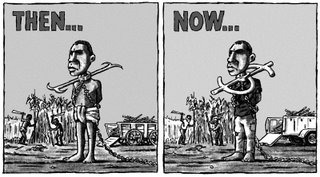
Why would we endorse and support WEALTH TRANSFER?
This defines how it's done:
Casino hosts turn to stats in rating players, giving comps
About Mark Gruetze
Mark Gruetze 412-320-7838Administrative Editor
Pittsburgh Tribune-Review
Mark Gruetze has been a recreational gambler for more than 30 years, focusing on blackjack, video poker and poker. He is administrative editor of the Tribune-Review.
Details
Money trail
Statewide loss by slots players, week ending Jan. 26: $33.61 million, down from $39.18 million in the comparable week last year
Statewide slot payout rate since July 1: 89.91 percent; for every $100 bet, the machines return an average of $89.91
High and low payout rates: 90.75 percent at Parx in Philadelphia; 89.2 percent at Penn National near Harrisburg
Rivers: 89.72 percent payout; weekly slot revenue $4.35 million, down from $4.67 million last year
Meadows: 89.95 percent; weekly revenue $2.69 million, down from $3.96 million
Presque Isle: 89.57 percent; weekly revenue $1.53 million, down from $1.77 million
Lady Luck Nemacolin: 90.68 percent payout; weekly revenue $226,753; not open last year
Player charged in fake-chip scheme
A Fayetteville, N.C., man was charged with sneaking fake chips into a tournament during the Borgata Winter Poker Open in Atlantic City.
Christian Lusardi, 42, was arrested at an Atlantic City motel after $2.7 million in tournament chips were found flushed down a toilet at nearby Harrah's Resort, the Associated Press and CNN reported.
Officials said Lusardi won $6,814 during the Open's first tournament. That event was canceled with 27 players still in contention after 160 of the fake $5,000 chips were found among the legitimate chips. Other events in the Open went on. The chips have no value outside a tournament and cannot be cashed in.

Daily Photo Galleries

By Mark Gruetze
Published: Sunday, Feb. 2, 2014, 9:00 p.m.Updated 15 hours ago
That nice casino host who hands out free meals, concert tickets and fancy suites isn't paid to be a player's friend.
The host's primary job is to increase the casino's bottom line by getting gamblers to play and spend more, says Stephen R. Marshall, senior vice president of relationship marketing for the Fine Point Group, a gaming management and consulting company based in Las Vegas.
“If you're a host, your role should be to increase the casino's revenue,” Marshall says. He spoke last week at a webinar encouraging casino executives to adopt a data-driven approach to providing comps for their best customers.
The Fine Point Group began in 2005, founded by veterans of Harrah's Entertainment who had been deeply involved in gaming operations and marketing.
Keeping the big players happy is essential for any casino, Marshall says, adding that it's not unusual for 40 percent of a casino's gross gaming revenue to come from fewer than 10 percent of its customers.
[Harrah's, now Caesars, determined under Gary Loveman's genius that 90% of their profits came from 10% of the patrons, a statement never disputed by Caesars.]
Casinos judge players with statistics such as average daily value, or how much the casino expects to win each day a player visits, and cumulative value, which tracks a player's loss over several months or a year. A player who bets relatively small amounts but visits a casino several times a week might have a low daily average but a high cumulative total.
Marshall suggests that casinos track a player's action closely to determine his value to the casino. He recommends knowing the theoretical loss, which is based on the average bet, hours played and the house edge; the actual loss; days played; and total trips. Then casinos can identify their most valuable players and encourage them to return with offers of free play, comps and other amenities.
Understanding what casinos are looking for can pay off for players. Recognize your value to the casino. Never gamble more than you can afford simply to try to qualify for a particularly attractive comp; whatever it costs, it's cheaper to pay for it yourself than play over your bankroll in the hopes that the casino will pick up the tab.
Realize that no casino wants its big players to find another place more attractive.
“The No. 1 rule is to keep them away from the competition,” Marshall says.
He says a host's techniques should distinguish between “active” players who visit frequently and those who show up only once in a while. The host should use a “moderate” approach on those already visiting frequently, enough to keep them coming back, while being “aggressive” with the infrequent player in the hopes of turning him or her into a regular customer.
“Make clear: The relationship (between host and player) is a business relationship, not a personal relationship,” he says. The host is a salesman for the casino and should follow the ABC commandment: Always Be Closing.
Generally, casinos are said to return about 40 percent of a player's expected loss in comps. A blackjack player who bets $10 a hand and plays for four hours would have an expected loss of $48; that would mean comps of about $19.
However, Marshall recommends that executives know what nearby casinos offer and stay competitive. That means areas with little competition, such as Pennsylvania, won't necessarily have to be as generous as facilities in destination areas such as Las Vegas.
Marshall says the most common mistake for a host is focusing on the wrong customers, paying too much attention to those already loyal to a property instead of going after the player who will bring in new revenue.
“Ultimately, it's about making more money,” he says.
Fall River's hand is weak on Foxwoods casino proposal
Letter: Fall River's hand is weak on Foxwoods casino proposal
Posted Feb. 1, 2014
We need jobs in Fall River, but a casino is no silver bullet.
I do not buy that this type of business will increase crime; we already have crime.
I do believe that casinos are breeding grounds for organized crime, generally speaking.
Additionally, after the construction is complete, the majority of employment that would remain is lower income: wait staff, cleaning crews, low-end security.
While the city would gain a higher-end taxpayer, there will be property tax collected and possibly a small revenue-sharing deal, but make no mistake:
Whatever profit is made will be shipped out of the area.
I am also concerned for the current restaurants in our city. Adding a casino could expose them to a new clientele base they would otherwise not have access to. It could also monopolize the market by offering extremely good dinning deals to lure customers in for an extended period of time, putting their competition out of business.
Take a stroll to Foxwoods or Mohegan Sun and count the number of hospitality type businesses outside the casino property in a one-mile radius.
It really seems Mayor Will Flanagan loves to gamble with the city.
A casino in our community is a gamble, and our hand at this table is weak at best.
Given the right location, namely on the waterfront, a well planned all inclusive resort could be a draw to our city.
Something in the woods will be just that, something in the woods.
In any case, this is far from a "made" deal, with only one casino slated for southeastern Massachusetts.
Expect a showdown on Beacon Hill or at least a grudge match with Taunton.
Daniel Botelho
Fall River
- See more at: http://www.heraldnews.com/article/20140201/OPINION/140209704/2011#sthash.1SAUpFYs.dpuf
Everett gets Wynn when no one else wanted him!
Good article by Jon Chesto who failed to mention that Steve Wynn was booted from Foxborough, chased out of Pennsylvania, rejected by New York, and unwanted in Connecticut.
Maybe Everett shouldn't shouldn't feel so special being pursued by someone no one else wanted.
It's unclear if Massachusetts has enough room for Wynn's oversized ego.

Feb 2, 2014, 11:25pm EST
Jon Chesto
Managing Editor, Print- Boston Business Journal Email | Twitter | Google+ There goes Steve Wynn again, mouthing off about the casino rules here in Massachusetts. Another conference call with analysts, another chance for Wynn to take potshots at the Bay State. Except this time, what was more interesting was Wynn’s explanation for why he’s making a big bet on Boston.
Wynn was more tactful about the state’s gaming regulators during last week’s quarterly earnings call than he was in October. He did explain why he’s asking lawmakers to tweak the casino law in his favor. He’s worried about a compact with the Mashpee Wampanoag tribe that would impose a 17-percent gaming tax on the casino the tribe wants to build in Taunton. Meanwhile, the state’s commercial casino resorts — presumably MGM in Springfield, and either Wynn Resorts in Everett or Mohegan Sun in Revere — would have to pay 25 percent. Wynn wants that reduced to 17 percent if the Mashpee casino moves forward — although he seems to think that Foxwoods’ plan for Fall River would trump the Mashpee casino anyway, and Foxwoods would pay the full freight there because it would be built under the state’s commercial casino rules.
There was one other criticism aimed at Massachusetts on the call. His license application was 18,000 pages, he told analysts, and weighed 225 pounds. He loves it so much, he joked that he takes it with him everywhere he goes. He referred to this state’s background check process that his firm had to undergo as “particularly grueling.”
So if Wynn dislikes the Bay State, why is he still pushing so hard to beat Mohegan Sun for the sole Boston-area casino license, invest $500 million of his company’s equity, and borrow another $1 billion to make it happen?
A Goldman Sachs analyst essentially posed that same question to Wynn on the conference call. And, it turns out, it’s the kind of question Wynn says that gets asked in Wynn Resorts board meetings and management conversations every month.
Wynn says he’s largely avoided the run-of-the-mill racinos and riverboat casinos that have popped up all over the country in recent years. But Boston, he says, is different. An international destination city, he calls us. The Wynn casino here would be of higher quality, Wynn boasts, than any other rival on the East Coast. Wynn says he would be able to capitalize on the thousands of Asian and Middle Eastern students who come to school in the Boston area, and whose parents are regular visitors as a result. He also sees a Boston casino as one giant billboard, advertising the Wynn brand in Las Vegas.
Gambling revenue in Vegas has shrunk in the past 10 years amid a wave of new regional casino openings. But Wynn sees Boston as a way to plant a flag on the East Coast, and promote the Wynn brand, perhaps spurring more well-heeled gamblers to hop on a flight at Logan and head to Sin City.
He also says he expects a roughly $300 million profit on that $500 million upfront investment.
Like any presentation on an earnings call, Wynn’s response was as much a show as anything else. But there’s probably plenty of truth to his answer. For Wynn, this is about building the brand in a high profile, well-to-do city that’s easily reachable from places like New York or Philadelphia — as well as being in a prime position to draw all the wealthy parents from other countries who are putting their kids through college here. That said, it’s still a high-stakes gamble, one in which will probably continue to raise more questions in those board meetings and management conferences in the months to come.
http://www.bizjournals.com/boston/blog/mass_roundup/2014/02/steve-wynn-on-the-boston-casino-market.html?utm_source=ML+14%2F2%2F03&utm_campaign=20140203ML&utm_medium=email
Maybe Everett shouldn't shouldn't feel so special being pursued by someone no one else wanted.
It's unclear if Massachusetts has enough room for Wynn's oversized ego.

Feb 2, 2014, 11:25pm EST
Here's why Steve Wynn says he's spending so much effort on a Boston-area casino
Wynn was more tactful about the state’s gaming regulators during last week’s quarterly earnings call than he was in October. He did explain why he’s asking lawmakers to tweak the casino law in his favor. He’s worried about a compact with the Mashpee Wampanoag tribe that would impose a 17-percent gaming tax on the casino the tribe wants to build in Taunton. Meanwhile, the state’s commercial casino resorts — presumably MGM in Springfield, and either Wynn Resorts in Everett or Mohegan Sun in Revere — would have to pay 25 percent. Wynn wants that reduced to 17 percent if the Mashpee casino moves forward — although he seems to think that Foxwoods’ plan for Fall River would trump the Mashpee casino anyway, and Foxwoods would pay the full freight there because it would be built under the state’s commercial casino rules.
There was one other criticism aimed at Massachusetts on the call. His license application was 18,000 pages, he told analysts, and weighed 225 pounds. He loves it so much, he joked that he takes it with him everywhere he goes. He referred to this state’s background check process that his firm had to undergo as “particularly grueling.”
So if Wynn dislikes the Bay State, why is he still pushing so hard to beat Mohegan Sun for the sole Boston-area casino license, invest $500 million of his company’s equity, and borrow another $1 billion to make it happen?
A Goldman Sachs analyst essentially posed that same question to Wynn on the conference call. And, it turns out, it’s the kind of question Wynn says that gets asked in Wynn Resorts board meetings and management conversations every month.
Wynn says he’s largely avoided the run-of-the-mill racinos and riverboat casinos that have popped up all over the country in recent years. But Boston, he says, is different. An international destination city, he calls us. The Wynn casino here would be of higher quality, Wynn boasts, than any other rival on the East Coast. Wynn says he would be able to capitalize on the thousands of Asian and Middle Eastern students who come to school in the Boston area, and whose parents are regular visitors as a result. He also sees a Boston casino as one giant billboard, advertising the Wynn brand in Las Vegas.
Gambling revenue in Vegas has shrunk in the past 10 years amid a wave of new regional casino openings. But Wynn sees Boston as a way to plant a flag on the East Coast, and promote the Wynn brand, perhaps spurring more well-heeled gamblers to hop on a flight at Logan and head to Sin City.
He also says he expects a roughly $300 million profit on that $500 million upfront investment.
Like any presentation on an earnings call, Wynn’s response was as much a show as anything else. But there’s probably plenty of truth to his answer. For Wynn, this is about building the brand in a high profile, well-to-do city that’s easily reachable from places like New York or Philadelphia — as well as being in a prime position to draw all the wealthy parents from other countries who are putting their kids through college here. That said, it’s still a high-stakes gamble, one in which will probably continue to raise more questions in those board meetings and management conferences in the months to come.
http://www.bizjournals.com/boston/blog/mass_roundup/2014/02/steve-wynn-on-the-boston-casino-market.html?utm_source=ML+14%2F2%2F03&utm_campaign=20140203ML&utm_medium=email
Sunday, February 2, 2014
Caesars has bad week in New Jersey, Massachusetts, Pennsylvania and Ireland
Caesars has bad week in New Jersey, Massachusetts, Pennsylvania and Ireland
February 2, 2014

Caesars Entertainment‘s rumored acquisition of Atlantic City’s Revel casino isn’t sitting well with New Jersey state Sen. Jim Whelan. Caesars already operates four of AC’s eleven casinos (there used to be a dozen, but Caesars and the Tropicana bought the Atlantic Club in December for the express purpose of shutting it down to reduce competition) and state law frowns on “undue economic concentration” of its gambling industry.
Whelan told the Associated Press that Caesars acquiring Revel “would be against the law and I don’t think it would be good” to have AC’s casino market “dependent on the rise or fall of one particular company.” Whelan’s concerns are underscored by the fact that Caesars’ $24b debt load has prompted no shortage of speculation as to how much longer it can limp on as a going concern. Whelan suggested it would better to “open the door” to other buyers who don’t already have operations in AC. Florida-based Hard Rock International is reportedly also mulling a bid for the troubled Revel, which has continued to struggle to turn a profit since emerging from bankruptcy protection last year.
CROSBY FILES TO DISMISS CAESARS LAWSUIT
A little further up the coast in Massachusetts, Caesars’ failed pursuit of a Boston casino license shows no sign of fading into memory. In December, Caesars filed suit against Massachusetts Gaming Commission chairman Stephen Crosby, alleging that Crosby had deliberately made false statements about Caesars’ suitability to obtain a state gaming license in order to favor a bid by rival Wynn Resorts that would financially benefit a Crosby pal on whose land Wynn wants to build its casino. Wynn boss Steve Wynn has called Caesars’ suit a “shameless, desperate attempt … to deflect attention from the serious issues raised in their investigation, including [Caesars] current financial condition.”
On Thursday, Crosby filed papers of his own, calling Caesars’ claims “inflammatory, but ultimately groundless.” Crosby’s motion to dismiss the suit says Caesars’ filing is “long on unfounded allegations … but wholly deficient in viable claims for relief.” Caesars’ suit alleged that Spectrum Gaming Group, the company charged with vetting Caesars’ suitability, had submitted a favorable judgment that Crosby chose to ignore, but Spectrum has denied arriving at a conclusion one way or the other.
CAESARS PHILLY CASINO FUTURE IN JEOPARDY
Over in Pennsylvania, the future of Caesars’ casino in suburban Philadelphia is in jeopardy after state gaming regulators ordered the casino’s adjoining racetrack closed. The Pennsylvania Harness Racing Commission said Harrah’s Philadelphia had failed to address concerns that the track’s condition posed safety threats to horses and riders. The casino is required to keep its racetrack operational as a condition of its license. The track’s racing season is scheduled to commence on March 8 and Caesars senior VP Jan Jones says the issue “will be resolved.”
The Commission said it had been forced to act after Caesars repeatedly failed to outline its plans to address concerns over the track’s condition, despite a serious incident in November in which a harness race driver was thrown from his sulky and trampled by another horse. The family of Anthony Colletta, who suffered permanent brain damage from the accident, plans to sue Caesars over the incident. On Thursday, Colletta’s attorneys won court permission to conduct a forensic investigation of the track surface.
CAESARS HINTS THAT IRISH AREN’T WELCOME IN VEGAS
This week also saw Caesars announce a new name for one of its properties in Las Vegas. The boutique casino originally opened in 1979 under the name Barbary Coast Hotel & Casino, but was renamed Bill’s Gamblin’ Hall after Harrah’s acquired the property from Boyd Gaming in 2007.
The joint shut down for refurbishment a year ago and was supposed to reopen under the moniker Gansevoort Las Vegas, but this was scrapped after Caesars terminated its relationship with the Gansevoort Hotel Group in October. The two parties parted ways due to the aforementioned kerfuffle in Massachusetts, in which a Gansevoort investor was accused of having Russian mob ties.
This week, Caesars announced that the property would begin taking reservations later this month under the name The Cromwell. How and why Caesars’ brain trust arrived at this name is something of a mystery, as the name evokes memories of a historical figure who would have viewed a casino as something fit only for burning. In addition to waging a genocidal campaign that has rendered his name a curse word in Ireland, Oliver Cromwell was the enemy of pretty much everything the gambling industry holds dear. Is it really too late to call up the printer and cancel the business cards in favor of something less inflammatory, like Pol Pot Palace or Heartbreak of Psoriasis Hotel?
http://calvinayre.com/2014/02/02/casino/caesars-bad-week-in-new-jersey-massachusetts-pennsylvania-ireland/
Casino slot machines are highly addictive

February 1, 2014
Casino slot machines are highly addictive
In my last two columns, I wrote about the negative aspects of gambling and the destructive effects of casinos on both human lives and the economy. Those columns focused mainly on why the economic benefits of casinos fade over time, how casinos hurt surrounding businesses, and what consequences problem-gambling brings to individuals, families and society. This column will discuss the unique, addictive nature of slot machines.
Slot machines — called “one-armed bandits” back when the player manually pulled down an actual lever on the side of the machine — are the heart and primary moneymaker of casinos and “slots parlors.” Physically, they are vertical screens that display the edges of three or more spinning drums on which are printed pictures of fruits, faces, numbers or other symbols. When matching symbols align, the gambler wins his wager.
The machines are not the relatively primitive assemblies of 30 years ago. They have been transformed by the amazing capabilities of the computer. Along with the sounds, lights, themes and general glitz of the machines, the apparent randomness of where the spinning drums stop has been carefully programmed by the manufacturer. Microchips — not luck or your favorite casino shirt — control the frequency and level of winnings.
Other than in nature, there is actually no such thing as true randomness. Complex, computer-derived algorithms determine the long, seemingly infinite sequences and combinations — displayed simultaneously in multiple, multi-directional lines — of spinning fruits and other icons.
Additionally, slot machines have been designed to keep the gambler seated at the device. The behavioral and cognitive psychologists and neuroscientists utilized by slots manufacturers have been able to study and learn how many “near misses” and how much intermittent, “random” reward — and at what monetary values — are necessary to keep a player emotionally reinforced and neurally hooked by his experience at the machine.
To add to the allure of the devices, manufacturers have introduced lots of features designed to appeal to every taste. A player can choose theme-based machines, selecting one that plays the hit songs of a favorite rock group, or shows video clips of recent movies, or mimics the animation and action of current video games. A gambler can interact with the features, inserting himself into a gaming character or tying his gambling wins into progress toward rewards and goals in a video game.
Gamblers can even “save” this progress for use on the same machine next time they come to the casino.
There is another factor at work with many regular slots players. The speed and intensity of the machines have become so fast and strong that many gamblers actually go into a trancelike, hypnotic state, mindlessly yet rhythmically playing bet after bet. This state is known in the trade as “the zone,” and it results in the player being in a disassociated condition where he loses touch with time, space, money, his own body, and any outside distractions.

Being in the zone becomes so pleasurable to the gambler that he actually views winning — when the action must be interrupted for a payout procedure — as something undesirable. For winning disrupts his flow, and breaks into his blissful isolation.
Slots manufacturers are well aware of this phenomenon and encourage it with incredible machines that can accommodate intense speed — the placing of one bet every three seconds (the player is simply tapping buttons) or roughly 1,000 spins per hour.
But whatever type of gambler is seated at the machine, it has been designed to exploit the full range of human tendencies. Manufacturers use the phrase, “playing to extinction” — meaning the gambler loses all his money — to describe the goal behind the clever programming inside a slot machine.
Studies have shown that it is the machine design, not character defects in individuals, that is responsible for slots addictions. Problem gamblers comprise 20 to 40 percent of all slots players, and not surprisingly, slot machines produce 65 to 80 percent of total casino revenues.'
Casinos love to publicize how much money is “paid out” in winnings to slots players. They also love to explain how slot machines are programmed to deliver 80 to 95 percent “payout rates.” But most gamblers go home with much less money than they walked in with, and the rare jackpots are comprised of everybody else’s losses. The reality is, the longer you play, the more you will lose.
There are roughly 250,000 problem gamblers in Massachusetts today. After the state permits three casinos and one slots parlor, that number is likely to grow to 400,000 and more. Staggering numbers of slot machines will be in these proposed facilities – 4500 in either Revere or Everett, 4500 in Springfield, 4500 in a third location, and 1250 in the slots parlor. Despite the claims of the casino developers that these facilities will be grand, destination “resorts,” most of the patrons will be day-trippers who will come from within a 50-mile radius of the gambling hall. The patrons will be the residents of our communities.
If we can understand the nature of contemporary slot machines, and understand that they prey on our neural circuitry, we will be less likely to view them as harmless entertainment.
http://www.salemnews.com/opinion/x1262664825/Casino-slot-machines-are-highly-addictive
Iowa: Fighting over crumbs!
Watch closely!
This is the future fight over crumbs in Massachusetts' future!

REPEAL THE CASINO DEAL is the only reasonable solution.
Updated: 2 February 2014
Last February in Cedar Rapids and in the nearby casino cities of Riverside and Waterloo, temperatures were rising and oodles of money was being spent on media ad campaigns — some $3.43 million in total — to support or oppose the building of a casino in Cedar Rapids.
Voters in Linn County overwhelmingly endorsed the idea on March 5, 2013.
Now the campaigns are heating up again as a crucial March 6 date approaches when the Iowa Racing & Gaming Commission will meet at Prairie Meadows Racetrack and Casino in Altoona to hear about the current state of gaming in Iowa from two independent market analysts. Their studies are expected to address the all-important question for the commission: Will granting a state gaming license to the proposed Cedar Crossing casino directly across the Cedar River from downtown Cedar Rapids cannibalize too much business from the Riverside Casino & Golf Resort, in particular, and from the Isle Casino Hotel Waterloo?
Steve Gray, chairman of the Cedar Rapids casino investor group, and Leah Rodenberg, a member of the non-profit Linn County Gaming Association, said again late Friday afternoon that Eastern Iowa has plenty of room for another casino — for the Cedar Crossing casino.
However, Gray and Rodenberg made the case anew for a Cedar Rapids casino by focusing on what the Riverside and Waterloo casinos have failed to do.
They said Iowa’s gaming industry of 18 casinos is set up so local gaming associations, which hold most of the casino licenses, get a share of a casino’s profits to distribute to local non-profit groups and other organizations that make the community better.
One the one hand, Gray and Rodenberg said the Riverside and Waterloo casinos continue to argue that a Cedar Rapids casino will steal a vital part of their business that comes from Cedar Rapids and Linn County patrons. But on the other hand, they said gaming associations in those two counties have turned their backs on Cedar Rapids and Linn County when time has come to distribute money to community organizations.
“We haven’t seen any,” Gray said. Or hardly any.
According to the Cedar Rapids casino group’s review, from 2010 through 2012, the Washington County Riverboat Foundation has distributed $5.4 million of gaming proceeds into the community, and of that, a total of $5,500 has gone to the American Red Cross in Cedar Rapids and a group called Families Helping Families in Cedar Rapids. Together, the money coming to Cedar Rapids is one-tenth of 1 percent of the total. Another $40,000 has gone to the Hawkeye Area Community Action Agency with a headquarters in Cedar Rapids, but with an office and programming in Washington County.
In the same three-year period, the Black Hawk County Gaming Association has received $13.4 million in revenue from the Isle Casino Hotel Waterloo, of which only $4,050 has been distributed inside Linn County to an organization in Coggon.
In fact, Keith Rippy, president of the Linn County Gaming Association and executive director of the local Area Ambulance Service, applied for funding from the Black Hawk County Gaming Association for a new ambulance in 2009 or 2010 without any luck, he said.
A review of 2013 grants did not look as if any additional grant money came into Linn County from the two casinos.
“So if Riverside and the Isle (in Waterloo) care about Cedar Rapids and it’s that important to their business, why haven’t they done more in Cedar Rapids and Linn County?” Gray asked. “And there have been numerous requests for them to do more.”
Gray and the Cedar Rapids casino investors and Dan Kehl, CEO of the Riverside casino, have presented the Iowa Racing & Gaming Commission with competing analyses of Iowa’s gaming industry from consultants each has hired. Gray’s expert says a Cedar Rapids casino will take 9 percent of Riverside’s business, while Kehl’s expert says it’s 39 percent of business generated locally.
For argument’s sake, Gray said, if Kehl’s numbers are correct, that means the Riverside casino has taken in about $150 million in revenue from Cedar Rapids and Linn County in the last six years with hardly anything coming back to Cedar Rapids and Linn County community organizations.
Gray, a Cedar Rapids businessman, and Kehl — who also has ownership interests in Iowa’s newest casino in far northwest Iowa at Larchwood and in the Davenport casino, which will be moving to a new land-based site — have been the poster boys for the fight over the proposed Cedar Rapids casino for a year now. And they know it.
“Mr. Kehl says that a lot of his revenue comes from Cedar Rapids and Linn County, but he and the (Washington County) non-profit have done remarkably little for one of his largest customers,” Gray said.
Kehl on Saturday said it was nice to hear that “Steve” acknowledges that a significant and crucial amount of revenue for the Riverside casino and other surrounding casinos comes from Cedar Rapids and Linn County, which Kehl has said repeatedly is the crucial question for the Racing & Gaming Commission.
Kehl also said he wondered why Gray and the Cedar Rapids investor group have decided to pay the Linn County Gaming Association so little of the profits from a Cedar Rapids casino.
“How can he say he’s concerned about area non-profits when he negotiated to pay the Cedar Rapids non-profit (gaming association) the bare minimum and one of the lowest rates in the state?” Kehl asked.
Taking business away from casinos that pay their non-profits more, he said, will mean less going to non-profits in Eastern Iowa.
“Those non-profits are very concerned,” Kehl said. “They have done an outstanding job of dispersing moneys throughout Eastern Iowa.”
He estimated that Riverside’s gaming assocation could lose $2.5 million from its $4 million in annual proceeds from the Riverside casino’s receipts with a Cedar Rapids casino.
The Waterloo casino provides its local gaming association with 5.75 percent of adjusted gross revenue and the Riverside casino, 4.5 to 5 percent, while the Cedar Rapids gaming association will get 3 percent for the first 10 years and more on a sliding scale after that. Three percent is the state minimum for the local gaming association, and the Cedar Rapids investors aren’t the only casino at 3 percent.
Rodenberg said the Cedar Rapids casino actually will be paying 4 percent not 3 percent, because it will pay an additional 1 percent of adjusted gross revenue to the city of Cedar Rapids. A share of what some other casinos pay to their gaming associations goes directly to local government, she said.
Rodenberg said she understands that casinos in Riverside and Waterloo may be opposed to a Cedar Rapids casino. In fact, she said a member of the Black Hawk County Gaming Association, whom she knows well and likes, has promised that she would be opposing the Cedar Rapids casino proposal.
“I think from our perspective and from the (Cedar Rapids and Linn County) non-profits that I talk to, it’s one of those things,” Rodenberg said. “… Why can’t our non-profits have a share of this? Why should these two counties (Washington and Black Hawk) get all the funds (from Cedar Rapids/Linn County gamblers).”
She said Cedar Rapids is Iowa’s second largest city with many non-profit groups that have a regional reach and could benefit from funding support from gaming revenue.
“After the flood (of 2008), most of them suffered great losses, and they had to rebuild, and they’ve done that without additional revenue sources,” she said. “… But if we could get some additional support each year, through our (gaming association) foundation, it would really make a big difference.”
It’s been a busy 10 days or so as the debate over a Cedar Rapids casino heats up.
Kehl dropped off his expert’s market analysis to the state commission a week ago to take on the expert’s report from Gray group, which the commission received earlier in the month. Riverside officials last week publicly expressed worry over the loss of local funds if a Cedar Rapids casino opens. And the non-profit Black Hawk County Gaming Association said publicly it was planning to protect Waterloo casino revenue from an opposing the Cedar Rapids casino.
The Racing & Gaming Commission will meet in Cedar Rapids on April 3 to visit the proposed site of the Cedar Crossing casino and to hold a public hearing. The commission is slated to make a decision on a Cedar Rapids casino at its meeting in Council Bluffs on April 17.
This is the future fight over crumbs in Massachusetts' future!

REPEAL THE CASINO DEAL is the only reasonable solution.
Updated: 2 February 2014
Riverside, Waterloo casinos take but don’t give to Linn County, Cedar Rapids casino backer says
Crucial Iowa Racing and Gaming Commission vote coming March 6
It’s one year ago all over again.Last February in Cedar Rapids and in the nearby casino cities of Riverside and Waterloo, temperatures were rising and oodles of money was being spent on media ad campaigns — some $3.43 million in total — to support or oppose the building of a casino in Cedar Rapids.
Voters in Linn County overwhelmingly endorsed the idea on March 5, 2013.
Now the campaigns are heating up again as a crucial March 6 date approaches when the Iowa Racing & Gaming Commission will meet at Prairie Meadows Racetrack and Casino in Altoona to hear about the current state of gaming in Iowa from two independent market analysts. Their studies are expected to address the all-important question for the commission: Will granting a state gaming license to the proposed Cedar Crossing casino directly across the Cedar River from downtown Cedar Rapids cannibalize too much business from the Riverside Casino & Golf Resort, in particular, and from the Isle Casino Hotel Waterloo?
Steve Gray, chairman of the Cedar Rapids casino investor group, and Leah Rodenberg, a member of the non-profit Linn County Gaming Association, said again late Friday afternoon that Eastern Iowa has plenty of room for another casino — for the Cedar Crossing casino.
However, Gray and Rodenberg made the case anew for a Cedar Rapids casino by focusing on what the Riverside and Waterloo casinos have failed to do.
They said Iowa’s gaming industry of 18 casinos is set up so local gaming associations, which hold most of the casino licenses, get a share of a casino’s profits to distribute to local non-profit groups and other organizations that make the community better.
One the one hand, Gray and Rodenberg said the Riverside and Waterloo casinos continue to argue that a Cedar Rapids casino will steal a vital part of their business that comes from Cedar Rapids and Linn County patrons. But on the other hand, they said gaming associations in those two counties have turned their backs on Cedar Rapids and Linn County when time has come to distribute money to community organizations.
“We haven’t seen any,” Gray said. Or hardly any.
According to the Cedar Rapids casino group’s review, from 2010 through 2012, the Washington County Riverboat Foundation has distributed $5.4 million of gaming proceeds into the community, and of that, a total of $5,500 has gone to the American Red Cross in Cedar Rapids and a group called Families Helping Families in Cedar Rapids. Together, the money coming to Cedar Rapids is one-tenth of 1 percent of the total. Another $40,000 has gone to the Hawkeye Area Community Action Agency with a headquarters in Cedar Rapids, but with an office and programming in Washington County.
In the same three-year period, the Black Hawk County Gaming Association has received $13.4 million in revenue from the Isle Casino Hotel Waterloo, of which only $4,050 has been distributed inside Linn County to an organization in Coggon.
In fact, Keith Rippy, president of the Linn County Gaming Association and executive director of the local Area Ambulance Service, applied for funding from the Black Hawk County Gaming Association for a new ambulance in 2009 or 2010 without any luck, he said.
A review of 2013 grants did not look as if any additional grant money came into Linn County from the two casinos.
“So if Riverside and the Isle (in Waterloo) care about Cedar Rapids and it’s that important to their business, why haven’t they done more in Cedar Rapids and Linn County?” Gray asked. “And there have been numerous requests for them to do more.”
Gray and the Cedar Rapids casino investors and Dan Kehl, CEO of the Riverside casino, have presented the Iowa Racing & Gaming Commission with competing analyses of Iowa’s gaming industry from consultants each has hired. Gray’s expert says a Cedar Rapids casino will take 9 percent of Riverside’s business, while Kehl’s expert says it’s 39 percent of business generated locally.
For argument’s sake, Gray said, if Kehl’s numbers are correct, that means the Riverside casino has taken in about $150 million in revenue from Cedar Rapids and Linn County in the last six years with hardly anything coming back to Cedar Rapids and Linn County community organizations.
Gray, a Cedar Rapids businessman, and Kehl — who also has ownership interests in Iowa’s newest casino in far northwest Iowa at Larchwood and in the Davenport casino, which will be moving to a new land-based site — have been the poster boys for the fight over the proposed Cedar Rapids casino for a year now. And they know it.
“Mr. Kehl says that a lot of his revenue comes from Cedar Rapids and Linn County, but he and the (Washington County) non-profit have done remarkably little for one of his largest customers,” Gray said.
Kehl on Saturday said it was nice to hear that “Steve” acknowledges that a significant and crucial amount of revenue for the Riverside casino and other surrounding casinos comes from Cedar Rapids and Linn County, which Kehl has said repeatedly is the crucial question for the Racing & Gaming Commission.
Kehl also said he wondered why Gray and the Cedar Rapids investor group have decided to pay the Linn County Gaming Association so little of the profits from a Cedar Rapids casino.
“How can he say he’s concerned about area non-profits when he negotiated to pay the Cedar Rapids non-profit (gaming association) the bare minimum and one of the lowest rates in the state?” Kehl asked.
Taking business away from casinos that pay their non-profits more, he said, will mean less going to non-profits in Eastern Iowa.
“Those non-profits are very concerned,” Kehl said. “They have done an outstanding job of dispersing moneys throughout Eastern Iowa.”
He estimated that Riverside’s gaming assocation could lose $2.5 million from its $4 million in annual proceeds from the Riverside casino’s receipts with a Cedar Rapids casino.
The Waterloo casino provides its local gaming association with 5.75 percent of adjusted gross revenue and the Riverside casino, 4.5 to 5 percent, while the Cedar Rapids gaming association will get 3 percent for the first 10 years and more on a sliding scale after that. Three percent is the state minimum for the local gaming association, and the Cedar Rapids investors aren’t the only casino at 3 percent.
Rodenberg said the Cedar Rapids casino actually will be paying 4 percent not 3 percent, because it will pay an additional 1 percent of adjusted gross revenue to the city of Cedar Rapids. A share of what some other casinos pay to their gaming associations goes directly to local government, she said.
Rodenberg said she understands that casinos in Riverside and Waterloo may be opposed to a Cedar Rapids casino. In fact, she said a member of the Black Hawk County Gaming Association, whom she knows well and likes, has promised that she would be opposing the Cedar Rapids casino proposal.
“I think from our perspective and from the (Cedar Rapids and Linn County) non-profits that I talk to, it’s one of those things,” Rodenberg said. “… Why can’t our non-profits have a share of this? Why should these two counties (Washington and Black Hawk) get all the funds (from Cedar Rapids/Linn County gamblers).”
She said Cedar Rapids is Iowa’s second largest city with many non-profit groups that have a regional reach and could benefit from funding support from gaming revenue.
“After the flood (of 2008), most of them suffered great losses, and they had to rebuild, and they’ve done that without additional revenue sources,” she said. “… But if we could get some additional support each year, through our (gaming association) foundation, it would really make a big difference.”
It’s been a busy 10 days or so as the debate over a Cedar Rapids casino heats up.
Kehl dropped off his expert’s market analysis to the state commission a week ago to take on the expert’s report from Gray group, which the commission received earlier in the month. Riverside officials last week publicly expressed worry over the loss of local funds if a Cedar Rapids casino opens. And the non-profit Black Hawk County Gaming Association said publicly it was planning to protect Waterloo casino revenue from an opposing the Cedar Rapids casino.
The Racing & Gaming Commission will meet in Cedar Rapids on April 3 to visit the proposed site of the Cedar Crossing casino and to hold a public hearing. The commission is slated to make a decision on a Cedar Rapids casino at its meeting in Council Bluffs on April 17.
The NY Times: Should government promote sports gambling

On the eve of The Super Bowl, The
New York Times is having a debate today on whether state governments should
add sports betting to its current roster of casinos and lotteries as yet another
form of gambling to drain dollars from local citizens.
On behalf of SPG, I was invited to
participate and presented how government sponsorship of casinos and
lotteries is a significant contributor to the unfairness and inequality in
American life. I encourage you
to participate in the debate and read my op-ed in The Room for Debate section of
The Times here.
The message of the piece is rooted in what
I've learned from all of you who have helped me in our work the last six years.
I've met thousands of citizens during that time whose stories have left a
profound mark on me. The work of our SPG National Board, the transformative
writing by The Institute for American Values on this
issue, and your willingness to support our work together with your time, effort
and financial support, have brought this just cause to a higher level. While
there can be no denying our progress, you and I know we need to keep pushing
harder.
If you
support our mission and work, please
participate by contributing $10 or more today to help sustain it.
With gratitude,
Les
____________
Les Bernal
National Director
"Ending the unfairness and inequality produced
by government sponsorship of casinos and lotteries."

Wynn provides another reason to REPEAL THE CASINO DEAL!

Wynn may walk if state doesn’t play ball on tax rate discrepancy
Saturday, February 1, 2014
Saturday, February 1, 2014
Recovering gambling addict speaks out in campaign
Recovering gambling addict speaks out in campaign to tackle bookies’ betting games

For Owen Baily, gambling was an exciting escapist adventure which offered him fast cash and a road to riches.
But it soon became a crippling addiction which saw him spend much of the last decade living on the streets and battling alcohol abuse.
“At my lowest point I was resorting to looking in phone boxes, trying to get enough money together for a tin of baked beans and some bread so I had something to eat,” Owen admits openly.
“With gambling, your money ebbs and flows. Sometimes I was stable and other times I had nothing.
“But I would only really feel comfortable when I was gambling.
“It made me neglect my rent and food, I was destructive and neglectful. It brought me to my knees.”
Owen got his first tastes of gambling while growing up in Boston, and then Sibsey, seeing it as a chance to better himself and win enough cash to live the lifestyle he desired.
“We didn’t have a lot of money when I was young,” he said.
“I saw gambling as the chance to make lots of money quickly and to get the money to buy the things I always wanted.”
Eye-opening adverts for books on ‘how to beat the fruit machines’ in the back of magazines, and playing the two-penny shuffle games on days out in Skegness first switched him onto the ways of gaining money for nothing.
But it wasn’t until he turned 18 and began visiting the arcades and bookies in Boston that Owen started taking gambling seriously.
When family circumstances saw him move to Leamington, Owen’s quest for the high life became magnified when he discovered casinos.
He won big and he lost big, once leaving with £5,000 in his pocket and, on another occasion, seeing £2,000 slip through his grasp in one sitting.
And as the big wins were celebrated and the heavy losses comiserated, Owen found himself turning more to drink to emphasise those highs and mask the lows.
But his life took its greatest turn for the worse when he discovered ‘FOBT machines’.
The Fixed Odds Betting Terminals, to give them their full names, are essentially touch-screen games – such as roulette and virtual horse racing – which you can play on machines in a bookmaker’s shop.
“From my personal experience I find them very addictive,” Owen added.
“Roulette itself is a hard form of gambling. Before the FOBT machines, it was only available in casinos.
“You have to get suited and booted, travel to the casino and also register at the casino. They used to be almost inaccessible. It’s the total opposite now.
“The problem is that you can put money into the machine every 20 seconds.”
Indeed, it is widely recognised that punters can wager up to £100 every 20 seconds on these machines, meaning huge amounts of cash can be lost within minutes.
It was this addiction to the brightly lit and easily accessible machines you see in the bookies in every town that saw Owen become trapped in a vicious downwards spiral.
For a 10-year period, Owen, 31, spent around 90 per cent of his money on gambling.
In doing so, he found himself swiftly flitting between rented accommodation, sleeping rough and hostels, depending on whether the chips were down or not.
As he drifted through life he also drifted across the country, laying his head in Leamington, Canterbury and then on to Oxford.
He explained: “The FOBTs brought the casinos to the high street and made it very accessible.
“The machines give you an illusion of control, whereas casinos can often be busy and you don’t always get the time and space to do what you want at the table.
“In the early days I had a few wins. I could take £10 into the bookies and come out with £500 or £700 in my pocket.
“But whatever I won would end up going back into the machines. I never really won.”
After finally deciding enough was enough, he began seeking help. And here’s where, fortunately, Owen’s story took a turn for the better.
After stays at a residential rehab in Oxford and work with a gambling clinic in London, Owen believes he is now in control of his urges.
Like most addictions, there is often a sense of denial surrounding those trapped in a downward spiral.
But after spending almost a year without placing a bet or having a drink, Owen is ready to share his story.
And the reason he wants to highlight the horrors of frittering away what he coyly describes as thousands of pounds, is because he is a man on a mission.
Instead of channeling his energies on destructive passtimes, he is now fighting to raise awareness of the dangers he believes these machines hold – helping a campaign that wants to limit the amounts that can be gambled on FOBTs and ultimately ban them,
Owen hopes the errors which have plagued his life throughout his 20s can act as a deterrent to the many people who could find themselves following the path he began taking as a youngster in Boston.
“The demographic of people who use these machines are often young people on benefits,” he continued.
“And you can quite quickly lose all your dole money on them - they’re very seductive.
“At first I felt they offered me hope, but really they destroyed me.”
And does Owen - who currently lives and works in Oxford - see himself ever slipping back into his old life?
“I never want to go back to that,” he said firmly.
“The buzz I get from living my life now is far greater than the buzz I ever got from gambling.”
Follow Owen on Twitter at @galiberation or learn more about how to combat gambling addiction by visiting www.stopthefobts.org
http://www.bostonstandard.co.uk/news/business/business-news/recovering-gambling-addict-speaks-out-in-campaign-to-tackle-bookies-betting-games-1-5846994
A Wall Street Gambling Addict Talks Money, Winning, And Losing

A Wall Street Gambling Addict Talks Money, Winning, And Losing
The Gambling Addict is a thirty-something attorney-turned-Wall Street bond trader.
Here, he talks about his first time, what he’s won and lost, and his other vices.
What is your first memory of gambling?
I was probably 11 or 12. My uncle worked for Salomon Brothers in the ’80s [and] ’90s. He wasn’t into sports at all, but all of the guys in his office used to pass out those sheets where you pick four games against the spread, and if you win all four, you win four times your money. He used to bring them home to me and my cousin who I was close with and tell us to fill them out for him. He’d turn them in, and we’d never win. But I recall the excitement of having won the first three games we picked, and during the fourth game, staying on the phone with my cousin for the whole second half.
What method do you use?
Currently, I go through a bookie. He has a shop set up in Costa Rica that runs the website where you enter the bets and does all of the “back office work,” if you will.
Why do you like gambling?
I’m a sports fan at the core, but when you have action on the game, it makes it that much more fun. When you’re willing to stay up past midnight to watch the start of a Hawaii football game with absolutely zero rooting interest, you’re obviously just in it for the action.
When did you realize you had a problem?
I was about 26 years old and only had been working two years or so. I still wasn’t making much money, but something possessed me to take a loan against the couple thousand bucks I had in my 401k and use it to bet on an NCAA College Basketball Conference Tournament. Now, it was an extremely small conference (I’m not talking about Duke and UNC), and I had recently graduated and still followed the conference and the teams very closely. Maybe I was cocky, but I consciously realized before I ever took the loan that it was a terrible idea, but it ended up working in my favor. Did I return the initial money I borrowed to the 401k and just keep the profits? F*** no!
What are some of the negative consequences?
I’ve had bad cold streaks and some really bad weeks. You end up robbing Peter to pay Paul until you get your next paycheck. I remember times I had to have a girl I was dating front me the money for my monthly train pass just so I could get to work.
Do people in your life know?
I don’t know. I’ll say that everyone is definitely aware I do it. On Thanksgiving, when the family is watching football, someone will always ask me what the spread was. I don’t think they know how extreme the addiction has gotten at times, though. I’m pretty good at keeping a strong front.
Have you ever gotten treatment?
No. Like I said, I’m fully aware it isn’t the best thing in the world for me, but I am fortunate in that I make enough money these days to cover my losses.
How much would you estimate you’ve won and lost?
I always wonder about this. I’m quite sure I’ve lost more than I’ve won, but I honestly have no idea. I’m not sure I’d want to know. No matter what, though, you never forget the big weeks where it was almost impossible to lose.
What do you see in the future, as far as gambling?
I think it’ll always be something I do in one way or another. No matter what is going on in the world or at work, the first thing I do when I get on the train in the morning and open the paper is check that night’s lines.
Do you have other vices — smoking, drinking, drugs, prostitutes?
No smoking. Drinking, definitely (and it’s gotten worse, for some reason). Drugs, not really, but I wouldn’t have a career without my Adderall, which I do have a legit prescription for. Not prostitutes so much, but sex in general. Going through a horrendous divorce right now because of a two-year affair I was involved in.
On a side note, the over in the first half of the Knicks game is a loser. Marquette is a win, though. 2-4 tonight, so far. It’s time for a cocktail.
http://www.forbes.com/sites/susannahbreslin/2014/01/31/gambling-addict/
Pennsylvania's Addiction to Gambling Revenue
Sad!

Newest Pennsylvania lottery scratch-off costs $30
By FRAN MAYE, fmaye@21st-centurymedia.com
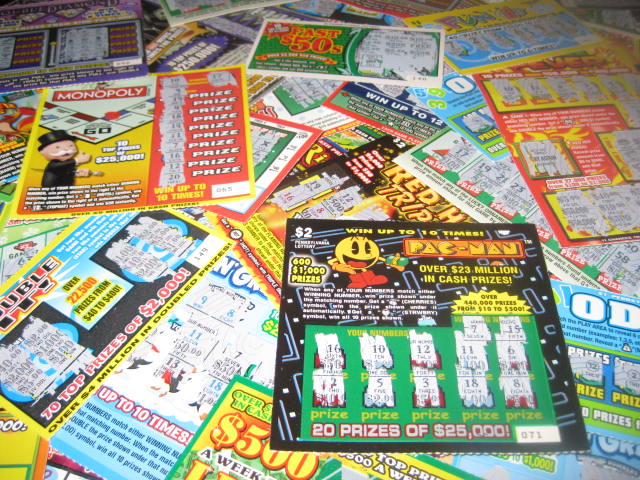
The Pennsylvania Lottery earlier this week launched its most expensive instant lottery ticket, a $30 scratch-off that offers a top prize of $3 million.
The game, appropriately called “Three Million,” is already in place at many of the places that sell instant tickets. It is the state’s third $20 or more instant prize game offered at 9,100 retailers statewide.
So far, local lottery players have been slow to try the new game.
“I think $30 might be a little expensive for a scratch-off,” said Dario Hilton of Coatesville, who recently won $200 in an instant lottery. “I think it depends if the risk is worth the reward. If it offers more prizes, then it’s a possibility, otherwise I’ll stick to the $10 game.”
The prizes that can be won in this game are: $30, $35, $40, $50, $75, $100, $250, $500, $1,000, $30,000, $300,000 and $3,000,000. The prizes that can be won in the ‘’Cash Bonus’’ area are: $40, $50, $100, $250 and $500. A player can win up to 26 times on a ticket.
There are four $3 million scratch-off tickets, 15 $300,000 tickets, 229 $30,000 tickets, 11,518 $1,000 tickets, 23,019 $500 tickets and 57,628 tickets. The odds of winning $30 to break even is one in 10 while the odds to win the grand prize of $3 million is one in 1.65 million. Because there are so many ways to win on one ticket, the overall odds of winning any prize is one in 2.7.
Gary Miller, a spokesman for the Pennsylvania Lottery, said the game is the newest in instant games that are offered once a month.
“This is the highest prized instant game we offer, and it will remain on sale indefinitely,” he said. “These games perform very well and our players are very receptive to this price point. We’re offering something for everyone’s taste.”
Miller said it’s important to continually offer new games.
“We have a legislative mandate to generate funding for older Pennsylvanians,” he said. “In the last two fiscal years, we generated $1 billion each year and we are very proud of that.”
While some people may scratch their heads wondering who would pay $30 for a scratch-off lottery ticket, local therapists who treat people for gambling addiction fear it could create problems with people who play the lottery often.
“People with gambling addictions, you can keep raising the price like with this $30 card, and as long as they can justify it in their mind, there is no limit to what they would be willing to bet, with the assumption that the payoff will be better,” said Seth Rosenberg, a licensed professional counselor with offices in West Chester. “It’s like with the Powerball jackpot gets high, people have no problem laying out $20 because the idea that $300 million is somehow better than $100 million. The risk to reward is greater with a $30 scratch-off ticket.”
Matt Mauriello, a West Chester licensed professional counselor and licensed behavioral specialist who specializes in dealing with problem gamblers, agrees.
“Ultimately, it is the excitement of the game, and the risking of money,” he said. “One thing about the lottery I find fascinating is that most parents would frown on giving their kids a bottle of alcohol or tobacco in their Christmas stocking, but are OK with giving them lottery tickets. People just don’t recognize the risk (of future gambling addiction) that comes along with the lottery.”
Mauriello said he had a client who ditched his company-sponsored retirement plan when the market crashed in 2008, and invested that money in lottery tickets. Unfortunately, it didn’t work out for him.
“More than nine chances out of 10, if you play, your money is gone,” he said. “For folks that have gambling problems, it’s not so much the reward, it’s the anticipation and the risk.”
Hilton agrees.
“It’s always exciting when you see your number match and you scratch the bottom part and see how much you won,” he said.
http://www.timesherald.com/general-news/20140130/newest-pennsylvania-lottery-scratch-off-costs-30
Newest Pennsylvania lottery scratch-off costs $30
By FRAN MAYE, fmaye@21st-centurymedia.com
The Pennsylvania Lottery earlier this week launched its most expensive instant lottery ticket, a $30 scratch-off that offers a top prize of $3 million.
The game, appropriately called “Three Million,” is already in place at many of the places that sell instant tickets. It is the state’s third $20 or more instant prize game offered at 9,100 retailers statewide.
So far, local lottery players have been slow to try the new game.
“I think $30 might be a little expensive for a scratch-off,” said Dario Hilton of Coatesville, who recently won $200 in an instant lottery. “I think it depends if the risk is worth the reward. If it offers more prizes, then it’s a possibility, otherwise I’ll stick to the $10 game.”
The prizes that can be won in this game are: $30, $35, $40, $50, $75, $100, $250, $500, $1,000, $30,000, $300,000 and $3,000,000. The prizes that can be won in the ‘’Cash Bonus’’ area are: $40, $50, $100, $250 and $500. A player can win up to 26 times on a ticket.
There are four $3 million scratch-off tickets, 15 $300,000 tickets, 229 $30,000 tickets, 11,518 $1,000 tickets, 23,019 $500 tickets and 57,628 tickets. The odds of winning $30 to break even is one in 10 while the odds to win the grand prize of $3 million is one in 1.65 million. Because there are so many ways to win on one ticket, the overall odds of winning any prize is one in 2.7.
Gary Miller, a spokesman for the Pennsylvania Lottery, said the game is the newest in instant games that are offered once a month.
“This is the highest prized instant game we offer, and it will remain on sale indefinitely,” he said. “These games perform very well and our players are very receptive to this price point. We’re offering something for everyone’s taste.”
Miller said it’s important to continually offer new games.
“We have a legislative mandate to generate funding for older Pennsylvanians,” he said. “In the last two fiscal years, we generated $1 billion each year and we are very proud of that.”
While some people may scratch their heads wondering who would pay $30 for a scratch-off lottery ticket, local therapists who treat people for gambling addiction fear it could create problems with people who play the lottery often.
“People with gambling addictions, you can keep raising the price like with this $30 card, and as long as they can justify it in their mind, there is no limit to what they would be willing to bet, with the assumption that the payoff will be better,” said Seth Rosenberg, a licensed professional counselor with offices in West Chester. “It’s like with the Powerball jackpot gets high, people have no problem laying out $20 because the idea that $300 million is somehow better than $100 million. The risk to reward is greater with a $30 scratch-off ticket.”
Matt Mauriello, a West Chester licensed professional counselor and licensed behavioral specialist who specializes in dealing with problem gamblers, agrees.
“Ultimately, it is the excitement of the game, and the risking of money,” he said. “One thing about the lottery I find fascinating is that most parents would frown on giving their kids a bottle of alcohol or tobacco in their Christmas stocking, but are OK with giving them lottery tickets. People just don’t recognize the risk (of future gambling addiction) that comes along with the lottery.”
Mauriello said he had a client who ditched his company-sponsored retirement plan when the market crashed in 2008, and invested that money in lottery tickets. Unfortunately, it didn’t work out for him.
“More than nine chances out of 10, if you play, your money is gone,” he said. “For folks that have gambling problems, it’s not so much the reward, it’s the anticipation and the risk.”
Hilton agrees.
“It’s always exciting when you see your number match and you scratch the bottom part and see how much you won,” he said.
http://www.timesherald.com/general-news/20140130/newest-pennsylvania-lottery-scratch-off-costs-30
Gambling a compulsive disease

Bernard Zeitler: Gambling a compulsive disease
On Sunday, Jan. 26, I was struck with a sense of sadness after reading a letter to the editor titled “Casino doesn’t show flip side of coin.”The letter told a familiar story for compulsive gamblers in recovery like myself. It is the story of reaching breaking points and losses that are far more important than the money lost.
Ms. Wade, I know your pain and I know your grandmother’s pain. Who am I, you ask? My name is Bernie and I am a compulsive gambler.
I started my recovery on Nov. 21, 2007 when, after going to a GA meeting, I came face to face with the truth.
It is hard to feel good about casinos or any of the many ways gambling presents itself here in Michigan and across the country.
Most people in Michigan probably do not realize that we are one of only three states that have legalized all defined forms of gambling, the other two are Iowa and Louisiana. How can anyone feel good about that?
I am here to tell you that while I am not against gambling, I am disappointed that it is not treated like alcoholism. There is a need for treatment and assessment of people for this.
The State of Michigan has been planning to unleash gambling online and from iPhones now to reach more people.
This I have a problem with because while it may be a revenue stream for the government, it is not good for people who are already struggling to pay their bills.
Compulsive gamblers do not show the same physical signs as other addicts but they do show signs.
When a person follows this path, these changes may occur: less contact with people they know, trouble at work, a decrease of interest in other activities and increased borrowing.
Often, a person will begin to show physical signs when the pressure of their losses gets to the point they can’t hide it anymore. This addiction causes behavior changes that include building a fantasy around lies told to cover losses of time, money and property.
It is a silent addiction today because it is often not identified until one of three things happen: the person is convicted of a crime and ends up in jail; the person commits suicide because of how bad it has become; or, as with me, they end up in the hospital because of everything coming apart.
Some excuses that people come up with are very believable on the surface, but when it comes right down to it, they are not entirely true.
The excuses are not just from the gambler but also from those around them too. Justifying gambling because you know “the next one’s a winner,” “I’m just having a little fun,” “he/she needs a little fun after all they do work hard,” and not thinking about other activities that used to be fun is a path to trouble.
Now that compulsive gambling is identified as an addiction, it is time to treat it as one. There is evidence that, while no drug is ingested, the brain centers triggered by substance abuse respond identically for compulsive gamblers.
At risk populations include the elderly, poor and young adults. Many will start because of loneliness, boredom and/or poor self-esteem. Another thing to be aware of is if a person has had prior addictions.
Do you suspect you or someone you know has a problem? Seek out help through support groups, counseling, and reading up on it.
Consider this thought: Do you go to a restaurant to buy one french fry and leave, or are you going for the whole meal and the experience of the restaurant?
For compulsive gamblers it is the same thing. It is the whole experience that they go for.
Bernard Zeitler is the founder
and CEO of Stand Tall Recovery Services, and is the author of “How to Win as a High Roller While Losing Your Shirt.” He can be reached at (517) 980-0013 or standtallrecoveryservice@hot-
mail.com.
http://www.battlecreekenquirer.com/article/20140131/OPINION02/301310022/Bernard-Zeitler-Gambling-compulsive-disease?nclick_check=1
Subscribe to:
Posts (Atom)

 Posts
Posts


