Meetings & Information


*****************************
****************************************************
MUST READ:
GET THE FACTS!


Monday, September 3, 2012

Genting: One to watch

One to watch because of Massachusetts connections --

Genting power assets sale a ludicrous deal
  • Harold Angus
  • Sep 3, 2012
We all know that the independent power producer IPP deals are not favourable to Malaysians and especially to Tenaga Nasional Bhd, the national electricity company.

It seems the editor of Business Times was having an off day when they labelled the Genting power assets sale a 'sensible deal' (Business Times Aug 14, ‘Genting power assets sale a sensible deal')

This deal makes no sense from a logical or business perspective. After having consumers pay for the secret IPP deals, we now have to swallow this.

The most logical price to pay for this plant is book value, and only after a thorough plant survey, and maybe a little extra for some goodwill.

Within three years, this plant will be almost worthless in Malaysia unless they can negotiate a new IPP deal.

Is this one way of forever keeping the agreements a secret? Or could it be the testing of the mechanism to buy out all the other IPPs at ludicrous prices too?

So how is 1MDB going to manage this plant? I suppose they could create another Syabas-type model and pay the CEO something like RM400,000 a month?

Most likely there will be the usual upgrading and refurbishments resulting in another RM500 million in more dubious deals. The only economic transformation progression (ETP) for Malaysia in this deal is Malaysia going from indebtedness to Greek-like bankruptcy.

The headline is hilarious but misleading. This is not a sensible deal for Malaysians but it is certainly one sweetheart deal for Genting!
 

The Mitt Connection


Steve Wynn credits Michael Milken with making him a wealthy man and
financing a few disasters in Atlantic City.

The New Jersey Gam[bl]ing Commission, under the chairmanship of Steve
Perskie turned a blind eye to the fraud, approved licenses for insolvent
operators and endorsed unviable deals.

Michael Milken helped make casino investing respectable.

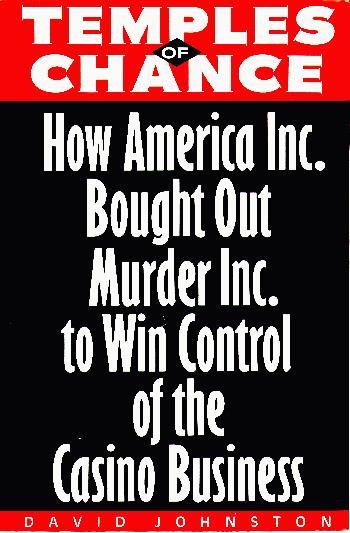
Great book, well worth reading --


These were complex transactions the destroyed investors that regulators
ignored.

Maybe what was done wasn't illegal, but was it moral?

Mitt and the junk bond king

Mitt Romney in Orlando, Fla. on June 21, 2012. The presidential hopeful teamed up with junk-bond king Michael Milken at the height of the 1980s buyout boom.
Mitt Romney in Orlando, Fla. on June 21, 2012.
The presidential hopeful teamed up with junk-bond king
Michael Milken at the height of the 1980s buyout boom.
(Charles Dharapak/AP Photo)
 
Globe Staff / June 24, 2012
 
It was at the height of the 1980s buyout boom when Mitt Romney went in search of $300 million to finance one of the most lucrative deals he would ever manage. The man who would help provide the money was none other than the famed junk-bond king Michael Milken.
 

What transpired would become not just one of the most profitable leveraged buyouts of the era, but also one of the most revealing stories of Romney’s Bain Capital career. It showed how he pivoted from being a relatively cautious investor to risking his reputation for a big payoff. It is one that Romney has rarely, if ever, mentioned in his two bids for the presidency, perhaps because the Houston-based department store chain that Bain assembled later went into bankruptcy.


But what distinguishes this deal from the nearly 100 others that Romney did over a 15-year period was his close work with Milken’s firm, Drexel Burnham Lambert Inc. At the time of the deal, it was widely known that Milken and his company were under federal investigation, yet Romney decided to go ahead with the deal because Drexel had a unique ability to sell high-risk, high-yield debt instruments, known as “junk bonds.”

The Obama campaign has criticized the deal as showing Romney’s eagerness to make a “profit at any cost,” because workers lost jobs, and challenged Romney’s assertion that his business background best prepares him for the presidency. Romney, meanwhile, once referred to the deal as emanating from “the glorious days of Drexel Burnham,” saying, “it was fun while it lasted,” in a little-noticed interview with American Banker magazine.

The “glorious” part, for Romney at least, was that he used junk-bond financing to turn a $10 million investment into a $175 million profit for himself, his partners, and his investors. It marked a turning point for Romney, according to Marc Wolpow, a former Drexel employee who was involved in the deal and later was hired by Romney to work at Bain Capital.
 
“Mitt, I think, spent his life balanced between fear and greed,” Wolpow said. “He knew that he had to make a lot of money to launch his political career. It’s very hard to make a lot of money without taking some kind of reputational risk along the way. It’s just hard to do. It doesn’t mean you have to do anything illegal or immoral, but you often have to take reputational risk to make money.”

So it was that Romney decided to rely on a man and a company in the thick of one of the most intensive investigations ever undertaken by the Securities and Exchange Commission.
 
It happened in 1988, the fourth year of Bain Capital’s existence. Romney was shifting his focus from venture capital, funding younger companies, to buying larger, established businesses, which sometimes were troubled.

Under this new strategy, known as a leveraged buyout, Romney could invest a relatively modest sum and borrow the rest to finance deals. The debt was then typically transferred to the companies Bain acquired. Bain earned management fees, dividends, and, if the company increased in value, massive profits.
 
This deal was one of the mostly highly leveraged yet. It involved the purchase of two department store companies — Palais Royal, a small and profitable chain with 28 stores, and Bealls Brothers, a larger chain that was struggling — which Bain wanted to merge into a stronger and more successful brand.
 
Given the high-risk nature of the deal and the amount of money needed to pull it off, Romney and his partners sought financing from Wall Street’s Drexel Burnham Lambert. It had a Boston office with about 20 employees, as well as a Beverly Hills office where Milken oversaw the junk-bond operation.
Milken was so successful at selling risky bonds in exchange for possible double-digit returns that he had become one of the best-known and most controversial financiers in the nation by the time Romney and his partners met with him. A year earlier, Milken’s deals had earned him $550 million in salary and bonuses.
 
Romney, the famously cautious investment manager, embraced the philosophy of Milken, the embodiment of the high-flying 1980s. Romney, according to his former partners, viewed Milken not just as someone who built up piles of cash, but also as an innovator whose deals could force bloated companies to become leaner, more efficient, and more profitable.
 
Romney and Milken declined to comment, but former associates of both men said the seemingly Odd Couple pairing goes far in explaining why Romney became willing to do riskier deals for bigger payoffs.
 
“I believe Mitt admired Milken’s creativity,” said Wolpow, the former Romney partner. “Milken did force underperforming companies and management teams to face the music. That’s the plus side of leveraged finance.”
 
But there was a potential downside of doing business with Drexel. Just as the deal was about to be sealed in September 1988, the Securities and Exchange Commission filed a complaint against Milken and Drexel, alleging insider trading and stock manipulation. Some clients feared being tainted by scandal, but Romney stayed loyal: The deal was too important.
 
“We did not say, ‘Oh my goodness, Drexel has been accused of something, not been found guilty,’” Romney told the Globe years later. “Should we basically stop the transaction and blow the whole thing up?”
 
But the deal nearly blew up anyway. The fraud case was being heard by US District Judge Milton Pollack. In what seemed a remarkable coincidence, the judge’s wife, Moselle Pollack, was chairwoman of Palais Royal, one of the department stores in Bain’s deal, and she stood to gain millions.
 
Drexel’s lawyers seized on the potential conflict of interest and tried to get the case thrown out, or to at least have Pollack taken off the case. Indeed, there were suggestions that Drexel was in effect using Romney. A Wall Street Journal story from 1988 quoted the SEC as saying Drexel had first approached Bain about the deal, “creating the very situation of which they complain.”
 
But Rick Moseley, a former Drexel official who worked on the deal, said Drexel did not create the conflict and didn’t realize the judge’s wife had a stake in the deal.
 
“It was totally inadvertent,” Moseley said. “I can tell you that because I was in the epicenter of it when the deal came in.”
 
Romney and his partners were alarmed by the media furor over the alleged conflict of interest. Romney called Drexel’s chief executive, Fred Joseph, and was assured the controversy wouldn’t endanger the deal.
 
Still, as reported in “The Real Romney,” a biography by two Globe reporters, some SEC officials were upset that Romney went ahead with Drexel, because it enabled the claim of a conflict to go forward.

“By doing the deal, [Romney] enabled Drexel to use the claim of conflict of interest on the part of the judge, which I think at a minimum reflects a lack of concern about the impact of his financing activities on the administration of justice,” said James T. Coffman, a former SEC official who worked on the case.

In the end, the matter became moot when Drexel pleaded guilty to six criminal counts of securities and mail fraud, paying $650 million in fines. Milken later pleaded guilty to securities and reporting violations and would serve 22 months in prison. By 1990, Drexel was bankrupt and out of business.

In the meantime, Drexel’s financing for Bain succeeded. Romney distanced himself from the legal case, noting that his deal had nothing to do with the charges against Milken and Drexel.
 
With the deal concluded, Bain Capital merged the department store chains into an entity that later became known as Stage Stores, which became responsible for paying off much of the debt. Business went well for several years as the chain grew and boosted profits, and was able to pay interest on the debt that Bain had placed on the company. “They did an incredible job of improving the business dramatically,” Moseley said.
 
But the seeds of later problems for Stage Stores were sown while Bain was still on board, and eyeing the exit door.

Bain’s hand-picked chief executive retired in 1993 and was replaced by Carl Tooker. Bain partners served on the board for four more years, helping take the company public in October 1996, at $16.50 a share, and approving an acquisition in June 1997 that added 246 stores, nearly doubling the chain. Bain had sold some of its shares in the low $30s and by September 1997 sold the rest at nearly $35 per share.

Some at Bain wondered if they sold too soon. Indeed, the stock kept rising into 1998, and the firm actually bought back a minority stake. Shares peaked at $53 before diving as Stage Stores struggled with its expansion.
 
Other shareholders filed a lawsuit in March 1999, alleging that the company and certain investors, including Bain, had inflated the company’s performance numbers and then dumped their stock. The suit was dismissed later that year.
 
But problems mounted. By 2000, the company was in emergency talks with its lenders. It announced plans to close 60 stores and then pushed out Tooker. In June that year, Stage Stores filed for bankruptcy protection, with $444 million in long-term debt on the books, and said it would close 300 stores. (Stage Stores emerged from bankruptcy in 2001 and today operates 813 stores in 40 states. It reported a $31 million profit in 2011 on sales of $1.5 billion. The company did not return calls requesting comment.)
 
Bain Capital says it wasn’t responsible for the problems that led to the bankruptcy filing.
 
“Stage Stores was a growing, successful, and consistently profitable company during the nine years we owned it,” Bain said in a statement. “Unfortunately, the company ran into operating problems three years after we sold our controlling interest, and we were as disappointed as anyone to see that happen.”
 
Tooker, the former CEO, said in an e-mail that he worked with two Bain partners who served on the company’s board, including Josh Bekenstein, but that Romney “never was directly involved, nor have I ever met him.”
 
That was often true for Romney. While he portrays himself as a turnaround specialist who helped create jobs in his time at Bain, his main role was that of financier — overseeing investment decisions and helping make connections as he did with Drexel. His was typically not the nitty-gritty work of running companies. But as the head of Bain Capital, Romney stood to profit when things went well or face blame when they did not.
 
The Obama campaign has said Romney’s actions laid the groundwork for Stage Stores’ bankruptcy and layoffs of more than 5,000 workers, saying on its website, Romneyeconomics.com, that Romney “profited even as businesses were closed and workers lost their jobs.”

But Wolpow, the former Drexel employee who went to work for Bain, said the deal was a clear success for Bain Capital and its investors.

“That was a point at which Mitt took a modicum of reputational risk because there was a substantial amount of money that could be made on the transaction,” Wolpow said. “And I think that encapsulates how Mitt is able to find that balance and is able to rationalize his behavior in that regard.

Mitt was doing the right thing by his investors. The decision to move forward with Drexel was in the best interest of Bain’s limited partners.”

http://www.boston.com/business/articles/2012/06/24/the_story_behind_mitt_romneys_work_with_michael_milken_it_was_fun_while_it_lasted/?page=full
 

Pastor leads a solo fight against Internet gambling


Pastor leads a solo fight against Internet gambling

January 27, 2012

McClatchy News Service

Indian tribes, racetrack owners, card room operators – and the army of lobbyists they’ve hired to help them make more money – will keep pressure on lawmakers in 2012 to legalize Internet gambling in California.

They’ll attend campaign fundraisers. They’ll testify in support of legislation. They’ll make the case that taxes on Internet gambling could help solve the state’s budget deficit.

And at every hearing on the matter there will be the lonely voice of the Rev. James Butler saying:

Don’t do it.

In the three years the debate over Internet gambling has simmered in the Capitol, the focus has been on which games should be allowed and who should be able to profit. Butler’s organization has been the only one arguing that another form of legal gambling is not a good idea.

“I think we can still defeat it at the legislative level once I have clarity on what the bill is and what it’s going to say,” said Butler, a Methodist pastor and executive director of the California Coalition Against Gambling Expansion.

“But it’s going to be a challenge, because what was being encouraged was to get all the gambling interests lined up on the same side.”

Butler spent most of his career as a congregational pastor, leading Methodist churches in Lompoc and Santa Paula. He said he saw how gambling can affect families as Indian tribes near his church began opening casinos and more and more people turned to him for help coping with devastating debt.
In 2005, he moved to Sacramento to take on a ministry of advocacy, leading faith-based efforts to lobby against gambling, alcohol and drug abuse.

Senate President Pro Tem Darrell Steinberg, D-Sacramento, and his staff members have been meeting with tribal lobbyists, casino owners and others in the gambling business to hash out a compromise bill for lawmakers to consider in 2012.

“The goal remains the same,” Steinberg said. “To put forward a proposal early in the year that represents as much consensus as possible, with a laser focus on the state’s interest, which is tax revenue for education, higher education and other public services.”

Butler hasn’t been invited to the talks, which Steinberg described as “very quiet but very productive.” Butler’s not surprised he’s being left out.

“We’re of the position that Internet gambling is, at its basic core, a bad idea. Consequently, if they were to invite us into the room to say what could we possibly do to generate your support, it’s not going to be there,” Butler said.

He has been busy preparing a plan to fight the Internet gambling legislation when it comes up in 2012. Butler’s strategy will be to suggest more than a dozen regulations, including:

n People who receive public assistance – welfare, unemployment, food stamps, subsidized housing or medical care – or are behind in child support payments should not be permitted to gamble online.

n People should have to get permission from their spouse, who is legally responsible for any debt incurred, before being allowed to gamble online.

n Internet gamblers should not be able to file for personal bankruptcy.

“Maybe the state would say if it takes that much effort to make this good, then maybe it’s not possible and we shouldn’t do it altogether,” Butler said. “That’s going to be our focus.”


Read more: http://www.appeal-democrat.com/articles/indian-113359-racetrack-internet.html#ixzz25QkYZc8j

California's Broken Promises


Editorial: Brown places a poor bet on two new tribal casinos

Published: Sunday, Sep. 2, 2012


Gov. Jerry Brown waited until Friday's deadline to announce his support for two controversial off-reservation casinos that are likely to usher in a troubling new Indian gambling boom in California.

It's unfortunate that Brown blessed these two bad deals initially approved by the Obama administration's Interior Department. The first allows the North Fork Rancheria of Mono Indians to build a casino along Highway 99 in Madera County, 40 miles from their existing reservation near Yosemite. The second allows the Enterprise Rancheria of the Estom Yumeka Maidu Tribe to build its casino near Oroville, 50 miles from its historic tribal lands. The governor approved that casino even though residents of Yuba County signaled in a 2005 advisory vote that they did not want it.

Both casinos were opposed by established gambling tribes, who argue they will not generate new revenue but take profits from existing casinos. The most troubling aspect of Brown's decision is that it adds pressure to approve off- reservation casinos for other tribes.

When voters approved Proposition 1A a dozen years ago, they were promised gambling would be contained on existing Indian lands and that the expansion authorized by the initiative would be modest.


That's turned out to be a lie. Today, California has more than 60 Indian casinos, some of them quite massive. Gambling tribes rake in close to $7 billion annually, more gamblng revenue than in any other state in the nation.

Some formerly impoverished tribes have become wealthy as a result, but most Indians in California remain mired in poverty. The gambling boom has also led to rifts within tribes, with some members seeking to disenroll other tribal members.

In the press release announcing his decision, Brown predicted the casinos would bring hundreds of jobs to depressed areas of the state. In the current economic environment, the impulse to approve any business venture that promises jobs is understandable. But the price the state pays in the expansion of gambling makes these ventures precarious. Whether Indian casinos or the state lottery, gambling preys on those least able to afford it. Many economists argue that gambling just moves money from existing enterprises.

Moreover, tribal sovereignty places casinos outside the normal rules that govern non-Indian businesses. Local governments lose their land use planning authority. Indian tribal enterprises don't pay taxes like the local bookstore or movie house. They are not subject to the same zoning restrictions or environmental regulations.


 The governor has negotiated compacts with both tribal governments that he says will protect patrons and the environment and fund programs to mitigate negative impacts and address gambling addiction.  

There's reason to be skeptical. Recent history has shown that even when revenue sharing deals are cut with Indian tribes, they can and have been invalidated by the courts. Beyond all that, is gambling really the best way to grow California's economy?


http://www.sacbee.com/2012/09/02/4777254/brown-places-a-poor-bet-on-two.html


For $50 Million, Harry's Always Welcome!


Norm Clarke | NORM

Norm Clarke, Vegas Confidential

Prince Harry would be welcomed back to Wynn's casinos

Posted: Sep. 2, 2012


The bottom line: Yes, Prince Harry would be welcomed back to Steve Wynn's casinos.
But there's a qualifier attached, not just for Harry, but other hell-raisers headed for Wynn properties.

As long as they obey the law, they're welcome, "and that certainly includes Prince Harry."

That's the message emerging from the executive offices after Harry's libido-fueled scandal involving a game of naked billiards.

Meanwhile, a small army of U.K. reporters remains in town, seeking new revelations. I'm told some have been focusing on rumors that strippers were among the revelers in Harry's suite Aug. 18.
Strippers could mean out-of-towners who work a night at a local club to pay for their trip to Las Vegas. Local strip clubs have been told there's a $250,000 payday for an informant on one of Britain's worst royal scandals.

Wynn isn't pleased that he's been pulled into the vortex.

When the British tabloids reported he comped Harry, Wynn had to break one of his rules and issue a denial, which appeared here last Sunday, through an intermediary.


Wynn's no different from his top-level counterparts when it comes to discussing their guests: It's a violation of hospitality confidentiality.

Expect some changes in Wynn security, I'm told. Harry and his pals pulled a fast one by telling security they were done for the night. Later, when the coast was clear, the party girls arrived.

As for the report that Wynn had put Wynn Las Vegas and Encore on media "lockdown," meaning jobs are at risk for talking to reporters, that's not a Harry-related policy. It has been in effect for
decades, from one end of the Strip to the other.

http://www.lvrj.com/news/harry-would-be-welcomed-back-to-wynn-s-casinos-168303836.html


The Downward Spiral of Niagara


Just as in Massachusetts, Niagara was promised streets paved with gold when they endorsed Predatory Gambling, ignoring the evidence.

How'd that go for ya?


Abandoned Church Fire in Niagara Falls, New York

A 100 year old abandoned church in Niagara Falls, New York caught fire in an impoverished neighborhood. The fire rages for 3 days, the building had to be completely demolished. A grassy plot not sits where the church used to. Side note, the other burned up/abandoned buildings next to the church were burned and abandoned long before the church burned down, a tell tale sign of the level of poverty in the area....

September 1, 2012

City of Niagara Falls deep in the red


NIAGARA FALLS — The city’s fund balance ended 2011 with a deficit of $844,000.
An accountant hired to review the year-end books for 2011 told city lawmakers Thursday the number was a reflection of the uncertainty surrounding casino revenue the municipality is owed but has not received in years.
During a meeting at City Hall, Randall Shepard, an accountant from the city’s outside auditing firm, Bonadio and Co., presented his firm’s audit of the municipality’s 2011 financial statements.
Shepard said there are a number of reasons the fund balance ended in the negative, but the main
reason involved accounting procedures. In previous years, the firm and the city have counted anticipated casino revenues when calculating the fund balance, but this year those funds were not counted.
 
Shepard said casino revenue was not factored into the audit because of the length of time the city has been waiting for the estimated $58 million it is owed. Those funds have been tied up as a result of an ongoing dispute between the state and the Seneca Nation of Indians.
There is $8,631,000 in the fund balance, but all of that money is tied up in restricted and committed funds, meaning those dollars have already been spent, Shepard said. There is also a line for “unassigned” funds in the audit which is $844,000 in the negative.
 
“That doesn’t mean that it’s not owed to you or that it’s not going to be counted as revenue at some point, but that’s how we treat it in the revenue category here,” Shepard said.
Shepard recommended that the city look closely at its spending when putting together next year’s budget.
 
“I think the biggest issue is looking at the things that are within your disposal with the city from a spending perspective and making sure that budgeting streams are realistic and available in terms of cost in the long run,” Shepard said.
 
During the presentation, Councilman Robert Anderson asked Shepard if he saw a control board in the city’s future.
Shepard said that he was in no position to say whether the state would install a board to oversee the city’s finances in the future, adding that “a control board is something that I wouldn’t wish on anybody.”
 
Mayor Paul Dyster said that the negative fund balance looks bad, but that once the casino funds are factored in again it won’t seem so bleak.
 
“[The casino funds] are still being counted as receivable, but they’re not being counted as receivables in the short term,” Dyster said.
The city has been acting conservatively with casino funds since they started receiving the money in 2008, Dyster said. Instead of taking out bonds against the money guaranteed to the city in the gaming compact to use for a large-scale project it has been using a pay-as-you-go strategy for capital improvement projects such as roads, Dyster said.
 
The city did bond for the Public Safety Complex on Main Street after the state required the city to build it without providing the funding to do so, Dyster said. The bond puts a heavy burden on the city’s budget - more than $5 million each year - though the city hasn’t been getting the casino funds it had planned to use to repay the bond, Dyster said.
 
“For the most part what we’ve done is pay-as-you-go for other capital projects,” Dyster said. “We’ve limited our bonding to $3 million per year.”
 
Dyster said the city expects to get the casino revenues it is owed and it would have been bad planning if the city hadn’t budgeted the use of those funds.
 
“We are owed these monies,” Dyster said. “Somebody owes us $58 million in the view of the city of Niagara Falls.”
 
Dyster views the language of the original gaming compact as weak and hopes that, as a result of an ongoing arbitration process, the state and Senecas will have a more firm written agreement in place soon. He and other local officials would also like host communities like Niagara Falls to be paid directly in the future.
 
“Everyone at a local level has agreed that we would much rather see a direct payment to the municipality than the formula in which the funds pass through the state,” Dyster said.
Council Chairman Sam Fruscione described the numbers in the year-end 2011 audit as troubling. He declined comment when asked about the current state of the city’s finances and the prospects for the 2013 budget. Fruscione said he’d have more to say once Dyster’s budget proposal is formally presented to the council later this year.
 
“This is an indicator that the worst is coming,” Fruscione said of Thursday’s report from the auditor.
Fruscione indicated that he was not in favor of any tax hikes next year.
 
“I do not support raising the property tax cap at all right now,” Fruscione said. “But, I need to see what the budget is first.”


GOP Hoax: Sale to the Highest Bidder


Let's not pretend the GOP platform represents any sensible protection for Americans.
It's all about Democracy for Sale to the highest bidder.


GOP platform urges ban on online gambling
Sunday, September 2, 2012

LAS VEGAS (AP) — A new Republican party platform adopted at last week's GOP national convention in Florida opposes online gambling, putting it at odds with the position many elected Nevada Republicans take.
 
Democracy For Sale
 
The plank in the platform — listed under the heading "Making the Internet Family-Friendly" — links online gambling to gambling addiction.
 
"We're not going to agree on everything," Gov. Brian Sandoval told the Las Vegas Review-Journal (http://bit.ly/PQQOK0). "Nevada has always set the gold standard in gaming, and online gaming is the next frontier for the industry. Our state supports online poker and will continue to work to ensure a secure online gaming environment."
 
Many major players in Nevada's casino industry are asking Congress to pass legislation that legalizes and regulates Internet poker nationally. Experts believe Nevada could be the center of a regulated Internet gambling market.


While it's not the first time the party's platform has spoken out against Internet gambling, this year's statement mentions recent changes in the U.S. Justice Department's interpretation of the Federal Wire Act of 1961, which governs betting over wires or electronic means.
 
In December, the DOJ reversed its decades-old interpretation of the act, saying the law only encompasses sports wagering. Legal experts say that clears the way for individual states to allow online poker and other games, as long as the gambling doesn't cross state lines.
 
"We support the prohibition of gambling over the Internet and call for reversal of the Justice Department's decision distorting the formerly accepted meaning of the Wire Act that could open the door to Internet betting," the platform stated.
 
Some online poker proponents fear the platform could stymie legalization efforts in Congress.
 
"The 2012 GOP platform on Internet gambling is grossly out of touch with the opinions of the party's own elected officials," said John Pappas, executive director of the Washington D.C.-based Poker Players Alliance. "Instead of broad political statements, now more than ever, Americans expect Congress to finally put the political posturing aside."
 
Other proponents, including Marco Valerio, who hosts poker-related programming on QuadJacks.com, downplayed the role of the platform.
 
"The online gaming climate has changed so much in the last six years," Valerio said. "For one thing, online poker was largely friendless back then at virtually every level. Today you have much stronger support from big gaming and key legislators."
 
In Washington, D.C., Senate Majority Leader Harry Reid, D-Nev., and Sen. Jon Kyl, R-Ariz., agreed this summer on a framework for online poker legislation. The bill would also strengthen bans on sports wagering and other traditional casino games on the Internet.
 
Reid said the bill needs Republican support to make it through Congress, and has asked fellow Nevada Sen. Dean Heller to round up GOP votes.
 
Heller's campaign spokeswoman, Chandler Smith, downplayed the role the platform will play.
 
"Regardless of any language contained in a document voted on back in Florida, Dean Heller will always do what is in the best interest of Nevada," Smith said.


Read more: http://www.sfgate.com/news/article/GOP-platform-urges-ban-on-online-gambling-3834988.php#ixzz25PcoEHCv


Not content with enormous profits, sucking discretionary income from local economies and destroying communities, the Predatory Gambling Industry always seeks MORE. What better way than allowing you to bankrupt yourself from home? And the Gambling Industry avoids the cost of employees, physical structures and can reach more Gambling Addicts.


The State Gambling Addiction


The State Gambling Addiction


In 1964, New Hampshire reintroduced the lottery.
 
Today, 43 states have a lottery system that net an average of $18 billion a year.
 
In 1976, Atlantic City approved the first state-sanctioned casino as a means of fixing the budget.
Today, there are 15 state-operated casinos that make $4.5 billion in annual government revenue.
 
Despite the promised economic benefits, legalized gambling has fallen short of its promise to ease tax burdens and help fix the economy.
 
New Jersey was the fifth most heavily taxed when its first casino opened. Today, it is the second most taxed state.
 
Most states overestimate the revenue brought in by gambling. Oklahoma, for instance, predicted their lottery would raise $150 million. The actual revenue raised was $70 million.
 
Moreover, gambling creates a tradeoff with other forms of consumer spending. In one study, after a state instituted a lottery, consumer spending went down $42 per household.

In addition, severe economic and social problems outweigh the benefits states derive from legalized forms of gambling.
  • The Tax Foundation argues that state lotteries have the steepest of all taxes, since the government keeps an average of 42 percent of betting proceeds. This is higher than the sales tax rate that would be charged if the wagered money were spent on something else.
  • More troubling, the incidence of crime rises as gamblers become desperate and turn to crime to feed their addiction.
  • A National Opinion Research Center Survey found that 20 percent of self-reported pathological gamblers and 11 percent of problem gamblers had filed for bankruptcy at some point in their life, in contrast to 5 percent of non-gamblers.
In spite of the research, politicians continue to cave in to the demands of lobbyists and the public to legalize more gambling as a fix to the current economic situation.

Source: Steven Malanga, "The State Gambling Addiction," City Journal, Summer 2012.

http://www.ncpa.org/sub/dpd/index.php?Article_ID=22299

Suffolk Downs: The Hoax


Maybe some more 'charitable contributions' to Mayor Menino will work!


Suffolk Downs casino plan needs cities’ support

Boston, Revere hold sway on 2-phase project at track


Boston Mayor Thomas M. Menino wants the entire casino project built in a single phase. Above, the entrance to Suffolk Downs on Rte. 1A in East Boston.


By Mark Arsenault
Globe Staff / September 3, 2012
 
Responding to complaints about plans to develop its proposed $1 billion casino resort in phases, Suffolk Downs has acknowledged that the host cities control when the resort could open, and that the project cannot be done in phases without the support of local officials.


Track officials would not comment further, but they continue to make the argument to public officials that it would make sense to open in stages — to begin to provide tax revenue and jobs — while construction continues on the more time-consuming aspects of the development, according to Revere Mayor Dan Rizzo.


Mayor Thomas M. Menino of Boston publicly objected this month to plans from Suffolk Downs to open a gambling floor first, and then a hotel and amenities in a second phase. Menino said a piecemeal project would lack the “wow” factor to draw visitors and drive additional economic development.  [Much like the Gam[bl]ing Commission and lawmakers, Mayor Menino continues to delude himself, disregarding the experiences of others.]


The committee Menino named to advise the city on casino issues urged the track to submit plans “that complete the project in a single phase.” As of Friday, Suffolk Downs had not yet submitted those plans, according to the mayor’s office.
 
But in a written response to Menino’s committee, Suffolk Downs noted that “the timing of the opening of our project is dependent on independent decisions made by the city, the Gaming Commission,” and state environmental officials — an acknowledgment that public officials, especially mayors, hold vast leverage under the state’s 2011 casino bill.

Suffolk Downs straddles the municipal line between East Boston and Revere. If Menino or Rizzo did not like the development plans, either mayor could indefinitely block the project by refusing to negotiate an agreement with the developers to host a casino. No casino project can apply for a state license without a signed agreement with its host community, or, in this case, the two communities in which the track sits. Holyoke Mayor Alex Morse effectively forced the casino company Hard Rock International out of his city by refusing to negotiate. The Foxborough Board of Selectmen similarly stonewalled a gambling resort proposal in their community.

Suffolk Downs spokesmen will not say if they have abandoned plans to build in phases.

But track officials have assured Rizzo that, should they win a casino license, they intend to begin construction on the hotel and resort amenities at the same time they begin construction of the casino floor, the mayor said.

The casino portion of the development is expected to take less time, and Suffolk Downs has argued that it would make sense to open the casino to patrons while work continues on the hotel, Rizzo said.

“I would be open to that,” Rizzo said, as long as he sees significant construction underway on the planned hotel and the rest of the project.

He said he is satisfied that Suffolk Downs, in partnership with the casino company Caesars Entertainment, is committed to building the full project that track officials outlined in June, which would include a hotel and restaurants, a spa, and entertainment venues.

Caesars chief executive Gary Lovemandescribed the plans for a two-stage development in a Globe interview published in July.
 
In the first phase, taking about 12 months, “you’d see casino, slots and tables, the usual casino services, and some restaurant services,” Loveman said then. “And then you’d get the hotel, spa, more restaurants, and retail in the second phase.” That second phase would take an additional year, he said.

The racetrack is currently the only applicant for the sole casino license created by state law for the Greater Boston and Worcester region.

http://www.boston.com/news/local/massachusetts/2012/09/02/suffolk-downs-acknowledges-city-can-prevent-casino-development-from-being-done-phases/cpHNAuSuS6WPMJlc3E0j4I/story.html


Ban on gaming donations a tough sell


Ban on gaming donations a tough sell
By SOPHIA TAREEN
Posted Sep 02, 2012
 
dome2.JPG
The State Journal-Register

The Dome: Illinois State Capitol Building

 
CHICAGO — When Gov. Pat Quinn shot down a plan to boost gambling in the state, he called for more ethical safeguards and conjured up cautionary images of mobsters infiltrating Illinois casinos.
 
But his top suggestion to fix the proposal — banning political contributions from the gambling industry — would likely face a difficult road in a state with some of the most lax campaign finance laws nationwide, if Quinn really pushes for it and any lawmaker would sponsor such a reform in the General Assembly.

Many question if Quinn truly was motivated by the ethics and oversight concerns, or if he simply would never support the plan to establish five new casinos and slot machines at racetracks. Some of the plan’s supporters question if aiming a contributions ban at one industry would be fair or constitutional. And Quinn could anticipate stiff resistance among lawmakers to doing away with such a fat source of cash.

Just ask Maryland.

The governor there proposed strict limits on donations from casino owners and some employees as part of a gambling expansion. But the proposal was pummeled by lawmakers until they ended up with what supporters say is a watered-down version that became law this year.
“What they did was take a very comprehensive bill and they (put) a big doughnut hole in it,” said Delegate Luiz Simmons, a Maryland Democrat who has pushed gambling reforms. “It probably is almost moot.”

Cash connection?

The gambling industry — including casinos, racing parks and horsemen associations — has contributed nearly $10 million to Illinois politicians over the past decade, according to an analysis by good-government group Common Cause.

First on a list of the top 25 lawmakers receiving contributions was House Minority Leader Tom Cross, a Republican who received more than $530,000 from 2002 through 2012. Fourth was the sponsor of the vetoed gambling legislation, Rep. Lou Lang, a Democrat who received over $310,000.

Another bill sponsor, state Sen. Terry Link, also a Democrat, was much further down at No. 14 with nearly $59,000.

Quinn received more than $46,000, according to the group.

Rey Lopez-Calderon, the executive director of Common Cause Illinois, said lawmakers should focus on ethical protections in gambling because of the industry’s historic ties to organized crime and the state’s reputation for rampant political corruption. Quinn’s two predecessors are in prison, as he noted in explaining his veto.

“Part of the problem with corruption and the influence of money, why it’s not just a trivial item, there’s relationships that they’ve built up over years and years,” Lopez-Calderon said.

Lawmakers were quick to disagree, arguing there’s no tie between contributions and the legislation. Most of the state’s 10 existing casinos opposed the expansion, saying it would have saturated the market and hurt existing establishments.

“The idea that gaming money brought me to this place is not true,” said Lang, who has campaigned for expanded gambling for years. “I got some money from a bunch of casinos who opposed the bill.”
Quinn’s spokeswoman Brooke Anderson said the governor’s concerns aren’t over existing campaign contributions, but over the potential for problems.

Not veto-proof

The experience of trying to ban political contributions in other states has been varied. A handful — including Iowa, Michigan and New Jersey — have some type of ban. But not all attempts have survived constitutional challenges.

In 2009, the Pennsylvania Supreme Court struck down a ban prohibiting casino investors and executives from making any political campaign contributions after a developer challenged it in a lawsuit. Louisiana’s laws, among the strictest, have survived First Amendment challenges.

 Deciding what to do with Quinn’s veto is brand-new territory for lawmakers. They passed a gambling expansion bill last year too, but refused to give the legislation to Quinn because he’d threatened to veto it.

This year, they passed the bill in Springfield just a few votes shy of what would be necessary to override the governor’s veto. Supporters said they would try to get the necessary votes before the fall legislative session, after the November election. “My plan is to forge ahead,” Lang said.

He and others believe Quinn had no intention of signing any gambling expansion: Quinn waited until the last day to make a decision and opted against using his amendatory veto power to approve the bill while altering parts he didn’t like. Signing the legislation would have allowed lawmakers to proceed with a planned trailer bill they said would address his concerns, including the campaign contributions issue.

“He’s taken tens of thousands of dollars from gambling interests,” said Democratic state Rep. Jack Franks, who voted against the bill because he thought the expansion was too big for the state. He said Quinn’s call for more ethical oversight “rings hollow.”

No specifics

Meanwhile, the American Gaming Association and a Chicago gambling attorney who once provided legal counsel to the Illinois Gaming Board argue that such bans unfairly target the industry.

“If you’re going to have a campaign contribution policy, it should be a broad, all-encompassing one,” said Donna More, the lawyer. “If the governor is serious, this is something that is much larger than one industry.”

Quinn would only say that he made his decision to prevent loopholes, though he didn’t have specifics when pressed for what type of ban he’d like or how he’d work with lawmakers.

“We should have the strongest one possible,” he said. “There’s just too many potentials for ... political disaster and governmental disasters if we have the gaming people running around handing out campaign donations to politicians and aldermen.”

http://www.sj-r.com/thedome/x1547503665/Closer-look-Ban-on-gaming-donations-a-tough-sell?zc_p=0


Sunday, September 2, 2012

The Focus


Route 24 is an outdated road, with dangerous ramps, too much traffic causing gridlock and, as statistics below indicate, too many crashes and fatalities.

No attention was focused on this failed road until the Mashpee Wampanoag/Genting proposal in Taunton projected the addition of +20,000 vehicles per day.

Suddenly, we get sorely needed patrols?

How much will infrastructure improvements cost to subsidize Malaysian investors?


Driving on Route 24 still dangerous

Some say increased state police presence making a difference

By Justin Graeber
Posted Sep 02, 2012


rt 24 Bridgewater ejr 072612-10.jpg
Emily J. Reynolds/The Enterprise

State police Troop D Commander Maj. Anthony Thomas talks, along Route 24 in Bridgewater on Thursday, July 26, 2012, about new patrols being added to the highway during the most dangerous hours between 8 p.m. and 4 a.m. on Fridays and Saturdays.

Route 24 accident - 2010
Marc Vasconcellos/The Enterprise

In this 2010 file photo, Route 24 southbound was shut down for some length of time next to Exit 18 due to an accident. Marc Vasconcellos /The Enterprise


The Enterprise published a two-day series on Route 24 and why it is so dangerous on July 29-30. Read it at www.enterprisenews.com.

Gail Morrill of Stoughton has seen the difference a beefed-up police presence has had on Route 24.

“There is no more jumping lanes and the speed is way down,” she said.

Other drivers who regularly brave the notoriously dangerous highway during the work week disagreed. They have the same complaints they had about the road before state police bumped up the number of weekend patrols following two deadly accidents in July.

“Cars still pass at a high rate of speed on the right, the tailgaters are still there and drivers are still cutting in and out of lanes,” said Jerry Carney, a commercial truck driver from Nashua, N.H., who drives the 42.8 mile length of Route 24 from Randolph to Fall River between two and three times a week.

The state police “surge,” as it’s called, has resulted in 1,377 tickets and 87 arrests, 45 for drunken driving, in the past five weeks. No one has died on the highway since the surge began.

The added weekend patrols will continue through September.

While the road appears to have become safer to drive since the surge began, the most recent statistics from the state Highway Department on Route 24 – for calendar year 2010 – show that overall, it has become increasingly dangerous over the years.

There were three fatal crashes on the local stretch of Route 24 – from Berkley to Randolph – in 2009.

During 2010, eight people were killed on the same stretch.

And the past year has been even worse. State police said in July that 11 people were killed on the highway during the previous 12 months.

Three people were killed, including a 12-year-old girl from Norton who was a passenger in a car that crashed in Avon, and two people involved in a crash in West Bridgewater, within four days in July alone.

The number of accidents on the local stretch of the 60-year-old state highway increased from 630 in 2009 to 703 in 2010. Non-fatal injuries jumped from 221 to 297.

State police did not return repeated requests for comment during the past week on the added patrols.
Rachel Buckley of Brockton said Route 24 is still a scary commute.

“It’s three lanes so there are people that come right up behind you and tailgate when you’re in the high-speed lane ... which is completely frightening,” she said.

She said that the added weekend patrols have done nothing to improve the behavior of weekday rush-hour drivers.

“Police presence slows some down but the majority of drivers are still going far beyond the speed limit,” Ellen Ladetto of Bridgewater added. “It just goes to show you, it’s a crazy road to travel on.”
Justin Graeber may be reached at jgraeber@enterprisenews.com or follow him on Twitter @justingraeber

READ MORE about Route 24.


Route 24 statistics


8 People killed in accidents on Route 24 during 2010
11 People killed on Route 24 during the last 12 months
11 People killed on Route 24 during all of 2006 through 2009
703 Crashes in 2010 on the 25-mile section of road from Berkley to Randolph
227 People injured on Route 24 in 2010
42.8 Length of the road in miles from Fall River to Randolph
25 Length of the local stretch of Route 24 from Berkley to Randolph
Source: Mass Highway crash statistics.

2010 crash numbers from Route 24 by community


75 Avon
28 Berkley
66 Bridgewater
123 Brockton
82 Randolph
112 Raynham
57 Stoughton
98 Taunton
62 West Bridgewater
703 Total for 25-mile stretch of Route 24 from Berkley to Randolph
Source: Mass Highway statistics for 2010.

Latest traffic accident statistics from Route 24


2010
Total accidents: 703
Injured: 297
Fatalities: 8

2009
Total accidents: 630
Injured: 221
Fatalities: 3


Read more: http://www.enterprisenews.com/answerbook/avon/x1681146184/Accidents-fatalities-on-Route-24-up-in-2010#ixzz25JvUh8SO

Saturday, September 1, 2012

More Swedish women addicted to gambling


More Swedish women addicted to gambling

More Swedish women addicted to gambling

Published: 30 Aug 12

Increasing numbers Swedish women are becoming compulsive gamblers according to a new report, results which have left experts surprised and demanding new regulations.

The report, published Thursday by the Swedish National Institute of Public Health (Folkhälsoinstitutet, FHI), shows that middle aged women account for more than half of the compulsive gamblers, with a total of 2 percent of the population currently addicted.

“There is a huge flood of new gamblers and this worries us,” said researcher Ulla Romild to the TT news agency, adding that some 100,000 more Swedes become addicted to gambling each year.

However, just as many Swedes shook their addiction in the same time frame, although Romild explains that their problems remain.

"They probably have some problems left over that can be linked to their compulsive gambling, for example economic problems, problems with social relations and health - especially physical health," she said.

Researchers attribute the increase in gambling addiction among Swedish women to recent marketing efforts specifically directed toward women.

According to Romild, steps need to be taken to prevent a further increase.

“We think it’s important that people seriously consider the gambling issue, the entire gambling market should be regulated – I’m thinking especially of online gambling which is available to all of us. It has to be ensured that the gambling that can lead to problems should be regulated,” she said.

Women in the age range of 45-64 are the most likely to be addicted, with slot machines and online games being the most common choices. Heavy drinkers are also more likely to find themselves addicted.

But it is not only the women who have spend too much time gambling. 77 percent of men responded that they gamble "very often", a figure which rose by 4 percent over the 2-year period of interviewing.

The institute’s research was based on 6,000 interviews performed between 2008 and 2010, with respondents surveyed twice each with one-year intervals.

http://www.thelocal.se/42914/20120830/

Veterans and Gambling Addiction


Veterans and Gambling Addiction – Facts for Families and Employers

Posted on by
From traumatic brain injury to post-traumatic stress disorder (PTSD), many of us are becoming more aware of the physical, mental, and emotional issues that affect our nation’s military members. But there’s one veterans’ issue that hasn’t received as much attention: gambling addiction.

Veterans are more vulnerable to excessive gambling than non-military members.

A Veterans Administration-funded study revealed surprising findings about American veterans and gambling behavior:
  • About 8% of veterans show signs of problem gambling behaviors, while an additional 2% suffer from pathological gambling—these numbers are about double the rate of the general population.
  • Vets in their 20s have higher rates of pathological gambling. This is a sharp contrast from the rest of the population, in which the people with the most serious gambling addictions are typically over age 35.
  • Male and female veterans have identical problem gambling rates; but in the general population, men addicted to gambling outnumber women at least 2 to 1.
Gambling often starts as a form of entertainment.
Some military vets with gambling addiction report they started by playing poker to relieve stress and boredom during active duty. Other vets may be attracted to table games, slots, and sports betting because of the thrill they provide.

And while many are able to enjoy occasional gambling as entertainment, others develop a dangerous addiction. This excessive behavior creates havoc for veterans, their families, and their employers. It triggers arguments between partners, an inability to focus on non-gambling activities (like work or a child’s soccer game), and poor financial decision making. And, for some, the effects of the addiction are serious enough that they lead to suicidal thoughts or actions.

Gambling addiction in veterans often co-exists with other mental health issues.

Former military members with an addiction to gambling often live with other—sometimes undiagnosed—illnesses, like PTSD, anxiety disorder, clinical depression, and alcoholism. If that’s the case, it’s crucial to find a treatment team able to manage any other conditions the addicted person may be suffering from.

How can you get help for a veteran with a gambling problem?

Everyone deserves to live an addiction-free life. If you know or love a veteran who gambles enough that it’s destroying their relationships, finances, and workplace performance, it’s time to reach out for a helping hand.

http://www.safestakes.org/blog/tag/gambling-addiction-statistics/

Ann Romney's Abuse of Horse


Taken from face book ---
http://www.dogsagainstromney.com/2012/06/romneys-appalling-record-of-animal.html


The Official Site of Dogs Against Romney founded 2007. Hi, I'm Rusty. Mitt Romney is mean to dogs. Help me get my message out about the Mitt Romney dog on roof story. Putting a dog on the car roof is abuse. Remember Crate-Gate. I ride inside. Mitt is Mean. Contribute to DogPAC.Dog on the Roof book.

The Romneys Appalling Record of Animal Abuse


First there was Seamus, the poor Irish Setter the Romney's strapped to the roof of their car (at least once) for a 12-hour drive to Canada - leaving him up there after he became ill and soiled himself and the car. Mitt Romney admits to merely hosing poor Seamus down and continuing the trip for hours more.

Now, its horses. A dressage horse named Super Hit, in particular, had the misfortune of falling into the cold, cruel hands of the Romneys. Super Hit, used by Ann Romney for her "therapeutic" hobby of performing dressage (horse ballet), was sold by the Romneys for $125,000 in 2008.

After the sale of Super Hit, the new owners soon discovered he was physically incapable of performing dressage. They consulted Dr. Stephen Soule, veterinarian for the United States Equestrian Team since 1978. Dr. Soule found that Super Hit, at the time he was sold by the Romneys, had a staggering amount of painkillers in his system.

"In my 38-years of practice, " Dr. Soule wrote, "I have never come across a drug screen such as this where the horse has been administered so many different medications at the same time."

The new owners sued Ann Romney and her trainers in 2010, claiming that Super Hit had a defect in one of his feet and that the horse had been drugged with the massive amount of painkillers so that he could continue to perform, hiding his condition.

The Romneys settled the case against Ann last September.

One thing you DON'T EVER want to be is an animal in the care of the Romneys. Another thing you DON'T EVER want to be is a human under the rule of the Romneys.

For complete details about this story, see Buzzfeed's article, "Ann Romney's High Horse."